MODULE 14: Active Managerial Control and HACCP Systems
 Call Kai
 Learn
Learn Practice Test
 Spaced Repetition
 Match
Match Flashcards
 Knowt Play
1/33

There's no tags or description
Looks like no tags are added yet.
Name | Mastery | Learn | Test | Matching | Spaced | Call with Kai |
|---|
No analytics yet
Send a link to your students to track their progress
34 Terms
What is a food safety management system?
system that helps monitor the flow of food through operation, from receiving to service, to ensure each step is performed safely
What programs are included in a food safety management system (8)?
personal hygiene
food safety training
approved suppliers
quality control and assurance
cleaning and sanitizing
standard operating procedures (SOPs)
facility design and maintenance
pest control
What are the CDC’s five most common risk factors responsible for foodborne illness?
purchasing food from unsafe suppliers
failing to cook food adequately
holding food at improper temperatures
using contaminated equipment
practicing poor personal hygiene
In active managerial control, what should you do in terms of the five top risk factors?
understand how risk factors apply to our operation
develop standard operating procedures to address problem areas
be proactive, not reactive
monitor staff to be sure SOPs are being followed
What five key public health interventions does the FDA Food Code establish?
demonstration of knowledge with both managers and staff (demonstrating safe food handling practices)
employee health controls: ensuring staff is practicing proper personal hygiene guidelines
controlling hands as a vehicle of contamination
time and temperature parameters for controlling pathogens
consumer advisories
What should an active managerial control program include?
training for employees
guidelines for management supervision
standard operating procedures
What are the steps in identifying risks?
be proactive
identify food safety risk by looking in areas where foodborne illness can occur
identify how the hazard can be controlled or eliminated
document each hazard
What is monitoring in terms of corrective action?
monitoring is done by verifying that employees know how to perform the corrective action
Is it enough to observe employees performing tasks?
no
you also have to demonstrate corrective action when they are not being properly performed
on going training on food safety practices also needs to be a part of the operation
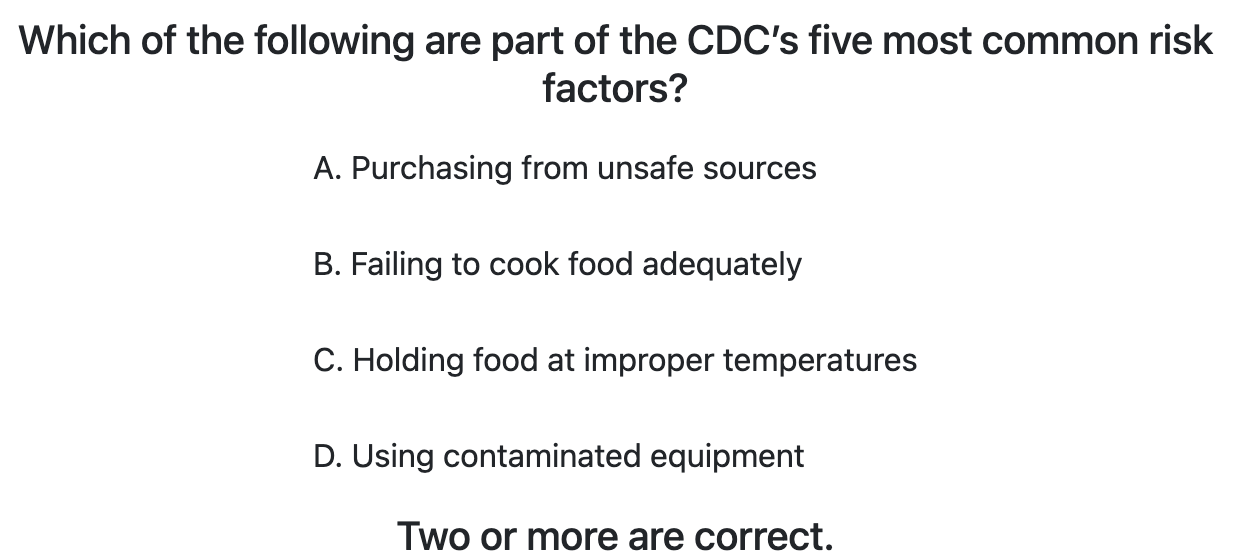
A, B, C, and D
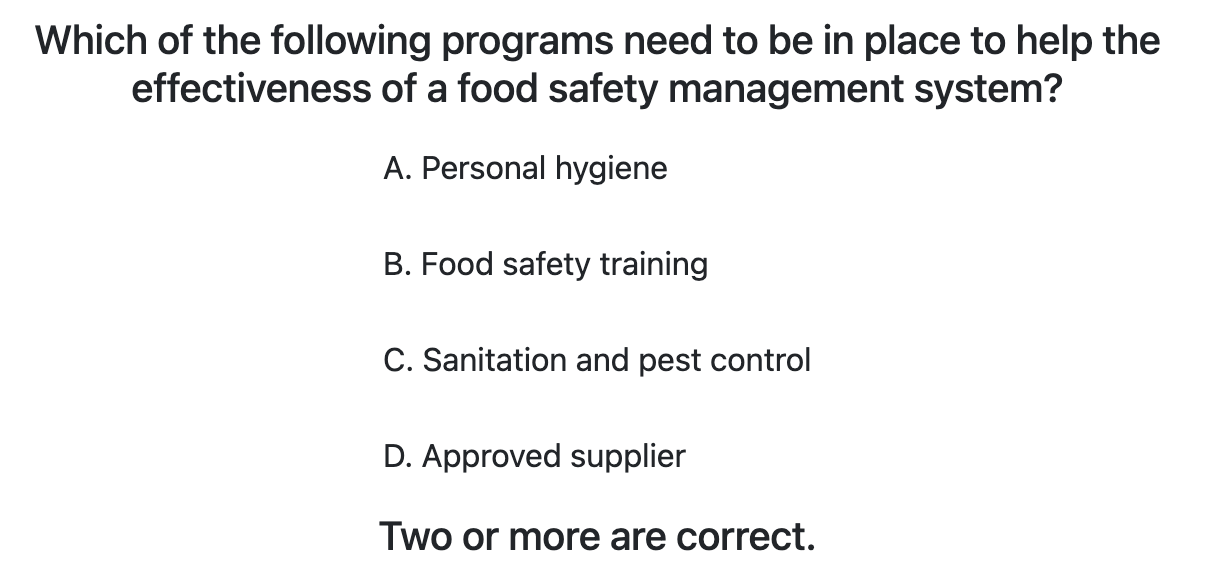
A, B, C, and D
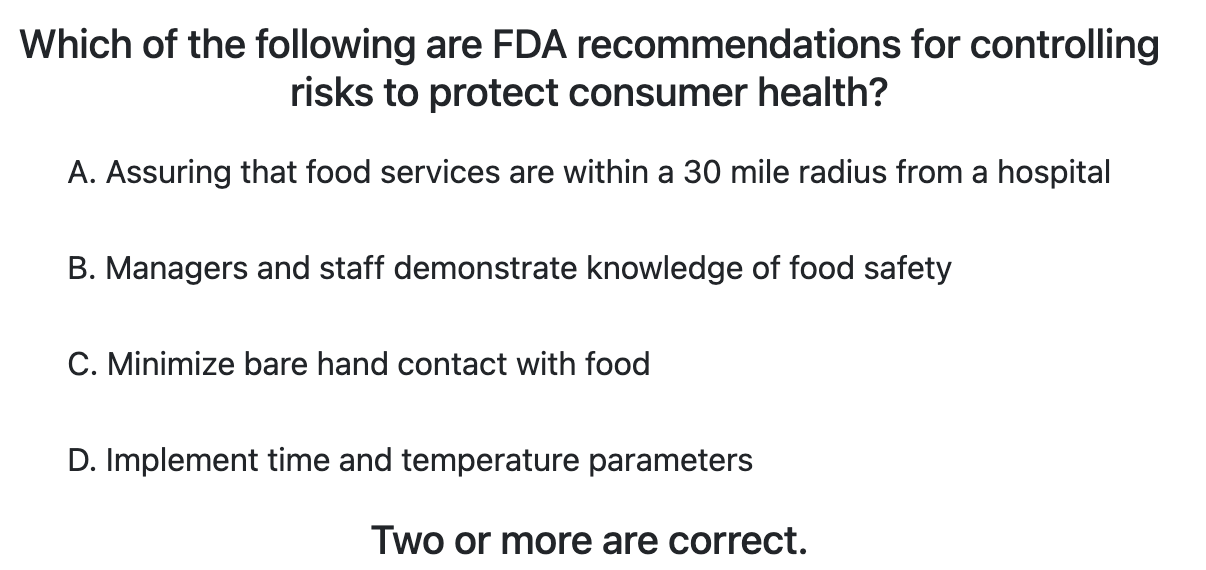
B, C, and D
What is a HACCP system?
a system that combines the principles of food microbiology, quality control, and risk assessment
may be required by law for operations serving high risk populations
What is a variance?
something given by a regulatory authority to allow a requirement to be changed or not apply in a specific process
tend to be used in conjunction with HACCP plans in order to document the variance
What are examples of things that need a variance/HACCP plan?
ROP packaging
retail operations who serve soft cheeses and combinations of cheese with other ingredients
sprouting seeds or beans
operating a molluscan shellfish life support system display tank used to store and display shellfish that are offered for human consumption
packaging unpasteurized juices for sale
reduced oxygen packaged fish prepared in a retail or food service operations (must be frozen at least once during the packaging process and labelled “keep frozen until time of use”)
When applying for variance, what must you submit to a regulatory authority?
may require you to submit a HACCP Plan
plan must include any food safety risks related to your processing methods
you cannot deviate from the plan and procedures
When applying for variance, what must you provide records for?
CCP monitoring procedures
verifying the effectiveness of the plan
any corrective actions that were taken
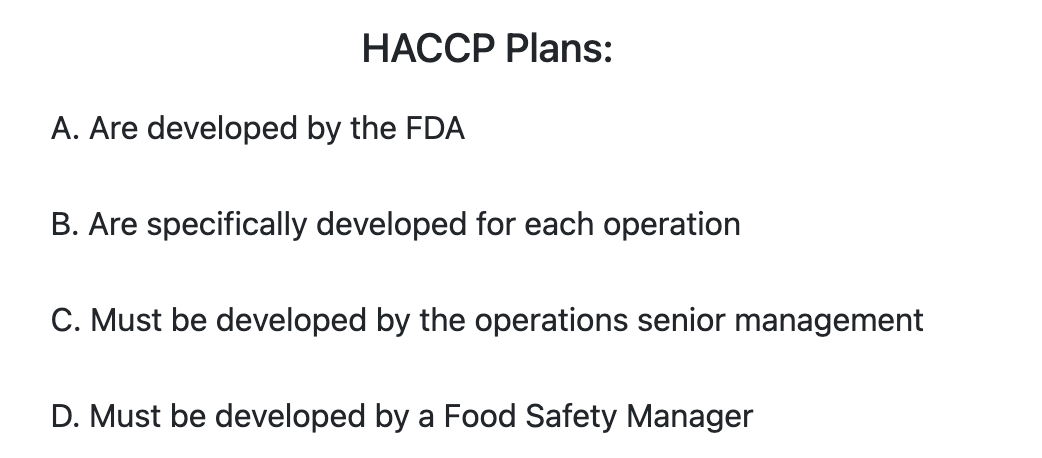
B
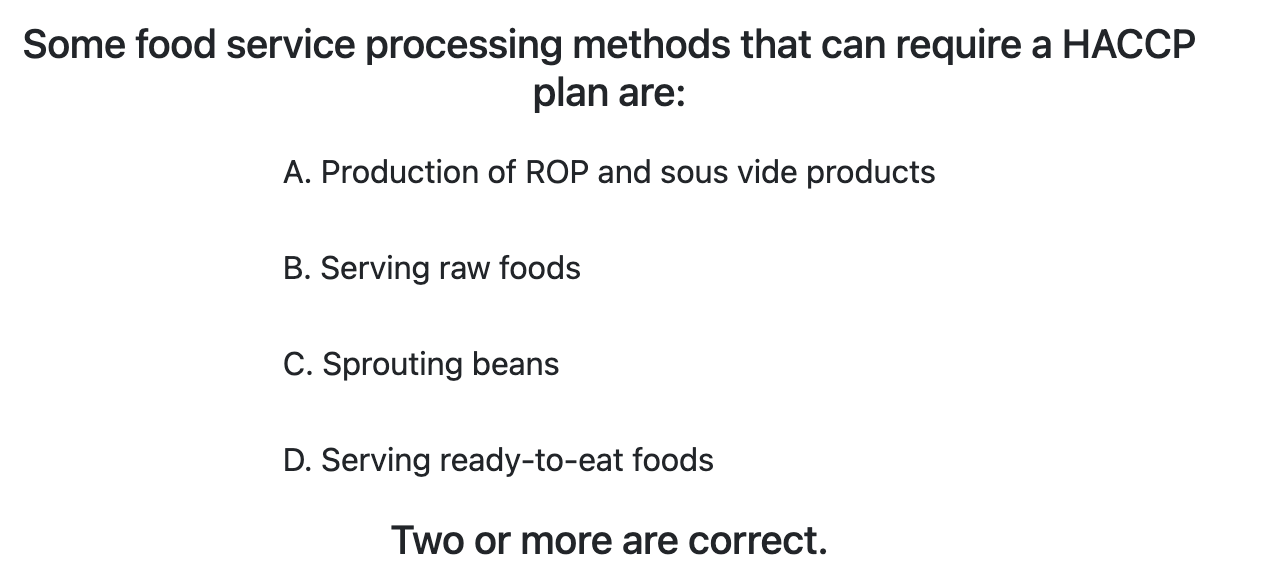
A and C
What are the different steps in a HACCP system (7)?
identify possible hazards and assess risks
identify critical control points
establish critical limits and procedures for critical control points
monitor critical control points
take correct action
verify HACCP system is working
create effective record keeping systems
When developing a HACCP plan, how do you identify possible hazards and assess risks ?
analyze each menu items recipe, and identify the TCS foods used
look at preparation procedures to assess risk
What are critical control points?
points in the food handling process where a control or safety procedure can be put in place so that the possible hazard can be prevented, eliminated, or reduced to acceptable levels
tends to be the last point in a food preparation process where human control can destroy or eliminate foodborne contamination before food is served
Are all procedures labeled as critical control points?
no, only some are identified as critical control points
How do you establish critical limits and procedures for critical control points?
needs to be done for each CCP
needs to be met to prevent or eliminate hazard, or reduce it to an acceptable level
typically regulatory standards or guidelines (ex: FDA food code) define these limits
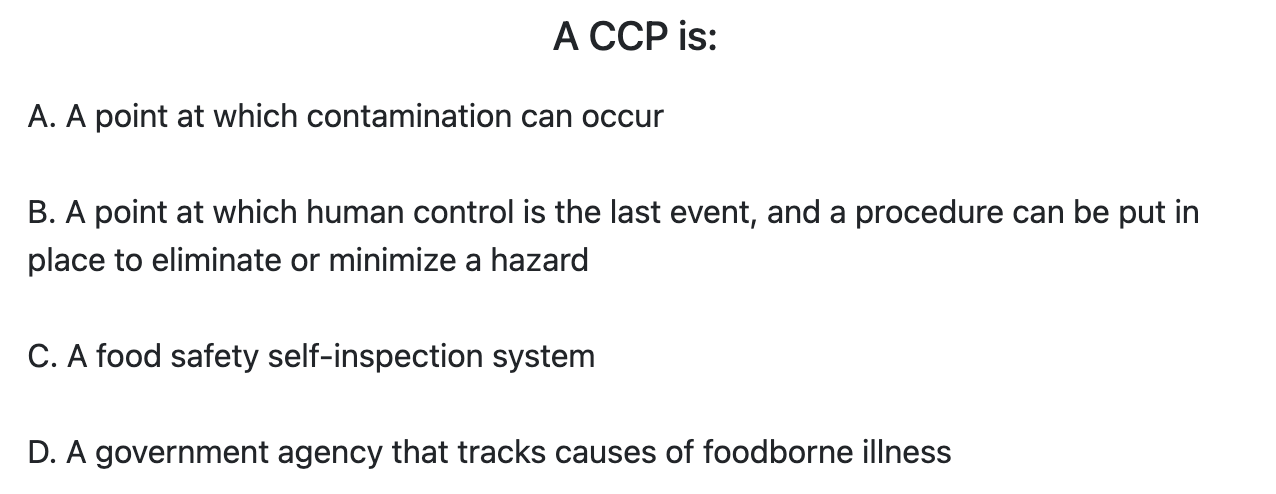
B
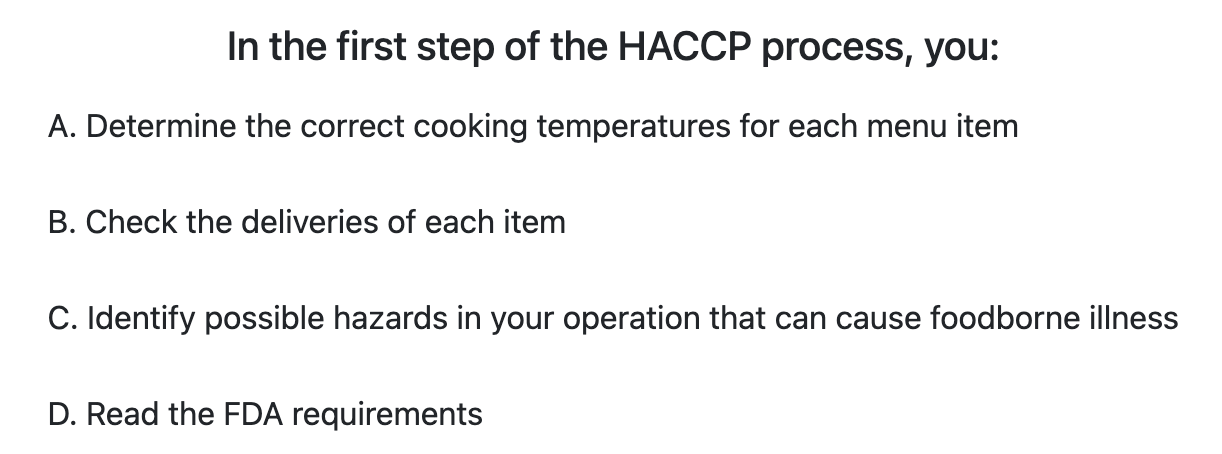
C
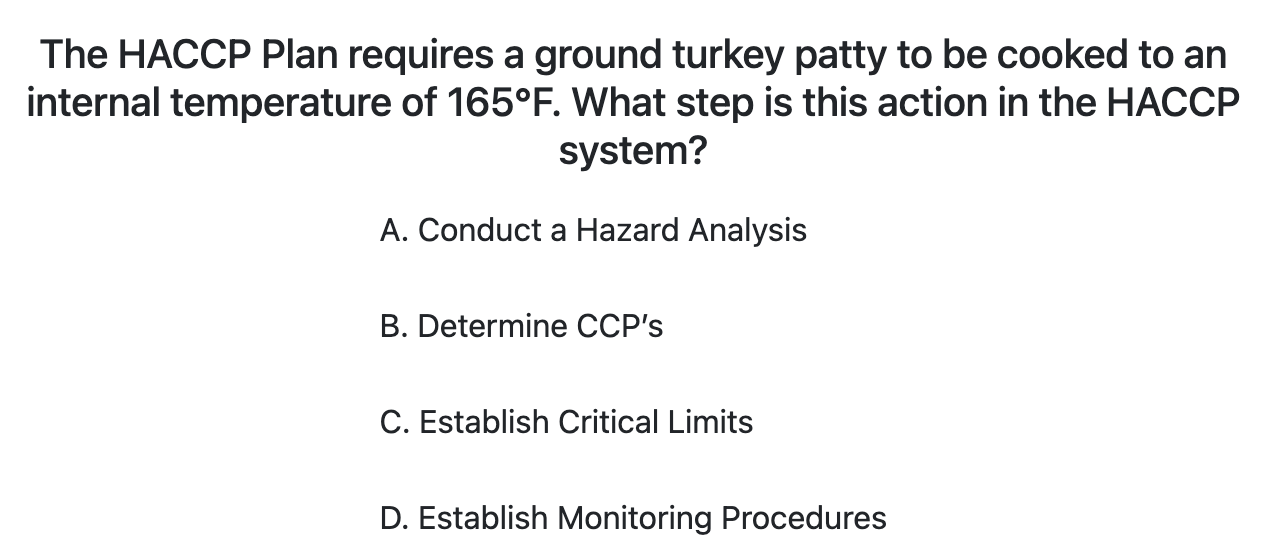
C
Why do we monitor CCPs?
in order to determine whether critical limits are working
continuous monitoring involves careful observations and measurement to produce accurate documentation
train workers on importance of monitoring and what techniques to use
observation data needs to be unbiased so it is accurate
When should we take corrective action when talking about HACCP plans?
need to take corrective action when CCPs are not being followed correctly and if they are not solving the problem
if not followed: retrain employees
if not solving problem: change the CCP to get desired result
documentation of CCP must exist to compare result to expectation
either the person in charge or a food employee may monitor critical control points and take corrective action when a critical limit is not met
How do you verify that the HACCP program is working?
review documentation
discuss plan effectiveness and reinforce procedures at staff meetings
What is the last step in developing a HACCP plan?
record keeping system
should have flow charts for each menu items recipe that includes receiving, storing, preparing, cooking, hot holding, and chilling
should indicate the monitoring of time and temperatures
unusual deviations should be noted along with corrective actions that were taken
should include monitoring activities that were performed, equipment maintenance records, and supplier documentation
records must be obtained for at least six months
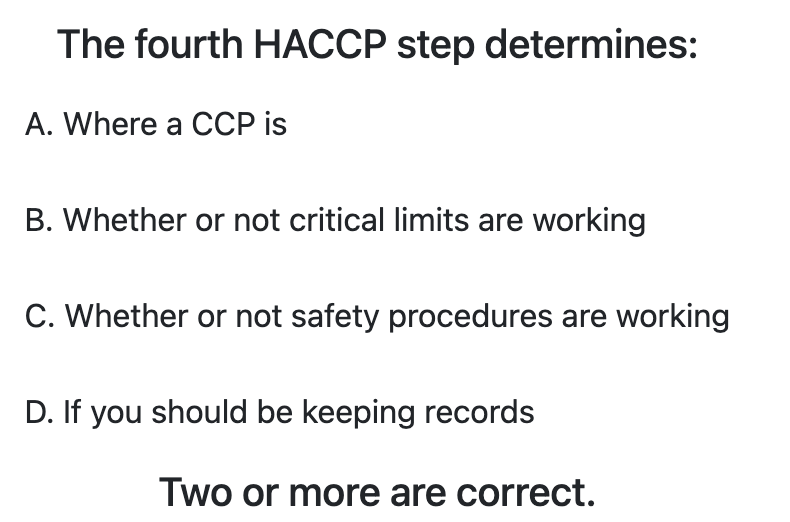
B and C
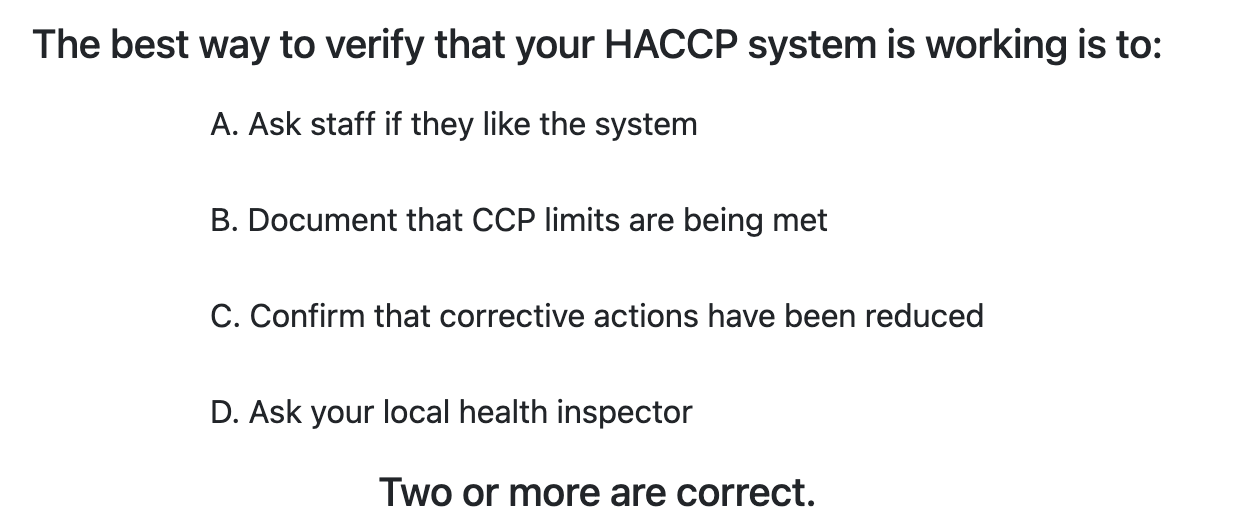
B and C
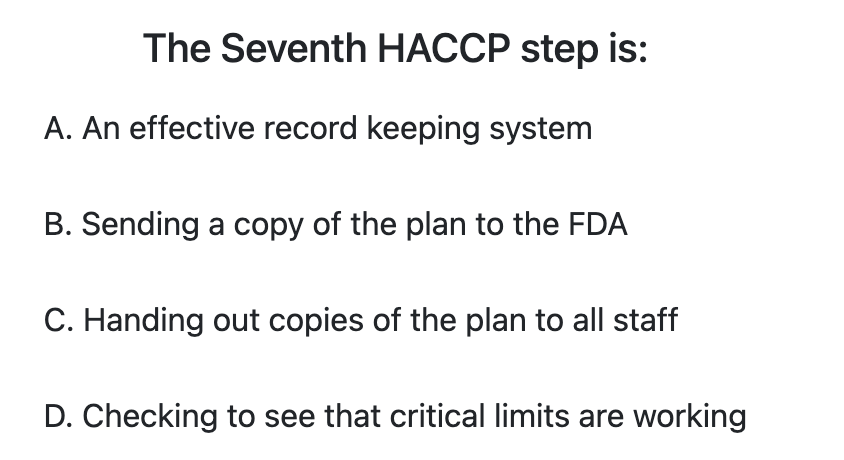
A