tack fit - april 16th
 Call Kai
 Learn
Learn Practice Test
 Spaced Repetition
 Match
Match Flashcards
 Knowt Play
1/30

There's no tags or description
Looks like no tags are added yet.
Name | Mastery | Learn | Test | Matching | Spaced | Call with Kai |
|---|
No analytics yet
Send a link to your students to track their progress
31 Terms
Why is tack fit important?
Improper fit creates pressure points, pinching, friction, and overall sore spots (mouth, muscle, nerve compression). will allow proper movement of the horse (improper fit will restrict natural movements). Also will help with clear communication, makes aids clearer.
What are the signs of improper tack fit? - saddle
The horse is pinning its ears when the saddle is placed, exhibiting excessive tail swishing, kicking out, crow-hopping, hollowing its back, head tossing, and difficulty bending or picking up the lead.
What are the signs of improper tack fit? - bridle
avoid the bit by raising the head, open mouth, grinding teeth, leaning/ pulling the bit/reins from a person’s hands
What are the signs of improper tack fit? - Girth
biting, snapping, sucking in air
Physical Signs of Improper Tack Fit
white hairs from scars, muscle atrophy behind the shoulder, heat, swelling, sensitive when palpated, rubs/ hair loss, sores, asymmetry (muscle development, saddle sliding), shortened stride, reluctance to stretch forward and down, difficulty lifting back
10 key points of saddle fit
wither clearance (2-3 fingers vertical clearance, no side contact), gullet/wide channel width (clears spine completely - narrow pinches; wide collapses on the spine), tree width ( matches angle of shoulder), tree length (can’t extend past the last rib - otherwise effect lumbar region), balance (side - level not tipping foward or back), shoulder freedom (can’t trap scapula), panel contact (even contact - no rocking), girth alignment (billets will line up in the arm pit), seat length and rider fit (fit the rider seat -4 fingers behind the sit to help with proper communication), movement test (horse walks, saddle will stay centered and not bounce or shift)
short - 10 key points of saddle fit
wither clearance, gullet/wide channel width, tree width, tree length, balance, shoulder freedom, panel contact, girth alignment, seat length, and rider fit, movement test
why saddle pads?
protects horses’ skin, absorbs sweat, cushioning
Why wool/sheepskin saddle pad”?
shock absorption, conform to the horse’s back, reduce friction
Why gel saddle pads?
absorbs shock, add cushioning
why front rider pads?
used for saddles that tip forward (horses with hollow withers/muscle loss)
Why rear riser saddle pads
for a saddle that tips backward (horse with high withers or low loin muscle )
Girth shape
caters to the horse’s barrel shape to prevent saddle sliding forward/back, or pressure from the elbows
Girth length
dressage - should not reach the saddle flap
jumping - should buckle above the elbow
incorrect with cause pinching/ pressure points
girth material
leather - stable, molds to the horse
Neoprene - gripper but can rub (some allergic)
wool/fleece - soft, good for sensitive horses
crown peice fit
sit behind the ears/poll with no twisting, even pressure
browband fit
straight across the forehead, should not pull the crownpiece - 1 to 2 fingers of space behind the ear, should not excessively gap outward
cheekpeice fit
even on both sides, leather is flat not twisted, buckle below the horse’s eye, fitted to the bit is at the correct height (1-2 soft wrinkles in the corner of the mouth)
noseband fit
1-2 fingers below the cheekbone, not interfering with the bit rings, tight enough to encourage closed mouth but not too tight (2 fingers)
throatlatch fit
About 4 fingers should fit when buckling (no twisting)
Bit fit
1-2 soft wrinkles at the corner of the mouth, bit should have about ¼ of an in beyond the lips on each side, not pinching lips, bit thickness - match oral confirmations, match training level
Signs of being too small/tight/thick a bit
excessive wrinkles, lip pinching, head tossing, trying to escape bit, sores, opens mouth, alot of salivation, leaning heavy
signs of being too big/lose/thin of a bit
bit hitting teeth, gaping mouth, sliding side to side, shifting, uneven rein pressure, unstabke contact, sharp pressure, sensitive heading tossing,
behvaioral signs of improper bit fit
pulling reins, opening mouth/crossing jaw, tongue over bit, grinding of teeth , refusing contact, inconsistent frame, rushing
physical signs of improper bit fit
mouth rubs, bruising, tongue discoloration, excessive foam or no foam at all, uneven bit wear
why breastplates
round barreled horses, narrow shoulder horses/high withered, hill working horses
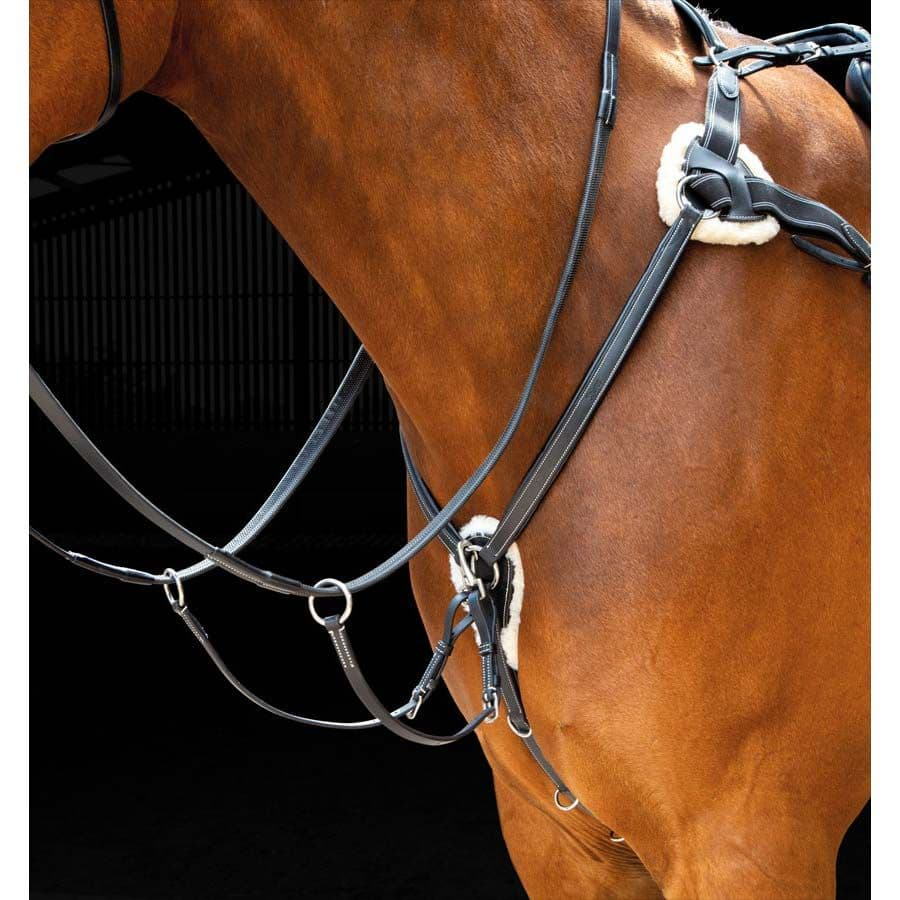
5 point breast plate
max stability, eventing, cross country, and jumping, even pressure on the shoulders, girth, and between the legs - not interfere with scapula rotation, stretch slightly ut not maxed out, between the legs shoulf not pull the girth, fleece pads should sit centered on pressure points
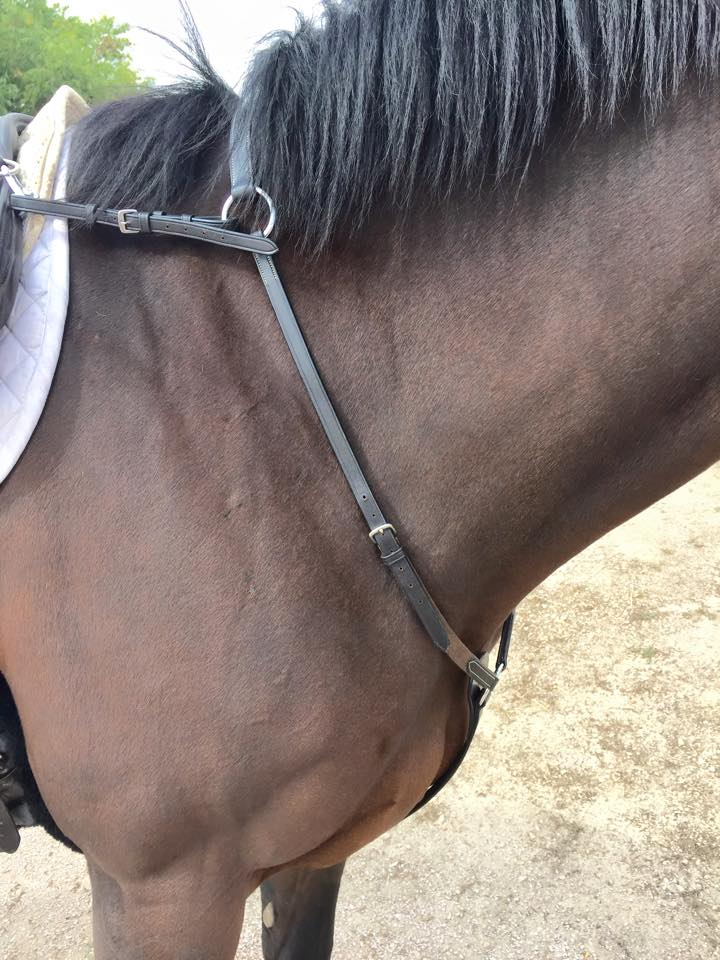
hunting breast plate
prevent saddle from slipping back, offer attachment points for martingales, for jumping, eventing ot foxhunting - chest straps above the point of the shoulder, should not pull the saddle forward, should not restrict movement, around the neck should not press into the neck
why martingales
helps regulate head carriage and rein contact
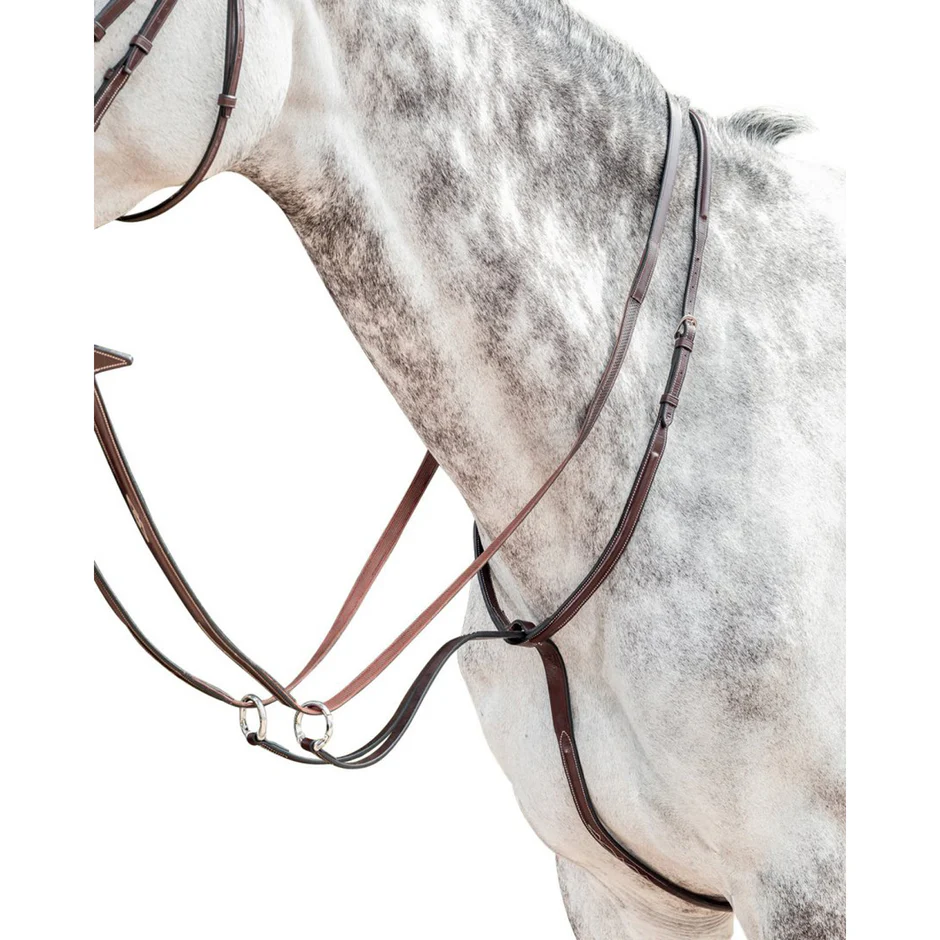
running martingale
prevents horse from throwing its head high, allowing freedom when the horse is in the correct frame, jumping, eventing, and schooling. - should not choke or hang low (4 fingers), when reins are lifted, rings will reach the horse’s throatlatch, and will not be used unless the horse’s head is raised. checking lencgth of straps with rings, hold at the base of the chest and lift the rings they should just reach the withers. must always have rein stops
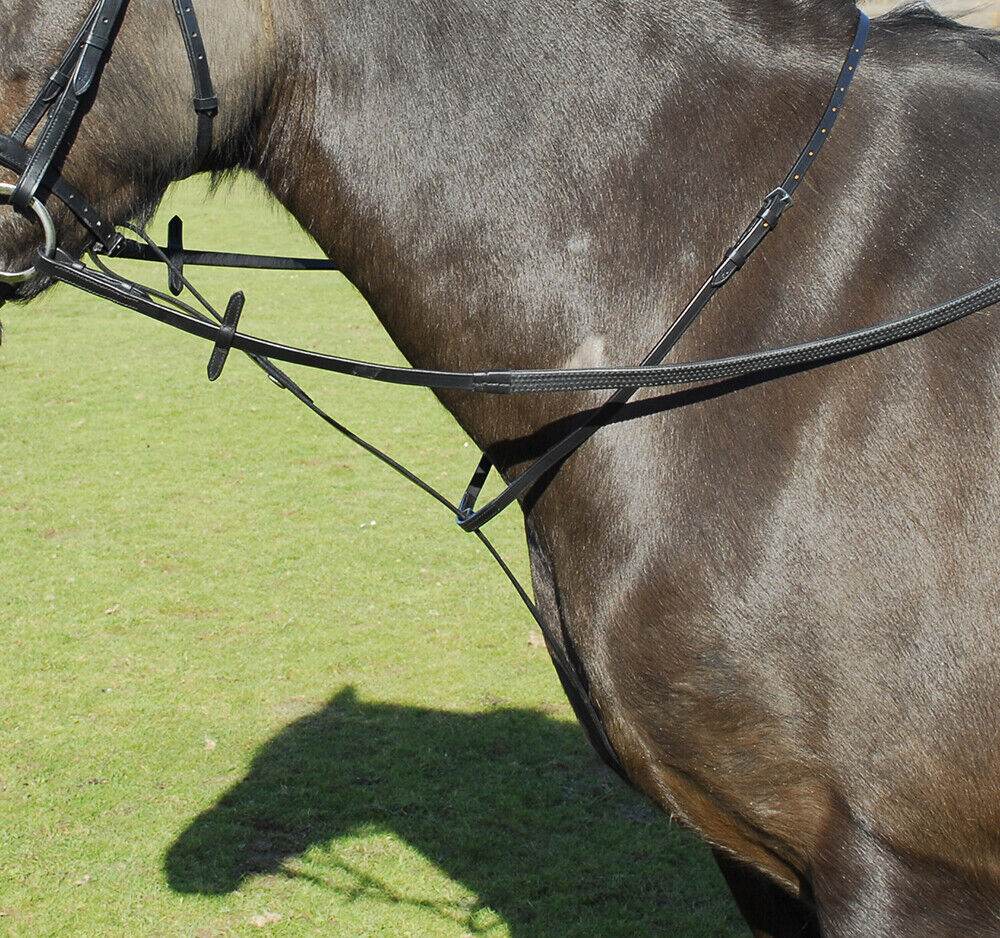
standing martingale
limits extreme upward head movement, common for hunters and equitation provides steady boundaries - lift martingale strap to horse’s throatlatch, should just reach, will not pull the horse’s head down, around the neck -4 finger space. actually head holding peice if inverted to follow the bottom of the neck, should go right to the throatlatch