Economics real yr 10
 Call Kai
 Learn
Learn Practice Test
 Spaced Repetition
 Match
Match Flashcards
 Knowt Play
 Podcast
1/82

There's no tags or description
Looks like no tags are added yet.
Name | Mastery | Learn | Test | Matching | Spaced | Call with Kai |
|---|
No analytics yet
Send a link to your students to track their progress
83 Terms
Macroeconomics relevance to businesses
Knowing the state of the economy helps plan strategy, future investments and estimate profits
Macroeconomics relevance to Citizens
Make informed decisions on employment, purchasing of major assets, investments, wealth creation and voting
Macroeconomics relevance to government
need to know the economic situation in order to create policy to manage the economy and achieve their macroeconomic objectives
GPD
Gross Domestic Product
the main measure of economic growth
Measures the total value of all goods and services produced in an economy each year
Measured in $ terms (usually USD)
Includes
household spending (consumption)
Business
Government spending
Inclusions
re building after a natural disaster
weapons production
unhealthy production (tobacco, junk food, etc.)
production of pollutants such as coal
Exclusions
volunteer work
caring for family work
house work
leisure time
environmental quality
many important wellbeing factors
__________________________________________________________________________
GDP is a measure of money - nothing else
Inflation
An increase in the level of prices of the goods and services that households buy
measured in the rate of changes of those prices
Consumer Price Index (CPI)
A quarterly measurement of the prices of around 100 000 commonly used goods and services that shows the changes in prices
Causes of inflation
Consumer Activity
Rising demand
Increasing costs
Chain reaction
Monetary policy
the manipulation of interest rates by the Reserve Bank of Australia (RBA) to influence the price levels and level of economic activity in the economy
Fiscal Policy
the manipulation of government spending and taxation to influence the level of economic activity in the economy
economic growth
an increase in the value of the goods and services produces by an economy over time. It is usually measured as a percentage change in real GDP
Cyclical unemployment
Occurs when the level of spending in the economy falls
i.e a business is making fewer sales, so they cut employees
Boom/peak
Economic growth and general activity is above average
High consumption expenditure
high output/production
low unemployment rates
high levels of business profits
confidence throughout the economy (Business and consumer)
Above target inflation rates
why must economic growth be controlled
strain natural resources
increase inequality
Unemployment rate formula
Number of unemployed people ÷ labour force
Targets %
Sustainable economic growth range (GDP)
2-4%
RBA inflation target
2-3%
Unemployment
4-5%
Inflation rate (annual %) formula
CPI this year - CPI last year ÷ CPI last year
Real GDP
A measure of a country’s gross domestic product that has been adjusted for inflation
Structural unemployment
Occurs to changes in the way goods and services are produced, leading to a mismatch of skills
eg. AI taking over
Major causes
automation + outsourcing
Disproportionately affect lower paid and lower skilled jobs
Contraction
Due to the negatives caused by booms (inflation) the government puts in place contractionary economic policy to reduce the level of activity
Fiscal policy
increasing taxes and/or spending rate
Monetary policy
increasing official interest rate
decrease in spending, investment, profit and confidence
unemployment will rise and inflation will drop
Happens quickly
Seasonal unemployment
Results from the termination of jobs at the same time each year due to the regular change in season
eg. someone working as a fruit picker, ski lift operator etc.
what is macroeconomics and why is it studied
Macroeconomics
the study of the economy as a whole
the total aggregate level of economic activity (production, expenditure and income)
Analysing data about the state of the economy means that we can identify problems and their courses and create strategies to deal with or prosper from them
Real wages
income expressed in terms of purchasing power as opposed to actual money received
in regards to inflation
Frictional unemployment
Unemployed between one job and another or entering the work force for the first time
small amount of frictional unemployment is important because it means that people are seeking opportunities and are able to change jobs if they wish
Trough
Economic activity ‘bottoms out’ sometimes bringing a recession
low levels of consumption expenditure
low levels of output/production
low levels of inflation
increase levels in savings
low consumer and business confidence
highest unemployment rates
The govt. will usually bring about expansionary policy to boost the levels of economic activity to start an upswing
why economic growth matters
it changes the overall quality of life of a person
produces enough goods + services
improves quality and variety of goods
creates job opportunities
raising living standards
Effects of high inflation
decreased purchasing power for consumers
increases in interest rates
worsening income inequality
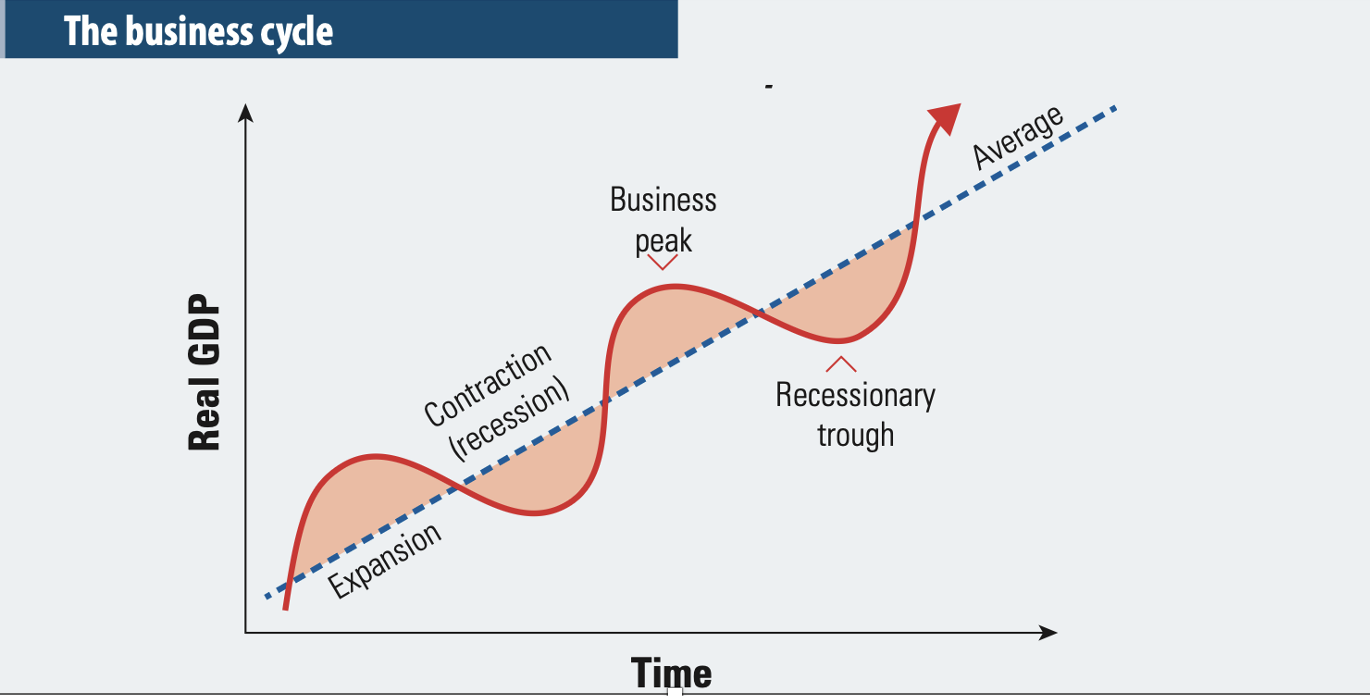
Business cycle
the regular fluctuations in economic activity over time. It is categorised with distinct phases (peak, contraction, trough and expansion) and is measured in GDP unemployment
Dash line
what the government would ideally like to happen based off fiscal and monetary policy
Trend line
average growth over time
Why is GDP important
gives us a snapshot of the economy
this years vs previous years
businesses
who to hire and if they should hire or fire more people
consumers
jobs to choose/move to, what to buy and from where
government
adjusting taxes
Upswing/expansion
during a trough, the government will put expansionary policy in place to start an upswing
Fiscal policy
decrease taxes and/or increasing spending
Monetary policy
decreasing the official interest rate
Can take time but we know it is working when we see GDP and inflation start to increase back into its targets as well as a decrease in unemployment
Recession
a period of two successive quarters (six months) of negative GDP growth
how does unemployment rate relate to economic growth
a high unemployment rate = a decrease in economic growth and leads to an overall lower standard of living for the population
a low unemployment rate = an increase in economic growth and leads to an overall higher standard of living for the population
To whom, and why, is the unemployment rate important?
individuals: it allows people to make decisions about whether to take the risk of finding a different job
businesses: providing evidence for making hiring decisions
government: for issues such as taxation and welfare
who are not included in the unemployment rate
People who choose not to work, such as students, stay-at-home parents and sick or injured individuals.
Labour Force Survey
the ABS conducts it
a monthly survey that collects information about the employment status of Australians aged 15 and over
Measuring the unemployment rate
Unemployment rate = Number of unemployed people/Labour force
The labour force = everyone in Australia who is either working or actively seeking work
Employed = people working at least one hour per week (including self-employed)
Unemployed = people actively seeking work but not currently working
key statistics idc
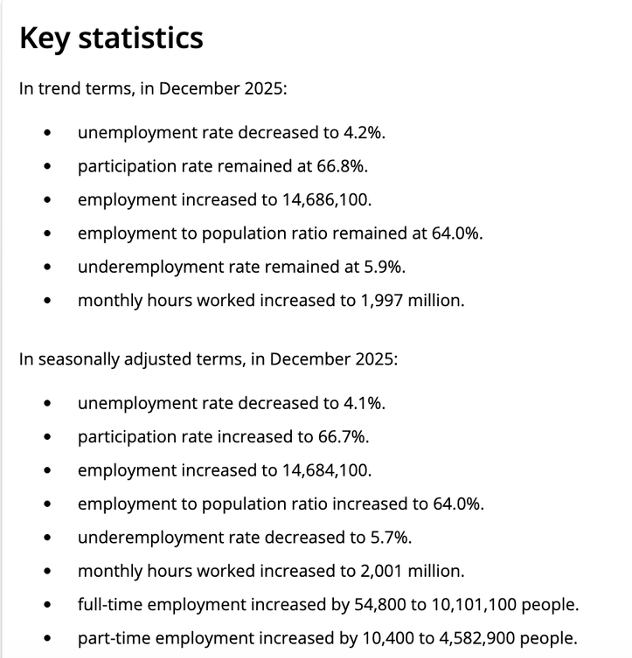
why low unemployment could be bad
Due to the changing nature of work, a growing proportion of the participants in the workforce are part-time employed or underemployed
high unemployment rate?
A high unemployment rate usually corresponds with a decrease in economic growth and leads to an overall lower standard of living for the population
frictional unemployment
Occurs when people are unemployed between finishing one job and starting another, or entering the workforce for the first
e.g. Someone who was working as a receptionist but is now seeking work as a lawyer
structual unemloyment
Occurs due to changes in the way goods and services are produced, leading to a mismatch of skills
e.g. Someone who was working in a factory but whose job was replaced by an automated technology
cyclical unemployment
Occurs when the level of spending in the economy falls
e.g. A business is making fewer sales so has to cut employees
seasonal unemployment
Results from the termination of jobs at the same time each year due to the regular change in seasons
e.g. Someone working as a fruit picker or a ski-lift operator
Which types of unemployment is good
A small amount of frictional unemployment is important in an economy because it means people are seeking opportunities and are able to change jobs if they wish
Cyclical and structural unemployment, however, are less desirable because they indicate jobs being lost to economic problems or a mismatch of skills
what is a major cause of structural unemployment
Automation and outsourcing are major causes of structural unemployment in Australia and tend to disproportionately affect lower-paid and lower-skilled jobs
natural rate of unemployment
the rate at which there is only frictional and structural unemployment, and zero per cent cyclical unemployment
an economy experiencing strong performance will likely be operating at this natural rate of unemployment
it is at 4.5% in aus
Employed
people working at least one hour per week (including self-employed)
Unemployed
people actively seeking work but not currently working
Underemployment
when a person works fewer hours than they would ideally like or takes a job that does not reflect their actual training and skills
GDP
the most important indicator of economic performance most widely used measure of economic growth
aka Gross Domestic Product
measures the total value of all goods and services produced in a country each year, it is measured in money ($)
includes
Household spending (consumption)
Business investment
Government spending
Why is GDP important
gives us a snapshot of the economy
shows how much a country produces
helps compare this year vs previous years
measures economic growth
Why economic growth matters
It produces enough goods & services for a growing population
It improves quality and variety of products
It creates jobs, opportunities, and raises living standards
fast growth
Very fast growth (above 4%) can:
Strain natural resources
Cause environmental damage
Increase inequality
Growth must be balanced
sustainable growth
Ideal growth = 2 – 4% per year
Within these parameters, the needs of Australians today are satisfied without creating significant problems for future generations
What is GDP per capita
GDP ($bn) ÷ population (number of people in a country)
It shows the average income/output per person
It gives a fairer comparison between countries with different population sizes
It helps measure living standards and wellbeing.
what does GDP include
Rebuilding after a natural disaster
Weapons production
Unhealthy products (tobacco, junk food)
Production of pollutants such as coal
what does GDP not include
Volunteer work
Caring for family members
Housework
Leisure time
Environmental quality
Many important wellbeing factors
inflation
an increase in the level of prices of the goods and services that households buy
measured as the rate of change of those prices
The RBA has an inflation target of between 2% and 3% per year, on average
prices rise?
this is a sign of a healthy economy because it means there are a lot of transactions occurring and we are adding value to what we produce and consume
low inflation?
Even within a low inflation target, prices increase significantly over time.
For example, a basket of goods that cost $100 in 1998 would have cost exactly double at $200 in 2023.
wages increase?
People’s incomes have also increased
what do economists need to take in account when comparing performance over time with inflation
economists refer to real wages and real GDP to take inflation into account when comparing performance over time
idk remember
As long as wages are rising faster than prices, people’s living standards are increasing on average
how is inflation calculated
calculated by the ABS, using the consumer price index (CPI)
a quarterly measurement of the prices of around 100, 000 commonly used goods and services that shows the overall changes in prices
These goods and services are weighted by their significance to household spending
CPI
is an average.
Some items, such as electronics and clothing, have seen large decreases in prices over time, while others, such as education, have increased significantly.
Causes of inflation
Consumer activity: As people increase their demand for goods and services, prices increase. If demand increases across the whole economy, inflation will occur
Increasing costs: if the costs of land, labour or capital increase, these costs are passed on in the form of higher prices for the things those resources go to producing.
Real wages
income expressed in terms of purchasing power as opposed to actual money received
Real GDP
a measure of a country’s gross domestic product that has been adjusted for inflation
how does the econmoney affect workers and businesses
Workers look for jobs and promotions
Businesses look at risks and trends before making decisions
what are the three main indicators according to the reserve bank of aus
Economic growth – is the economy producing more goods & services?
Unemployment – how many people can’t find work?
Inflation – are prices rising too quickly
quantitative indicators
measure the economy using data and numbers
that they can be counted, measured, and expressed in numbers
Why measure the economy?
Helps make predictions
Helps governments, businesses & people make better decisions
Reduces uncertainty
open economy
trades with other countries
Both global and local factors influence the economy
business cycle
is the regular fluctuations in economic activity over time
It is categorised with distinct phases and is measured in real GDP
depicts the rise and fall in output (production of goods and services), over time
example 1 of process and product innovation
Coca-Cola
The ‘Share a Coke’ campaign personalised the brand by printing individual names on bottles
This strategy created a personal connection with consumers, encouraging them to find and share bottles with their names or the names of friends and family
It significantly boosted sales and social media engagement.
example 2 of process and product innovation
Apple Inc
Known for its innovative marketing, Apple’s ‘Think Different’ campaign is a classic example
This campaign celebrated creativity and innovation, aligning the brand with iconic figures like Albert Einstein and Martin Luther King Jr
It effectively positioned Apple as a leader in technology and innovation
why process innovation
When economic conditions are on the decline businesses tend to look to process or systems innovation
It is less costly, and often comes with decreasing staff numbers or merging resources to save on costs
It is often a combination of technology and process innovation that makes the biggest difference to a business
process innovation e.g.
A small investment in some tablets and software can streamline the way businesses keep track of their inventory or communicate with customers, cutting down on staff costs and saving the businesses money
research and development
Many businesses invest in technology to improve their productivity
Small businesses tend to struggle in this area, as there are often very high costs involved in researching product improvements
when and why R&D
when economic conditions improve, businesses tend to allocate more money to R&D, looking to take advantage of not only having more money available but also increased consumer confidence to try new products and spend money
the government often supports ideas in it because of the general benefits it provides to the economy
innovation
organisations introducing new or improved processes, services or products to effect positive change within the business
why product innovation
innovation in new products can be risky, but the potential reward for developing an industry-changing idea can be enormous
when economic conditions change, businesses tend to look to innovate and adapt in order to maintain or increase their market share
product innovation e.g.
Nokia was the victim of the success of Apple and Samsung, companies that are now valued in the hundreds of billions of dollars
when product innovation
when the economy is strong, businesses tend to have surplus funds available to invest in new products or services
if these ideas fail, the harm to the business can be minimised because there are still traditional sources of revenue to fall back on