3: Male Histology (Dr. Sun)
 Call Kai
 Learn
Learn Practice Test
 Spaced Repetition
 Match
Match Flashcards
 Knowt Play
1/157

There's no tags or description
Looks like no tags are added yet.
Name | Mastery | Learn | Test | Matching | Spaced | Call with Kai |
|---|
No analytics yet
Send a link to your students to track their progress
158 Terms
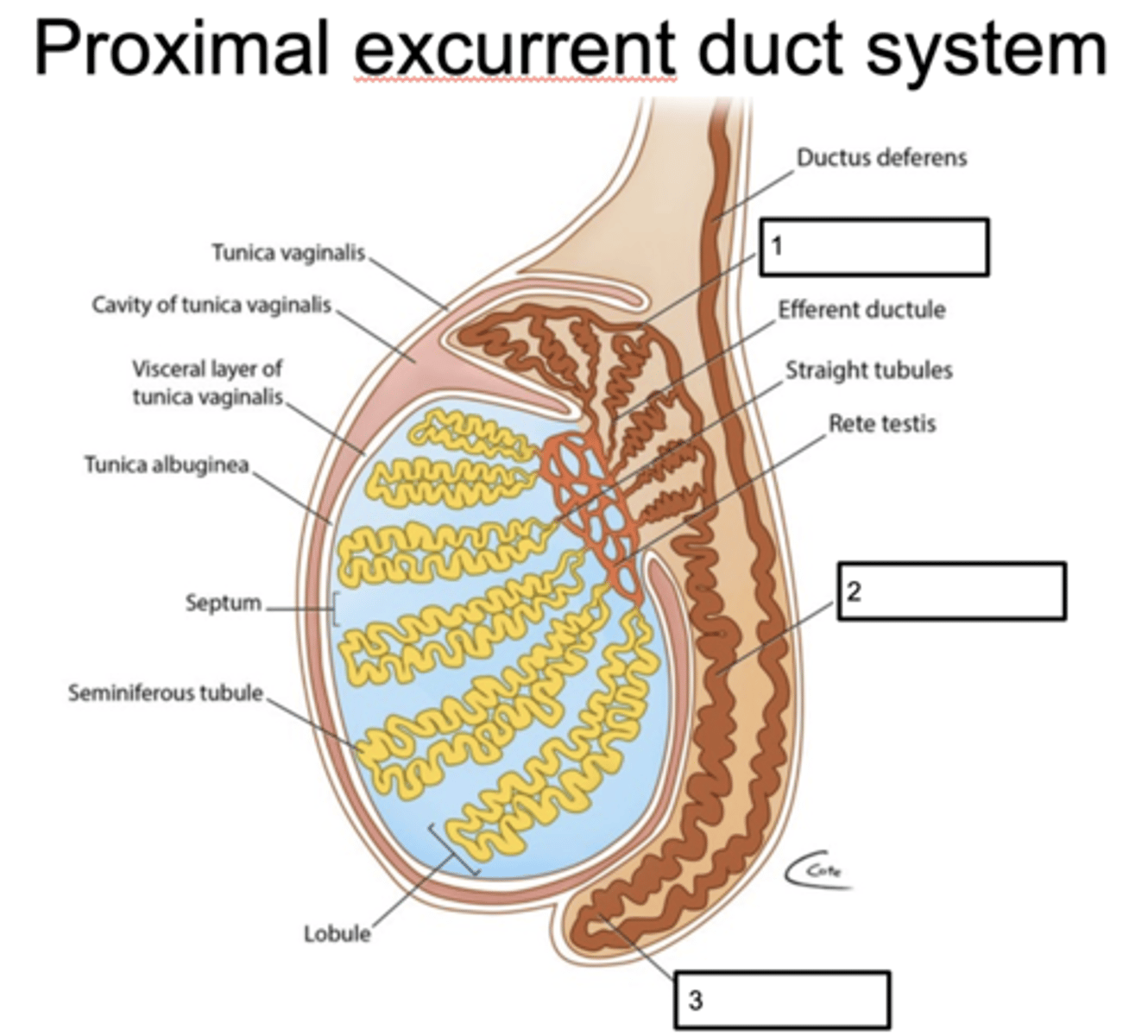
- Production of spermatozoa
- Production of hormones (sperm development/maturation, development/maintenance of accessory glands and secondary sex characteristics)
What are the two functions of the testis?
tunica vaginalis
These two layers (visceral and parietal) are parts of which layer?
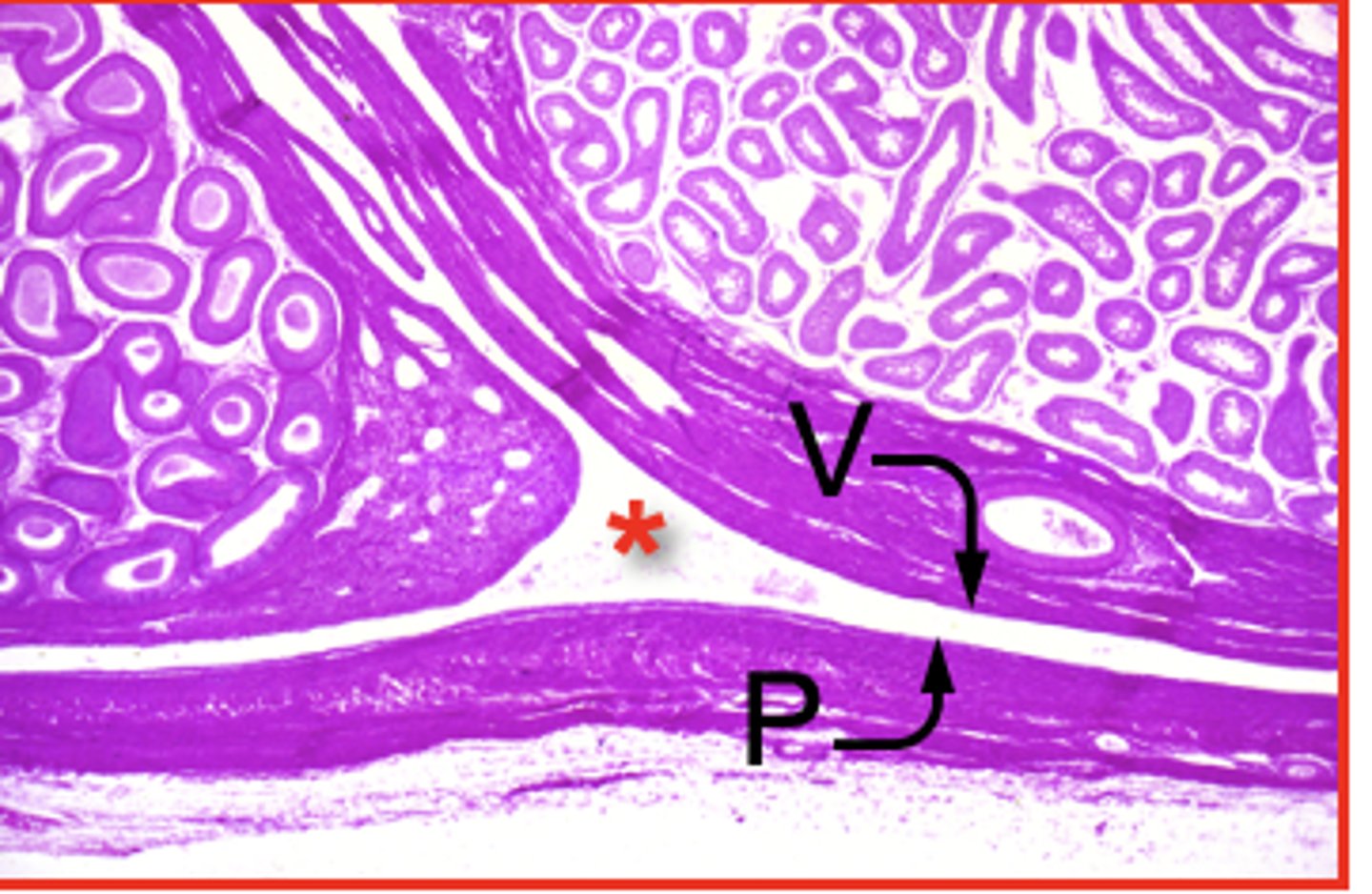
tunica albuginea
What is 1?
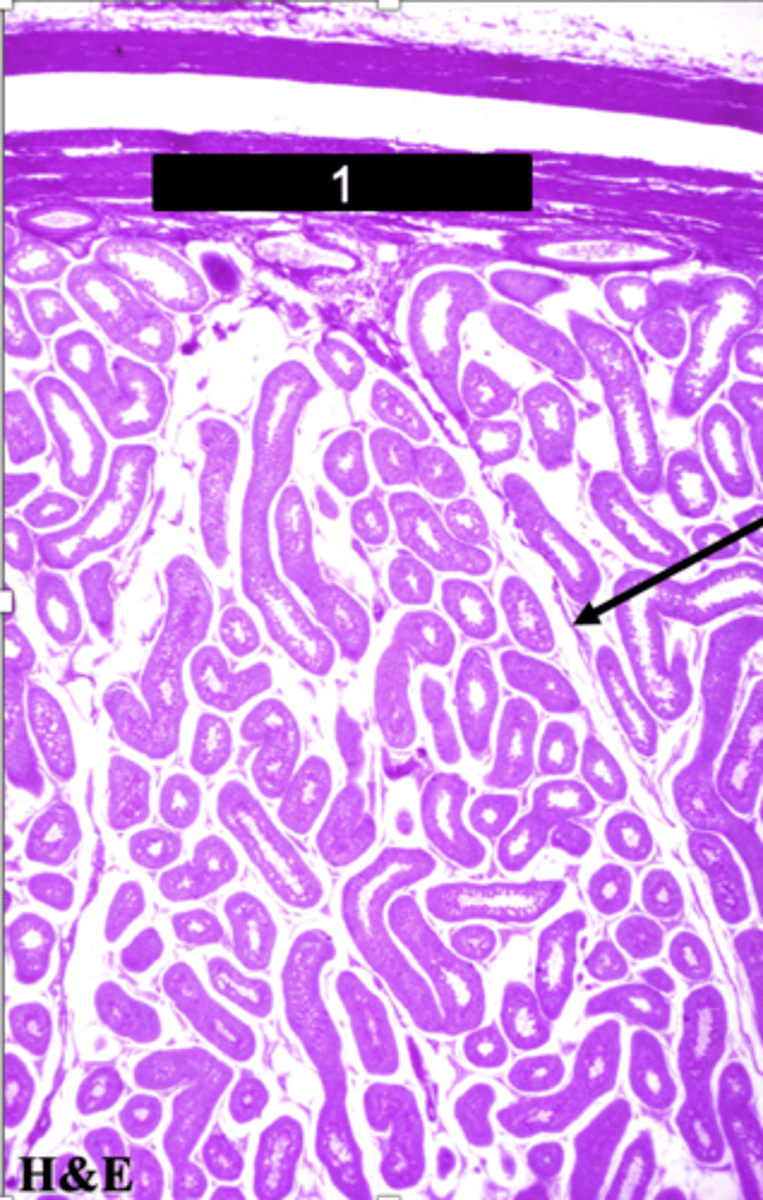
septa (of testis)
What is the arrow pointing to?
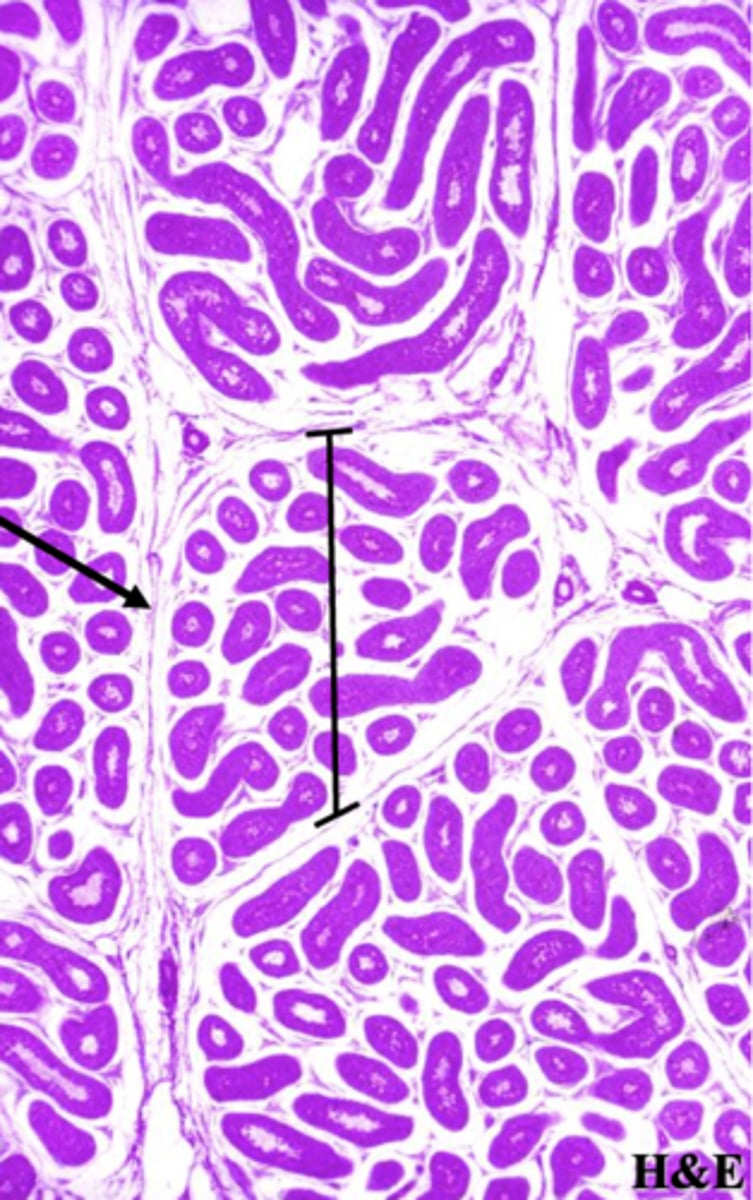
septa (of testis)
What is the arrow pointing to?
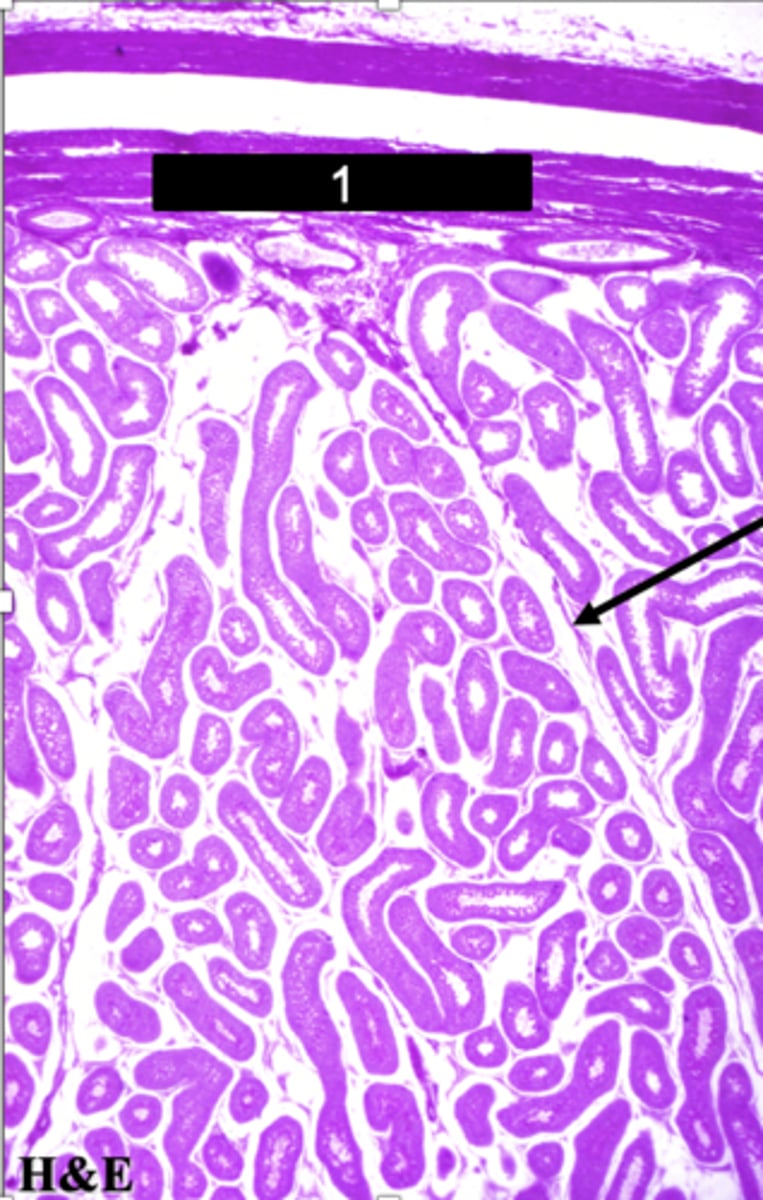
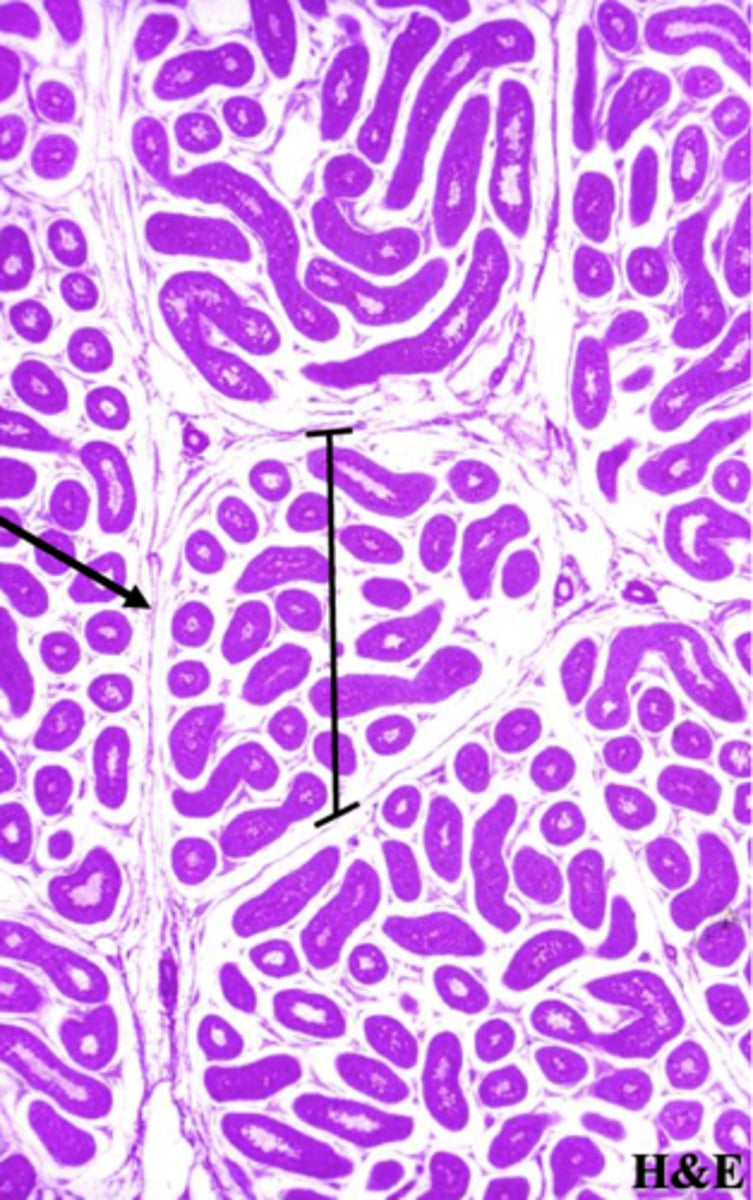
lobules (of testis)
What area is highlighted in the brackets?
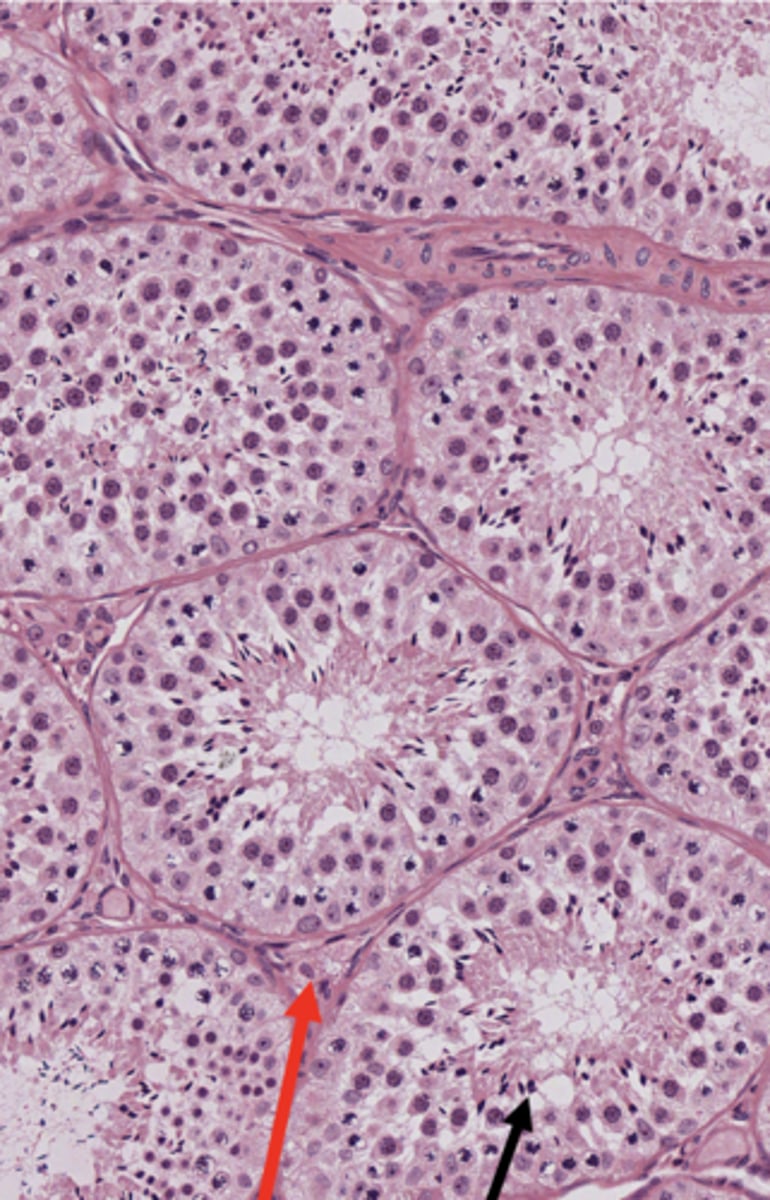
Seminiferous tubules (black arrow)
What has the following characteristics:
- Spermatogenic (aka germinal, seminiferous) epithelium
- - Spermatogenic cells
- - Sertoli (supporting) cells
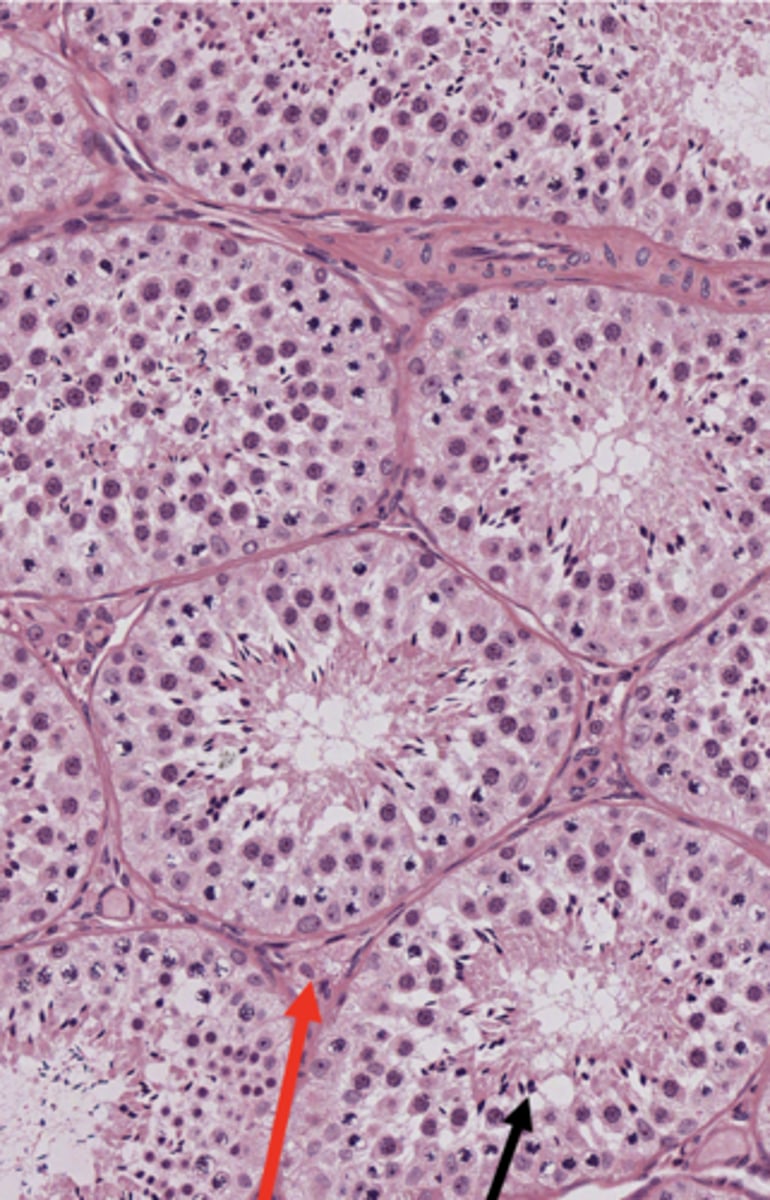
Interstitial tissue (red arrow)
What has the following characteristics:
- Peritubular (myoid) cells
- Leydig cells: secrete testosterone (major androgenic steroid)
- Macrophages
- CT & Vessels
seminiferous tubules
Which part of the testis contains sertoli cells?
interstitial tissue
Which part of the testis contains Leydig cells?
Leydig cells
What type of cell secretes testosterone?
seminiferous tubules
Which part of the testis produces sperm?
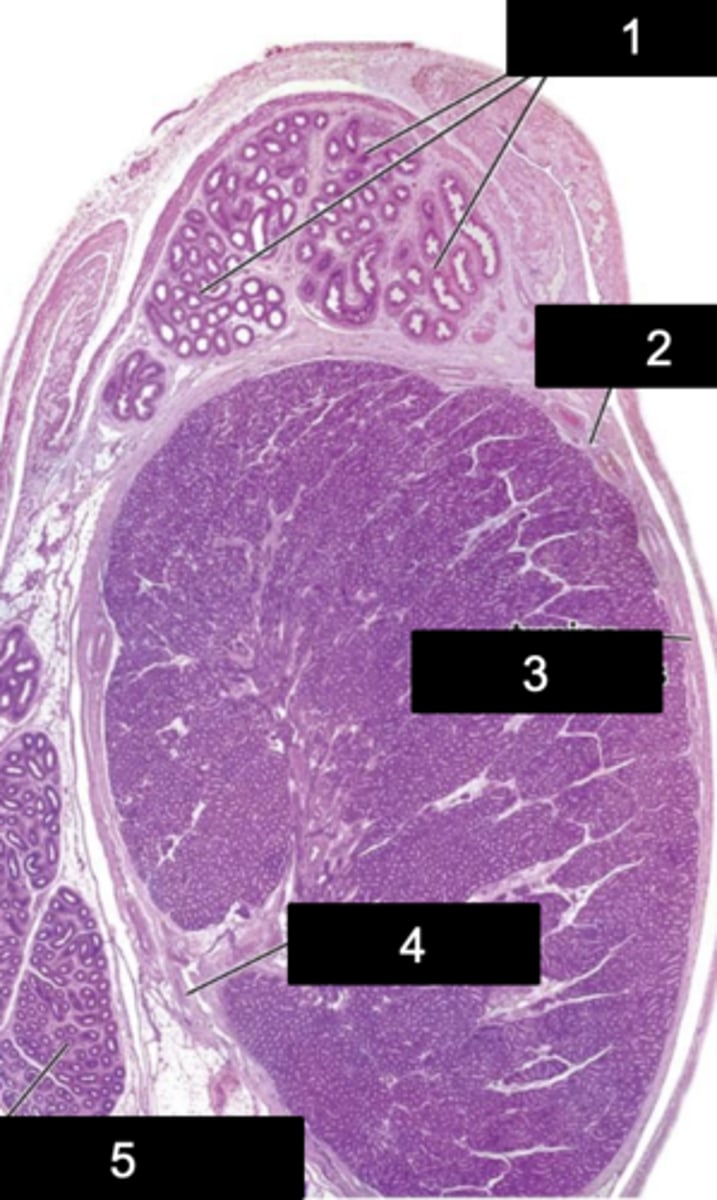
head of epididymis
What is 1?
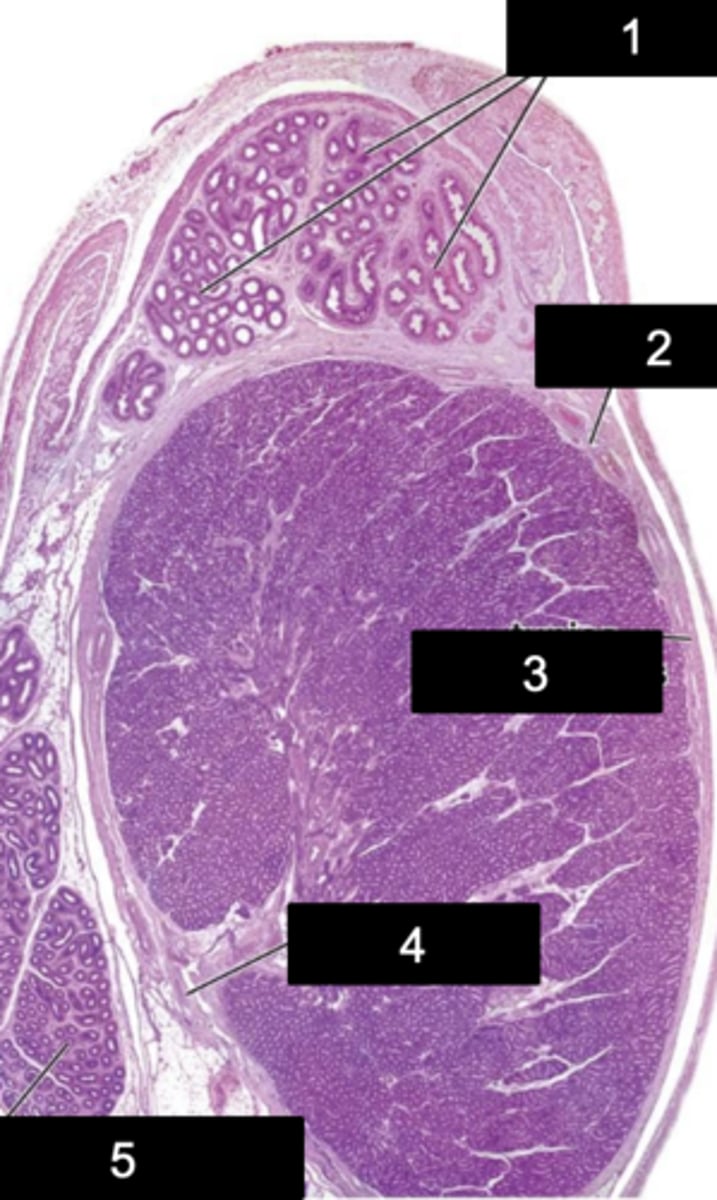
tunica albuginia
What is 2?
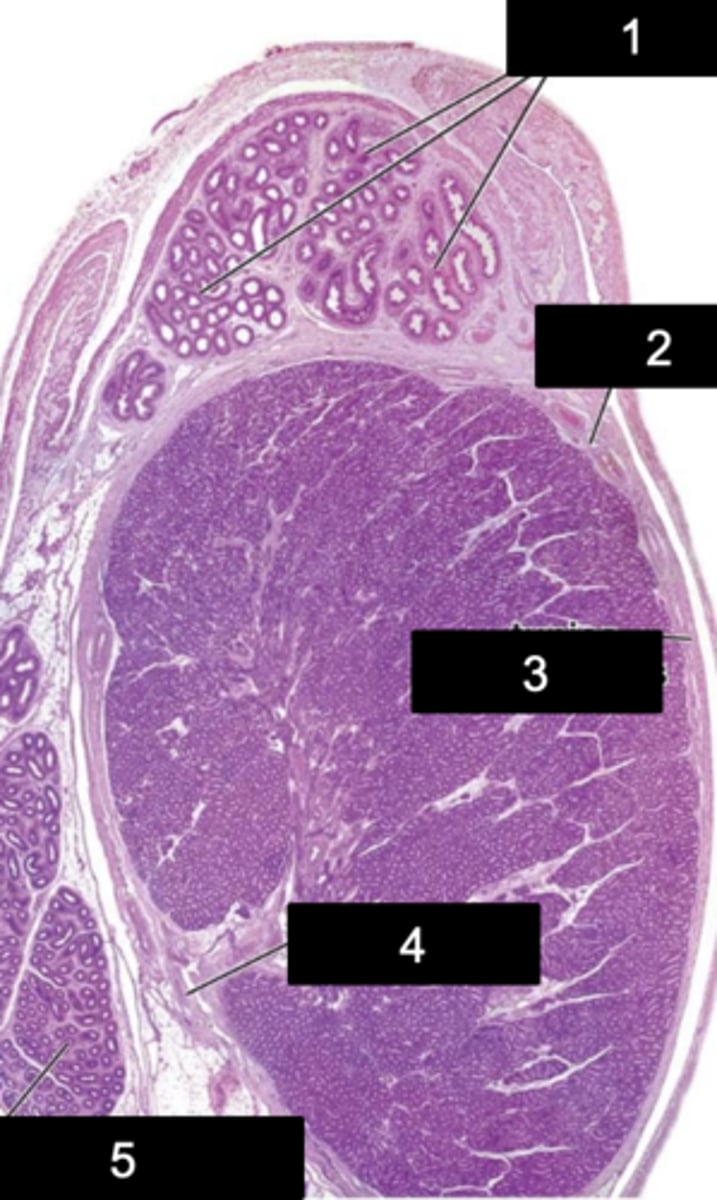
tunica vaginalis
What is 3?
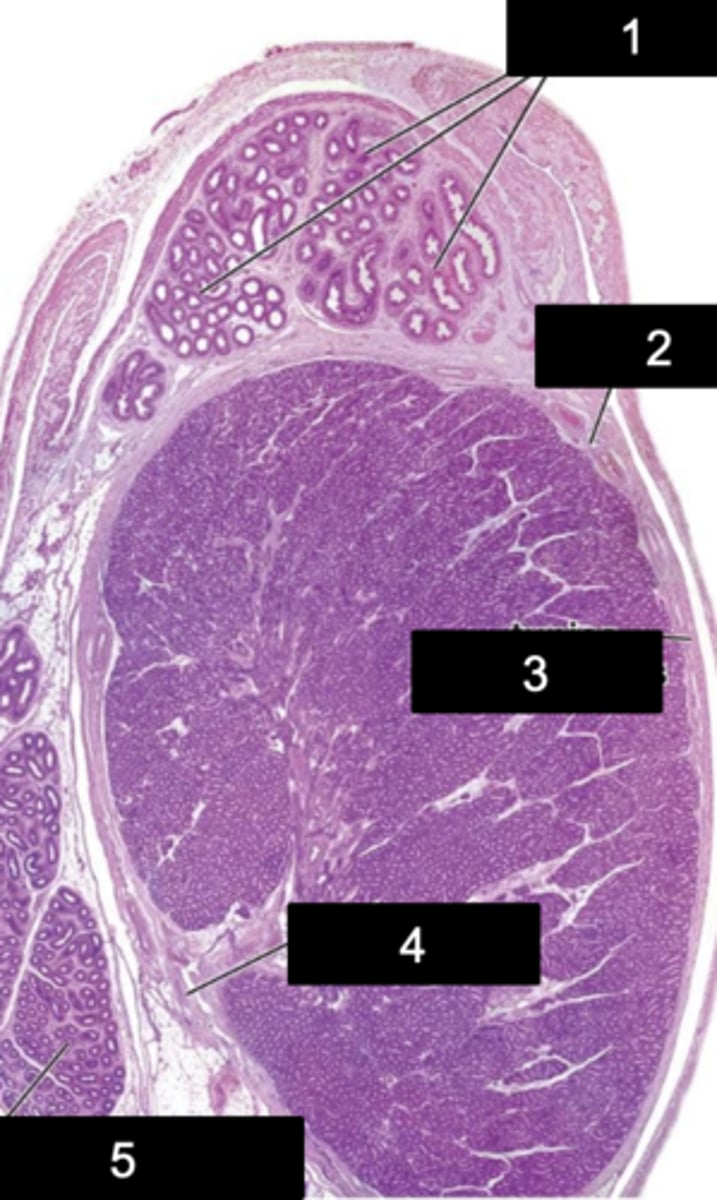
rete testis
What is 4?
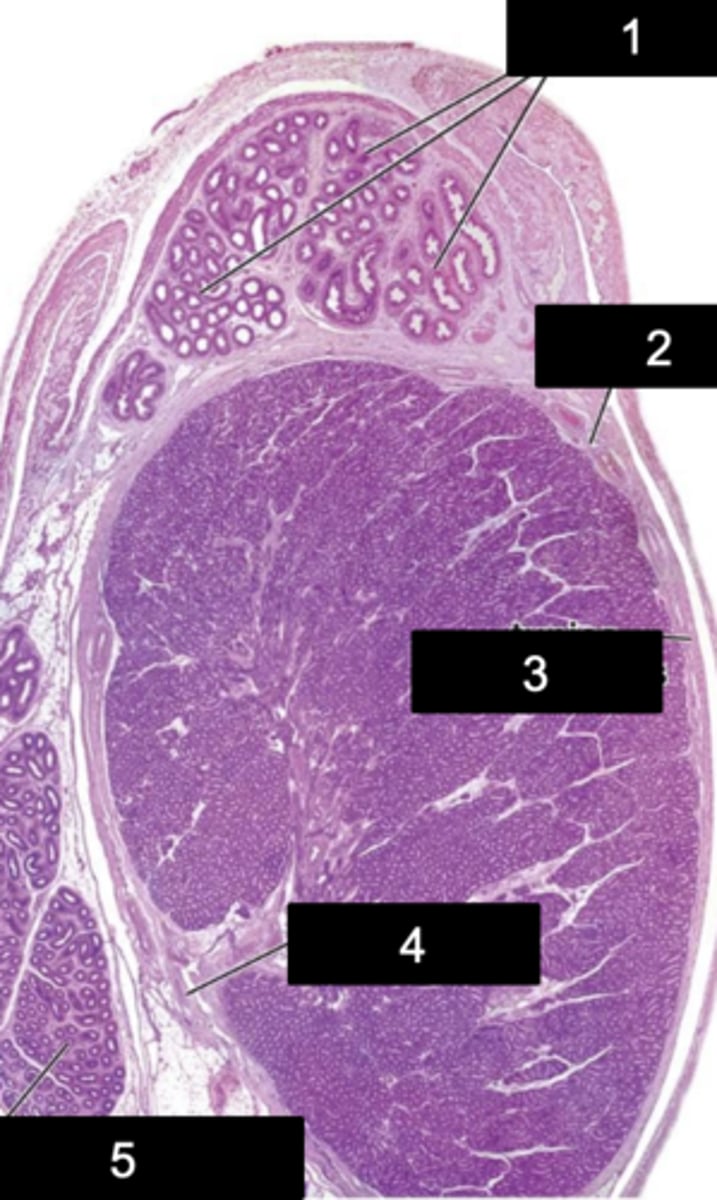
body of epididymis
What is 5?
seminiferous tubule
What is 1?
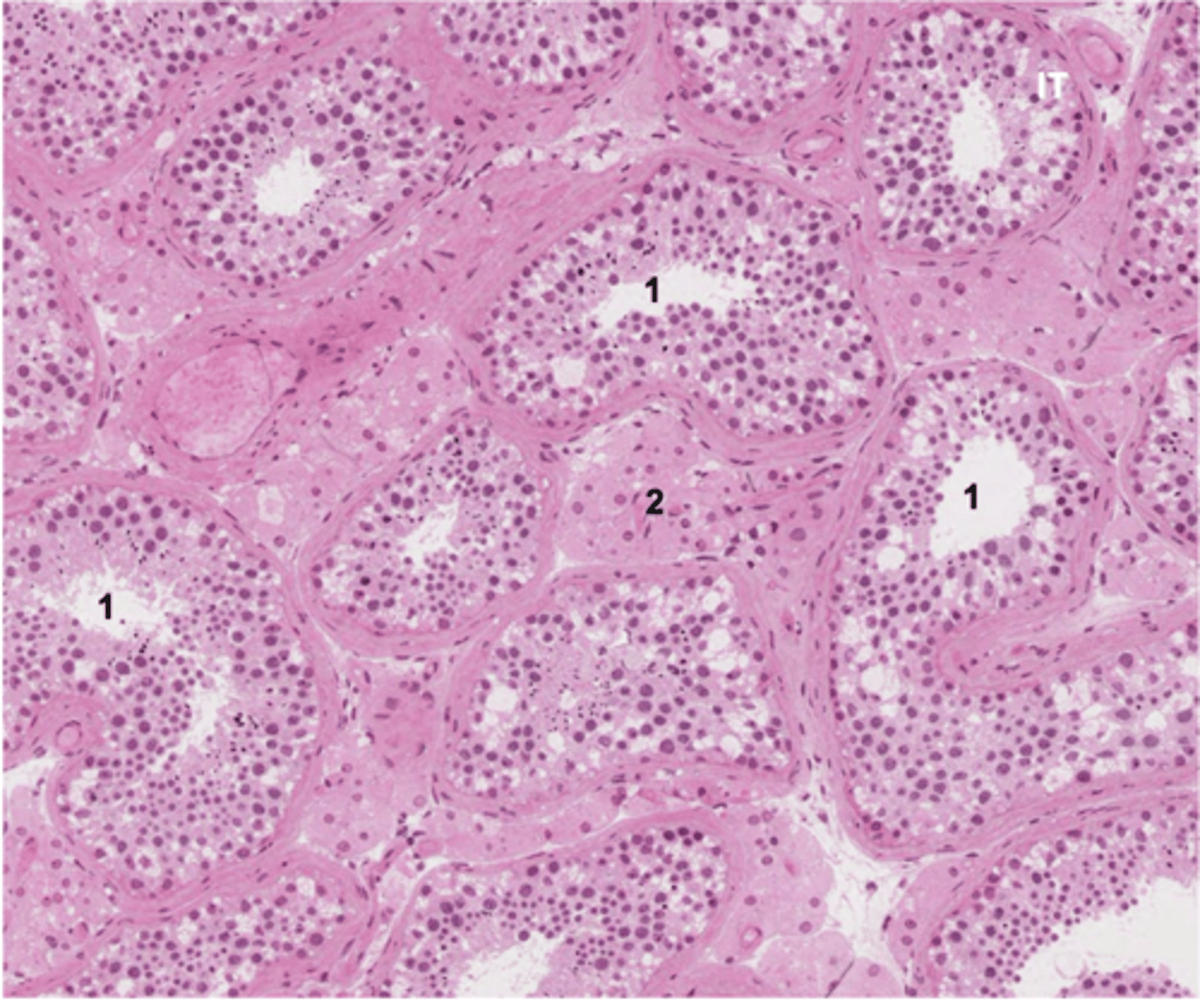
interstitial tissue
What is 2?
1
Does 1 or 2 produce sperm?
2
Does 1 or 2 produce testosterone?
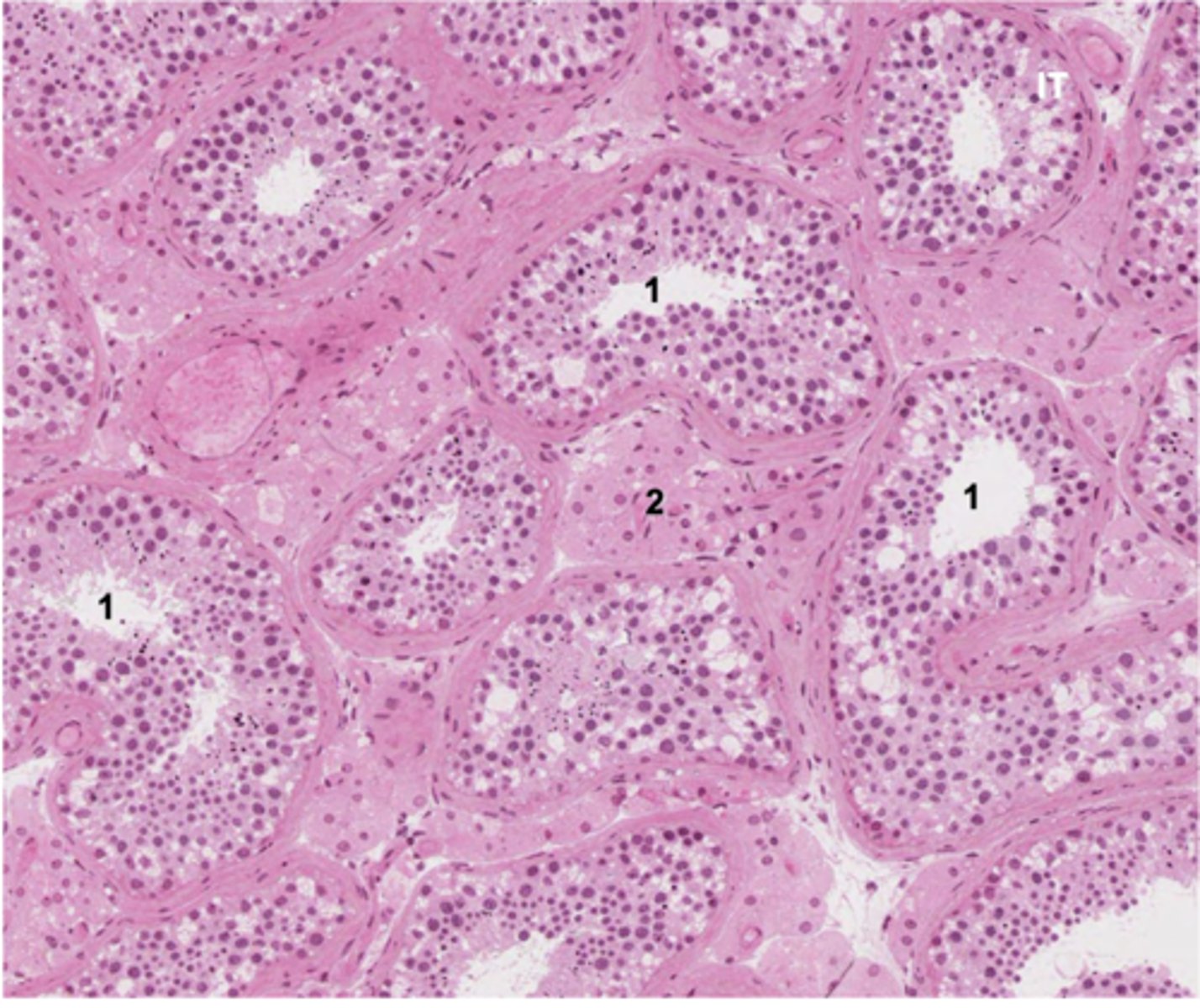
seminiferous tubules (sperm)
Which part of the testis? What is the arrow pointing to?
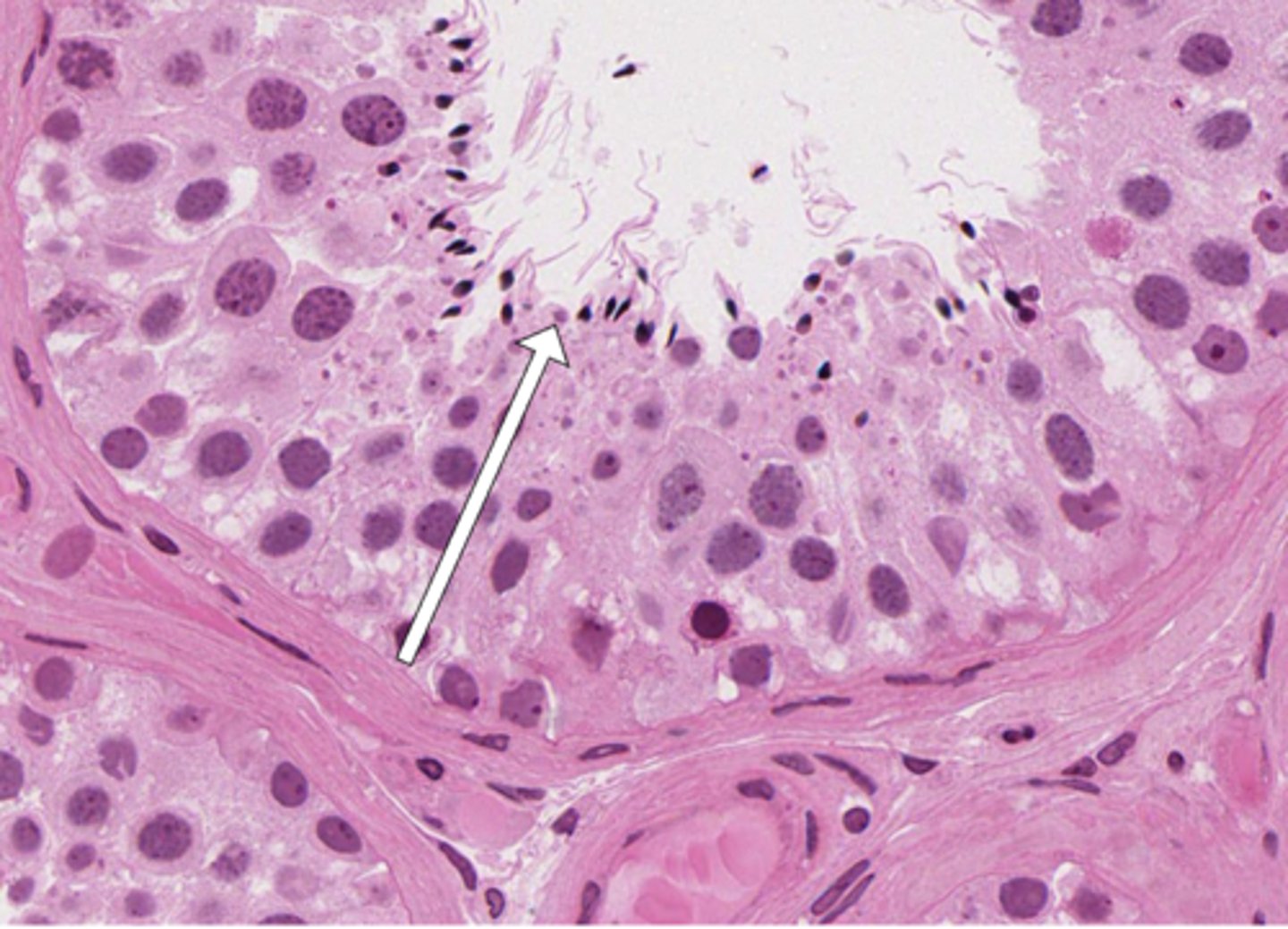
75 days
How long does development and differentiation of spermatogenic cells take?
200-300 million
How many sperm cells are produced per day?
true
T/F: Sperm production continues throughout life
cooler
Does sperm production favor cooler or warmer body temp?
mitosis
Spermatogenesis undergoes mitosis or meiosis?
Spermatocytogenesis (mitosis)
What has the following characteristics:
- Multiplication & Division of Spermatogonia
- Generation of primary spermatocytes
meiosis
Mitosis or meiosis?
- Reductional & Equational Spermatocyte Divisions Resulting in Haploids Spermatids
spermiogenesis
What has the following characteristics:
- Cytodifferentiation of Round Spermatids to Elongate Forms
- Spermiation
spermiation
Define the following:
Release of Spermatozoa from Sertoli Cells
Oval, round
Cells with __________ (type A) to __________ (type B) shape at the basal lamina (basal compartment)
type A
Which type of spermatogonia remain undifferentiated stem cells and divide by mitosis?
Type B
Which type of spermatogonia divide by mitosis to form primary spermatocytes (spermatocytogenesis)?
false (form during both A and B)
T/F: Cytoplasmic bridges form only during type a divisions
Basement membrane
What is the starred cell representing?
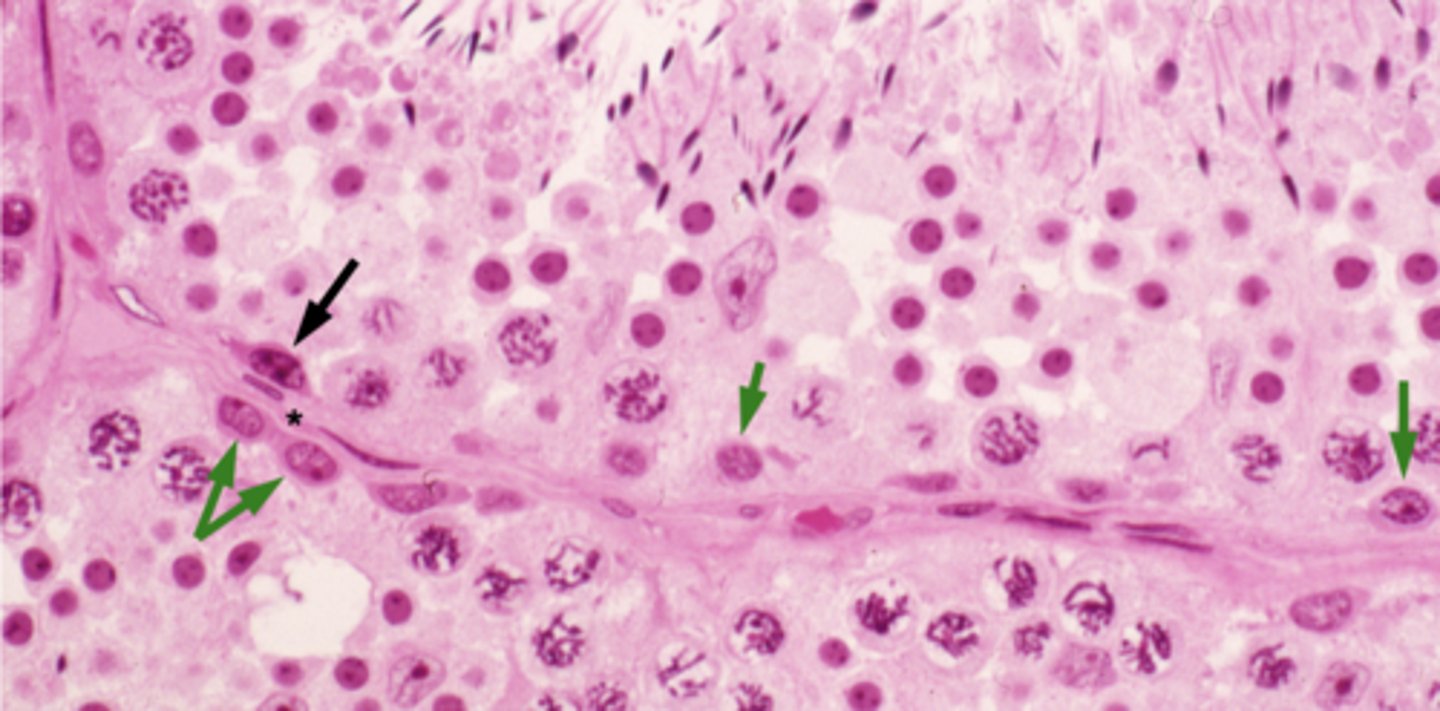
Spermatogonia
What are the arrows pointing to?
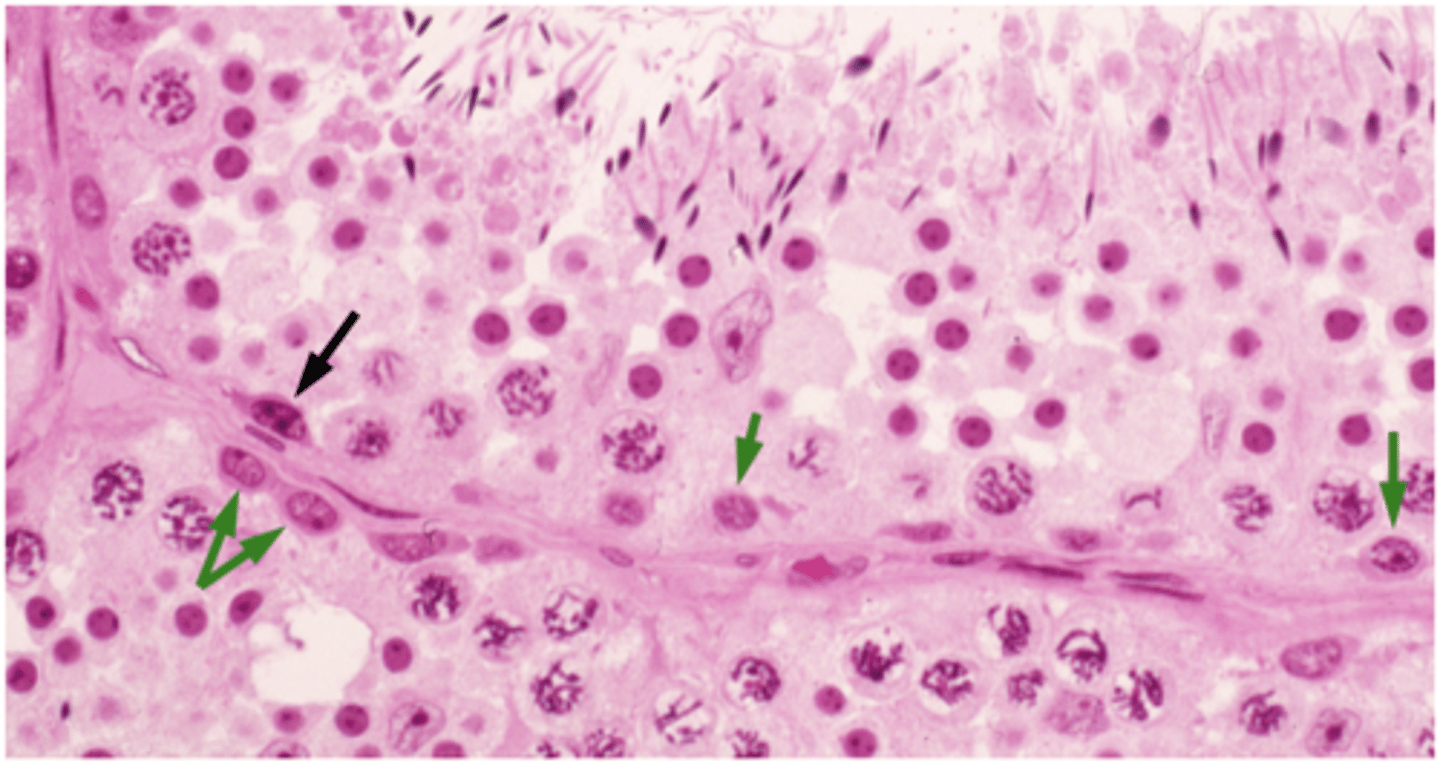
diploid
Are primary spermatocytes diploid or haploid?
haploid
Are secondary spermatocytes diploid or haploid?
haploid
Are spermatids diploid or haploid?
secondary spermatocytes
Which stage are spermatocytes rarely observed in?
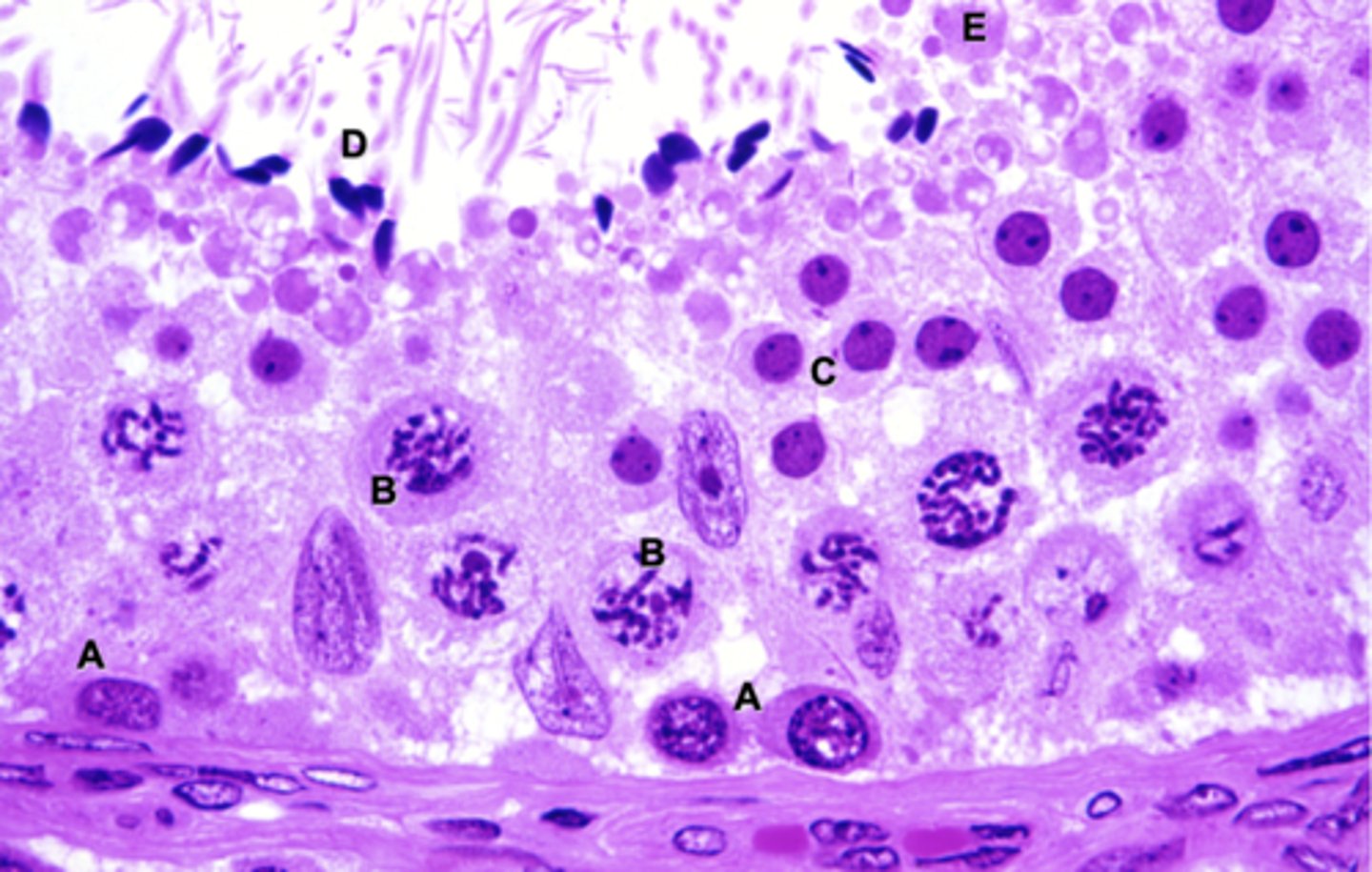
spermatogonia
What is A?
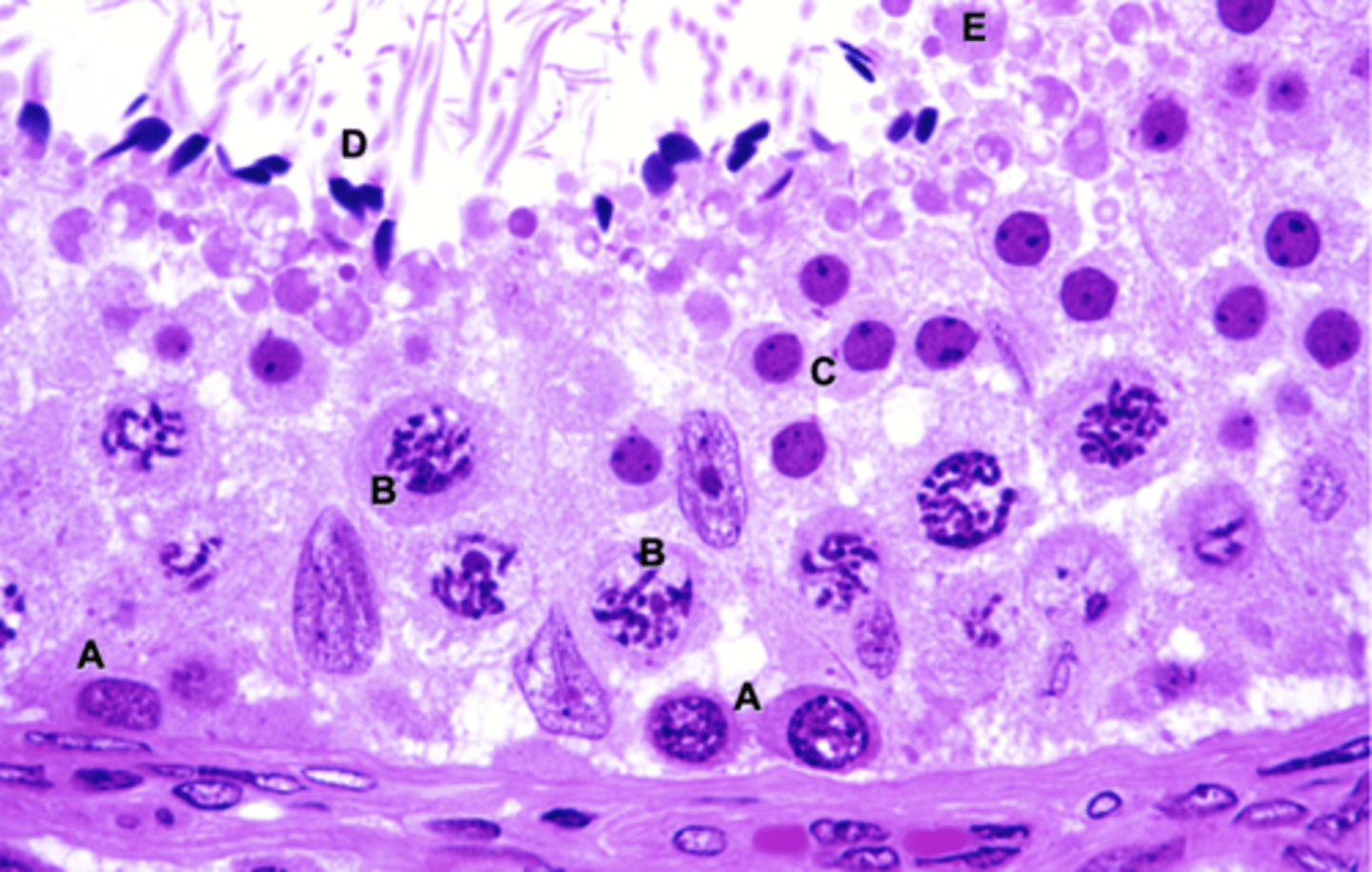
primary spermatocytes
What is B?
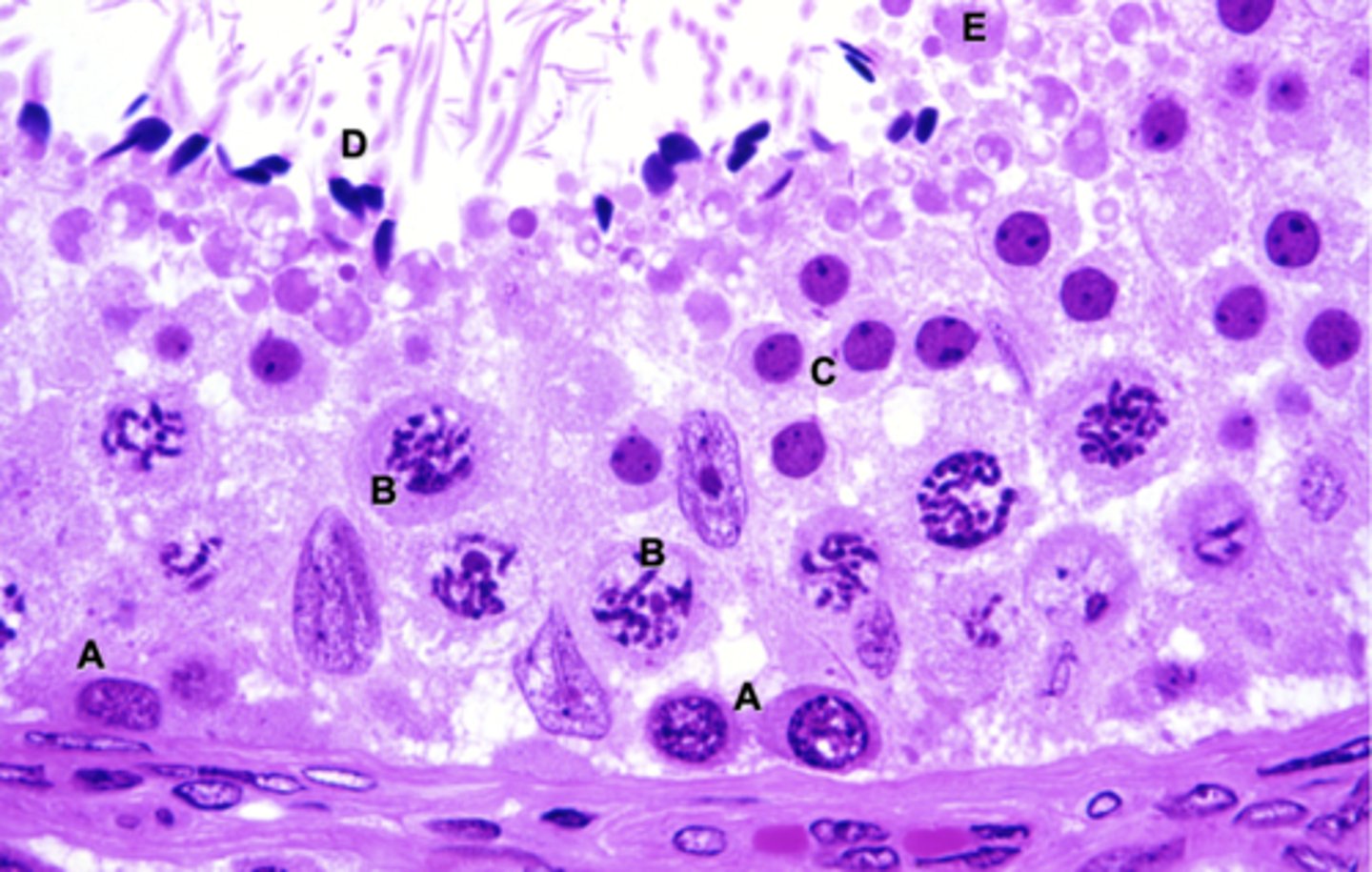
round spermatids
What is C?
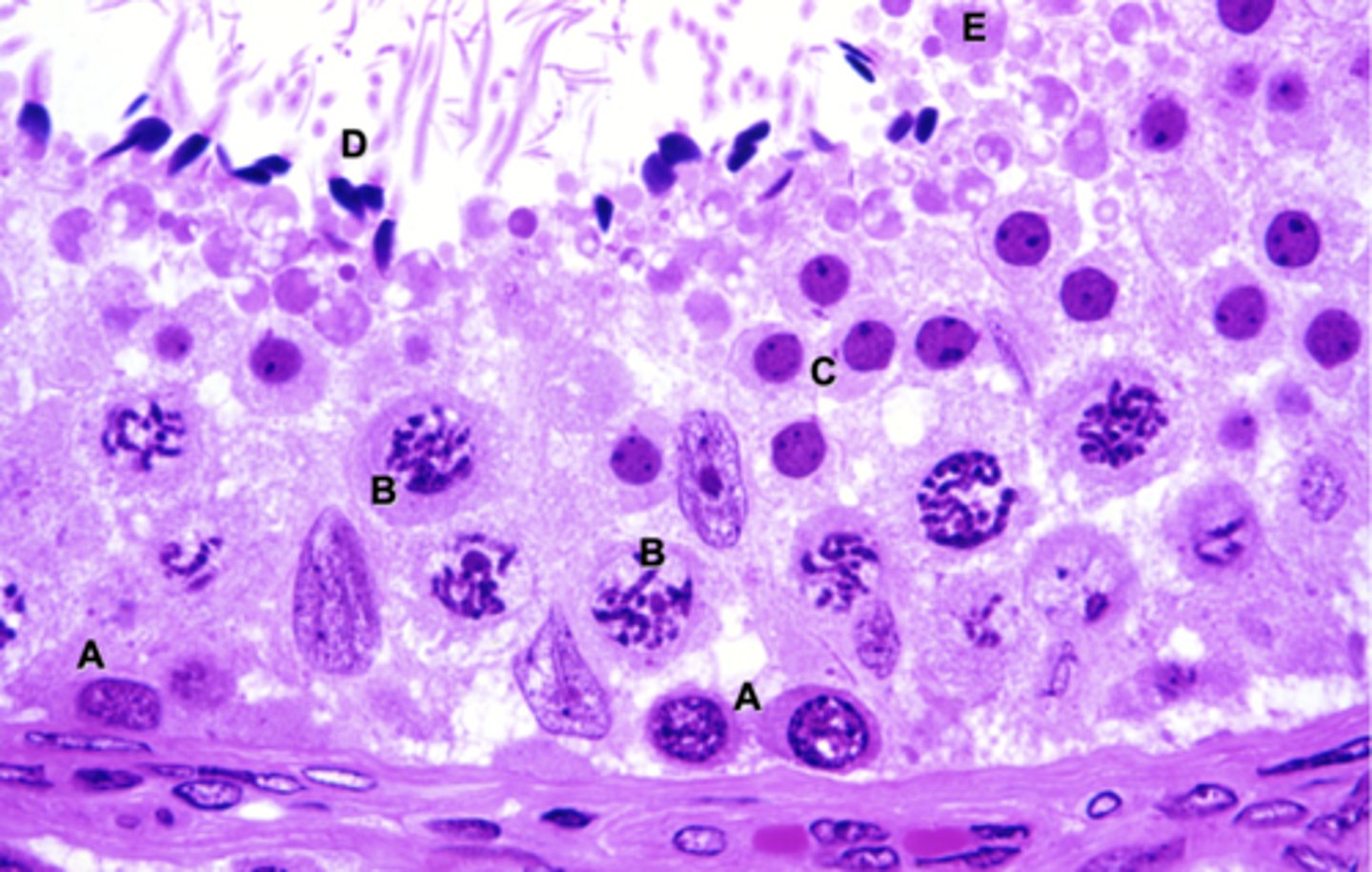
elongate spermatids
What is D?
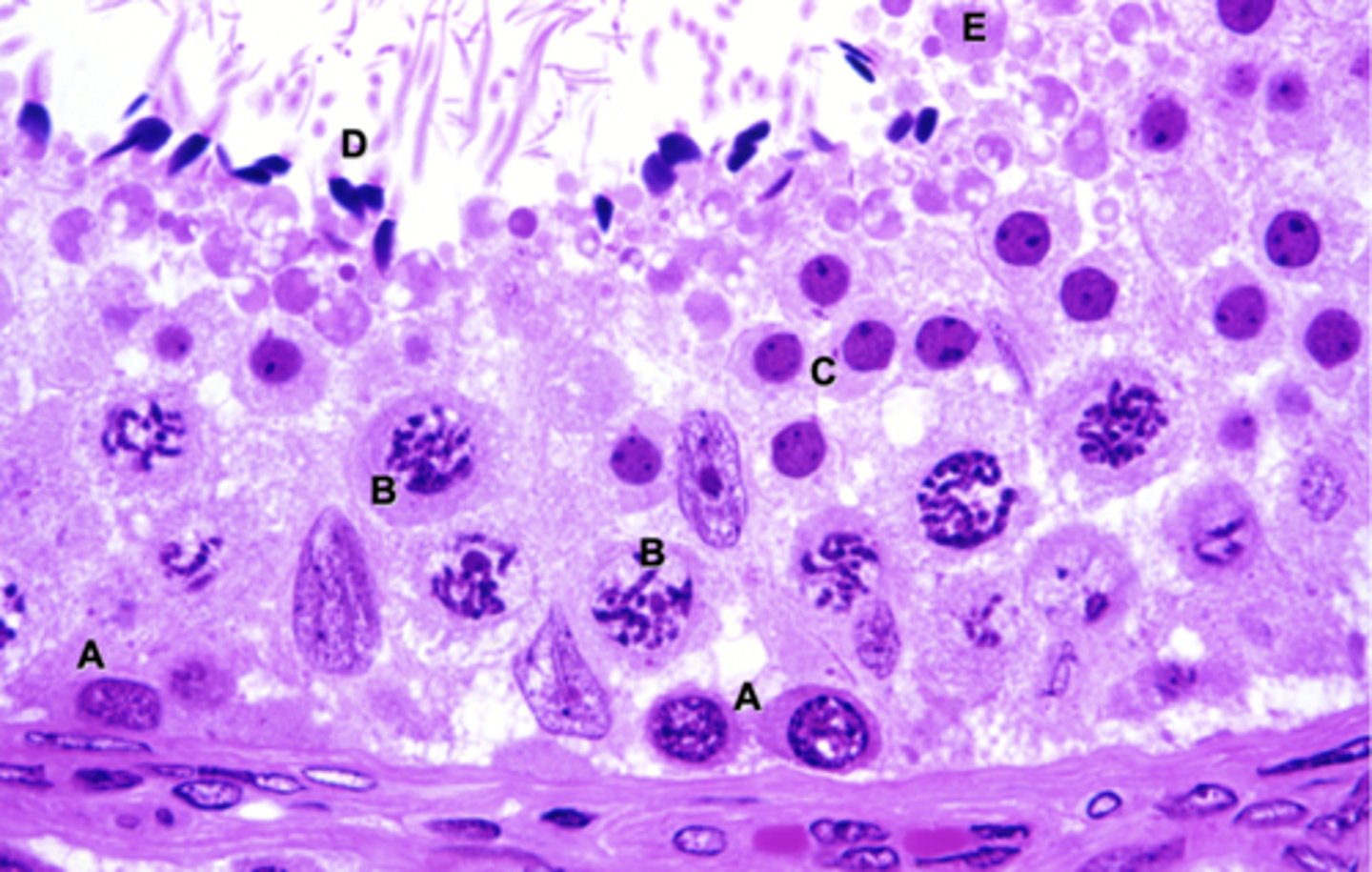
residual bodies
What is E?
cytoplasm bridge
Type A spermatogonia to spermatids have what in common?
heterogeneity
Development of clonal groups yields ______________ within and between seminiferous tubules
crossing over
What generates genetically different sperm compared to somatic cells?
primary spermatocyte
Which stage of sperm development does crossing over happen?
sertoli cells forming blood testis barrier
What protects primary spermatocytes and spermatids from the immune system?
- Adluminal
- Basal (abluminal)
What are the two compartments that make up the blood testis barrier?
sertoli cells
These are functions of what cell?
- Form blood testis barrier
- Produce factors that support germ cells (e.g., ABP/SHBG) in response to FSH
- Produce endothelin
- Phagocytosis of residual bodies & abnormal sperm
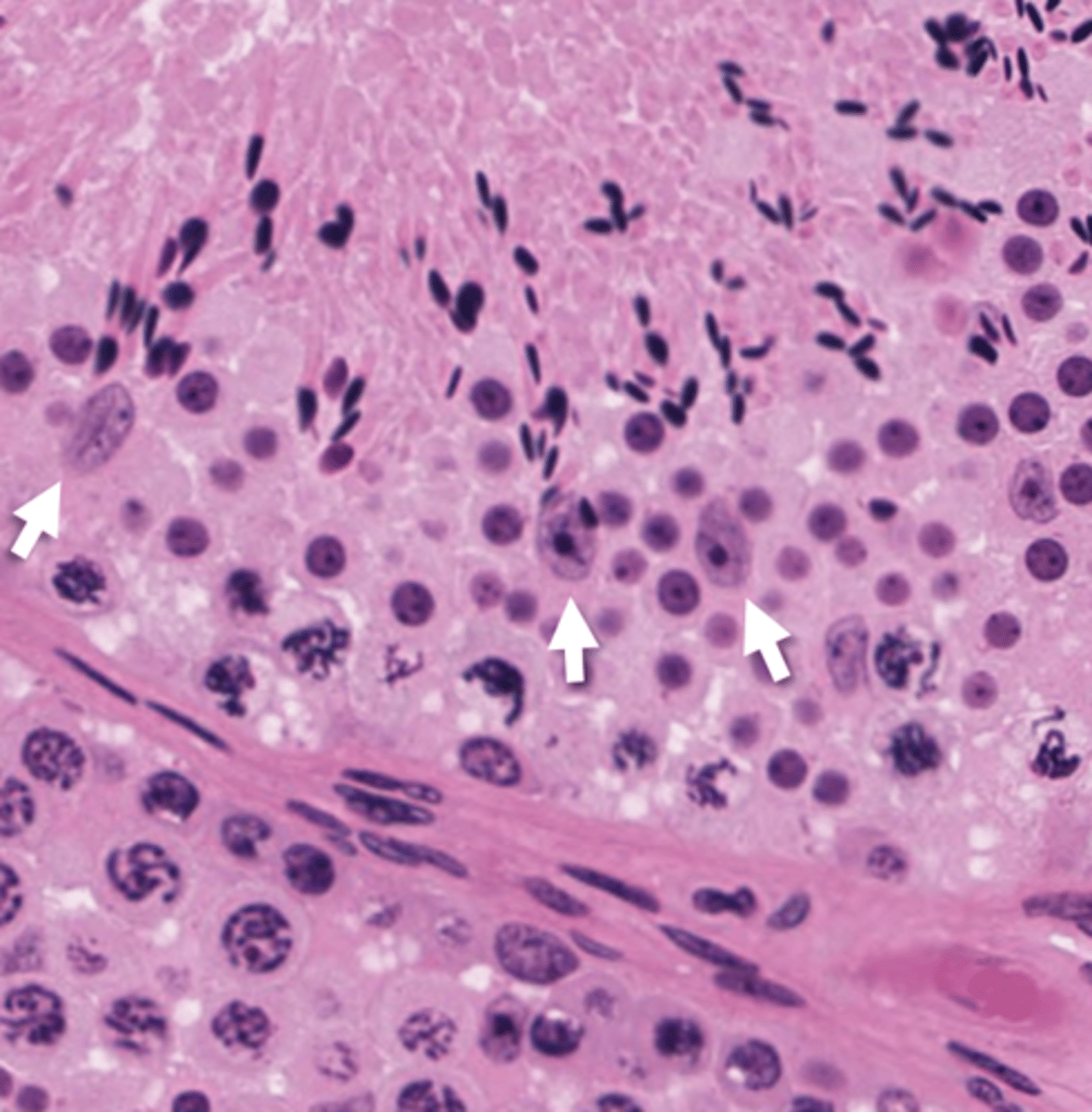
sertoli cells
What cells are the arrows pointing to?
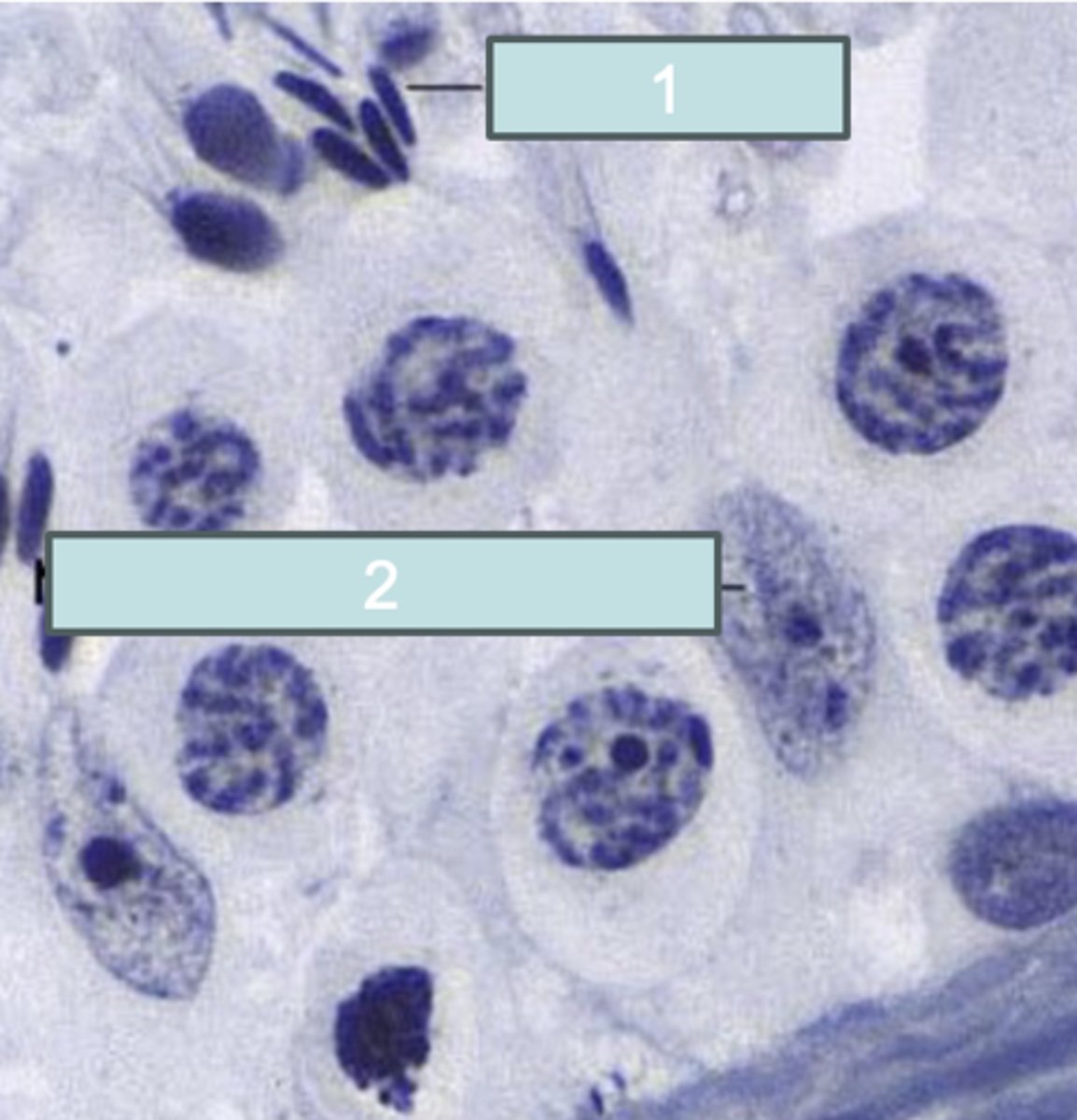
spermatids
What is 1?
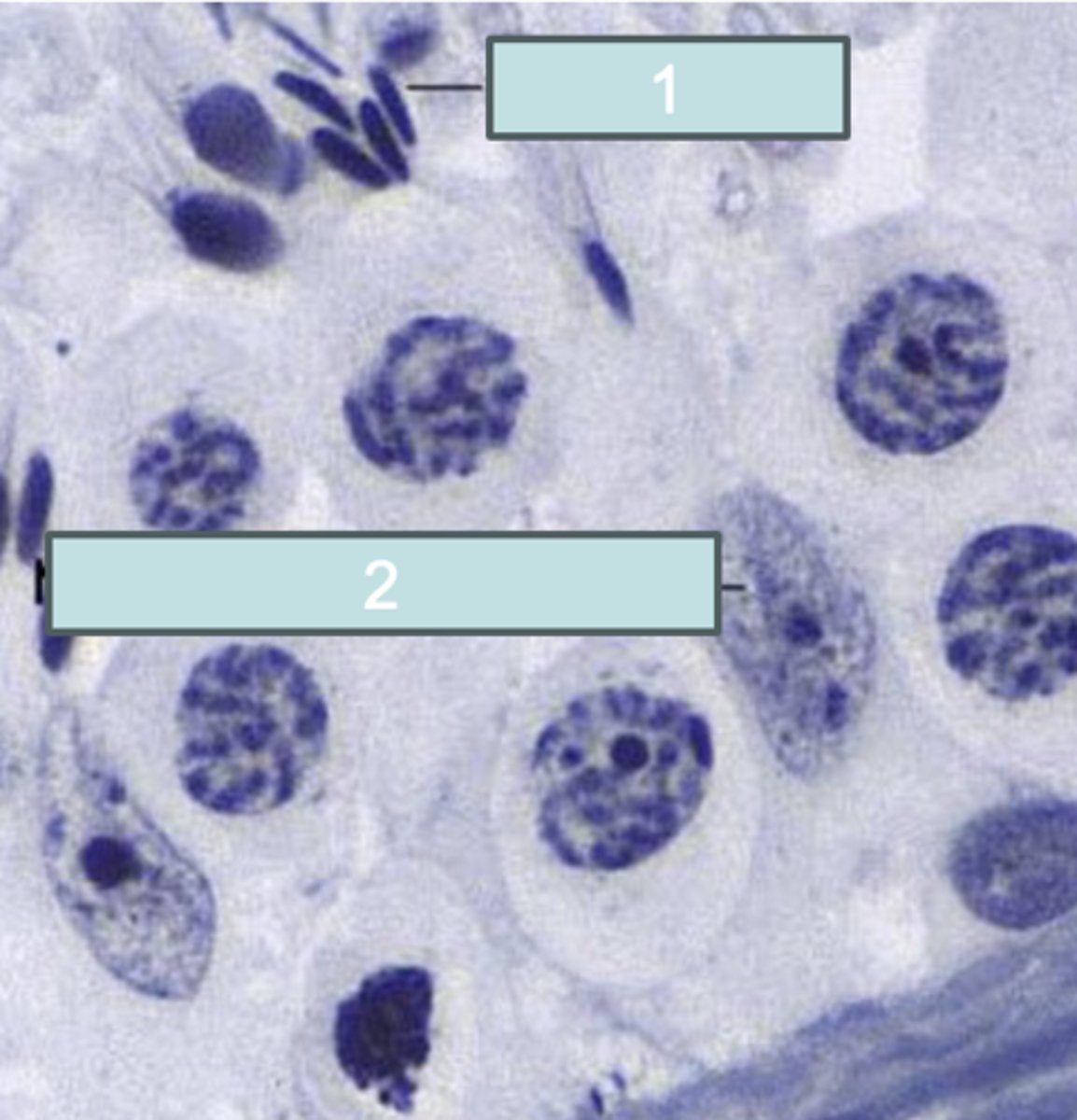
sertoli cell (nucleus)
What is 2?
tight junction (b/w sertoli cells)
What is the arrow pointing to?
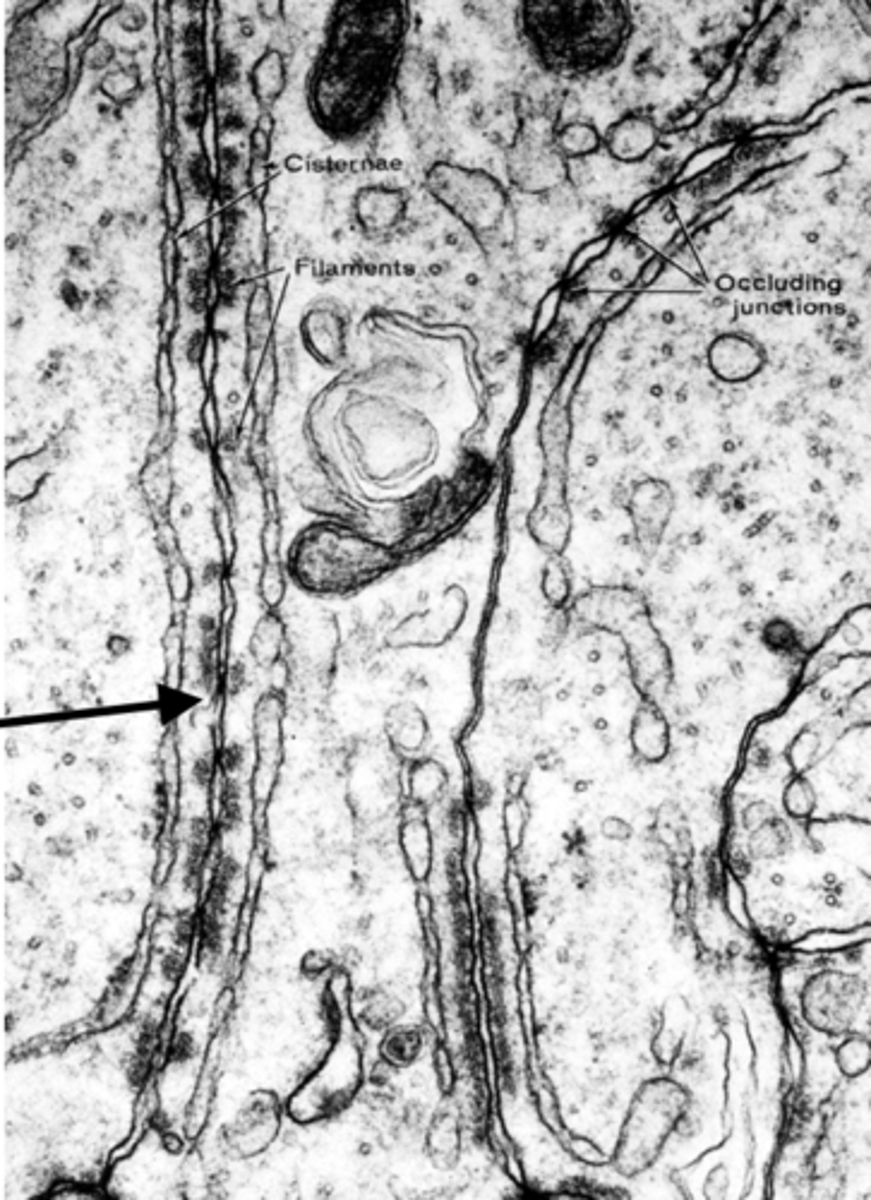
Tight junctions
What type of junctions separate seminiferous tubules into basal & adluminal compartments and protect "genetically different" germ cells?
interstitial tissue, myoid cells
What type of tissue and cell?
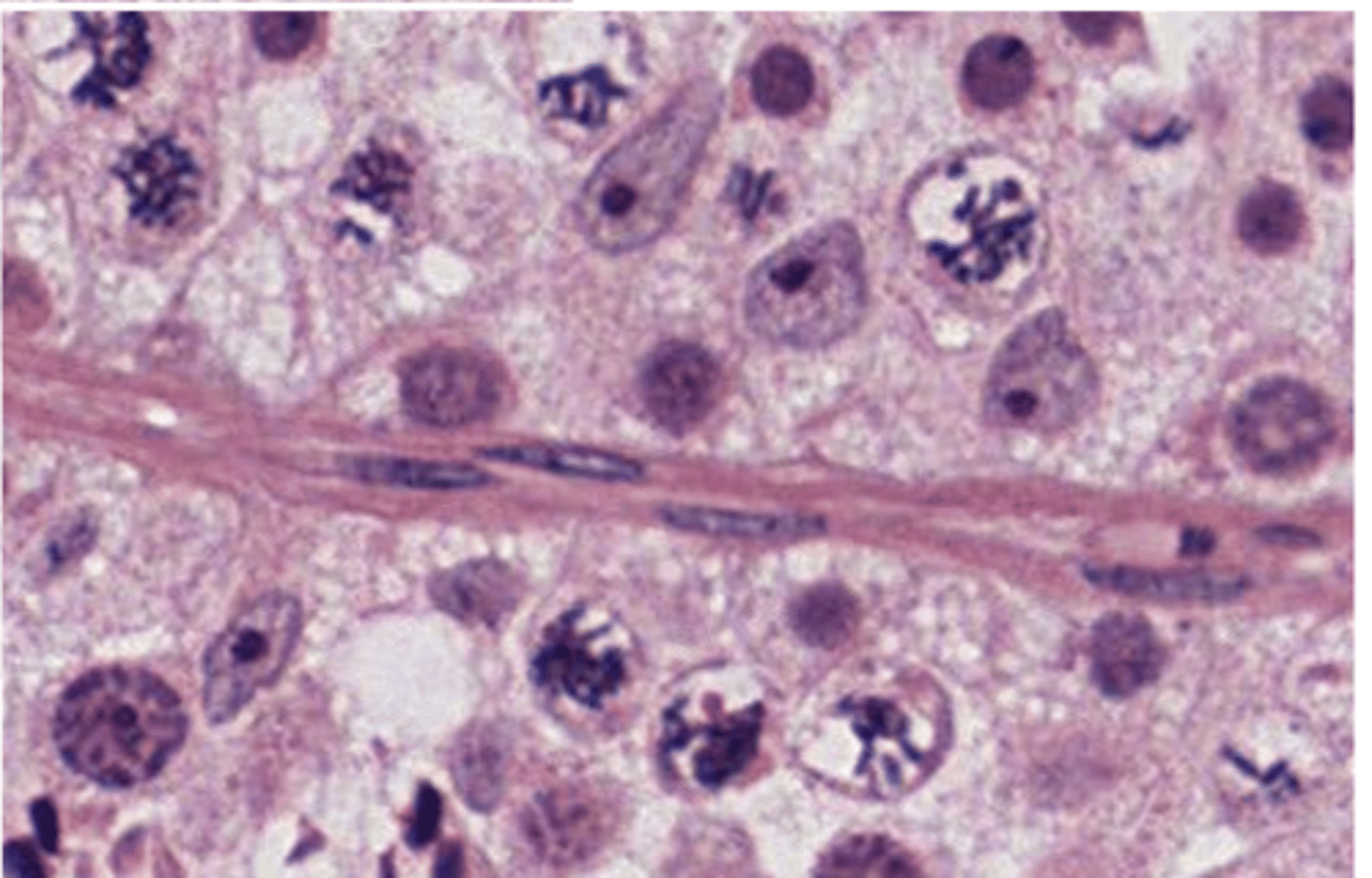
myoid cell
What type of cell?
- Myofibroblast-like cells: important for tubular contractility & sperm transport
- Contain androgen receptors, endothelin receptors (endothelin will stimulate contraction)
- Secrete paracrine factors
myoid (IHC for alpha smooth muscle actin)
What type of cells?
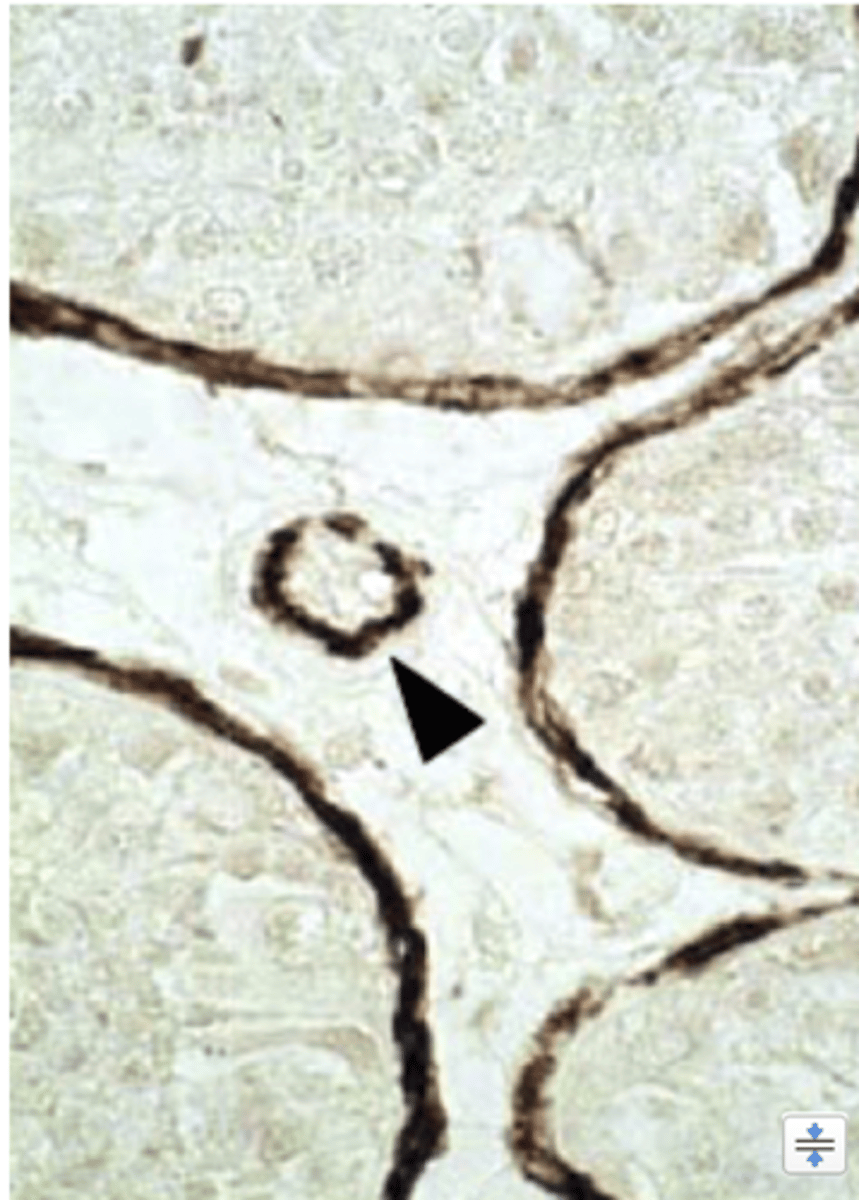
arteriole
What is the arrow pointing to?
leydig cell
What cell are the arrows pointing to?
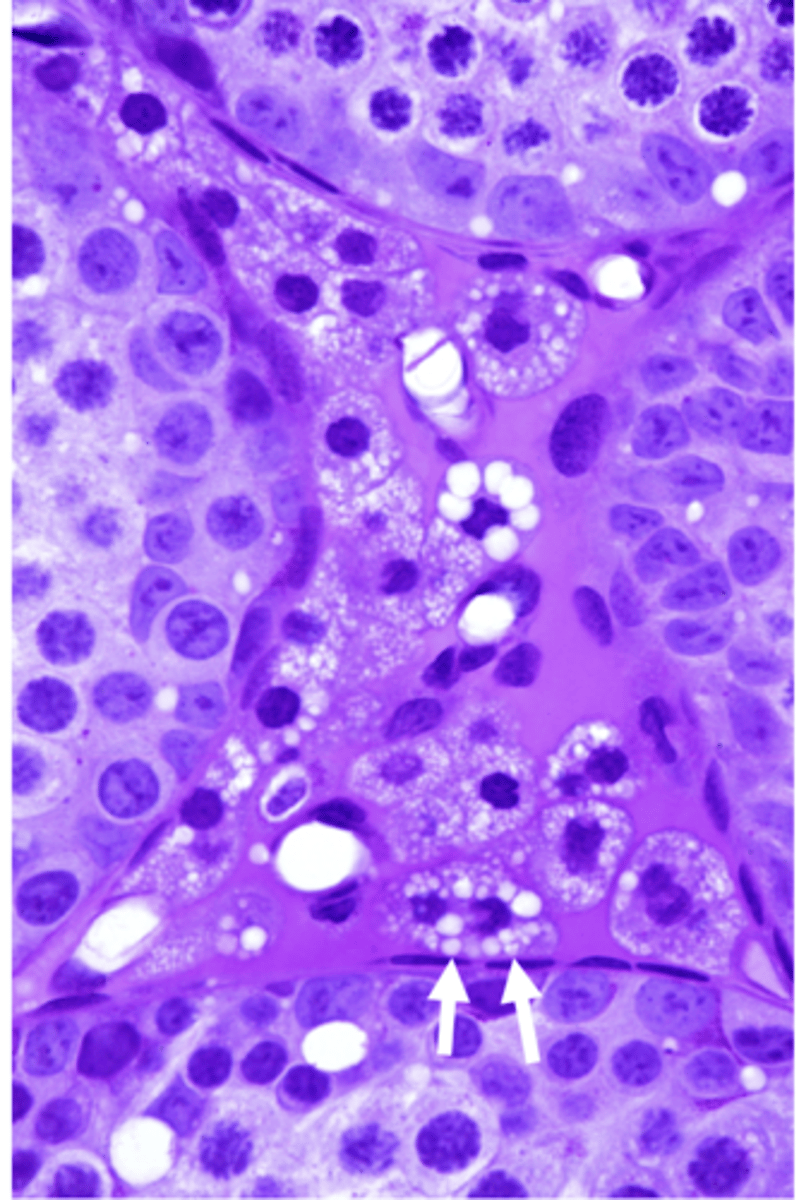
leydig cell
Which cell produces testosterone which is essential for spernatogenesis, accessory gland development & secondary sex characteristics?
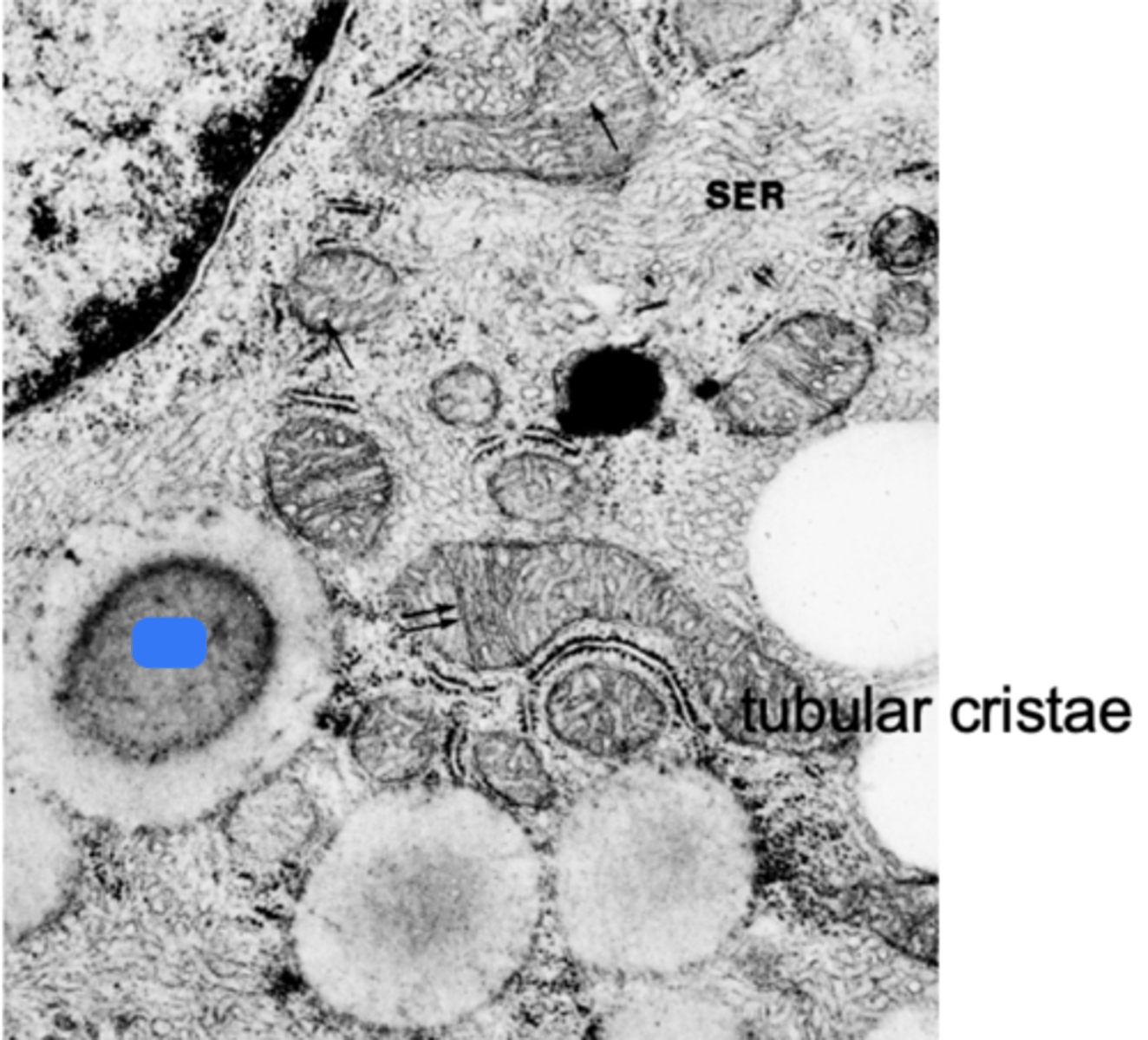
leydig cell
ID the cell in blue:
FSH and LH
GnRH stimulates what?
ABP
What does FSH stimulate sertoli cells to release?
Testosterone
What does LH stimulate leydig cells to release?
DHT (dihydrotestosterone)
What is testosterone converted to?
5-a-reductase
How is testosterone converted to DHT?
5-a-reductase
Individuals with___________ deficiency have non-masculinized external genitalia and are usually infertile due to the underdevelopment of reproductive tract glands (prostate, seminal vesicle)
ABP (androgen binding protein)
High levels of testosterone needed for spermatogenesis/ spermiogenesis. 200x plasma levels, achieved by what protein?
cryptorchidism
What condition is the following:
One or both testes fail to descend into scrotum
cryptorchidism
What has the following characteristics:
- Fertility is near zero for the bilateral condition; ~50% for unilateral
- Testicular cancer rates are increased with undescended testes
true
T/F: Leydig and sertoli cells are unaffected by higher temps so crytochid individuals have normal secondary sex characteristics
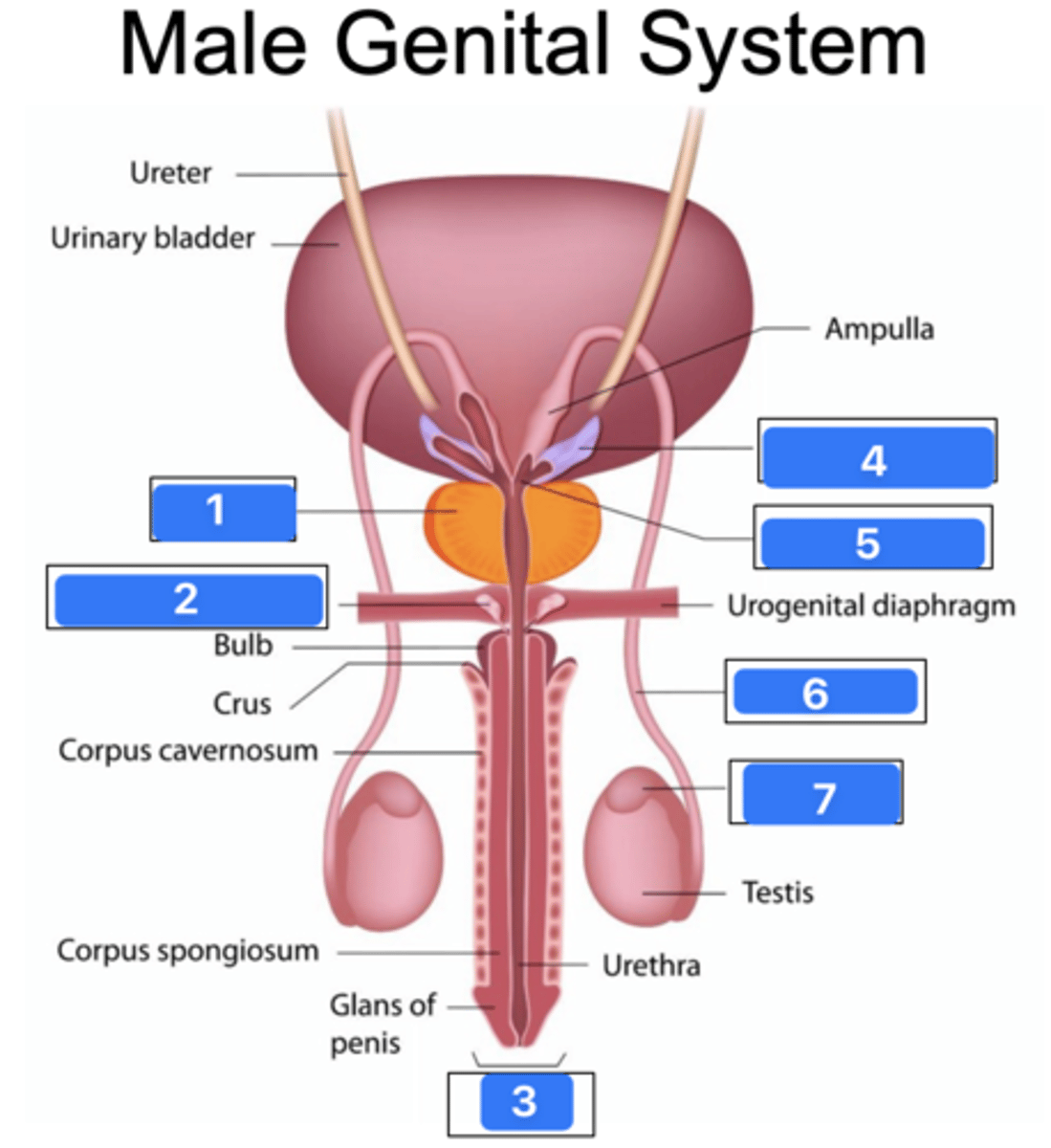
Prostate
ID #1
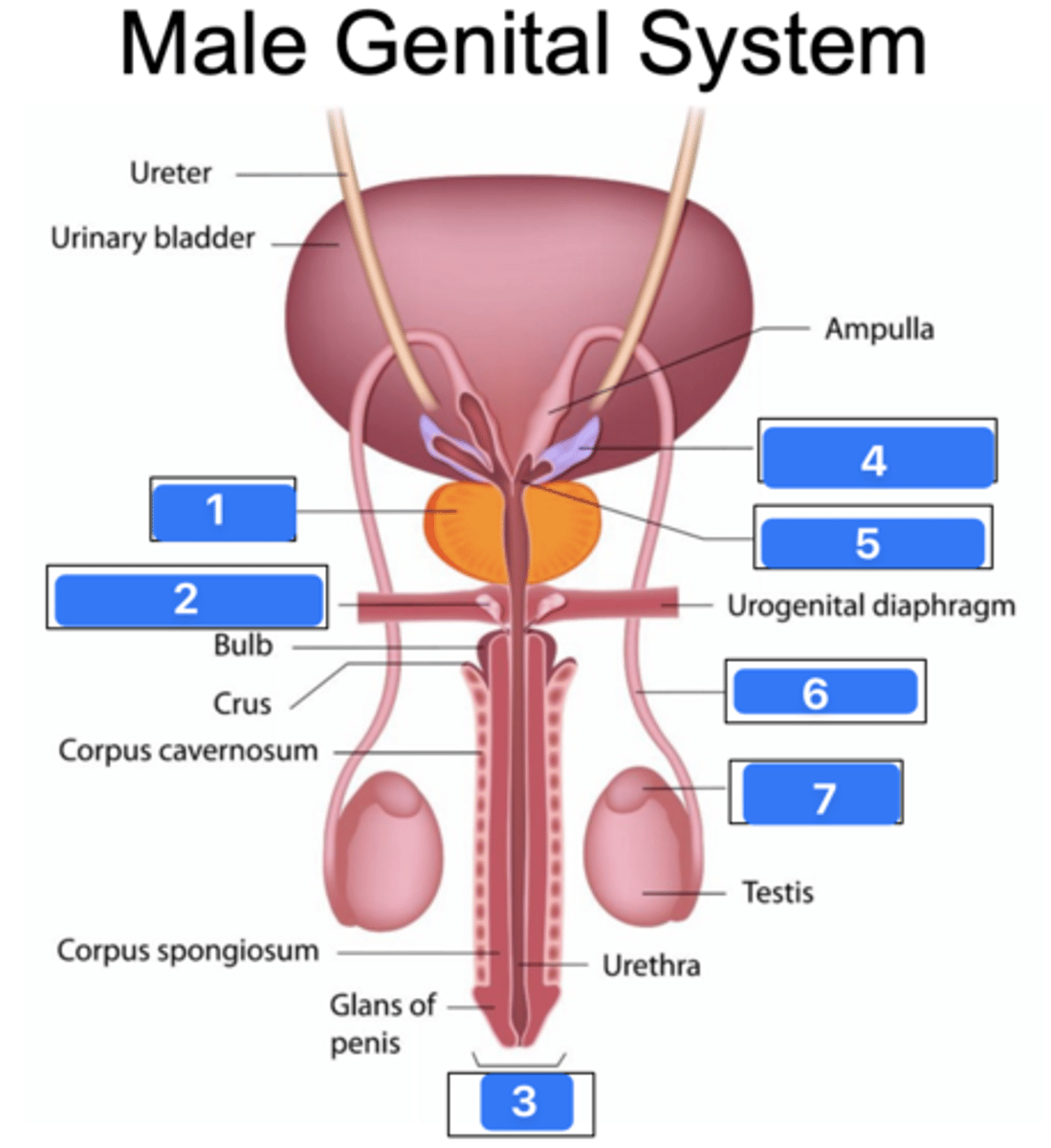
Bulbourethral gland
ID #2
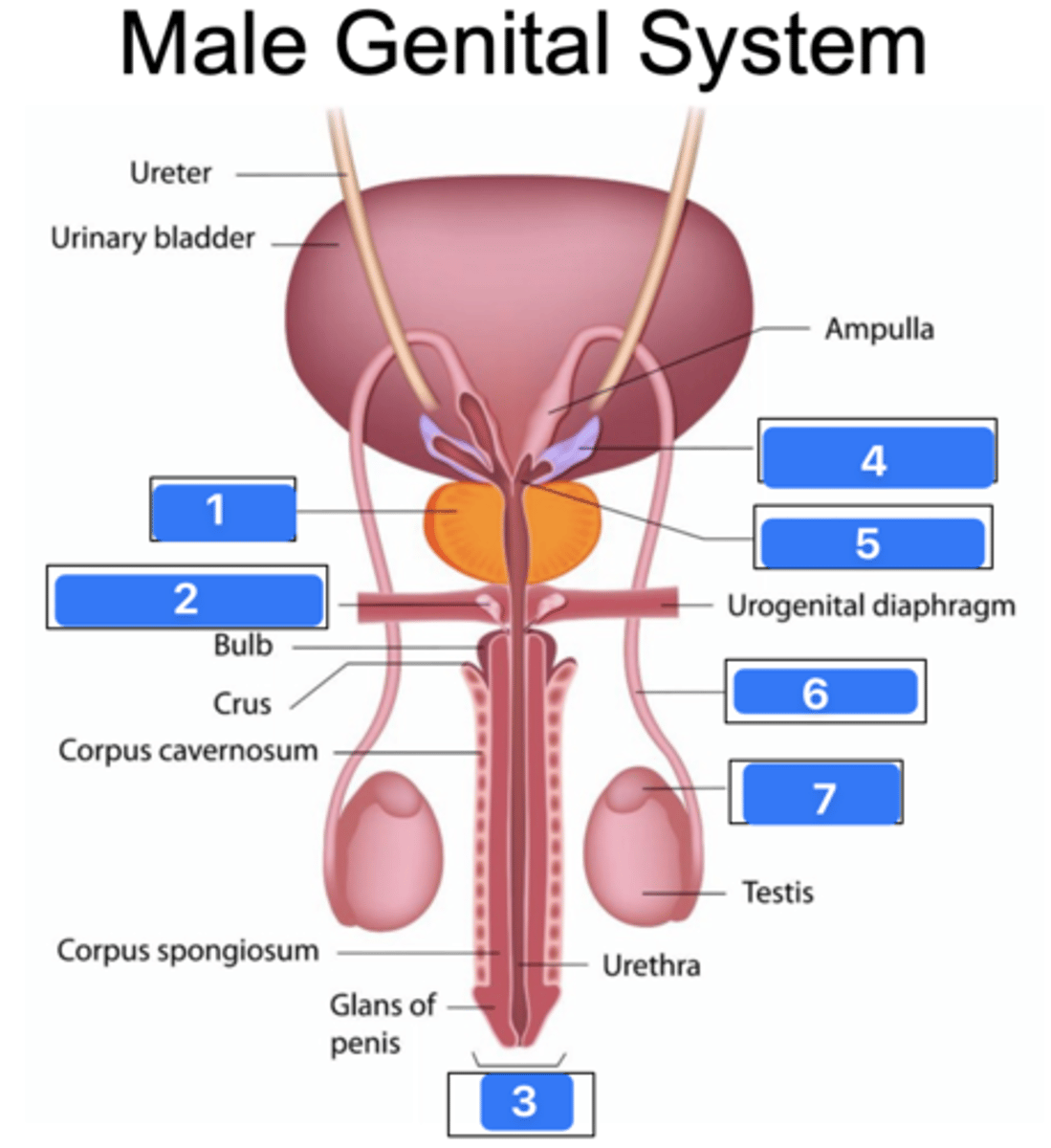
Penis
ID #3
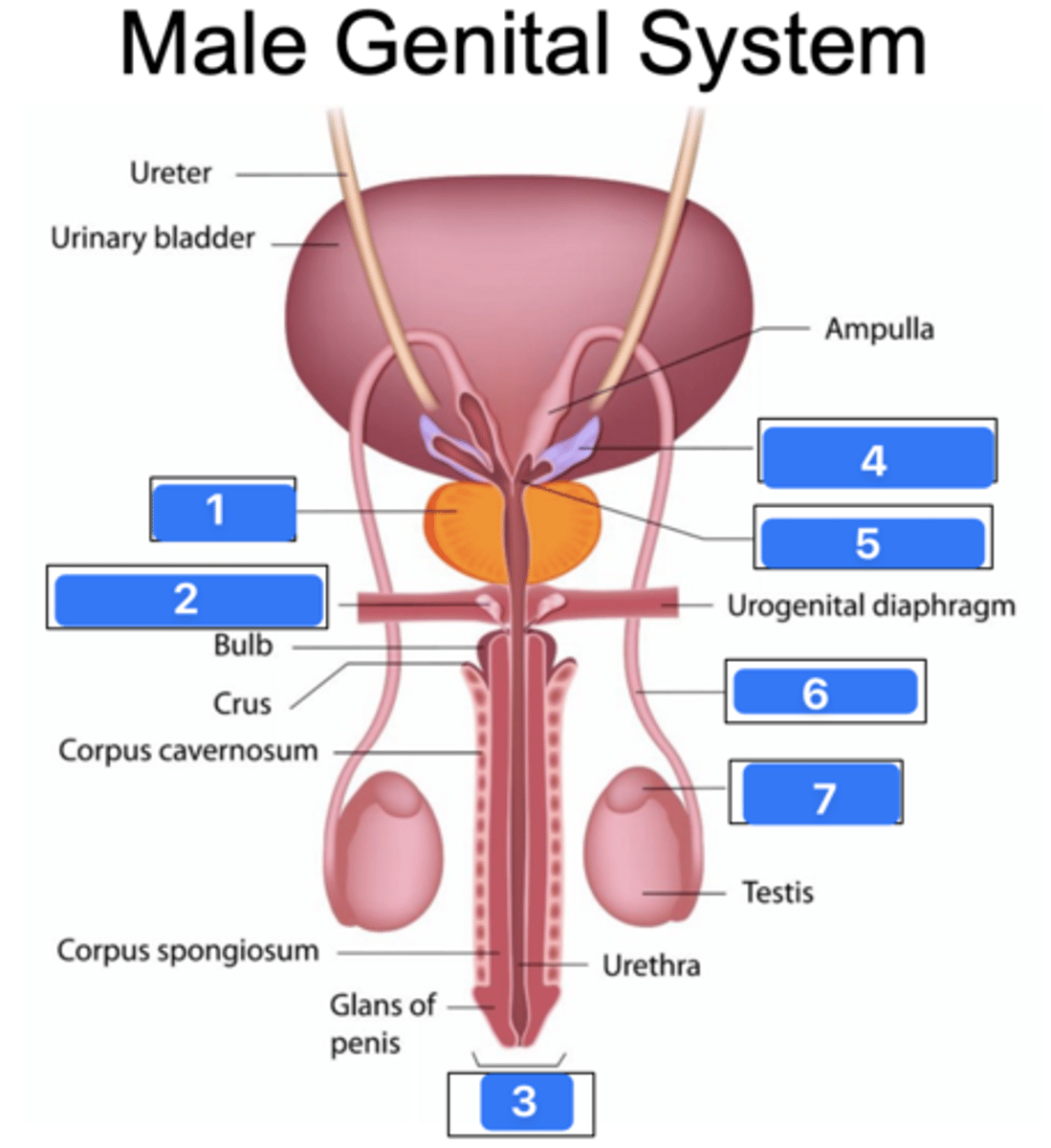
Seminal vesicle
ID #4
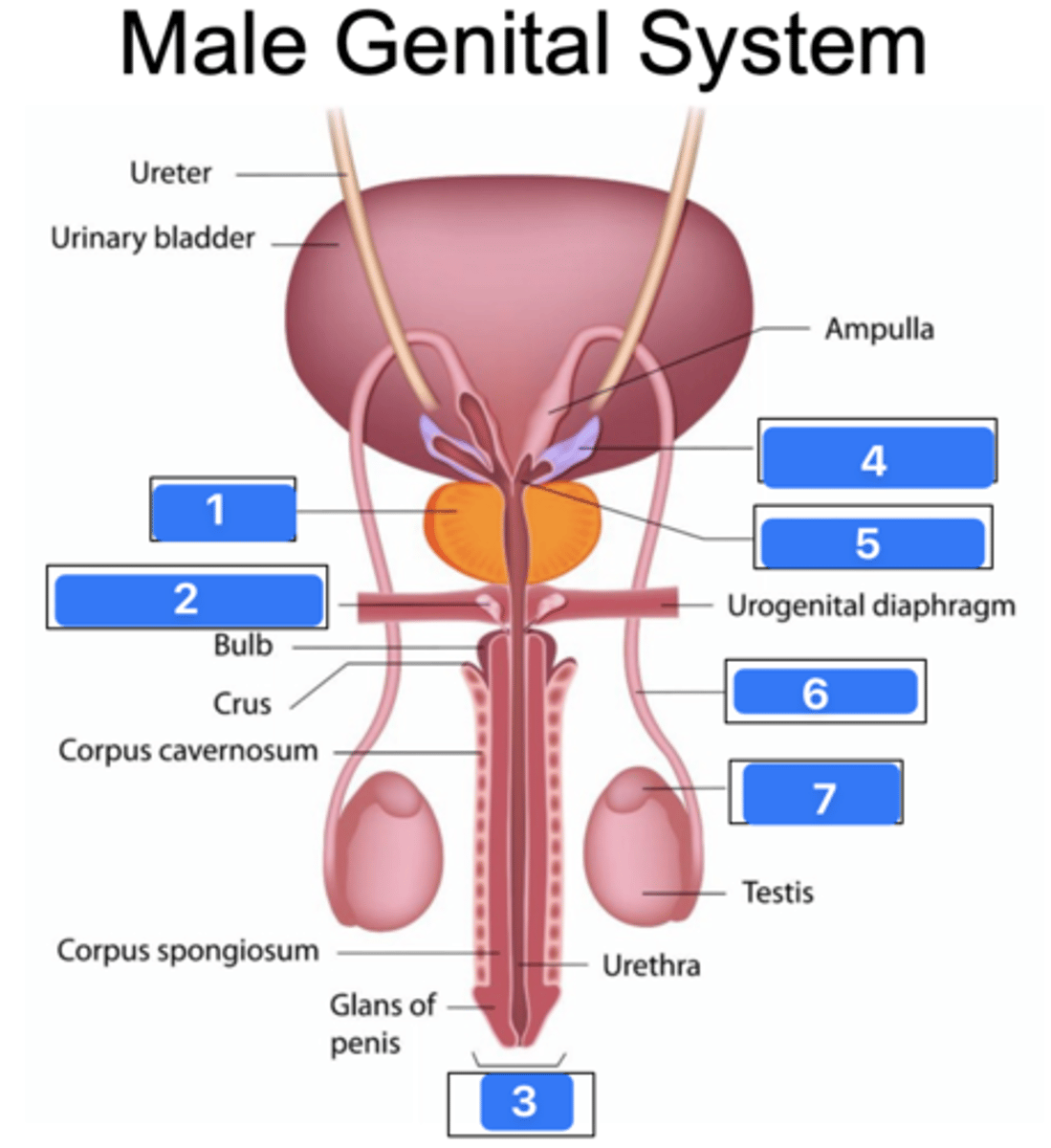
Ejaculatory duct
ID #5
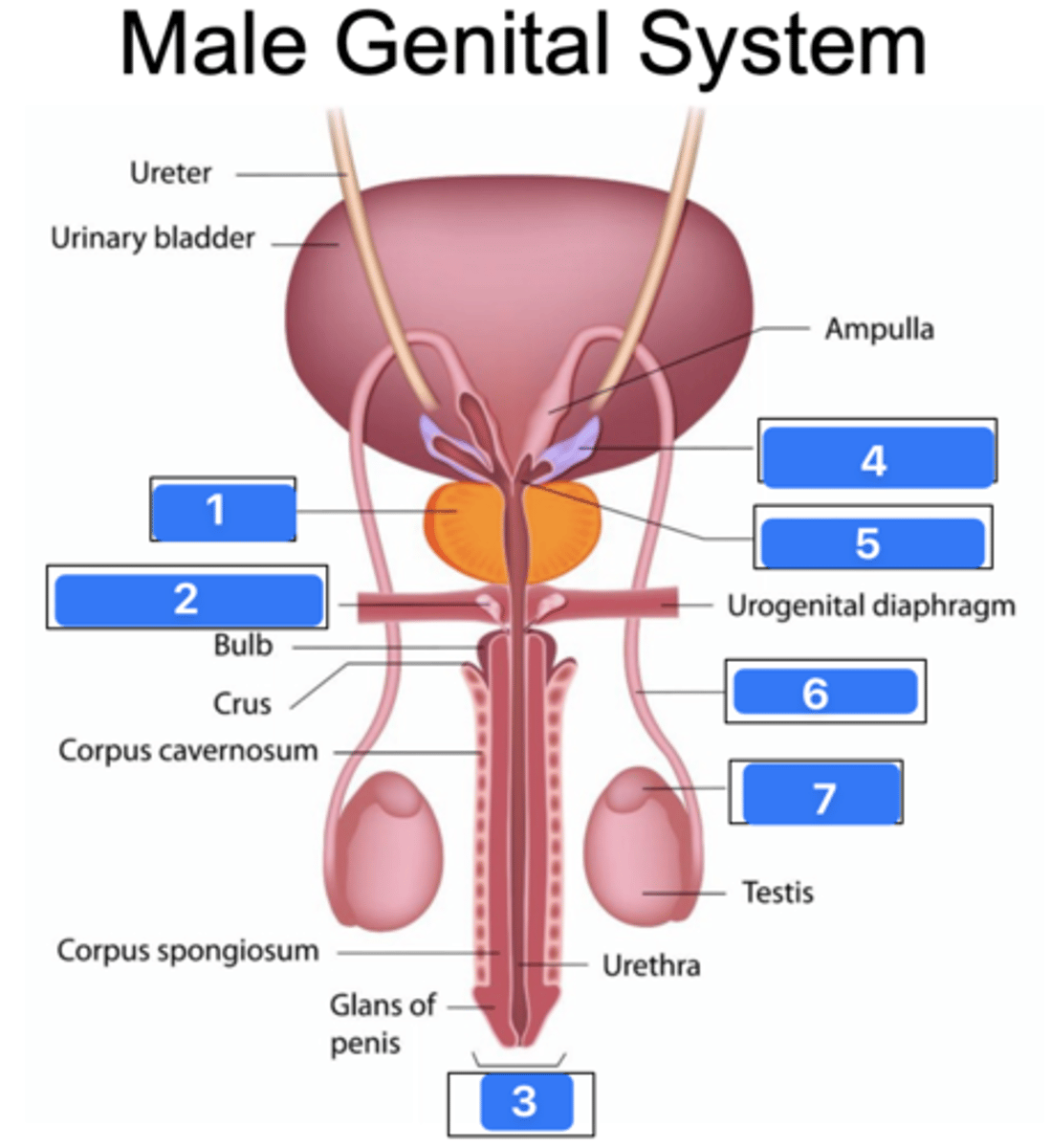
Ductus (vas) deferens
ID #6
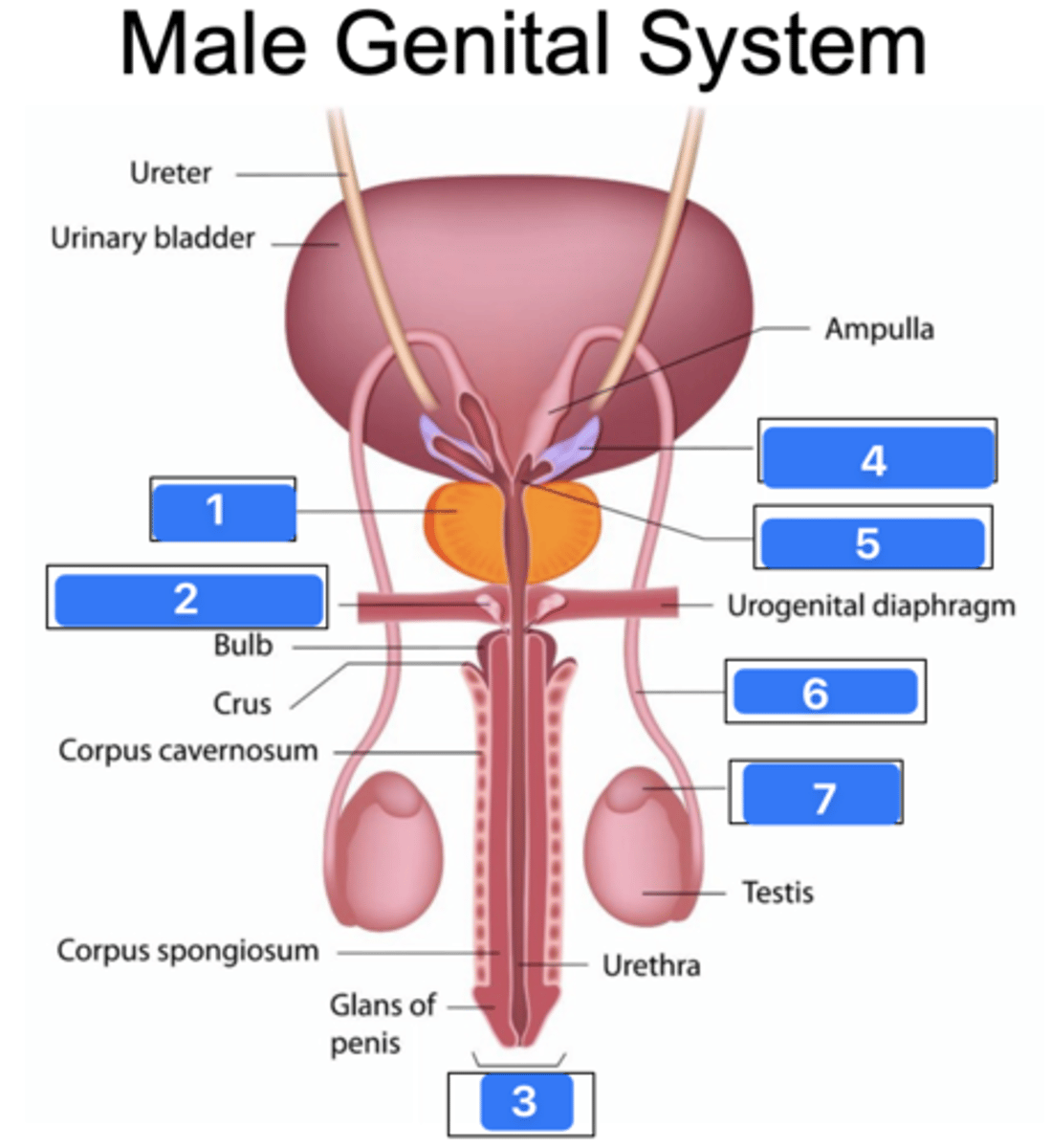
Epididymis
ID #7
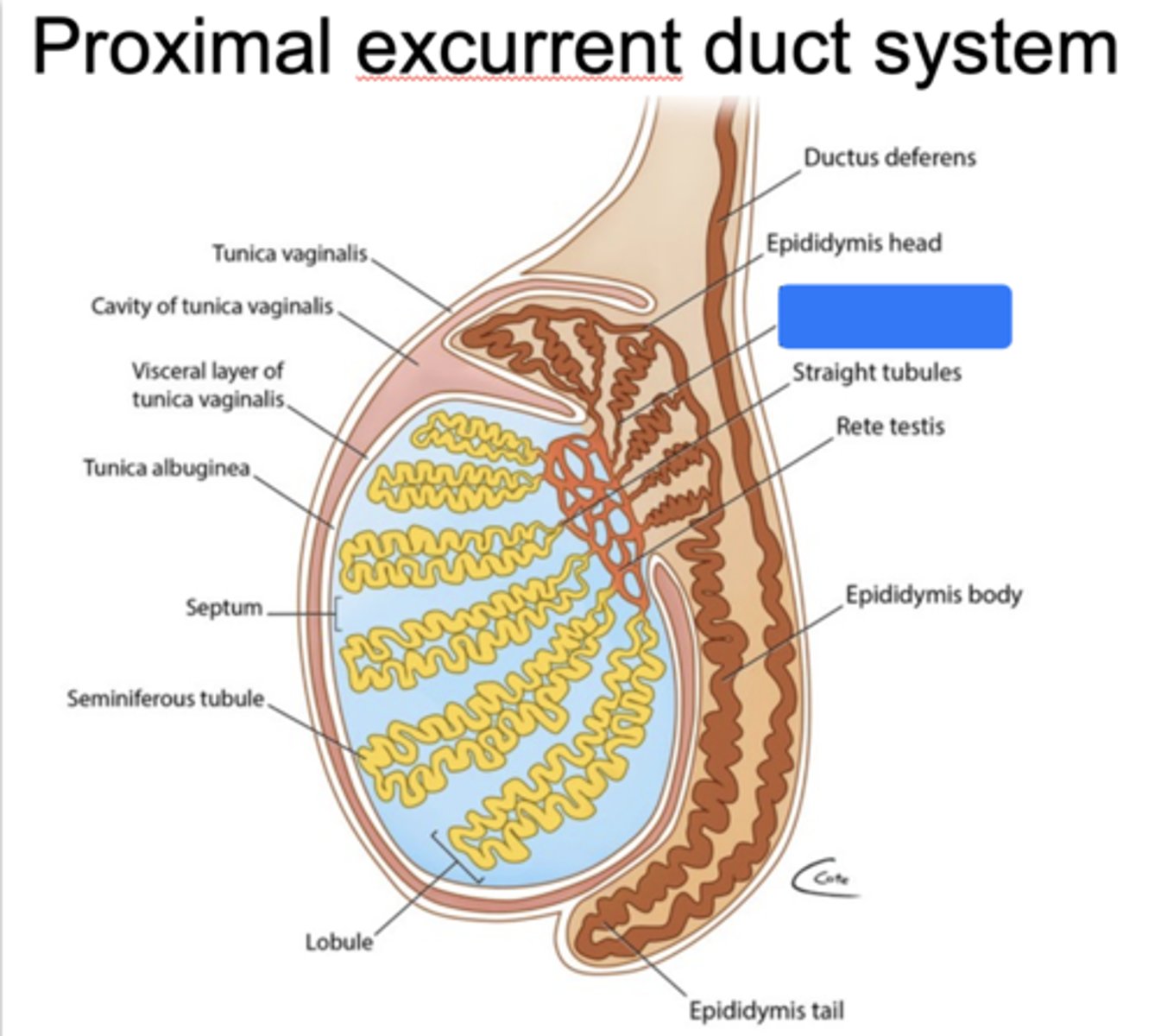
Straight tubules (tubuli recti)
ID #1
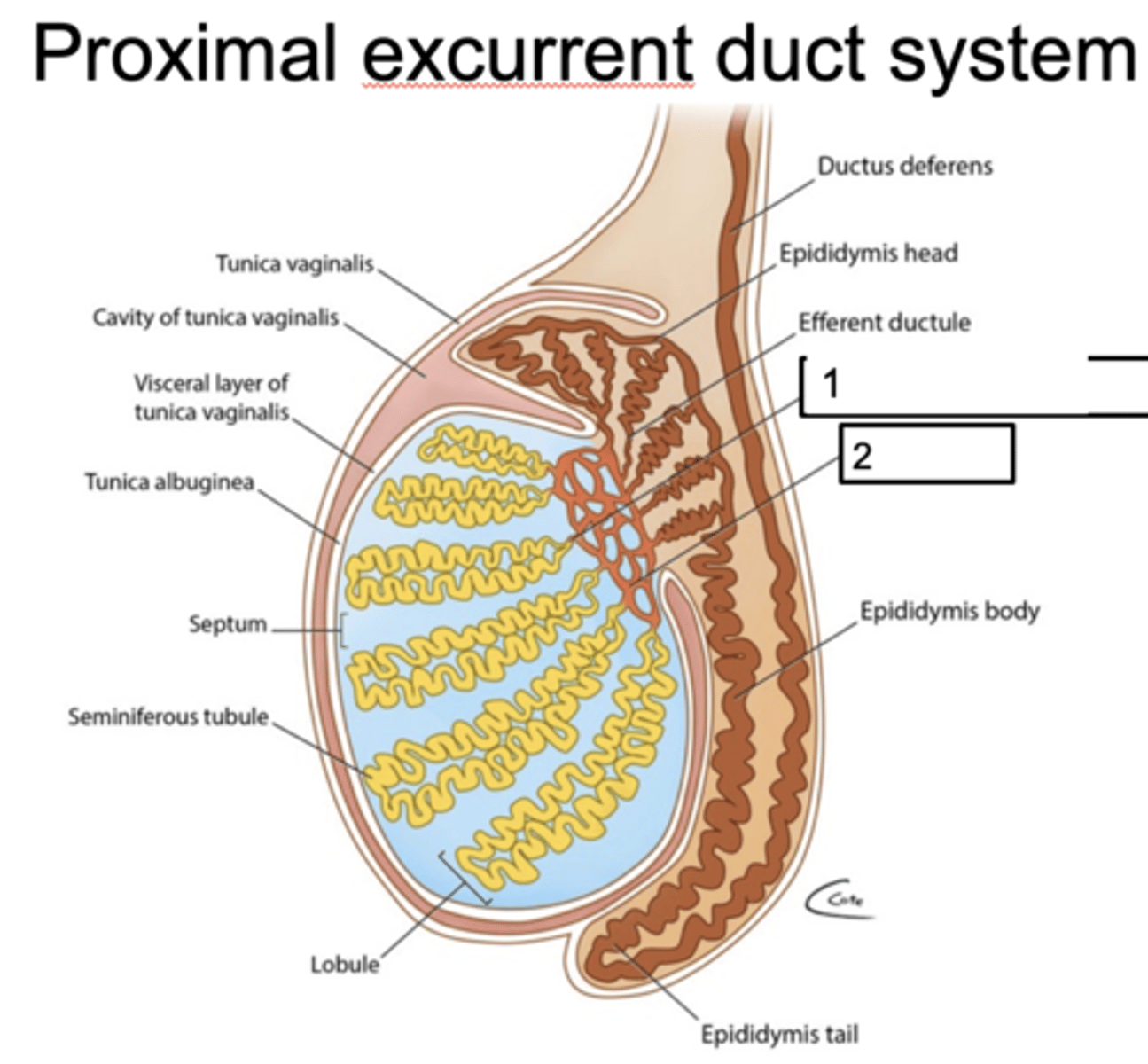
Rete testis
ID #2
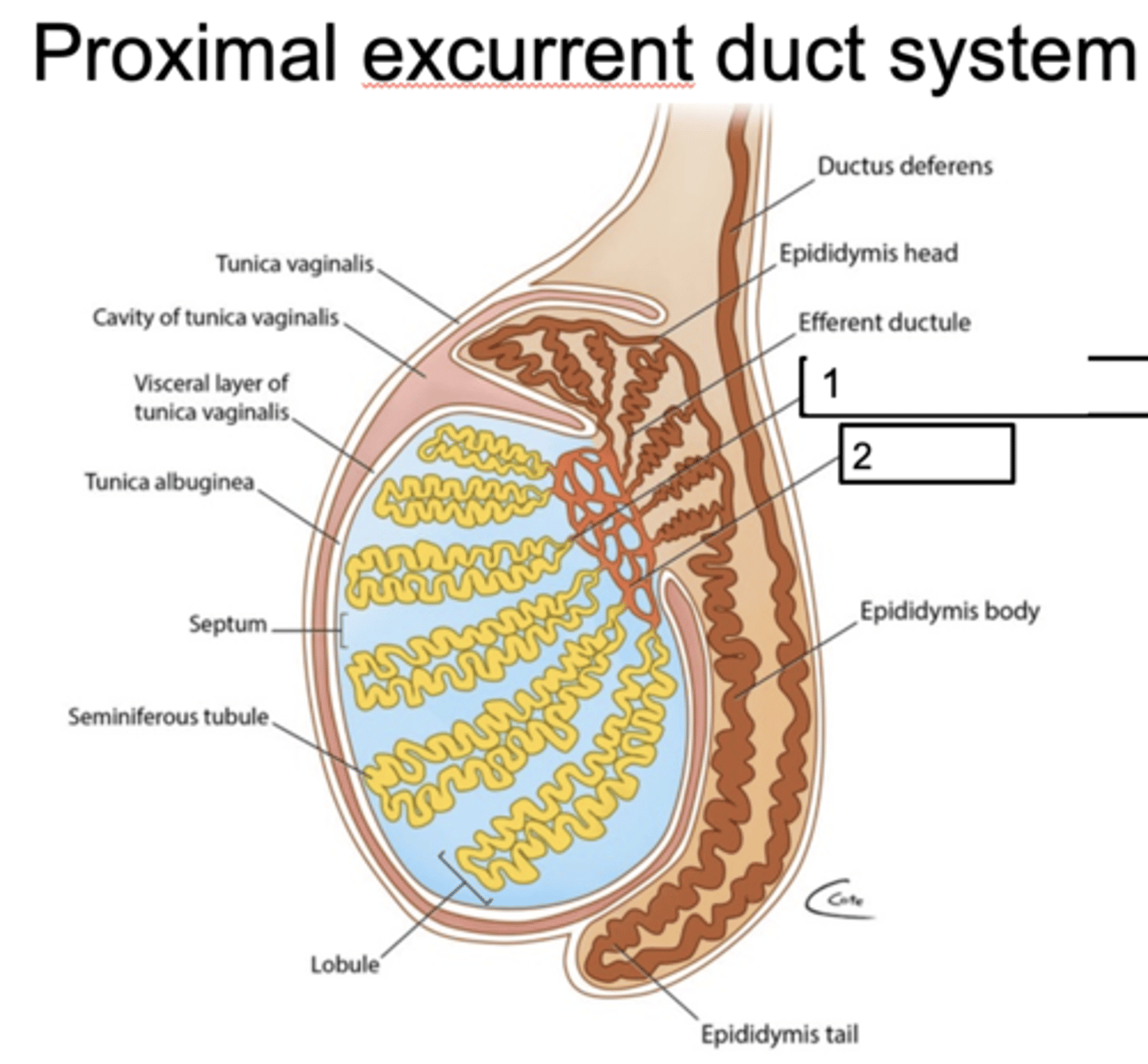
- Seminiferous tubules
- Straight tubules
- Rete testis
What are the three intratesticular structures?
- Duct of epididymus
- Ductus (vas) deferens
- Urethra
What are the three extratesticular structures?
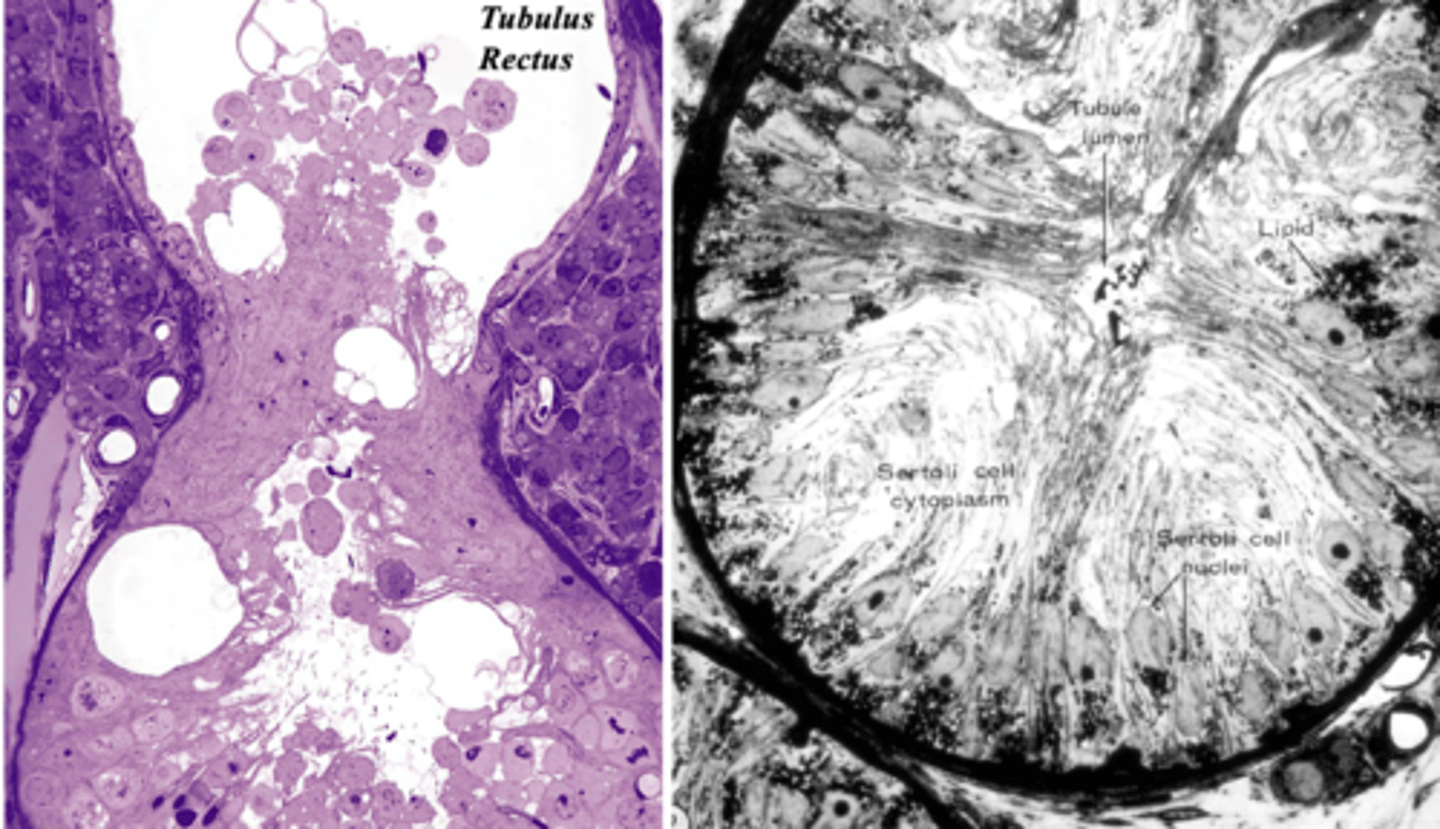
seminiferous tubule terminus
What does the blue dotted arrow show?
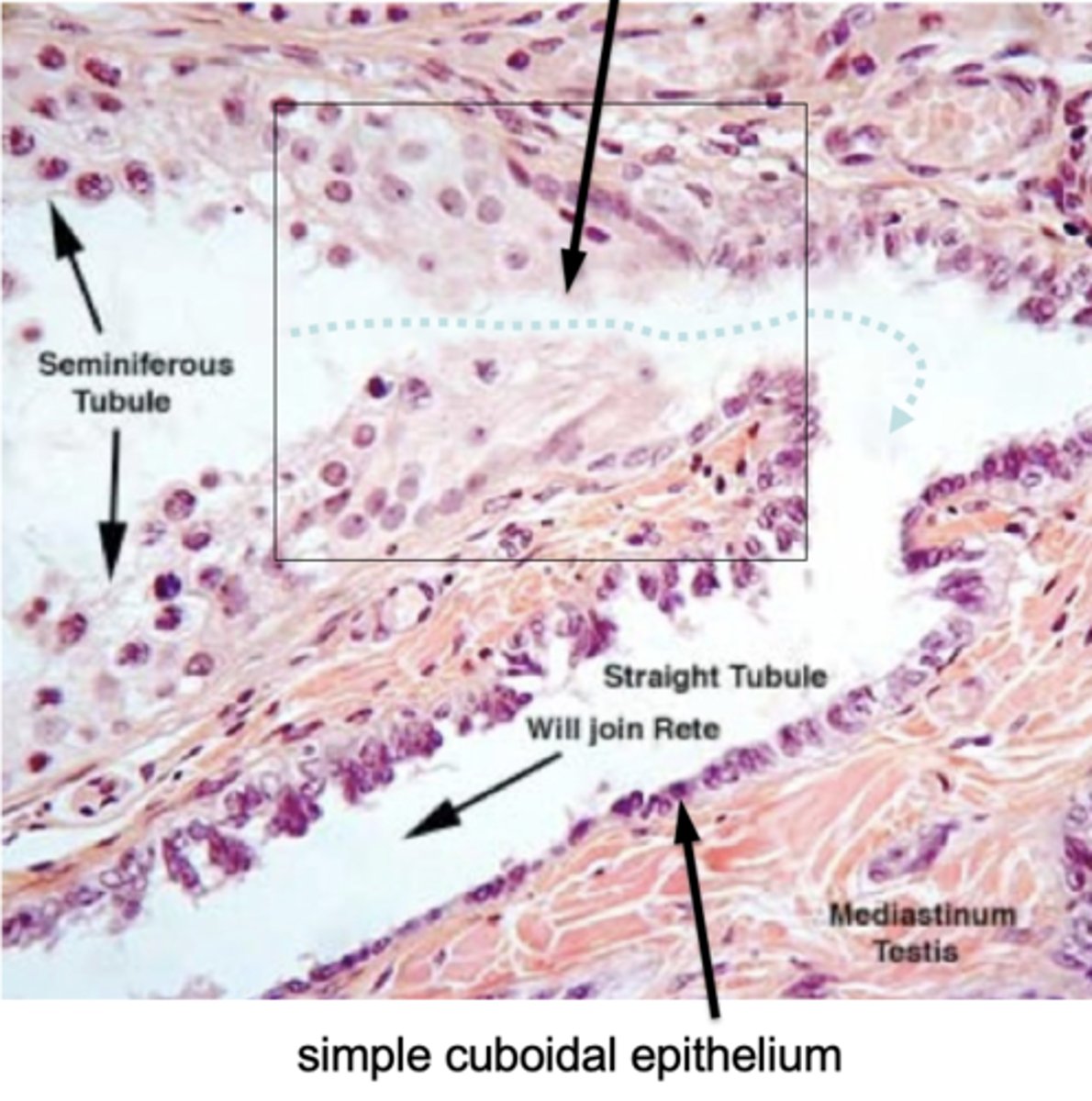
sertoli cells only
What type of cells are found in the seminiferous tubule terminus?
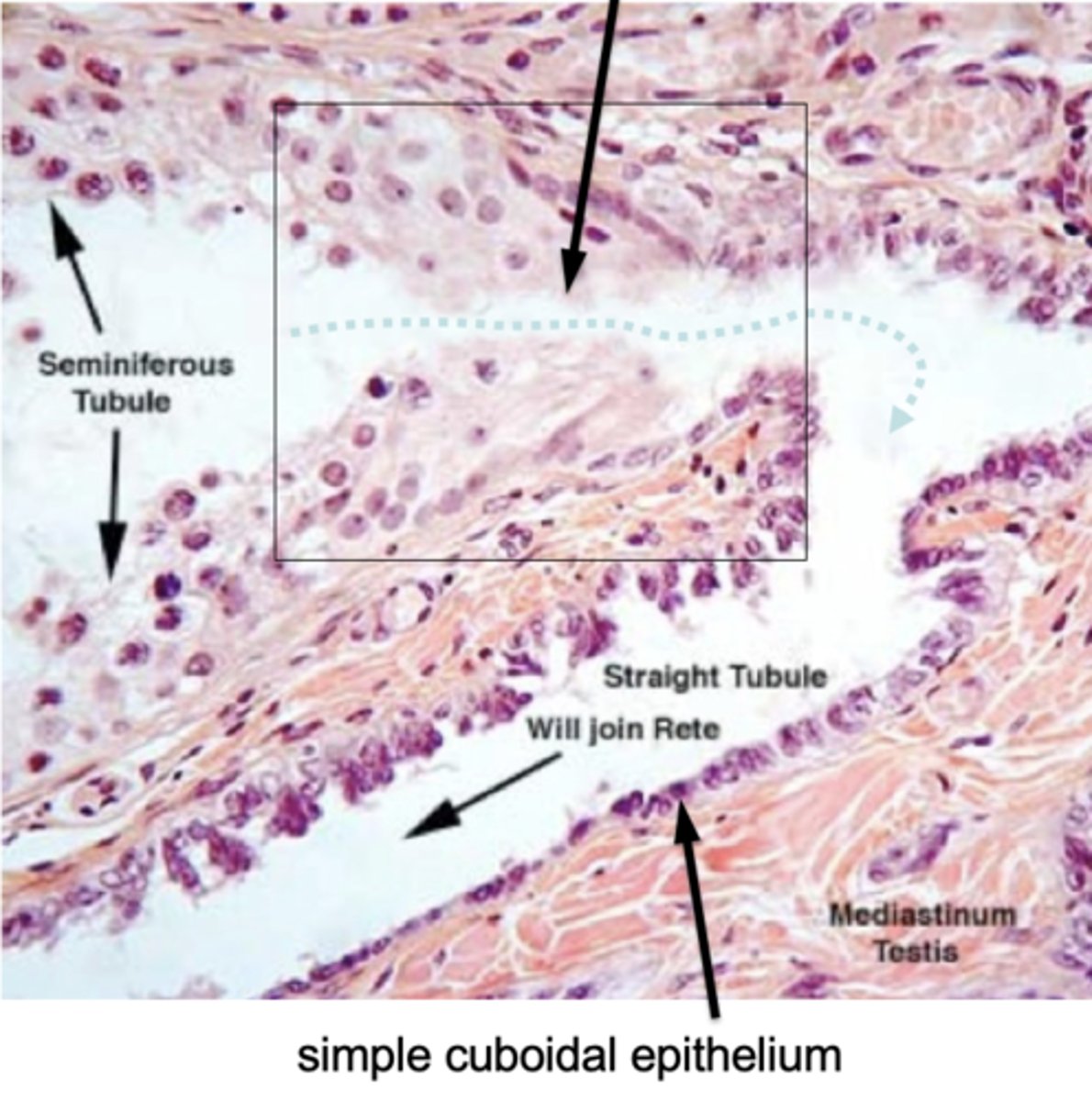
Seminiferous tubule terminus
What do these image show?
Efferent ductules
ID the blue box:
rete testis
What do these image show?
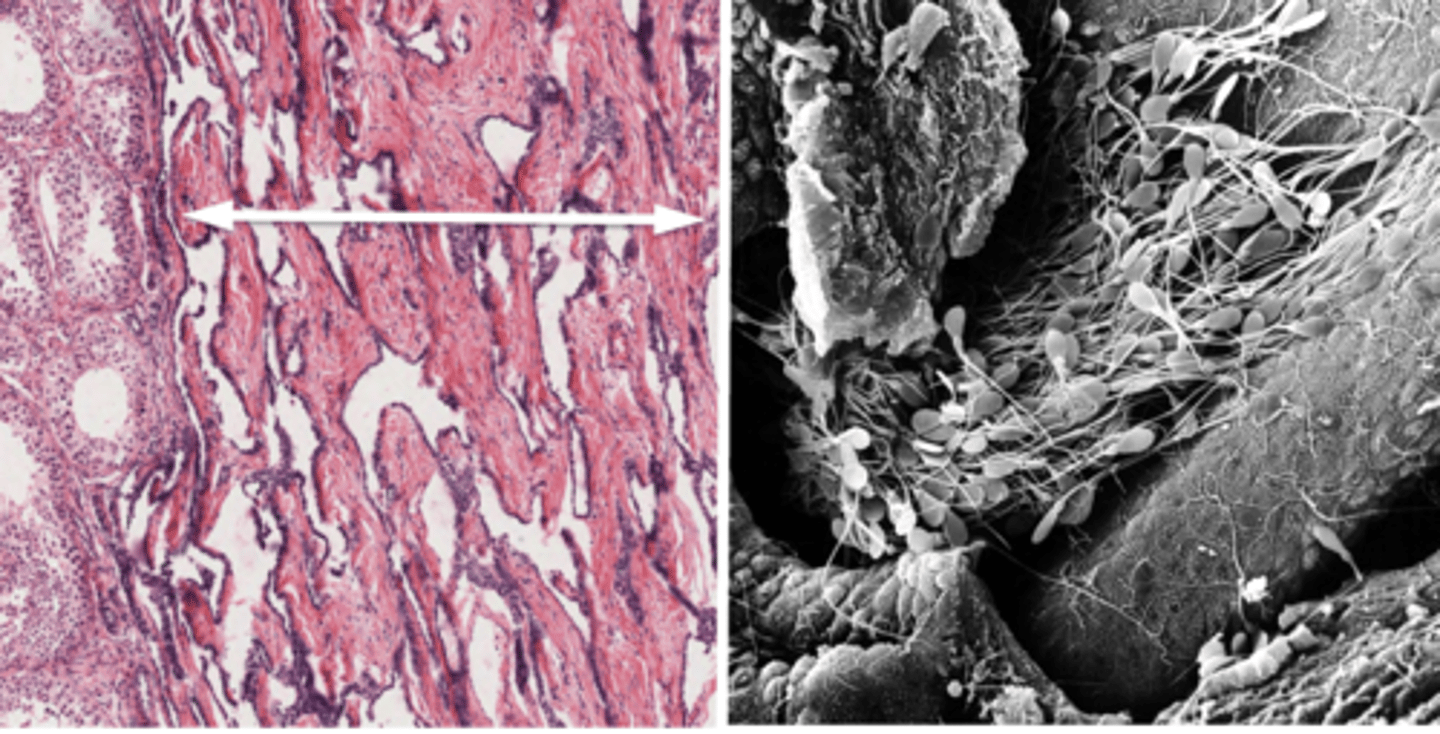
rete testis
What has the following characteristics:
- Simple cuboidal epithelium
- Few microvilli
- Collect sperm and propel them downstream via the fibromuscular stroma
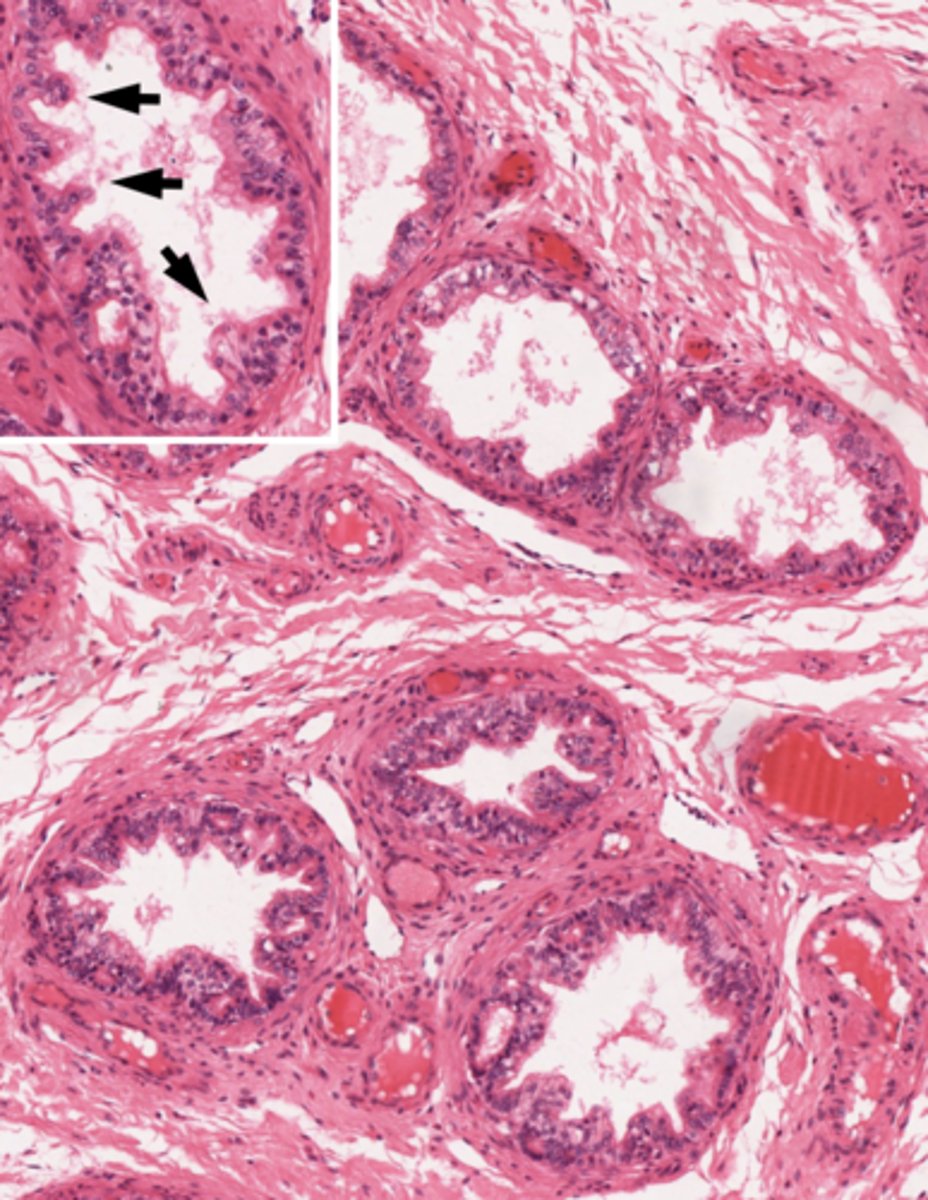
efferent ductules
What structure is this?
pseudostratified columnar
What kind of epithelium is found here (and all ducts from here to prostatic urethra are of this type)?
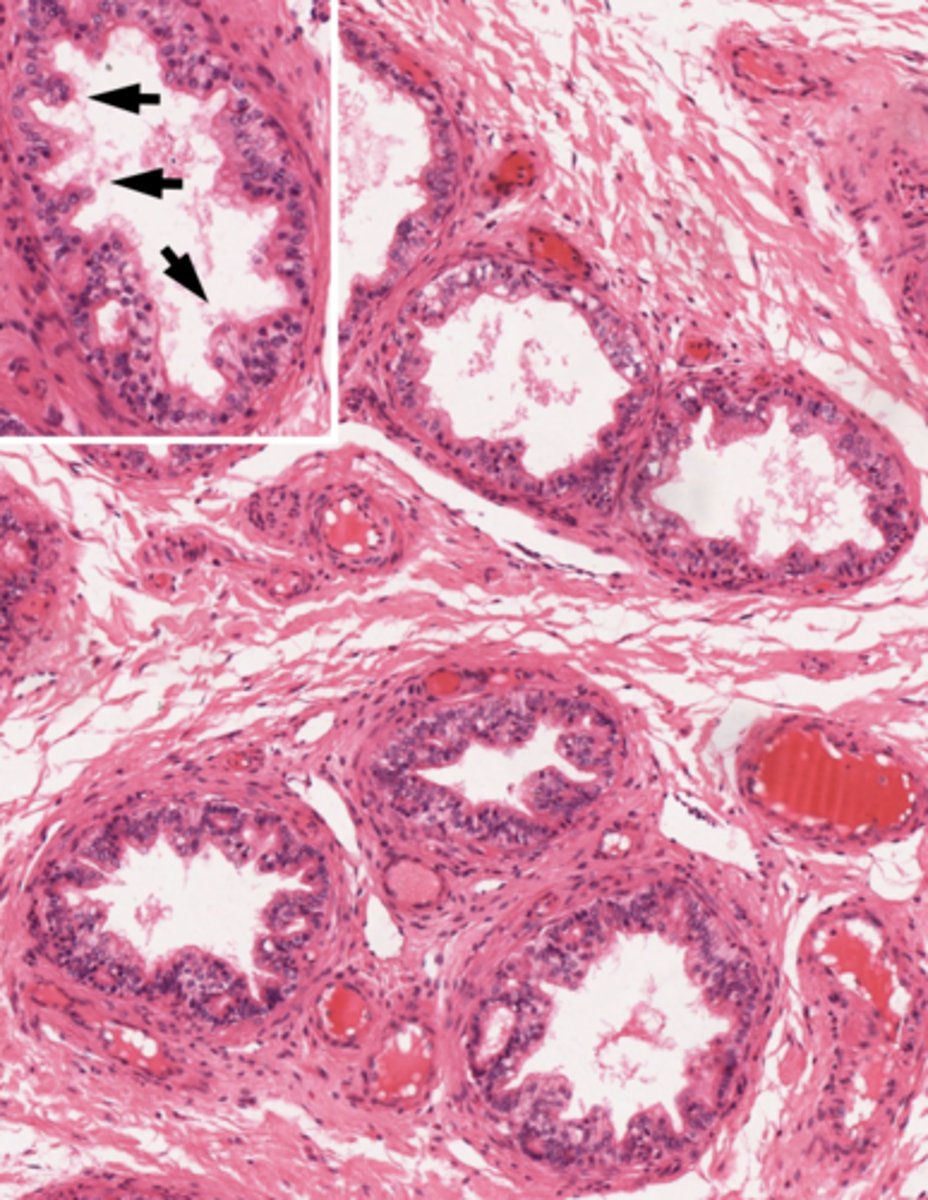
efferent ductules
What has the following characteristics:
- Short cells with microvilli
- Tall cells with cilia (transport non-motile sperm)
- Star-shaped lumen
- Surrounded by smooth muscle
- Resorbs most of fluid from testis
efferent ductules
What ducts are important in reabsorption of testicular fluid?
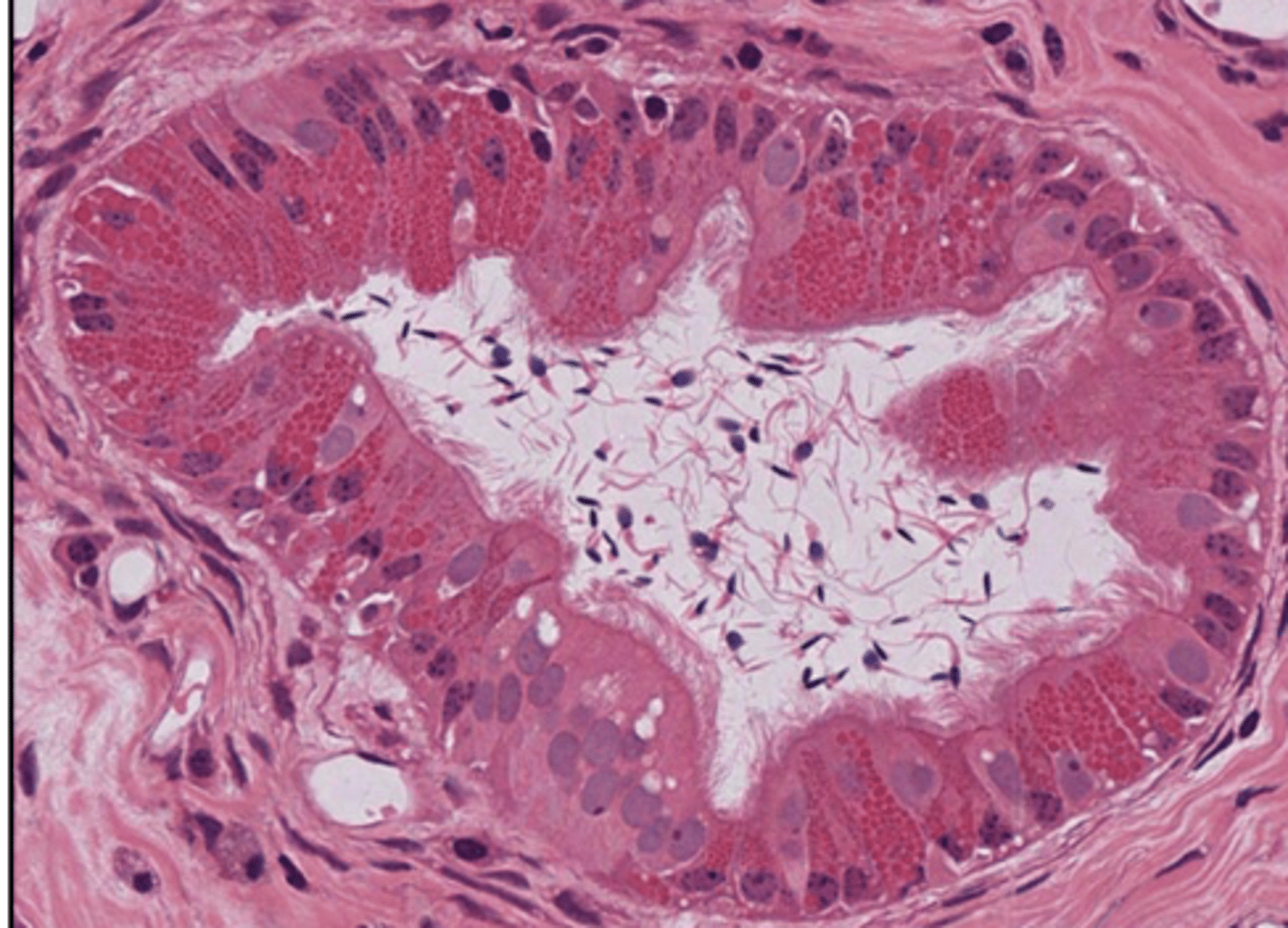
efferent ductule
What is the only area of ciliated cells in the male reproduction tract?
efferent ductules
What structure?
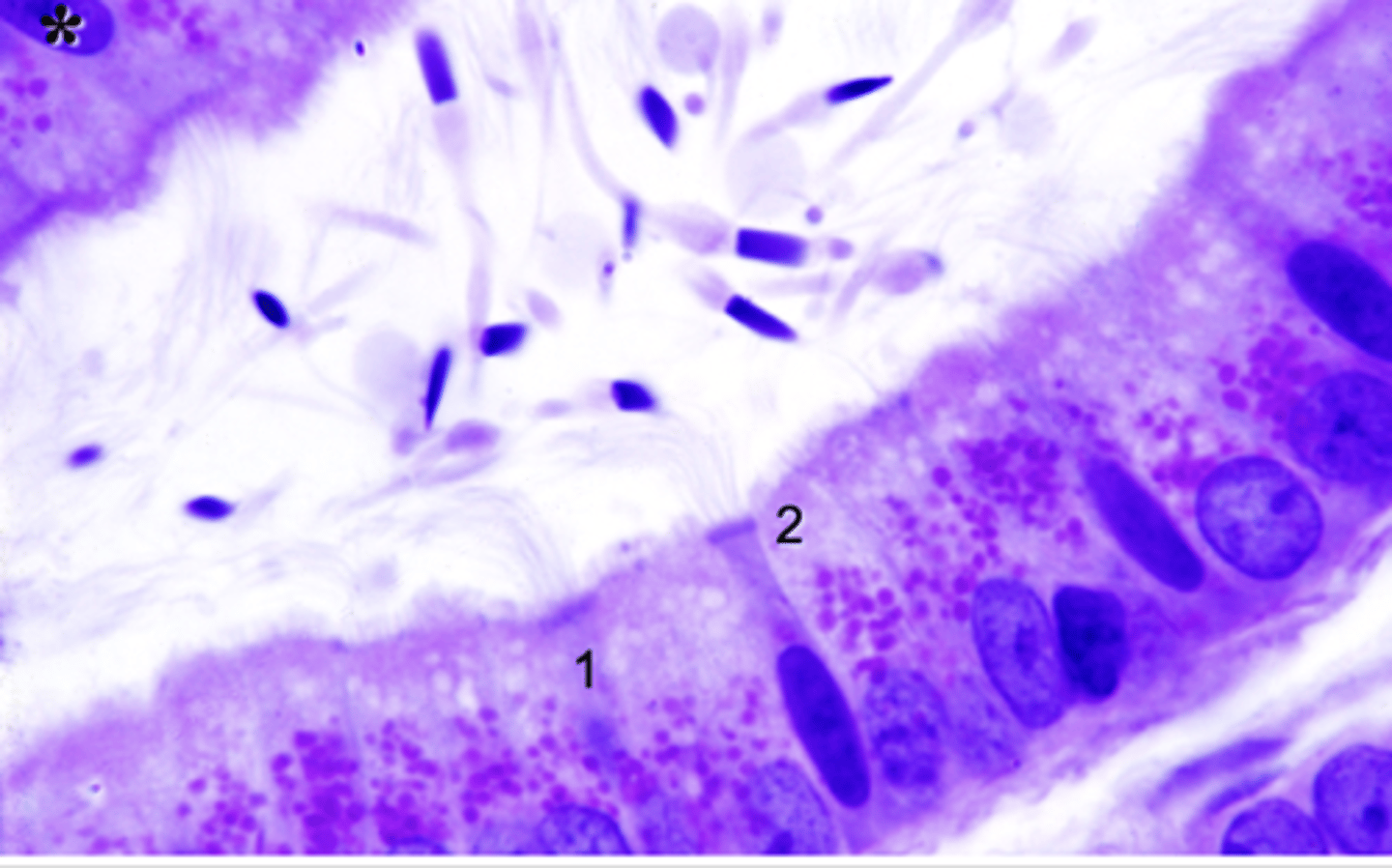
ciliated cell
What is 1?
Epididymus head
ID #1