chapter 29 Vertebrates
 Call Kai
 Learn
Learn Practice Test
 Spaced Repetition
 Match
Match Flashcards
 Knowt Play
1/40

There's no tags or description
Looks like no tags are added yet.
Name | Mastery | Learn | Test | Matching | Spaced | Call with Kai |
|---|
No analytics yet
Send a link to your students to track their progress
41 Terms
Vertebrates
• Derive their name from vertebrae: the series of bones that make up the backbone
• Most recognizable organisms of the Animal Kingdom
• More than 62,000 vertebrate species have been identified
• 3 groups of terrestrial vertebrates alive today: the amphibians, the reptiles (including birds),
and the mammals
• Are members of the phylum Chordata, the chordates
Chordata
Subphylum Urochordata
2. Subphylum Cephalochordata
3. Subphylum Vertebrata
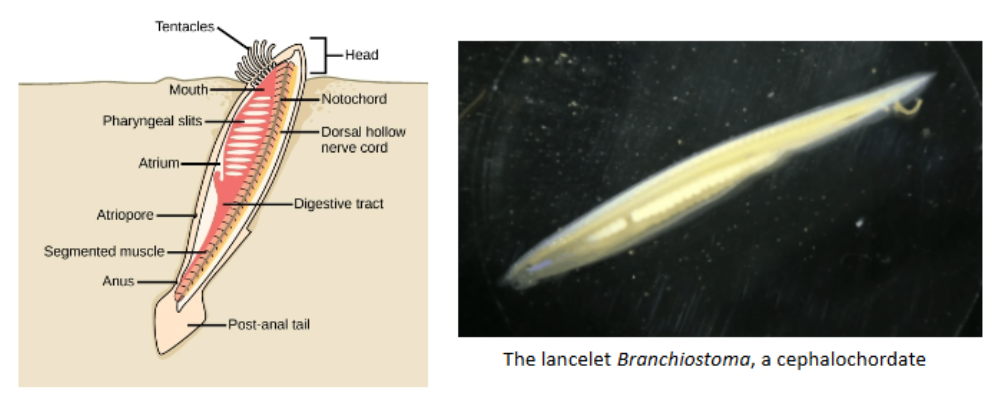
Characteristics of Chordates
1. Notochord
• Flexible, rod-shaped structure that runs along nerve chord
• In vertebrates, notochord develops into vertebrae
2. Dorsal hollow nerve cord
• In vertebrates, develops into spinal cord
3. Pharyngeal slits
• Vertebrate fish – develop into gill supports
• In tetrapods (4 limbed vertebrates) –develop into parts of jaws, ears and tonsils
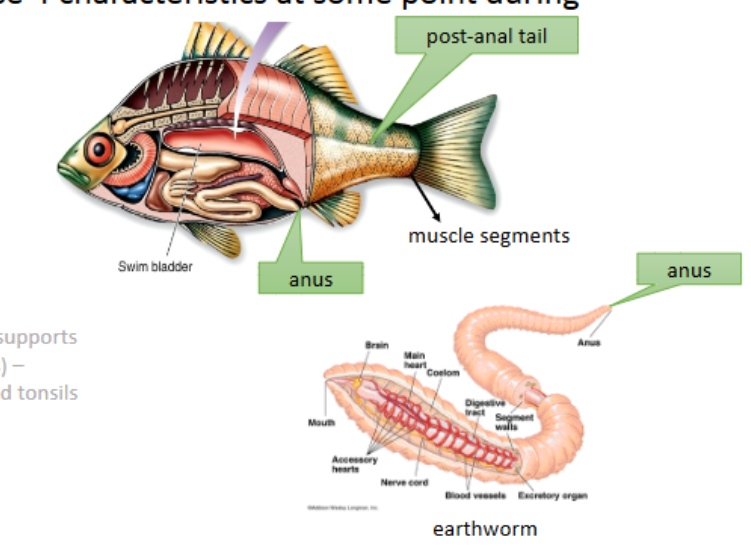
4. Post-anal tail
• Multiple muscle segments
• Undulating locomotion
post-anal tail
Chordates: Cephalochordata
lancelets
Lancelets
-all key chordate features in adult
• burrows tail-in & filter-feeds, cilia draw seawater into the lancelet’s mouth
• gas exchange occurs mainly across the external body surface
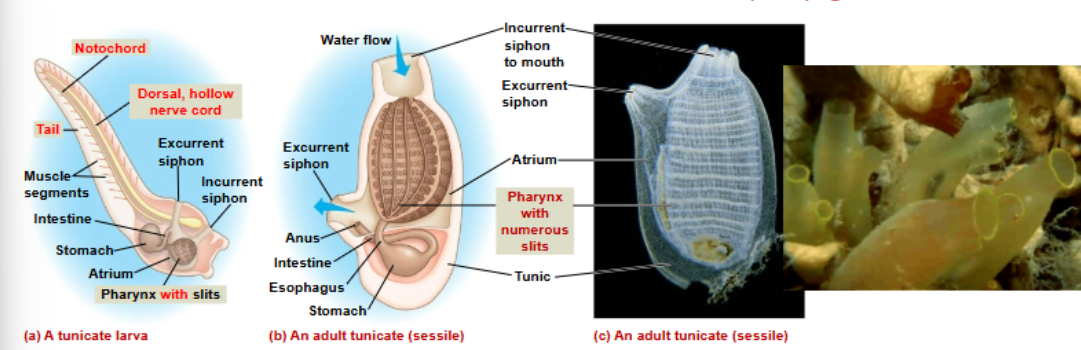
Chordates: Urochordata
-Tunicates (“sea squirts”)
Tunicates (“sea squirts”)
swimming larva has all key chordate features
Notochord, postanal tail, & dorsal nerve cord absent in adults
suspension-feeds w/ pharyngeal slits
Chordates : Vertebrate characteristics
• Vertebrae made of cartilage &/or bone enclose spinal cord (dorsal nerve cord).
• Two or more sets of Hox genes
-Endoskeleton:
• Axial Skeleton : skull, vertebrae (backbone), ribs
• Appendicular skeleton : pectoral and pelvic area
-A skeletal system and complex nervous system have
allowed vertebrates efficiency at two essential tasks
• Capturing food
• Evading predators
Vertebrates: Cyclostomes (Jawless)
hagfishes and lamprey
cyclostomes (jawless) characteristics:
• reduced vertebrae
• eel-like bodies & no lateral fins
• no jaw
keratin teeth
hagfish
• Marine scavengers
• cartilage skull & notochord
• keratinous teeth (aid feeding)
• Defensive slime
lamprey
• jawless parasite on fish
• notochord & cartilaginous skeleton
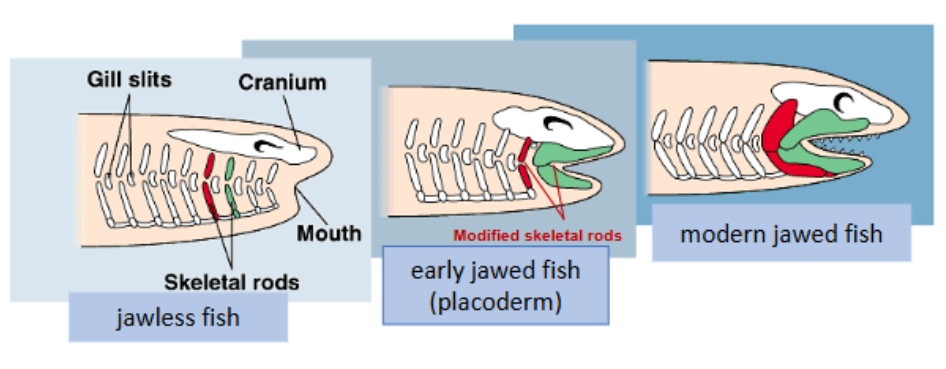
Vertebrates: Gnathostomes (Jaw)
• Vertebrates w/ hinged jaws
→derived from skeletal rods which supports gill slits
→usually have bony teeth (predation!)
• Larger forebrain (smell & sight)
3 gnathostome “fish” lineages
cartilaginous
ray-finned
lobe-finned
Gnathostomes: Chondrichthyes (cartilaginous)
• All have skeleton of cartilage
• Most diverse group - sharks, rays, skates
• A few ratfishes or chimaeras
• Bone minerals lost to reduce density
- buoyancy raised by liver oils & active swimming
• With bony teeth
• Most are active predators, marine
- but a few filter-feed; some live in fresh water
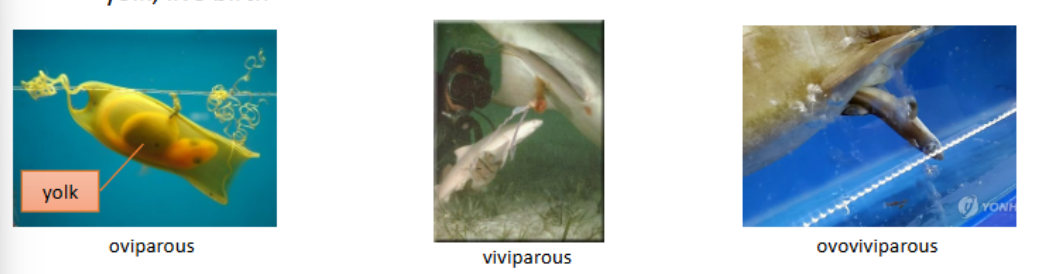
Reproductive adaptations of Chondrichthyes
oviparous: eggs “laid” and hatch outside the mother’s body; embryo develops w/in protective egg-case, fed by yolk
• viviparous: the young develop within the uterus; obtain nourishment prior to birth by nutrients from the mother’s blood through a yolk sac placenta; live birth
• ovoviviparous: fertilized egg retained w/in mother; embryo fed by egg yolk; live birth
Gnathostomes: Osteichthyes (bony)
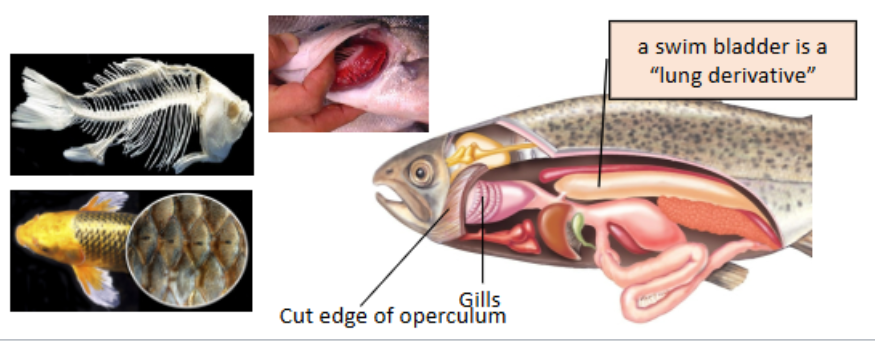
• includes both ray-fin fish & lobe-finned fish
• usually oviparous w/ external fertilization
• skeletons remain mostly ossified (mineralized)
• flat scales & slime protect & reduce drag
• operculum (gill cover) protects & helps pump water over gills
• lungs modified into swim-bladder for buoyancy
ray-fin fish
• thin fins supported by long, flexible rays are modified for maneuvering, defense etc.
• most diverse group of all vertebrates (almost all living bony fish ).
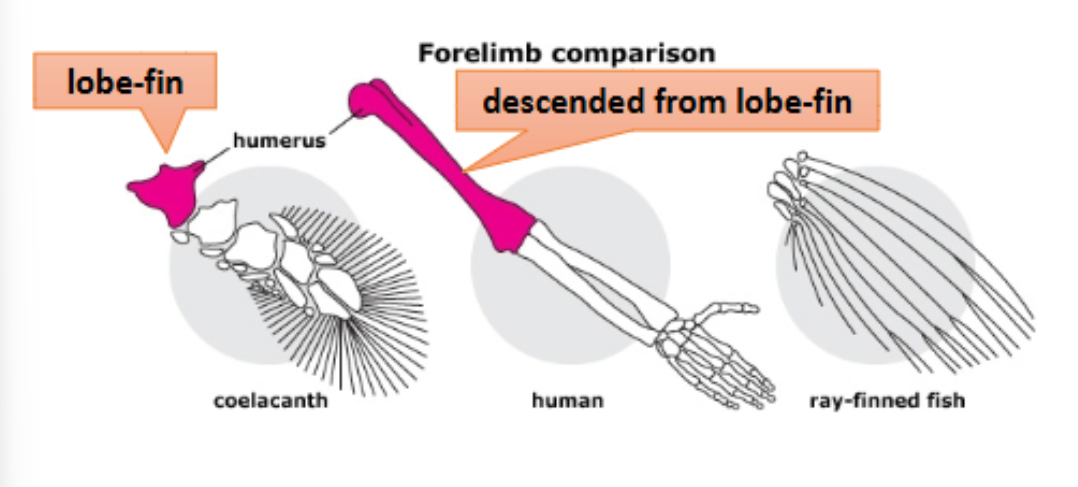
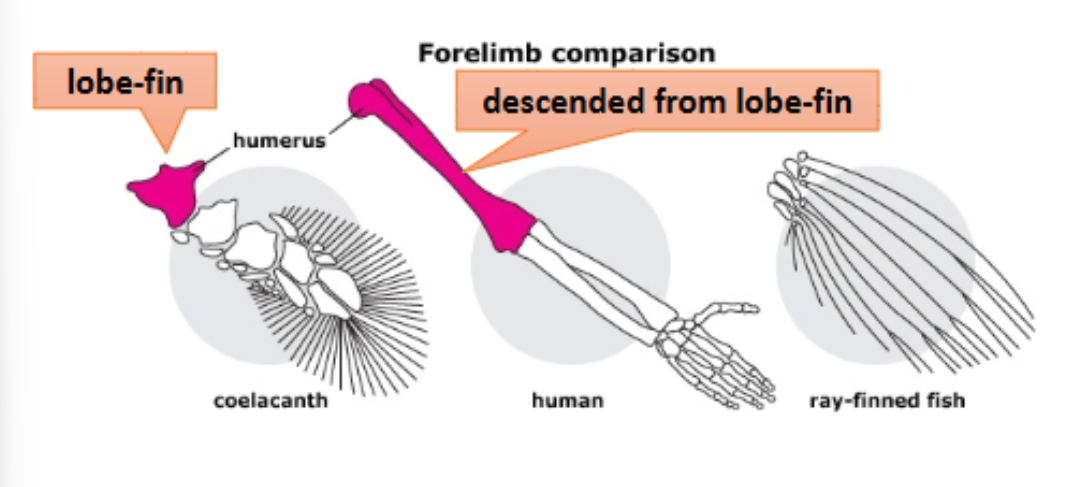
lobe-finned fish
• pelvic & pectoral fins supported w/ bones & muscles
• 3 lineages survive and include coelacanths (Actinistia),
lungfishes (Dipnoi), and tetrapods
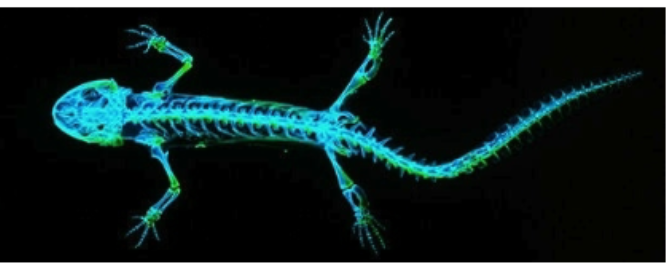
tetrapods
• four limbs w/ wrist & digits (key feature)
• neck: head moves independent of body
• pelvic girdle fused to backbone
• lung-breathing as adults (absence of gills: except in some aquatic species)
• ears for detecting airborne sounds
Ancestors of tetrapods
• were lobe-finned, lung-breathing fish
• had many tetrapod features
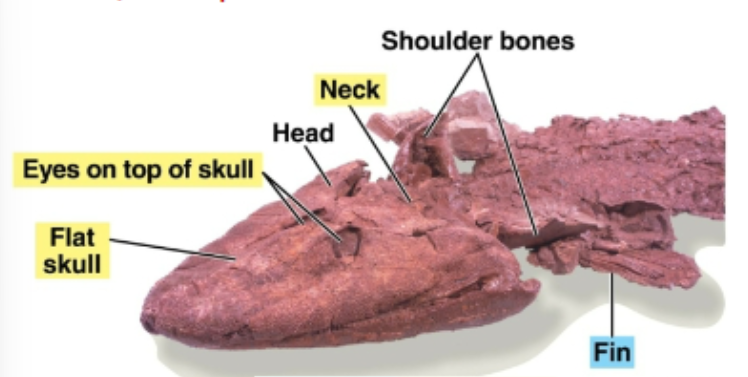
• Ex: fossil fish Tiktaalik w/ tetrapod features
→Tiktaalik could shuffle in shallow pools & maybe a bit on land.
fish versus tetrapod characteristics
-fish: scales, fins, gills and llungs
-tetrapod: neck, ribs, fin skeleton, flat skull, and eyes on top of skull
Tetrapods: Amphibia
• thin, moist skin; loses H2O easily
• gas exchange w/ air across moist skin & lungs; gulps air like fish
to fill lungs
• larval stage common aquatic, w/ gills; metamorphosis into
carnivorous adult
• almost all are oviparous (fish-like eggs); reproduction is closely
tied to fresh water
• diverse mating behaviors
Amniote Characteristics
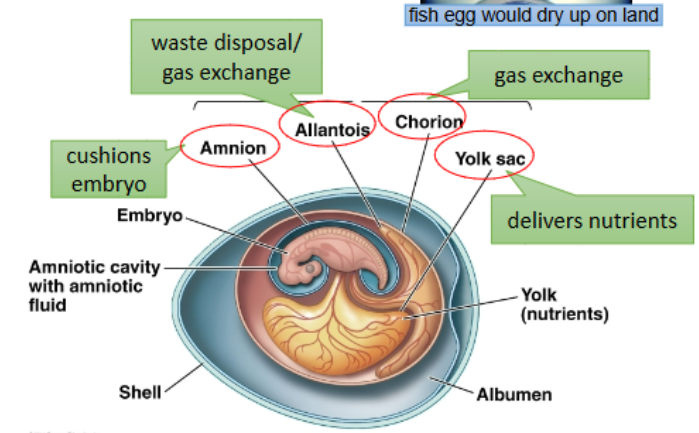
Amniotic egg : reproduction freed from water
• amnion protects embryo w/in watery amniotic sac
• other extraembryonic membranes sustain embryo w/
little water loss
• albumen stores water
• porous egg-shell protects, reduces water loss but allows
O2/CO2 exchange (rigidity varies w/ amt. of CaCO3)
• fertilization MUST be internal (before egg shell is made)
Evolution of Amniotes
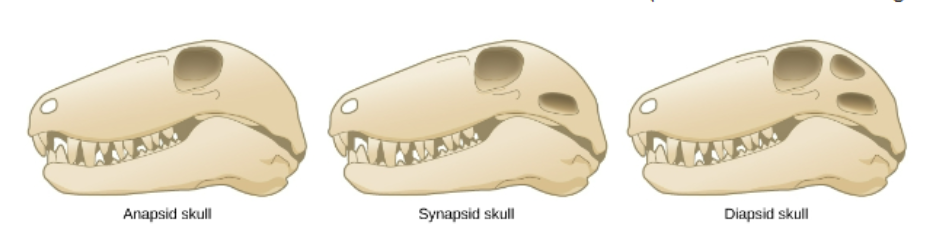
-The first amniotes evolved from tetrapod ancestors approximately 340 million years ago during the Carboniferous period
-Mammals are the only species that are classified as synapsids
-Reptiles are classified as diapsids
-Turtles are the only ones with anapsids
-Temporal fenestrae of anapsids, synapsids, and diapsids
(Anapsids have no openings, synapsids have one opening, and diapsids have two openings)
Amniotes: Reptiles
• Tetrapods
• Snakes and legless lizards—are classified as tetrapods -- descended from four-
limbed ancestors
• Scaly skin, containing the protein keratin and waxy lipids -- key adaptations that permitted reptiles to live on land
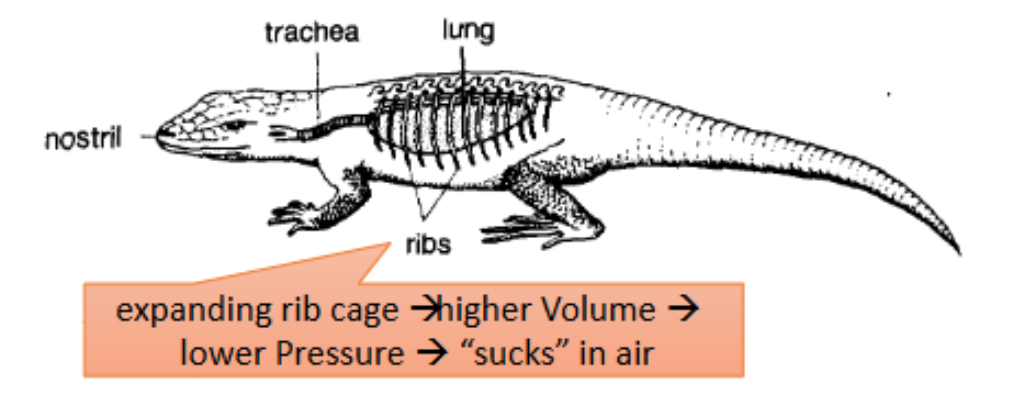
• Cannot use their skin for respiration, like amphibians -- breathe with lungs
• Negative-pressure breathing by expanding rib cage -- more efficient than
“gulping” air by fish & amphibians (positive-pressure breathing)
Amniotes: Archosaurs: Birds
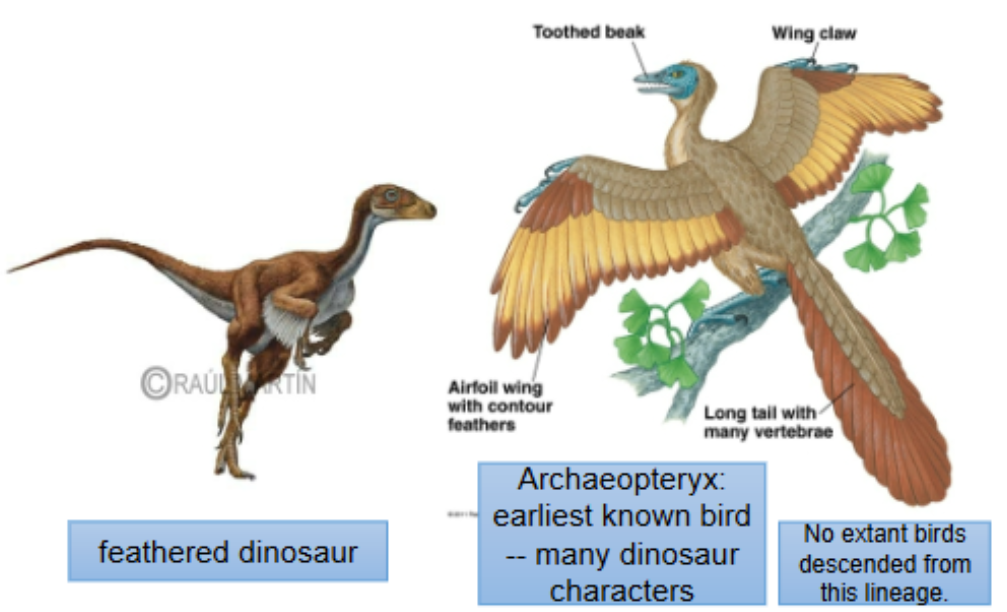
Origin of birds: diverged from a group of bipedal, feathered
dinosaurs called theropods during late Mesozoic Era
Many adaptations for flight:
1. forelimbs modified into wings w/ keratin contour feathers that provide lift
2. skeleton is lightweight but strong
• decrease in the number of bones
• pneumatization of bones (hollow bones)
3. stubby feathered tail for flight maneuvers
4. no teeth: beak of keratin over bone
5. efficient 4-chambered heart
6. highly efficient respiration system w/ air sacs
(negative-pressure breathing)
7. Urogenital adaptations
• no bladder or urethra
• only one ovary
• sex organs functional only during breeding season
• muscular gizzard grinds up food
Mammal Fossil History
• mammals descended from synapsid amniotes which had
mammal traits
Cynodonts first appeared in the Late Permian period 260 million years ago, are thought to be the ancestors of modern mammal
Mammals: Unique traits
1. mammary glands secrete milk for feeding young
• Extensive parental care
2. hair or fur, primarily for insulation
• also for camouflage, sensing, protection
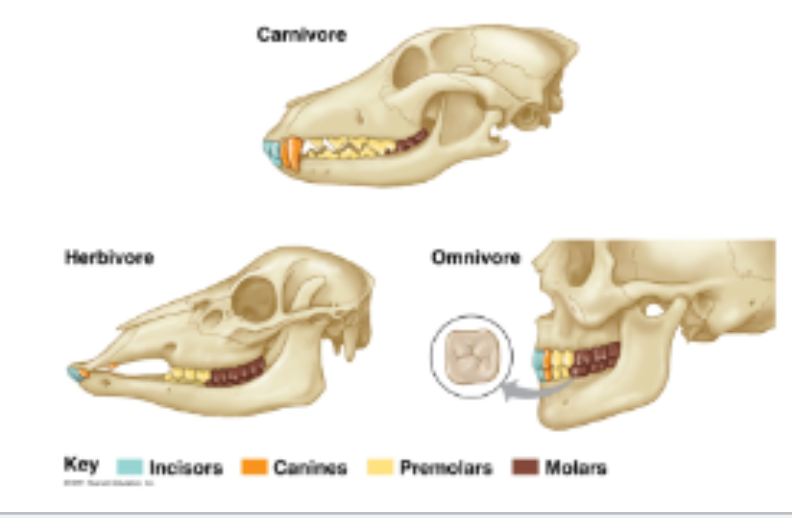
3. teeth vary in size, shape & number, adapted to many different food types
4. highly developed brain & complex behavior (the highly convoluted and folded cerebral cortex)
Mammals: Unique traits cont.
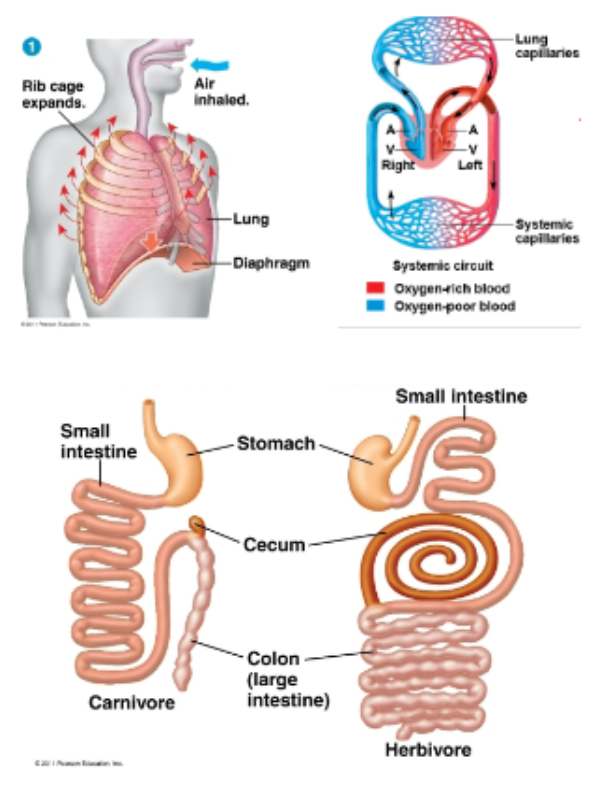
5. Efficient respiratory and circulatory systems
• ribcage breathing aided by muscular diaphragm
• improves negative pressure breathing
6. digestive tract adaptations for food types
• herbivores have longer tract than carnivores
• cecum can hold mutualistic microbes that digest cellulose
7. sweat glands secrete 99% water for evaporative cooling
8. Kidneys, which conserve water from wastes
mammals
-monotremes
-marsupials
-eutherians
Mammals: Monotremes
• egg-laying mammals
• lay shelled eggs (oviparous)
• young hatch & lap milk (no nipples)
• only echidnas & platypus
-only 1 species of platypus, 4 species of echidna
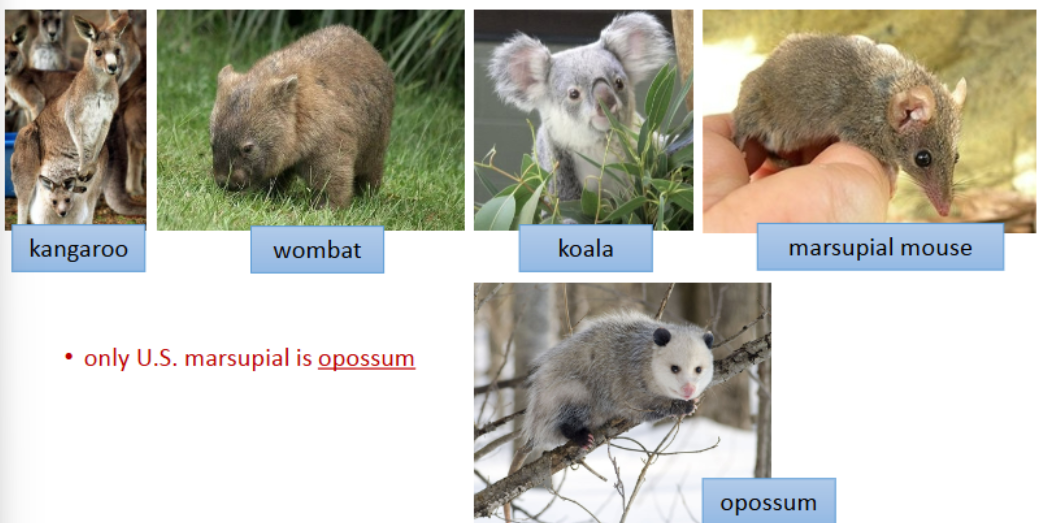
Mammals: Marsupials
• w/ maternal pouch
embryo starts growing in uterus w/ placenta
• fetus is born at early stage, crawls to pouch
• latches onto nipple to finish development
-marsupials are viviparous
-great diversity in Australia/New Zealand
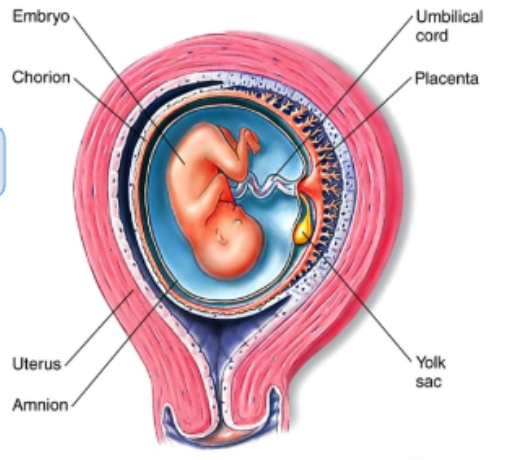
Mammals: Eutherians
• “placental mammals”
• better placenta for longer gestation
• young more developed at birth
viviparous
most diverse and widespread mammals
Mammals: Primate characteristics
Characteristics, related to arboreal life(live in trees):
• hands & feet adapted for grasping
• flat nails on digits
• large brains
• eyes forward
• flat face
Living Primate Groups
1. lemurs and relatives – arboreal
2. tarsiers – arboreal (one of the smallest primates, 3-6 inches in the Phillippines)
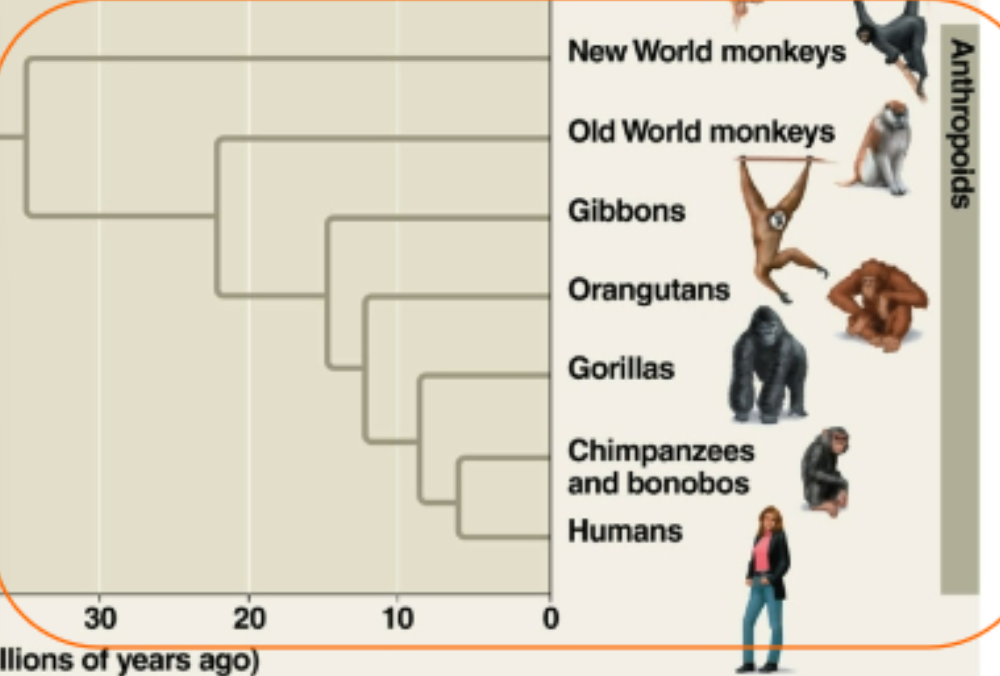
3. anthropoids – monkeys, apes & humans
anthropoids – monkeys, apes & humans
-humans and chimpanzees are most closely related
- last common ancestor ~7 mya ago
-old world monkeys: tails can’t grasp, mostly ground-dwelling (baboons and macaque)
-new world monkeys: prehensile tails, arboreal (spider and white-faced monkey)
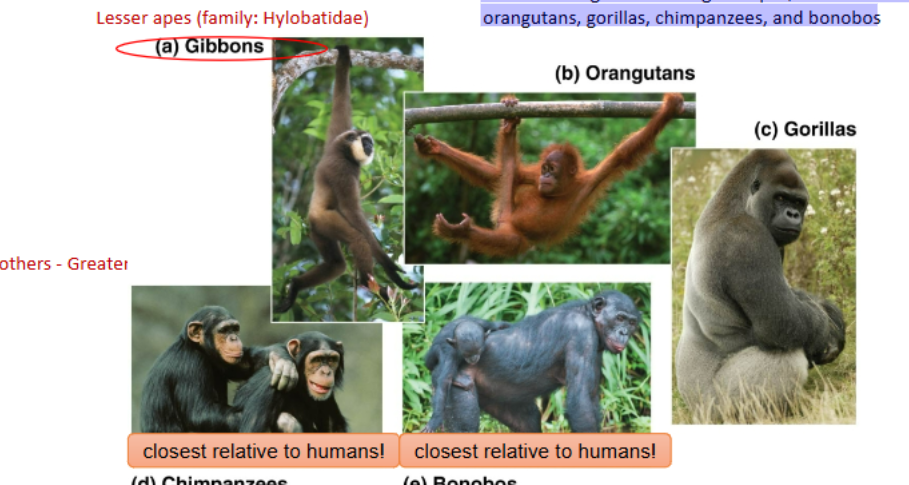
Apes & humans
-no tail; trees & ground
-A Hominid - any member of the family Hominidae -
Includes living and extinct great apes, modern humans,
orangutans, gorillas, chimpanzees, and bonobos
Homo sapiens
-very recent (200,000 years ago); only hominin (human & human ancestors) today
-characterized by:
• bipedal locomotion,
• ground-dwelling
• much larger brain
• language, complex
tools
• shorter digestive tract
• reduced jaws