Y1 Cog
 Call Kai
 Learn
Learn Practice Test
 Spaced Repetition
 Match
Match Flashcards
 Knowt Play
1/198

There's no tags or description
Looks like no tags are added yet.
Name | Mastery | Learn | Test | Matching | Spaced | Call with Kai |
|---|
No analytics yet
Send a link to your students to track their progress
199 Terms
cognitive psychology
the scientific study of mental processes
the information processing approach
based on analogy between the mind and computer
assumes brain processes information from the environment in a similar manner as a computer
a powerful approach to understanding psychological behaviour in labs and real world settings
interested in how we process information, where and when, the implications, errors and applications
clear assumption that information is represented in nervous system
the mind as a computer
hardware - physical system / nervous system
software - mental processes (memory, attention, reasoning, perception)
propositional representations
token mental representations with semantic properties (tokens with meaning)
indirect realism
we access external reality through representations
information - the amount of entropy/disorder in a system
very mathematical and involves predictive probability in a system
cognitive processes aim to process this surprise and filter out any noise
environmental information is processed by a variety of different processing systems (modularity)
discrete systems transform and sort the information collected from the environment
history of cognitive psychology
70 years old
structuralist approach - introspection (Wundt)
problematic, can’t be verified, different reports, can alter thought processes, assumes mental events are conscious
behaviourism - study of observable, measurable events
all behaviour can be explained with the learned relationship between stimuli and response
classical - passive stimuli response association
operant - pos/neg reinforcement
mental variables unimportant
basic drives of eating, breathing, reproduction
Watson - need a scientific approach to psychology, with same foundations as other physical sciences
cognitive revolution
paradigm shift with new concepts of attention, skill and capacity
behaviourism was too simplistic
influence of information theory from maths, engineering and computers
information flow 1 - bottom up (data driven)
begins with an analysis of the sensory input eg. light on retina
perception is built up from low level information
perception directs cognition (starts at the bottom, with observable patterns, which inform our higher order cognitive processes)
information flow 1 - top down (concept driven)
high level cognitive influences
knowledge and experience influence our perceptions of the world
our behaviour is influenced by conceptual data eg. can walk around house in dark
information flow 2 - serial
piecemeal processing
bottle neck
sequential/limited processing

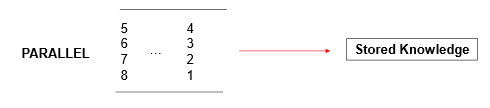
information flow 2 - parallel
bulk processing
late/no bottle neck
consecutive
approaches to studying cognition - experimental cognition
very common approach
experimenter controls the variable in attempt to study only 1 particular variable/system (eg. memory capacity)
structures are deduced indirectly as a result of measurements of accuracy and reaction time
approaches to studying cognition - cognitive neuropsychology
uses tests and experiments with patient sample, comparing to non-patient sample / other patients
how cognitive systems work is deduced based upon brain injuries/abnormalities
involves very small samples and relies heavily on double dissociations
assumes modularity of mind - one area damages one particular function
functional specialisation - brain has specialised areas for specific task
approaches to studying cognition - cognitive neuroscience
brain imaging techniques: EEG, PET, fMRI, TMS
approaches to studying cognition - computational cognition
artificial intelligence (physical electronics and computer programs)
connectionism
abstract associate networks
applications of cognitive psychology
product design eg. phones
visual behaviour eg. driving and road safety
object/face recognition eg. airport security
social interaction eg. ingroups/outgroups
representational accounts
assume we have activity in our nervous system that indirectly represents the world around us
non-representational accounts
don’t assume we have activity in our nervous system that indirectly represents the world
instead, information is directly picked up as we engage with the world
eg. Gibson’s ecological, Alva Noe’s access
sensation
the physical stimulation of the sensory apparatus
eg. effect of light on retina, vibrations on ear drum, surface pressure on skin
detecting stimulations
information is captured by the sensory systems and converted to neuronal activity
vision
the dominant sense in humans (we are still multi-sensory)
sensory information is captured, converted into electrical energy, carried along multiple specialized routes and processed in multiple locations for different purposes
perception
the ability of the mind to refer sensory information to an external object and its cause
the experiential (consciousness) component of experiencing/sensation
accessing and capturing the outside world, transforming it and representing it in the brain
cohesive experience
sensory information is transformed from one kind of energy, to electrical brain activity
then the brain has to make sense of this
about making sense of the world, forming a cohesive whole
perception is adequate, not accurate (Matlin and Foley)
physical stimuli are rich in information
human sensory system is really good at gathering information
concepts (higher level processes) shape our perception
sensation → perception is a combination of…
top down processes (concepts/expectations) and
bottom up processes (structures in the visual pathway)
consciousness
the state of awareness of our own existence, sensations, thoughts and surroundings
contrasting unconscious
Bor and Seth:
consciousness level - scale of awareness from zero contents to fully aware
consciousness content - moment to moment, here and now experience
consciousness and attention are not the same thing
they are related but involve different parts and processes in the brain
may come from synchrony and co-ordination
Baumiester and Masicampo - difference between levels of content experience
low-level - basic here and now awareness
high-level - reasoning, self-reflecting (humans only)
David Charmer’s 2 problems:
easy/soft problem - consciousness comes from brain activity (for stimuli that we process with and without awareness is different, but present)
where does it come from
hard problem - how does brain activity become conscious awareness, where does the experience come from
how, where and why we do it
Merikle - measuring when we are conscious
subjective threshold (own report)
point at which individuals can/can’t report awareness of a stimulus
objective threshold (observer)
point at which individuals can/can’t make accurate forced choice decisions about a stimulus/adjust a stimulus
the binding problem
understanding how the brain puts all the distributed processing information back together, to give a cohesive experience
consciousness is not unitary, but it feels that way
incoming information is extracted and broken down to be processed in multiple locations
synchrony is a possible solution
selective attention can explain this
Feldman - multiple difficulties
how does broken down information remain contagious/connected over time, as a cohesive
synchrony
precise - use timings of single cell firing to time stamp information
problem - computationally expensive
general - general pattern of cell firing is used to bind
problem - loss of detail
selective attention
we attend/process things/events together, so they are bound together in the brain
attentional clusters/grouping
Gestalt
laws/bias for putting information together in a coherent way
similarity - similar things go together
proximity - things close together go together
good continuation - when objects intersect, assume the object continues behind it
why are we conscious
perceptual
perceiving your environment may help you better interact with it
action control
free will, control and agency
social communication
understanding and interacting with others (theory of mind)
information integration
reflect on your own experience, organised information allows you to integrate experiences as you have them, but we don’t know why
the global workspace model
selective attentional processes affect how much of what we process we are aware of
eg. filtering, augmenting
what we see/hear is selected
conscious experience comes from:
here and now contents:
self, intentions, expectations, perceptual context
incoming sensory stimuli (environmental information)
external output (speech and actions)
unconscious processes
interpretations, memories, language, automatic biases
consciousness comes from synchronised and integrated activity across multiple brain regions
pre-frontal cortex, anterior gyrus and parts of parietal lobe
support for the global workspace model
fMRI and ERP evidence for differential brain activity for objects/words that are below conscious/subjective perception
behavioural results suggest unconscious processing is possible up to and including semantic level
response affected by ‘meaning’ of the target, even though you don’t see/hear it
problems with the global workspace model
zero level of consciousness is tricky to define, and impossible to measure
vegetative states and sleep
patients with limited brain activity appear to have some level of awareness
types of attention
people decide to engage in either focused or divided attention
usually determined by goal-driven or top-down attentional control processes
bottom up attention
passive modes of attention
exogenous
alterness/arousal
reflexive eg. towards a bolt of lightning
top down attention
active modes of attention
endogenous
selective/focused eg. you choose whether to listen/look or not
selectively attend to certain stimuli in environment, while ignoring others
present 2+ stimuli inputs, instruction to respond to just 1
necessary to reduce overloading our senses and cognitive processes
divided attention
multitasking
ability to undertake several tasks at once
present at least 2 stimulus inputs, instruction to respond to all
may tell us something about attentional mechanisms and their capacity
the eye as a camera
optics:
ciliary muscle
iris
cornea
conjunctiva
pupil
lens
film
processor
retina
fovea
optic nerve
the retina
film
made up of photoreceptor cells
broken down into:
fovea - more cells with most of them cones
parafovea - less cells with most of them rods
acuity/sharpness is highest at the centre
cells in the optic nerve
magnocellular cells
parvocellular cells
koniocellular cells
acuity/sharpness
highest at the centre of the retina
as something appears further from the centre of the retina, acuity drops off steeply
but we still perceive a world where everything is sharp in focus
our brain fills in the gap and uses our frequent eye movements to update and hold visual information - like the blind spot
our perception of the visual world is made by amalgamating visual snapshots and knowledge about our environment
limits on how we encode information (the eye), mean what we actually see is a more fuzzy than what we perceive
saccadic suppression
saccades - rapid movements of the eye between fixation points
we do not perceive our own saccades
this happens to supress the motion blur during the saccades, to perceive a stable world
just a decrease of the visual sensitivity
the eye travels up to 900 visual degrees per second
saccades can last up to 50ms
we are ‘blind’ for over 3 hours of the day
overt attention
attended information (in/around the fovea)
slow, 3-4 saccades per second
covert attention
unattended information (everything apart from in/around the fovea)
faster, 50ms to shift
when we attend somewhere/to something without moving our eyes
acts as a filter - selects stimuli for further processing
is limited capacity
includes attentional spotlight and zoom lens
Hemholtz
observed if we can enhance perception if we focus our attention on a location in the visual field
but it comes at the expense of other areas in the visual field
attentional spotlight
focused visual attention resembles a spotlight
enhanced attention within a small region of the visual field
but not outside the beam of attentional spotlight
zoom lens
attention is directed to a given region of the visual field
the area of focal attention can be increased/decreased, depending on task demands
voluntary orienting (expectancy)
results in faster reaction times
posner task
primary themes characterising attention
capacity limitation
our limited ability, to carry out various mental operations at the same time, needs a way to prioritise information
perceptual gating (selection)
conscious perception is always selective
but selection is not always conscious
attentional modalities
vision
limit on how much we can take in because things in the environment are placed in different spatial location
auditory
streams of sound from different locations
can’t listen to all at once, so selectively listen - cocktail effect
use top-down processing to fill in the gaps
Welford (1952)
presented 2 signals in rapid succession - psychological refractory period paradigm (PRP)
participants make speeded response to both
reaction time to 2nd stimulus depends on how close it is presented to the 1st stimulus
the closer the presentation, the slower the reaction time
saw this as evidence for a bottleneck (early selection)
as processing of 1 stimulus must be completed before processing of the next one can begin
claimed this as good evidence for a central limit on human processing capability
Cherry’s cocktail party effect (1953)
we are able to follow one conversation while several people are talking
due to selective auditory attention
ability to selectively attend to one auditory message, while filtering out others in a noisy environment
shadowing task - dichotic listening procedure
shadow = repeat aloud the message told to attend to
participants were able to:
perform the task and repeat the correct message
filter out the unshadowed message with little information remembered about this message
process the unshadowed physical characteristics
participants were not able to:
detect the meaning of the 2nd stream
detect if the 2nd stream was a foreign language/reversed speech
repeat any words in the 2nd stream
testing the bottleneck - Broadbent (1958)
3 digits presented to one ear at the same time as another 3 digits presented to the other ear
participants would recall numbers ear by ear better than in pairs
suggests the stimuli are accessed in parallel, by a sensory buffer
this filter stimuli on the basis of the physical characteristics
the other input remains in the buffer
attention allows us to selectively process information to filter out irrelevant information
his filter theory argues that we cannot identify/process something without attention
evaluation:
theory is based on physical properties = inflexible
attenuation - Treisman (1964)
unattended things are sometimes processed, when they leak through the filter, as they are processed enough to reach the threshold on conscious awareness
where the filter occurs depends on task demands:
physical cues, syllabic pattern, grammatical structure, meaning
attentional competing hypotheses
early selection
broadbent
physical characteristics of messages are used to select one message for further processing, and all others are lost
attenuation
treisman
physical characteristics are used to select one message for full processing
other messages are given partial processing
late selection
deutsch and deutsch
all messages get through, but only one response can be made
inattentional blindness
what we don’t attend to, we are not aware of
a grat demonstration that attention is required for identification
change blindness
interleaving screens where large changes happen, but can only see these changes when we are attending to them
Rensinck
explored ‘are change blindness and inattentional blindness the same?’
CB = spotting transitions
IB = identifying something that is ‘irrelevant’ to the task
change blindness suggests there is a failure of visual short-term memory (VSTM), enabling us to compare between scenes (irrelevant for inattentional blindess)
CB and change detection tasks show there is a clear limit in the information we can hold in VSTM = limit in what we can hold across a temporal gap
limits of attention
capacity
our idea of what the world is like is incorrect
gestalt psychology
means whole in german
scientists in 1910 suggested that perception could not be done by breaking it down into parts, but by considering the whole experience
links to object identification
the whole is other than the sum of its parts
laws of perceptual organisation
eg. law of pragnanz - the percept you see should be the simplest interpretation of the scene (good figure)
eg. law of proximity, similarity, closure, good continuation, common fate
provide us some framework on how to separate figure from the ground
theories of object recognition
imaged based models
structural description models
marr’s vision
recognition by component (RBC)
one of the most difficult tasks the visual system has to perform
imaged based models - theory of object recognition
specific views are ‘stored’ and recognition performance is based on generalisation from these
encode structured templates of viewpoint dependent representations
structural description models - theory of object recognition
information about the 3D structure of an object is extracted from a single view
marr’s vision - theory of object recognition
object parts are represented independently of their spatial cofiguration and viewpoint
everything can be broken down into sub parts
and looked how they link together
recognition by component (RBC) - theory of object recognition
objects are represented using basic shape units called geons (36 in total)
geons = variations in a small number of basic parameters called non-accidental properties (NAPs)
these are basic features that define variation in shapes, which are view independent
non-accidental properties (NAPs)
curvilinearity - curviness in the 2D image caused by curve on object
parallelism - lines in parallel in 2D objects caused by parallel lines on object
cotermination - 2+ edges that terminate at the same point
symmetry - axis of symmetry in 2D image reflect the axis of symmetry on object
collinearity - a straight line in the 2D image is caused by straight line in object
role of disparity and view generalisation during object recognition
clear evidence of viewpoint generalisation
accuracy is always better at the learnt rather than interpolated viewpoints, whilst extraploated viewpoints are the most difficult to discriminate
argues for image based models
effect of stereo depth information
although not significant in all experiments, subjects find the 3D viewing condition easier to perform, particularly in the extrapolated viewpoints
argues for structural description models
both theories correct
canonical viewpoint`
most recognisable view eg. horse from the side, rather than the front
Palmer, rosch and chase (1981)
participants shown views of an object and asked to rate how much each one looked like the objects they depict
in recognition task, reaction time correlated with the ratings
canonical views are recognised faster at the entry level
why canonical views are recognised faster at the entry level
frequency hypothesis
it is the view we’ve mostly seen in our lifetime
the easiness of recognition is related to the number of times we’ve seen the objects from each viewpoint
maximal information hypothesis
viewpoint contains the most amount and most informative information about the object
some views provide more information than others about the objects
best views tend to show multiple sides of the object with all its parts
edelman and bulthoff
created new objects to control for familiarity
when presenting all view points with the same frequency, observers had preference for specific viewpoints
when few viewpoints were presented, recognition was better for previously seen viewpoints
face recognition
our visual system is active in its attempts to organise our perceptual input without any conscious effort
involves ‘within-category’ discrimination
discrimination between members of the same basic level category
discrimination of patterns which share the same essential features eg. eyes, mouth, nose
errors in face recognition can have catastrophic consequences eg. eye-witness testimony
yin
participants are better at recognising upright faces than they are other objects
but worse for inverted faces than they are for inverted objects
face recognition hypotheses
featural hypothesis
faces are primarily remembered due to their facial features
configurational/spacing hypothesis
emphasis on the relationship/spacing amongst the facial features
holistic hypothesis
takes the face as a perceptual whole, where both configurational and featural information are required for accurate recognition
configuration is more important than the features
the thatcher illusion
tells us that we perceive faces in terms of the global configuration of facial features
we are unable to detect/accurately process the properties of local individual face parts if upside-down
evidence that faces are processes holistically
functional face recognition model - bruce and young
faces are structurally encoded
encoded information activates face recognition units (FRUs)
if match between encoding and FRU, then semantic information can be accessed
personal identity nodes (PINs) contain information about that person
evidence suggesting face recognition is special
johnson and morton
new born babies will preferentially view faces from 9 minutes old
meltzoff and moore
expression analysis seems to be innate (independent of object recognition)
face agnosia (prosopagnosia) without object agnosia, object agnosia without prosopagnosia
human fMRI result of objects vs faces:
subject viewed faces for a while, then pictures of objects
one area becomes more active during face-viewing (fusion face area - FFA)
another area becomes more active during object-viewing (lateral occipital complex - LOC)
inversion effect
healthy participants are better at recognising upright, rather than inverted faces
effect is not as strong with objects
prosopagnosic participants are better at recognising inverted rather than upright faces
Jennifer Aniston cell
single cell recording in live patients, who were shown hundreds of pictures
neurons in the medial temporal lobe (MTL) responded to only jennifer aniston - but not when she was photographed next to brad pitt
this part of the brain is involved in memory
greebles
participants learned them and became experts
they are mini figures varying in elements
the fusion face area (FFA) of the brain behaved like they were faces
after this special training, brain activity shifted from object area to face area
evidence suggesting face recognition is NOT special
bruyer et al
a prosopagnosic farmer who could identify his cows
McNeill and warrington
patient with prosopagnosia who could distinguish between his sheep
ellis and young
such cases might simply reflect specialities in processing for many types of object
after training people to recognise non-face objects, they show face recognition-like performance
language
a system of symbols and rules that enable us to communicate
the rules specify how words are ordered to form sentences
words, both written and spoken, are symbols that stand for other things
collections of signs, sounds and gestures put together to use rules (grammar) and structure (syntax) to convey message
panbanisha - the bonobo great ape
a lifetime in captivity receiving language training
taught to use a keypad of 400 geometric patterns to communicate
keypresses prompted a synthetic voice
he understood english at the level of a 2.5 year old human
had a 3000 word vocabulary at 14 years
could produce a grammatically correct sentence with keypresses
shows apes can grasp aspects of language
is language innate or learnt
a critical debate in the development of the cognitive revolution
skinner = learnt
chomsky = innate
innate universal grammar
an innate set of grammatical principles found in all human languages
multiple linguistic universals
lexical categories
nouns, verbs, adjectives etc
some categories are missing in some languages however
word order
subject, object verb (SOV)
subject, verb, object (SVO)
almost universal - majority has the subject preceding the object
recursion
embedding clauses within sentences
lacking in some languages eg. Piraha - Amazonian language
justification for innate universal grammar
offers explanation for:
why only humans develop language fully
the broad similarities across the various languages
the rapid speed in which children learn to speak
criticisms of innate universal grammar
there aren’t linguistic universals
languages differ enormously across the world
children learn language quickly because it’s invented by humans, with the limitations of human performance in mind
language reflects pre-existing and hence non-language specific, human learning and processing mechanisms
natural language
any language that has developed naturally through human interaction and use
can take different forms eg. speech, signing
fundamental to human cognition and social integration
a flexible, generative, symbolic representation system for communicating meaning
grammar and syntax are key mechanisms
meaning is subject to inference and pragmatics
it is complex and resource intensive
subject to inteference and error
we have a range of shortcuts
context is very important
language follows developmental sequence:
simple → complex
babbling → words → sentences
natural language appears to be unique to humans
only humans have the vocal equipment and unique brain areas for spoken language
generative and flexible
finite set of symbols, infinite set of messages
grammar
combination rules contain subject, verb, object
very young children are sensitive to grammar
importance of natural language
as a social animal, language is necessary to convey simple and complex meaning/ideas
may have been a key factor for human brain development - encephalisation
human brain is 3x bigger than it should be, given our body size
correlates with sociality
only humans have the vocal equipment and unique brain areas for spoken language
non-humans able to convey complex message, but is not the same as natural language
eg. waggle dance, bird song
3 processes involved in language production - Levelt
conceptualisation
planning the message
desired concept to be communicated
formulation
transforming the intended message into speed sounds and sentences
including grammatical, morpho-phonological and phonetic encoding
articulation
words turned into speech
movements from the tongue, lips, jaw, lungs, larynx and glottis
these processes are incorporated into models of speech production, but they differ in number of processing levels
tip of the tongue phenomenon
a failure in retrieval
cannot recall the exact word, but can recall words of a similar form/meaning
recall can be guided by partial word information
info can often be retrieved if given sufficient additional time to retrieve it
occurs when we can access the concept of a word, but cannot access the phonological form of the world
only the conceptualisation process occurs, not formulation or articulation
phonology
sounds of language
semantics
meaning encoded in language
meaning conveyed by words, phrases and sentences
grammar
rules of language
govern syntax
SVO, plus specific rules for each language
syntax
structural order of words
eg. colourless green ideas sleep furiously
this has correct grammatical structure - syntactically acceptable
but does not have clear semantic structure/meaning
phonological structure
organised into phonemes
morphophonological structure
how the phonemes are arranged/grouped to form words and morphemes
syllabic structure
how spoken words can be deconstructed into syllables
prosodic structure
assigning stress and intonation within a sentence
phonemes
constitutes the spoken sounds of a sentence
what we hear
smallet unit of sound in a word than can convey meaning
eg. swapping the ‘m’ phoneme to ‘n’ in ‘dime’ changes the meaning of the word (dime → dine)
graphemes - the written alternative to a phoneme (what we see)
phonemes can form graphemes in multiple ways (multiple spellings)
eg. shun (sound) can be spelt as tion (writting) in ration for example
graphemic content within a word can have multiple phonological representations and sounds/pronounciations
eg. ough can be dough, tough, plough, thought, through
orthography
the conventional spelling system of a language
ghoti is an alternative spelling for fish
most language have a shallower orthography than english
written production
similar to speech production
conceptualisation - planning the message
formulation - transforming the message into sounds and sentences
articulation - words turned into writing
2 ways of generating the spelling of a word to be written:
sublexical route
lexical route
sublexical route
word is prepared as in speech
until the point where phonemes can be converted to graphemes
useful for words with unfamiliar spellings
also known as sound-to-sound spelling and phoneme-to-grapheme conversion
lexical route
direct retrieval of the orthographic word
stored knowledge about how the word is written
very important for languages with deep orthographies
allows us to spell words with poor sound-to-spelling consistency, or words with the same spelling eg. they’re/their/there
whorfian hypothesis - language and thought
language determines/influences thinking
perception of the world is affected by the words we use to describe it
principle of linguistic relativity
supposedly saw similarities with Einstein’s theory of general relativity
strong version - language determines thinking
intertranslatability - can translate a statement in one language to one in another language, just might not be the same number of words
contradicts the argument that a thought expressible in one language is not in another
eg. the word Mokita means ‘truth everybody knows but nobody speaks out’
in English there is no word with this meaning, but we understand the concept
weak version - language imposes constraints on thinking
weakest version - language influences memory
winawer et al
studied categorical perception in english and russian subjects
russian has distinctive words for dark blue (siniy) and light blue (goluboy)
examined performance in a speeded colour discrimination task
russian speakers were faster to discriminate 2 colours if they can be categorised separately
categories in language can affect performance of basic perceptual colour discrimination tasks
support for whorfian hypothesis
roschian hypothesis - language and thought
language does not determine/influence thinking
perception of the world is not affected by the words we use to describe it
language is only used to describe our perceptions of the world
pragmatics and inference
literal meaning vs intended meaning of the sentence
knowledge about how to use language appropriately in the right contexts
eg. can someone tell me the time?
literal = yes
intended = 12:30
concerned with practical language use and comprehension
grasping the speakers understanding and beliefs with accompanying gestures (vocal and facial)
can be considered as meaning minus semantics
emphasis on figurative language - not intended to be taken literally
idiom eg. kick the bucket
metaphor eg. fishing for compliments
the non-reversibility of metaphors is an important phenomenon
eg. my surgeon is a butcher vs my butcher is a surgeon
a phrase looked up in a dictionary can give us definitions
but cannot give the intended meaning of the sentence
more information is required, such as speakers tone, stress of words, context