EXOCRINE GLANDS
 Call Kai
 Learn
Learn Practice Test
 Spaced Repetition
 Match
Match Flashcards
 Knowt Play
1/52

There's no tags or description
Looks like no tags are added yet.
Name | Mastery | Learn | Test | Matching | Spaced | Call with Kai |
|---|
No analytics yet
Send a link to your students to track their progress
53 Terms
Which are the 6 classifications way for exocrine glands
NUMBER OF CELLS
LOCATION
DUCT SHAPE
SHAPE OF SECRETORY PROTION
NATURE OF SECRETION
RECEPTOR KIND
CLASSIFICATION FOR LOCATIN
Which are intracellular which are extraepithelial?
Intracelullar as goblet cells so between epithelail cells
Extra epithelial : beneath so are in the connective tisue.
Have a secretory part and an duct system to transport the secretion to epithelia
Classifcation based on duct system shape
Duct system can be symple or compund
The compound kind is branched as the one in the salivary gland and pancretaic gland
Compound duct are associated with connective tissue dividing the glands into LOBES
If a gland is divided into lobes which kind of duct is present
A compound duct where ct is associated (septa)
How can you classiy the shape of the secretory portion?
Tubular then can be single, coiled and branched
Acinar that has a rounder shaped singles or branched
Tubuloacinar
Silvary glands and pancreatic glands have what shape of sec. Portion
Tubuloacinar
Gastric glad and sweat gland have what duct shape
Tubuluar
Classification based on the nature of the nature of secretion
Serous
Mixed
Sebaceous
Mucous
Serous secretion And glands
Serous secrete is rich in enzyme therephore the serous glands hvae abundant RER basally and secreate granules APICALLY
Appear darker than mucosu cells, small lumen and rich in enzymes
Basophilic cytoplasm for rer abbundant
Es. Exocrine pancreas
Paratyroid
Mucosu secretion
In what is it rich?
How does it appear
Compare mucous to serous
Mucous is rich in GLICOPROTEIN
The acini appear PALE and FLAT LARGE LUMEN Rand larger compared to serous one
How are acinar mucous cell histologically
They appare pale, flat and white a larger lumen compared to serous one ( darker, smaller)
CELL ARE CUBOIDALS
Secrete carbo and glyprottein pas positive
Ex. Mucosu cell of stomach ( simple, branched tubular)
Mucous glands of the oral cavity
Which glands have mixed secretion
How are their cell called
Cells of mixed glands are SEROUS DESMILUNES
They secrete both serous. And mucosu and are like the SUBLINGUAL AND SUBMANDIBULAR
SEBACEOUS GLANDS
What type of secretion is here?
Sebacosu glands have a big secretion of LIPIDS And antibacterial
As the lipid droplet acculumate they are then secreted by HOLOCRINE SECRETION
CLASSIFICATION BASED ON TYPE OF SECRETION MECHANISM
Merocrine: exocytosis whitout cytoplams loss as in PANCRREAS, SALIVARY
Apocrine: apical cytoplasm is pinched off SWEAT GLAND AND MAMMARY
Holocrine as in sebacous glands
What are the two components of glands?
Stroma: ct with blood vessels, nerves and ecm
Parenchyme: functional cells
Embryologically which is the differenc ebetween endocrine and exocrine cells
As they form from the invagination of the connective tissue in the underling connnective the endocrine detach completely so do not have the ducts
While xocrine keep the duct connecting to the surface
From which layers do exocrine glands derive
From all three
From those that open into the outer skin from the ECTODERM. Sweat, salivary and lacrimal
For those that open in internal lining dfromthe ENDODERM: ES, PANCREAS, STOMAVH, SALIVARU ECC..
Fro the mesoderm those related to the urogenital system
Unicellular cells goblet
Carcateristic
Location
Secretion
Staining
Goblet cells are intraepithelial and unicellular
Secret mucin ( that with water becomes mucosal)
Mucus traap pathogens
Hitsologically THEY ARE PAS POSITIVE as muscosu is rich in glycoprotein
Why are goblet cell have a polarized structure
Mucus is rich in glycoproteins so basal part is rich in RER and golgi
Apical part in goblet cell is wjere there are the granules
The apical part as it has mucus it is paler
What type of secretion do goblet cell have?
MEROCRINE as the cytoplasm is nt lost and also it can be continuous or stimulates-
Is secreted for esocytosis! ( as those of trachea bronchi and GI)
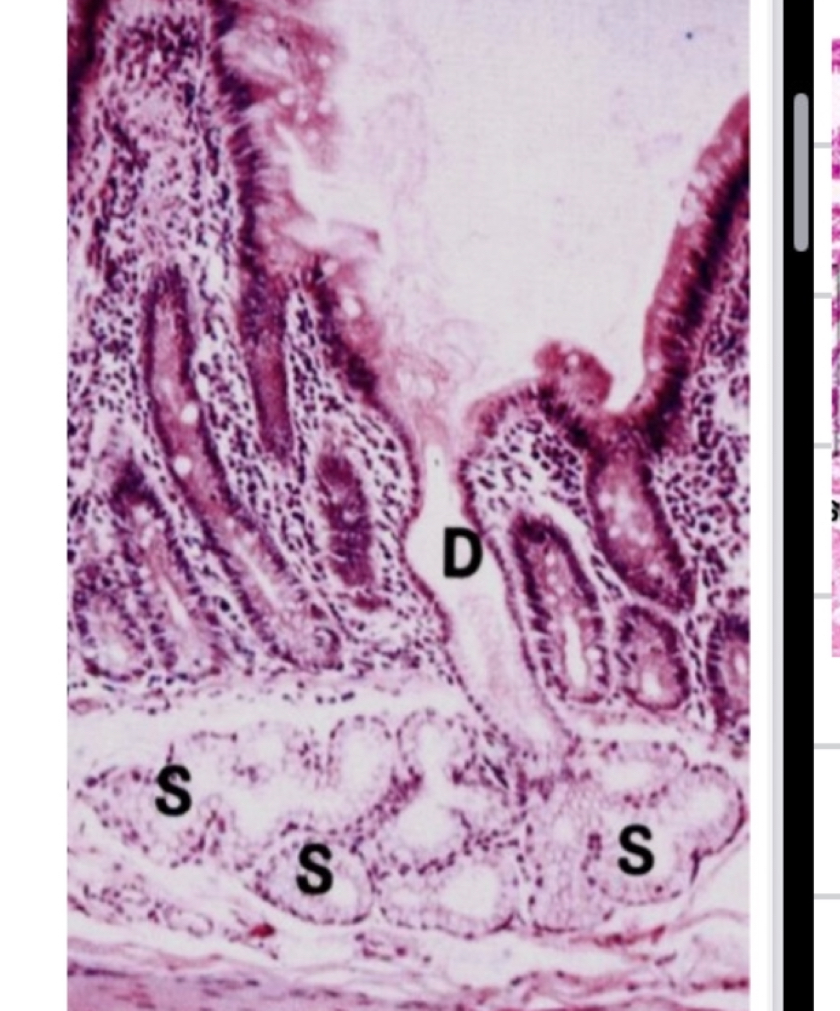
Which kind of glands are intestines one?
SIMPLE AND TUBULAR
Also called instine cripts
Merocrine secretion
In the large intestine they secrete mucous for fecal lubrigication
What kind of gland are sweat glands? What sdecretion is here?
Simple coiled tubular ( tipo la liquirizia)
Here we have APOCRINE SECRETION with loss of cytoplasm
the odriferous part is optain when the secrete is in contact with the six
It opens into the hair follicle
How do sweat gland appears
It appars clear for water and all the elocrolytesDarker where glycoproteins are
And then with myoepithelia
Which kind of glands are stomach one
What kind of secretion?
Branched tubular
Open into the gastric pts
Merocrine secretion
Secrete mucous to protect from HCL secretion of parietal cell and PEPSIN secretion from chief cells
As mucosu is rich in glycoproteins cells have dev. Golgi and rer and a clear appearance
Which kind of cells are sebacous glands? What kind of secretion is here?
Branched and alvolar
Lipid droplets accumultion leads to HOLOCRINE SECRETION
Sebacous glands are associated with hair follecules
NEAR THE FOLLICLE AND IT LOOKS PALE AND FOAMY
What kind of glands are sweat glands
WHAT ARE THE TWO KINDS AND HOW DO THEY DIFFER?
Simple tubular coiled
Apocrine
Coiled part is for the secretion
ECCRINE: for termoregulation and have a merocrine secretion a smaller lumen clear cell where water and electrolites are and darker where glycoproteins are
Eccrine are DEEP INTHE DERMIS and use myoepithelial cells to secrete into duct secreting nacl, ammonia, urea
Apocrine: are in the axilla region and open into haur follicles hand have amuch wider lumer and CUBOIDAL cells
SECRETE ODORIFOURS FLUIS
Describe eccrine sweat glands
Eccrine sweat glands are located deep in the drrmis
Simple ytubular and coiled for the part thatt secretes into the duct secreting nacl, urea, ammonia
They have a narrow lumen
And are for thermoregulation
COLOUMNAR
Which gland is this
Sweat
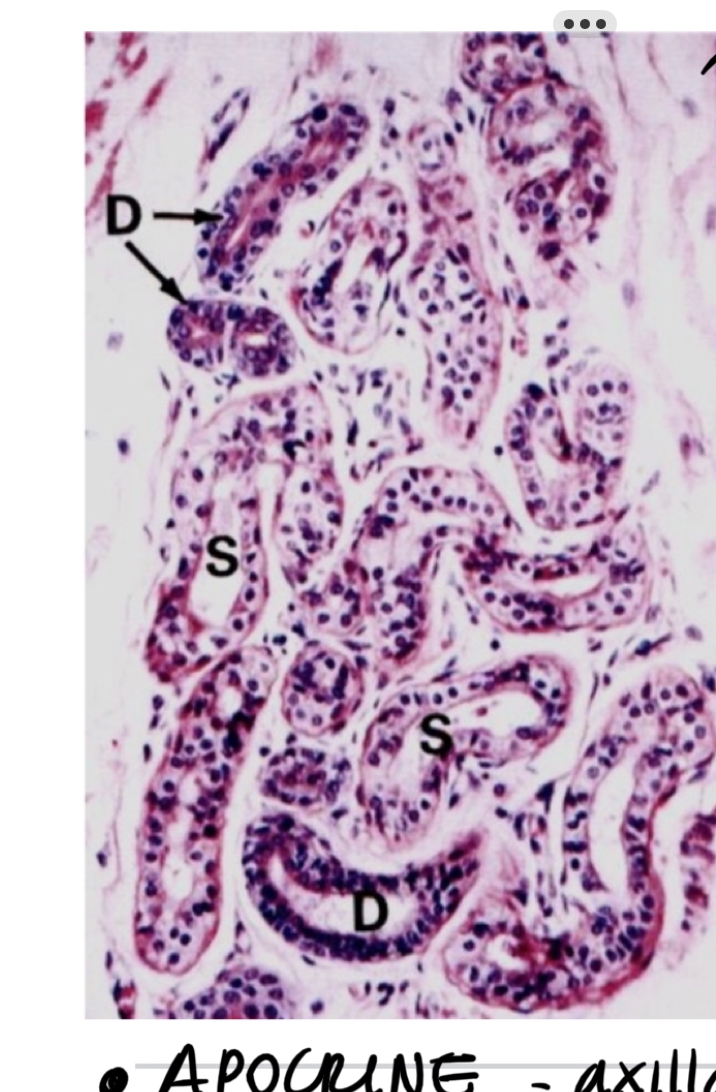
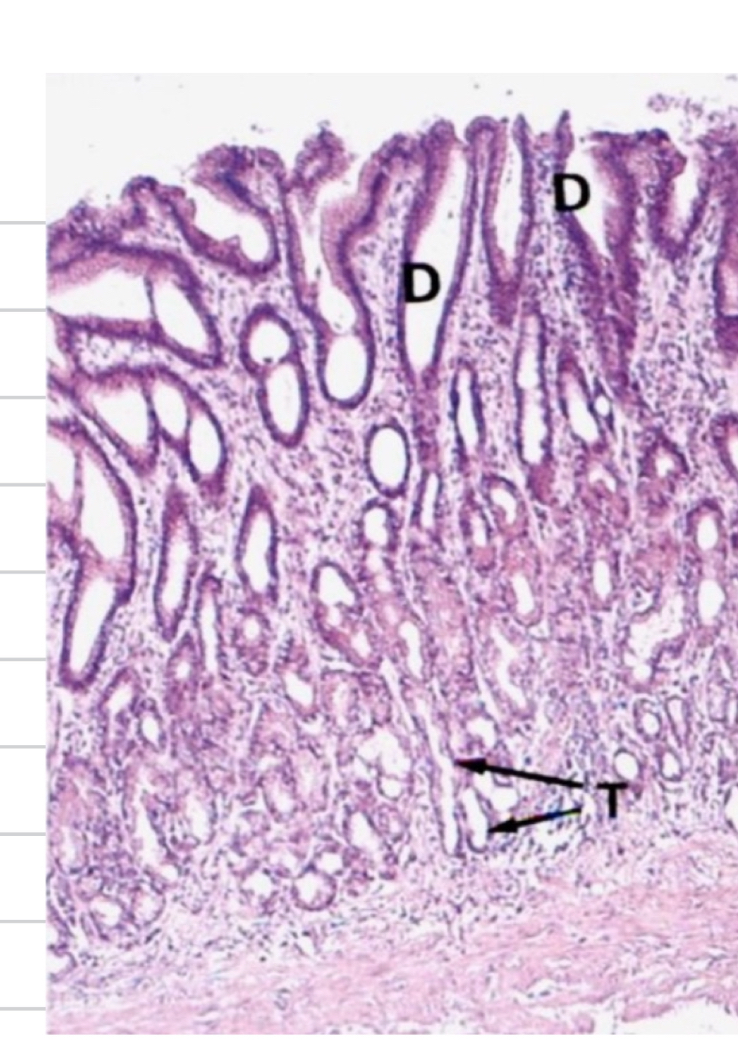
Stomach glands In detail
Are simple branched tubular
Secrete mucous via merocrine secretion to protect form hcl and pepsine they open int
OPEN INTO gastric pits from tubular secretory portion
GASTRIC GLANDS CONTAIN ALSO: parietal cells that are zymogenic meaningare hat they secrete inactive enzyme precurosor ad pepsinogen and lipase
And enteroendorcirne cells for hormons related to digestion
In the case of cronic acid reflux GERD what happens?
With acid contant exposure the tissue liningthe esophagous changes transforming the squamous epithelium into gastric cells this is called INTESTINAL METAPLASIA
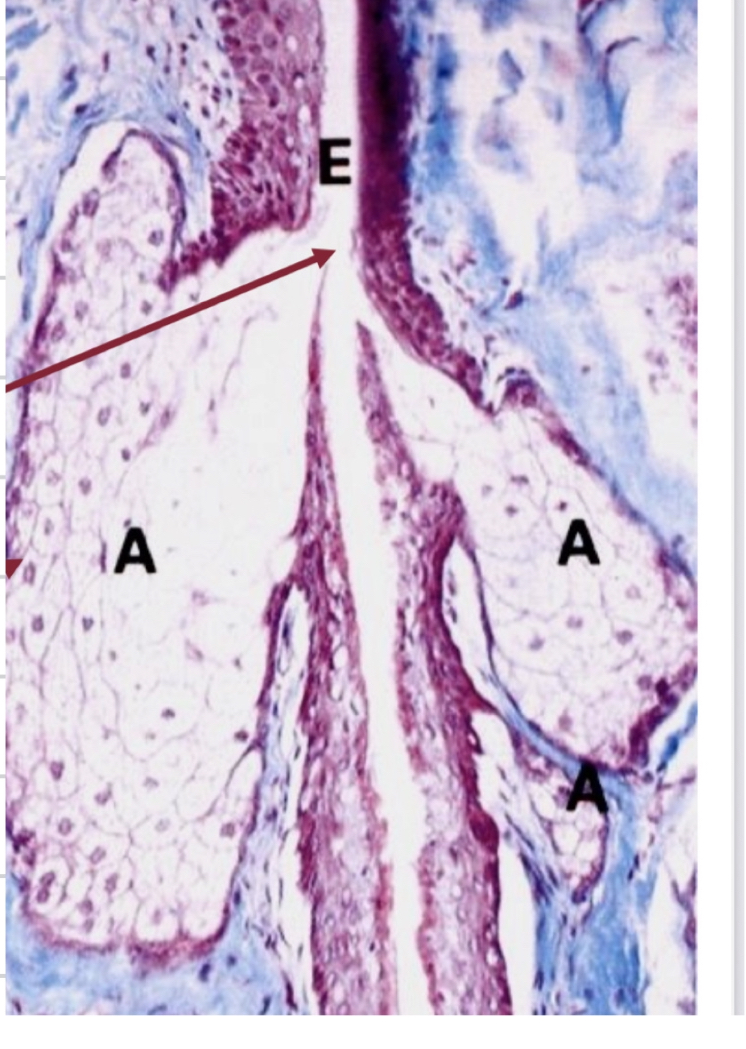
Describe in detail the sebacous gland formation
Holocrine secretion
Simple branched and alveolar
Mostly associated with hair follicles
Basal cells CUBOIDAL AND ARE STEM CELLS with nuclei in the periphery ( the periperical part is darker and cumboidale
Differentiate into secretory cells
Move toawrds the center ( paler) accumulate lipid droplets
Cell dies and disentegrates into sebum
Where is BUNNERS GLAND LOCATED And what type is it
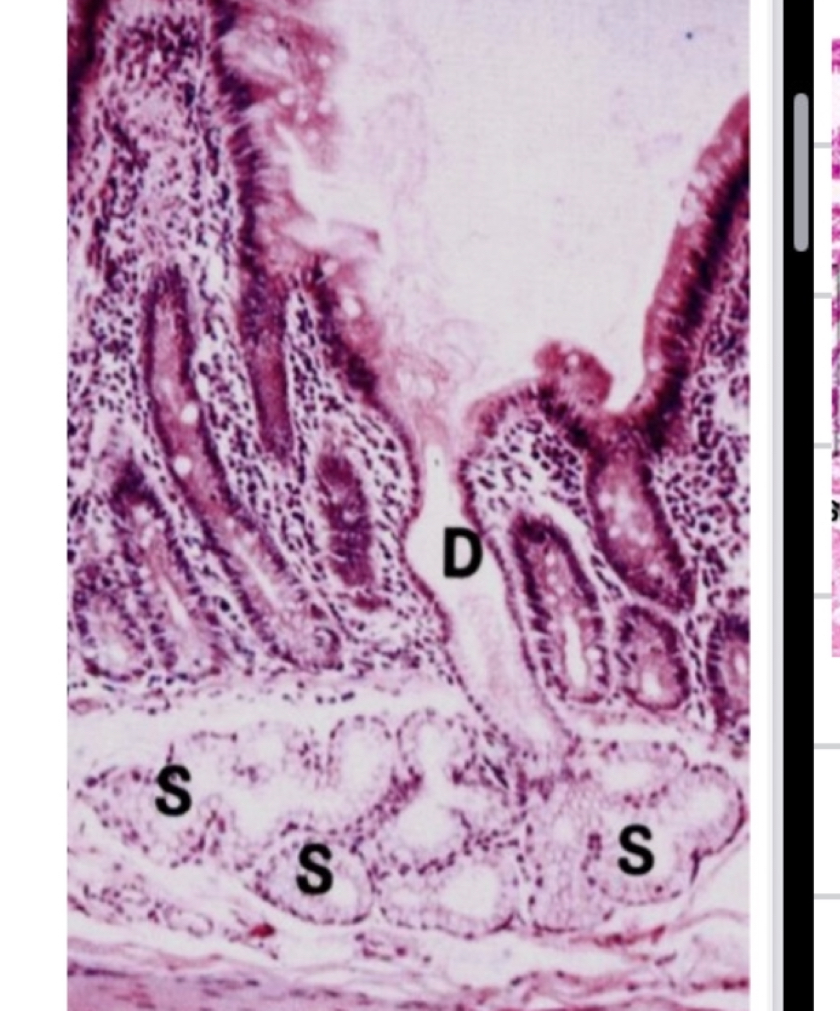
compound and tubular and it is in the duodenum mucosa
As it is mucous it is a merocrine secretion pale, looking cells
Easy to recognize: VILLI
Duodenum submucosa is rich in alkaline secretion
Protecting the doudenum from the acids of the stomach
It serves to 1. Lubrificate the intestinal wall 2. To allow to ave the correct alkaline enviroment to be active for absorption
Which is the min function of the ilium
Are there glands in the ilum?
An of the colon?
Ilium do not have glands but patches PLAQUES OF PEYER that appear very dark and very dense tissue this is LYMPOIOID TISSYE
In colon on the other hand we have mucous membrane to reabsorb a lot of water and micronutrients
What are very dense very dark part of tissue in the ilum
PLAQUES OF PAYERS which are lympoid tissue . Not glands
What type of gland is the mammary glandf?
Alveolar compound gland
As it is compound septa ct is present dividing this tissue into lobes.
The secretory portion is lined with cuboidal epitheliala and myoepithelial cells that if stimulated by oxytocin eject milk into the duct
When the gland is ACTIVE. Alveoli are distendend and the epithelium expands
When is inactive it is less alvoli and more connectuvve tissue
What is milk fomed of and how does the maammary gland change
Is everything secreted in the same way?
The secretory portion is lined with cuboidal epitheliala and myoepithelial cells that if stimulated by oxytocin eject milk into the duct
When the gland is ACTIVE. Alveoli are distendend and the epithelium expands
When is inactive it is less alvoli and more connectuvve tissue
MILK IS RICH IN LIPID,ANTIBODIES, IONS, LACTOSE
Lipid part is SECRETED VUA HOROCRINE
The protein part via merocrine!!!
What kind of gland is pancreas?
How is the basal part different from the apical part?
The pancreas is a mixed gland
It has the exocrine protin to secrete a bicarbonate rich fluid ( secreted in the cells of the duct) and digestive enzymes ( in the acini)
We can find SEROUS ACINI that start from the centroacinal cells and are branched and alveolar,
Acini have a basal part rich in rer basiphilic and a esoinophilc part whcih is the apical part where the zymogenous granules are ( inactive form of amilase and lipase)
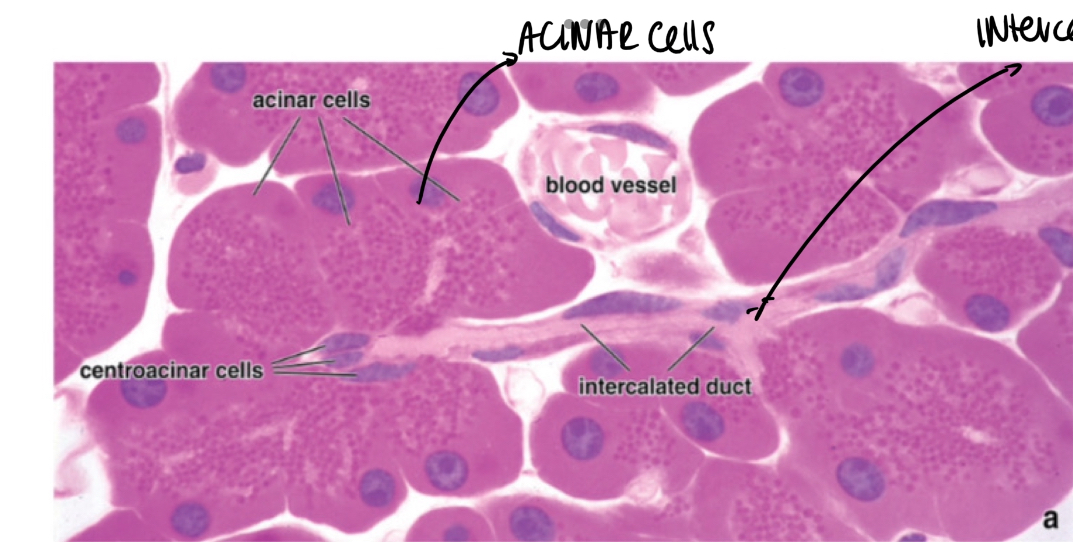
How is the structure of exocrine pancreas
Starting with the centroacinar cell the acini deveolp having the nuclei in the periphery and the zymogenous garanules more centrally, connected to the ducts we have the INTERCALTED DISTSC ( squamous epithelial cells) that connect the straiated duct cuboidal cells) that then all lead to the INTERLOBULAR PDUCT
WHAT CAN YOU FIND IN THE PANCREAS AMONG THE EXOCRINE TISSUE
ENDOCRINE langheran islet
Which are the 3 salivary glands?
What kind of secretion do they have?
Which are the mixed and which is serous
PAROTID serous compound alveolar
Submandibular mixed mainly serous
Sublinguale mixed mucous.
Descirbe the parotid gland
Compound alveolar and serous gland
Parotid is repsionisbile for 30 % of the saluva
Adipose tissue can be present
Only serous acini!
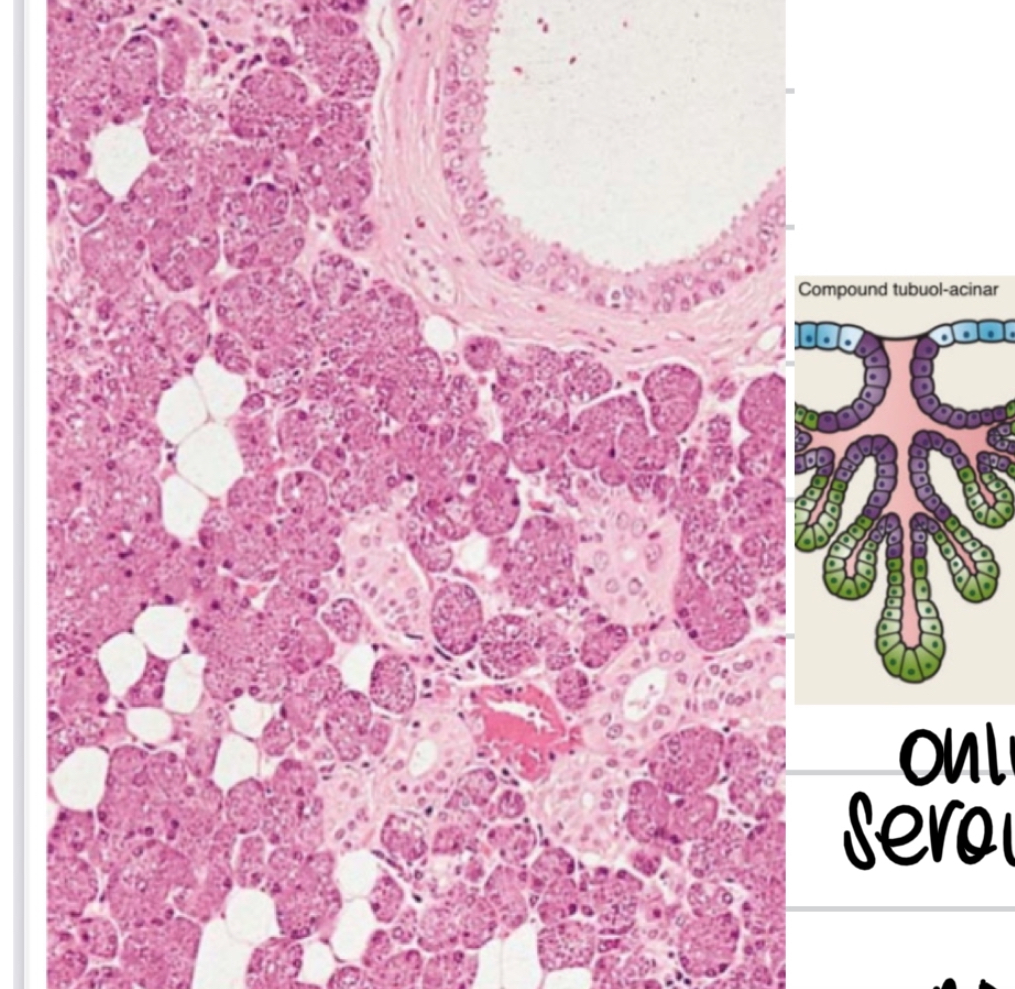
Descirbe the sublingual and submandibular glands
Both are miced but the sublinguale is mainly MUCOUS and have few serous demilunes it is also COMPUND but tubular
Pale as it is mucous mainly
Subamandibularis also mixed but it is manily serous
It secretes the resting saliva
It appears darker and it has demilunes arranged in a crescent manner at the end of the acini ( muco spinge le sierose ai lati)
Around the acini we also have the myopeithelia
This is as paroti compund alvolar
What kind of cells are sebacous glands
Holocrine sec.
Alvolar and branched
Stiomach glands are what type
Branched and tubular
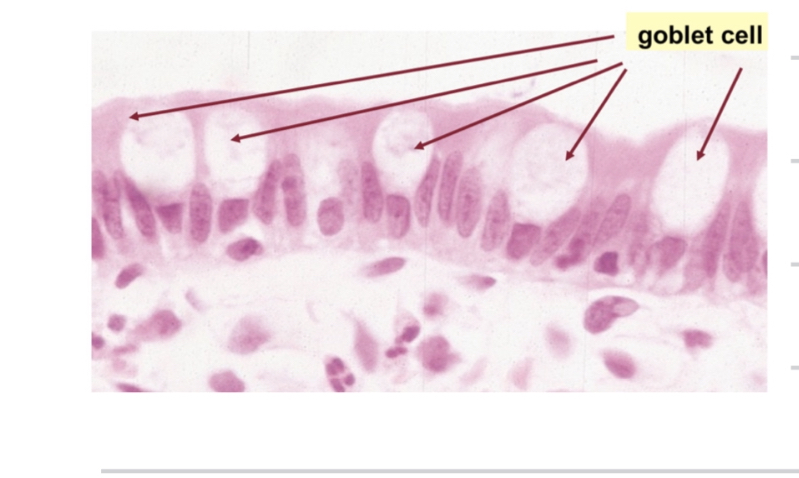
Describe goblet cells
Histologically, location, secretion kind ecc
Goblet cells
Unicellular cells that are intraepithelial
Very common in the respiratory tarcat and gi tract
Merocrine secretion ( fusion of granules in the pm for exocytrosis) secreting mucin
Mucous is rich in glycoproten and thri carbo stains with PAS
Cells appear polarized base: rer, golgi ecc and a paler apical part where the granules are.
What is the difference between a simple gland and a compound gland
Compound are does whose DUCT IS BRANCHED
Whidhc are the only apocrine glands
Latte e sudore
Mammary and weat they both loss the apical portion of the cytoplams with their serete