Protein Structure/Carbohydrates
 Call Kai
 Learn
Learn Practice Test
 Spaced Repetition
 Match
Match Flashcards
 Knowt Play
1/28

Earn XP
Description and Tags
IB BIO DP1
Name | Mastery | Learn | Test | Matching | Spaced | Call with Kai |
|---|
No analytics yet
Send a link to your students to track their progress
29 Terms
Condensation
Synthesis of complex molecules from simpler molecules. (Formation of macromolecules from monomers by condensation)
Hydrolysis
Breakdown of complex molecules into simpler molecules (Hydrolysis of macromolecules into monomers)
Polysaccharides
Large carbohydrates formed by joining multiple monosaccharides through glycosidic bonds, often serving as energy storage or structural components in cells.
Starch
A storage polysaccharide in plants, composed of glucose monomers, that provides energy.
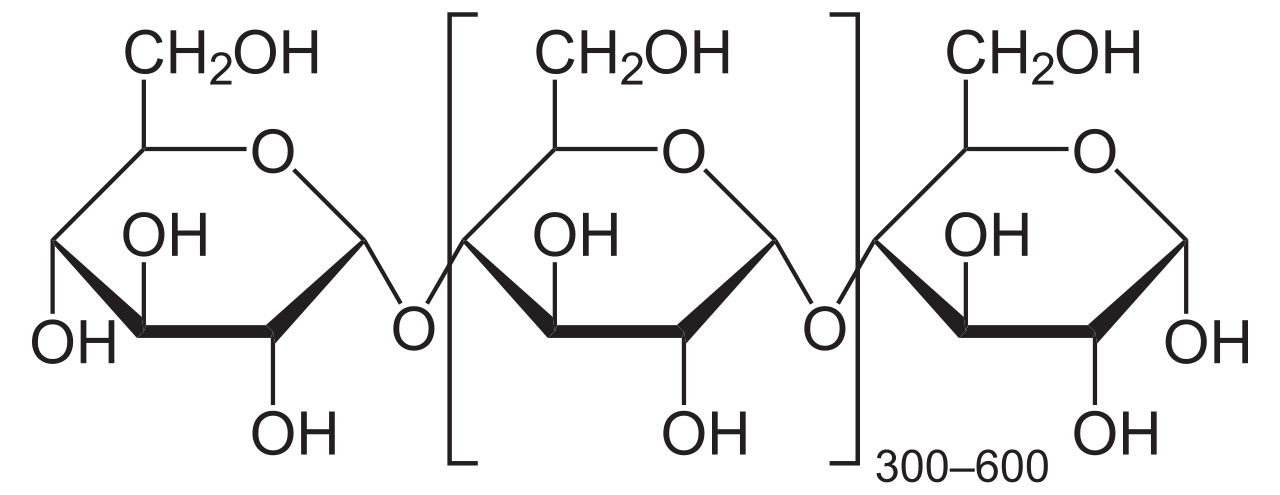
Amylose
A type of starch where carbon #1 is bonded to carbon #4 of the adjoining glucose, the resulting molecule will be linear but in a helix shape.
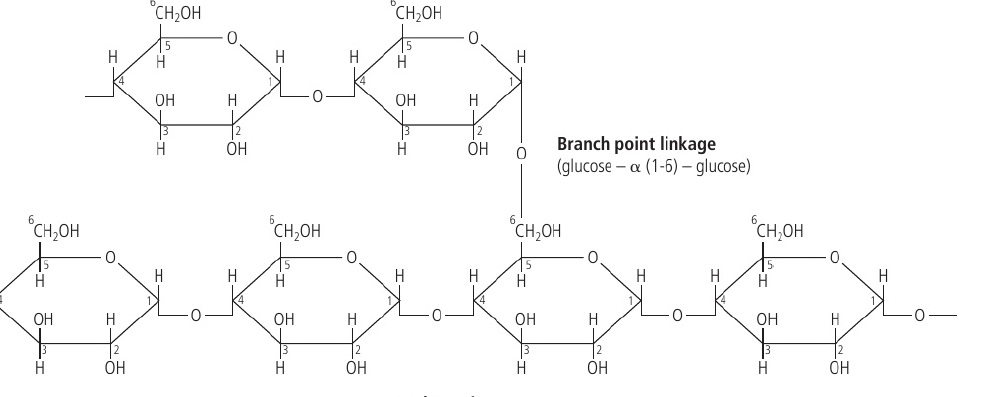
Amylopectin
Not only does it have 1 - 4 glycosidic bonds but also has some 1 - 6 glycosidic bonds, making this molecule branched.
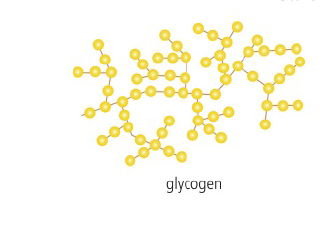
Glycogen
Animals store this as energy, it is a polysaccharide made of glucose monomers that are bonded in a very similar pattern as amylopectin 1-6 linkages.
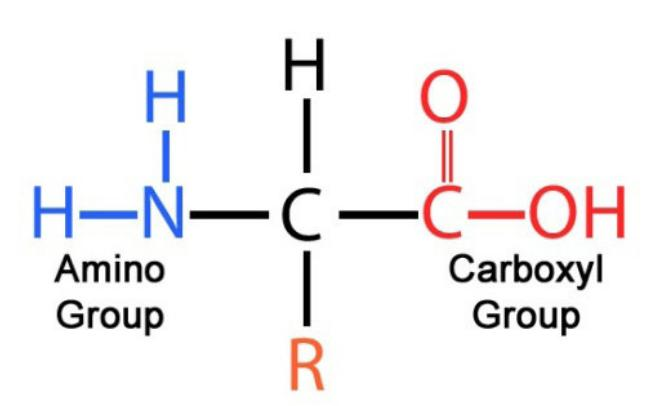
What is the general structure of protein?
Essential amino acids
Cannot be synthesized in sufficient quantites by animal so must be obtained from diet (9/20 of amino acids are essential in humans)
Non-essential amino acid
Can be synthesized by an animal using a metabolic pathways that can transform one amino acid into another
hemoglobin
an oxygen carrying protein found in red blood cells
keratin
found in hair, nails, claws and hooves
lipase
digestive enzyme that helps hydrolyze ingested lipids
collagen
found in connective tissue in the body, includin tendons and ligaments
histones
proteins found in the nucleus of cells that help form chromatin and chromosomes
insulin
hormone that helps regulate blood sugar
Effect of pH on protein
Change in the + and - charges on the R groups
Ionic bonds within the protein either break or new ones are formed
This can alter the 3d shape
Effect of heat on proteins
Causes vibrations within the molecule that can break the intermolecular bonds
This causes denaturing
Heat tolerance varies within species
Chemical Diversity
Stems from variation in the R-groups
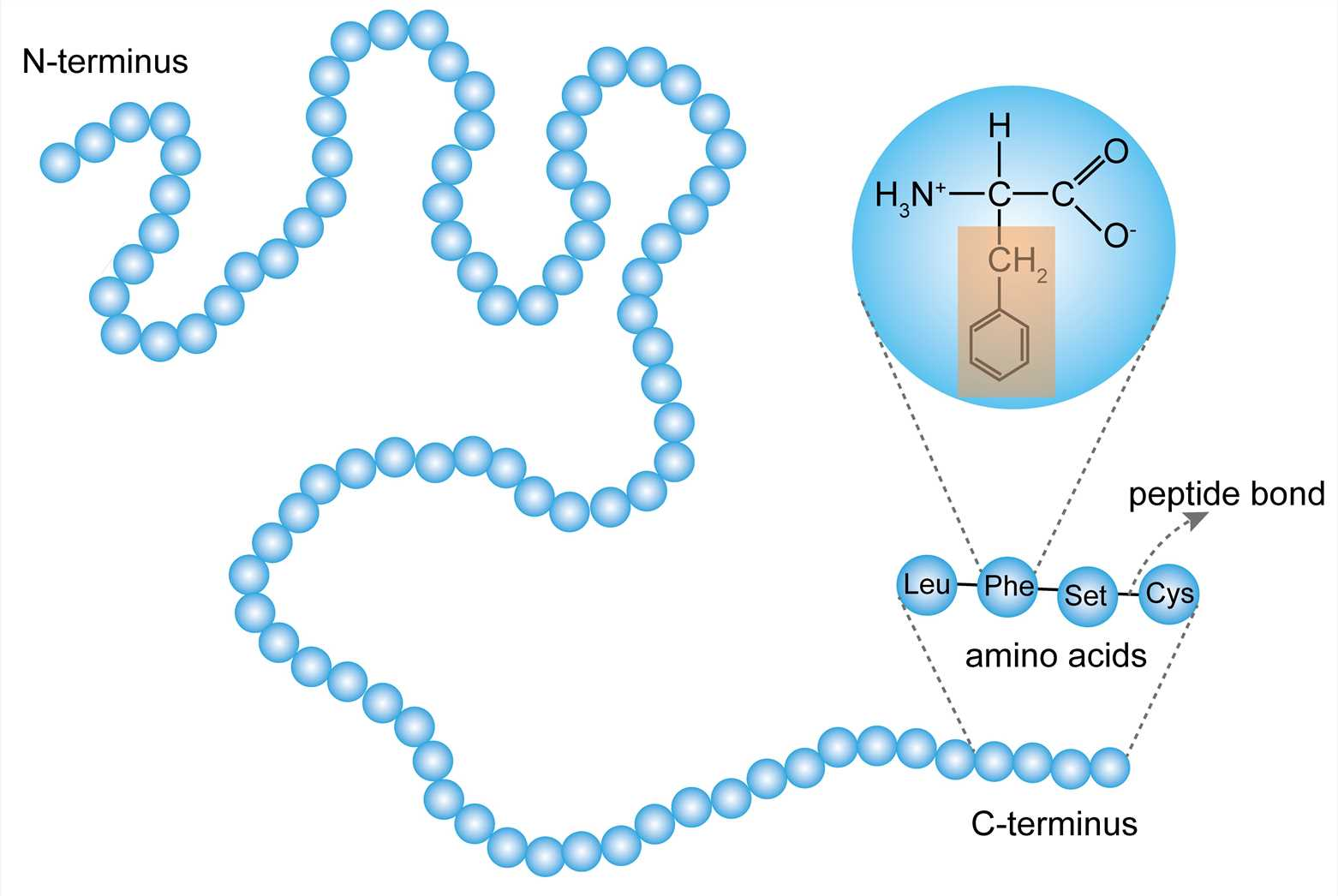
When an amino acid is linked to a polypeptide it is called peptide bond
R groups can be hydrophilic, hydrophobic, polar, charged…
Primary structure (Protein)
Linear sequences
Atoms are covalently bonded
Bond angles allow for rotation around the bonds between alpha carbons
This allows them to fold into different shapes called conformations
Sequences of amino acid and R group causes conformations
Conformation determines the function of the protein
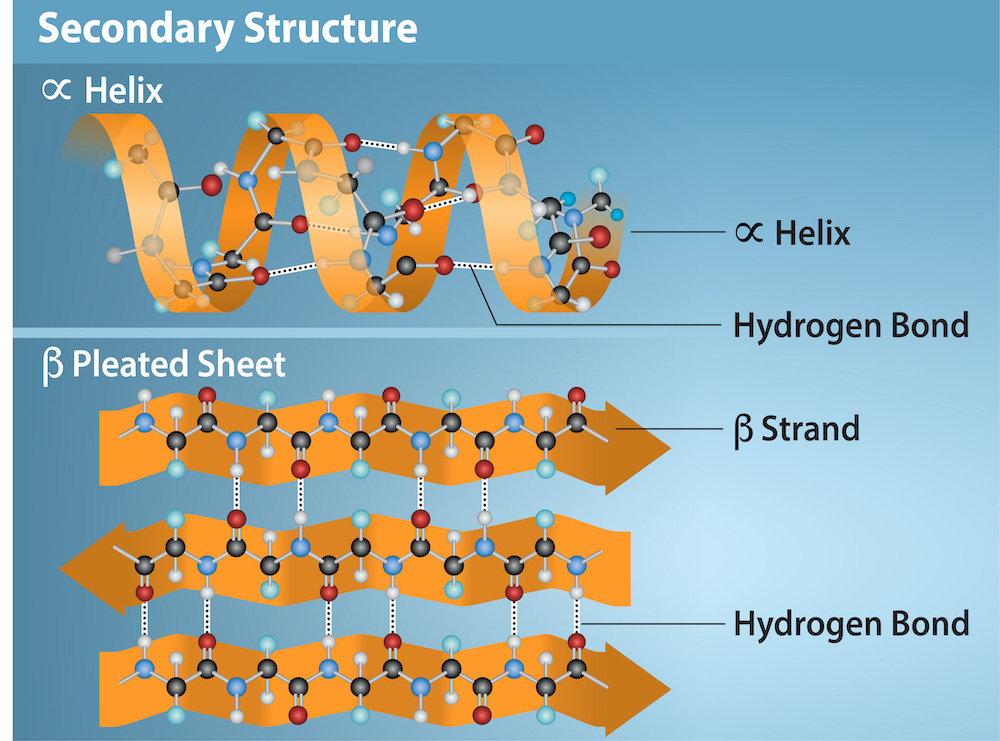
Secondary Structure (Protein)
H bonds form between the H and the O, stabilizing the structure
With the frequency of these atoms within the proteins, different confirmational structures can be built
a helix - polypeptide winds into helical shape w/ H bonds between adjacent turns of the helix
b pleated sheet - 2 or more sections of polypeptide are arranged in parallel with H bonds between them
Tertiary Structure (Protein)
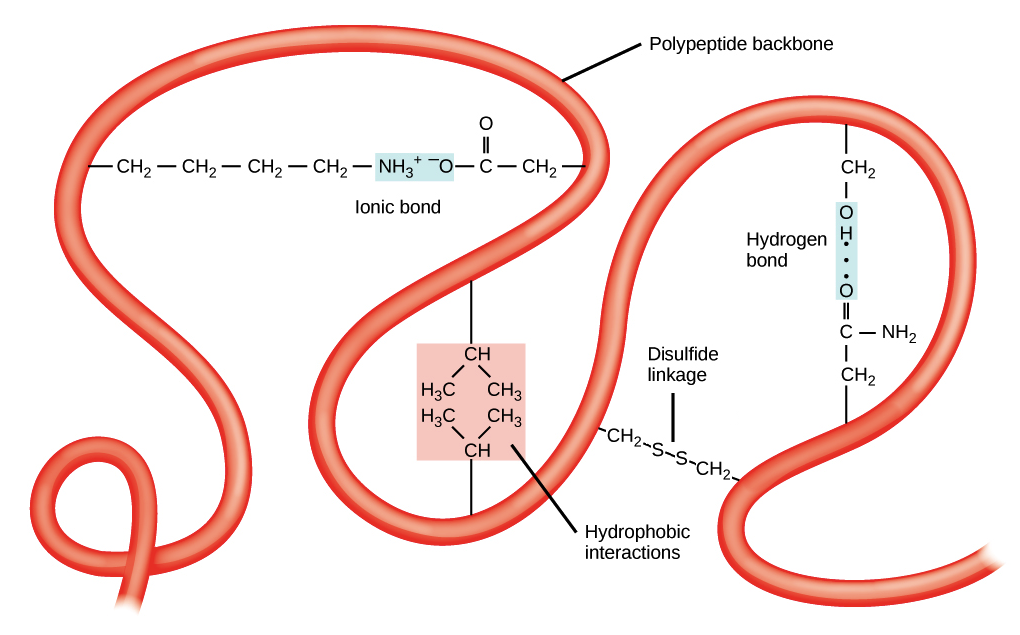
Folding of a whole polypeptide chain into a 3D shape
Stabilized by..
Ionic Bonds between positive and negative R groups
Hydrogen bonds between polar R groups
Disulphide bonds between pairs of cysteines, this is a covalent bond
Hydrophobic interactions between any of the non-polar R groups as they try to get away from polar water molecules
Hydrophobic (Teritary Structure of Proteins)
Non-polar amino acids are usually in contact with other non polar substances over some or all of their surfaces
Hydrophilic (Teritary Structure of Proteins)
Have hydrophilic amino acids on their surface and hydrophobic amino acid clustered in the centre
Quaternary Structure
Consists of two or more polypeptides bonded together
May have 1 or more that 1 non-polypeptide subunits
Non-conjugated protein
There are only polypeptide subunits in addition to their polypeptides
Conjugated protein
Has 1 or more non-polypeptide subunits in addition to their polypeptides
Fibrous protein
Elongated polypeptides that lack the folding of typical tertiary structure
Does not develop secondary structures
Quaternary structure is developed by linking together polypeptide chains into narrow fibers or filaments with hydrogen bonds between the chains
Globular Protein
Rounded shape, formed by the folding up of the polypeptides. Stablizied by the r groups of the amino acids that have been brough together by the folding.