GI Physiology 2 - Bile (Dr. Sun)
 Call Kai
 Learn
Learn Practice Test
 Spaced Repetition
 Match
Match Flashcards
 Knowt Play
1/58

There's no tags or description
Looks like no tags are added yet.
Name | Mastery | Learn | Test | Matching | Spaced | Call with Kai |
|---|
No analytics yet
Send a link to your students to track their progress
59 Terms
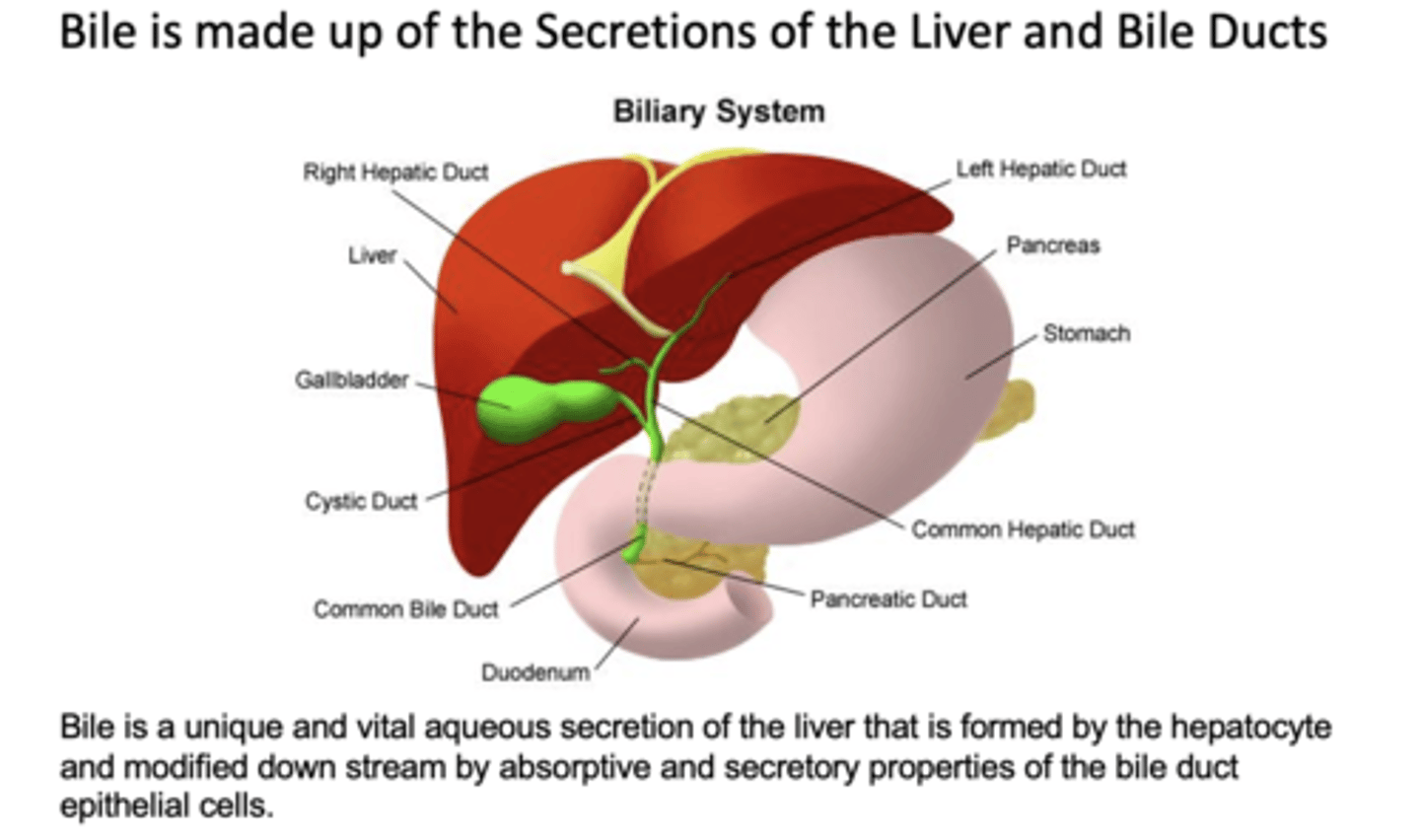
What is made up of secretions of the liver and bile ducts?
bile
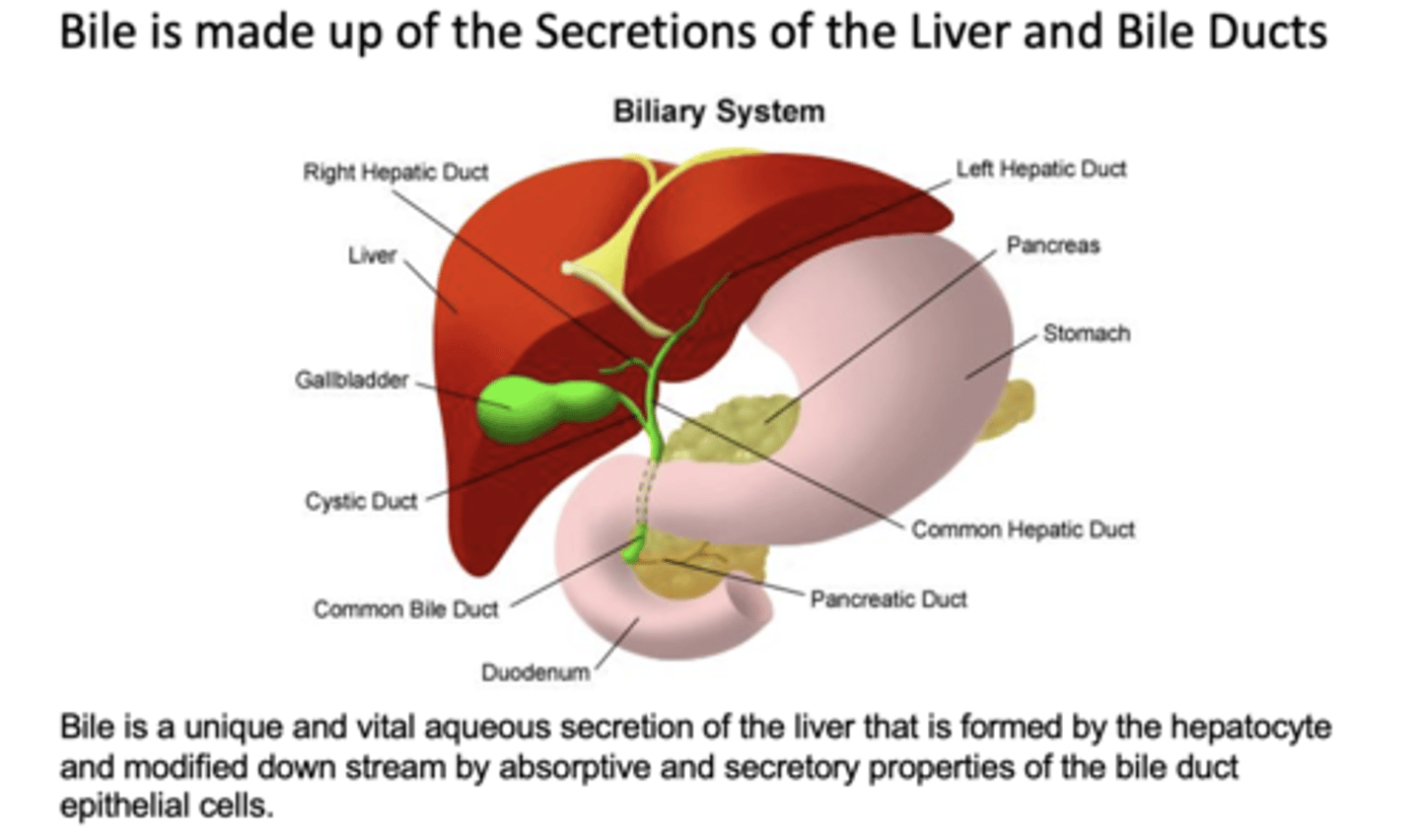
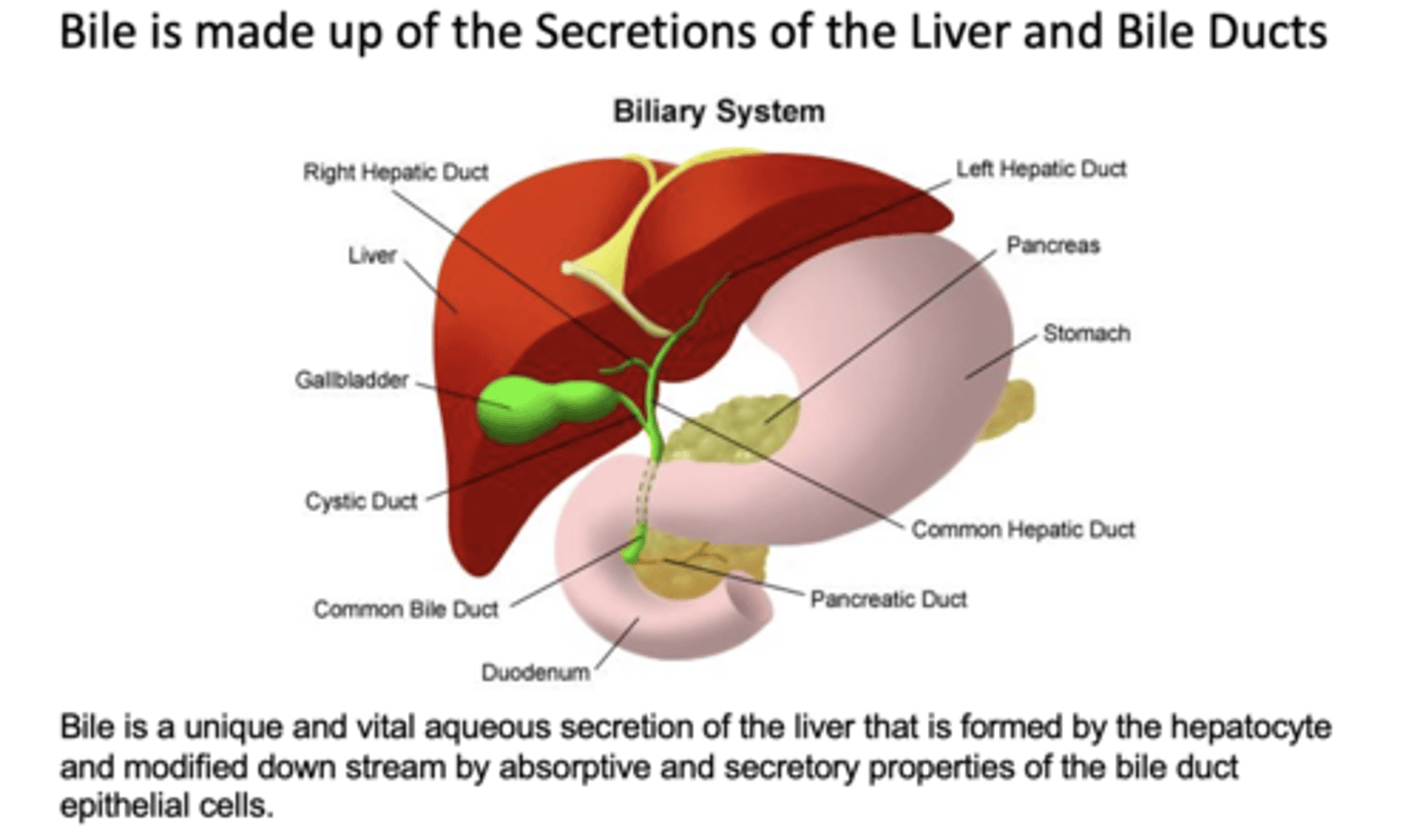
What is a unique and vital aqueous secretion of the liver that is formed by the hepatocyte and modified down stream by absorptive and secretory properties of the bile duct epithelial cells?
bile
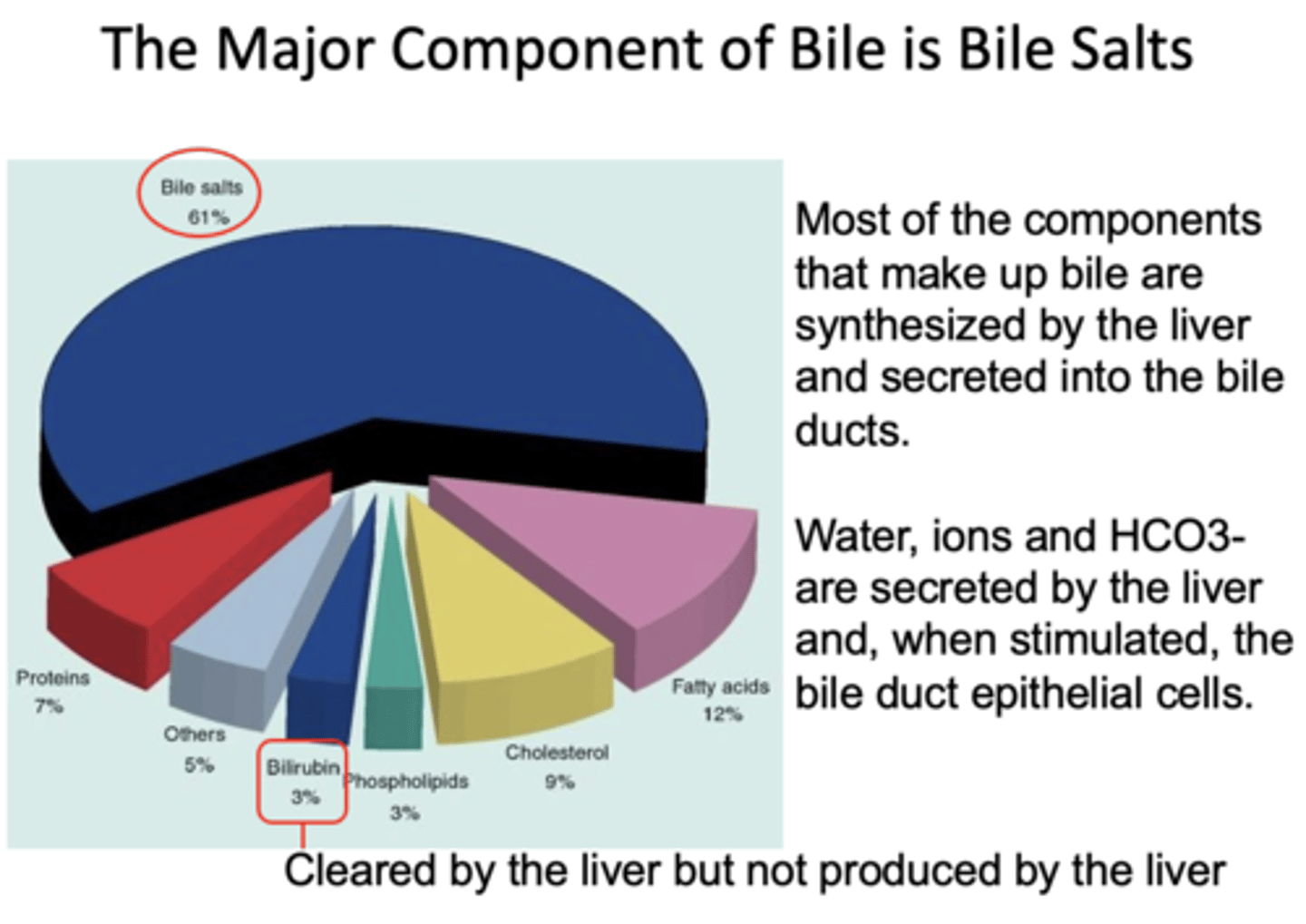
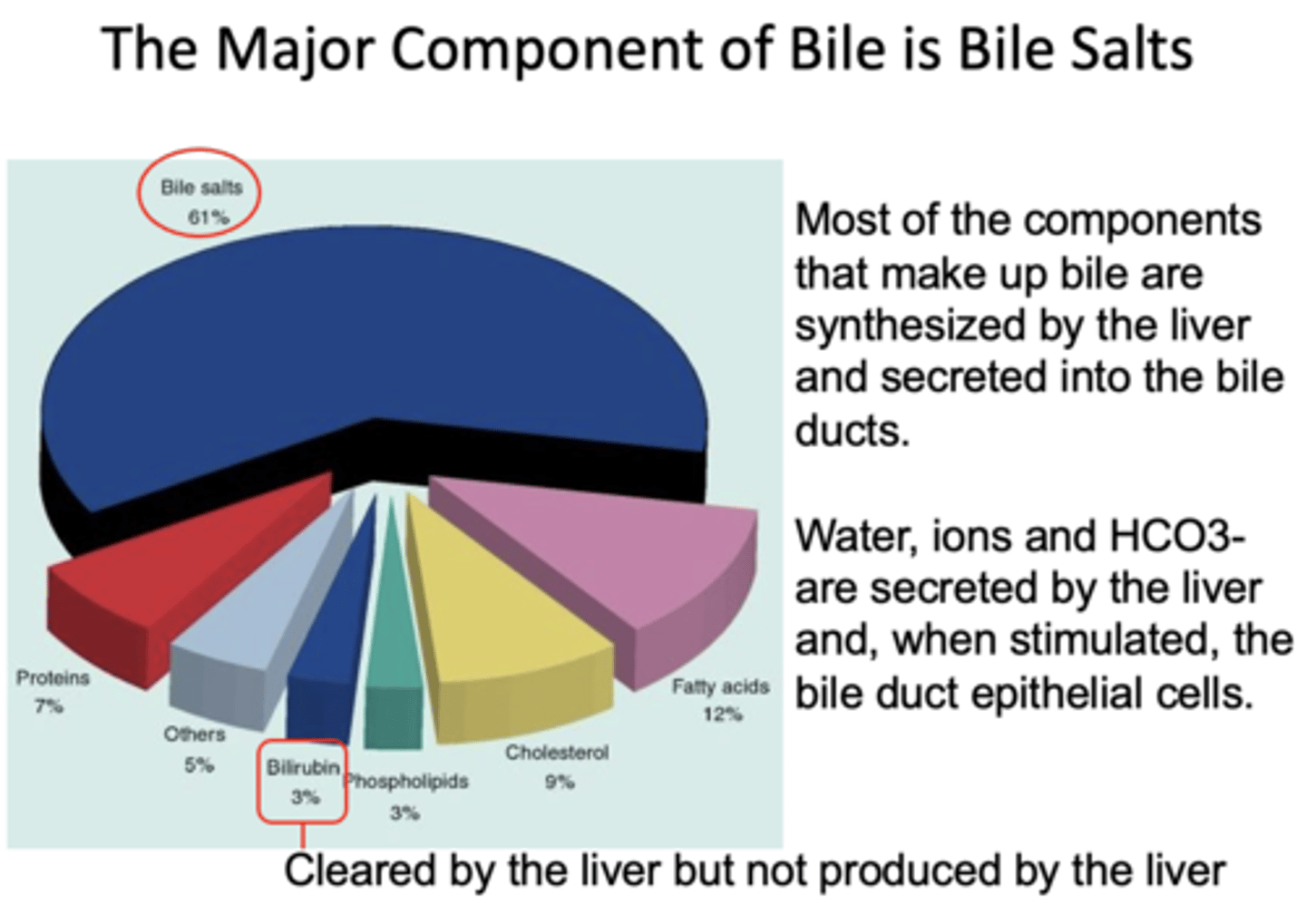
What is the major component of bile?
bile salts
bile canaliculi empties into what?
bile ducts
The bile ducts empty into what?
common hepatic duct
The common hepatic duct joins with what to form the common bile duct?
cystic duct
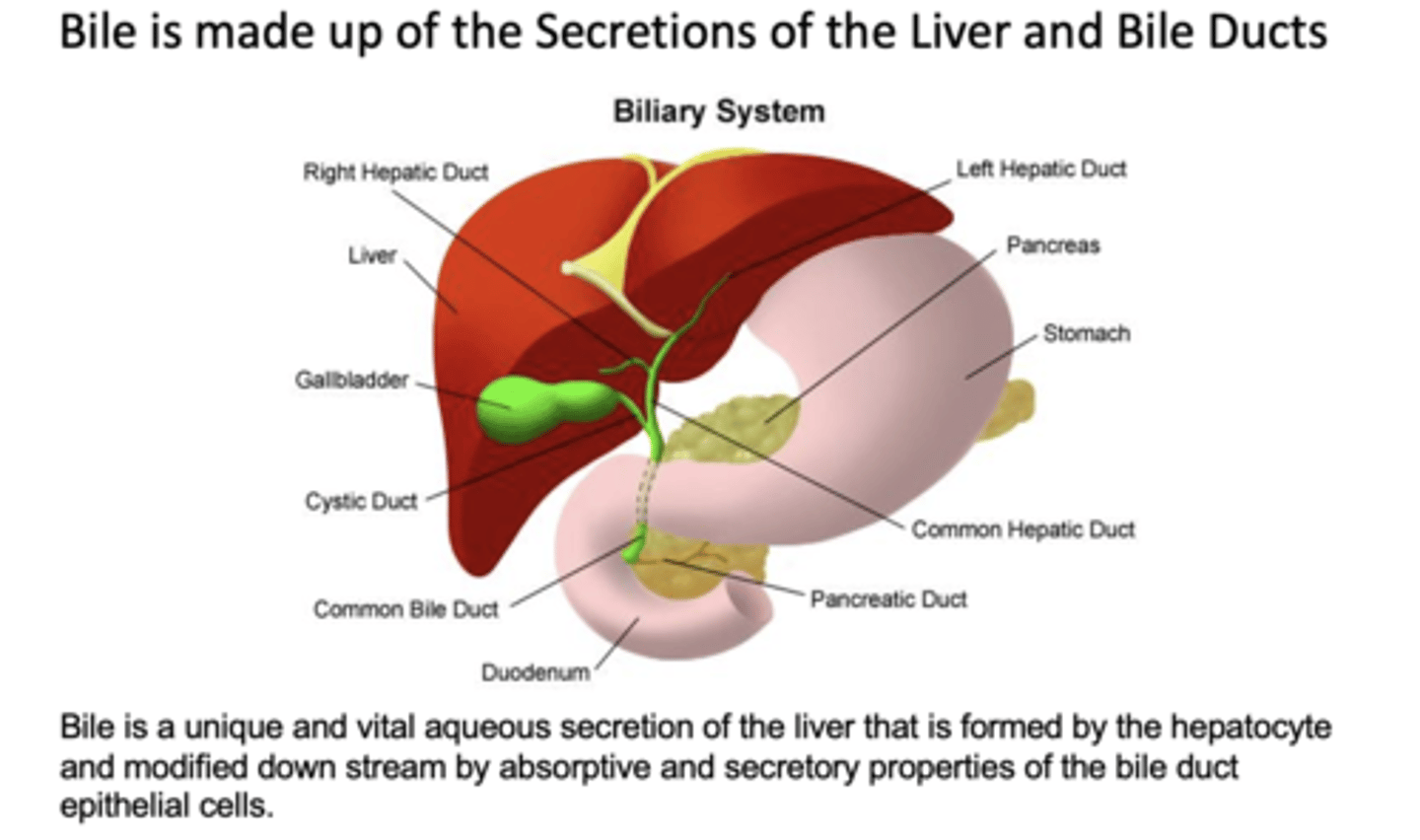
What two ducts join together to empty into the duodenum?
common bile duct, pancreatic duct
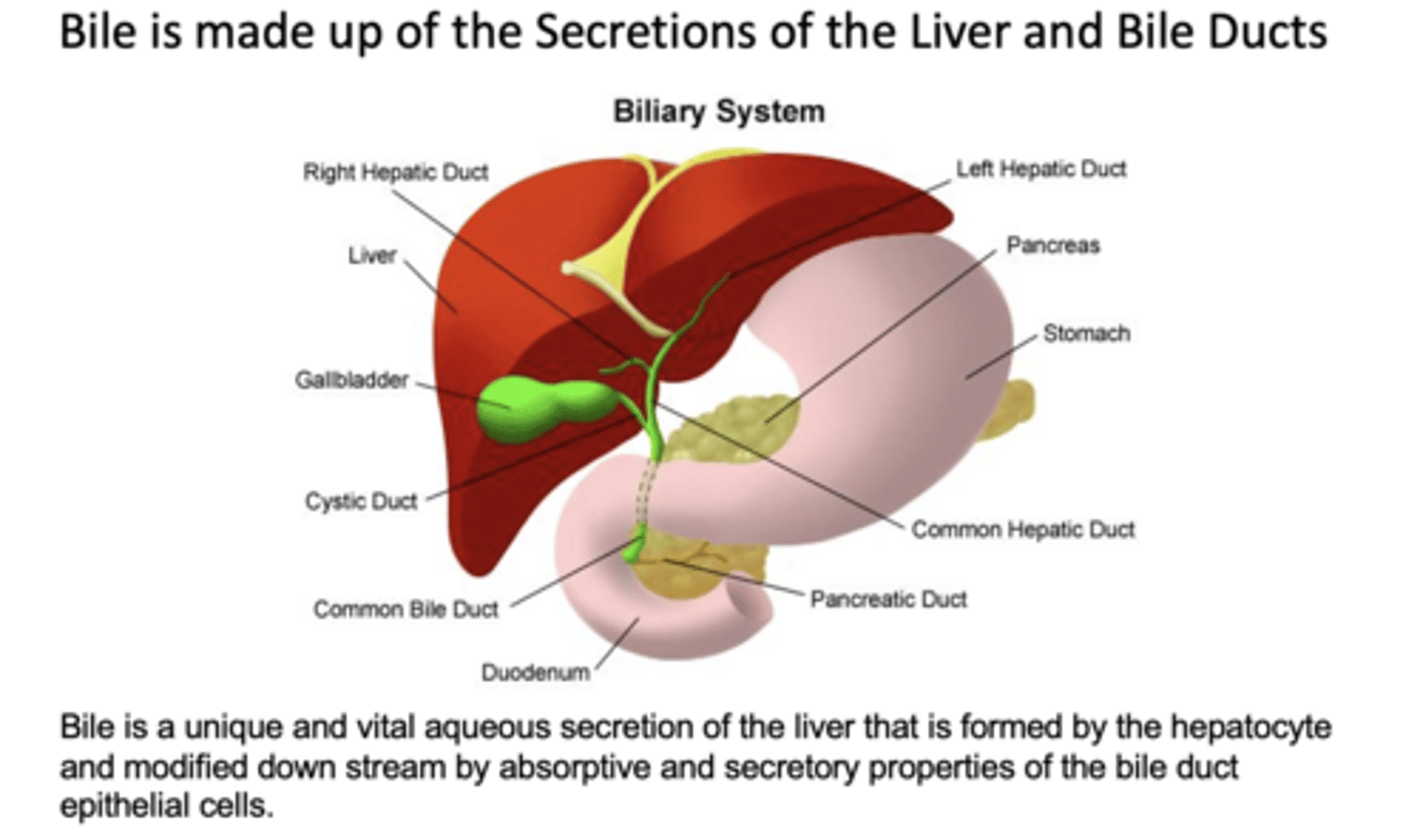
What is the opening in the small intestine where bile enters?
sphincter of oddi
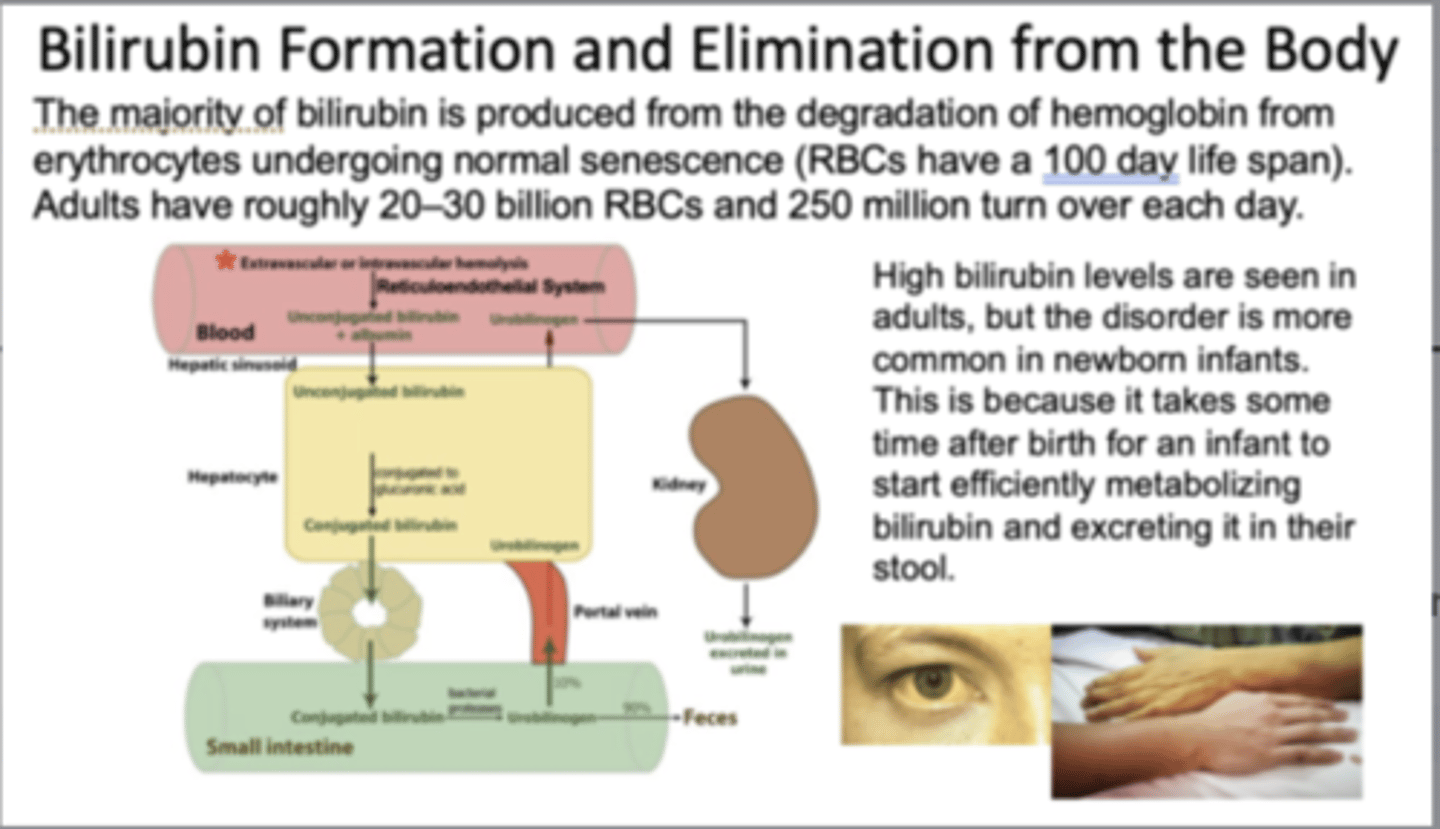
What is cleared by the liver but not produced by the liver?
bilirubin
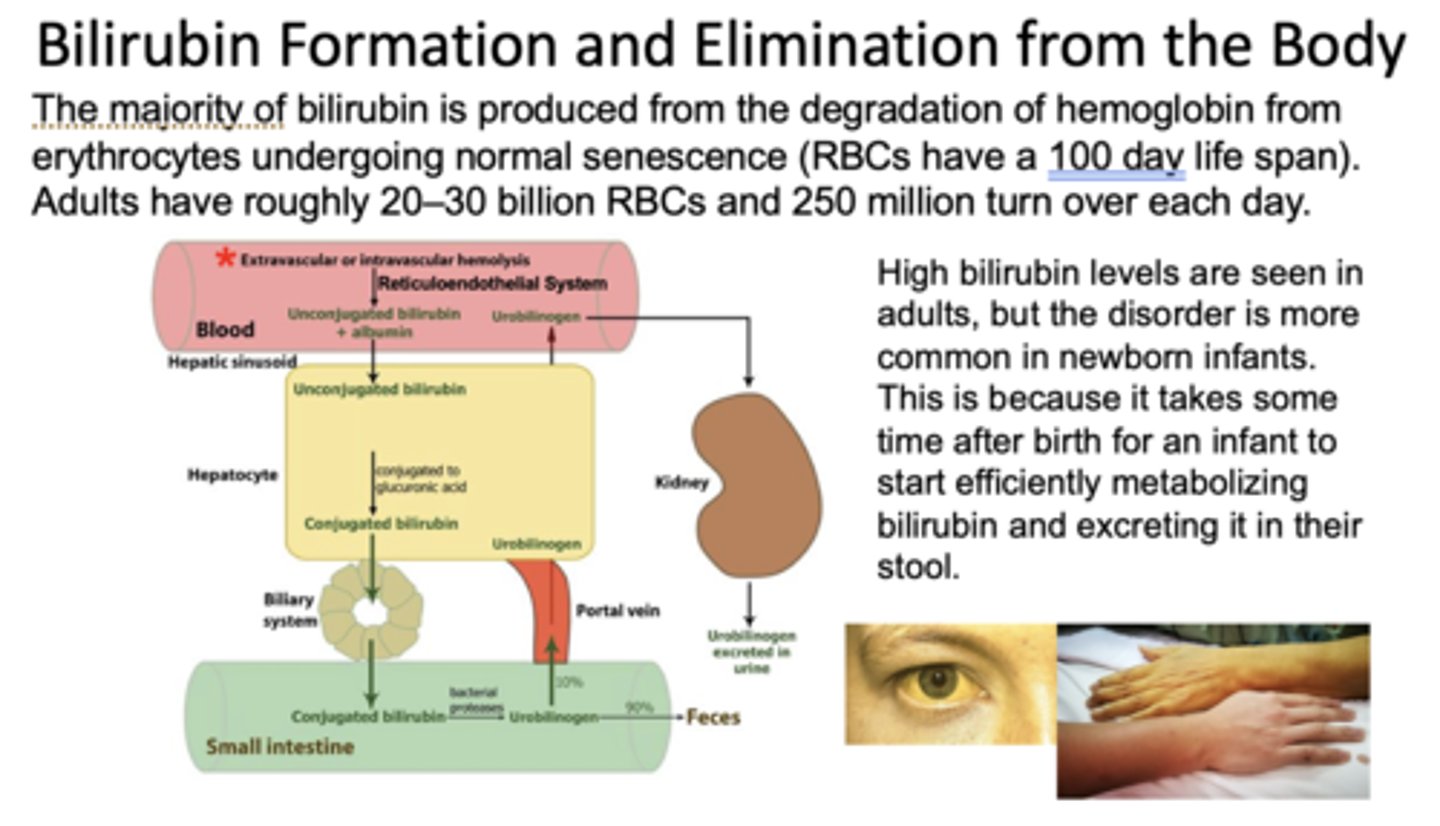
What is produced from the degradation of hemoglobin from erythrocytes undergoing normal senescence?
bilirubin
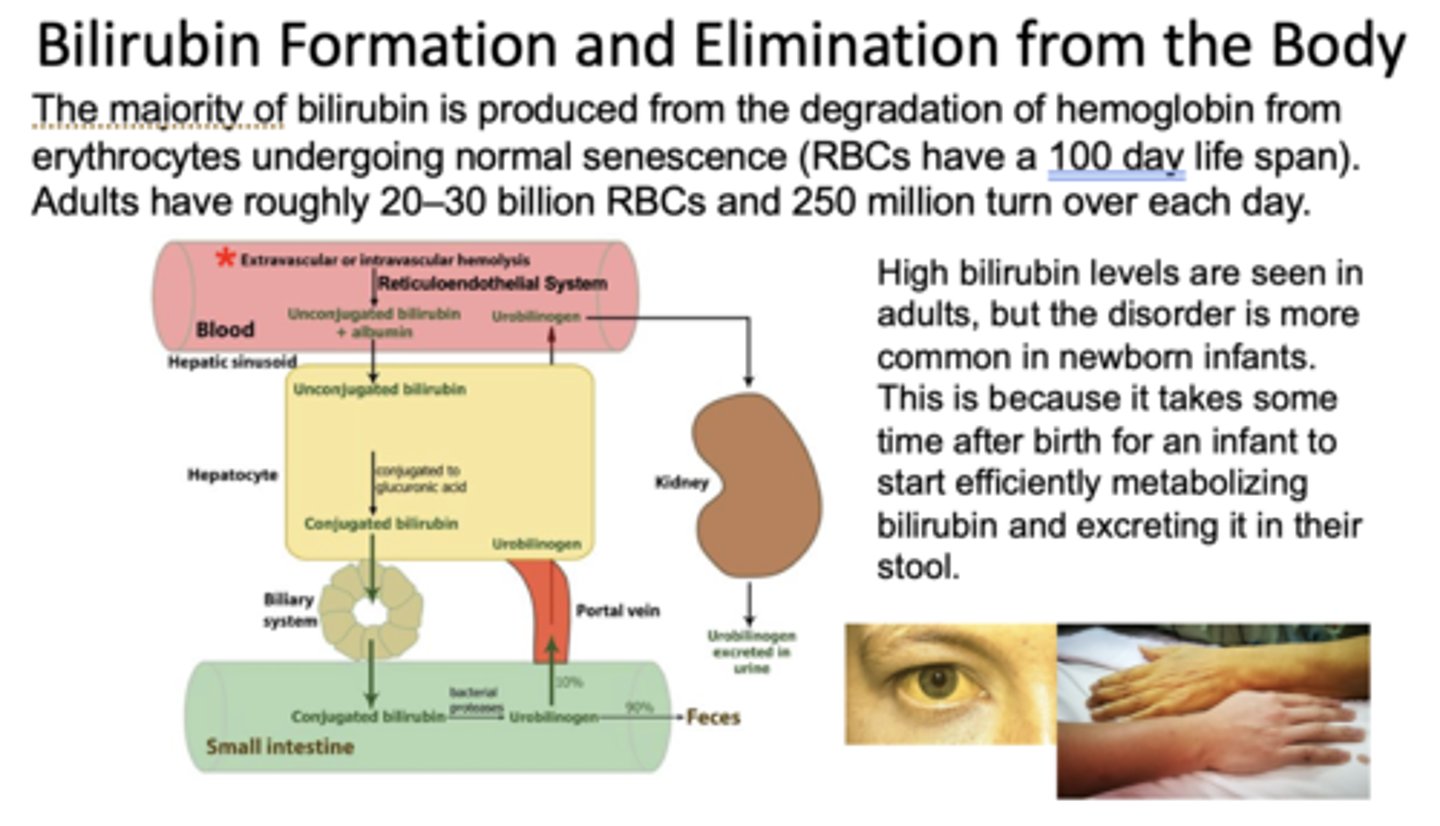
High bilirubin is seen more in adults or newborn infants?
newborn infants
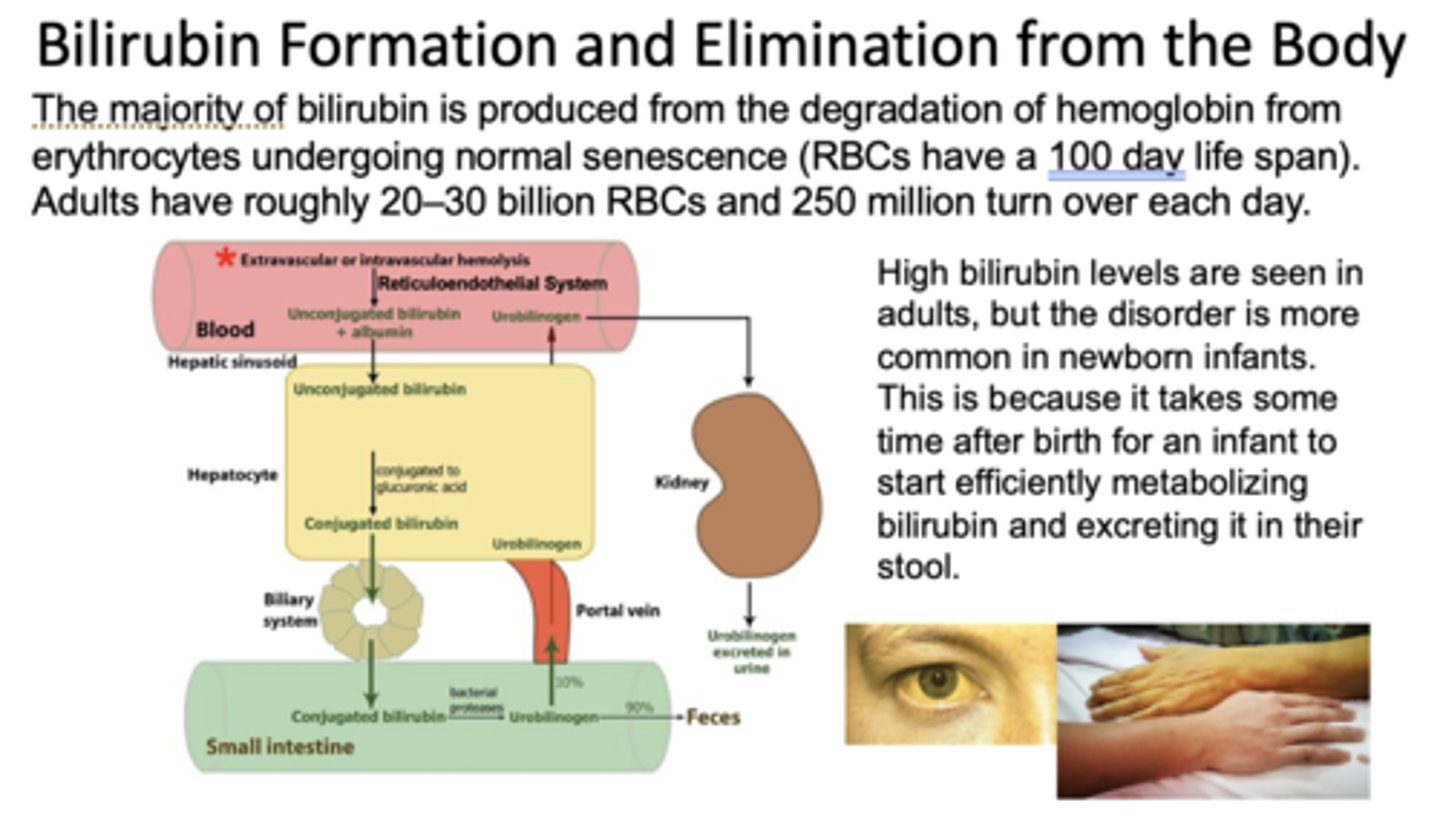
What gives color to stool?
urobilinogen
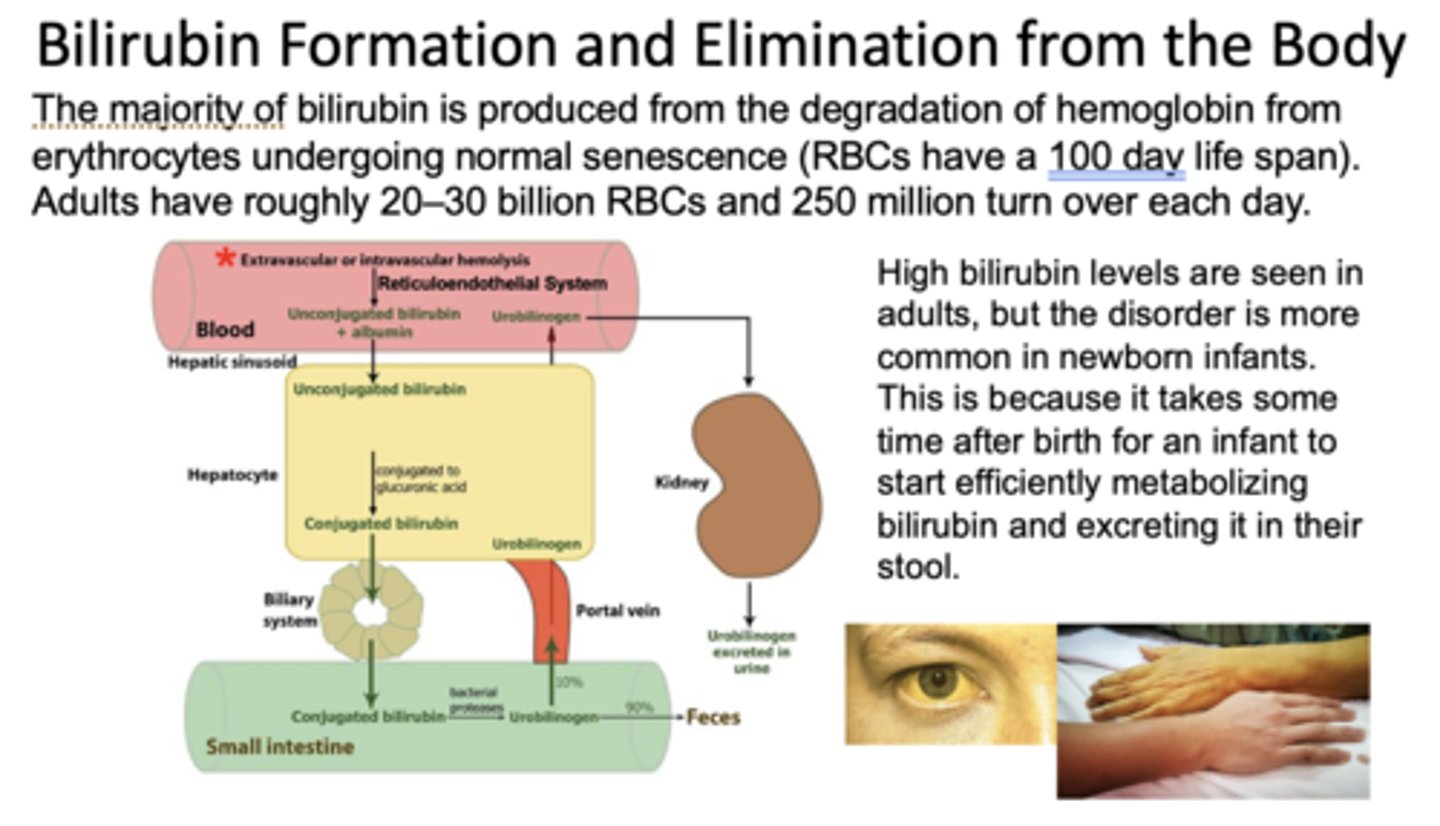
What is the transporter for bilirubin from blood to liver?
Albumin
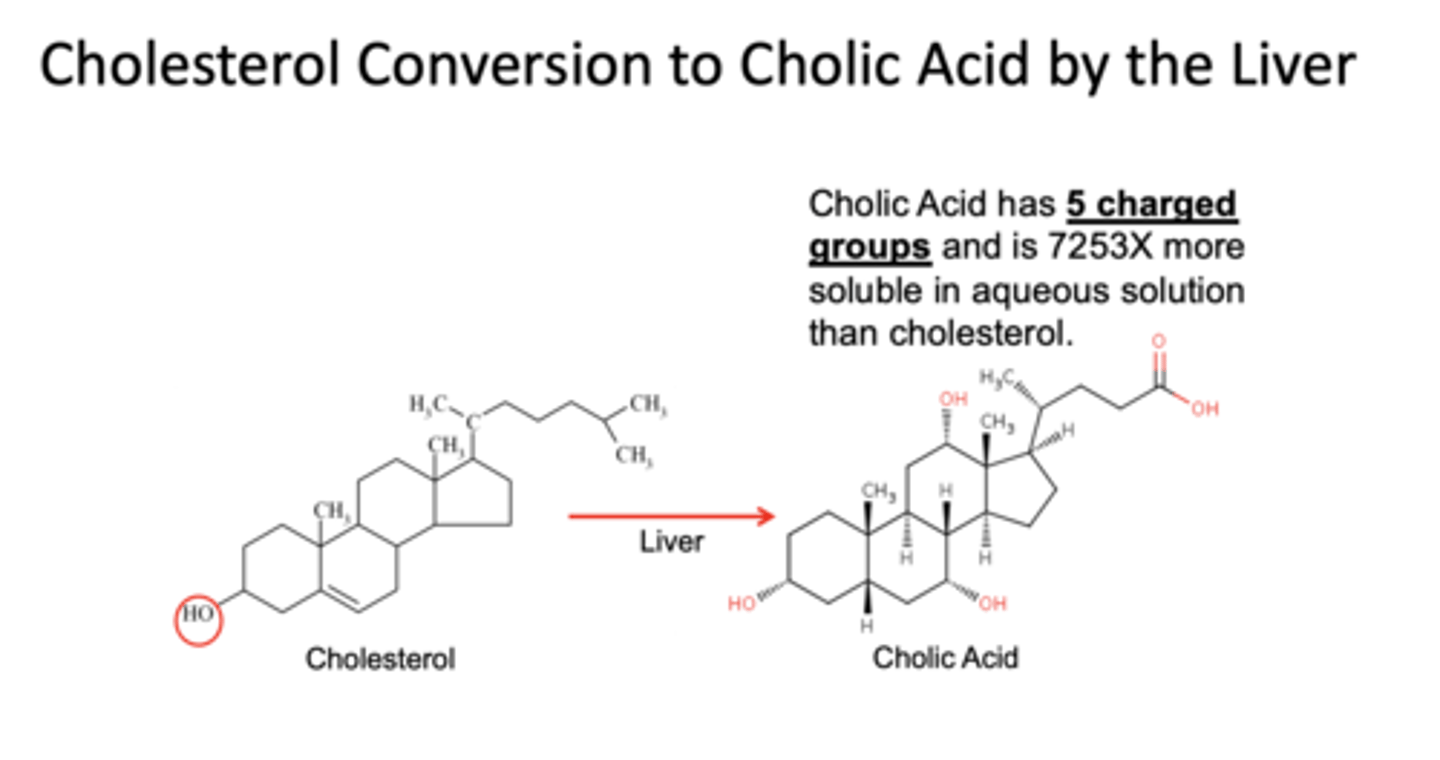
How many charged groups does cholic acid have?
5
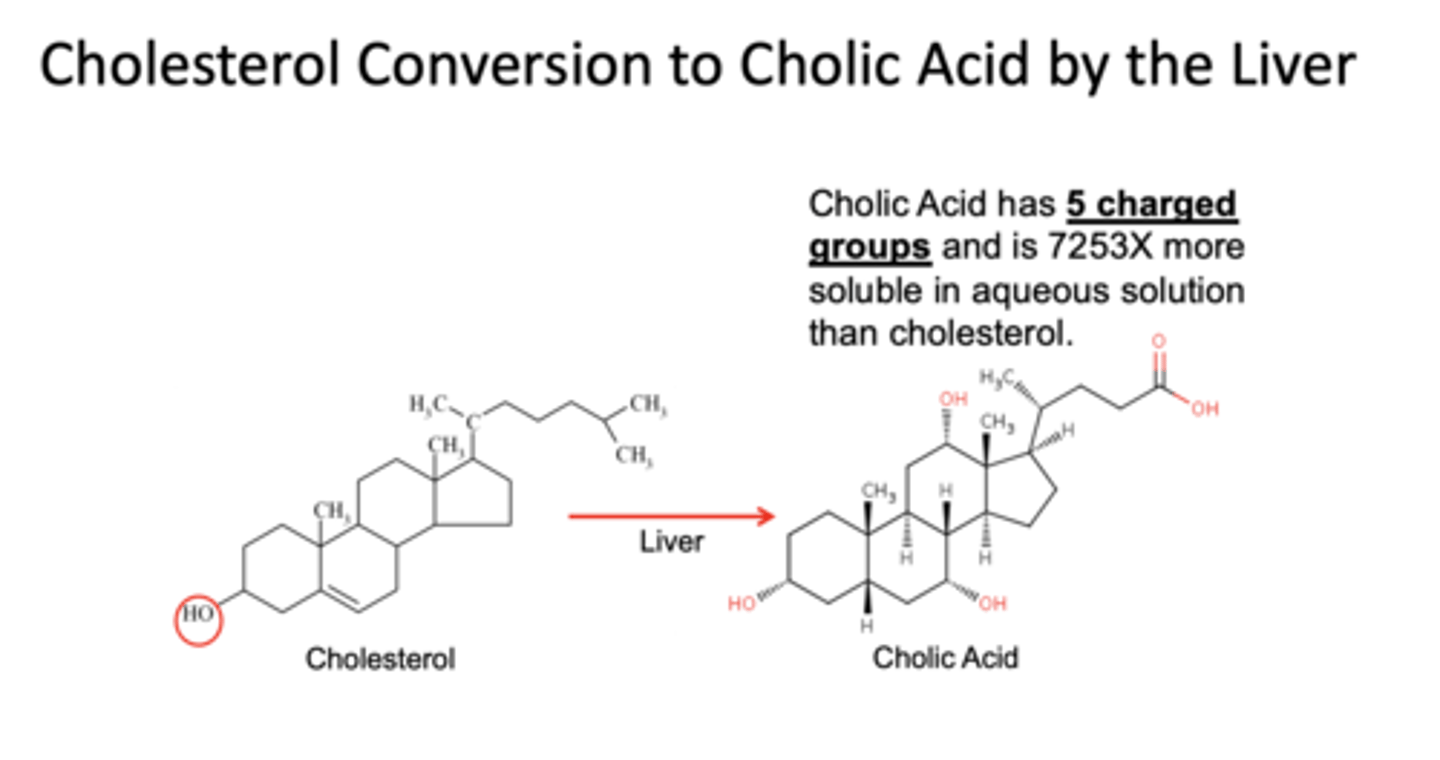
What does the liver convert cholesterol to?
cholic acid
Bile acids are _________
A. Hydrophilic
B. Hydrophobic
C. Amphipathic
C. Amphipathic
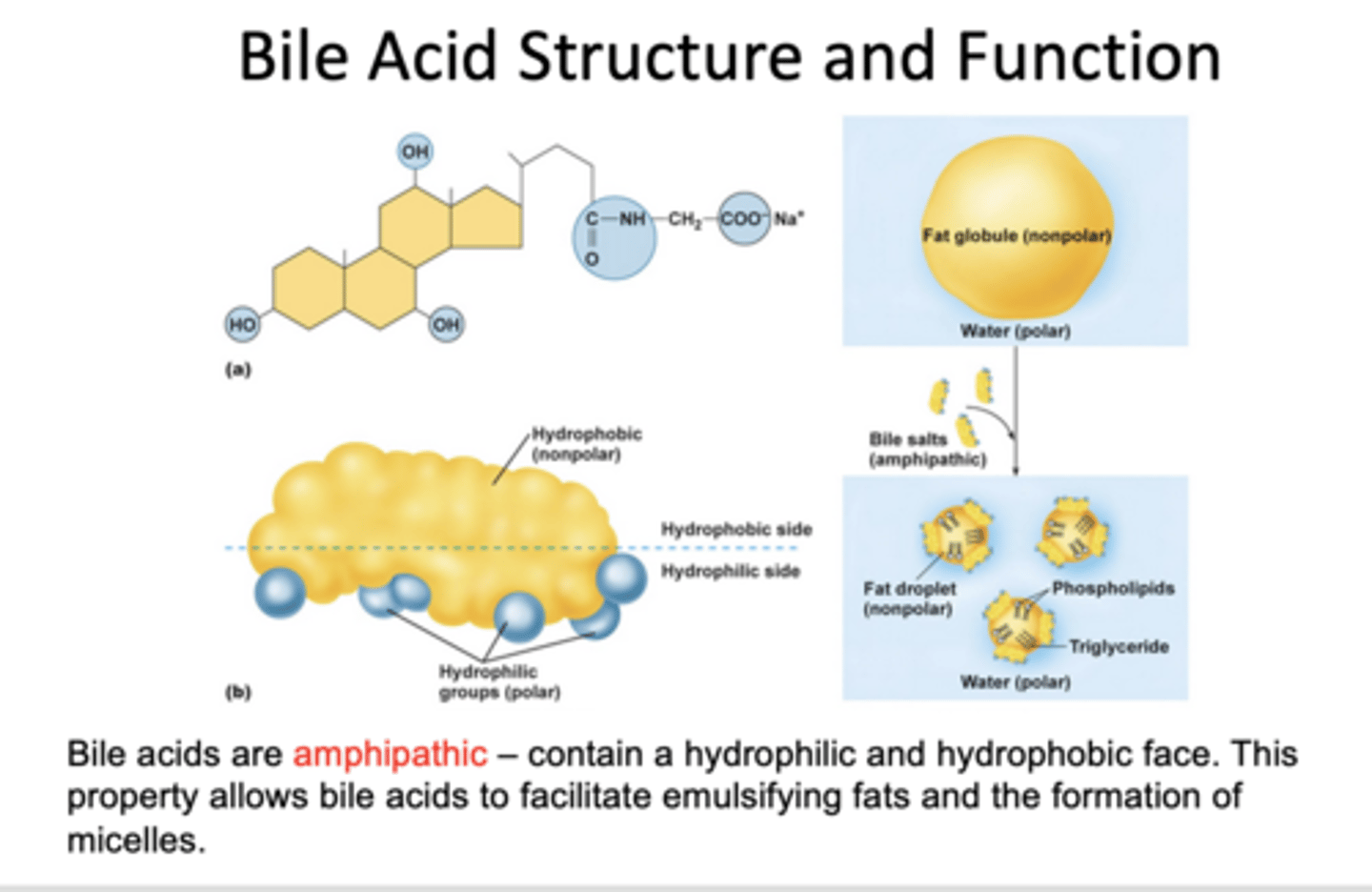
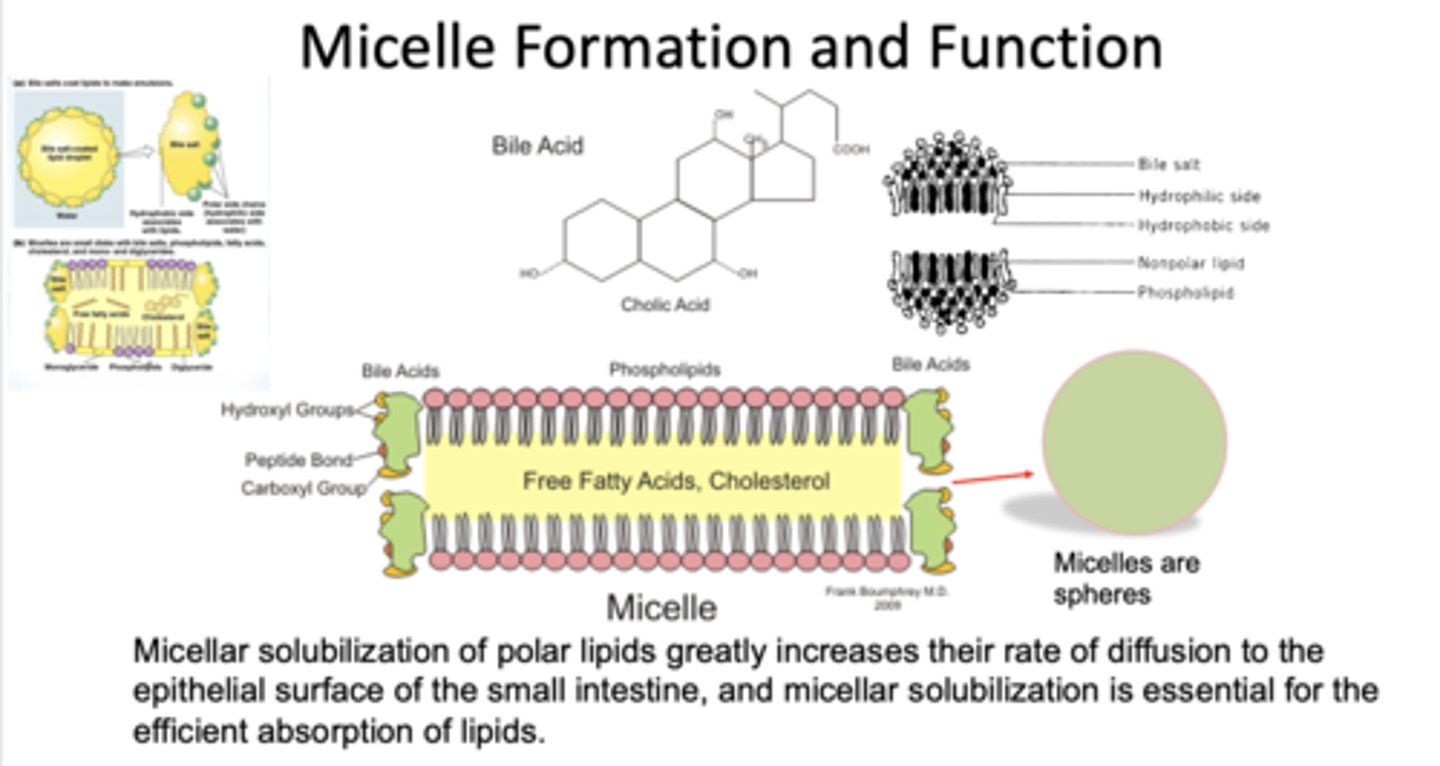
Since biles are amphipathic, what does this allow them to do?
- emulsify fats
- form micelles
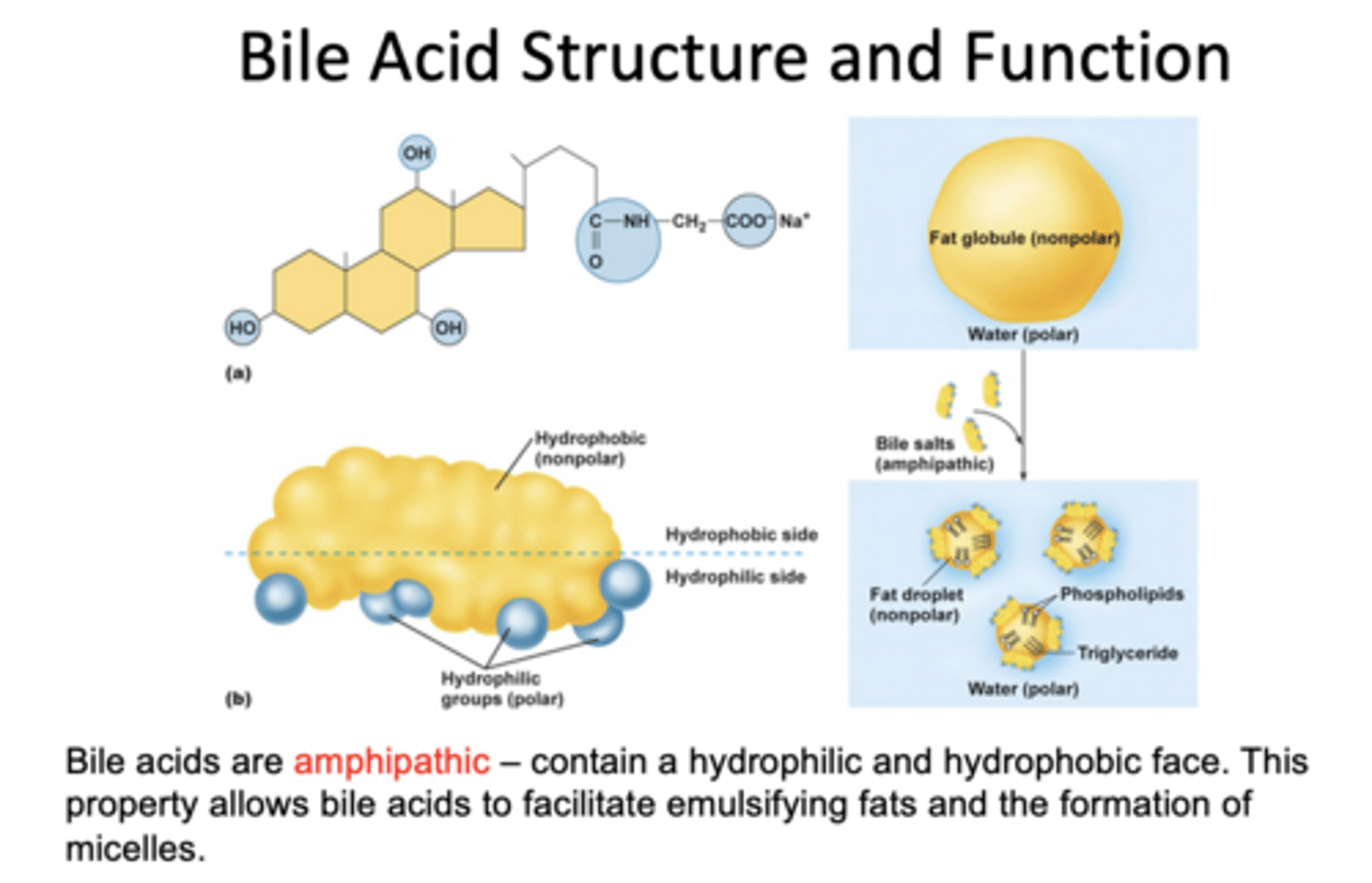
What transforms fat globules to fat droplets?
bile salts
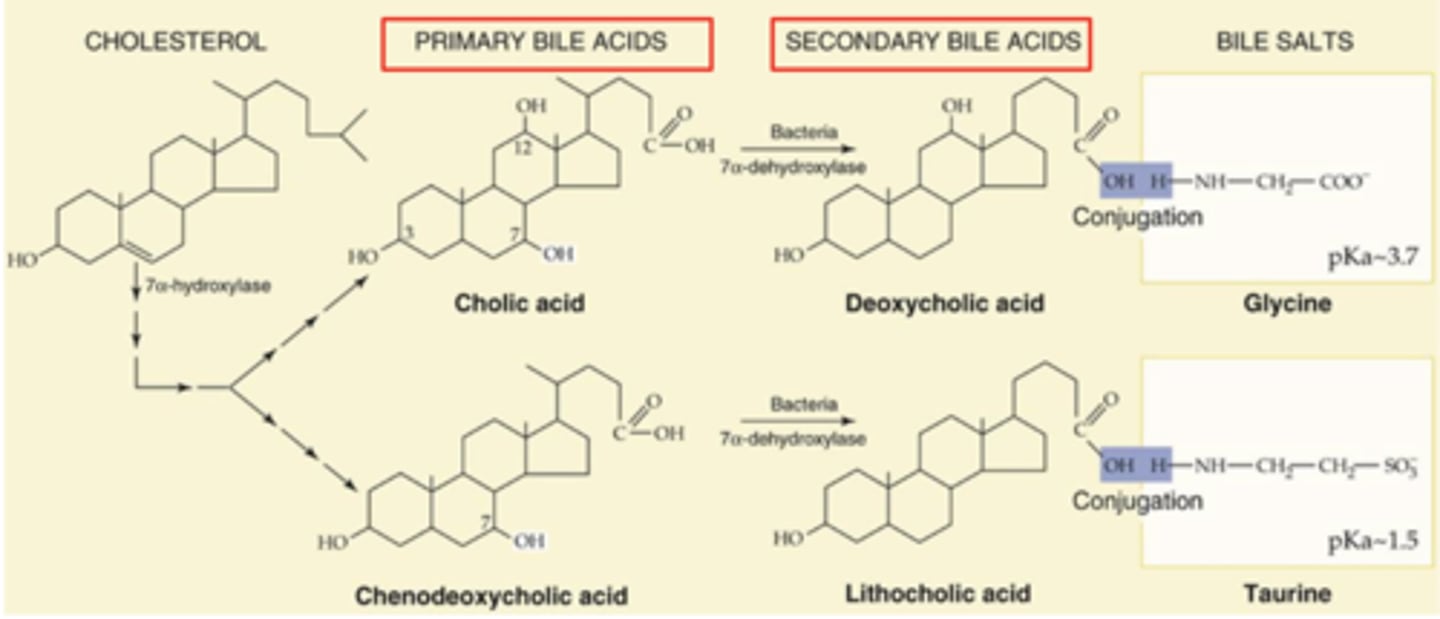
Cholic and chenodeoxycholic bile acids are synthesized in the liver from what?
cholesterol (primary bile acids)
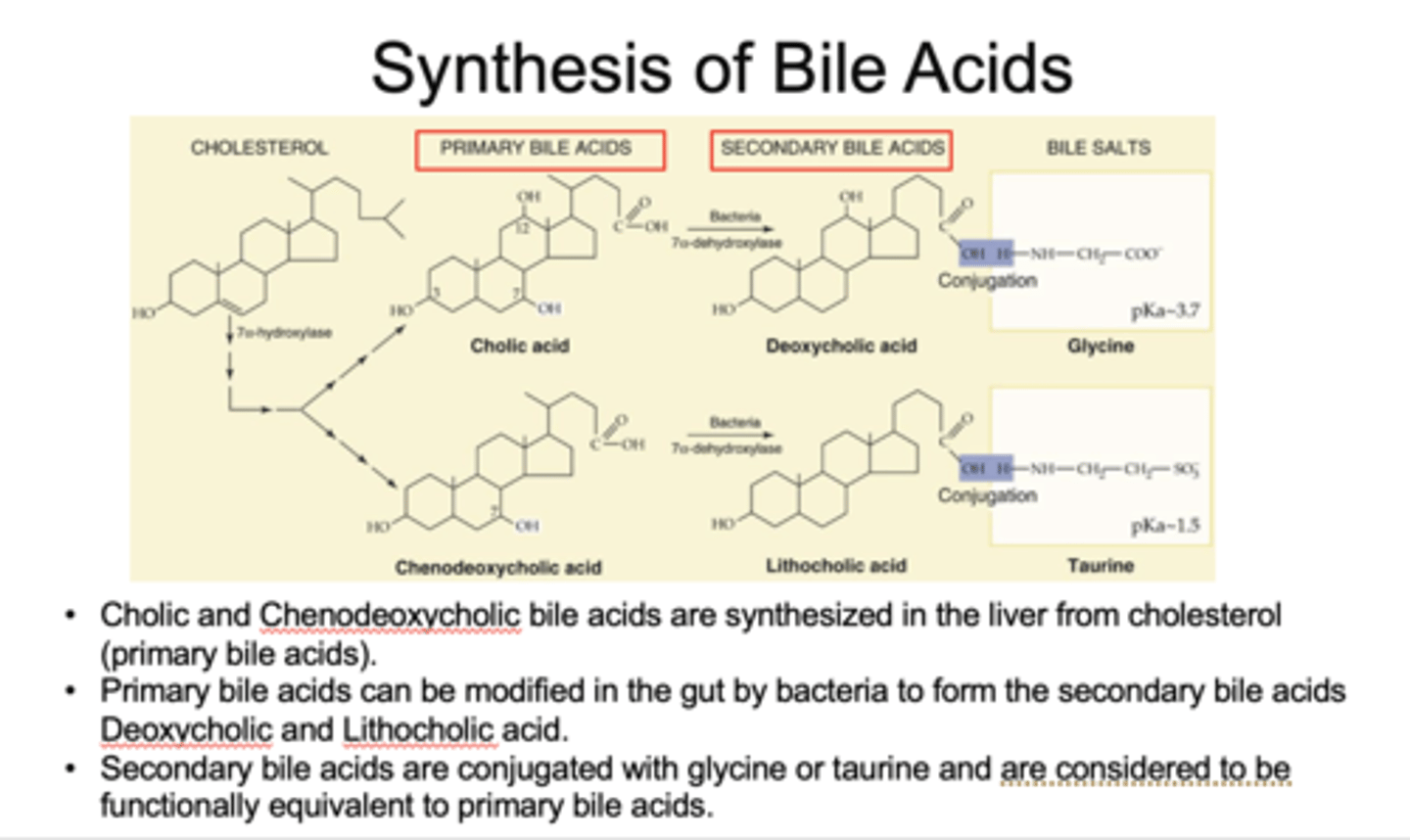
Primary bile acids can be modified in the gut by bacteria to form what?
secondary bile acids (deoxycholic acid, lithocholic acid)
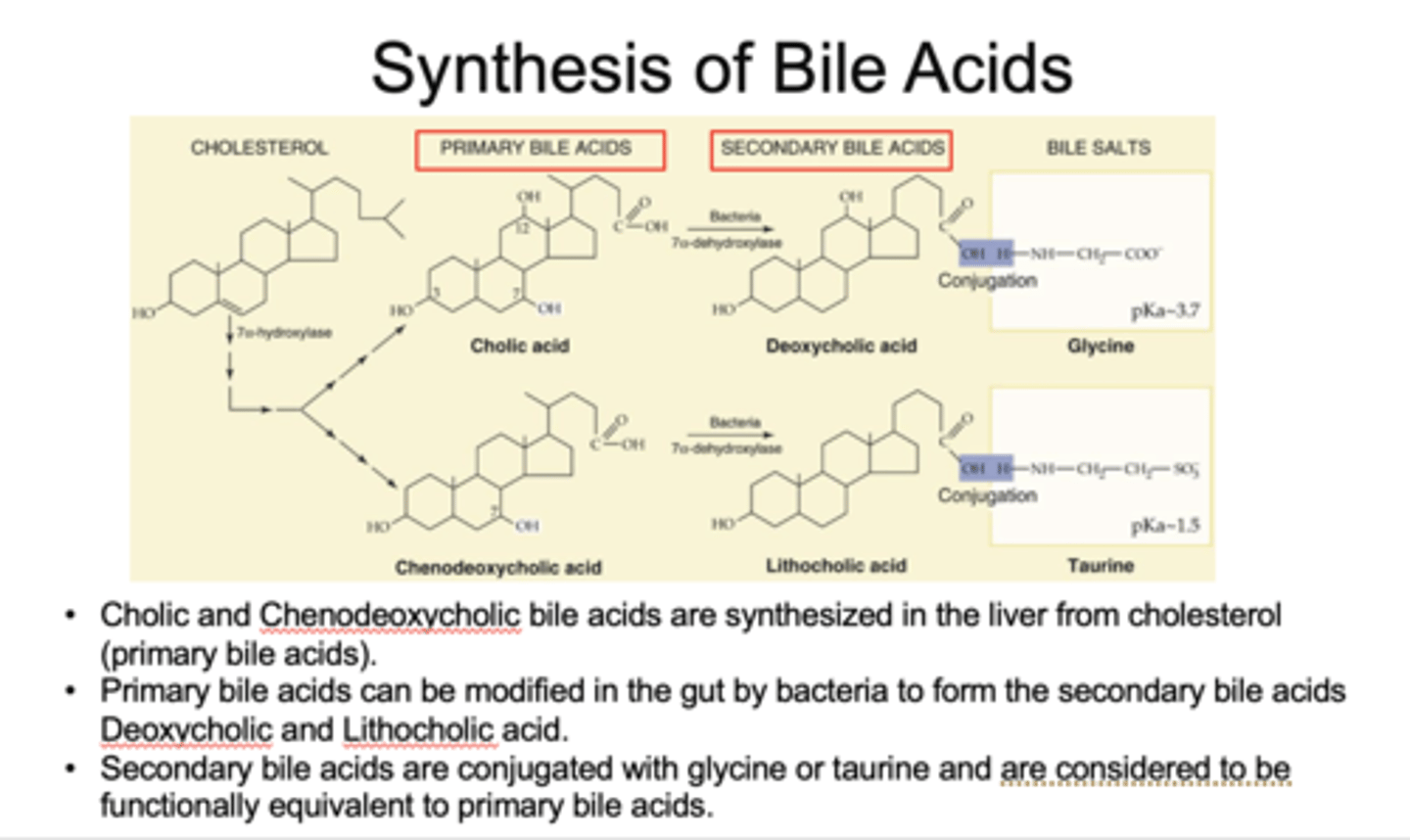
Secondary bile acids are conjugated with glycine or taurine and are considered to be functionally equivalent to what?
primary bile acids
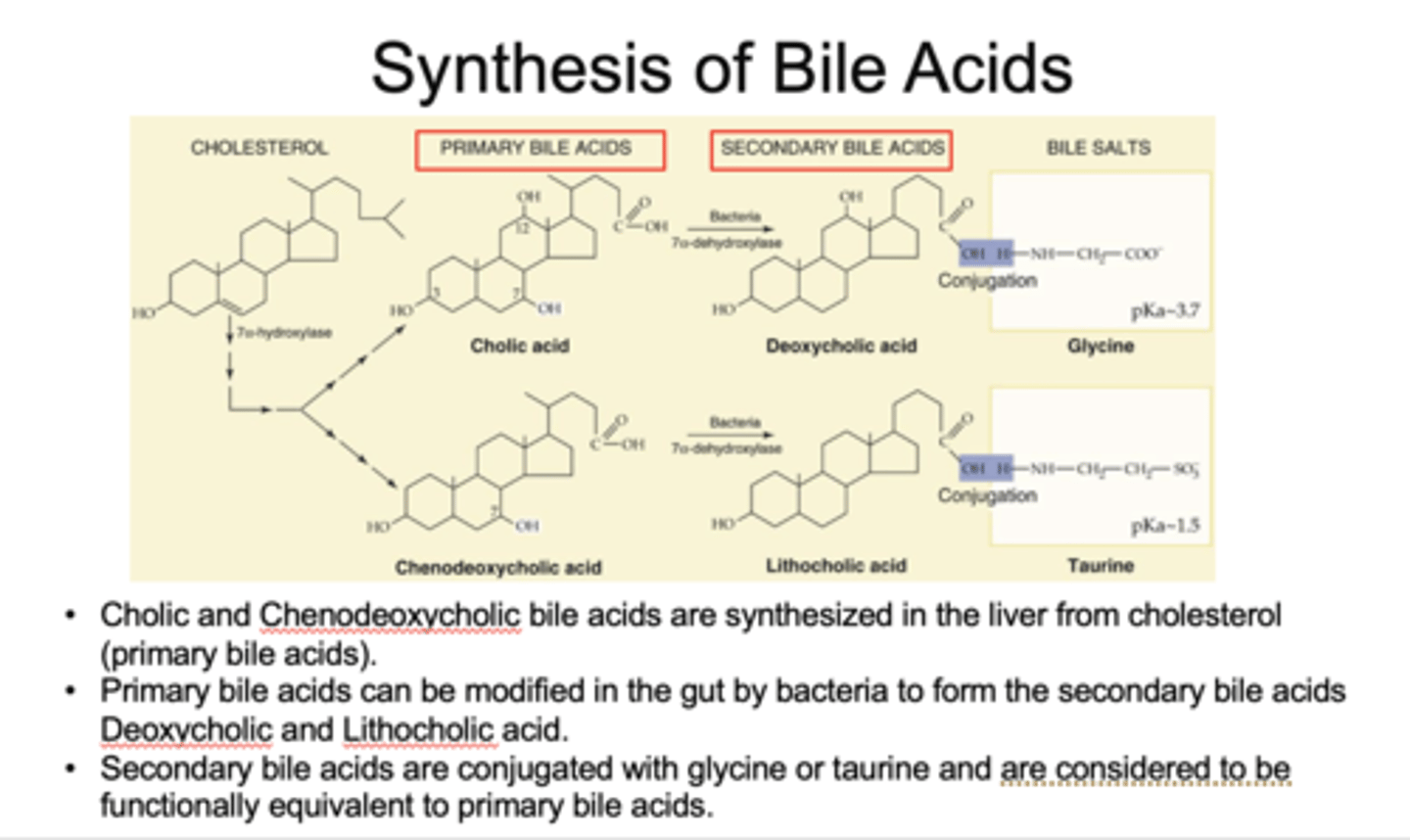
Is cholic acid a primary or secondary bile acid?
Primary bile acid
Is chenodeoxycholic acid a primary or secondary bile acid?
Primary bile acid
Is deoxycholic acid a primary or secondary bile acid?
Secondary bile acid
Is lithocholic acid a primary or secondary bile acid?
Secondary bile acid
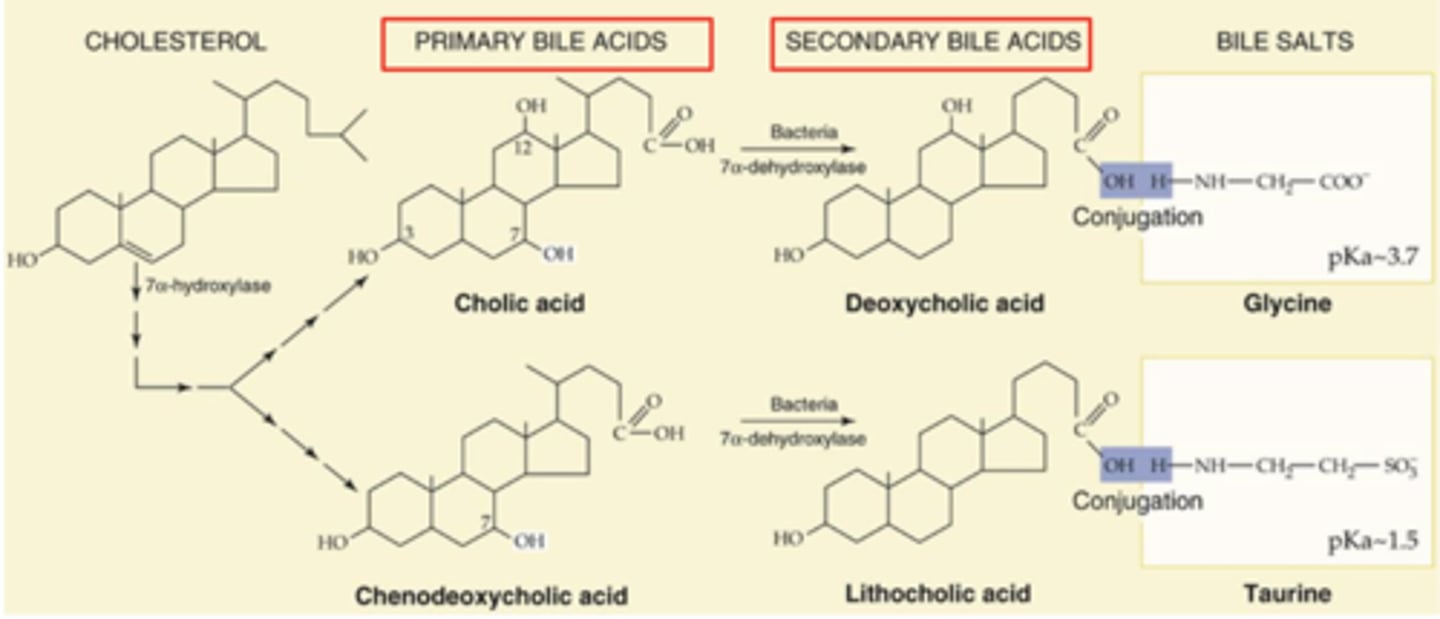
Cholic acid converts to deoxycholic acid which binds to what?
Glycine
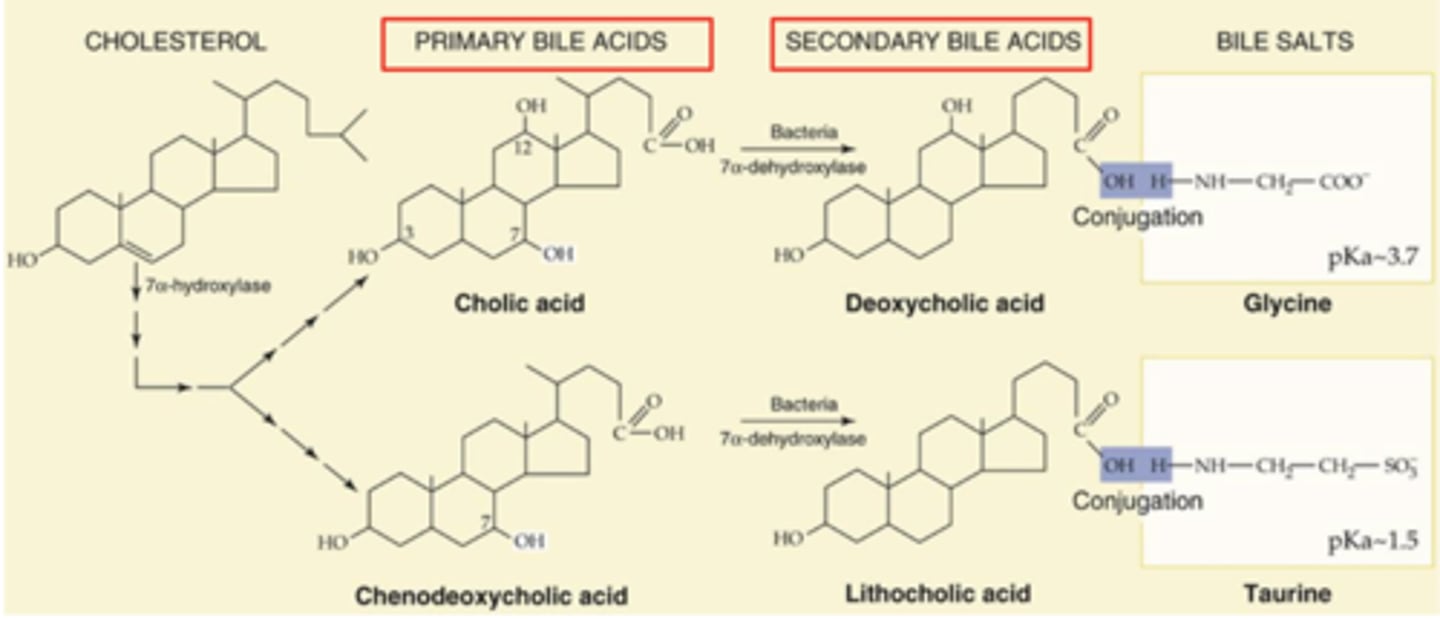
Chenodeoxycholic acid converts to lithocholic acid which binds to what?
Taurine
Micellar solubilization of polar lipids greatly increases rate of what?
diffusion to small intestine
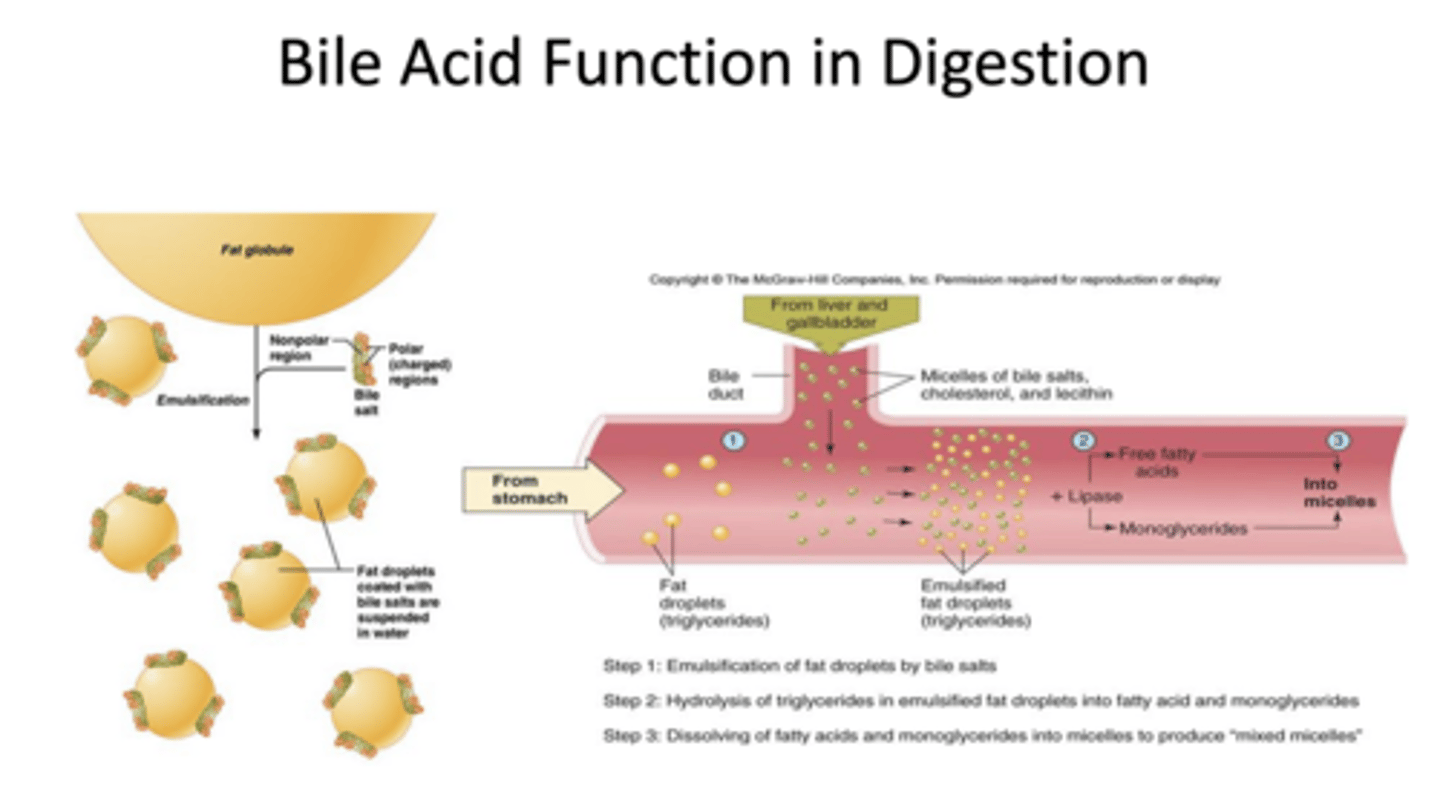
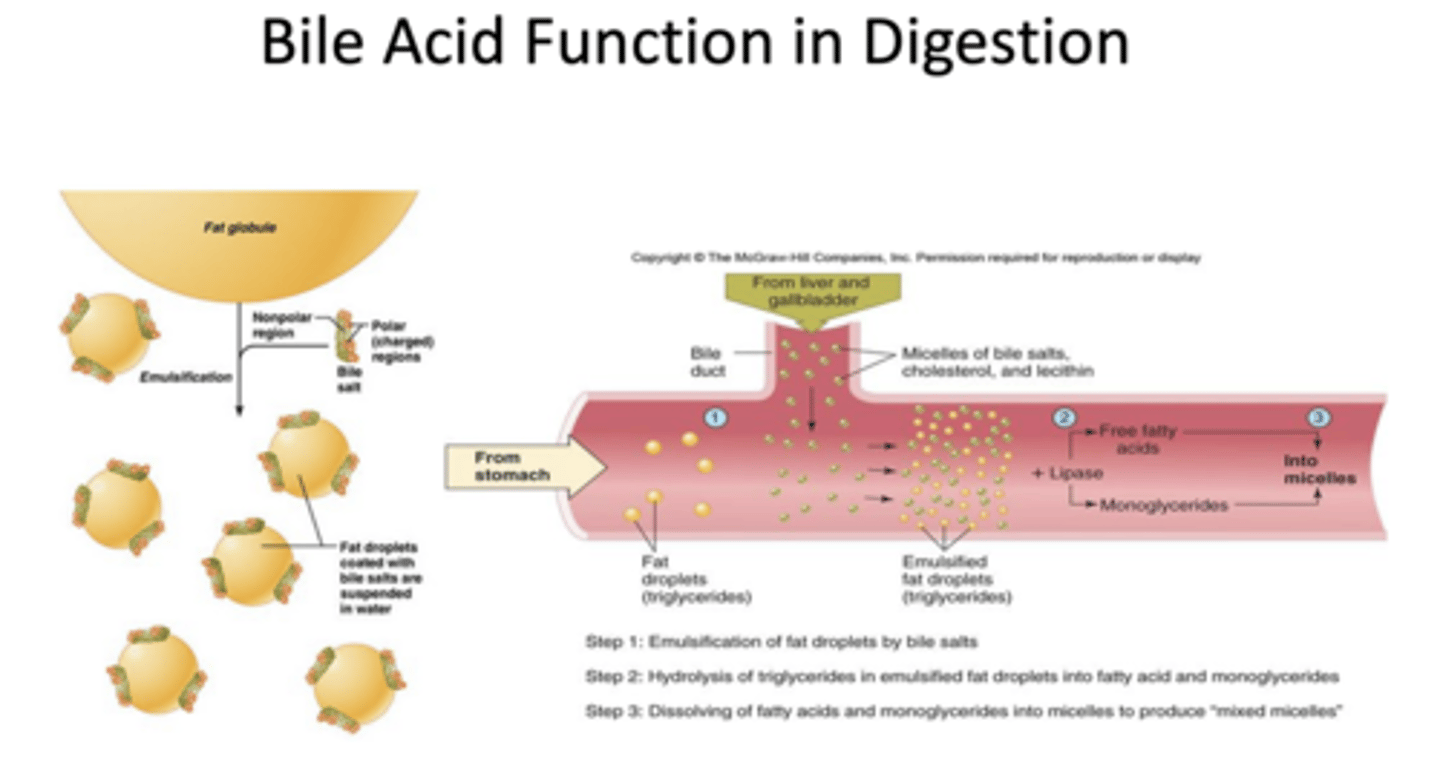
Emulsification of fat droplets by bile salts is what step of fat digestion?
1
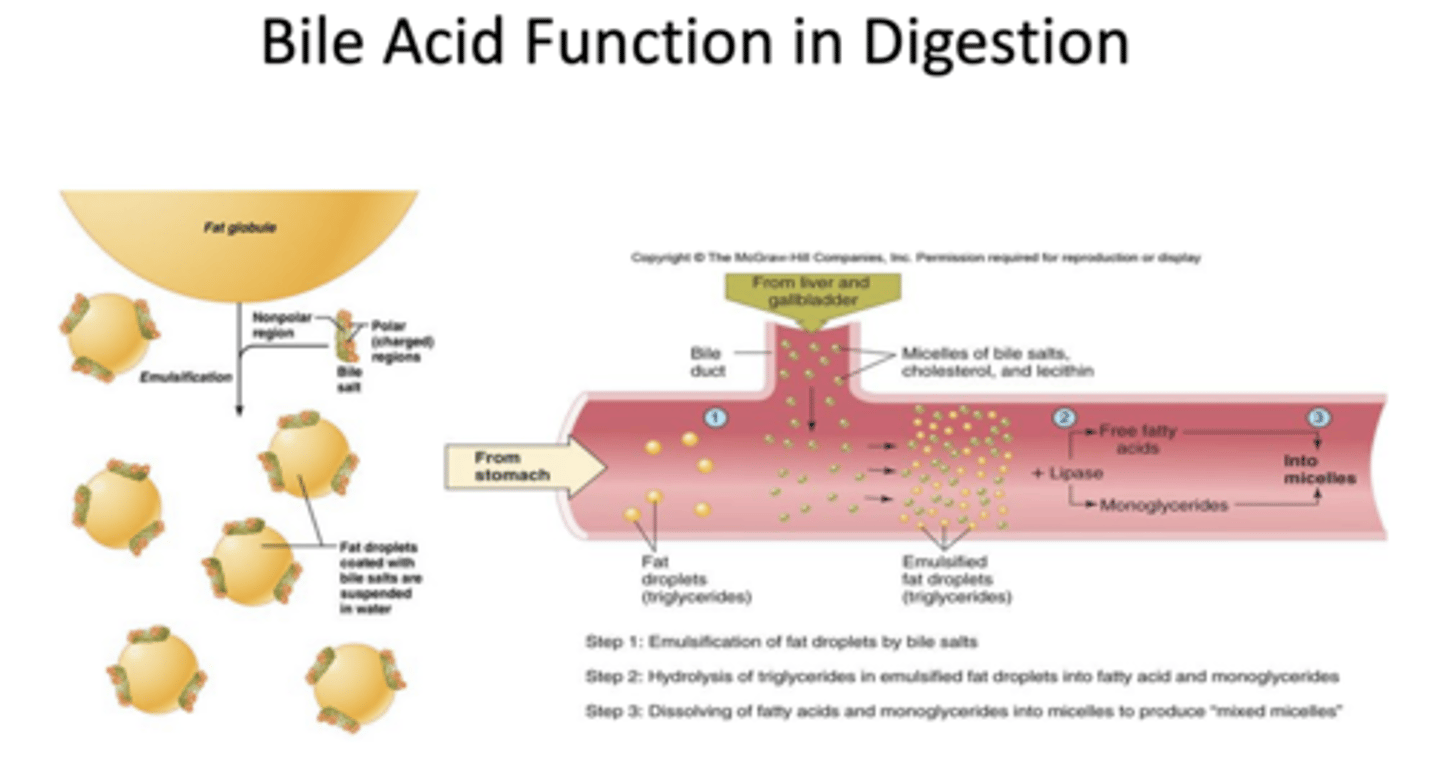
Hydrolysis of triglycerides in emulsified fat droplets into fatty acids and monoglycerides is what step of fat digestion?
2
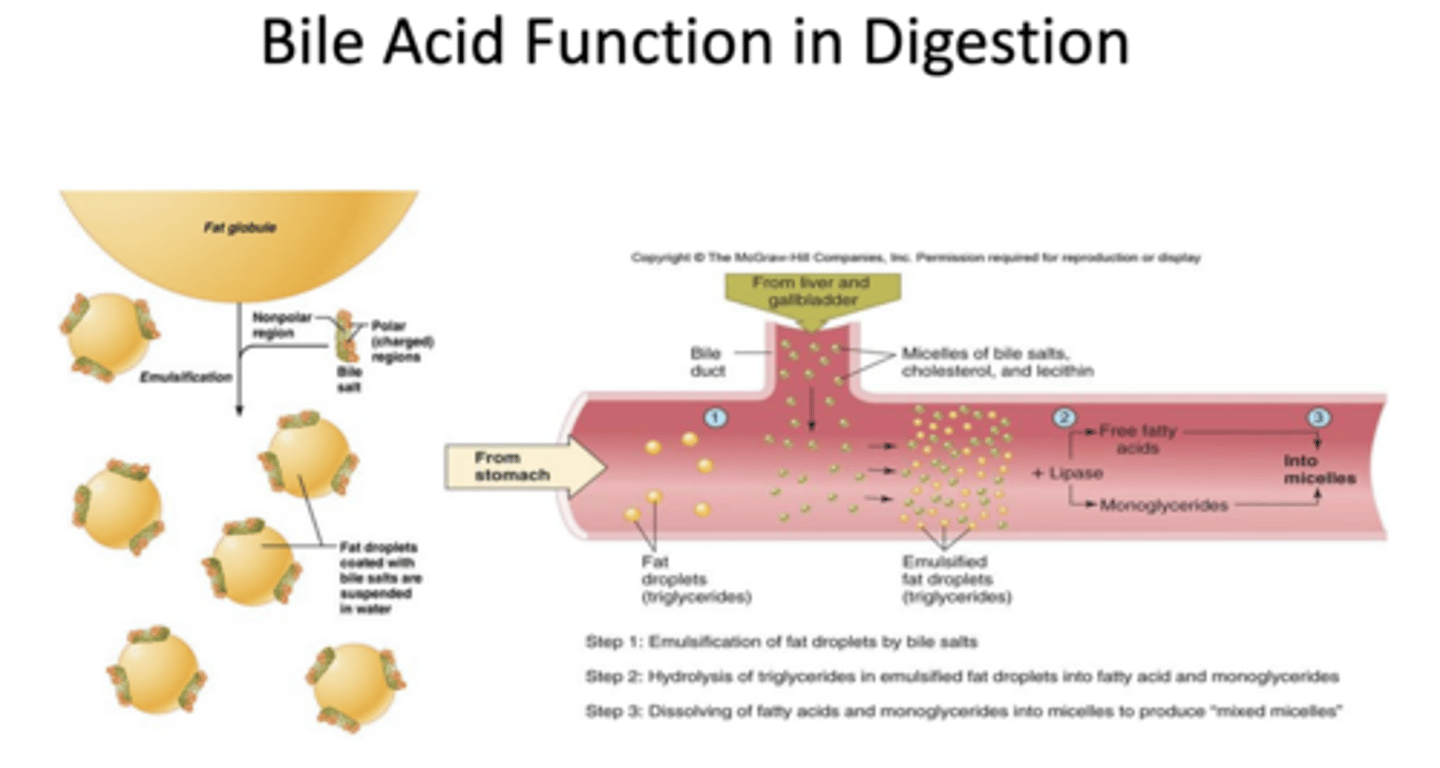
Dissolving of fatty acids and monoglycerides into micelles to produce mixed micelles is what step of fat digestion?
3
What synthesizes bile salts?
cholesterol
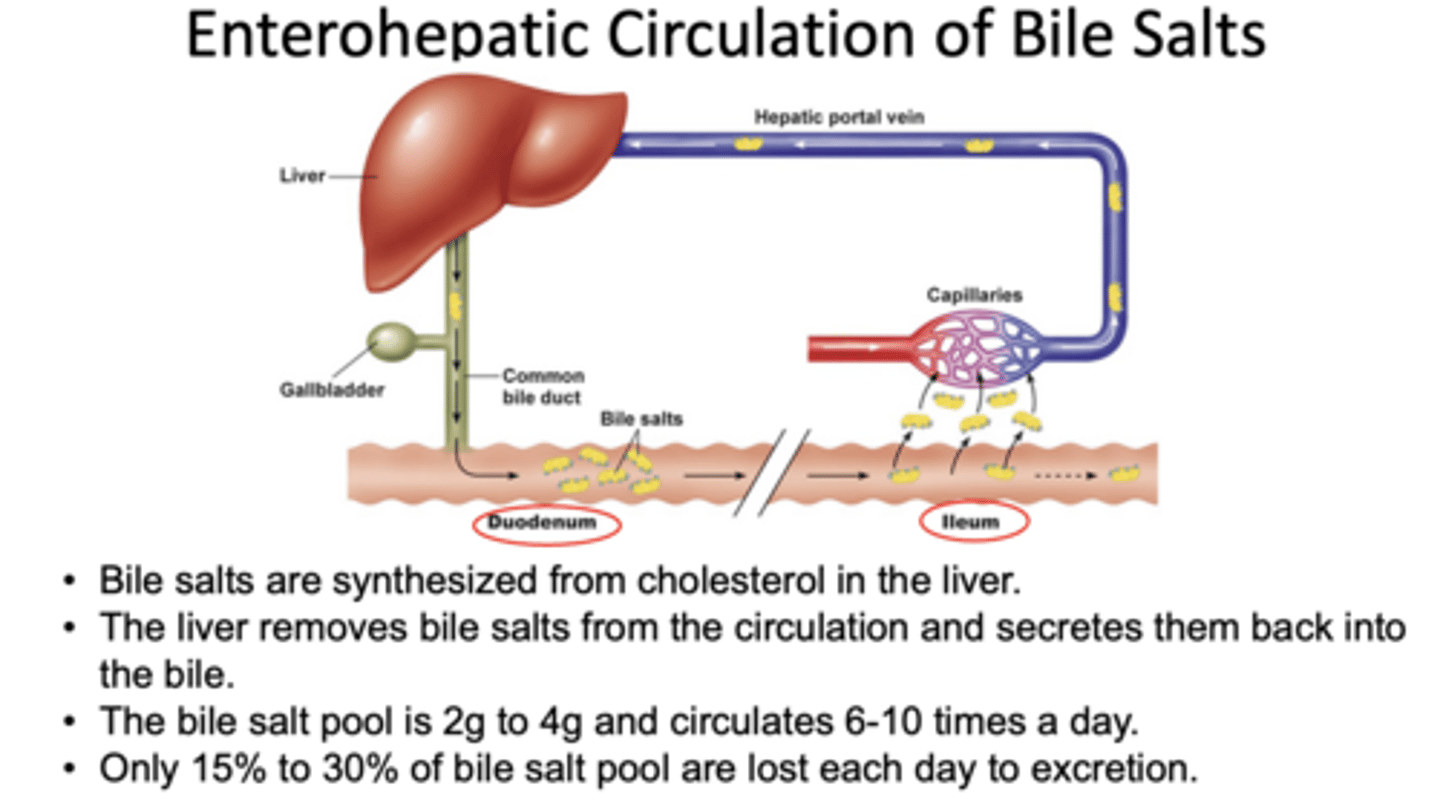
What removes bile salts from circulation and secretes them back into bile?
liver
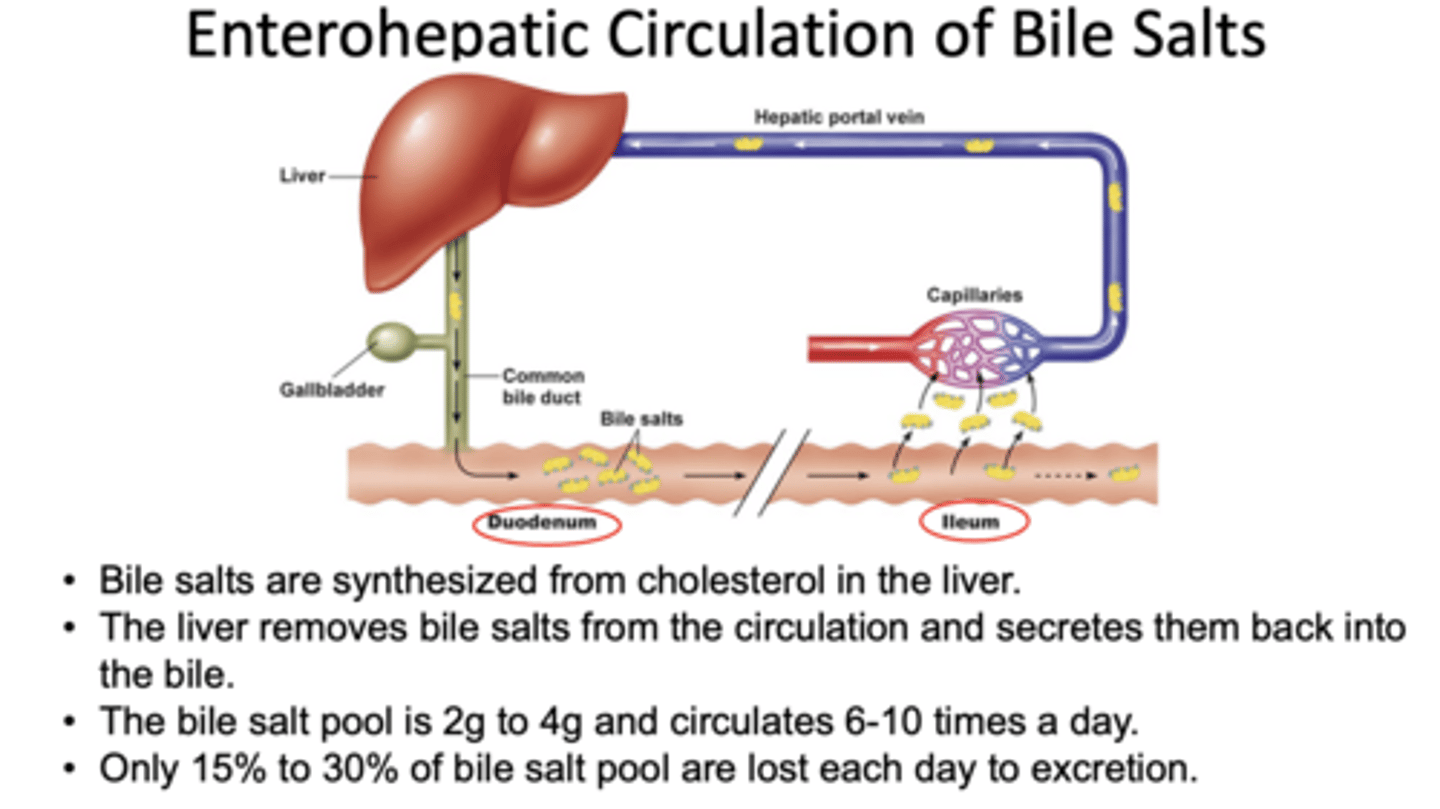
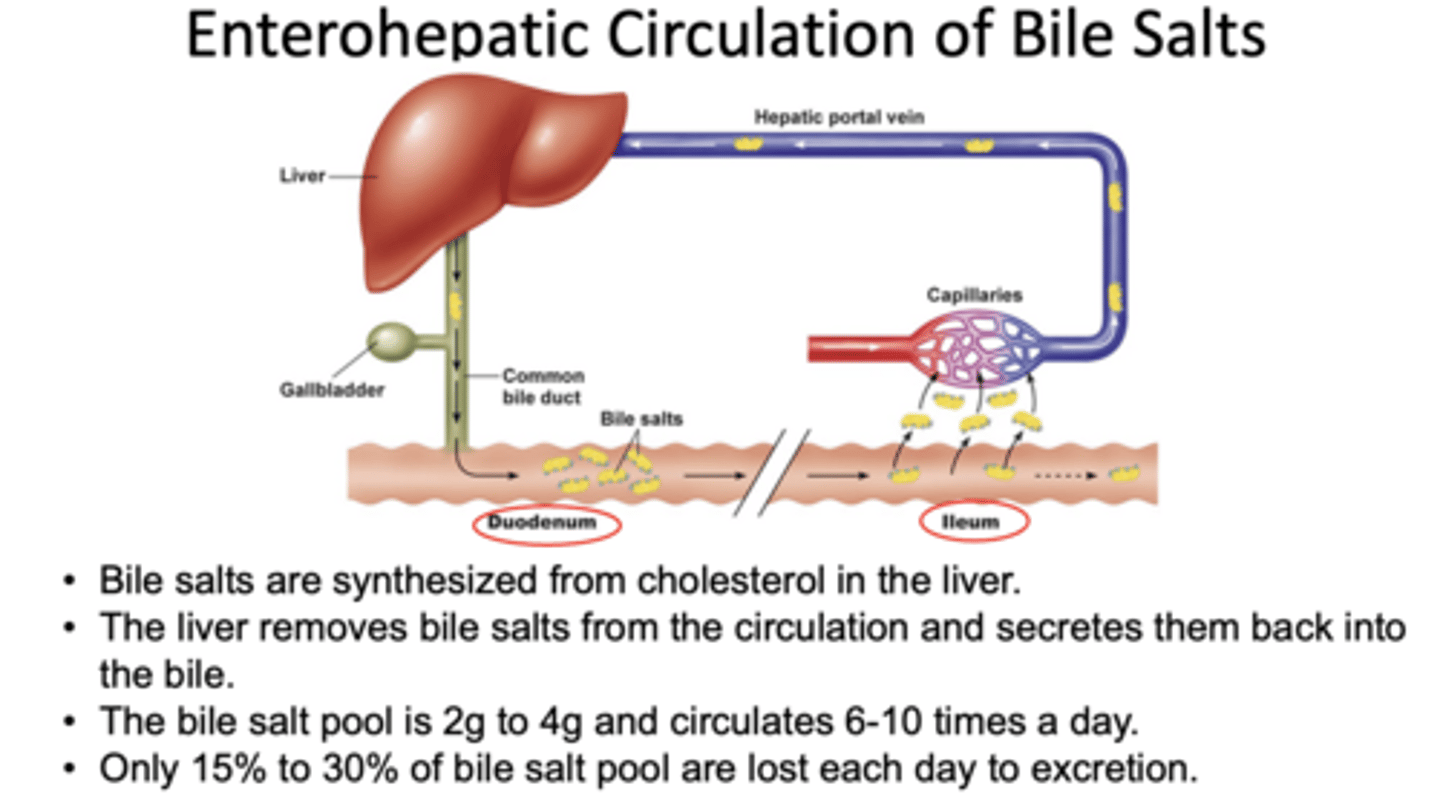
What type of circulation do bile salts go through?
Enterohepatic circulation
Where are bile acids taken up by enterocytes?
distal ileum
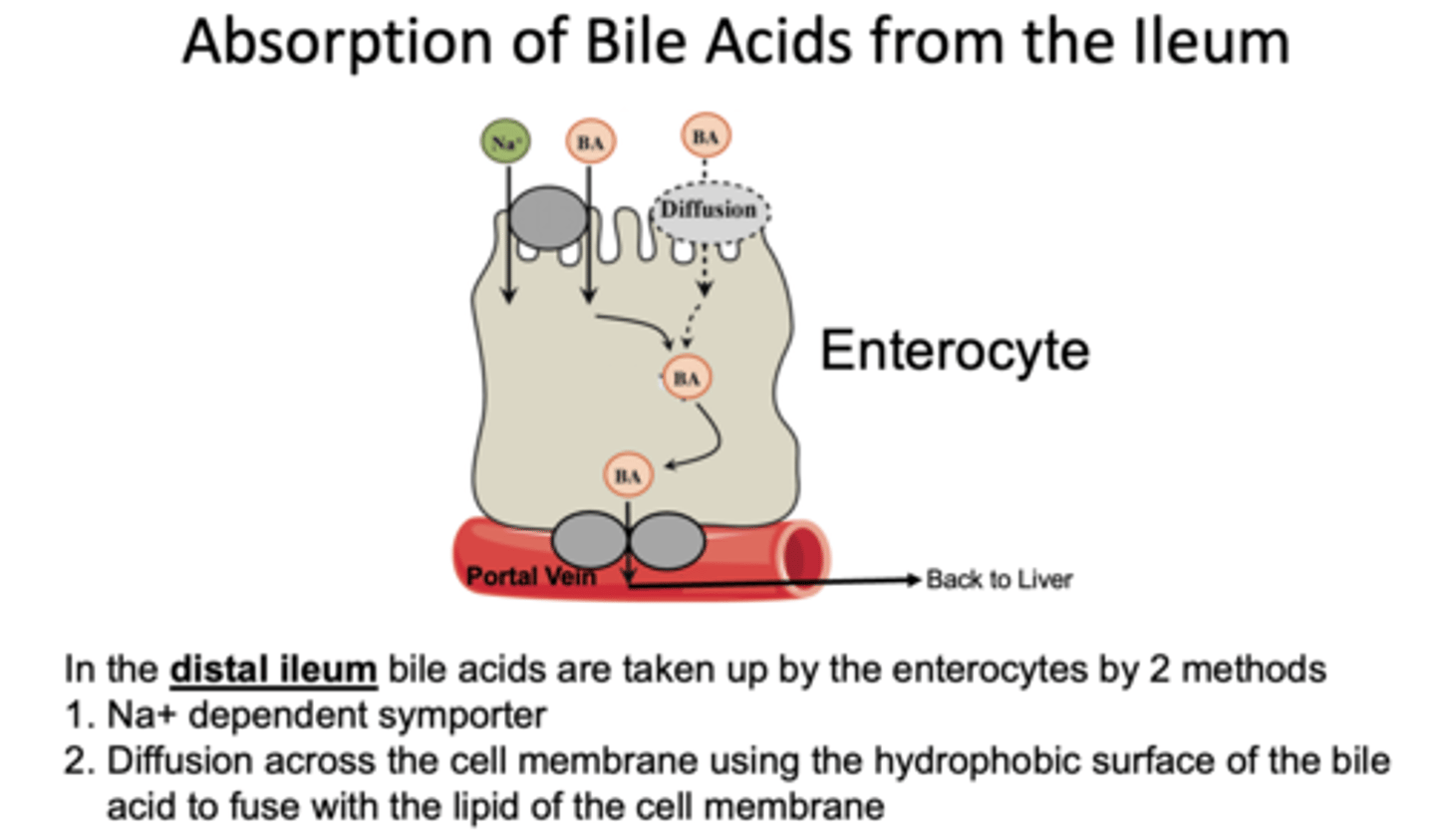
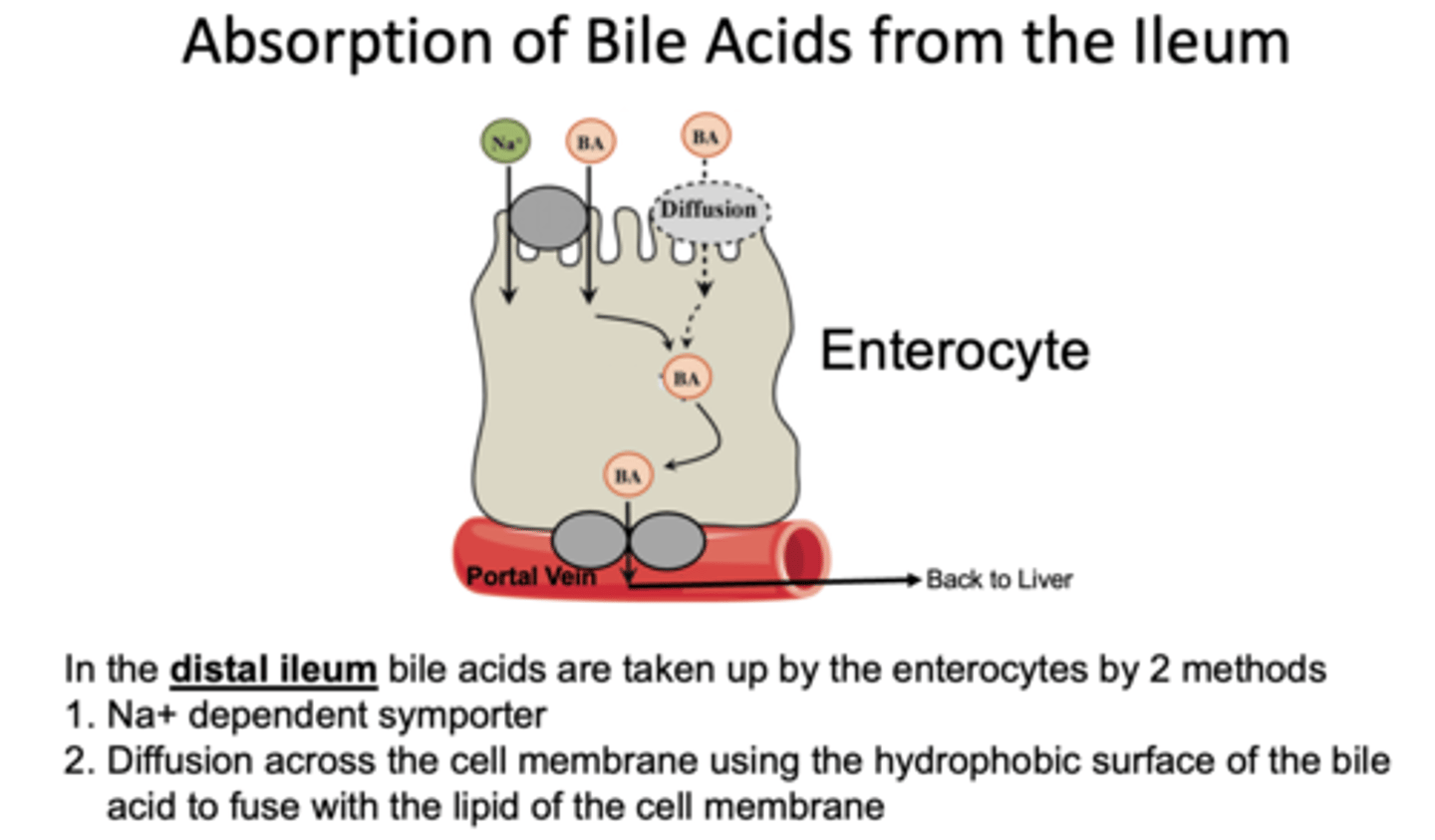
What are the two methods enterocytes use to take up bile acids?
- Na+ dependent symporter
- Diffusion
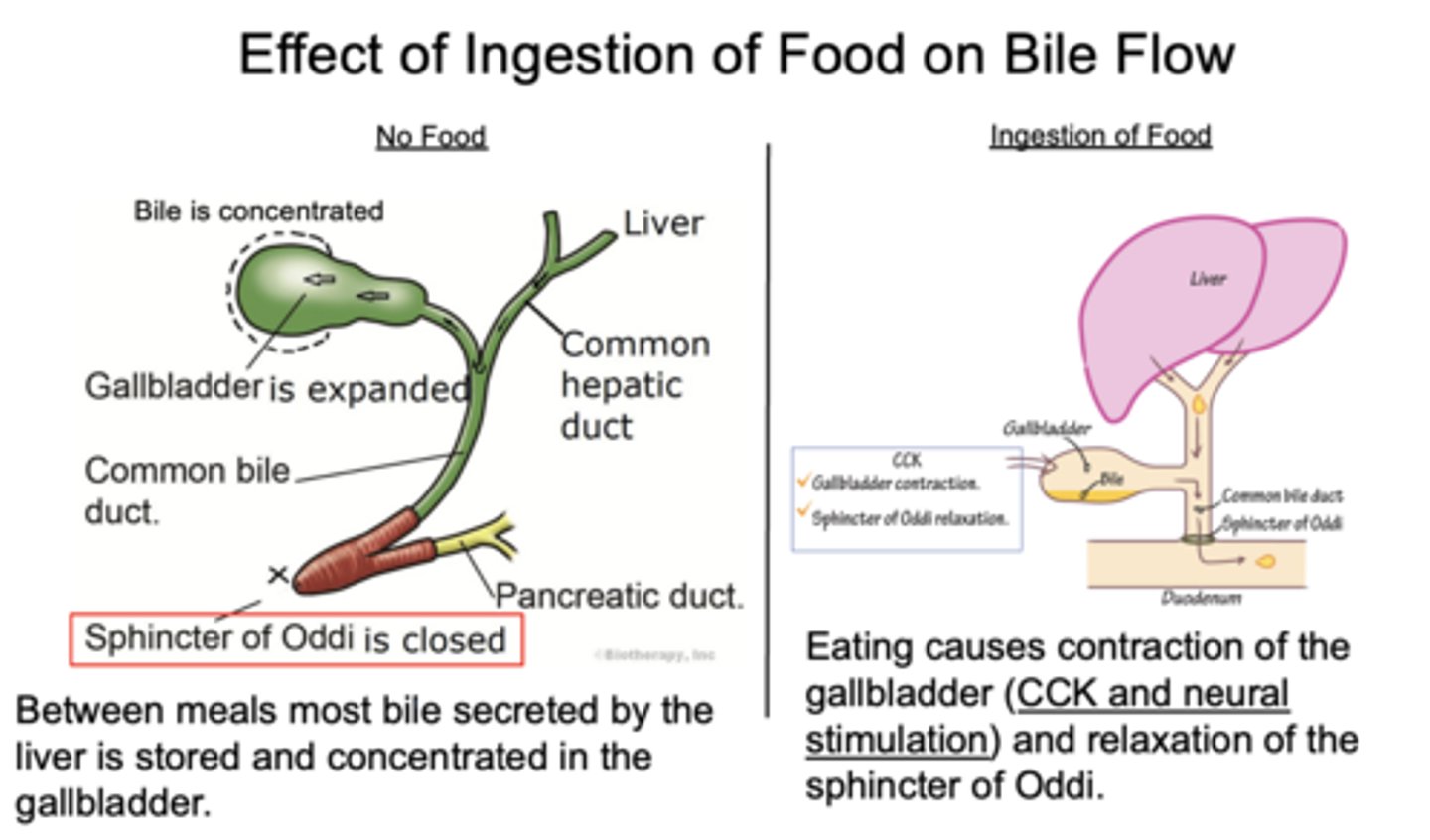
Between meals, is the sphincter of Oddi open or closed?
closed
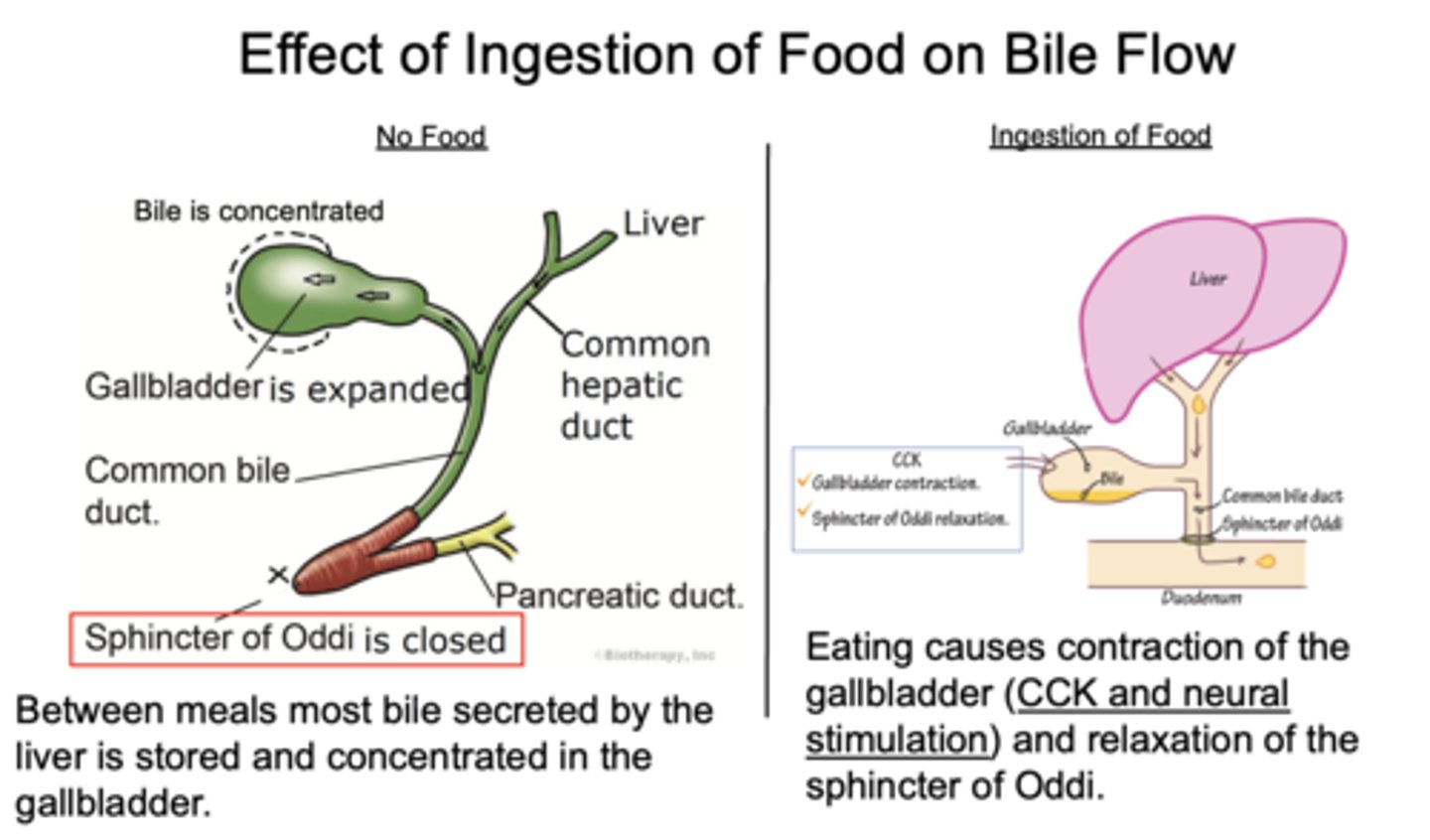
When food is ingested, is the sphincter of Oddi open or closed?
open (relaxed)
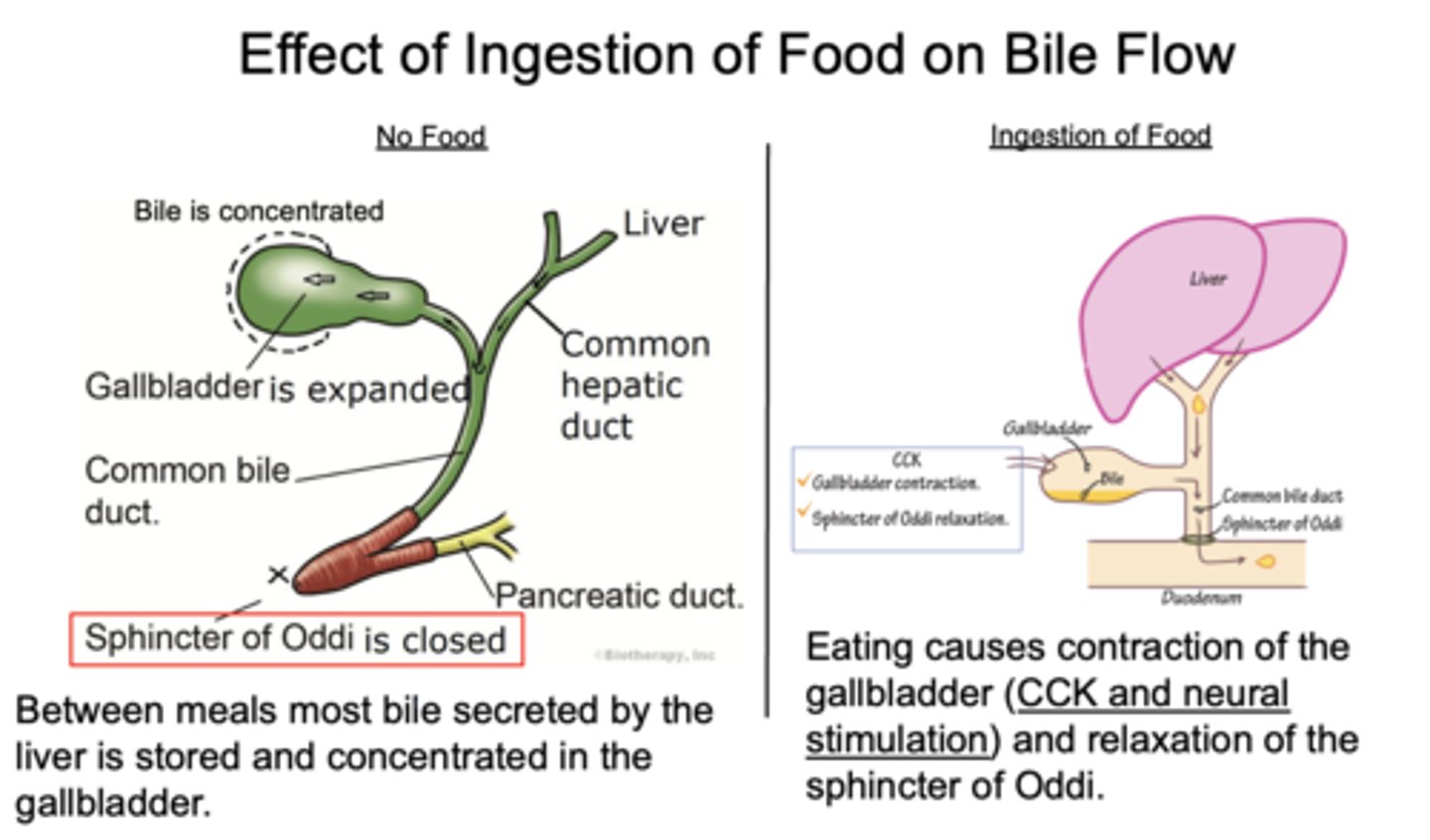
Between meals most bile secreted by the liver is stored and concentrated in the ____________.
gallbladder
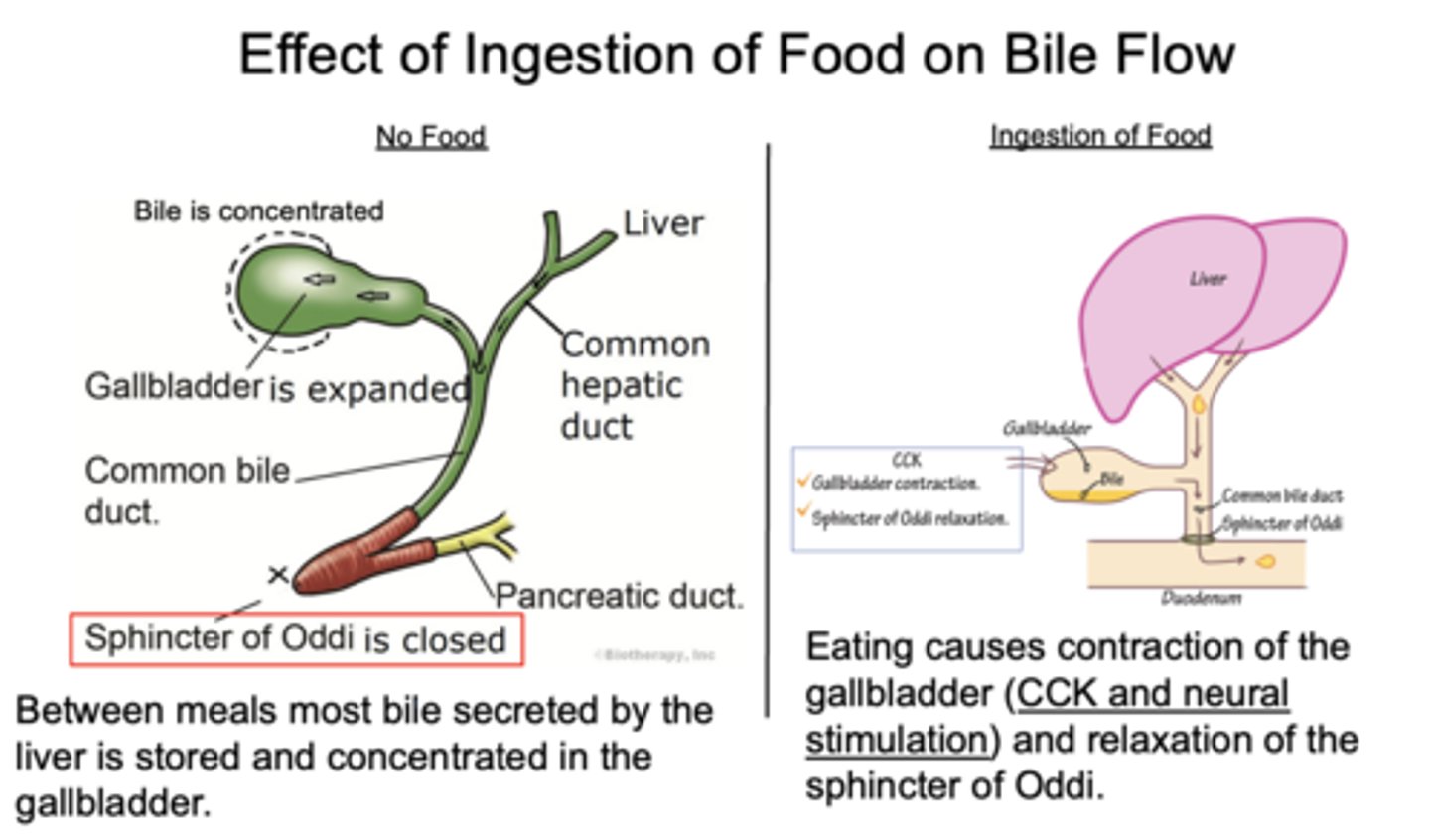
Eating causes contraction of ____________
gallbladder
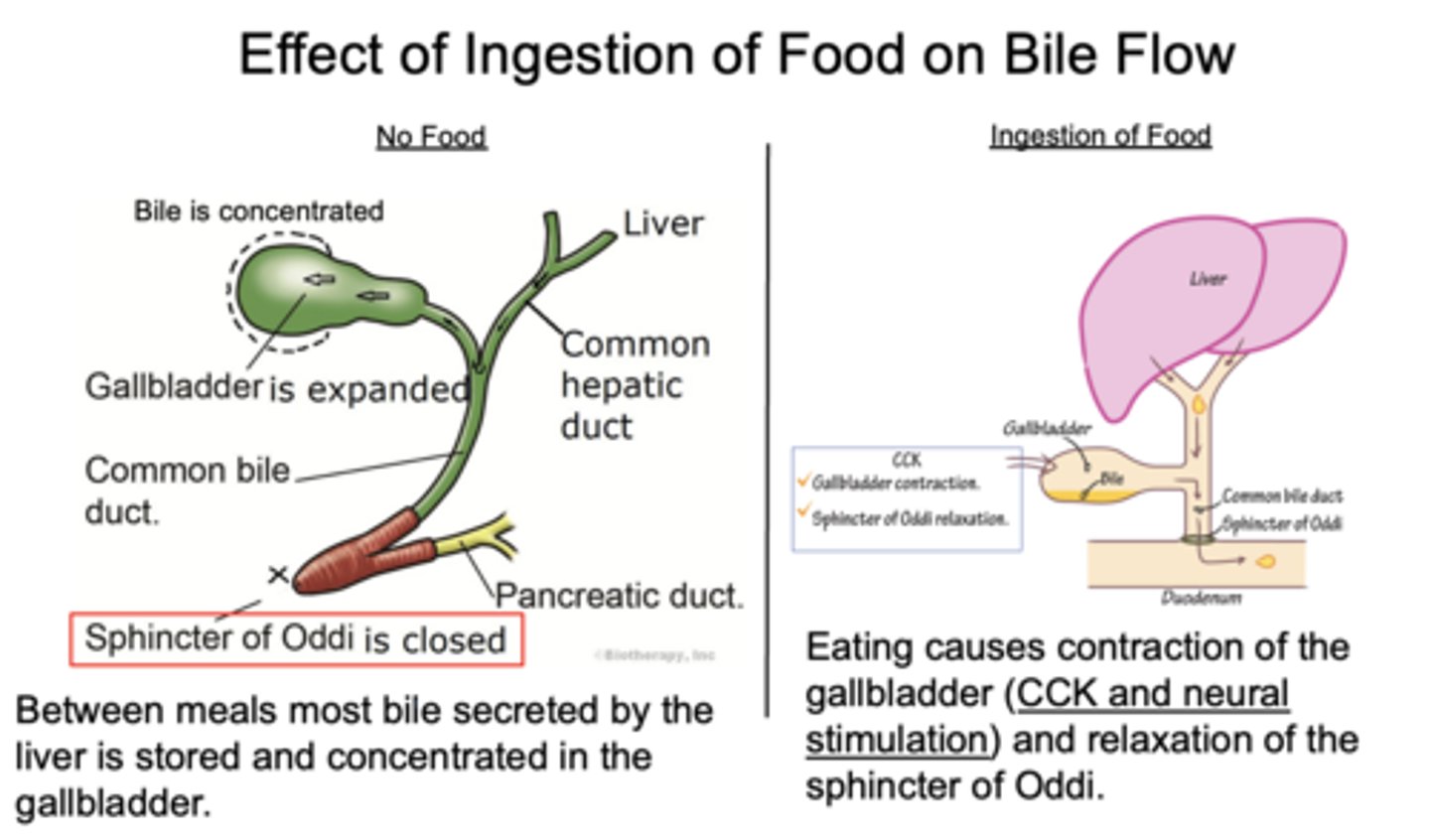
What is stimulated when eating?
- CCK
- Neural stimulation
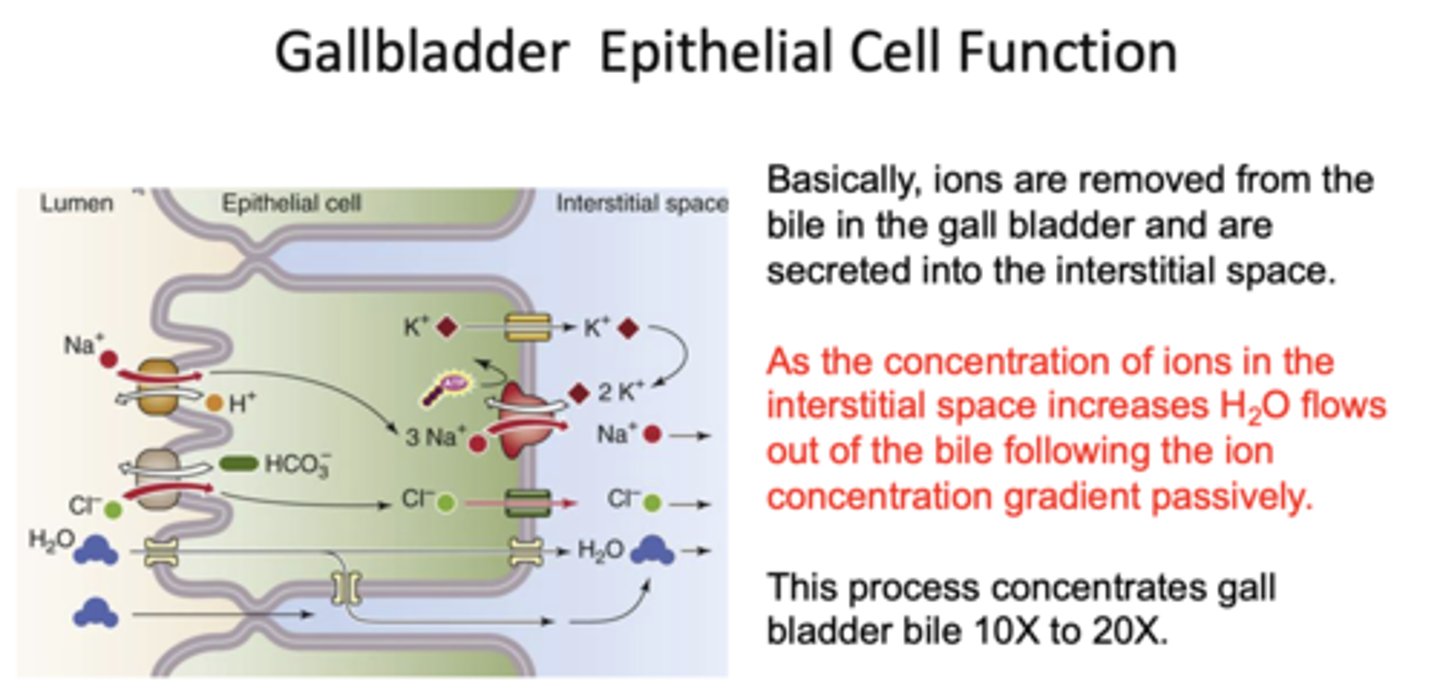
When ions are removed from bile in gallbladder, where are they secreted into?
interstitial space
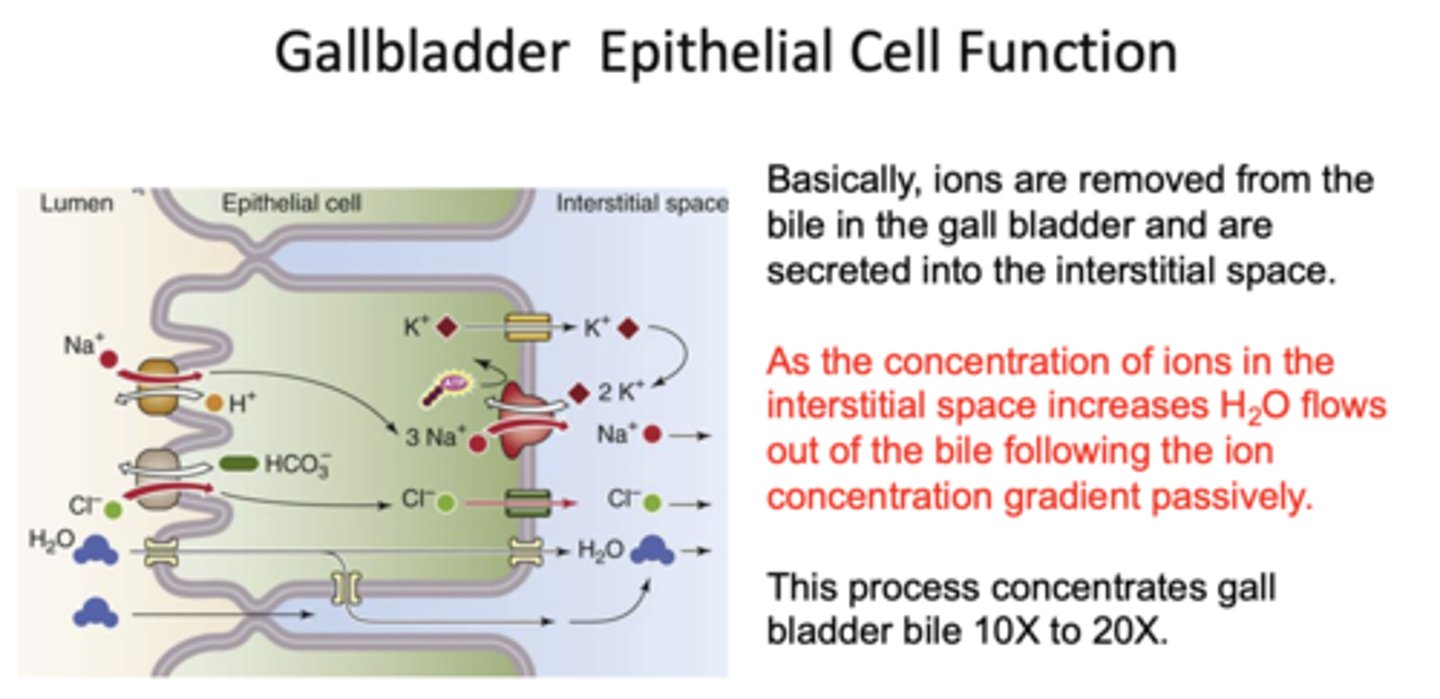
When the concentration of ions in the interstitial space increases, water flows in or out of bile?
out! (follows ion concentration gradient passively)
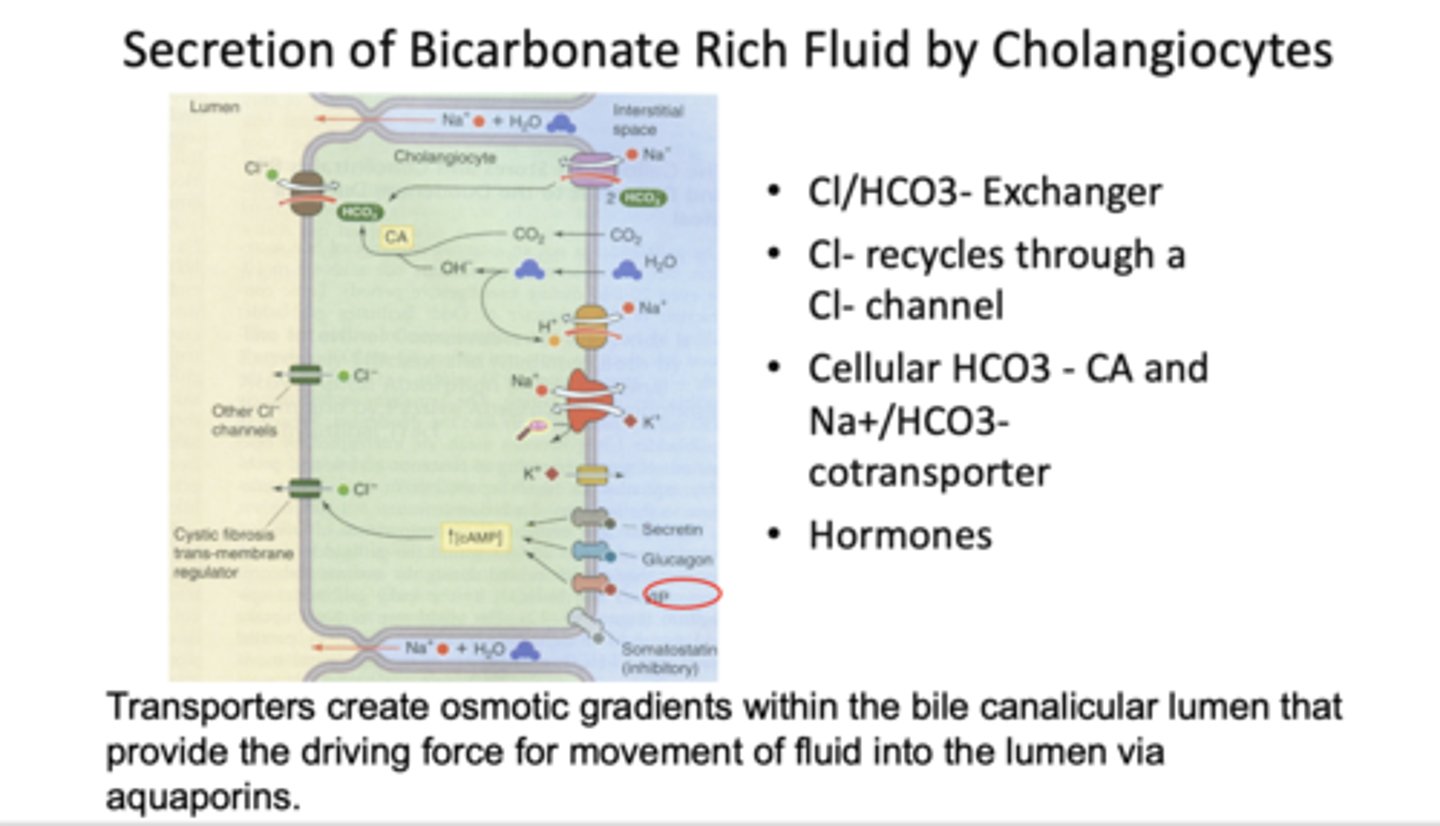
What secretes bicarbonate rich fluid?
cholangiocytes
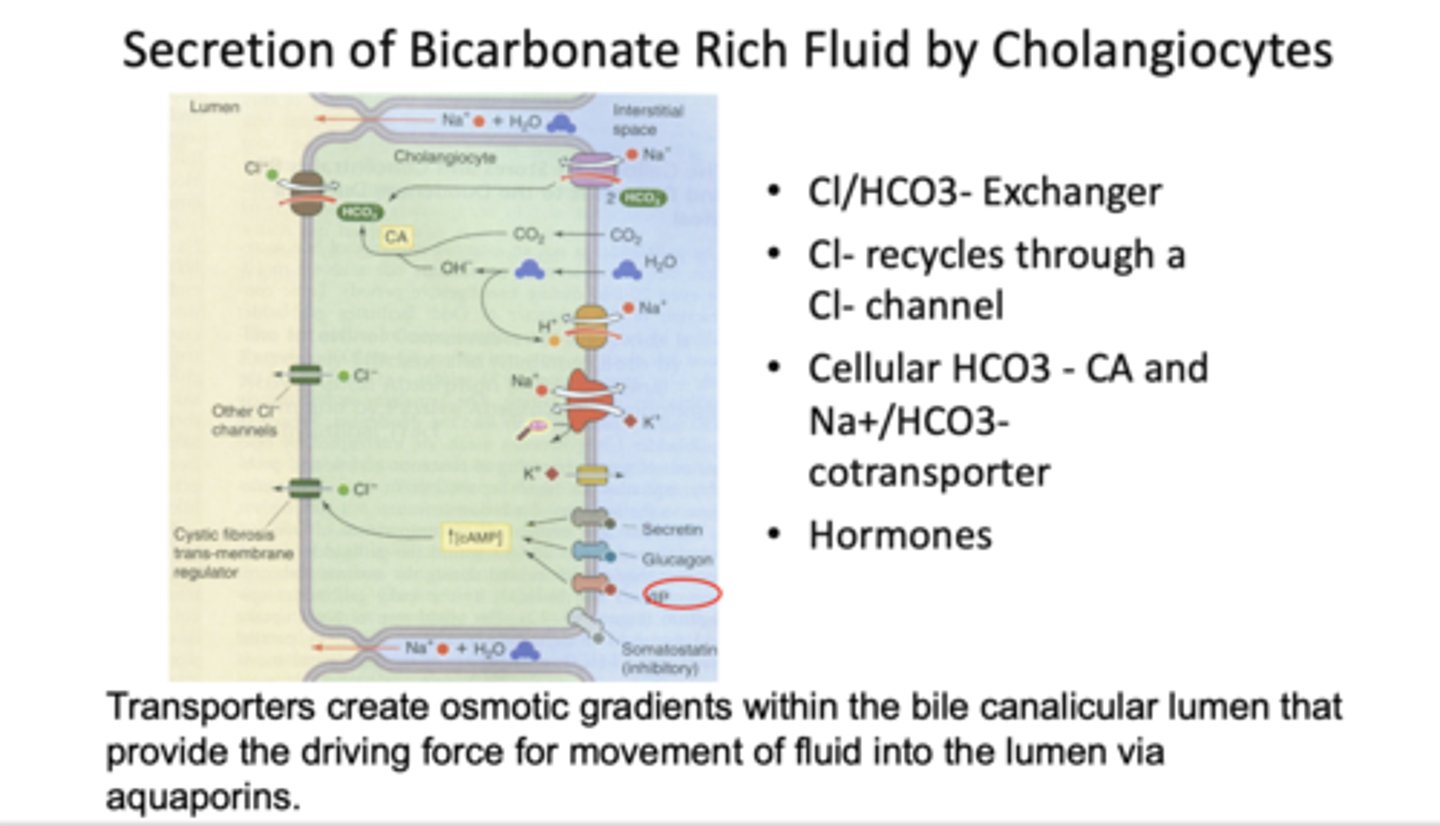
Transporters create osmotic gradients within the bile canalicular lumen that provide the driving force for movement of fluid into the lumen via ____________
aquaporins
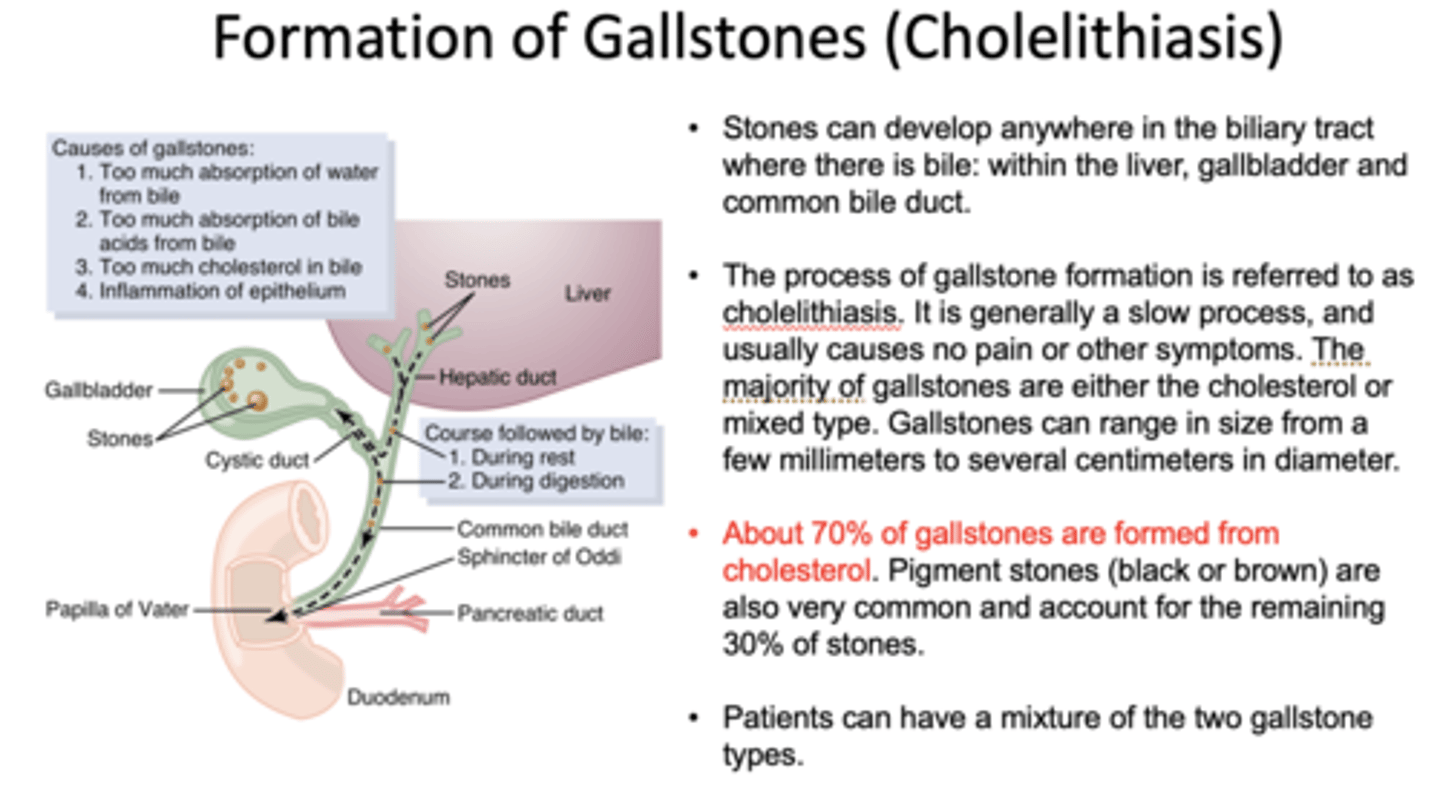
Gallstones can develop anywhere in the biliary tract where there is ________: within the liver, gallbladder and common bile duct.
bile
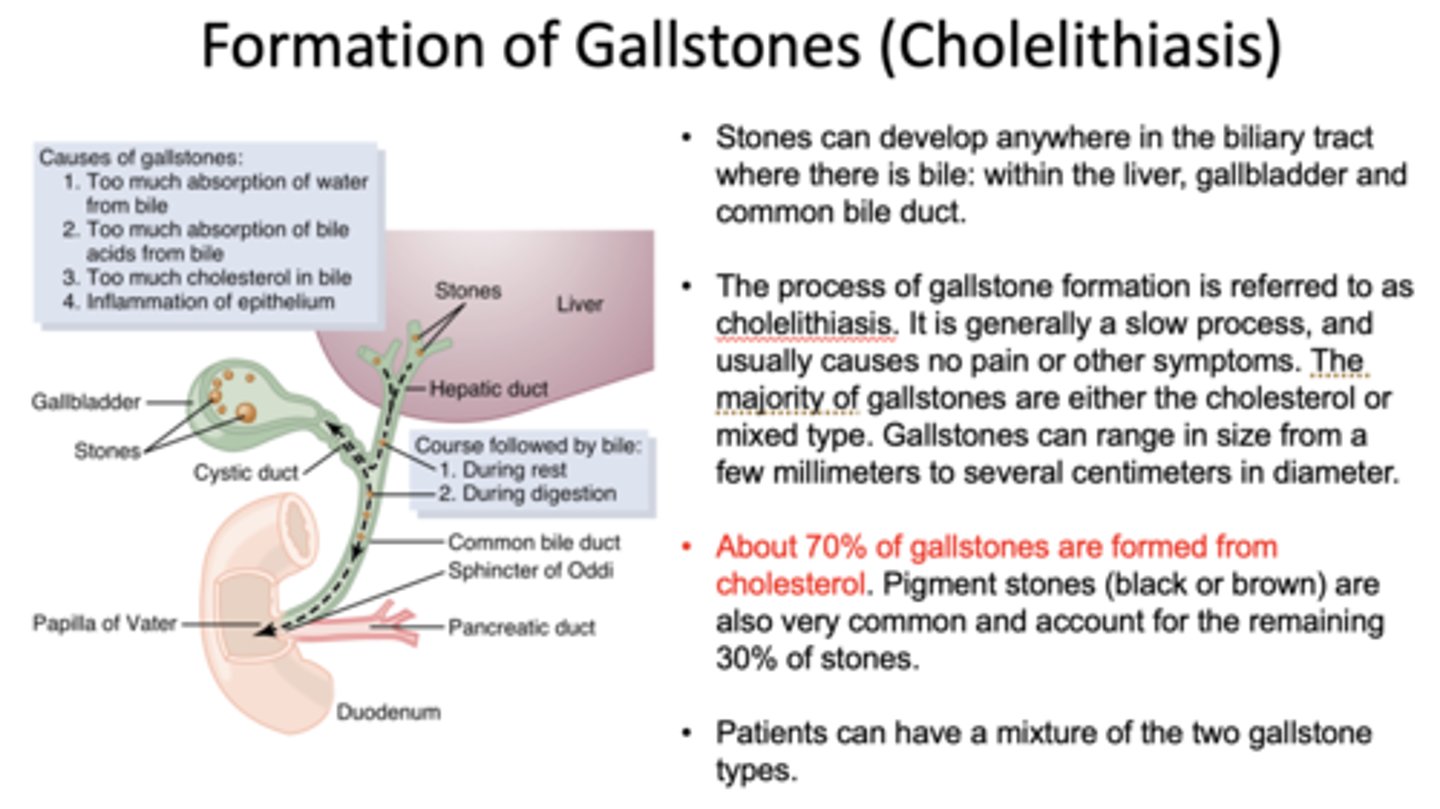
The process of gallstone formation is referred to as _______________. It is generally a slow process, and usually causes no pain or other symptoms. The majority of gallstones are either the cholesterol or mixed type. Gallstones can range in size from a few millimeters to several centimeters in diameter
cholelithiasis
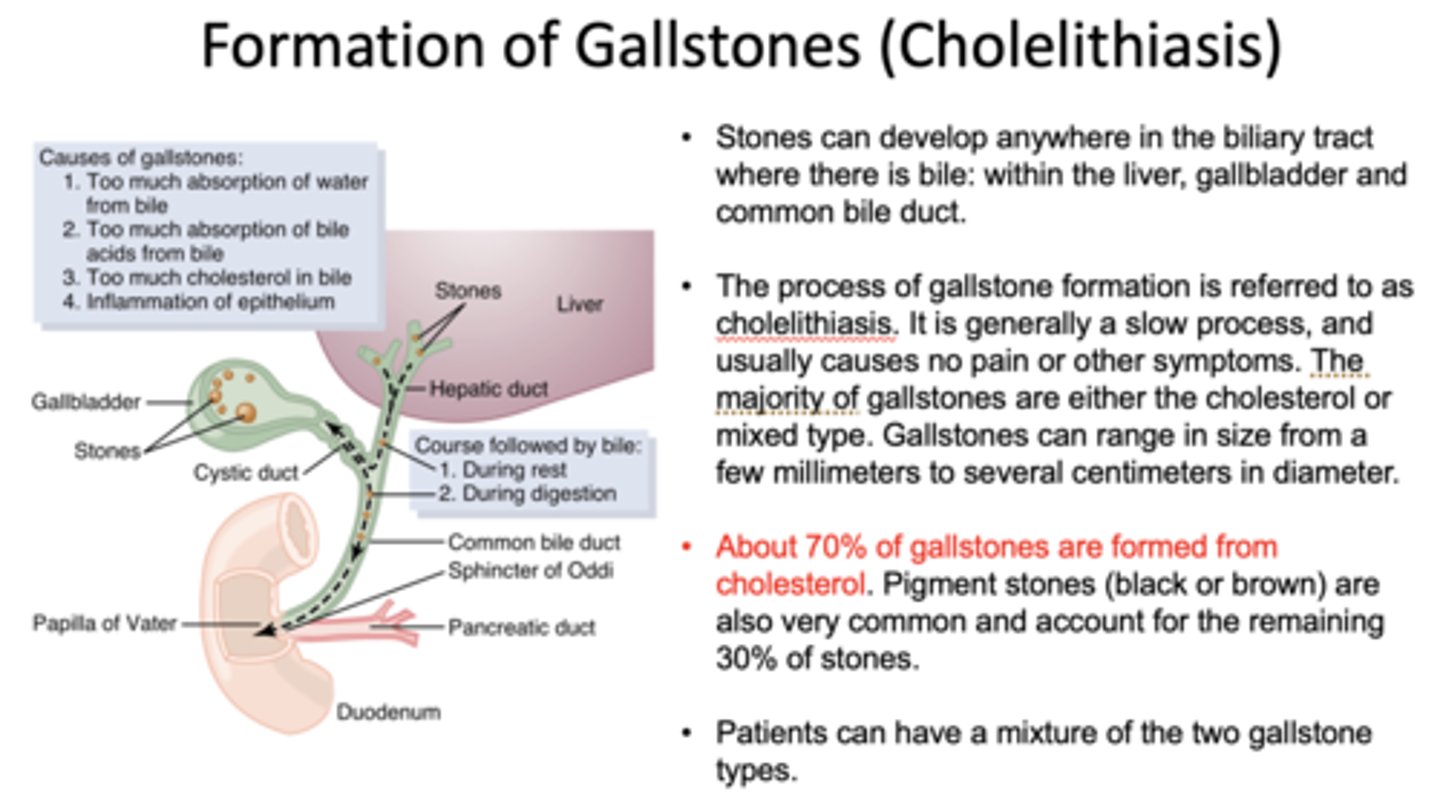
What percent of gallstones are formed from cholesterol?
70%
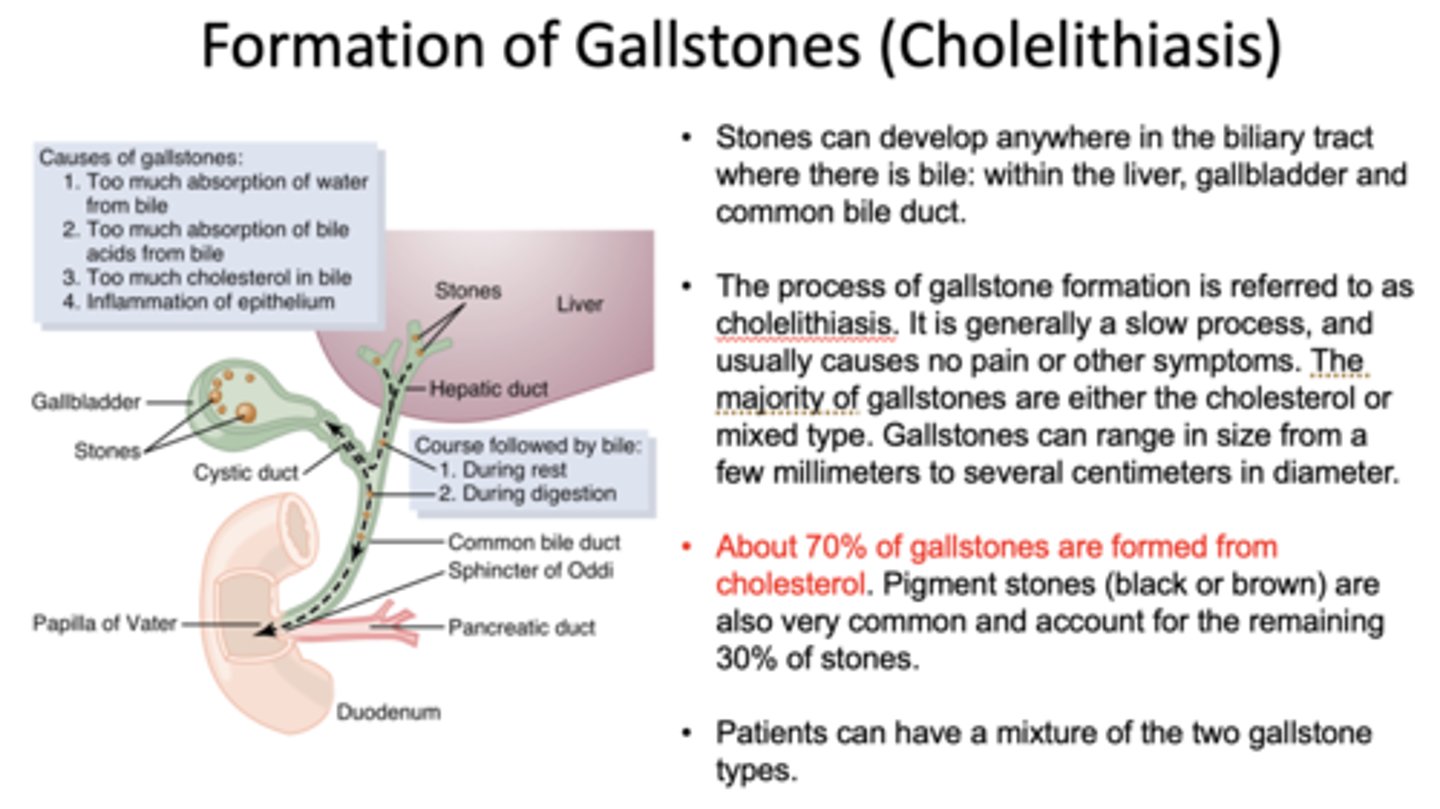
What are the two types of gallstones (cholelithiasis)?
- black
- brown
T/F: Most people with gallstones never have symptoms
True
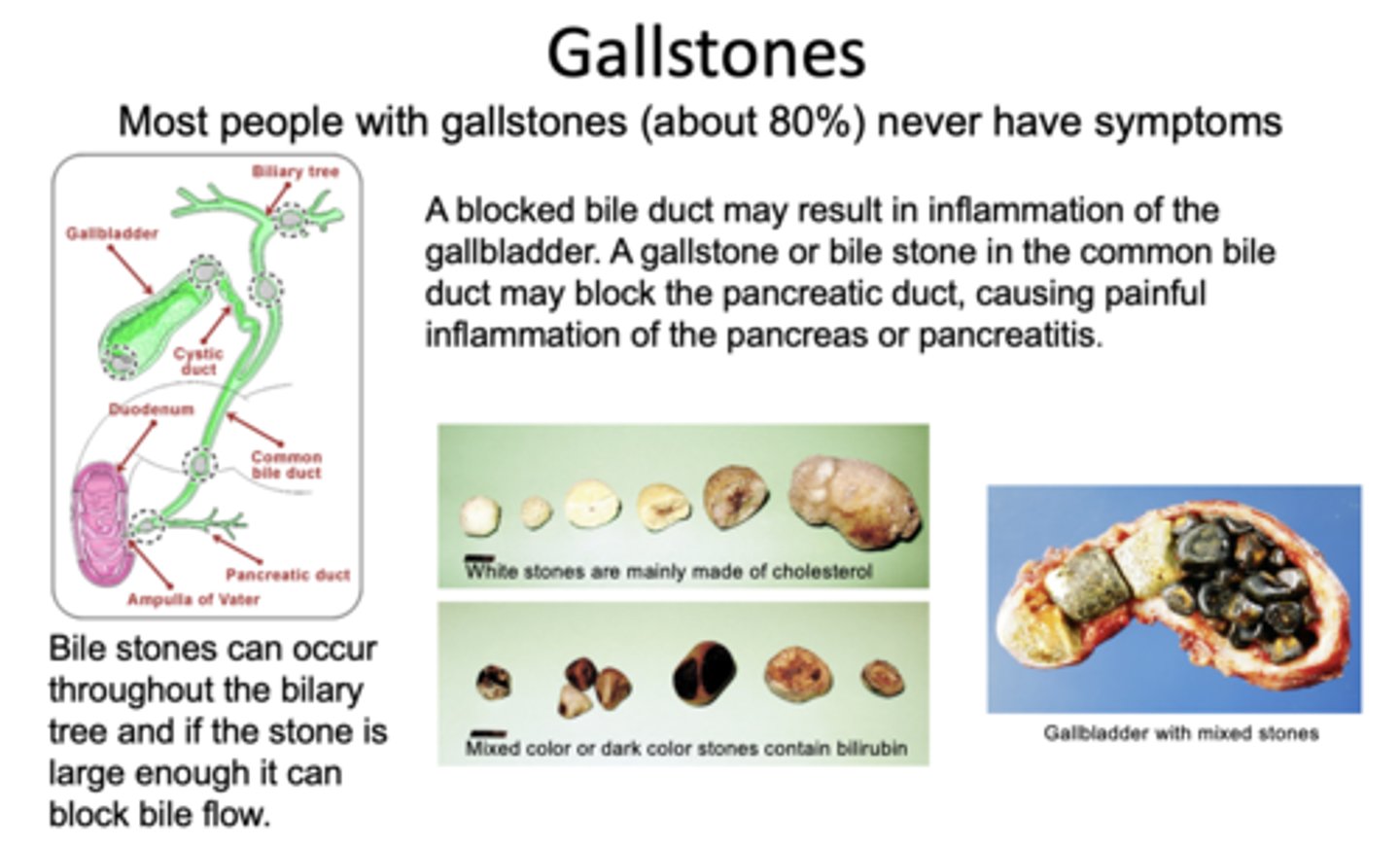
When are gallstones painful?
if they block bile flow
The liver takes up ________ from the circulation and secretes it into the bile and it is eliminated from the body through the urine and feces
bilirubin
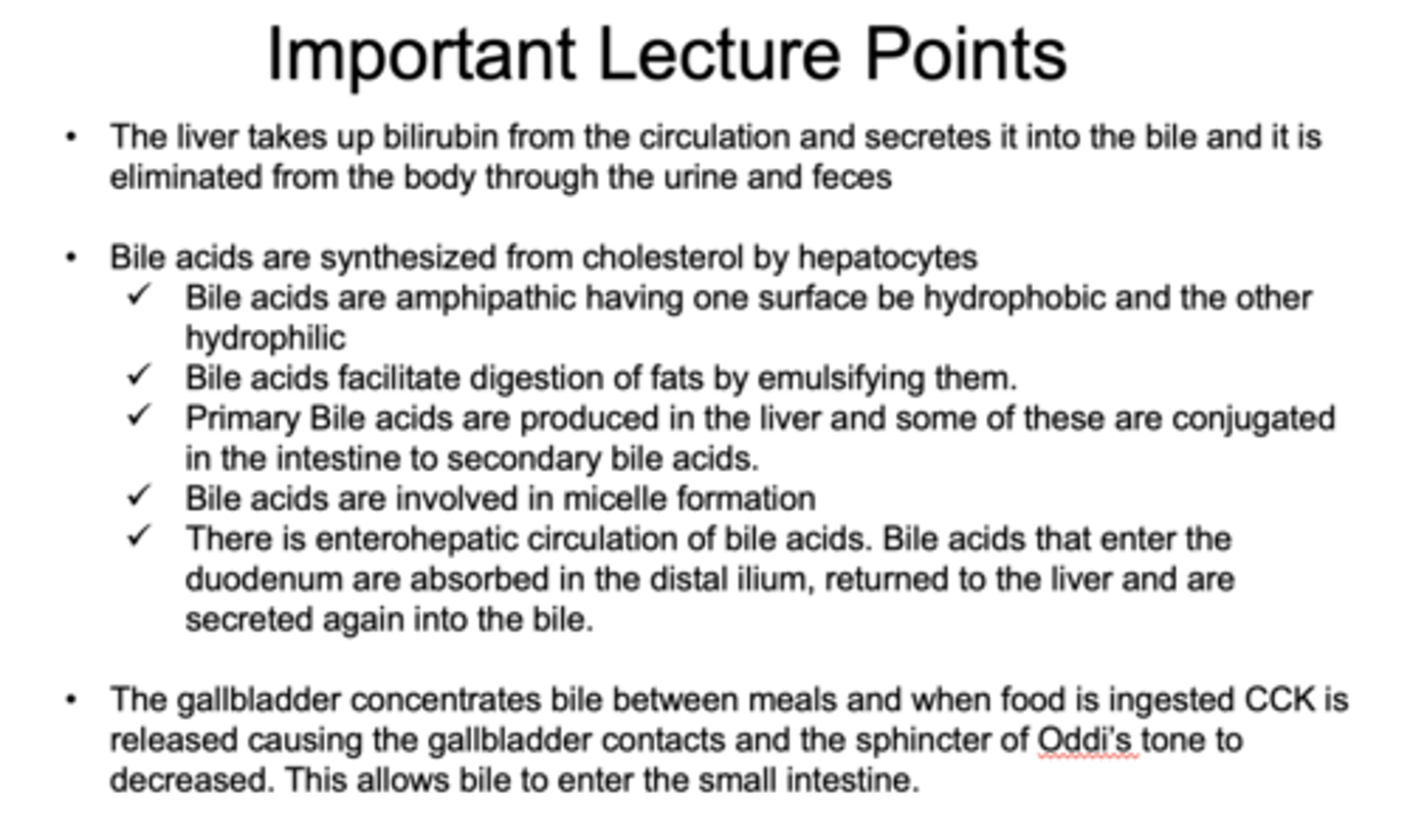
Bile acids are synthesized from cholesterol by ____________
hepatocytes
Bile acids are ____________ having one surface be hydrophobic and the other hydrophilic
amphipathic
Bile acids facilitate digestion of fats by ____________
emulsifying them
Primary bile acids are produced in the liver and some of these are conjugated in the intestine to ____________
Secondary bile acids
Bile acids are involved in _________ formation
micelle
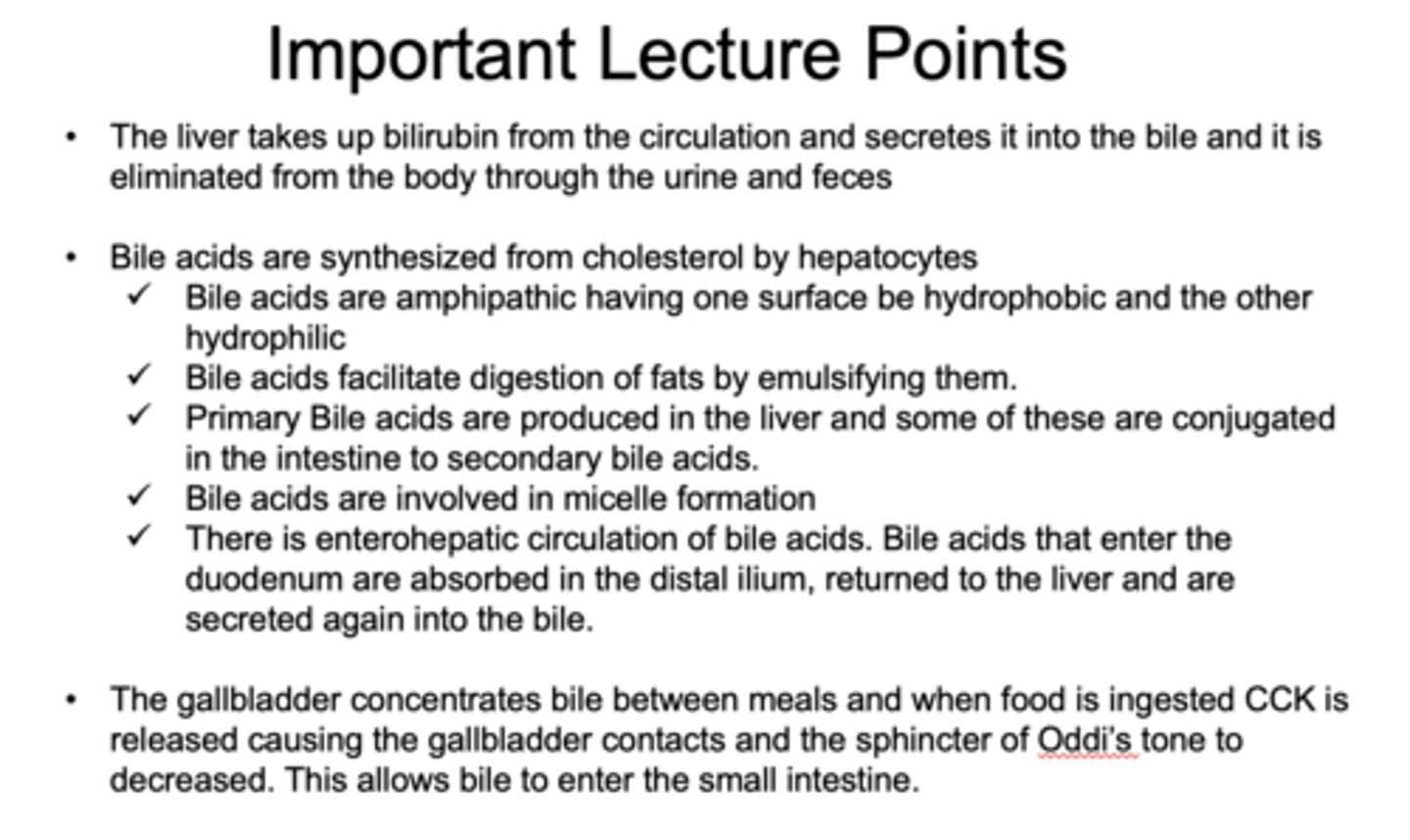
There is ____________ circulation of bile acids. Bile acids that enter the duodenum are absorbed in the distal ilium, returned to the liver and are secreted again into the bile
enterohepatic
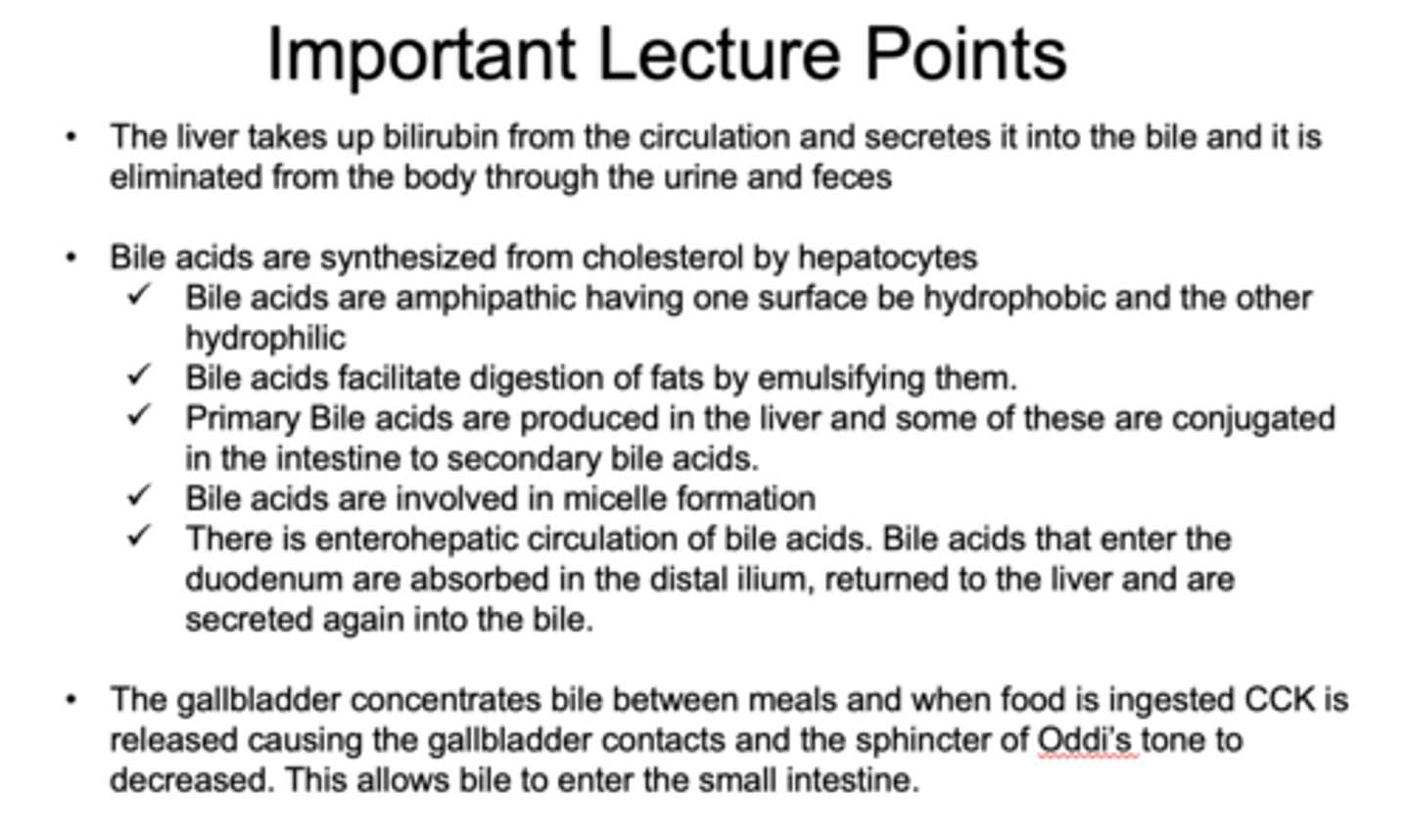
The ____________ concentrates bile between meals and when food is ingested CCK is released causing the gallbladder to contact and the sphincter of Oddi's tone to decrease. This allows bile to enter the small intestine.
gallbladder