BIOB 170 - Final Exam
 Call Kai
 Learn
Learn Practice Test
 Spaced Repetition
 Match
Match Flashcards
 Knowt Play
1/147

There's no tags or description
Looks like no tags are added yet.
Name | Mastery | Learn | Test | Matching | Spaced | Call with Kai |
|---|
No analytics yet
Send a link to your students to track their progress
148 Terms
The closest known relative of animals is a(n):
choanoflagellate
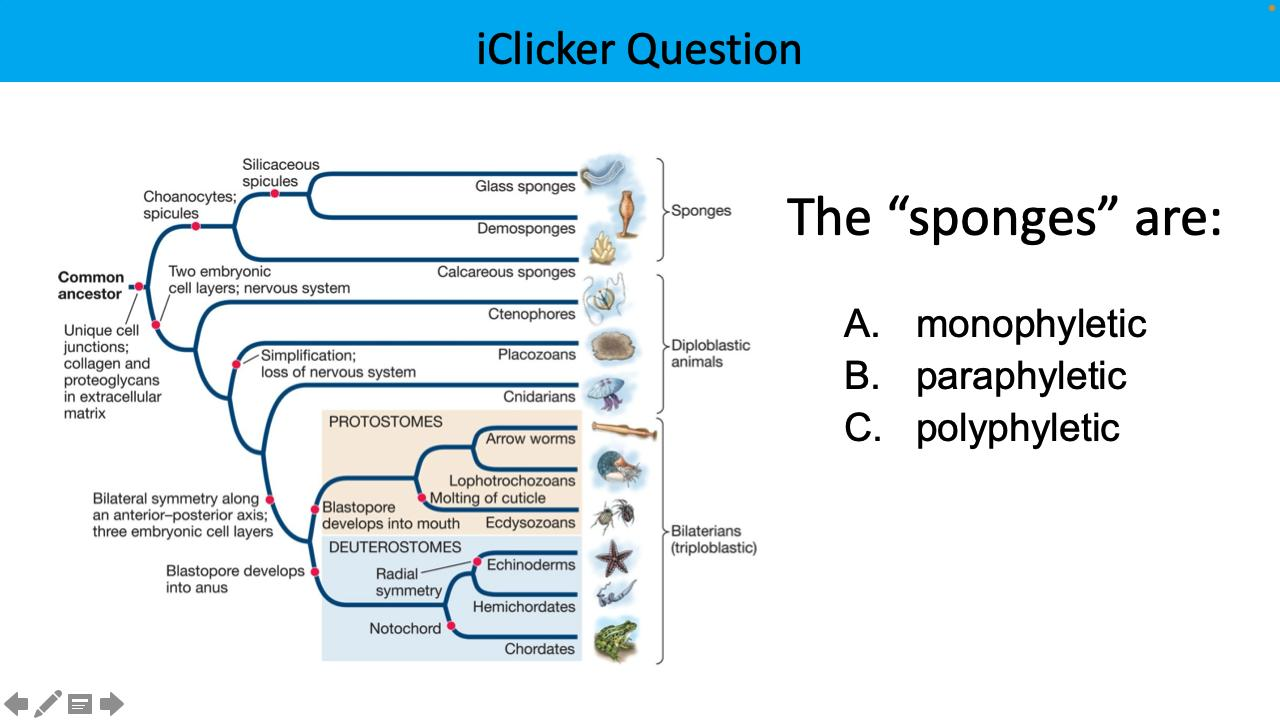
The sponges are:
monophyletic
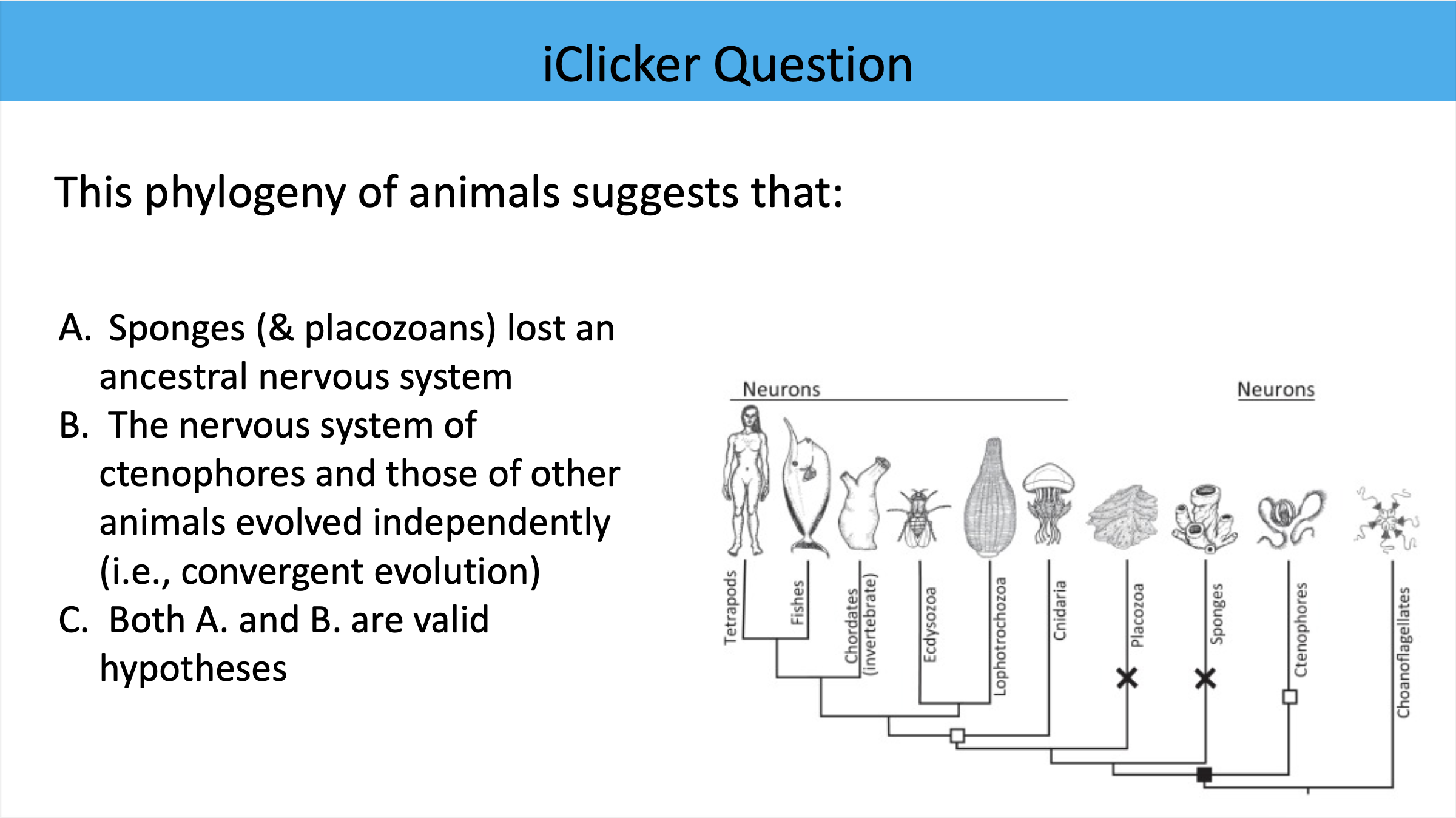
This phylogeny of animals suggests that:
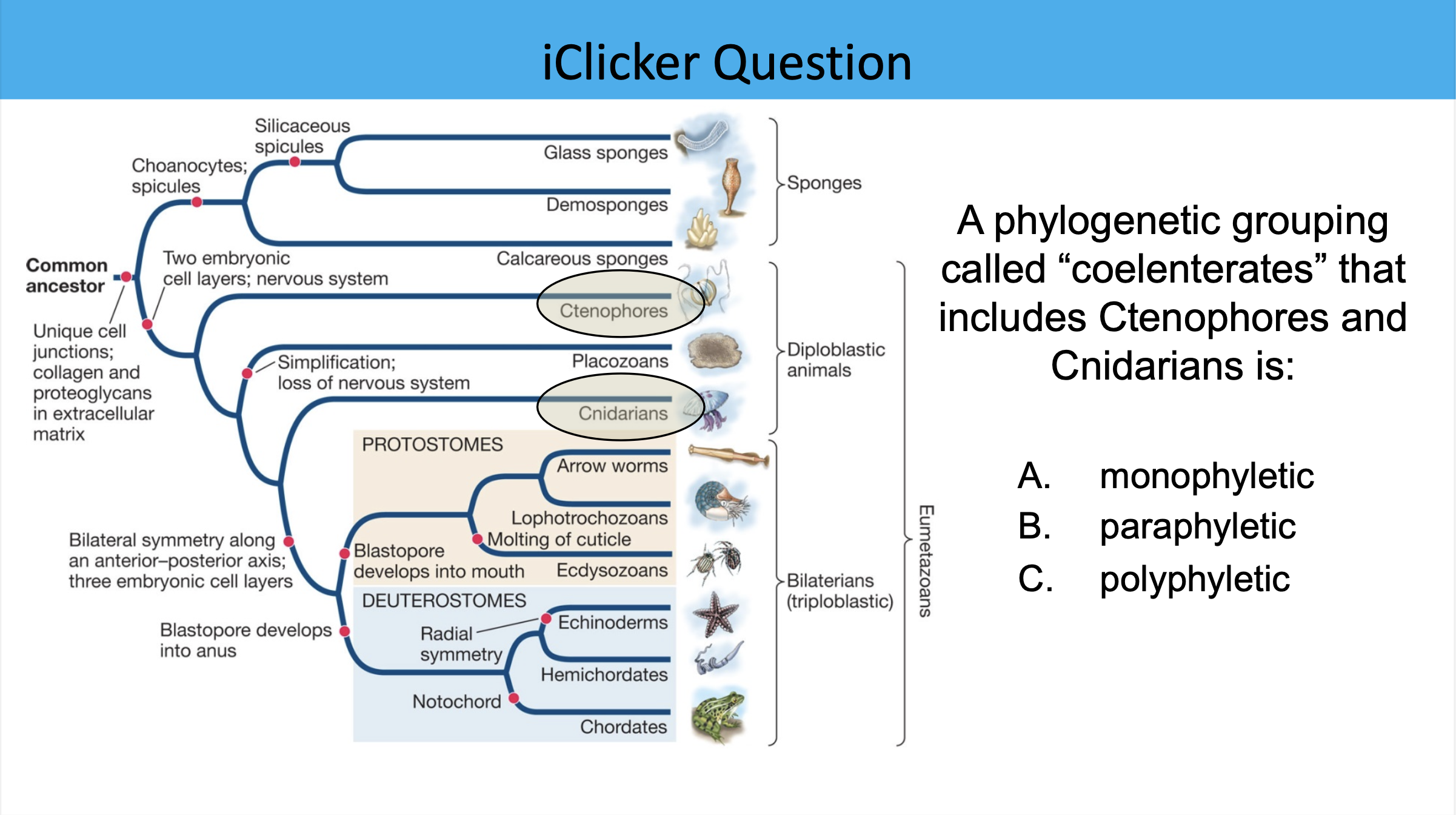
A phylogenetic grouping called “coelenterates” that includes Ctenophores and Cnidarians is:
polyphyletic
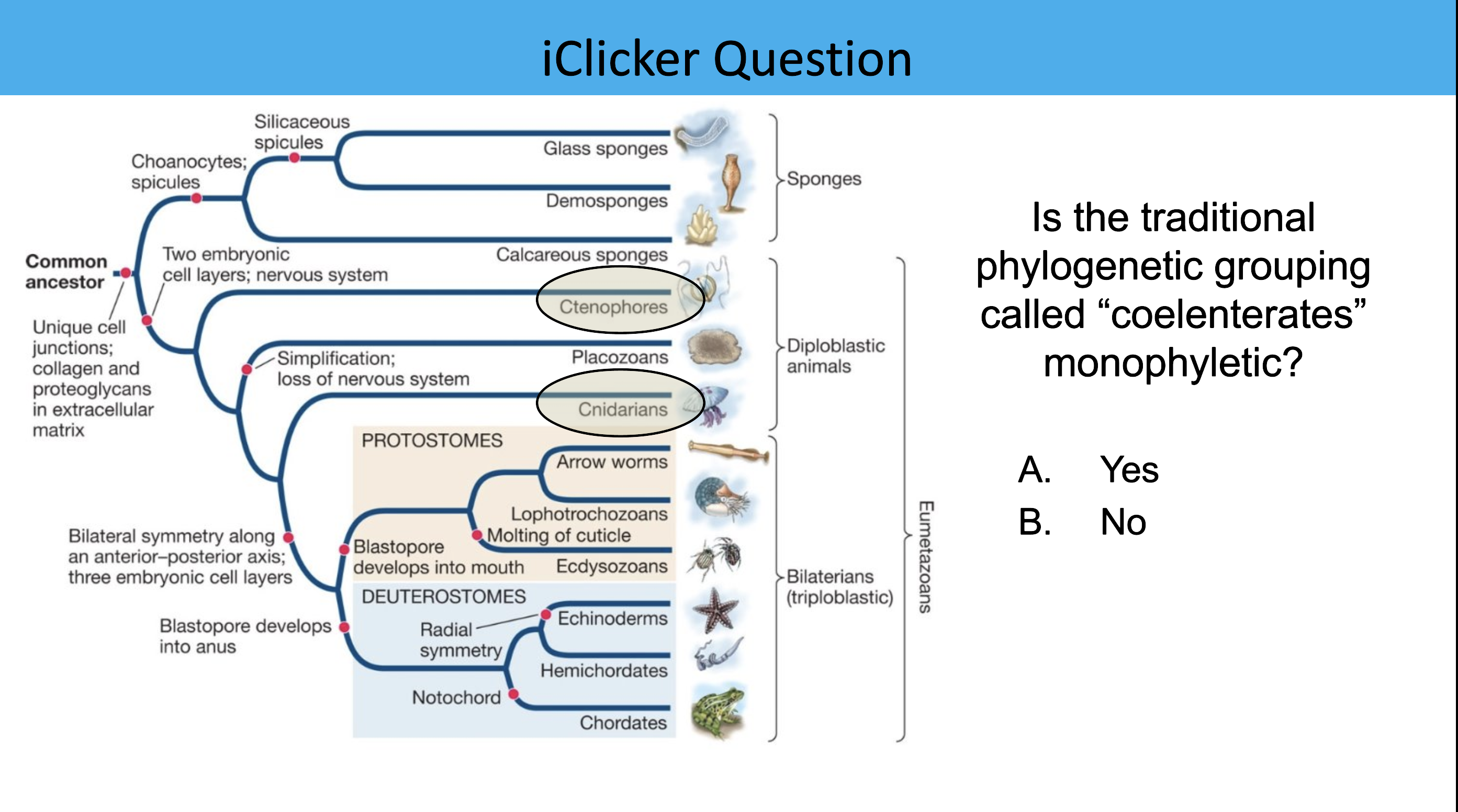
Is the traditional phylogenetic grouping called “coelenterates” monophyletic?
no
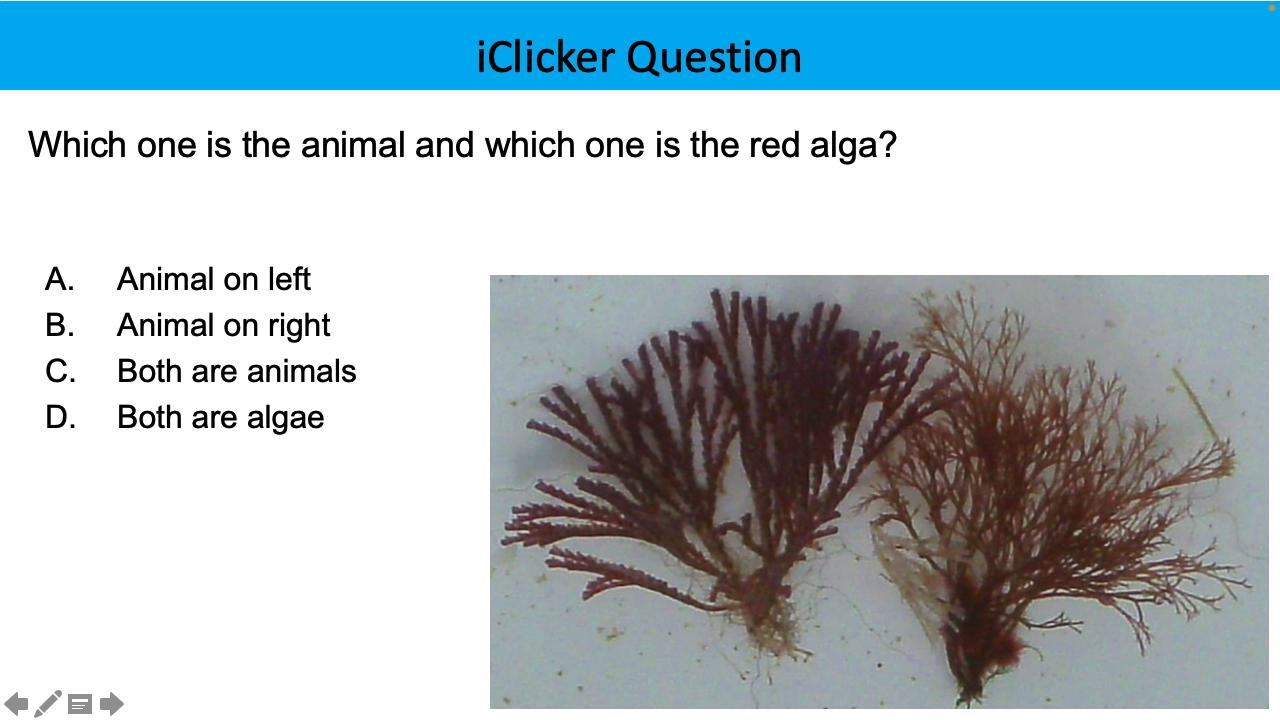
Which one is the animal and which one is the red algae?
animal on left
Fungi are important for humans as:
all of the above
Which of the following statements about fungi are correct?
They obtain nutrients by absorptive heterotrophy
Which group of modern animals branches earliest in the traditional "textbook" phylogeny of animals?
sponges
A major role of saprobic fungi in terrestrial ecosystems is to:
break down complex carbon compounds
The diversification of insects about 450 million years ago corresponded with:
The appearance of the first land plants
The most diverse (specious) group of insects consists of the:
beetles
Which organisms are members of the lophotrochozoan lineage?
mollusks
A defining synapomorphy for the protostomes is:
The blastopore develops into the mouth
The rigid exoskeleton of some ecdysozoans has protective and supportive advantages, but it poses which problem?
The exoskeleton cannot grow as the animal's body grows
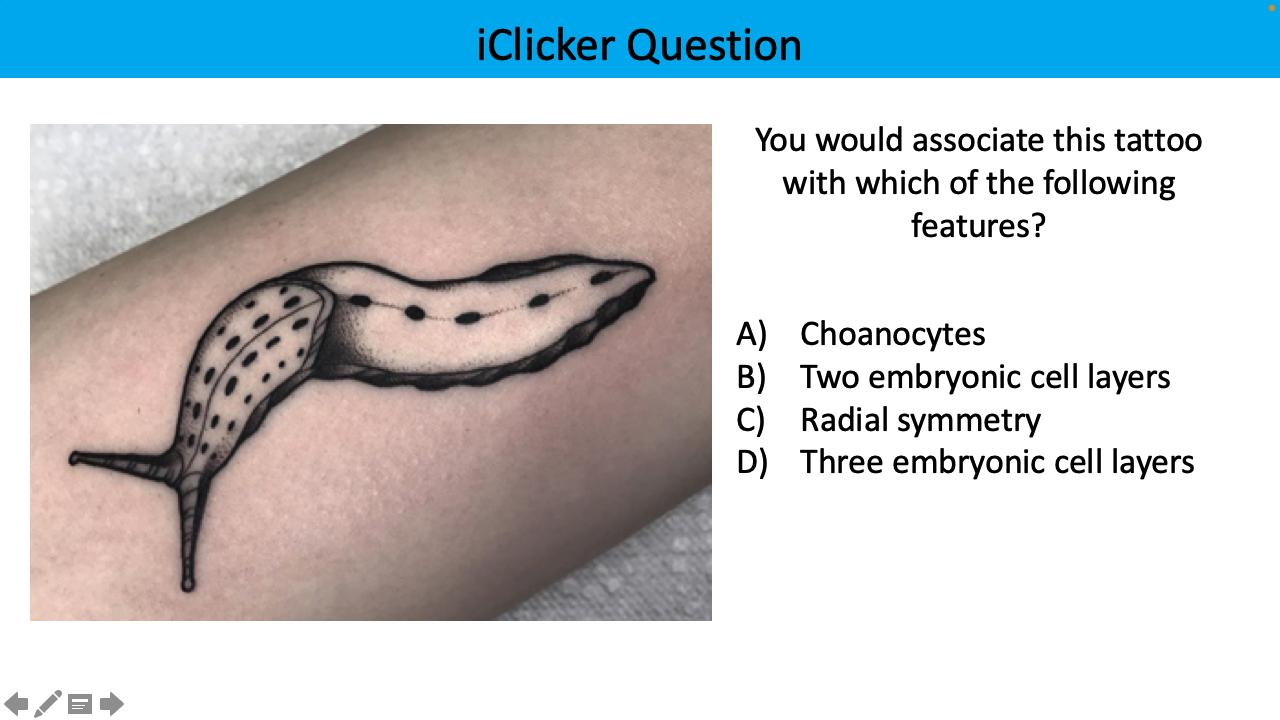
You would associate this tattoo with which of the following features?
three embryonic cell layers
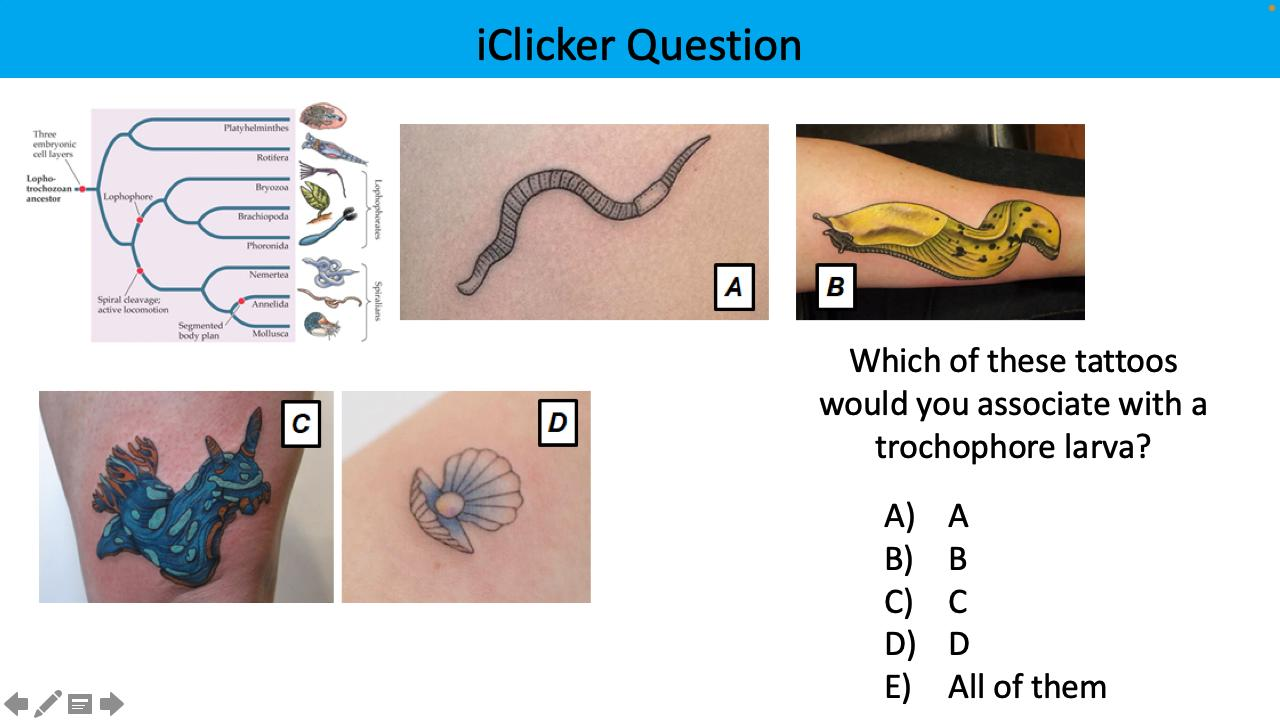
Which of these tattoos would you associate with a trochophore larva?
all of them
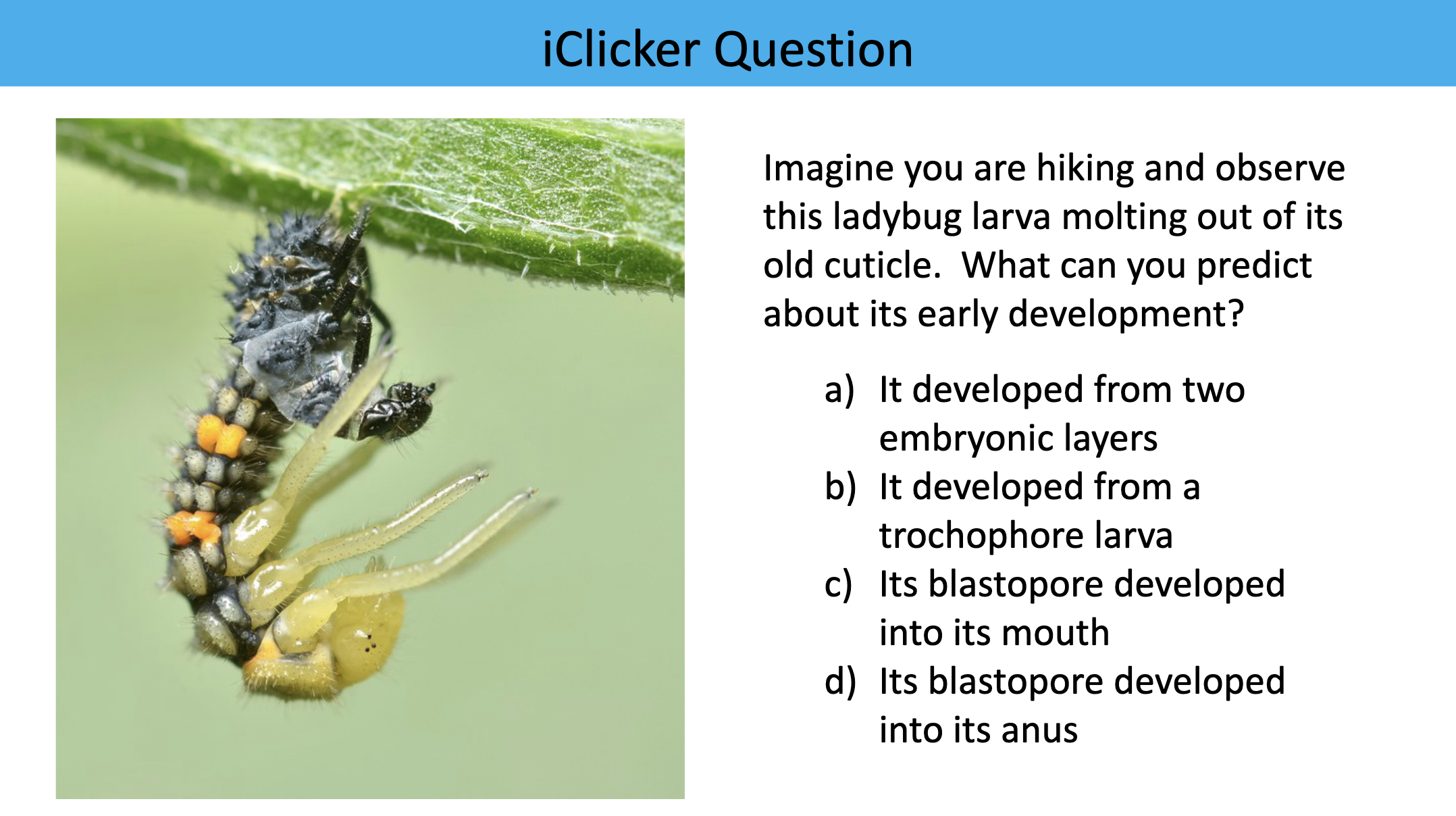
Imagine you are hiking and observe this ladybug larva molting out of its old cuticle. What can you predict about its early development?
Its blastopore developed into its mouth
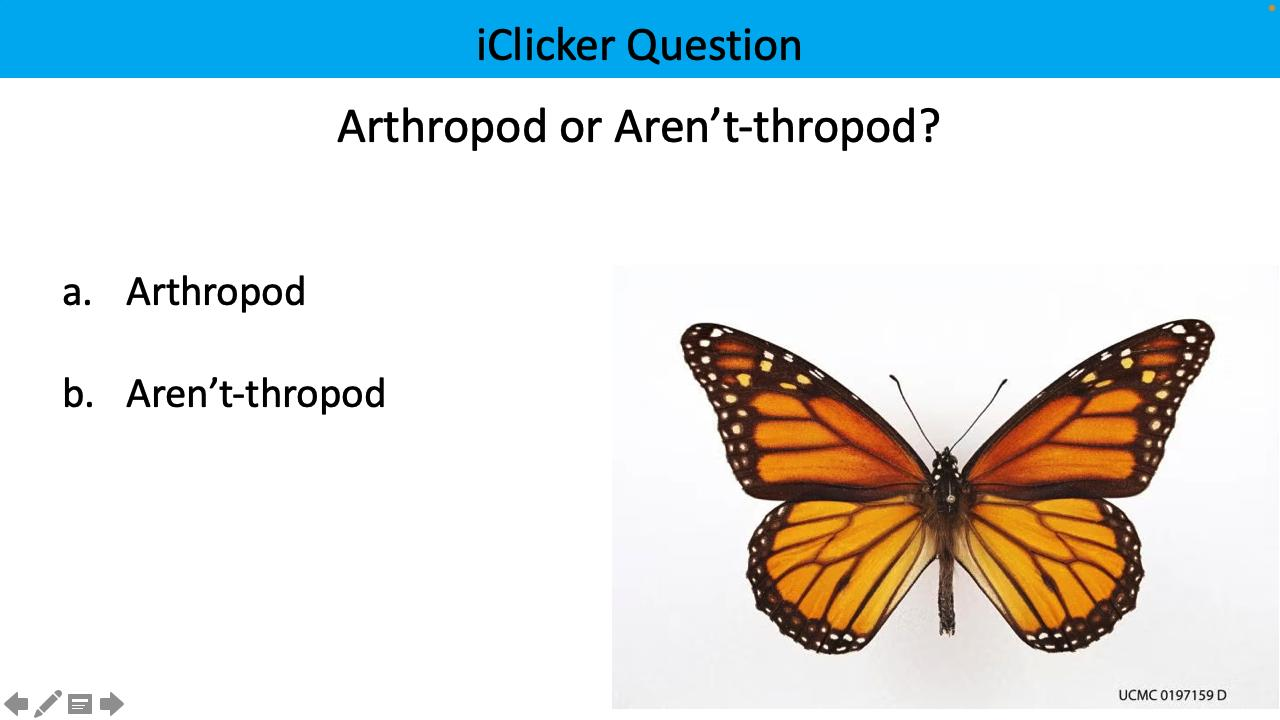
arthropod or aren’t-thropod?
arthropod
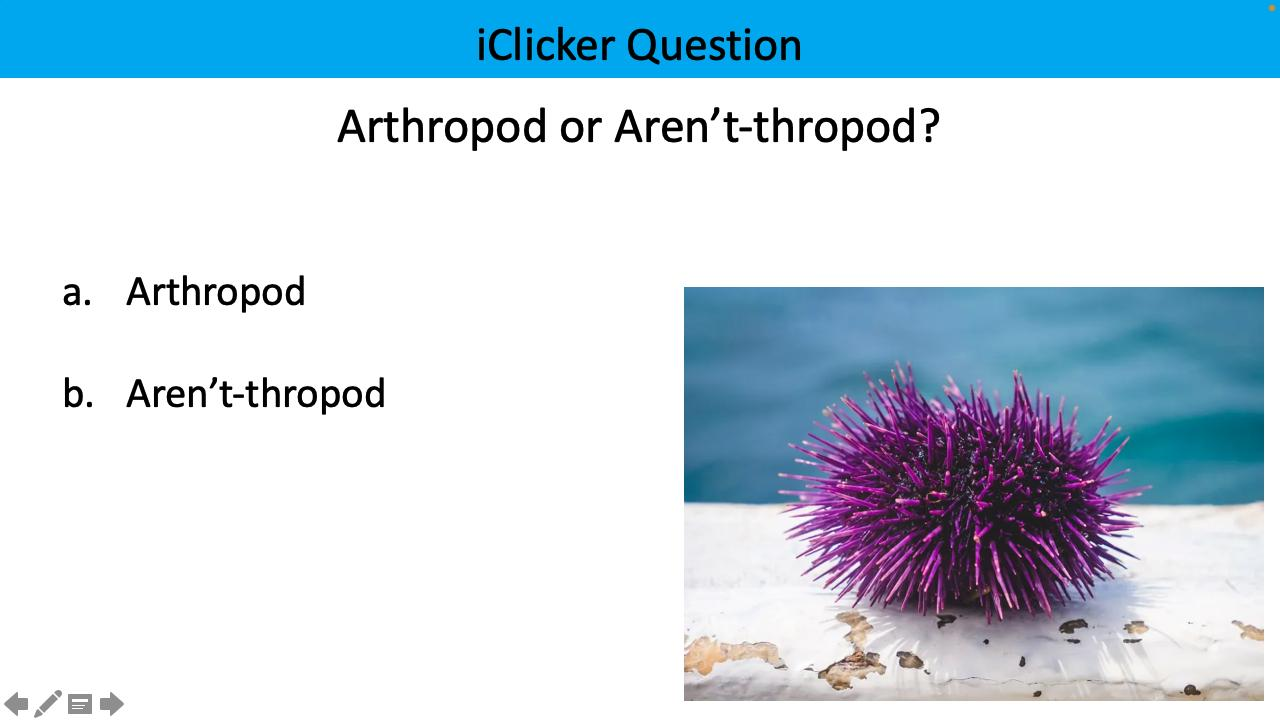
arthropod or aren’t-thropod?
aren’t-thropod
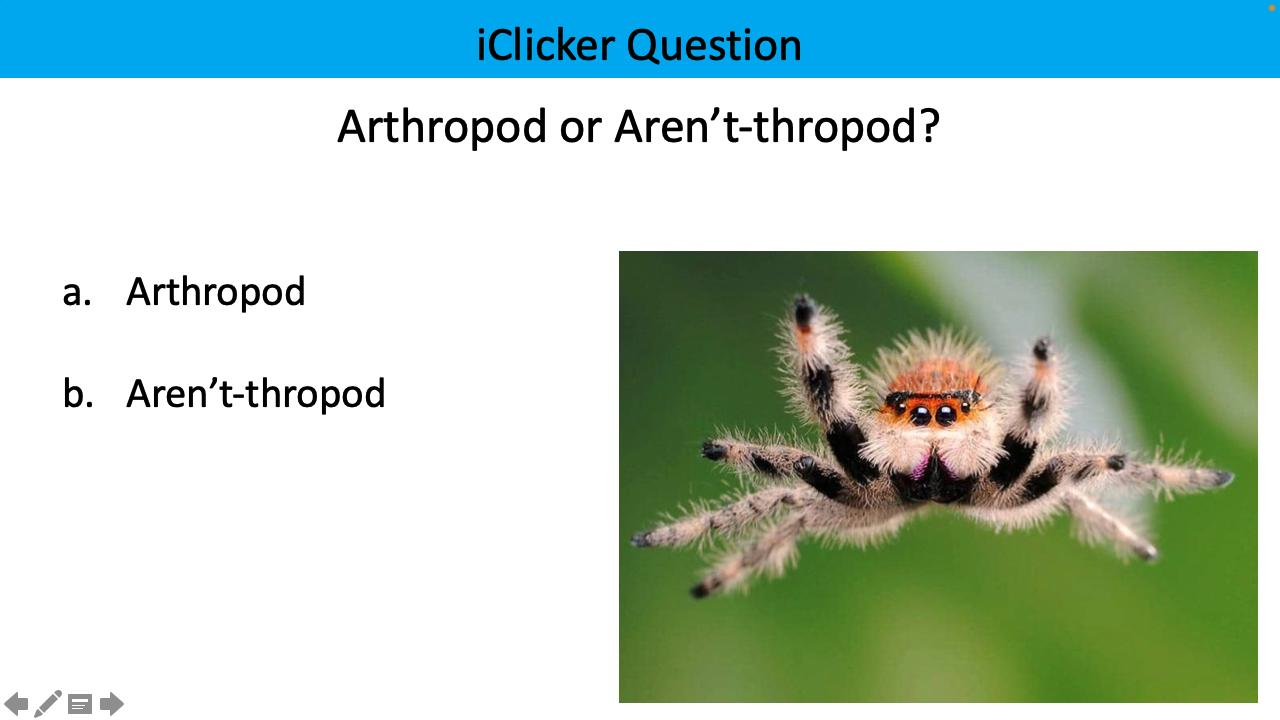
arthropod or aren’t-thropod?
arthropod
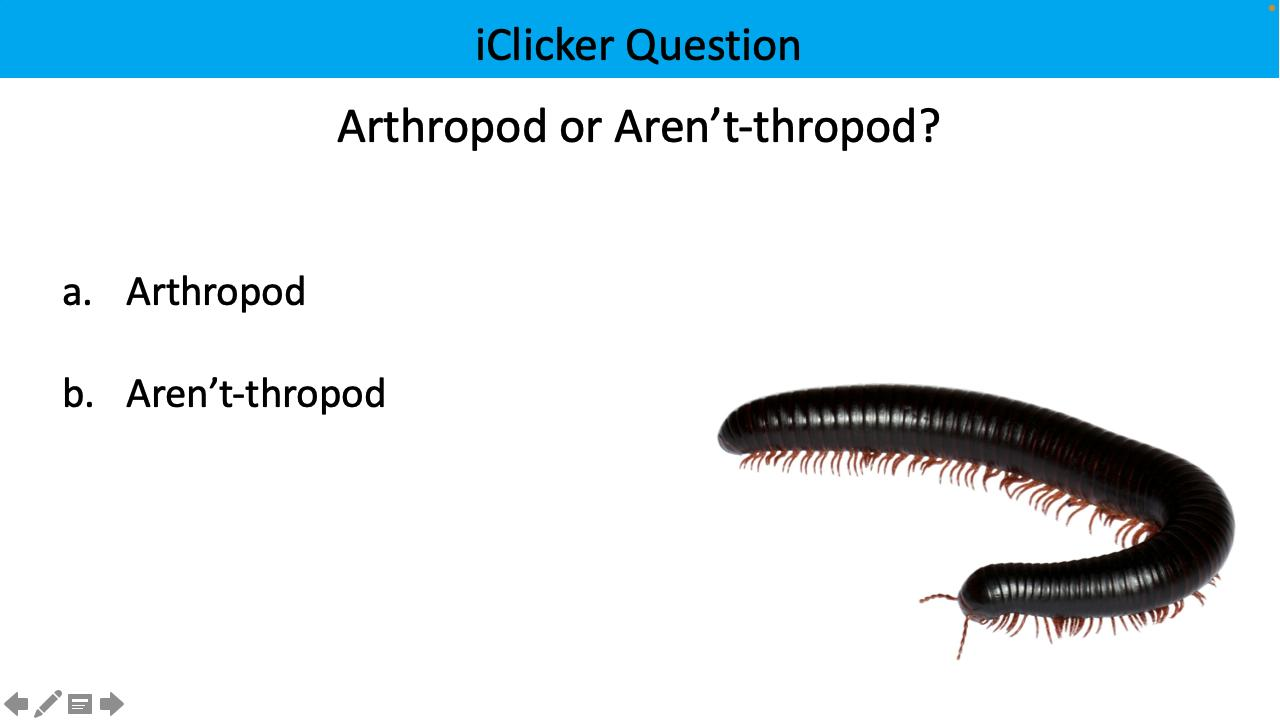
arthropod or aren’t-thropod?
arthropod
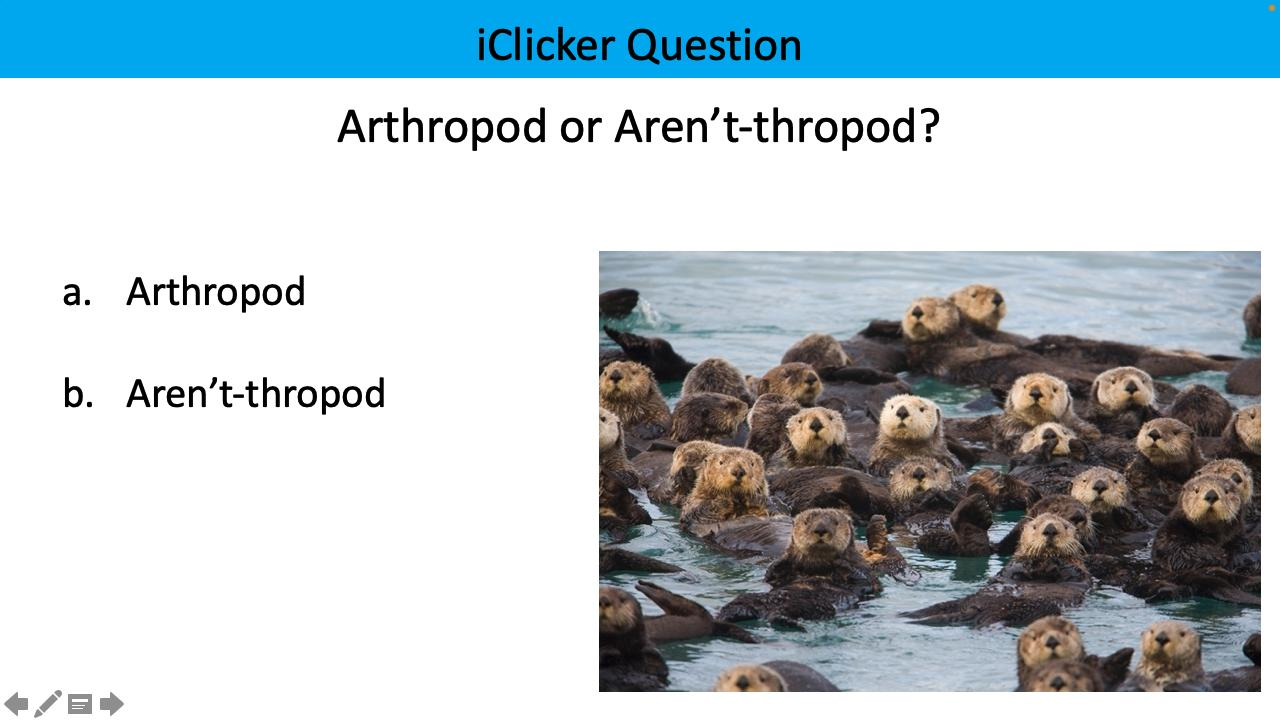
arthropod or aren’t-thropod?
aren’t-thropod
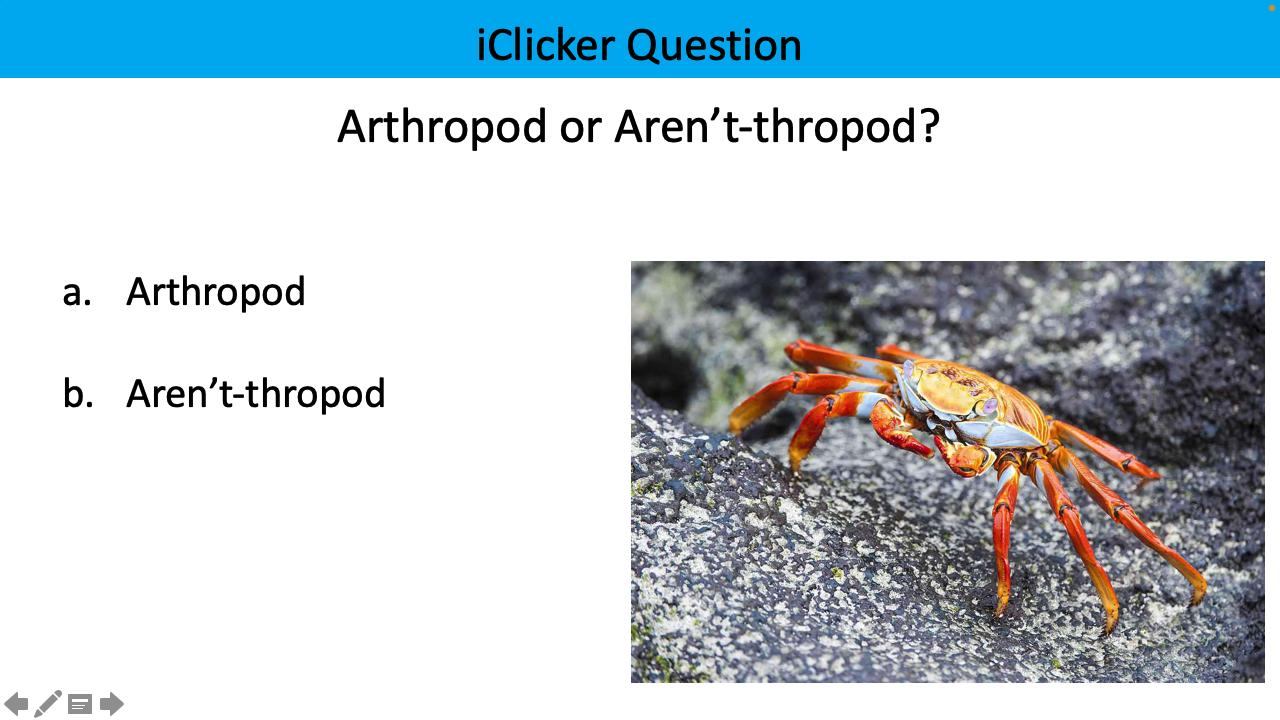
arthropod or aren’t-thropod?
arthropod
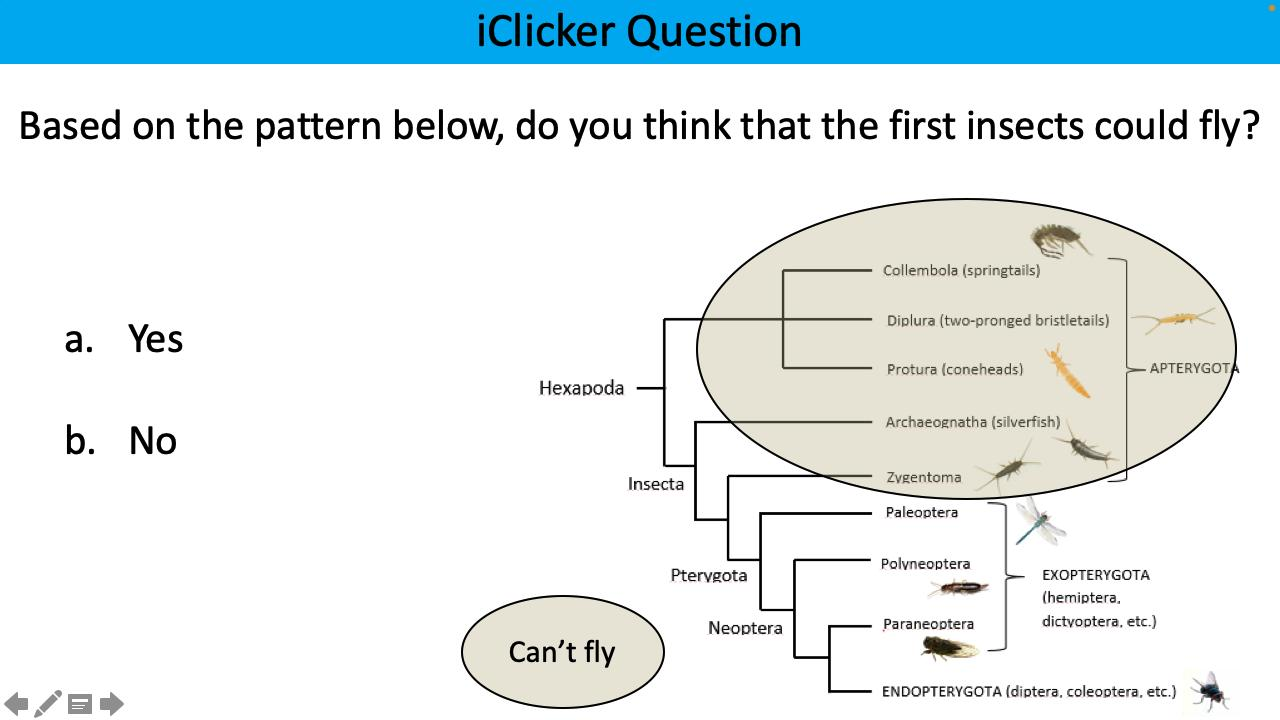
Based on the pattern below, do you think the first insects could fly?
no
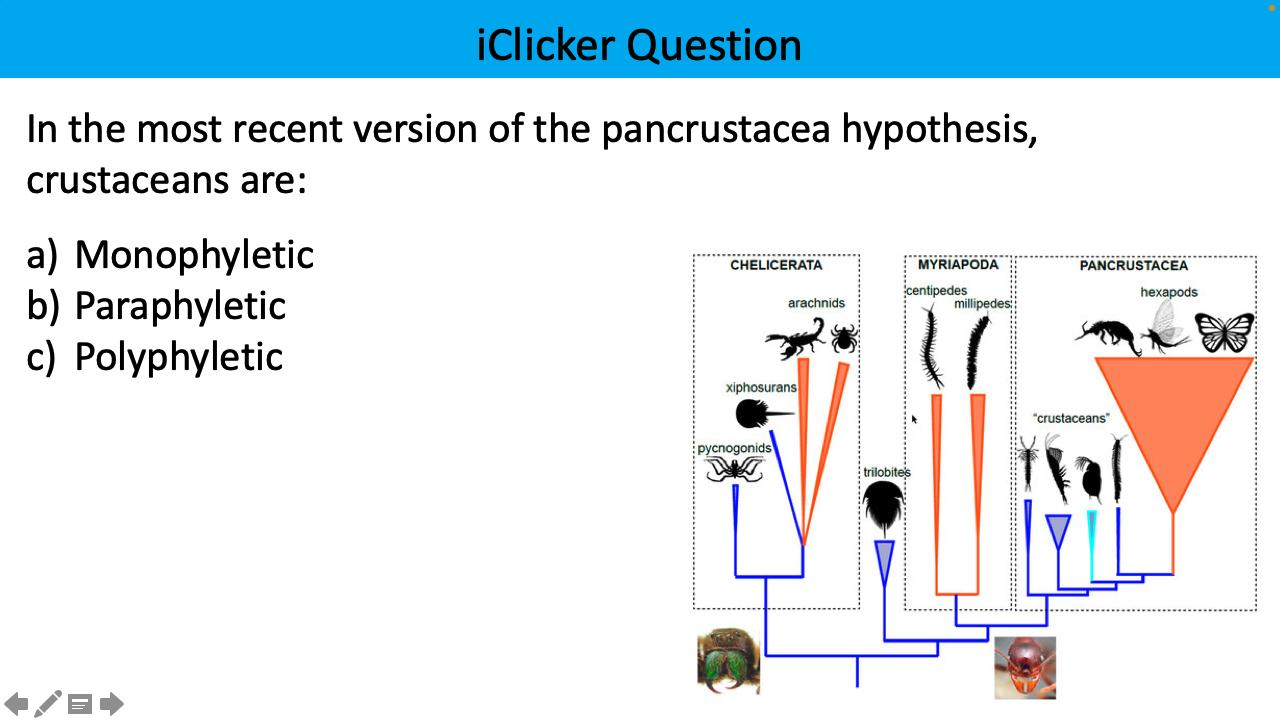
In the most recent version of the pancrustacea hypothesis, crustaceans are:
paraphyletic
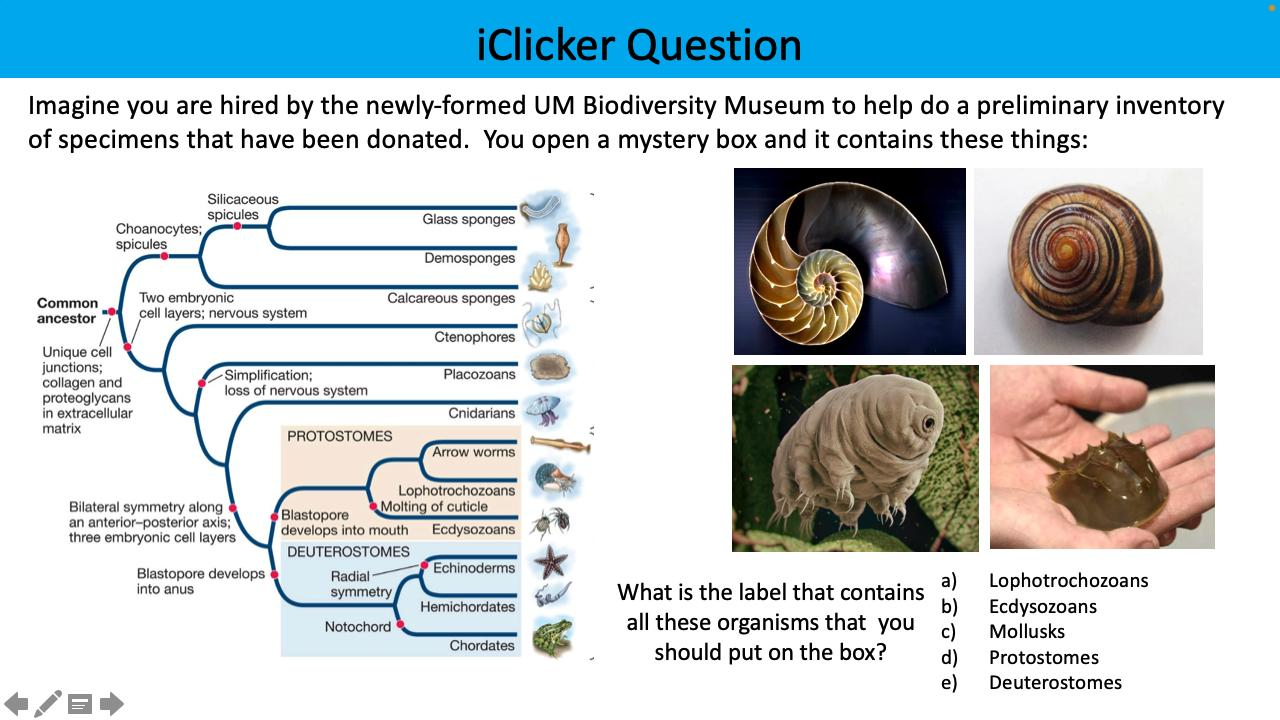
Imagine you are hired by the newly-formed UM Biodiversity Museum to help do a preliminary inventory of specimens that have been donated. You open a mystery box and it contains these things. What is the label that contains all these organisms that you should put on the box?
protosomes
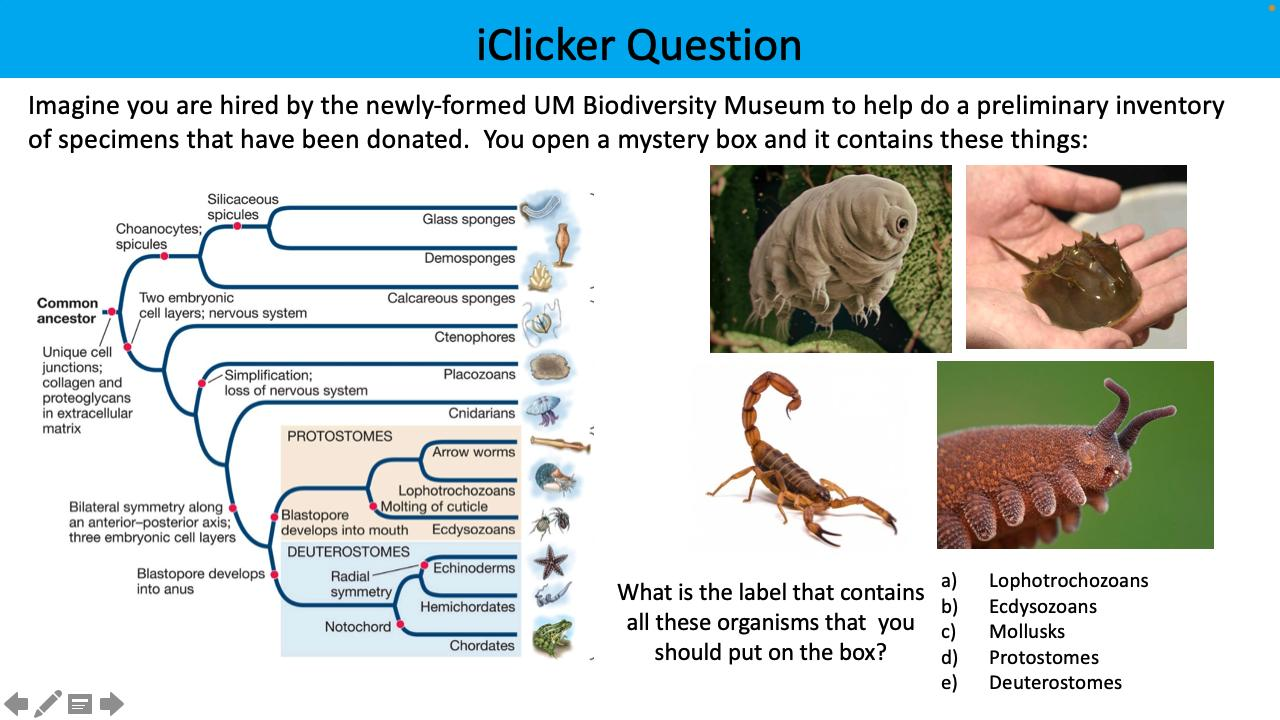
Imagine you are hired by the newly-formed UM Biodiversity Museum to help do a preliminary inventory of specimens that have been donated. You open a mystery box and it contains these things. What is the label that contains all these organisms that you should put on the box?
ecdysozoans
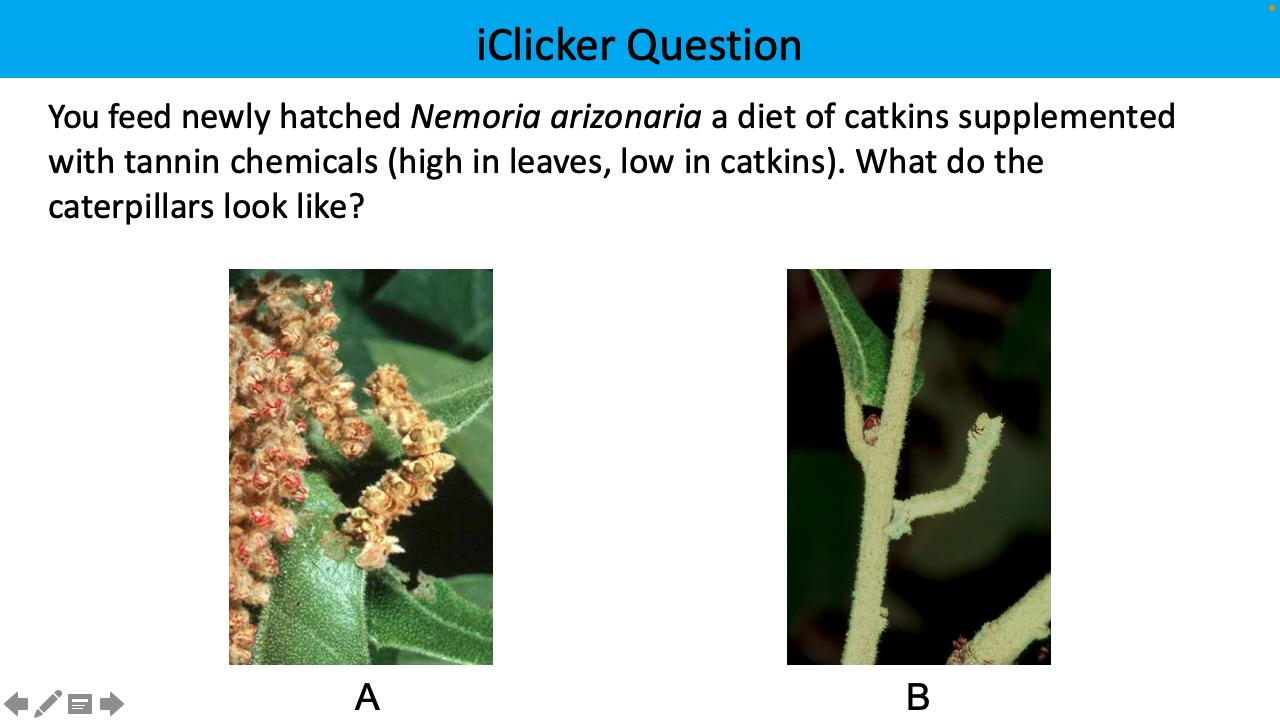
You feed newly hatched Nemoria arizonaria a diet of catkins supplemented with tannin chemicals (high in leaves, low in catkins). What do the caterpillars look like?
B
The body of a multicellular fungus is called a:
mycelium
The ancestor of the animal clade was probably a(n):
choanoflagellate
You observe an animals swimming in salt water by using a periodic jet of water. It has tentacles and an external shell. It is most likely a(n):
cephalopod
Most animals with triploblastic embryos are:
bilaterally symmetrical
In the history of animals, which characteristic arose after the evolution of the cnidarians?
Three distinct body layers
The calcification of an internal skeleton is characteristic of the:
echinoderms
Which group has a water vascular system?
echinoderms
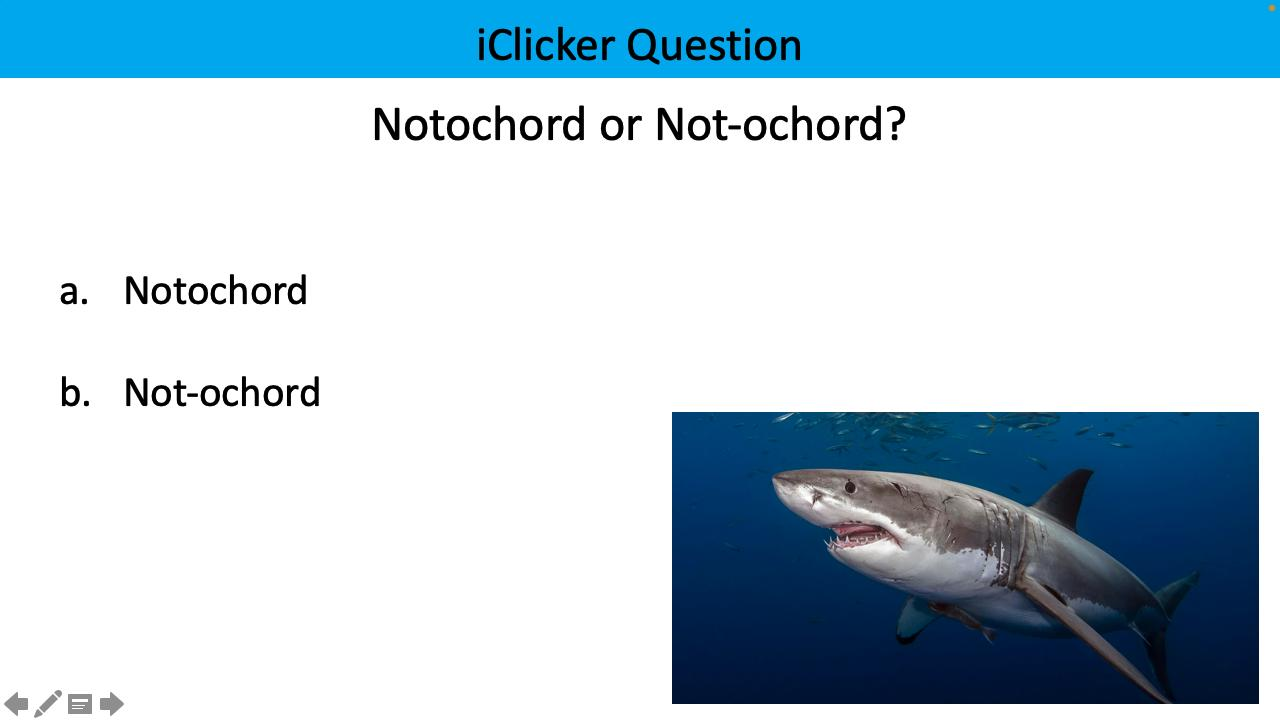
notochord or not-ochord?
notochord
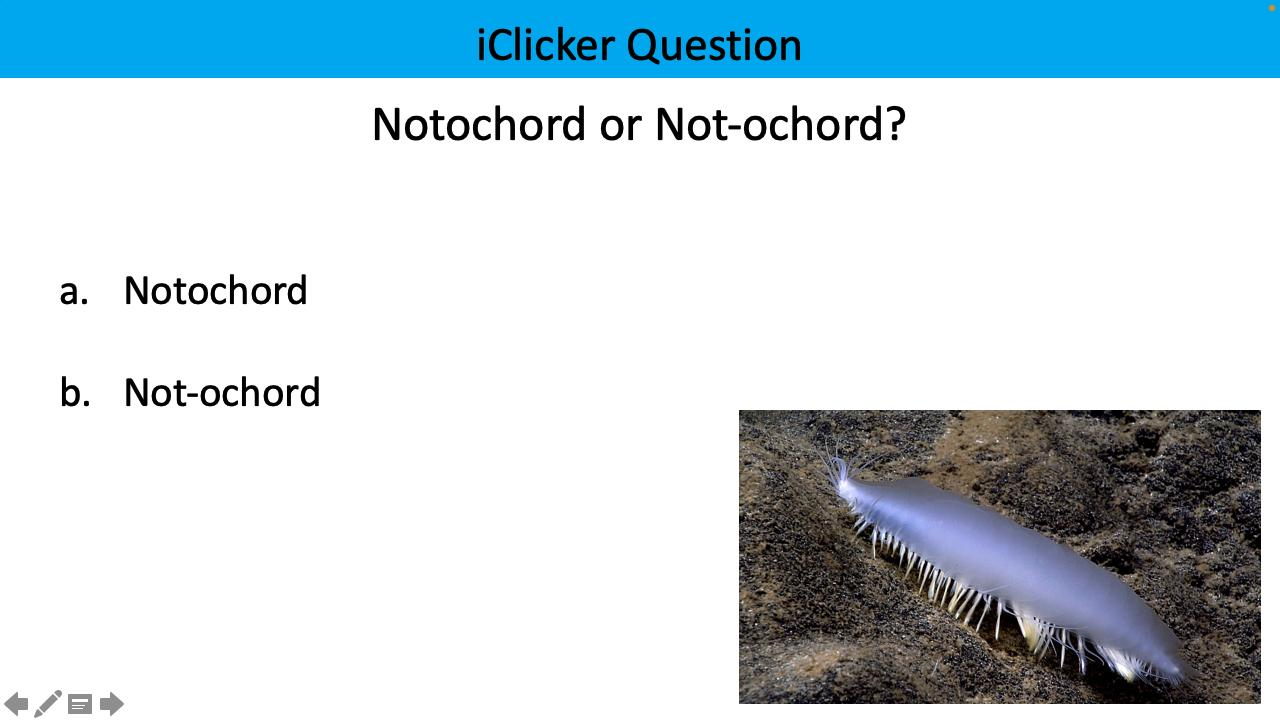
notochord or not-ochord?
not-ochord
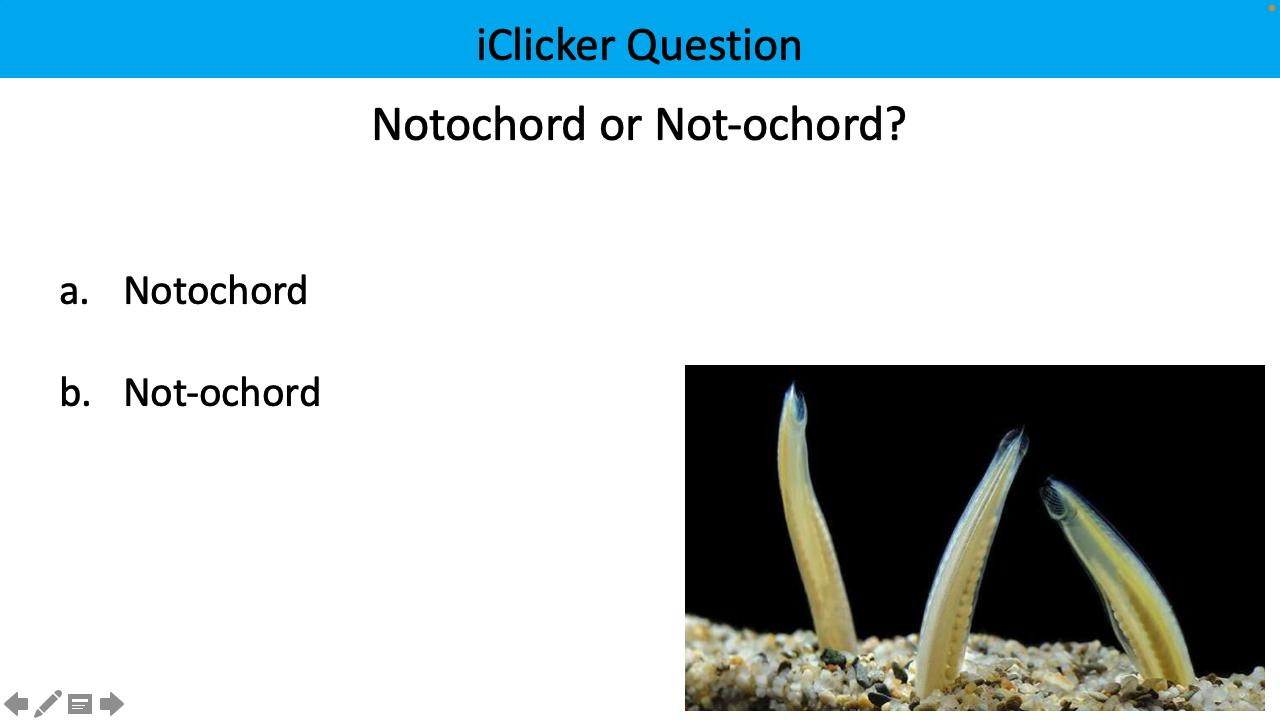
notochord or not-ochord?
notochord
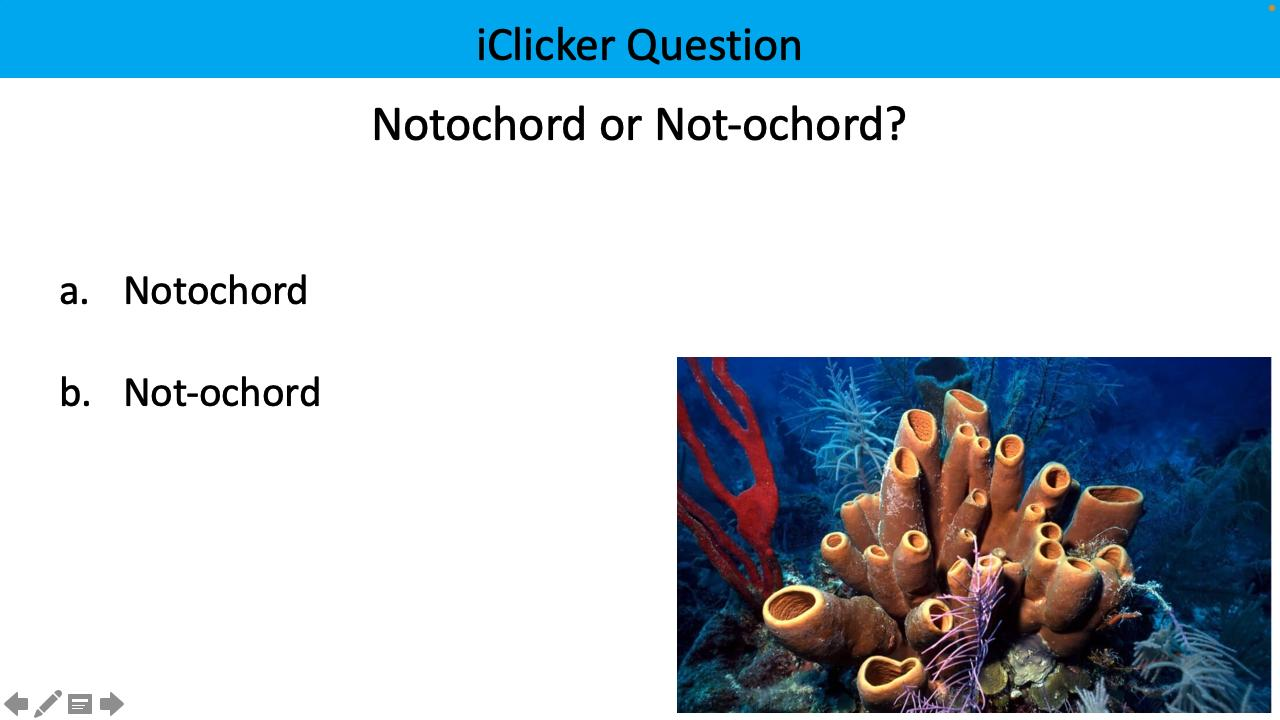
notochord or not-ochord?
not-ochord
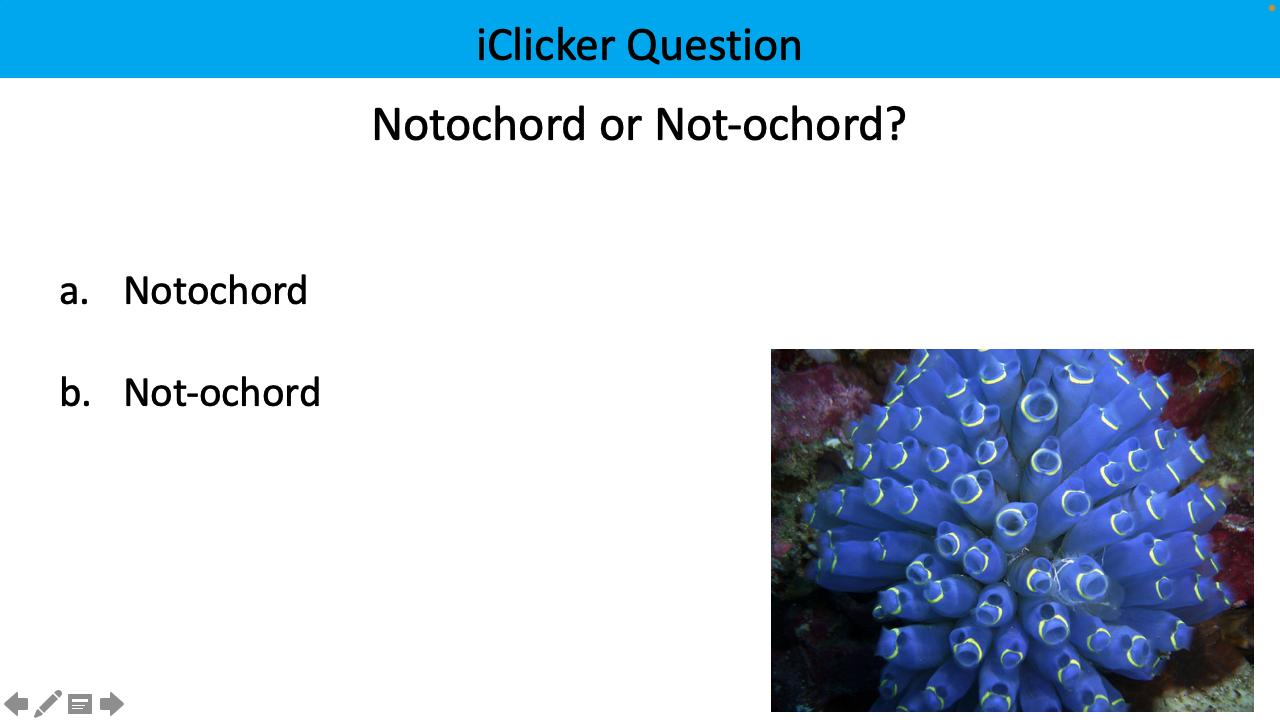
notochord or not-ochord?
notochord
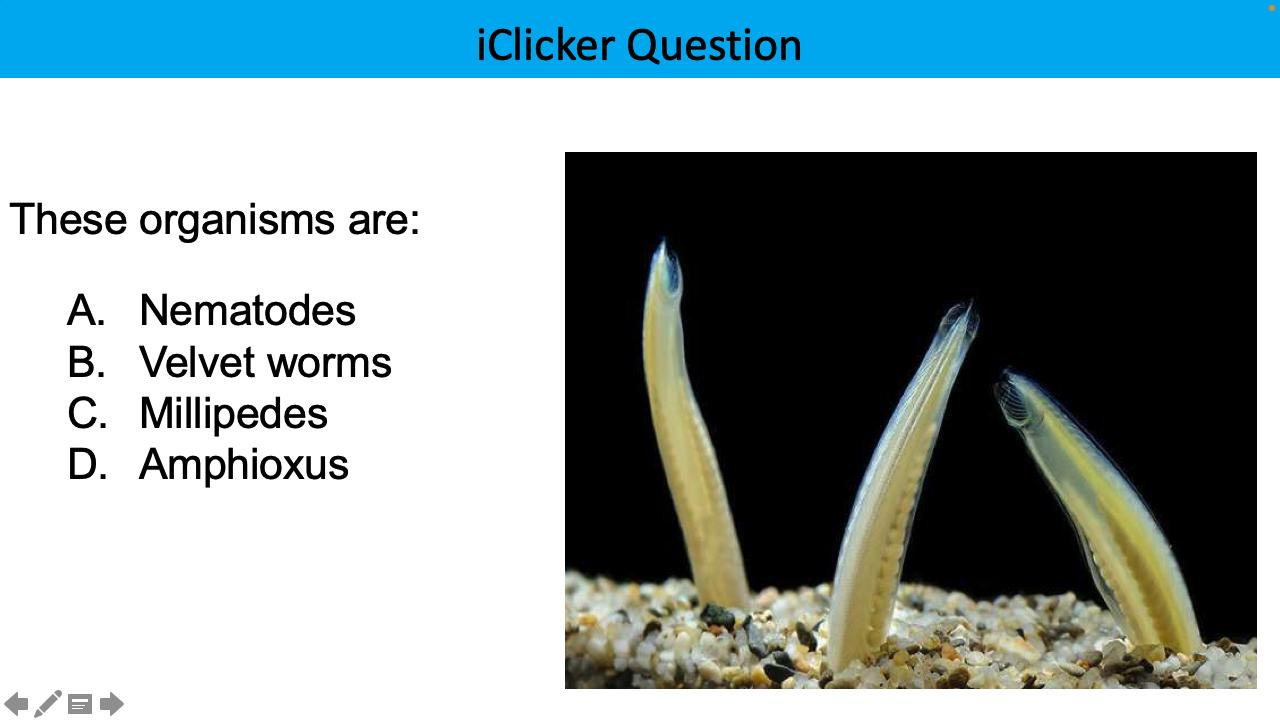
These organisms are:
amphioxus
Imagine I present you with a wiggly, tube-like fish. You get to ask me any four questions about it (morphology, ecology, behavior, habitat, etc.). Here are my answers to your four questions: it has no jaws; it has a circular mouth; it has vertebrae; it bites onto its victims and sucks their blood. From my answers you can determine that the organism is a:
lamprey
A major change in the evolutionary lineage leading to the chordates was the:
development of a dorsal hollow nerve cord
The amniote egg was an important innovation because:
It freed animals from having to reproduce in water
Many amphibians return to water to lay their eggs because:
amphibian eggs quickly lose water and desiccate if their surroundings are dry
A difference between amphibians and reptiles is that
amphibians have thin skin, whereas reptiles have thick skin
The horny scales that cover the skin of reptiles prevent them from:
using their skin as an organ of gas exchange
Which statement about the amphibians is true?
Their eggs are very sensitive to drying
Most amphibians breathe air by means of:
lungs and thin skin
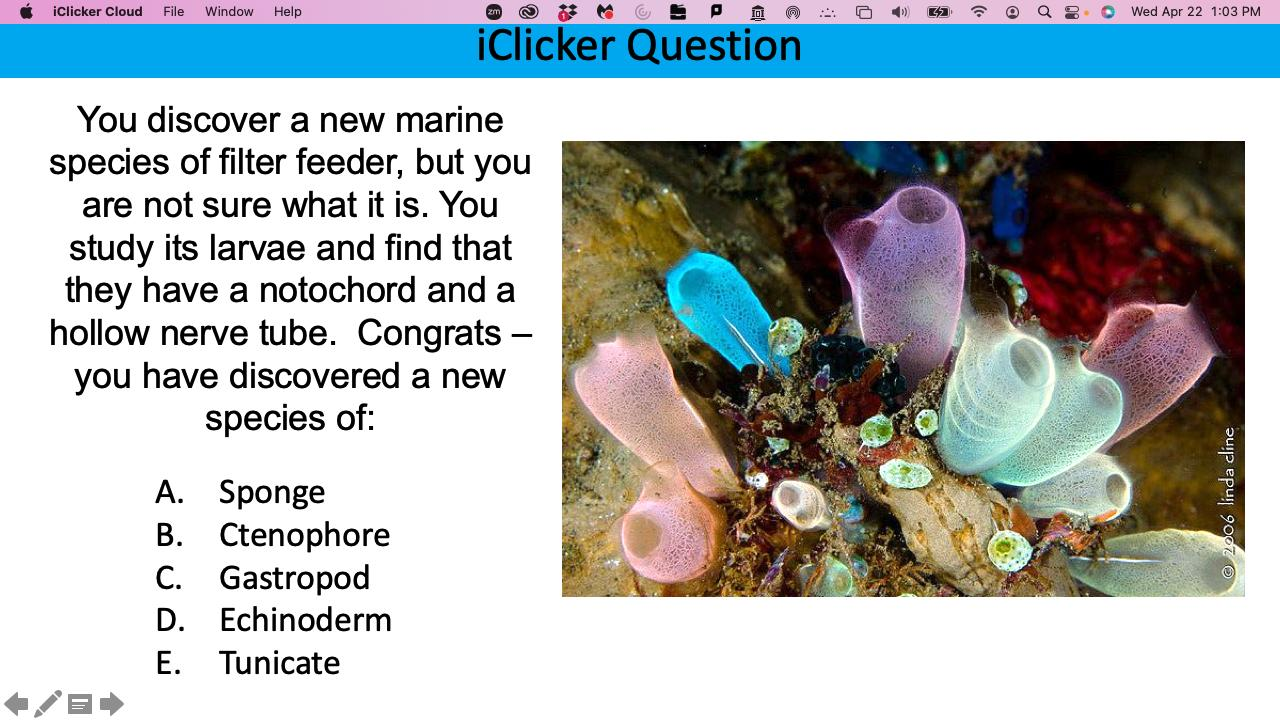
You discover a new marine species of filter feeder, but you are not sure what it is. You study its larvae and find that they have a notochord and a hollow nerve tube. Congrats – you have discovered a new species of:
tunicate
Imagine I present you with a wiggly, tube-like fish. You get to ask me any four questions about it (morphology, ecology, behavior, habitat, etc.). Here are my answers to your questions:
It has no jaws
It has a circular mouth
It has no vertebrae
It produces copious amounts of slime when disturbed
From my answers you can determine that the organism is a:
hagfish
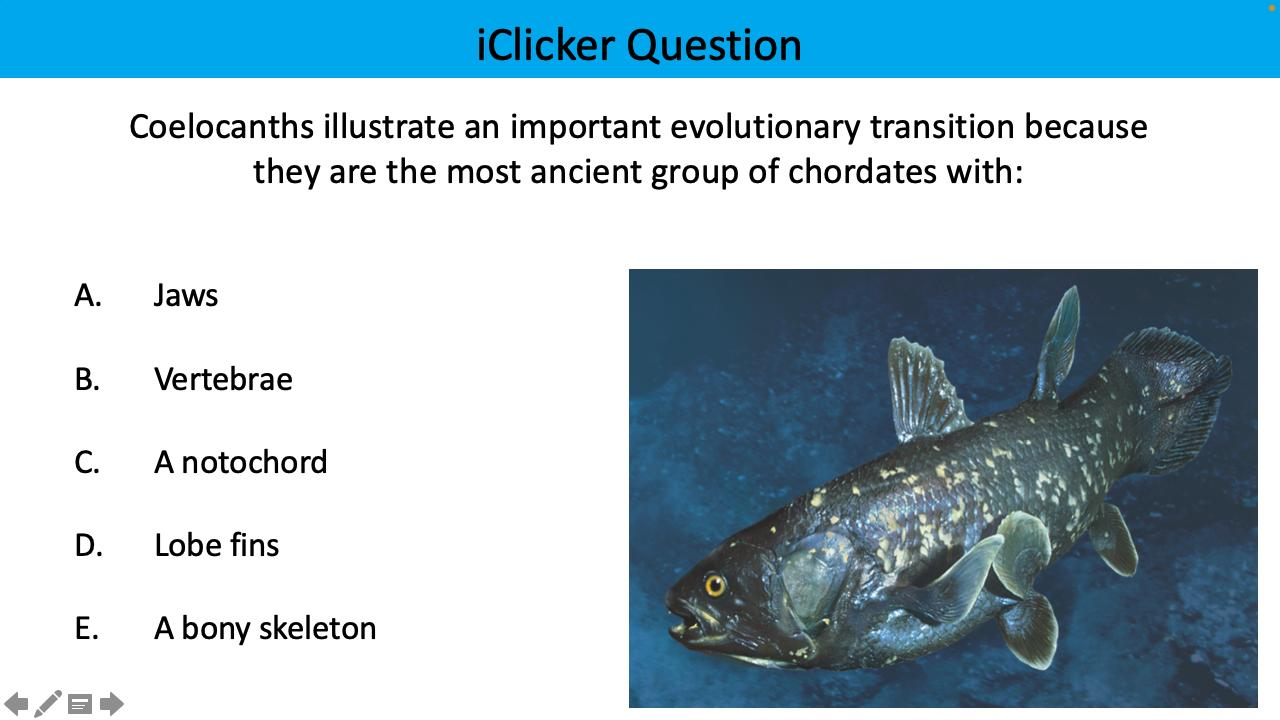
Coelocanths illustrate an important evolutionary transition because they are the most ancient group of chordates with:
lobe fins
Plants and tetrapods faced many of the same challenges moving from the water onto land. Which of the following IS NOT a major innovation that helped tetrapods colonize the land?
Origin of deuterostome development
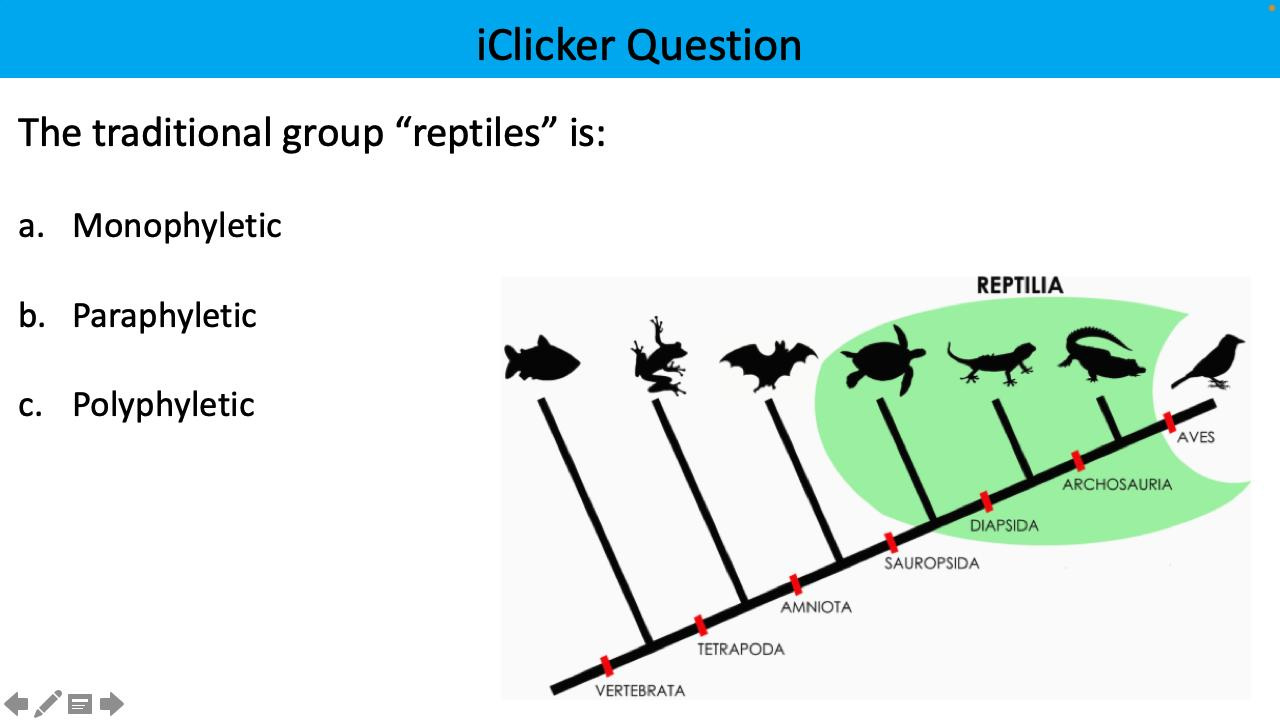
The traditional group “reptiles” is:
paraphyletic
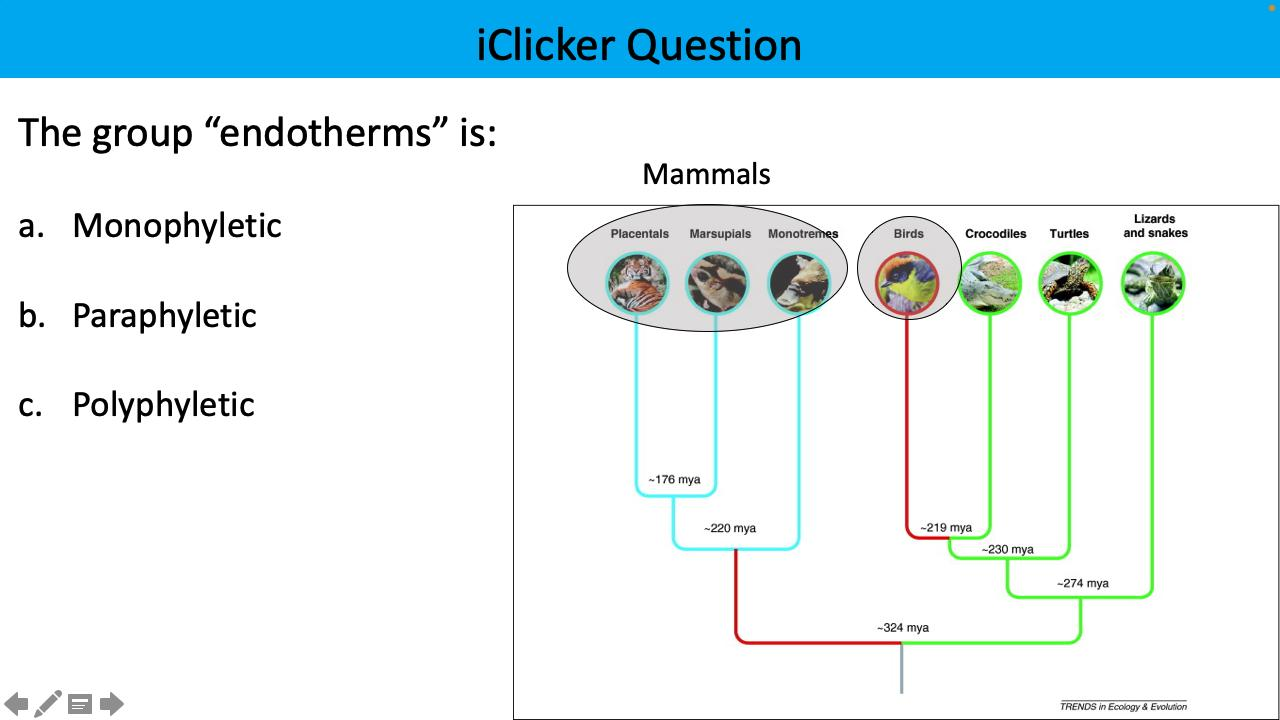
The group “endotherms” is:
polyphyletic
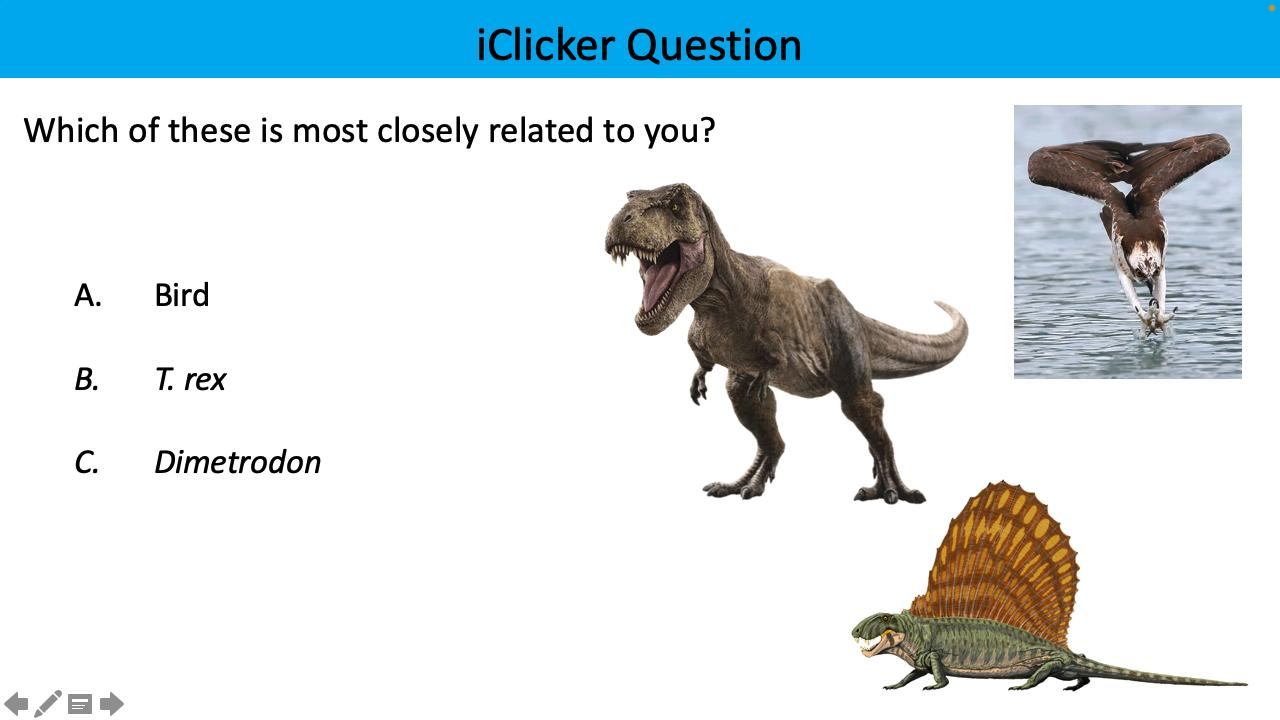
Which of these is most closely related to you?
dimetrodon
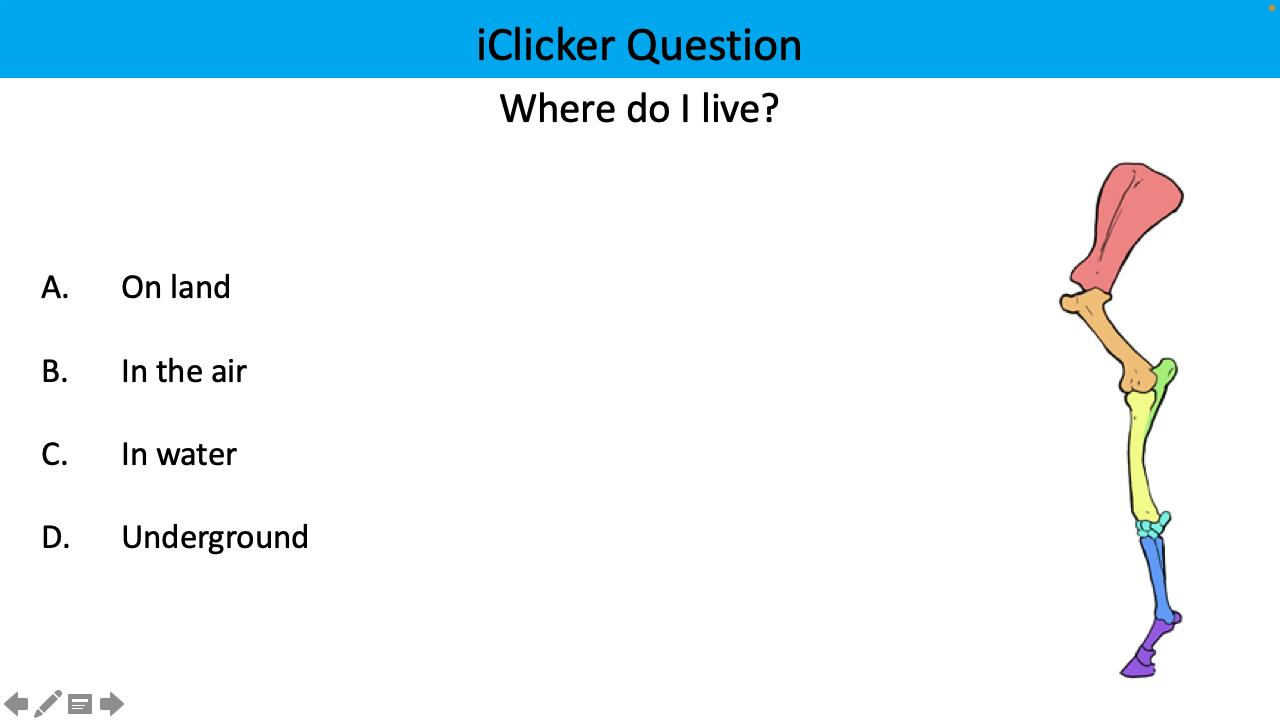
Where do I live?
on land
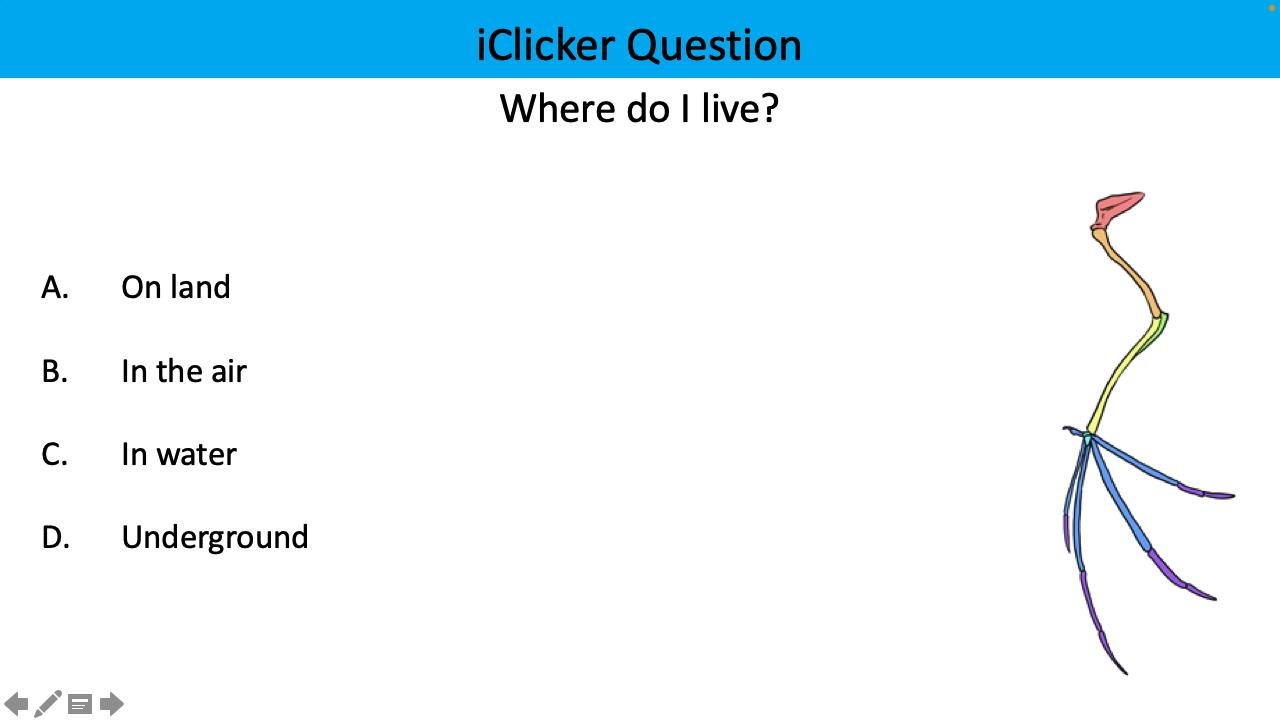
Where do I live?
in the air
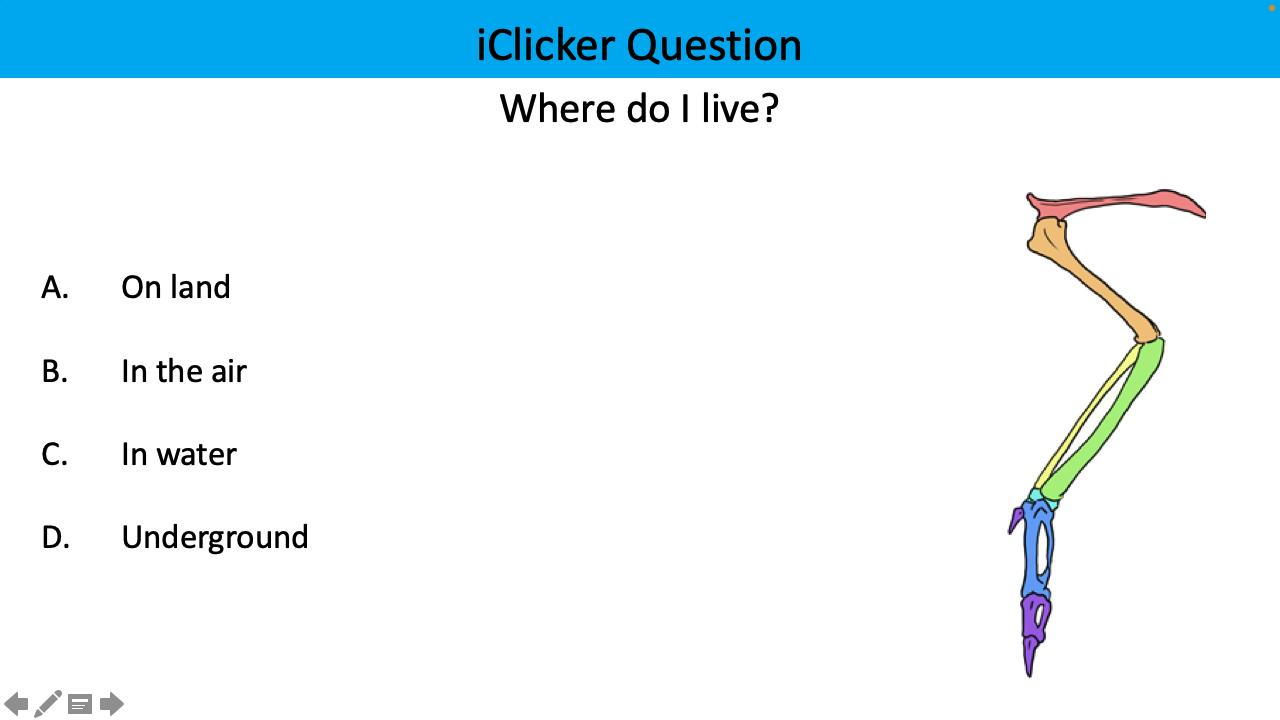
Where do I live?
in the air
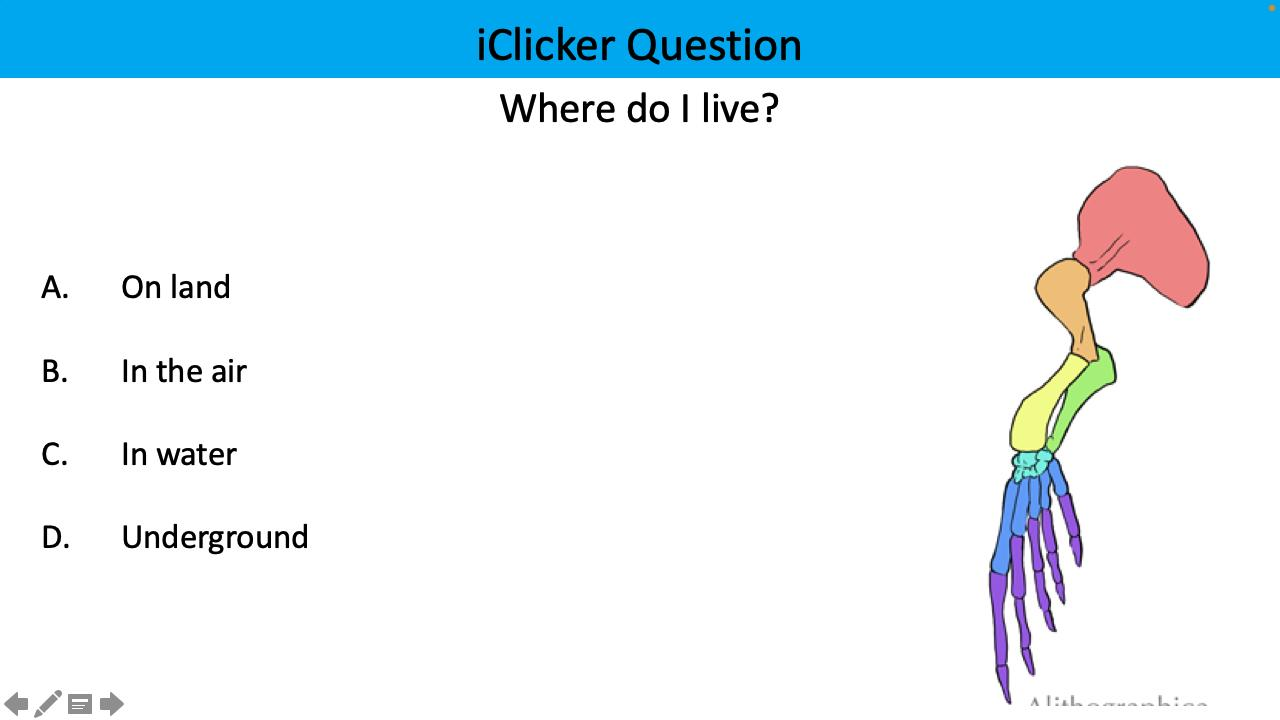
Where do I live?
in water
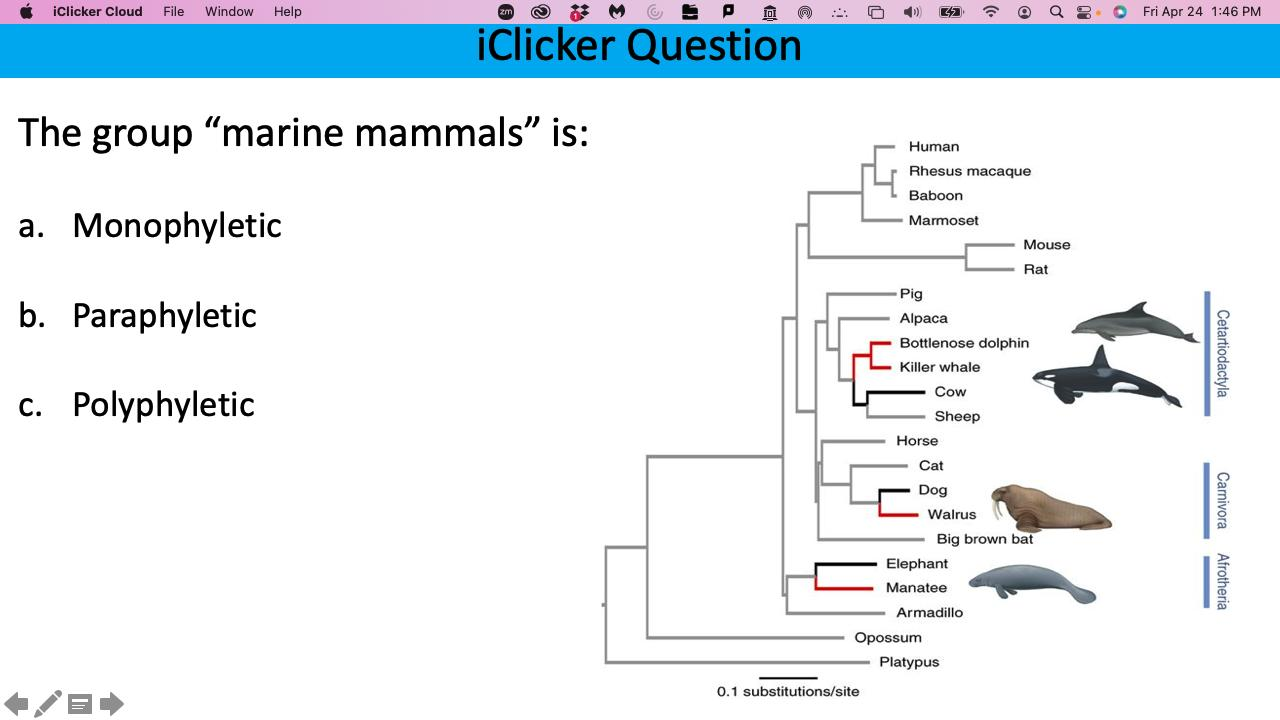
The group “marine animals” is:
polyphyletic
What defines Opisthokonts?
Cells with a single posterior flagellum (in some stage of life).
Members of Opisthokonts?
Animals, fungi, and choanoflagellates.
true or false: The Opisthokont ancestor was microbial.
true
What are choanoflagellates?
Single-celled organisms most closely related to animals.
true or false: Choanoflagellates can occur as multicellular colonies.
true
Key fungal synapomorphies?
Chitin cell walls + absorptive heterotrophy
what is the fungal chitin cell wall?
a tough, flexible polysaccharide
what is absorptive heterotrophy?
most fungi excrete digestive enzymes to break down food, and then absorb the nutrients
When did fungi evolve?
~1 billion years ago
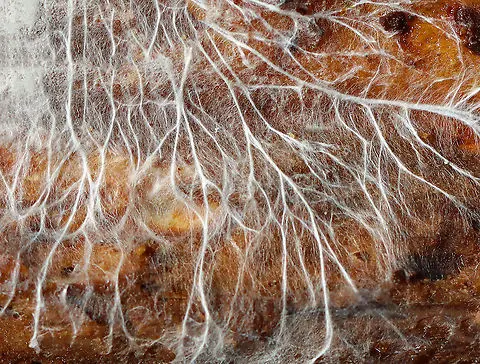
what are hyphae?
Thread-like filaments of fungi
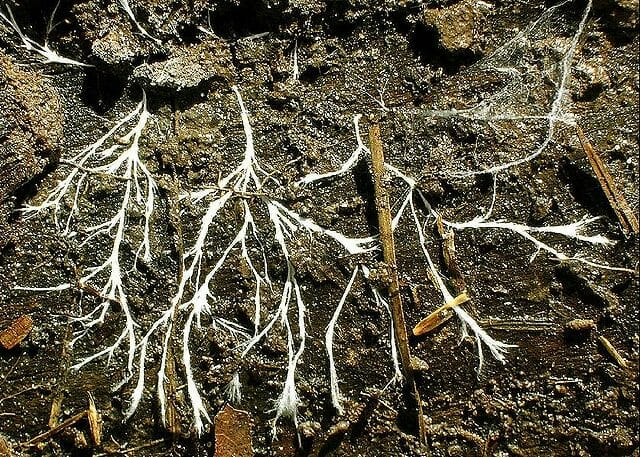
do fungal hyphae have high or low surface area to volume ratios?
high
what are mycelium?
Network of hyphae
what are yeasts and molds?
Single-celled fungi
what are multicellular fungi called?
mushrooms
What is a dikaryon stage?
Cells have two separate haploid nuclei (n + n)
How is fungal fertilization different from humans?
Fusion of cytoplasm first, nuclei later
Role of fungi in carbon cycle?
Decompose organic matter
what would happen if there were no sabprobic (decomposing) fungi?
the carbon cycle would slow greatly because a lot of carbon would get sequestered (isolated) in dead plants
when did the ability of fungi to degrade lignin in wood appear?
~300 MYA (the end of the age of coal formation)
what are some of the ecological functions of fungi?
predators
pathogens of plants
animal pathogens (amphibian die-offs)
food (mushrooms, yeasts, blue cheeses)
used in chemistry/drugs
What is a lichen?
Fungus + photosynthetic partner (algae/cyanobacteria)
true or false: Lichens do not grow their own food.
false
when do the first lichen fossils date back to?
>400 MYA (around the same time as first land plants)
Lichen structure roles?
Fungus = protection
Partner = food (photosynthesis)
what is the thallus?
the structure of the lichen
what is the apothecia?
sexual fruiting body of a lichen
what are the spores?
sexual units of reproduction, usually single-celled
what are soredia?
asexual, loosely-knit clonal propagules
what are isidia?
asexual, tightly packed and sealed clonal fragment
Lichen growth forms?
Crustose, foliose, fruticose.
Ecological roles of lichens?
Soil formation, indicators of air quality, lots of biodiversity, food for animals.
why are lichens considered the ultimate pioneer species?
they are typically the first organisms to colonize bare rock and start making soil
what is Mycorrhizae?
Fungi + plant root symbiosis.
What do plants get from mycorrhizae?
Water + nutrients.
What do fungi get?
sugars
Common mycorrhizal networks?
Underground fungal connections linking plants.
what does the flagellum of choanoflagellates do?
creates a current to catch food
when and where were animals estimated to have arisen?
~700 MYA, in the ocean