Mock Registry Review #1
 Call Kai
 Learn
Learn Practice Test
 Spaced Repetition
 Match
Match Flashcards
 Knowt Play
1/213

Earn XP
Description and Tags
Flashcards for radiology registry review covering skeletal anatomy, positioning, physiology, contrast media, and pharmacology.
Name | Mastery | Learn | Test | Matching | Spaced | Call with Kai |
|---|
No analytics yet
Send a link to your students to track their progress
214 Terms
appendicular skeleton
bones of the shoulder, pelvis, and upper and lower extremities
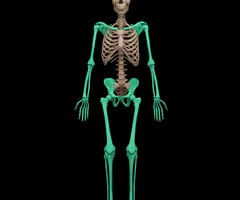
How many bones are in the appendicular skeleton
126
axial skeleton
the part of the skeleton that includes the skull and spinal column and sternum and ribs
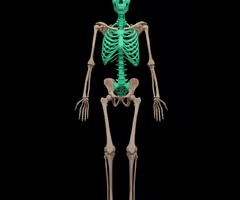
how many bones are in the axial skeleton
80
where would the gallbladder and stomach be located in an asthenic patient
down and in
where would the gallbladder and stomach be located in an hypersthenic patient
up and out
AP oblique = a _________ (posterior/anterior) oblique
posterior
trendelenberg position
Lying down with the feet elevated higher than the head
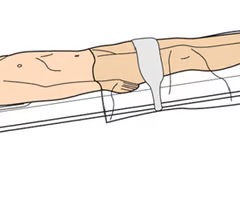
fowler position
laying down feet lower than head
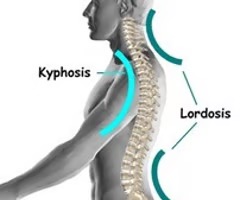
lordosis
concave curvature (swayback), most commonly seen in the lumbar
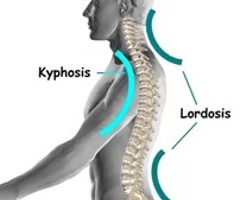
kyphosis
convex curvature (hunchback), most commonly seen in thoracic
ulnar deviation/ ulnar flexion
Movement of the wrist towards the ulna or medial side - also called stetchers view - done for scaphoid
radial deviation/ radial flexion
abduction movement at wrist of thumb side of hand toward forearm
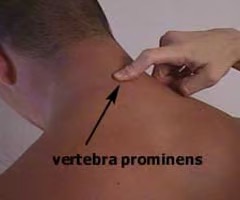
where is the vertebra prominens
C7
Where is the jugular notch
t2-3
Where is the xiphoid process located?
T9-T10
where is the inferior rib margin
L2
where is the umbilicus
L3-L4
where is the iliac crest
L4-L5
where is the ASIS
S1-S2
where is the symphysis pubis
1 inch inferior to the coccyx
where is the CR for a hand projection
3rd MCP joint
What is the ball catcher view done for
rheumatoid arthritis
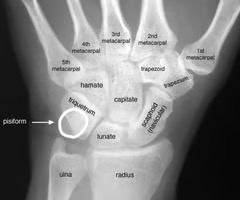
wrist bones w/ other names
hamate= unciform capitate= os magnum trapezoid= lesser multangular trapezium= greater multangular triquetrum lunate= semi lunar scaphoid= navicular pisiform
the gaynor hart view is done for _________
carpal tunnel
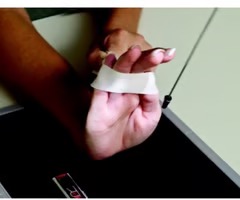
what view demonstrates the pisiform the best
AP obl medial rotation
What degree obliques are done for elbows
45
What does the external obl elbow demonstrate
radial head/neck and capitulum
What does the internal obl elbow demonstrate
coronoid process
What should you see on a lateral projection of the elbow
olecranon process and 3 concentric arcs
The radius goes with the _________ (capitulum/trochlea)
capitulum
The external shoulder projection shows what
the greater tubercule in profile laterally, epicondyles parallel to IR
What does the grashey method show
glenoid cavity free of superimposition
how much is the pt rotated for an AP obl Y view projection? PA?
AP= 45-60 PA= 30
What degree tube angle is used for the feet and toes?
10 degrees towards the heel
bones of the foot
tarsals, metatarsals, phalanges
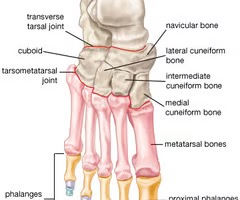
What view of the foot shows the longitudinal arch
weight bearing projection
What is the tube angle for a plantodorsal (axial calcaneus) view
40 degrees cephalic
What is the degree of obliquity for a mortise ankle view? regular?
mortise= 15-20 regular= 45
what is the tube angle for a lateral knee
5−7 degrees cephalad
What are tunnel views also called
intercondlyar fossa views
what does the medial oblique knee demonstrate
fibular head and neck
The sunrise view for the knee is also called _______
tangential
how much do you rotate the leg internally for an AP femur/pelvis
15−20 degree
Where is the CR for a pelvis
midway between ASIS and symphysis pubis
What is the other name for the frog leg pelvis/hip?
cleaves method
Where is the CR for the frog leg pelvis
3" down from ASIS, Midsagittal plane
What is the axiolateral hip also called? modified axiolateral?
axiolateral= Dan-miller modified axiolateral= Clements Nakayama
Where is the CR for the hip
at femoral neck
When doing a chest decubitus what side will be up? side down?
side up= air side side down= fluid side
What degree rotation shows the heart best for the chest?
60 degree LAO
What must you include for a soft tissue neck?
nasopharynx to C7
What SID is used for a lateral soft tissue neck ? AP?
lateral= 72" AP= 40"
What are the breathing instructions for ribs above the diaphragm? below?
above= inspiration below= expiration
What are the breathing instruction for an RAO sternum?
normal breathing
What degree obliquity is done for a hypersthenic pt for an RAO sternum? asthenic?
hypersthenic= 15 asthenic= 20
What is the breathing for an abdomen x-ray
expiration
Upright abdomens must include the __________
diaphragm
What side is down for a decubitus abdomen (left/right)
left
What do Vitals Measure?
Temperature, Pulse, Respirations, Blood Pressure, Oxygen Saturation
Normal Temperature for Adult?
98.6∘F
Normal Temperature for Infant?
99∘F
What is it called when your Temperature is above 99.5 F?
Hyperthermia
What is it called when your Temperature is below 97.6 F?
Hypothermia
How is Pulse Determined?
By counting for 30s and multiplying by 2
How long should you count for an Irregular Pulse?
60s
Common Pulse Points:
Central: Carotid (Neck), Femoral (Inner Thigh), Peripheral, Radial (Wrist), Brachial (Children; Inner Arm), Dorsalis (Infants; Inner Ankle)
Normal Pulse Rate:
Adult- 60-100/min, Child- 70-120, Infant- 120-150
Tachycardia in an Adult:
Pulse rate that exceeds 100BPM
Bradycardia in an Adult:
Pulse rates that are below 60BPM (Tom Brady is slow)
A Respiration
One inhale and one exhale
Determining Respiration
Counting for 30s and multiplying by 2
Normal Respirations
Adult- 12-20/min Child- 20-30/min Infant- 30-60/min
Dyspnea
Difficulty breathing
Apnea
Lack of respiration
Systolic
The pressure when the heart is pumping
Diastolic
Pressure when heart is at rest (120/80)
Taking Blood Pressure
-Patient sitting -Upper arm hoses pointing down -Inflate just past 160 mm Hg -Stethoscope over brachial artery -Deflate -Note first and last sounds -Record as systolic/diastolic
Normal Systolic Pressure
95−140mmHg
Normal Diastolic Pressure
60−90mmHg
Hypertension
High blood pressure (140/90)
Hypotension
Low blood pressure (90/60)
What is the normal oxygen saturation level?
95−100%
What does the term 'Hypoxemia' refer to?
Low oxygen levels in the blood
Define 'Orthopnea'.
Shortness of breath when lying flat
What is the term for difficulty breathing when lying down?
Paroxysmal nocturnal dyspnea
What is the normal oxygen saturation level in a patient with COPD?
88−92%
tomography
Radiographic technique that is designed to bring into focus only that anatomy lying in the plane of interest while blurring structures on either side of the plane
An object placed in the _______ will appear sharp
Fulcrum
What is a fulcrum?
Plane of pivot
Greater
The greater the distance from the fulcrum, the _________ the blurring
Tomographic amplitude
total distance the tube travels
As the tomographic amplitude increases….
blur increases in direct proportion
Exposure Amplitude
Total distance the tube travels during the exposure
Gross man principle
Fulcrum is fixed and the patient is moved
planigraphic principle
the fulcrum is adjustable while the patient remains stationary (most common)
section interval
distance between fulcrum levels
The section interval causes _____
Gaps
7 tube movements in Tomo
Linear 2. Curvilinear 3. Circular 4. Elliptical 5. Figure 8 6. Trispiral 7. Hypocycloidal
zonography
exp amplitude less than 10 degrees (usually 1-5 degrees) - large slice thickness - used to locate lesions