Earth and Space Sciences

0.0(0)
Studied by 0 people
call kaiCall Kai
learnLearn
examPractice Test
spaced repetitionSpaced Repetition
heart puzzleMatch
flashcardsFlashcards
GameKnowt Play
Card Sorting

1/24

encourage image

There's no tags or description

Looks like no tags are added yet.

Last updated 9:44 AM on 3/24/25
Name
Mastery
Learn
Test
Matching
Spaced
Call with Kai

No analytics yet

Send a link to your students to track their progress

25 Terms

1
New cards
Lithosphere
Earth’s crust, including mountains, continents, and the ocean floor.
2
New cards
Atmosphere
The layer of gases surrounding the Earth.
3
New cards
Hydrosphere
All the water on Earth, including oceans, seas, rivers, lakes, and ice caps.
4
New cards
Biosphere
All living things on Earth, including plants, animals, bacteria, and humans.
5
New cards
Carbon Cycle
The process through which carbon is exchanged between the atmosphere, land, water, and organisms.
6
New cards
Nitrogen Cycle
The series of processes through which nitrogen and its compounds are interconverted in the environment and in living organisms.
7
New cards
Phosphorus Cycle
The biogeochemical cycle that describes the movement of phosphorus through the lithosphere, hydrosphere, and biosphere.
8
New cards
Water Cycle
The continuous movement of water on, above, and below the surface of the Earth.
9
New cards

Photosynthesis

The process by which green plants and some other organisms use sunlight and chlorophyll to convert carbon dioxide and water into glucose and oxygen.
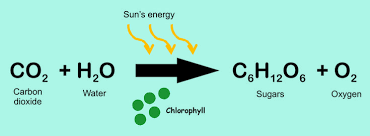
<p>The process by which green plants and some other organisms use sunlight and chlorophyll to convert carbon dioxide and water into glucose and oxygen.</p>
10
New cards
Respiration
The biochemical process in which organisms convert glucose and oxygen into energy, releasing carbon dioxide and water.
11
New cards
Greenhouse Effect
The warming of Earth’s surface caused by greenhouse gases absorbing and emitting infrared radiation.
12
New cards
Southern Oscillation Index (SOI)
An index used to measure the strength of the El Niño and La Niña events, indicating water temperature changes in the Pacific Ocean.
13
New cards

El Niño

A climate pattern characterized by cooler water temperatures in the central and eastern Pacific Ocean, resulting in less evaporation and less rainfall. The period is characterized by droughts, fires and heatwaves.

14
New cards

La Niña

A climate pattern characterized by warmer water temperatures in eastern Australia, often resulting in increased rainfall, storms, cyclones and floods.

15
New cards
Indian Ocean Dipole (IOD)
A climate mode of variations in sea surface temperatures in the Indian Ocean that affects weather patterns in Australia.
16
New cards
Biodiversity
The variety of life in the world or in a particular habitat or ecosystem.
17
New cards
Astrological Unit (AU)
The average distance from the Earth to the Sun, approximately 150 million kilometers.
18
New cards
Light Year (ly)
The distance that light travels in one year, approximately 9.5 trillion kilometers.
19
New cards
Parsec (pc)
A unit of distance used in astronomy, equal to 3.26 light-years.
20
New cards
Binary Star
A system of two stars that orbit around a common center of mass.
21
New cards
Galaxy
A vast collection of billions of stars, gas, and dust bound together by gravity.
22
New cards

Nebula

An cloud of gas and dust in outer space often visible as an indistinct and hazy area. It is between stars, and is where new stars are born.

23
New cards

Globular Cluster

A large number of stars, grouped closely together.

24
New cards
Supernova
A powerful and luminous explosion of a star, marking the end of its life cycle.
25
New cards
Big Bang Theory
The predominant cosmological model explaining the origin of the universe as having expanded from a singular point roughly 13.7 billion years ago.



