Animal Physiology Final Exam
 Call Kai
 Learn
Learn Practice Test
 Spaced Repetition
 Match
Match Flashcards
 Knowt Play
1/74

Earn XP
Description and Tags
Exam 1-3 + Quiz 1-3 + Gas Transport 1 + Cardiovascular 1
Name | Mastery | Learn | Test | Matching | Spaced | Call with Kai |
|---|
No analytics yet
Send a link to your students to track their progress
75 Terms
What characteristics do ammonia, urea, and uric acid all share and why do different animals use them for nitrogenous waste excretion?
All three are nitrogenous wastes produced from the breakdown of proteins and nucleic acids.
The choice depends on the animal's water availability and energy budget.
Ammonia: Highly toxic but requires no energy to produce; used by aquatic animals with plenty of water for dilution.
Urea: Less toxic and conserves more water than ammonia; used by mammals and amphibians, but requires moderate energy.
Uric Acid: Non-toxic and conserves the most water (excreted as a paste); used by birds and reptiles but requires the most energy to produce.
In addition to phospholipids and proteins, name one other specific component of cell membranes that can influence permeability?
Cholesterol. It inserts between phospholipids to regulate membrane fluidity; it prevents the membrane from becoming too rigid in cold temperatures or too fluid in high temperatures.
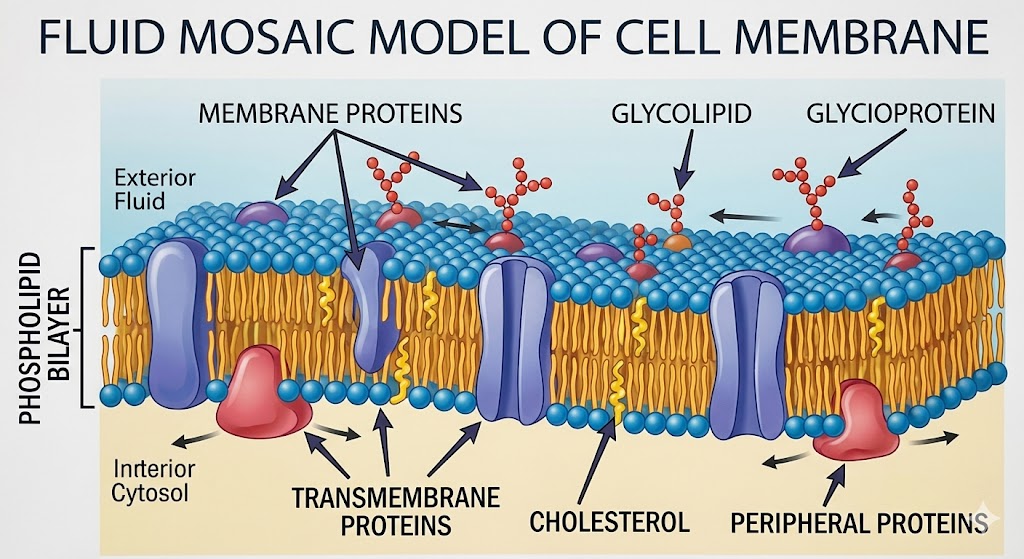
Label the components of a section of membrane
Phospholipid Bilayer
Fluid Mosaic (Interior & Exterior)
Membrane Proteins
Glycolipid
Glycoprotein
Cholesterol
Describe 3 examples of membrane proteins, what they do, and how their structure relates to their function.
Channels: These are typically shaped like a hollow pore or tunnel; this structure allows specific ions or water to flow rapidly through the membrane via passive diffusion.
Receptors: These feature a specific binding site on the exterior; when a signaling molecule (ligand) fits into this site, it causes a shape change in the protein that transmits a signal into the cell.
Transporters (Carriers): These have a structure that changes shape (flips); they bind a specific molecule on one side of the membrane and physically move it to the other side through a conformational shift.
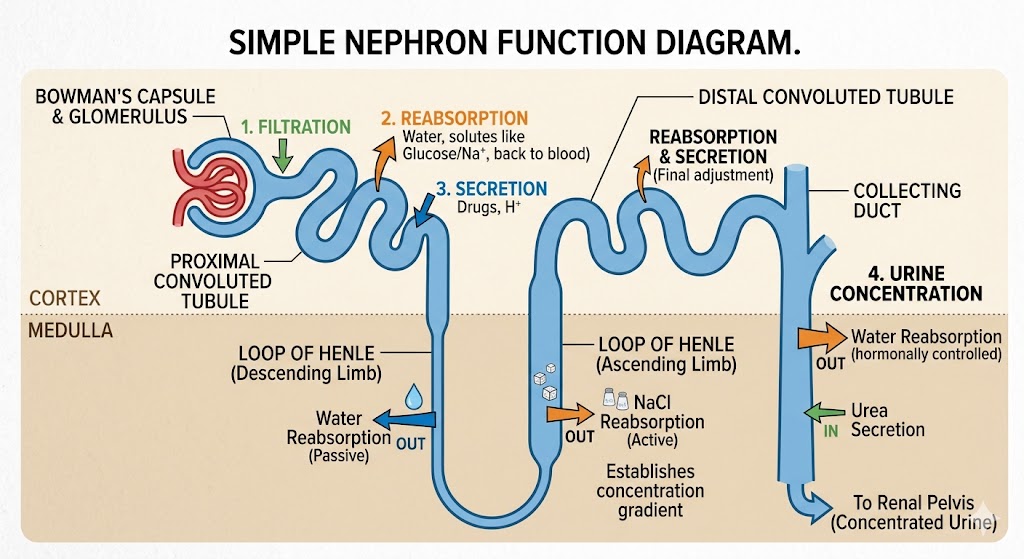
The major processes used by the mammalian kidney achieve the final composition of the urine filtration, secretion, and reabsorption. How, and where, do each of these processes take place to lead to the production of a hyperosmotic urine high in urea. Include a simple diagram of a typical nephron.
The mammalian kidney coordinates three processes within the functional unit called the nephron.
Filtration in Glomerulus/Bowman’s Capsule: Blood pressure forces water and small solutes (like urea and salts) out of the capillaries and into the nephron to create a "filtrate."
Reabsorption in Proximal Tubule & Loop of Henle: The body "reclaims" valuable water and solutes from the filtrate. In the Loop of Henle, a concentration gradient is established in the kidney tissue that is essential for making urine concentrated.
Secretion in Distal Tubule: The kidney actively pumps specific wastes or excess ions from the blood into the nephron to be added to the urine.
To make the urine hyperosmotic:
Water Reabsorption: As the filtrate moves down the Collecting Duct, water is pulled out of the nephron and back into the body.
Urea Concentration: Because water is removed but urea is largely left behind (or recycled in the inner medulla), the urea becomes highly concentrated in the final urine.
Bony marine fish (teleosts) however have extracellular fluids that are approximately 320-350 mOsm while freshwater fish have extracellular fluids that are 250-300 mOsm. This is also true of anadromous fish as well when they move between seawater and freshwater. Compare and contrast how marine and freshwater fish as well as anadromous fish maintain their plasma osmolarity related to their different habitats?
Freshwater Fish (Hyperosmotic to environment)
Challenge: They constantly gain water via osmosis and lose ions via diffusion.
Mechanism:
Drink: They do not drink water.
Urine: Produce large amounts of very dilute (hyposmotic) urine to expel excess water.
Ions: Actively take up Na^+ and Cl^- from the water through the gills.
Marine Fish (Hyposmotic to environment)
Challenge: They constantly lose water via osmosis and gain ions via diffusion.
Mechanism:
Drink: They drink large amounts of seawater to replace lost water.
Urine: Produce small amounts of highly concentrated (isosmotic) urine to conserve water.
Ions: Actively secrete excess Na^+ and Cl^- out through the gills.
Anadromous Fish
Adaptation: These fish (like salmon) are capable of remodeling their physiology as they move between habitats.
Mechanism: When moving from seawater to freshwater, they reverse the direction of ion transport in their gills (from secretion to uptake) and increase their urine production to handle the osmotic shift.
What are 3 mechanisms that influence the rate of diffusion across a cell membrane or tissue surface? Think in terms of Fick's Law of Diffusion and give examples.
Surface Area (A): A larger surface area increases the space available for molecules to cross.
Example: Villi and microvilli in the small intestine maximize nutrient absorption.
Concentration Gradient (Delta P or Delta C): A steeper difference in concentration between two sides increases the "driving force."
Example: Using Counter-current exchange in fish gills to maintain a steep O_2 gradient across the entire lamella.
Diffusion Distance (d): The rate is inversely proportional to the thickness of the boundary; thinner membranes allow faster transit.
Example: The alveoli in lungs are only one cell layer thick to facilitate rapid gas exchange.
Surface area to volume ratio
The relationship between the exterior area of an object and its internal displacement. As an organism or cell increases in size, its volume grows cubically while its surface area only grows quadratically, leading to a decrease in this ratio.
This is a critical constraint in physiology because a high ratio is necessary for efficient diffusion of nutrients, gases, and heat across the membrane to support the metabolic demands of the internal volume.
Homeostasis
The process by which biological systems maintain a stable internal environment despite fluctuations in external conditions. It relies on negative feedback loops where a sensor detects a deviation from a set point, an integrator processes the signal, and an effector carries out a response to restore balance.
This regulation is critical for maintaining variables like body temperature, blood pH, and glucose levels within narrow physiological ranges necessary for survival.
Uric acid
A nitrogenous waste excreted primarily by birds, reptiles, and insects to maximize water conservation. It is relatively non-toxic and insoluble, allowing it to be excreted as a semi-solid paste. While it saves the most water compared to ammonia or urea, it is the most metabolically expensive to produce.
Permeability
The measure of how easily a substance can pass through a biological membrane. It is determined by the molecule’s size, charge, and lipid solubility, with small, non-polar molecules like O_2 passing most easily.
In Fick's Law, it is represented as the permeability coefficient (P), which quantifies the membrane's conductance for a specific solute.
Na+/K+ atpase
An integral membrane protein that uses ATP to actively transport three Na^+ ions out of the cell and two K^+ ions into the cell against their concentration gradients. This process is electrogenic, meaning it creates a net charge imbalance that helps maintain the cell's negative resting membrane potential.
It is a primary example of active transport and is essential for establishing the ionic gradients required for action potentials in neurons and muscle cells.
Hyperosmotic
A solution that has a higher solute concentration (and thus a higher osmotic pressure) compared to another solution. In physiology, if a cell is placed in a hyperosmotic environment, water will move out of the cell via osmosis, causing it to shrink or crenate. This term is also used to describe urine that is more concentrated than the organism's blood plasma.
Countercurrent exchange
A physiological mechanism where two fluids flow in opposite directions to maximize the transfer of heat or substances like O_2. By maintaining a favorable gradient along the entire length of contact, it is far more efficient than concurrent flow (fluids moving in the same direction).
A classic example is found in fish gills, where blood flows opposite to water to extract the maximum amount of oxygen, or in the limbs of arctic animals to conserve core body heat.
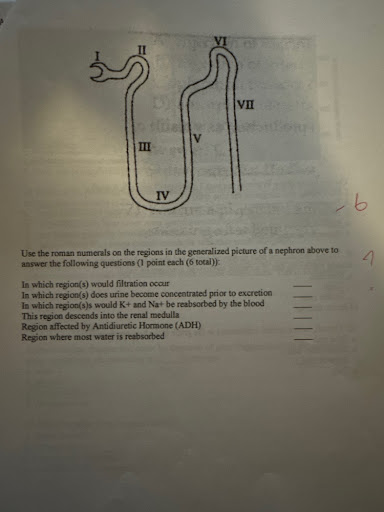
Use the roman numerals on the regions in the generalized picture of a nephron
Filtration (Bowman's Capsule): I
Urine concentration prior to excretion (Collecting Duct): VII
K+ and Na+ reabsorbed by blood (Proximal Tubule and Ascending Loop of Henle): II and V
Region descending into renal medulla (Descending Loop of Henle): III
Region affected by ADH (Collecting Duct): VII
Region where most water is reabsorbed (Proximal Tubule): II
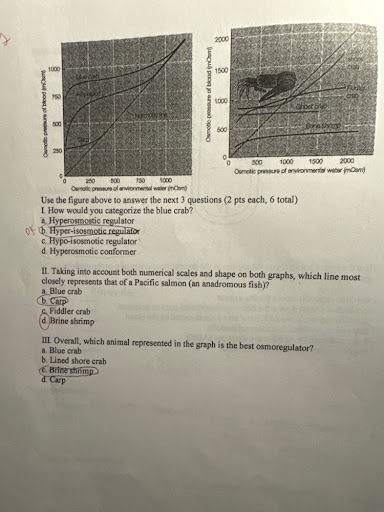
How would you categorize the blue crab?
Hyper-isosmotic regulator
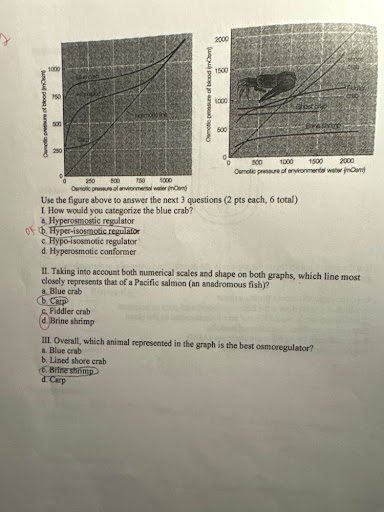
Taking into account both numerical scales and shape on both graphs, which line most closely represents that of a pacific salmon (an anadromous fish)?
Brine shrimp
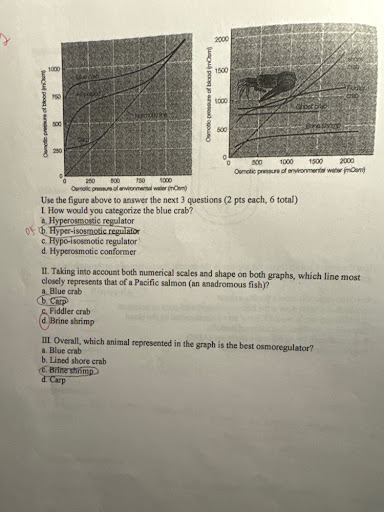
Overall, which animal represented in the graph is the best osmoregulator?
Brine shrimp
A physiological mechanism or other trait that is a product of evolution and is advantageous is called
as adaptation
Which statement regarding animals is true?
All animals require energy to maintain their organization
Which of the following statements concerning the relationship of energy expenditure to body size in animals is TRUE?
Large ecotherms have lower mass specific metabolic rates than small ectotherms
During childbirth, muscular contractions acting to expel the fetus from the uterus induce hormonal signals that induce even more intense contractions. This is an example of:
Positive feedback
Physiological changes that occur by alteration of gene frequencies over the course of many generations are referred to as ______ changes.
Evolutionary
Which response is the longest lasting?
Evolutionary response
Most inevertebrates that live in the ocean, such as sea stars and corals,
do not gain or lose much water
The surprise of a phone call at 3:00 AM results in an increase in heart rate. This is an example of a(n)
acute change
Compared to fish found in lower temperature habitats, fish that inhibit higher temperatures tend to have more
saturated phospholipids in their brain synaptic membranes
Which membrane protein is responsible for the passive movement of K^+ across the typical animal cell membrane?
Channel
Compared to the seawater around them the plasma of marne bony fishes are described as
hypo-osmotic
What characteristics do ammonia, urea, and uric acid all share?
They are all nitrogenous wastes
Which molecule is a functional membrane protein?
The Na^+/K^+ pump
Which statement regarding enzymes is false?
All catalysts are enzymes
If a change in the voltage of a cell membrane causes all the voltage-gated Na^+ channels to open, the permeability of the cell membrane to Na^+ has been
increased
A 1-osmolar solution has ______ dissolved entities per liter.
6.022 × 10²³ independent
Most terrestrial vertebrates typically have internal fluids of approximately
300 mOsm
When two solutions exchange water by osmosis, water always moves
from the solution with the lower osmotic pressure to the one with the higher osmotic pressure
Typically, in an invertebrate if the blood osmolarity were 500 mOsm, then interstitial fluid osmolaity would be ___ mOsm
500
If you submerge a mussel (a marine invertebrate) in an environment where the ambient osmotic pressure progressively increases, the blood osmotic pressure of the mussel will
progressively increase
If you go to the movie theater and eat a large bag of salted popcorn, after few hours your plasma salt concentration will
increase
In most aquatic animals, the organ whose function is equivalent to the mammalian kidney is the
gill
an ionic U/P ratio that is greater than 1 indicate the urine contains
more sodium compared to the plasma
If a human water drank sea water, ingestion of ___ would be most response for tissue dehydration
sodium and chloride
freshwater animals are
hyperosmotic regulators
In desert rates one of the main ways they can get enough water in a dry environment is
their urine is very hyperosmotic to their plasma and they don’t urinate much
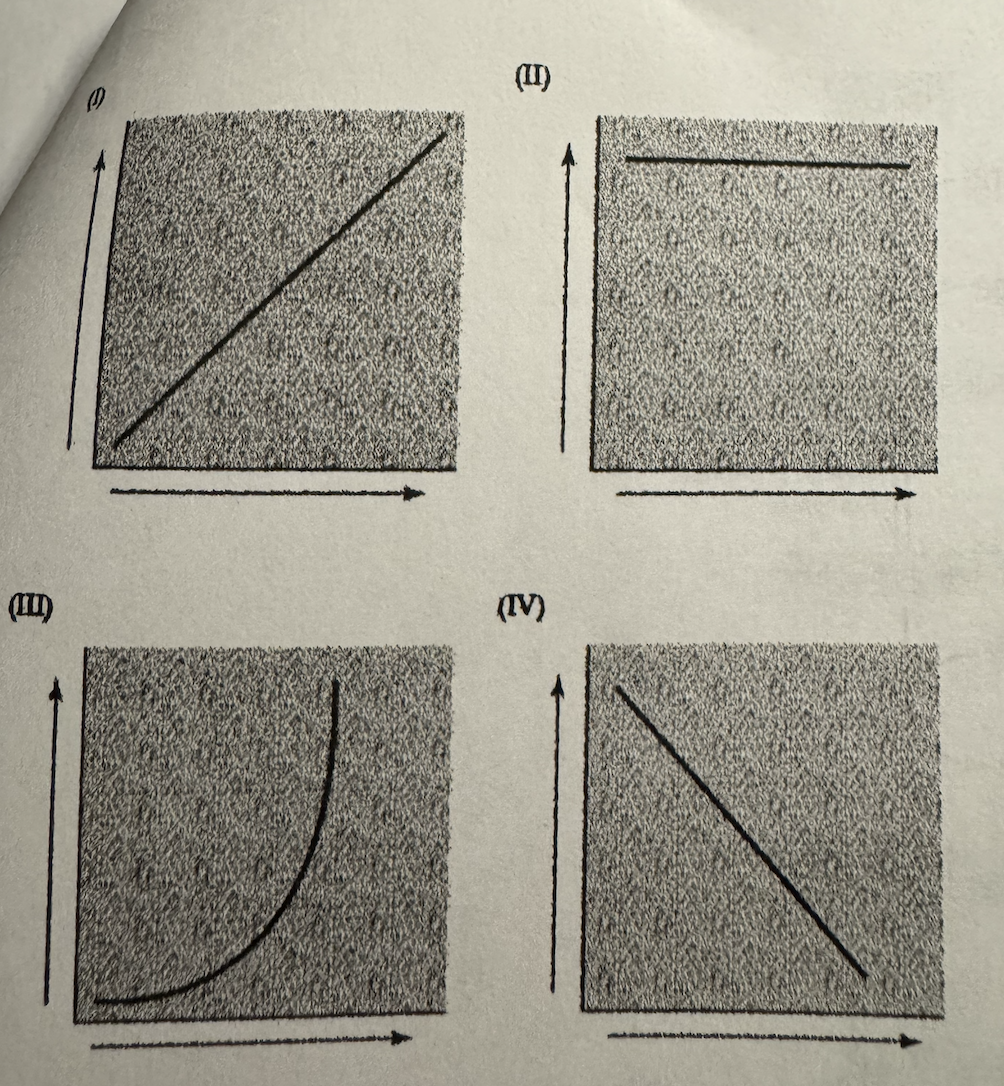
Which figure refers to a physiological trait that is regulated by an organism?
II
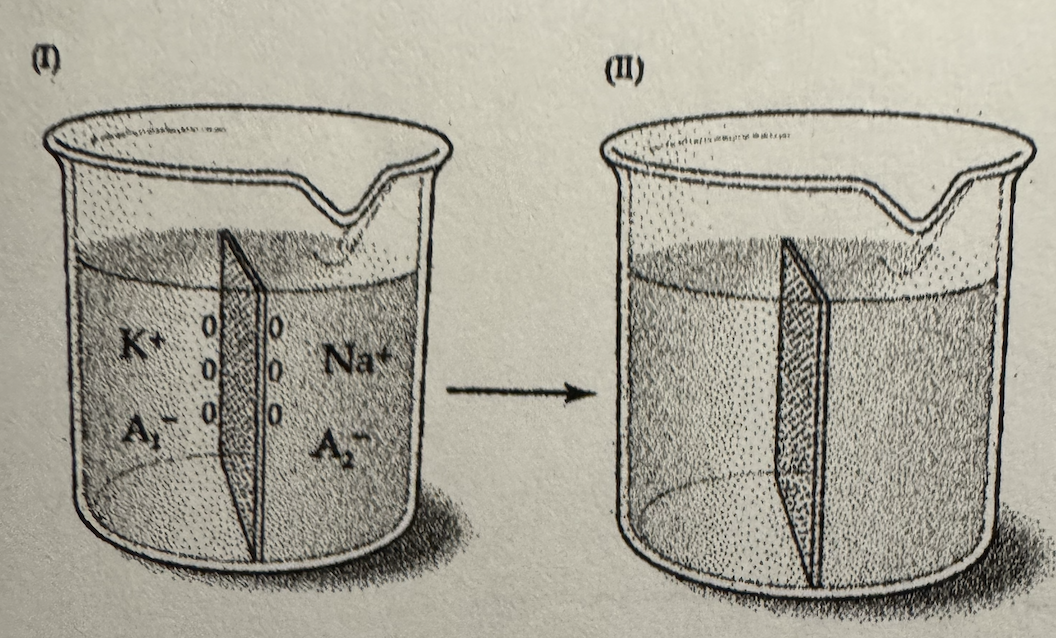
If the membrane shown in the beakers is permeable only to Na^+, and the beaker on the left represents the initial state
Na^+ will diffuse to the left side of the membrane, causing a net negative charge on the right side of the membrane
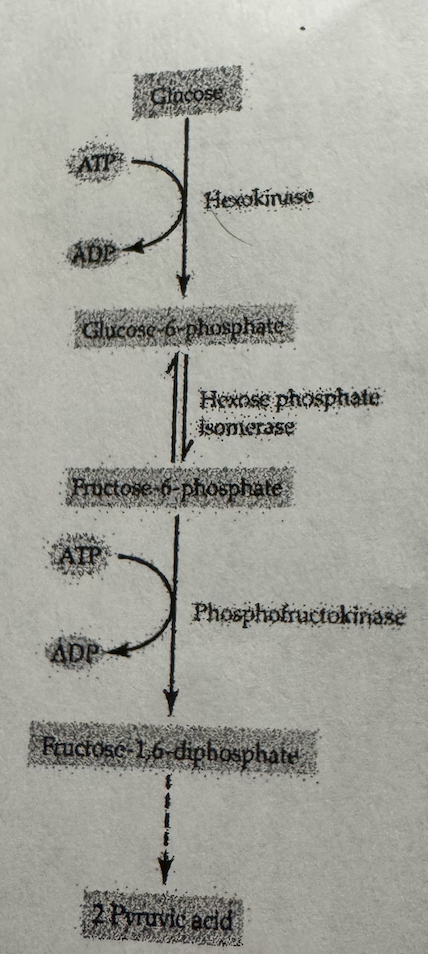
How many enzymes are catalyzing reactions in the diagram?
Three
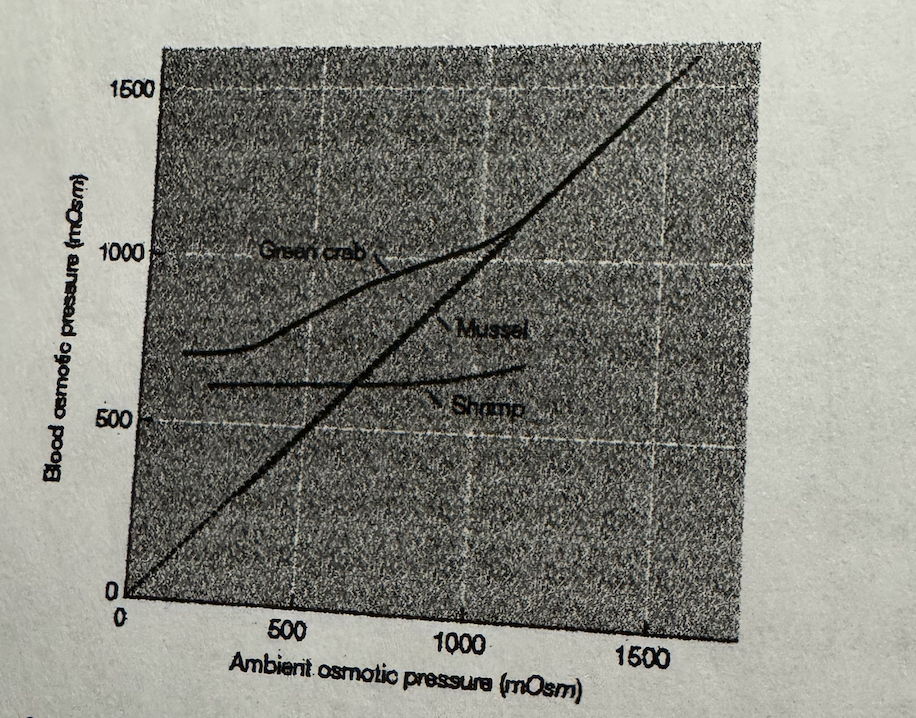
What does the foted line represent in the figure?
The isosmotic line
What are 3 hormones involved in digestion, what do they do, and where are they located in the digestive system?
Gastrin, produced by G-cells in the stomach, stimulates the secretion of gastric acid to aid in protein digestion.
Cholecystokinin (CCK), released from the duodenum, triggers the gallbladder to release bile and the pancreas to secrete digestive enzymes when fats and proteins are present.
Secretin, also located in the duodenum, stimulates the pancreas to release bicarbonate-rich fluid to neutralize acidic chyme entering from the stomach.
What are two thermoregulatory mechanism available to an endotherm at temperatures below or above the thermal neutral zone AND two thermoregulatory mechanism at temperatures within the thermal neutral zone?
Inside the Thermal Neutral Zone (TNZ), endotherms regulate temperature via energetically "cheap" behavioral and physical adjustments like vasomotor responses (altering blood flow to the skin to adjust heat loss) and postural changes (huddling to conserve heat or spreading out to dissipate it).
Below the TNZ, animals must increase metabolic heat production through shivering thermogenesis (muscle contractions) or non-shivering thermogenesis (burning brown adipose tissue).
Above the TNZ, they use active heat-dissipating mechanisms such as panting or sweating to facilitate evaporative cooling, both of which require significant metabolic energy.
Behavioral thermoregulation
The use of voluntary actions, such as seeking shade, sunbathing, or huddling, to maintain an optimal body temperature. Unlike physiological changes, these behaviors allow organisms to move into microclimates that facilitate heat gain or loss without relying solely on metabolic energy.
Poikilotherm
Organisms whose internal body temperature fluctuates in response to the ambient temperature of their environment. Unlike homeotherms, they do not maintain a constant set point, meaning their metabolic rates typically rise and fall alongside external thermal changes.
Most invertebrates, fish, amphibians, and reptiles fall into this category, often utilizing behavioral strategies to reach temperatures necessary for activity.
gastrin
Peptide hormone primarily secreted by G-cells in the stomach lining and the upper small intestine. Its main function is to stimulate the parietal cells to secrete gastric acid (HCl), which is essential for breaking down proteins and killing ingested pathogens.
It also promotes the growth of the stomach lining and increases gastric motility to facilitate the churning of food.
Nernst equation
Mathematical formula used to calculate the equilibrium potential (E) for a specific ion across a biological membrane when that membrane is permeable to only that ion. By accounting for the concentration gradient and the charge of the ion, it determines the exact voltage at which the electrical force pulling the ion in one direction perfectly balances the chemical force pushing it in the other, resulting in no net movement.
For a single monovalent ion at body temperature (37°C), the equation is typically expressed as E = 61 \log([ion]_{out} / [ion]_{in}).
Pepsinogen
Inactive proenzyme secreted by chief cells in the stomach lining. It is converted into the active protease pepsin when it encounters the acidic environment (HCl) of the stomach lumen.
This mechanism prevents the enzyme from digesting the proteins within the chief cells themselves before it is safely outside the cell. Once some pepsin is formed, it further activates more pepsinogen in a process called autocatalysis.
Antifreeze Proteins
Specialized polypeptides produced by certain fish, insects, and plants that live in sub-freezing environments. They bind to the surface of small ice crystals to inhibit their growth and prevent them from recrystallizing into larger, lethal structures.
By lowering the freezing point of body fluids without significantly changing the osmotic pressure—a phenomenon known as thermal hysteresis—these proteins allow organisms to survive in temperatures below the normal freezing point of water.
Gall bladder
Organ located beneath the liver that serves as a storage and concentration reservoir for bile. While the liver produces bile, this organ removes water and electrolytes to increase its potency, then contracts to release it into the duodenum via the common bile duct in response to the hormone cholecystokinin (CCK). This bile is essential for the emulsification and subsequent digestion of dietary fats.
Membrane Potential
Difference in electrical charge (voltage) between the inside and outside of a cell, created by the unequal distribution of ions across the plasma membrane. This potential is maintained by the selective permeability of the membrane and the action of the Na^+/K^+ ATPase pump.
In a resting state, most cells maintain a negative charge internally, typically around -70 mV, which provides the stored electrical energy necessary for the rapid firing of action potentials in excitable tissues like nerves and muscles.
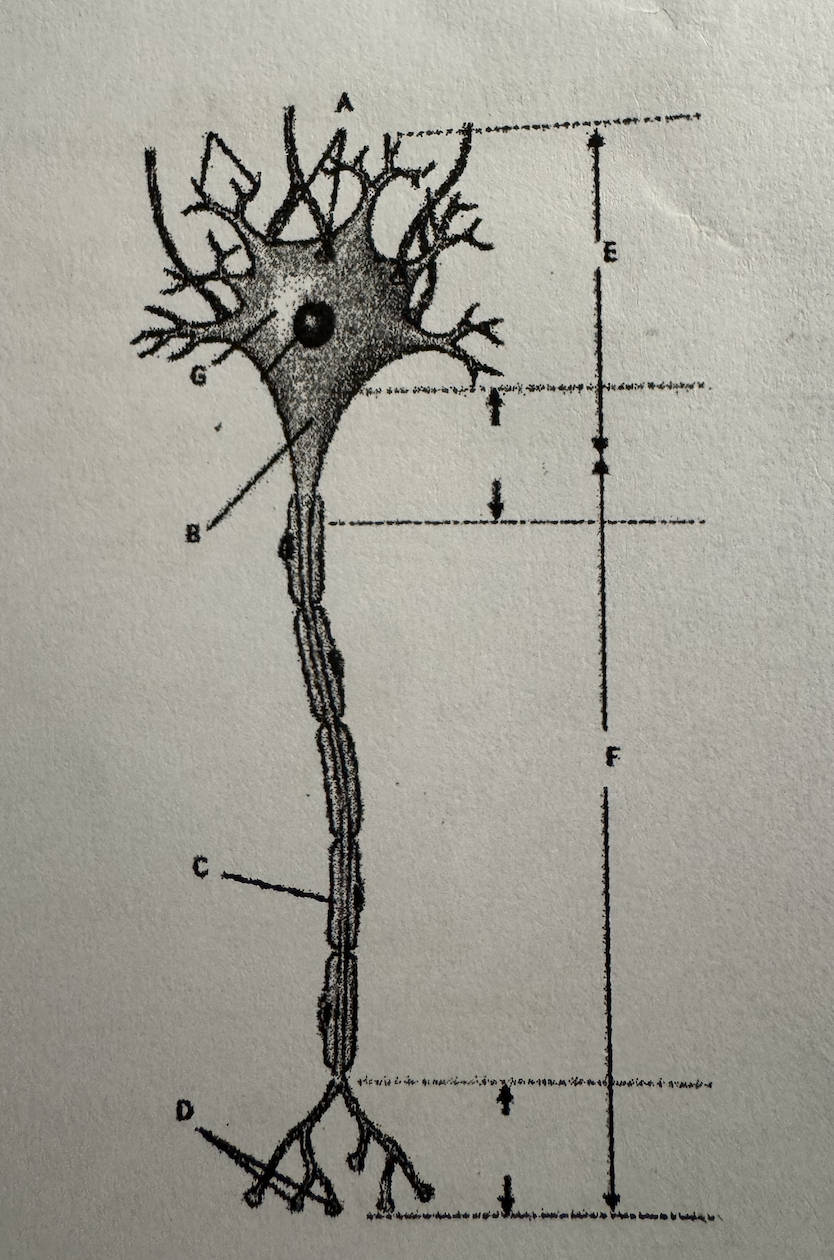
Assign letters to these questions:
This structure acts like insinulation along the axon _
One of the main functions of this region is keeping the cell alive _
Neurotransmitters is released from this region _
C
G
D
when fats are digested and metabolized what compound is generally NOT a product at some point
Nitrogen
Animals need ______ to create and maintain internal organization
Energy
In winter, some birds stand on frozen ponds and lakes. How do they prevent their feet from freezing while simultaneously preventing excessive heat loss?
By allowing their feet to cool below core temperature but remain above freezing
What is NOT used to measure metabolic rate
Carbon consumed
Which of the following is not one of the mechanisms by which animals exchange heat with their environment?
Metabolic heat production
All of the following are aspects of temperature acclimation EXCEPT
Animals with countercurrent circulation would have difficulty with thermoregulation
What happens to a homeotherm’s resting metabolic rate when the temperature is outside its thermoneutral zone?
Resting metabolic rate goes up
Which statement about an animal’s nervous system is true?
Neurons form highly discrete lines of communication
In 10ºC ocean water, you would expect the tipe of a killer whale’s flipper to be about
12ºC
Which of the following is NOT a gilial cell?
Parietal cells
Which organism is most completely ectothermic?
Crayfish
The seperation of positive and negative charge constitutes
Capacitance
Most terrestrial animals dissipate excess heat by
Evaporation
In a cell, the difference in ion concentration between the intracellular and extracellular fluids results from
Both active ion transport and passive diffusion of ions
What is not a factor in the Nernst Equation
Capacitance