biology stuff ya gotta know
 Call Kai
 Learn
Learn Practice Test
 Spaced Repetition
 Match
Match Flashcards
 Knowt Play
1/32

There's no tags or description
Looks like no tags are added yet.
Name | Mastery | Learn | Test | Matching | Spaced | Call with Kai |
|---|
No analytics yet
Send a link to your students to track their progress
33 Terms
DNA profiling
can identify individuals by comparing the short tandem repeats (microsatellites) in their DNA
done by first doing gel electrophoresis, followed by using southern blotting via a nylon filter so that the DNA bands appear as blots on the filter, then by adding gene probes (containing complementary base sequence to known allele sequence) which hybridise sections of DNA so they can be analysed
Methods of making recombinant DNA
Vectors → use a non-harmful virus, insert into hosts so they can pick up the DNA
Gene Gun → DNA shot into cell at high speed using carried on metals like gold. cells which survive accept the DNA as part of their genome
Liposome Wrapping → DNA wrapped around lipid soluble liposomes, which are able to move past cell membrane and deliver DNA to cytoplasm
Microinjection → DNA inserted into cell via micropipette, done with micromanipulator as small movements will damage and kill cell
Antibiotic resistance marker genes and replica plating
bacteria which are GM have a marker gene which means that bacteria who have been GM are unable to produce a necessary amino acid. a master plate is made via plating bacteria both GM and non-GM. an imprint of this plate is then made and kept. a replica plate is then made without the necessary amino acid, resulting in any bacteria growing being non-GM. the imprint and replica are compared to identify the GM bacteria
GM soya beans
GM to have different fatty acids which are not as easily oxidised, increasing shelf life
fibroblasts to iPSc
by altering gene expression e.g. via transcription factors, epigenetic markers are reset and fibroblast becomes unspecialised again
autosomal linkage vs recombinants vs recombinant DNA
autosomal linkage: when two alleles are located closely on the same chromosome, so inherited together, resulting in distribution of phenotypes not being 9:3:3:1.
recombinants: DNA which has genetic information from two different organisms, resulting in offspring having genetic variation. result of crossing over. unlikely to recombinants to occur if genes too closely located as they are less likely to be inherited separately
recombinant DNA: DNA which has been genetically modified to contain DNA from another organism
Genetic Drift
where allele frequency is altered by random chance
this can occur in small populations, where whole alleles can be removed from the population by random chance
proportional effect is larger in small populations
Hardy Weinberg Requirements and Issues
no migration, no mutations, random breeding, large population, no selection pressures
unlikely as: breeding is rarely truly random since adaptations exist, often migration occurs as males leave to find new mates (causing essential gene flow)
why do we need to maintain water potential
to maintain cell osmotic gain and water loss
blood pressure negative feedback loop
baroreceptors in the carotid artery detect high/low blood pressure as a result of vasodilation/constriction (exercise causes vasodilation, which decreases pressure), it is always sending steady stream of impulses to the cardiac centre (medulla oblongata), so when pressure too low, stream of impulses decreases, medulla oblongata activates and sends impulse to sympathetic nerve which causes impulses to be released so noradrenaline released at SAN increasing heart rate
Spinal cord structure
central region of grey matter (cell bodies), surrounded by white matter (mylineated axons) protected by vertebrae
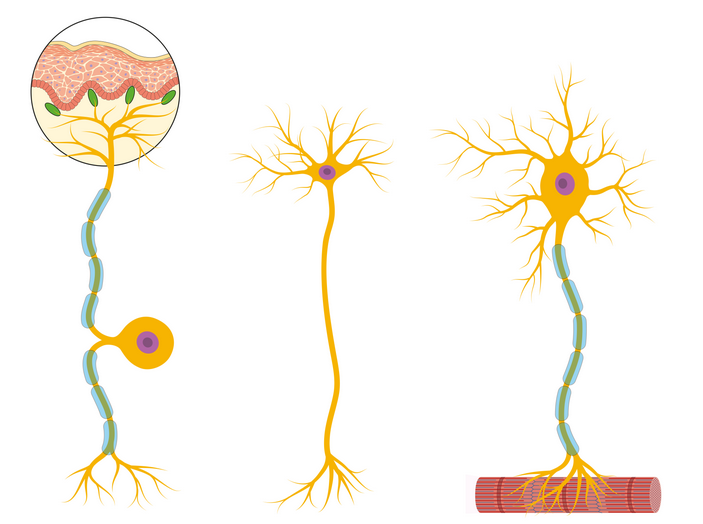
left to right, name
sensory, relay, motor
nicotine
mimics acetylcholine, binds to it’s receptors, causes increased post synaptic firing
lidocaine
blocks voltage gated Na+ channels preventing action potential being synthesised, esp. in sensory neuron
cobra venom
binds to acetylcholine receptos in post synaptic, preventing acetylcholine transmission decreasing motor response
auxin how does elongation work
binds to receptors causing H+ pump activation, H+ pumped into cell wall space, lowers pH. this is optimum pH for enzymes which weaken bonds between cellulose, cell absorbs water and expands
in roots, low levels of auxin cause growth
Gibberellin and detecting effectiveness of Gibberellins
released from embryo, diffuse into aleurone layer, activates genes for amylase synthesis, amylase breaks down starch into sugars for embryo
place embryo side of seed down on starch plate, use iodine to test for starch, the amylase released will cause the iodine to show clear zone
why two plant hormones interact
Growth substances often act synergistically or antagonistically, allowing plants to coordinate complex processes like branching, rooting, and flowering.
steroid hormone
diffuses through membrane (lipid soluble), binds to receptor inside cell (e.g. oestrogen receptor), resulting in a complex (e.g. estrogen receptor complex), complex enters nucleus via nuclear pores and binds to DNA, acting as a transcription factor
peptide hormone
binds to receptor on membrane (not lipid soluble)
triggers a series of reactions, and activates G protein, which activates adenyl cyclase (enzyme).
adenyl cyclase converts ATP to cAMP → cAMP is a second messenger, cAMP activates protein kinase → triggers enzyme reaction inside cell (e.g. glycogen → glucose)
abundance measurement
ACFOR scale, “abundant, common, frequent, often, rare”
quadrats, percentage coverage
distribution measurement
belt transect, line transects (belt uses quadrats, line does not)
mycobacterium tuberculosis
spread: droplets
risk for: malnourished, ill, problems with immunity
pathogenic effect: damages and destroys lung tissue via invasion and replication, suppresses immunity
the primary infection ot TB causes no obvious symptoms, localised inflammatory response forming a mass of tissue called tubercle containing dead bacteria and macrophage. 2nd infection occurs when the mycobacterium who create a waxy outer layer to prevent breaking down by enzymes survive in the tubercle, and when individual is weakened, the bacteria cause active TB
salmonella and staphylococcus are gram…
salmonella - gram negative
staphylococcus - gram positive
Salmonella pathogenic effect
bacteria invades intestine lining and endotoxins cause inflammation, cells don’t absorb water, faeces is liquid, so water loss
staphylococcus pathogenic effect
cause skin tissue damage, exotoxins disrupt cell signalling/directly damage cells
when something is highly transmittable the reason is…
short incubation period and easy transfer e.g. droplets
how do bacteriostatic drugs work
bind to 70s ribosomes preventing tRNA from binding, so no protein synthesis, no replication
effectiveness of antibiotics depends on?
conc of drug, how easily drug reaches tissue and how quickly excreted
local pH
pathogen/host tissue destroys antibiotic
susceptibility of pathogen to antibiotic
T killer cells kill cells how?
release perforins (chemicals) to destroy infected cells
how to do chromatography for plant pigments
place pigment dot on pencil line, leave to dry so that the dot becomes concentrated. repeat until dot is heavily concentrated, place in solvent of propanone/ethanol
how to control temperature?
thermostatically controlled water bath
PCR process
denaturing: heat to break H bonds (90)
annealing: cool and attach primers (55)
extension: add free nucleotides to the end of primers (70)
repeat cycle! to make many