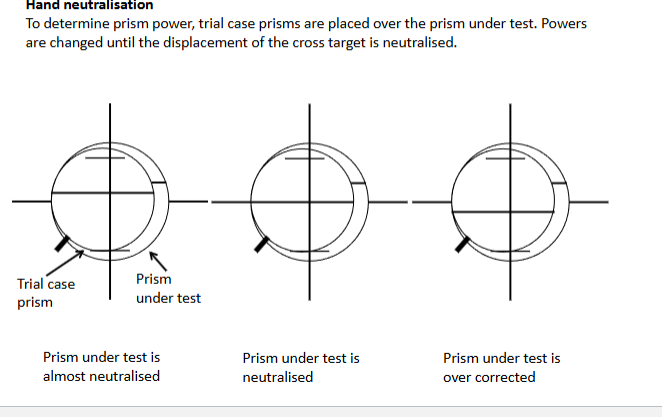
6: hand neutralisation .
 Call Kai
 Learn
Learn Practice Test
 Spaced Repetition
 Match
Match Flashcards
 Knowt Play
1/19

There's no tags or description
Looks like no tags are added yet.
Name | Mastery | Learn | Test | Matching | Spaced | Call with Kai |
|---|
No analytics yet
Send a link to your students to track their progress
20 Terms
what is hand neutralisation
a method of determining the optical characteristics of a lens
a neutralsing set is requored- half a trial lens set
sphere cylinder and axis and prismatic power can be assessed
technique is based around placing lenses of opposite power over the unknown lens to determine parameters
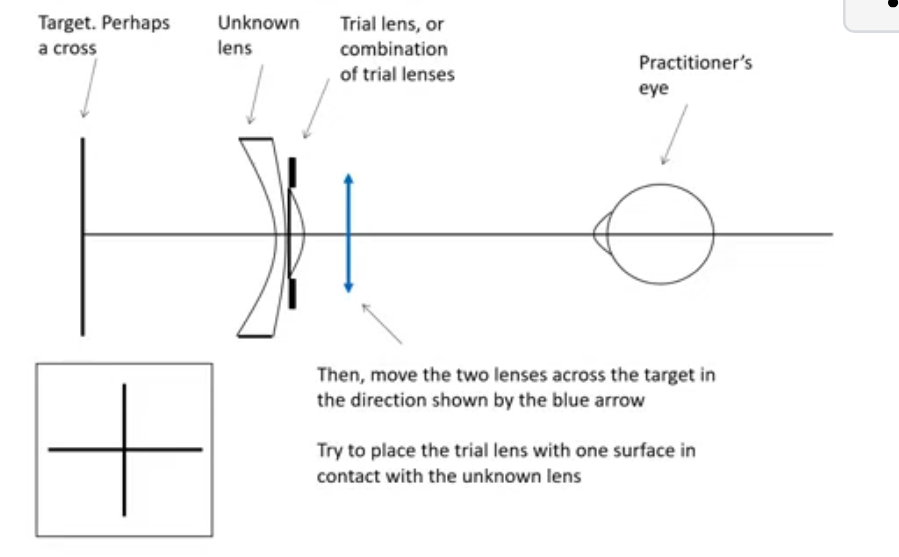
hand neutralisation basic set up
practitioner eye is looking through the combination of trial lens and unknown lens
then moving the combination of lenses across the target in the direction of blue arrows
try place trial lens with one surface in contact with unknown lens
hand neurtralisation general principles
for it to work, the unknown lens and trial lens need to be incontact
in a prism, the image moves towards the apex if a plus lens is moved downwards, the image moves towards the apex, so image moves up
displacing a powered lens away from its optical centre will induce prism; this will cause the image of an object to move. increasing the displacement will increase prism and will increase the movement of the image
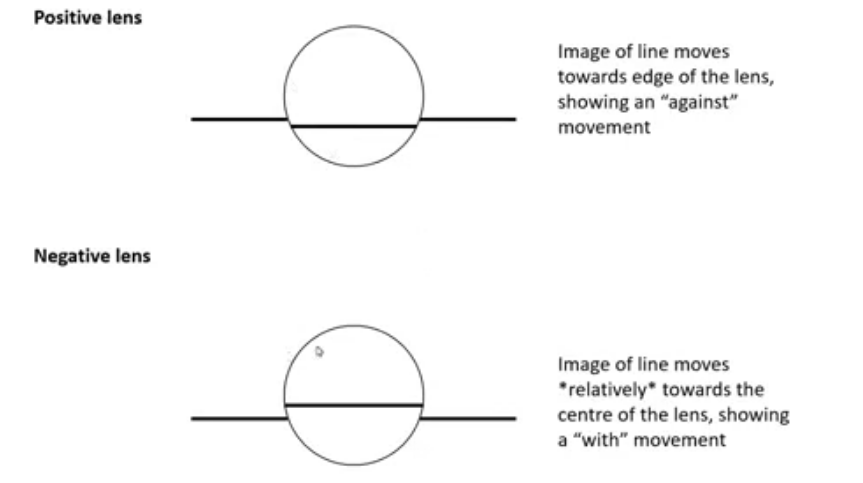
what movements will you see if positive power along a meridian f lens is displaced
will produce against movements of a target
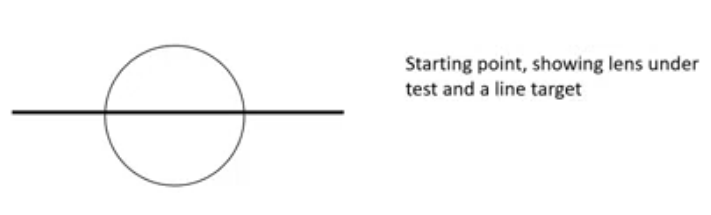
what movements are seen in negative power along a given meridian of a target as lens is displaced
apices are together
as negative lens is moved down, it goes towards the apex so image moves down
called with movements
what movements are seen when a combination of lenses produces 0 power
no movement seen
line displaced downwards with respect to lens optical centres
if line is moved downwards, means the lens was moved up
positive lens shows when the lens is moved up, the line moved dow showing against
negative shows the line moving up when the lens is moved upwards , showing with movement
how to detemine nuetralisation
find the overall power : if known lens is +2.00 we need the unknown to be -2.00
if placed a lens on top and it shows with movements, we have a lens thats too negative, if its showing against movements the lens is too positive.
if placed a +3.50 in top of a -1.50 we are going to see against movements as the overall power is positive
the lens we use to neutralise should be the opposite of the unknown
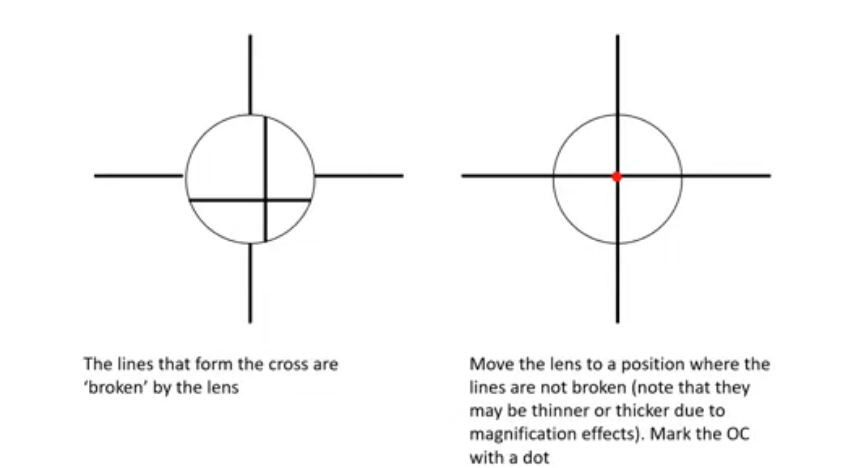
hand neutralisation- how we detect the optical centre of a lens
using the cross target
looking through the ciruclar lens at the cross, move the lens to a position where the limbs of the cross are not broken
the prism power is causing the cross the break
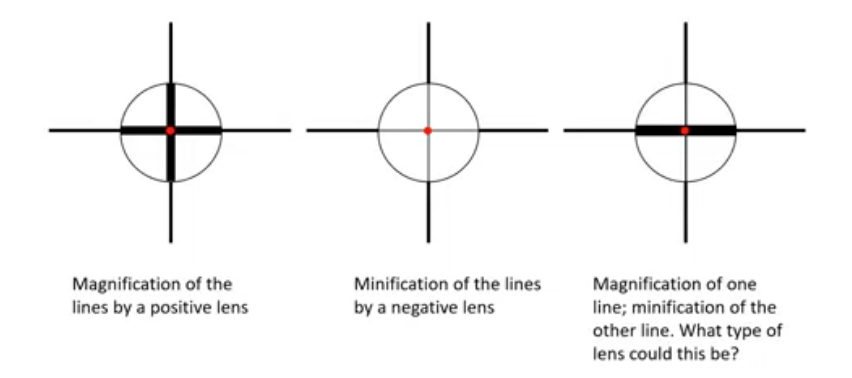
maginification effects when marking up optical centre
if its a plus lens, it magnifies the lines , looks thinner
if its a negative lens, it makes the lines look thinner
a cylinder lens will magnify one line and minify the other; telling us one meridian is positive the other is negative
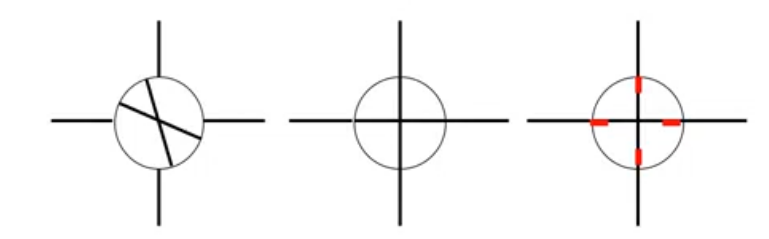
hand neutr- scissors movement observed woth sphero-cylindrical lenses
when lens is rotated, scissors movement is observed, this is happening due to dfferential prismatic effect across surface of lens
when lens is alligned with principal meridian on cross, the cross will show no displacement of lines
when rotated to a different postion the lines displace into a scissor
will occur with any lens with cylinder power
steps for neutralsing sphero cylindrical lens (1)
view cross target through the lens
rotate the lens so that there is no scissory misallignment of the cross
mark the principal meridians with a marker pen; use a small dot or a fine line, as you will be making one set of principal meridian marks more bold in later step
steps for neutralising a sphero cylindrical lens (2)
move the lens perpendicular to each line of the cross in turn. observe the direction of movement
neutralise each meridian separately using 2 spheres
the sphere choses should be the one that leavses a with movement along the other principal meridian
the other meridian can then be corrected using another sphere, on top of the other.
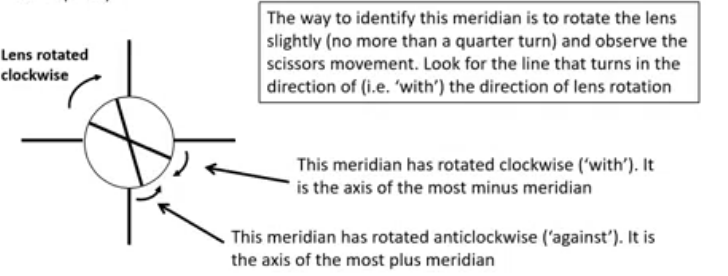
what does scissory movement mean
when rotating the lens, one line is being moved in the same direction, and the other opposite
one that rotates with you, is the axis of the most negative
one that rotates againsts it is the positive
in one meridian the lens is stronger- more plus or more minus
in the perpendicular meridian, its weaker
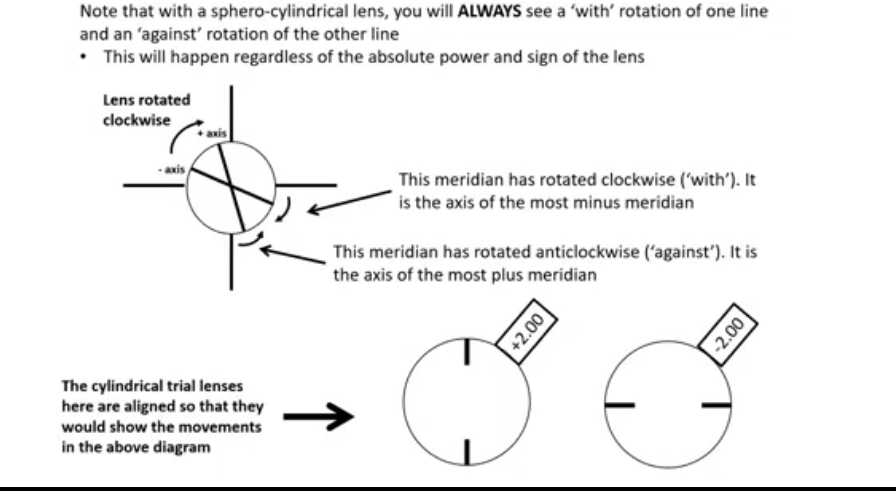
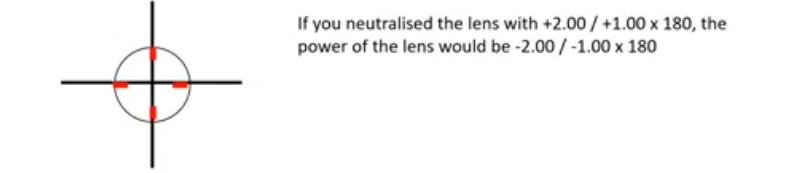
examples of neutralising a sphero cylindrical lens
after marking up your lens with the principal meridians, you find with movements along both- this is a negative lens
identify the most negative meridian using rotation method
mark this axis with a fine marker pen so that it can be identified
place positive spheres over the lens to neutralise the least negative meridian
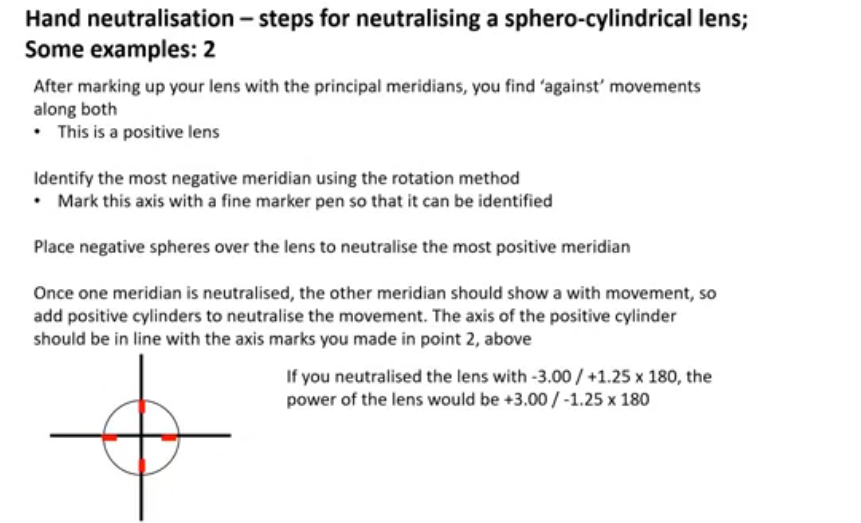
once one meridian is neutralised, the other meridian should show a with movement so add positive cylinders to neutraise the movement. The axis of positive cylinder should be in line with axis marks made
eg 2 of neutralising sphero cylindrical lenses
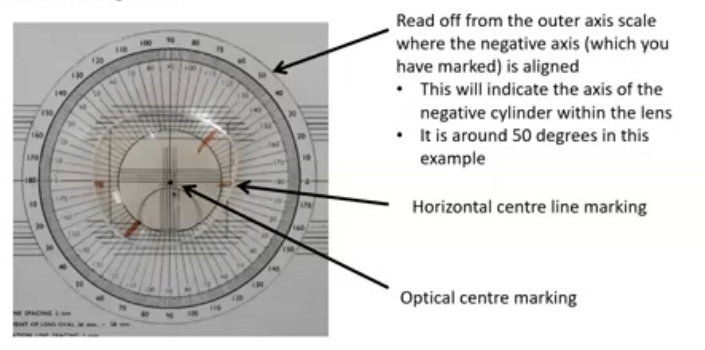
determining the axis of the neutralised lens
the lens neutralised will have a pair of engraved lines or dots which will indicate the horizontal centre line
place lens onto axis marking so that HCL marks are along the 180 degree line and OC of the lens that we have marked is aligned with centre of the axis marking chart
hand nuetralise prism
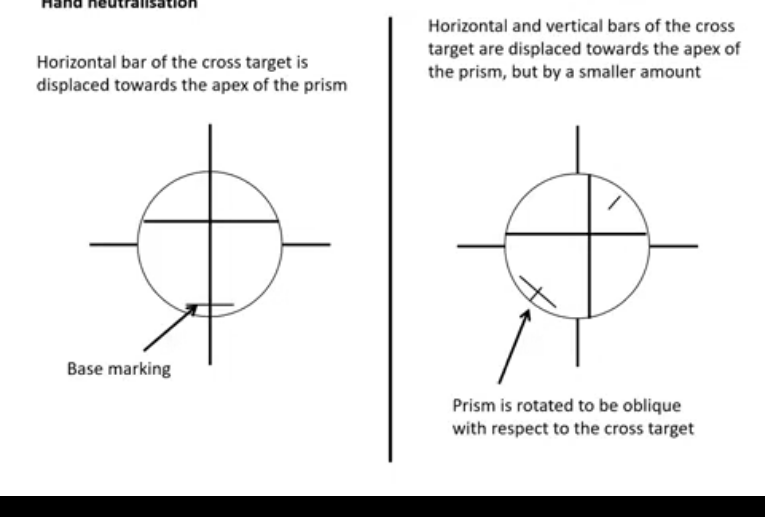
hand neutralisation : measurement of prismatic power