IB Sports, Energy, and Health Sciences (SL)
 Call Kai
 Learn
Learn Practice Test
 Spaced Repetition
 Match
Match Flashcards
 Knowt Play
1/108

Earn XP
Description and Tags
Name | Mastery | Learn | Test | Matching | Spaced | Call with Kai |
|---|
No analytics yet
Send a link to your students to track their progress
109 Terms
Function of the Endocrine System
Creates and releases hormones into the bloodstream to regulate bodily functions, trigger long term processes.
Oxygenated regions of the heart
Aorta, Pulmonary Vein, Left Atrium, Mitral/Bicuspid Valve, Aortic Valve, Left Ventricle
Deoxygenated Regions of the heart
Rights+ any not oxygenated
Function of the Circulatory System
Body’s transport mechanism, heart pumps blood to deliver oxygen to cells and CO2 away from cells
Respiratory System
Bring in O2 and bring out CO2, deliver to all of the body
Digestive System
Brings nutrients to the body and allows for absorption into bloodstream through small intestine.
Coefficient of Variation
Measures variability, allows for comparison of data spread between different data sets.
Newtons First Law
“Law of Inertia” - An object at rest will stay at rest and an object in motion will stay in motion unless acted upon by an equal and opposite force.
Newtons Second Law
F=MA
Newtons Third Law
For every action there is an equal and opposite reaction
Hicks Law
Psychological principle stating that the time it takes to make a decision increases logarithmically with the number and complexity of choices.
Superior
Above
Inferior
Below
Proximal
A body part located nearest to the center/point of origin
Distal
A body part located further away from the center/point of origin
Medial
Located nearer to the center of the body
Lateral
Located further from the center of the body
Types of Bones
Long, Irregular, Sesamoid, Flat, Short
Long Bones
Longer than they are wide, ex. Arms and legs
Irregular
Complex Shapes, ex. pelvis, vertebrae
Sesamoid
Small round bones embedded in tendons, ex. patella
Flat
Thin, flat, often curved, ex. clavicle, parietal (skull bones)
Short
Cube shaped, equal length and width, ex. tarsels, carpels, wrist, ankle
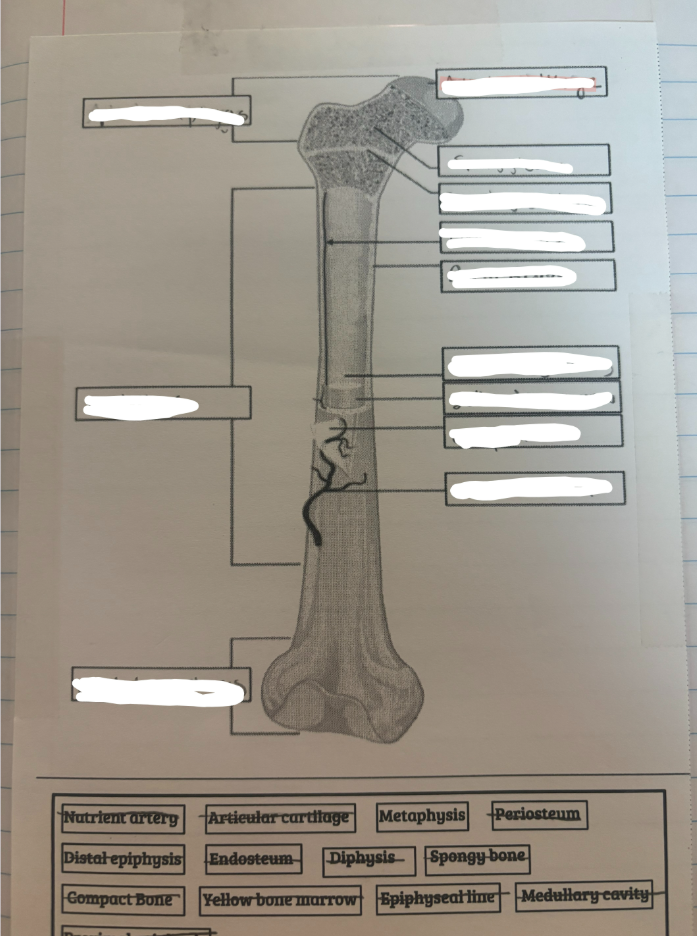
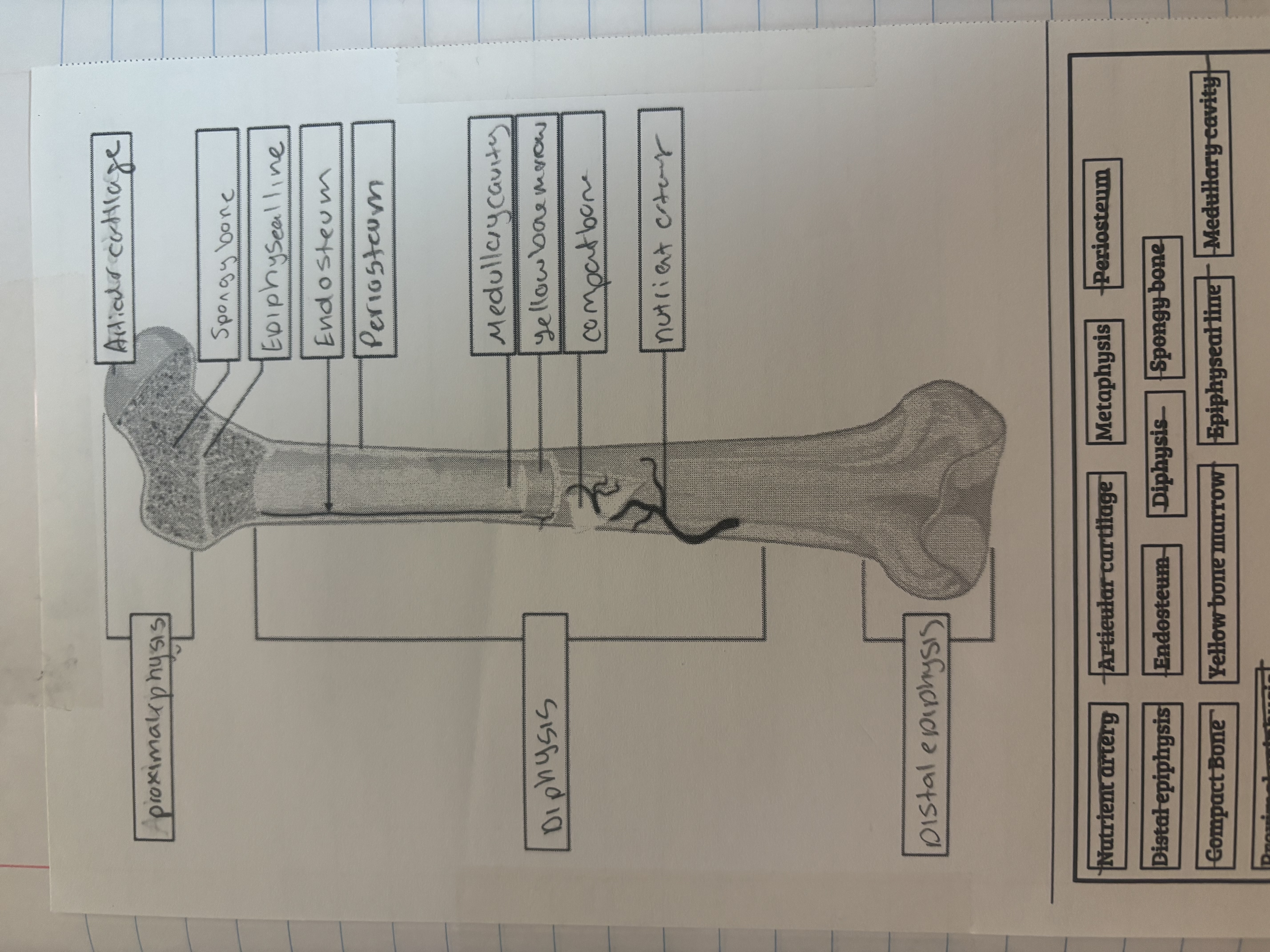
Structure of a Long Bones
Flexion
Decreasing angle ex. moving leg behind you
Extension
Increasing angle, ex. moving knee from bent to straight
Abduction
Moving away from midline
Adduction
Moving towards midline
Types of Joints (6)
Pivot, hinge, ball and socket, condyloid, saddle, gliding
Pivot Joint
Uniaxial, one moving around the other, ex. neck and wrists
Ball and Socket Joints
Multiaxial,able to spin, ex shoulders, hips, ankles
Hinge Joints
Uniaxial, one moves in the other, ex. elbows and knees
Condyloid Joints
Biaxial, one moves on top of the other, ex. fingers
Gliding Joints
Bone on bone sliding, ex metacarpals in fingers
Saddle Joints
Biaxial, ex. Thumbs (That’s it, only thumbs)
Features of synovial joints (4)
Articular cartilage, synovial fluid, joint capsule, synovial membrane
Types of Muscle contractions (4)
Isometric, Isotonic (concentric), Isotonic (eccentric), isokinetic
Isometic Muscle Contraction
No muscle length change, no movement, ex. plank
Isotonic (Concentric) Muscle Contraction
Muscle length change, movement, concentric = shortening, ex. Bicep curl
Isokinetic Muscle Contraction
Muscle length changes, movement at constant speed, ex. walking or running at a constant pace
Isotonic (eccentric) Muscle Contraction
Muscle length changes, movement, eccentric = lengthening, ex. Squat, leg extension
Roles of muscles in movement: Insertion
Where muscle connects to lower bone
Roles of muscles in movement: Antagonist
Pair of muscles that go in opposite directions
Roles of muscles in movement: Origin
Top area where muscle connects to bone
Roles of muscles in movement: Synergist
Assists the primary mover (agonist) in moving muscles
Roles of muscles in movement: Agonist
Primary mover, contracts
Roles of muscles in movement: Fixator
Stabilizes a joint to allow for movement
Mucsle fibers
Muscle - epimysium - fascicle - perimysium - muscle fibers, sarcoplasmic reticulum - sarcomere
Areas of a Sarcomere: Z disc
Boundary, connects sarcomeres to each other
Areas of a Sarcomere: Actin
Primary protein component, contracts
Areas of a Sarcomere: Myosin
primary motor protein, contracts, connects to acting, and pulls together
Areas of a Sarcomere: Tropomyosin
Prevents muscle contraction at rest
Areas of a Sarcomere: I band
areas where acting is not overlapped with myosin
Areas of a Sarcomere: H Zone
Only Myosin with no acting overlap
Areas of a Sarcomere: A Band
Spans entire length of myosin, has both actin and myosin
Areas of a Sarcomere: M Line
Central protein structure that anchors myosin
Fast Twitch Muscle Fibers
Type I, aerobic, - Pale color, fast fatigue, low blood supply, low capillaries and mitochondira
Slow Twitch Muscle Fibers
Type 2 (II) (a+b), anaerobic - dark red, slow fatigue, lots of blood, high capillaries and mitochondria
Center of Mass
Point where mass distribution is equal
Specificity of a data set
How narrowly and exactly data/measurement focuses on the exact variable being studied, not broad
Accuracy of a data set
How closely a measured value is to the true or accepted value
Reliability of a data set
How consistent results are when experiment is repeated under the same conditions
Validity of a data set
How well the data and method actually measure what they are supposed to measure
Oestrogen (estrogen)
Female s*x hormone, growth of female organs, reduces cholesterol
Progesterone
Ovaries, regulates menstruation and pregnancy
Testosterone
In both men and women, In males responsible for s*x regulation, muscle growth, and bone development. In women, Ovaries and adrenal glands, muscle development, and high cortisol levels
Epinepherine and norepinephrine
Adrenal medula, fight or flight response, nor - feeling of awareness
Insulin and Glucagon
Pancreas, regulates blood sugar, insulin dec bs, glucagon inc bs.
Antidiuretic Hormone (ADH)
Pituitary gland, regulates electrolyte balance in blood, by increasing or decreasing water excreation
Proprioceptors (function, role, location)
detect body position, deep in muscles, control balance and coordination
Chemoreceptors (function, role, location)
detect chemicals, distance: olfactory receptors (smell), direct: taste buds (taste), monitors blood chemistry changes
exterorecepters (function, location)
recieve info from enviroment, “5 senses”
Interoceptors (viscerocepters)
detect stimuli from within body, feelings of hunger, thirst, maintains homeostasis
Erythrocyte
Red Blood cells, carry O2 and CO2
leukocyte
Buffy Coat - B and T cells, adoptive immune response
Thrombeocytes
Platelets
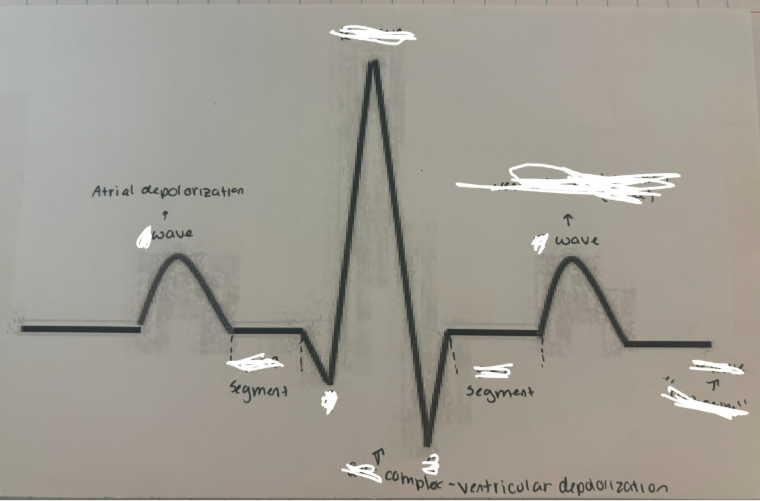
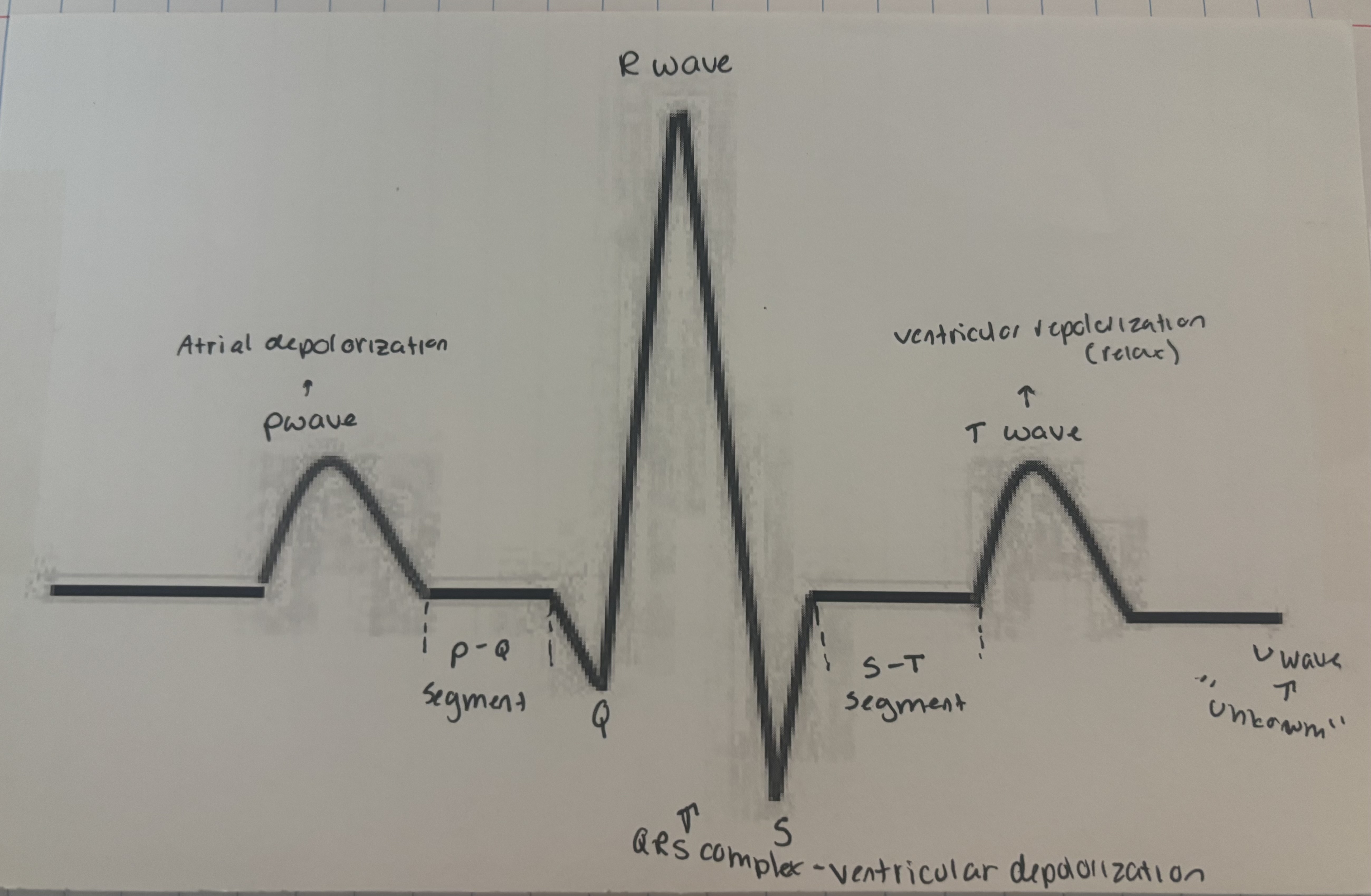
EKG Diagram
VO2 Max
The maximum amount of O2 your body can use in intense exercise
Stroke Volume
The amount of blood pumped with each beat of the heart (ml), CO/HR
Heart Rate
How fast the heart beats, BPM, CO/SV
Cardiac Output
Total volume of blood the heart pumps in one minute, ml/min, HR x SV
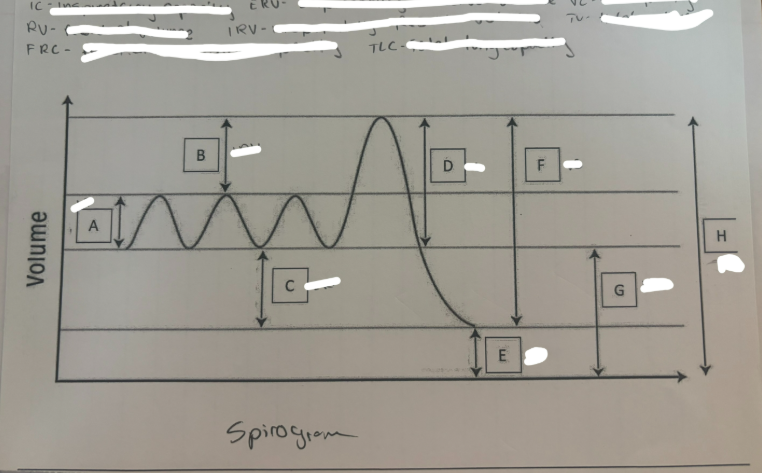
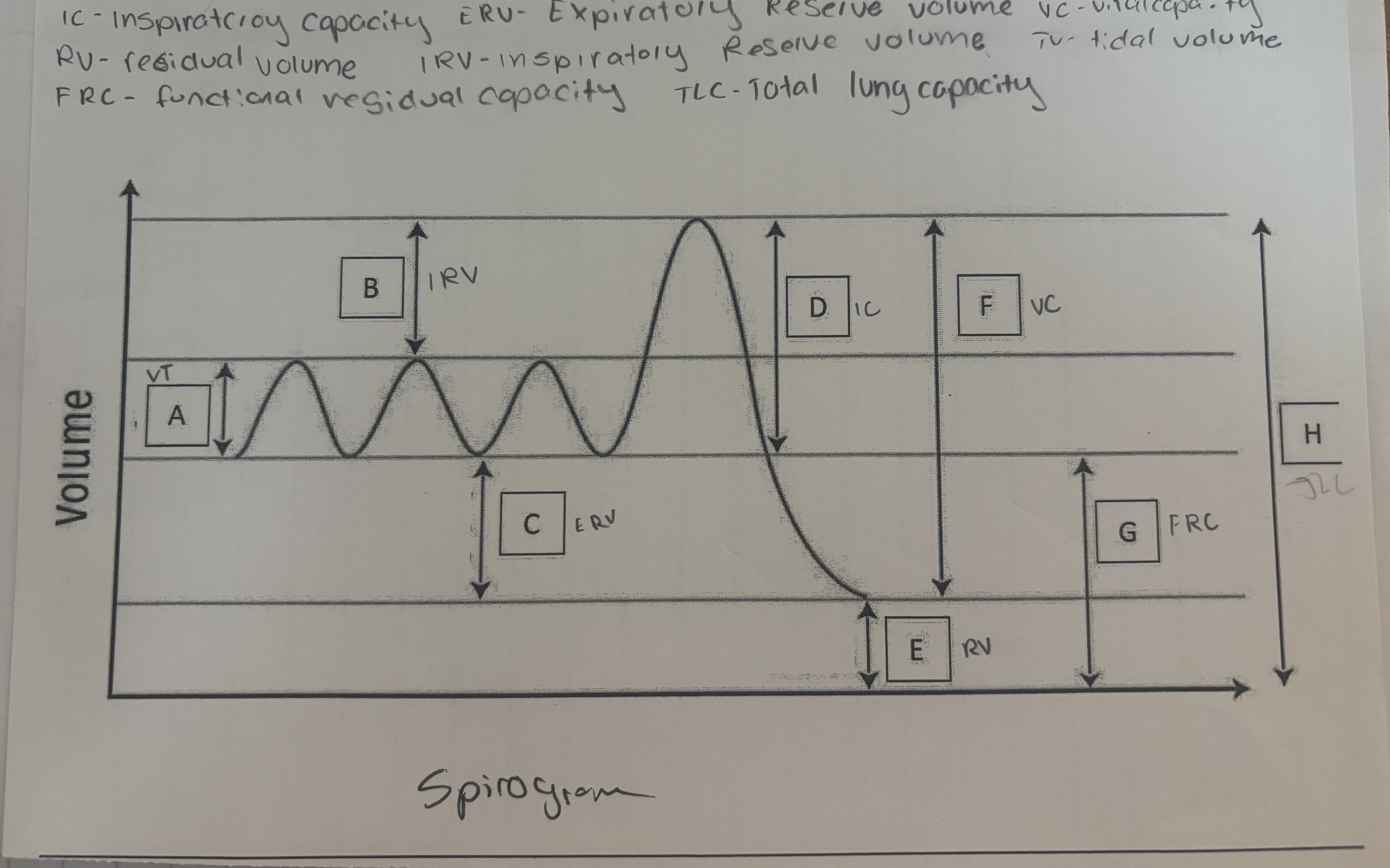
Lung Spiriogram
Cardiovascular Drift
During prolonged exercise at a steady level, heart rate will gradually increase, despite intensity staying the same
Catabolism
Breakdown of larger molecules
Anabolsim
Building or larger molecules
Glycogenesis
Building of glucose into glycogen
Glycogenolysis
Breakdown of glycogen into glucose
Gluconeogenesis
creation of glucose from none carb sources
Glycolysis
Breakdown of glucose into pyruvate - makes 2 ATP, independent of oxygen
Anaerobic Pathways
Without oxygen, short hard bursts of energy, 2 ATP
Aerobic Pathway
Needs oxygen, long term, efficient, 34-36 ATP
Motor Learning: Schmidt
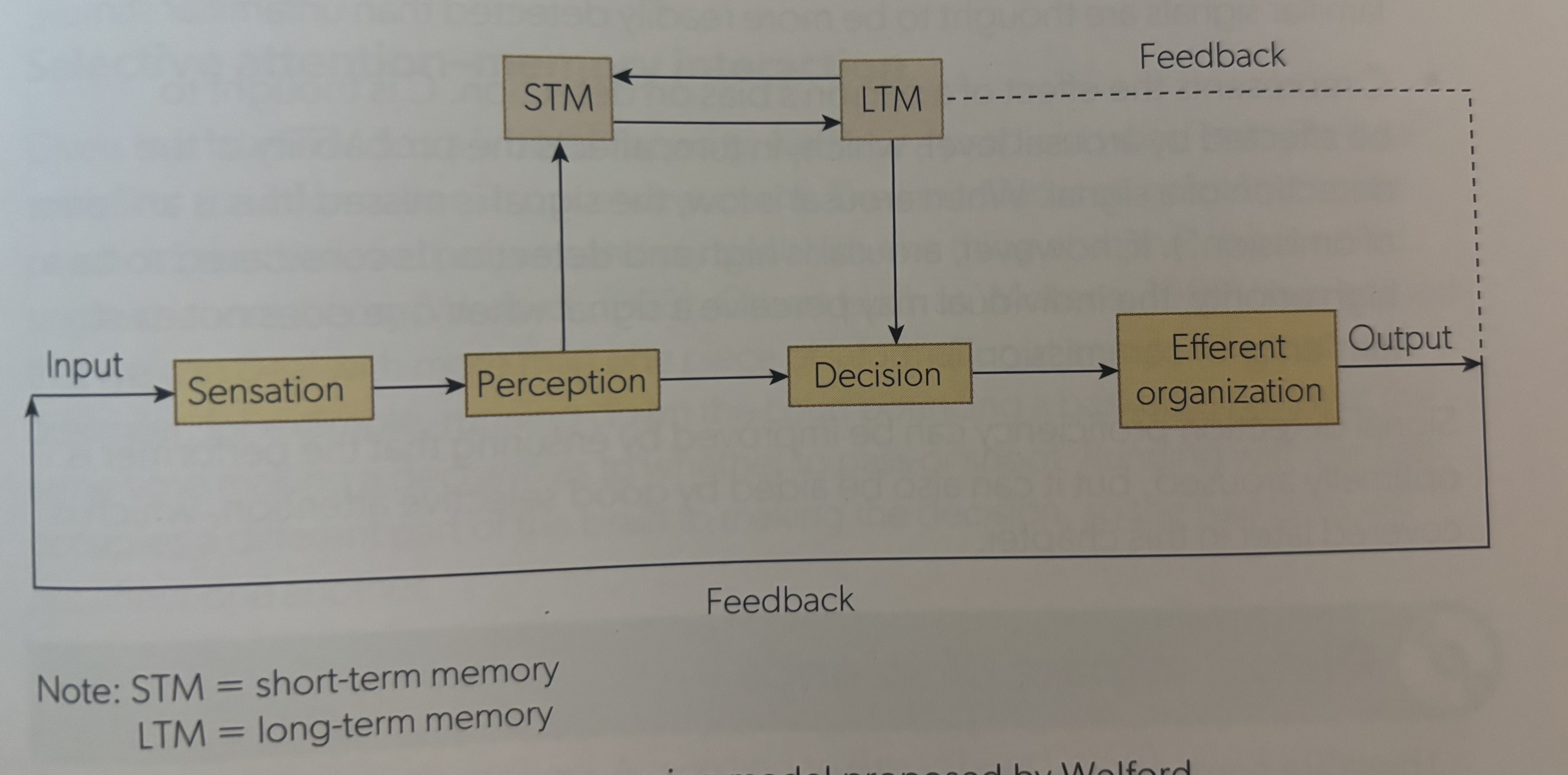
Schema Theory: How people organize information in long term memory
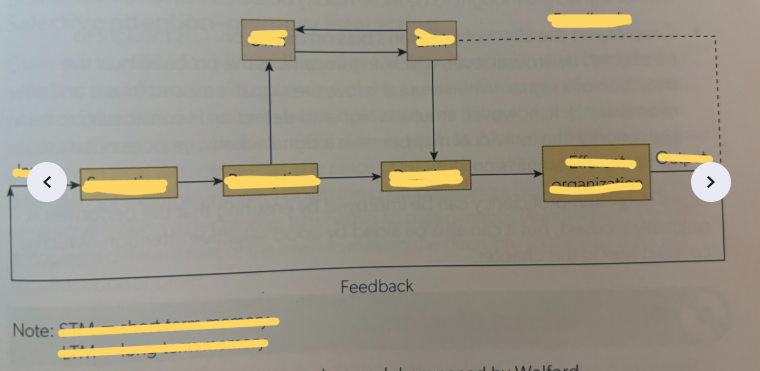
Welfords Model
Recall Schema
memory with regard to choices
Intrinsic Risk Factors
Come from the person, lack of focus, unpreparedness
Extrinsic Risk Factors
Come from the environment, actions of another player, weather
Principles of Training: Progression
Gradual increase in workload of exercise
Principles of Training: Overload
An athlete must Overload the system they are working, increase frequency or intensity each weak more than current ability level
Principles of Training: Specificity
Training must match the needs of the sport
Principles of Training: Reversability
Any training can be undone, stopping or reduction in frequency will cause recession in ability