Domain Bacteria
 Call Kai
 Learn
Learn Practice Test
 Spaced Repetition
 Match
Match Flashcards
 Knowt Play
1/49

There's no tags or description
Looks like no tags are added yet.
Name | Mastery | Learn | Test | Matching | Spaced | Call with Kai |
|---|
No analytics yet
Send a link to your students to track their progress
50 Terms
peptidoglycan; ester-linked; circular;
Distinctive Features of Bacteria
Bacteria have ________________ walls, _______________ membranes, ___________ chromosomes, plasmids, and unique rRNA sequences.
These traits define the domain and explain its adaptability.
Peptidoglycan Walls
Distinctive Features of Bacteria
Give bacteria a rigid, protective cell wall that helps them survive physical and chemical stress.
Peptidoglycan Walls
Distinctive Features of Bacteria
Prevents osmotic lysis — bacteria can live in hypotonic environments without bursting.
Peptidoglycan Walls
Distinctive Features of Bacteria
Provides shape stability — rod, cocci, spirilla shapes optimize nutrient uptake and motility.
Peptidoglycan Walls
Distinctive Features of Bacteria
Supports survival in extreme conditions — desiccation, pH changes, and mechanical stress.
Ester-linked Membranes
Distinctive Features of Bacteria
Membrane fluidity enables fast nutrient transport and efficient metabolic reactions.
Ester-linked Membranes
Distinctive Features of Bacteria
Membrane remodeling enables bacteria to adjust their lipid composition in response to temperature, toxins, or nutrient changes.
Ester-linked Membranes
Distinctive Features of Bacteria
Flexible electron transport chains allow bacteria to switch between aerobic, anaerobic, and facultative modes.
Fast replication
Fewer replication errors
Efficient gene expression
Distinctive Features of Bacteria
A circular chromosome gives bacteria several adaptive advantages:
________________ because a circular chromosome replicates bidirectionally from one origin.
____________________ because the chromosome has no telomeres or fragile ends.
___________________ because a streamlined genome reduces energy cost and speeds transcription and translation.
Reproduce quickly
Exchange genes horizontally
Metabolic flexibility
Why are bacteria successful?
Cocci; Bacilli; Spirals
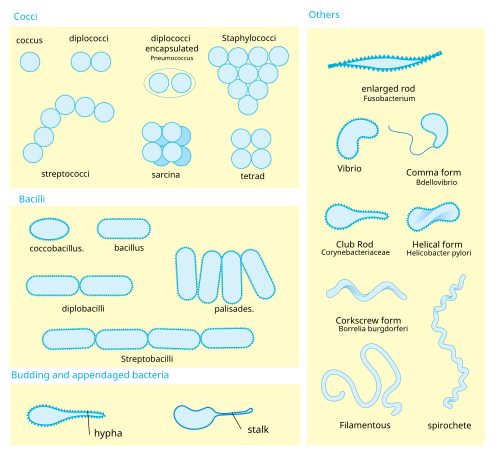
Morphological Diversity
Shapes matter. __________ resist desiccation. ____________ grow faster. ___________ move efficiently through viscous environments like mucus.
Morphology often reflects ecological strategy.
Cocci - are round or nearly round cells
Morphological Diversity
Often have reduced surface area-to-volume ratios, making them more resistant to desiccation
Diplococci
Morphological Diversity
Pairs of cocci formed when cells divide once and remain attached (e.g., Neisseria)
Streptococci
Morphological Diversity
Chains of cocci produced by repeated division in one plane
Staphylococci
Morphological Diversity
Irregular grape-like clusters formed by division in multiple planes
Tetrads
Morphological Diversity
Groups of four cells arranged in a square, produced by division in two perpendicular planes
Sarcina
Morphological Diversity
Cube-like packets of eight cells formed by division in three perpendicular planes
Bacilli - are elongated, cylindrical cells.
Morphological Diversity
Rod shapes allow greater internal volume and often support faster growth.
Bacillus
Cocobacillus
Streptobacilli
Morphological Diversity
______________ - A single rod-shaped cell
______________ - A short, oval rod that resembles a coccus (e.g., Haemophilus influenzae)
______________ - Chains of rods formed by division in one plane
Palisades
Morphological Diversity
Cells arranged side-by-side like picket fences, often seen in Corynebacterium species
Spiral
Morphological Diversity
___________ bacteria have curved or helical shapes that often enhance motility
Spiral
Morphological Diversity
Their shape allows them to “drill” through tissues, move efficiently in mucus, and evade immune responses
Vibrio
Morphological Diversity
Comma-shaped, gently curved rods
Spirillum
Morphological Diversity
Rigid, spiral-shaped cells with external flagella
Spirochete
Morphological Diversity
Thin, flexible spirals with internal axial filaments (e.g., Treponema, Borrelia, Leptospira)
Gram-positive
Gram-negative
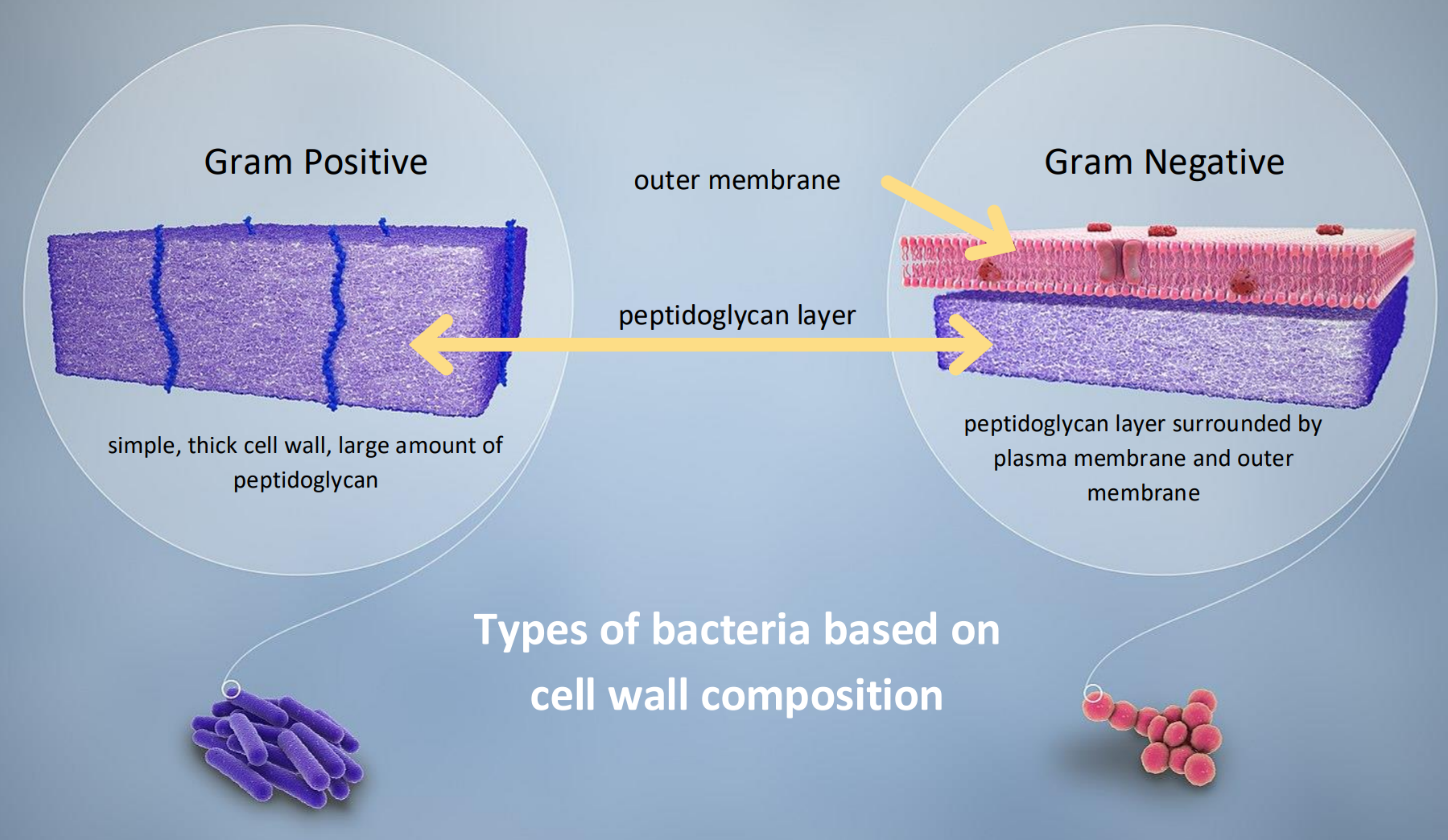
______________ bacteria - thick peptidoglycan layers.
______________ bacteria - thin peptidoglycan plus an outer membrane with LPS.
Gram-negative
______________ bacteria - The outer membrane of this type of bacteria makes them more resistant to many antibiotics
Photoautotroph
Mode - ____________________
Energy Source - Sunlight
Carbon Source - CO2
Example - Cyanobacteria
Chemoautotroph
Mode - ____________________
Energy Source - Inorganic chemicals
Carbon Source - CO2
Example - nitrifying bacteria, sulfur oxidizers, hydrogen oxidizers
Photoheterotroph
Mode - ____________________
Energy Source - Sunlight
Carbon Source - Organic compounds
Example - Purple non-sulfur bacteria
Chemoheterotroph
Mode - ____________________
Energy Source - Organic chemicals
Carbon Source - Organic compounds
Example - Proteobacteria, Firmicutes, Actinobacteria
Cyanobacteria
Phylogenetic Diversity
These are oxygenic phototrophs responsible for the Great Oxygenation Event.
Cyanobacteria
Phylogenetic Diversity
They use chlorophyll a and form heterocysts for nitrogen fixation.
Cyanobacteria
Phylogenetic Diversity
They remain major primary producers today
Proteobacteria
Phylogenetic Diversity
This is the most metabolically diverse phylum.
Proteobacteria
Phylogenetic Diversity
It includes nitrifiers, sulfur oxidizers, methane oxidizers, symbionts, and many pathogens.
The six classes reflect deep evolutionary splits.
Alpha-proteobacteria
Phylogenetic Diversity
_________________________ - often associated with plants or intracellular lifestyles.
Rhizobium (nitrogen-fixing symbionts), Rickettsia (obligate intracellular parasites)
Beta-proteobacteria
Phylogenetic Diversity
__________________________ - metabolically versatile soil and aquatic bacteria.
Neisseria (pathogens), Nitrosomonas (ammonia-oxidizing nitrifiers)
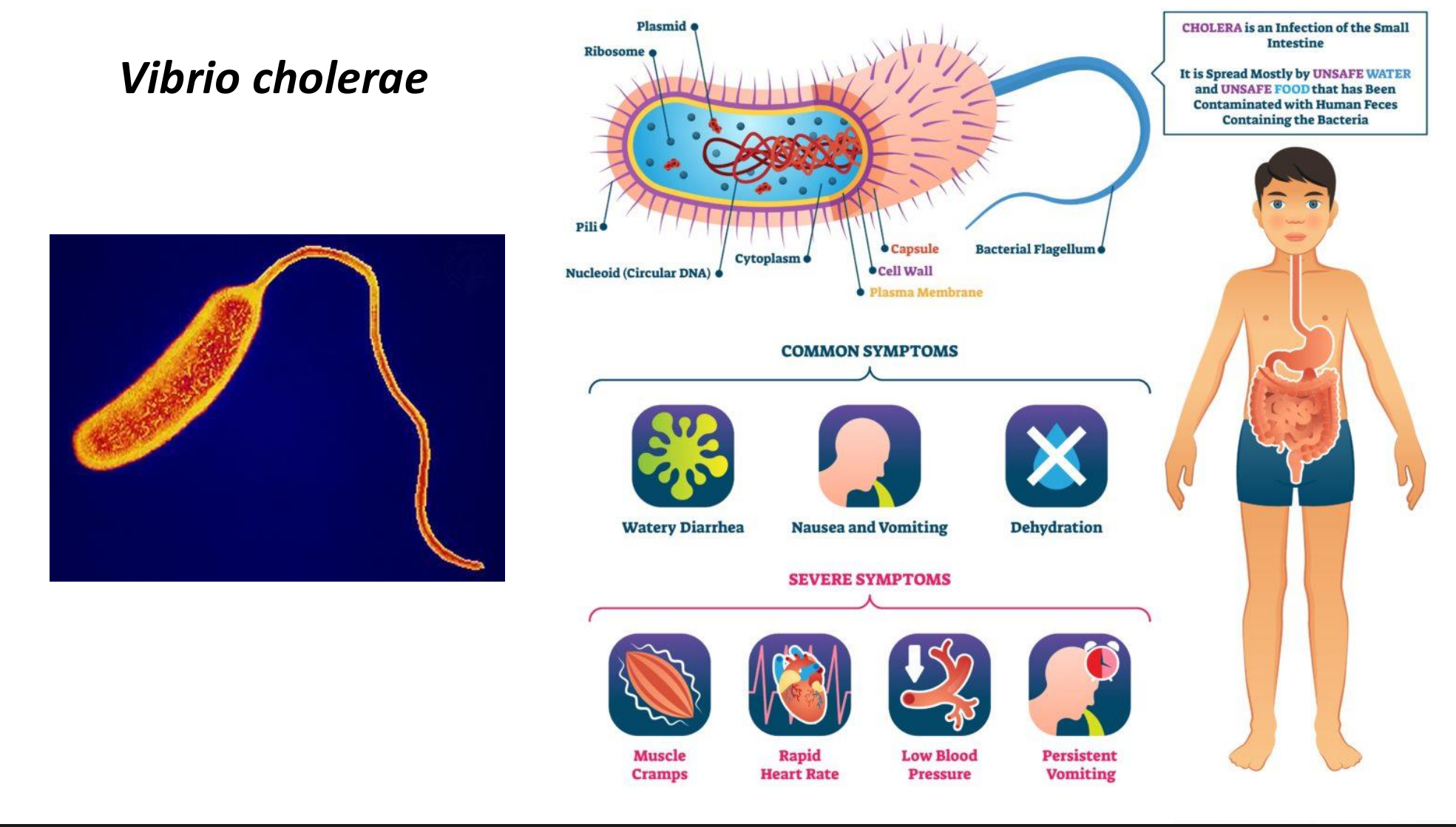
Gamma-proteobacteria
Phylogenetic Diversity
_________________________ - the most diverse class; includes many medically important species.
Escherichia coli, Salmonella, Vibrio cholerae, Pseudomonas
Delta-proteobacteria
Phylogenetic Diversity
______________________ - includes predators and sulfate-reducing bacteria.
Bdellovibrio (bacterial predator), Desulfovibrio (sulfur reducers).
Epsilon-proteobacteria
Phylogenetic Diversity
_______________________ - microaerophiles adapted to animal digestive tracts. Helicobacter pylori, Campylobacter
Firmicutes
Phylogenetic Diversity
______________ are Gram positive, low GC bacteria. Many form endospores.
Firmicutes
Phylogenetic Diversity
They dominate gut microbiomes and include medically important genera.
Firmicutes
Phylogenetic Diversity
Examples:
Bacillus (aerobic endospore formers)
Clostridium (anaerobic endospore formers)
Lactobacillus (fermentative, important in food microbiology)
Streptococcus and Staphylococcus (major human pathogens)
Actinobacteria
Phylogenetic Diversity
These high GC, filamentous bacteria resemble fungi.
Actinobacteria
Phylogenetic Diversity
They decompose complex materials and produce most of our antibiotics
Actinobacteria
Phylogenetic Diversity
Examples:
Streptomyces (antibiotic producers; earthy soil smell from geosmin)
Mycobacterium (acid-fast pathogens such as M. tuberculosis)
Corynebacterium (diverse soil and host-associated species)
Spirochaetota
Phylogenetic Diversity
Spiral, flexible bacteria with axial filaments.
Spirochaetota
Phylogenetic Diversity
Their corkscrew motion allows them to move through viscous environments.
Several are major pathogens
Spirochaetota
Phylogenetic Diversity
Examples:
Leptospira (leptospirosis)
Borrelia (Lyme disease)
Treponema (syphilis)