Physics end of year nonsense 🧬🔭
 Call Kai
 Learn
Learn Practice Test
 Spaced Repetition
 Match
Match Flashcards
 Knowt Play
1/35

Earn XP
Description and Tags
Vocabulary flashcards covering the lifecycle of stars, electrical circuit concepts, the National Grid infrastructure, and domestic thermal energy conservation.
Name | Mastery | Learn | Test | Matching | Spaced | Call with Kai |
|---|
No analytics yet
Send a link to your students to track their progress
36 Terms
Nebula
A cloud of dust and gas, made of helium (25%) and hydrogen (74%).
Protostar
A stage where gravity causes hydrogen and helium to contract, eventually becoming denser and hotter.
Main Sequence Star
A star that has reached equilibrium where forces (gravity and radiation pressure) become balanced.
Red Giant
A stage reached when hydrogen in the core runs out; helium fuses to form heavier elements up to oxygen and the star expands.
White dwarf
A core so dense it glows white, left behind after a red giant runs out of light element fuel and loses its outer layers.
Black dwarf
A theoretical cold star that a white dwarf becomes; none currently exist as the Universe is not old enough.
Red Super Giant
A stage for massive stars where core hydrogen runs out, allowing for the formation of heavy elements up to Iron.
Supernova
The event when a star runs out of fuel and begins to collapse in on itself due to gravity.
Neutron Star
The compressed core left behind after a supernova, composed of many neutrons and extremely dense.
Black Hole
A remnant of a massive star that continues to collapse until the gravitational pull is so strong that even light cannot escape.
Lightyear
The distance light travels in a year.
Remember this diagram
Radiation pressure out, gravitational force in
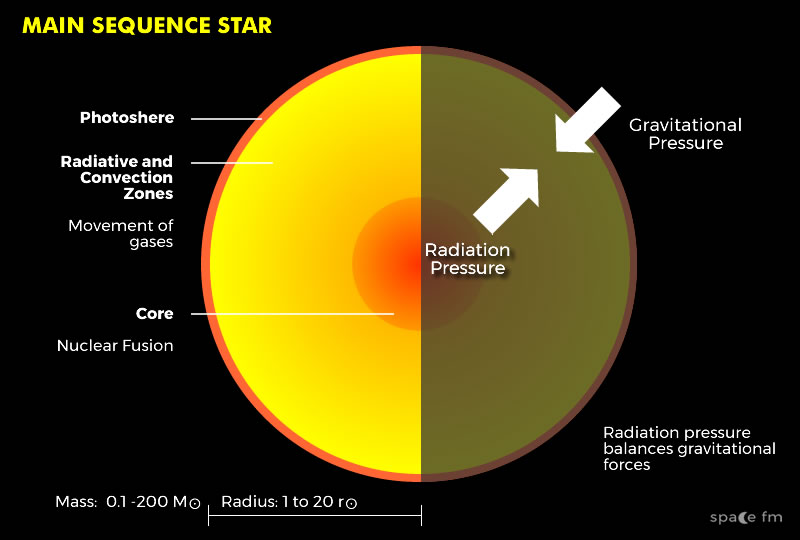
Explain why the sun stays the same in main sequence phase
Gravity and radiation forces are balanced
Electric current
A flow of electrons, which can occur in metals because they have electrons that are free to move.
Series circuit
A circuit where current is equal at all points and voltage is shared.
Parallel circuit
A circuit where voltage is equal across branches and current is shared.
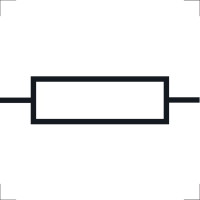
Resistor
A component that slows down the flow of electrons in a circuit.
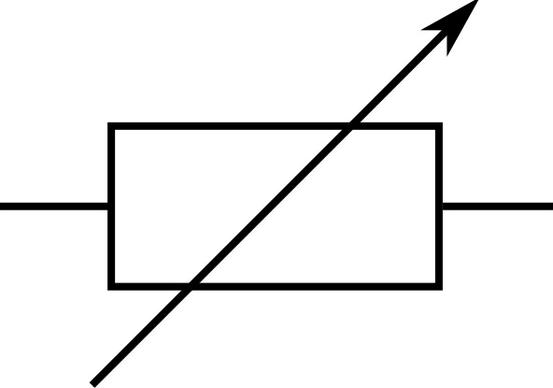
Variable Resistor
A component that slows down the flow of electrons in a circuit, but the resistance can be changed.
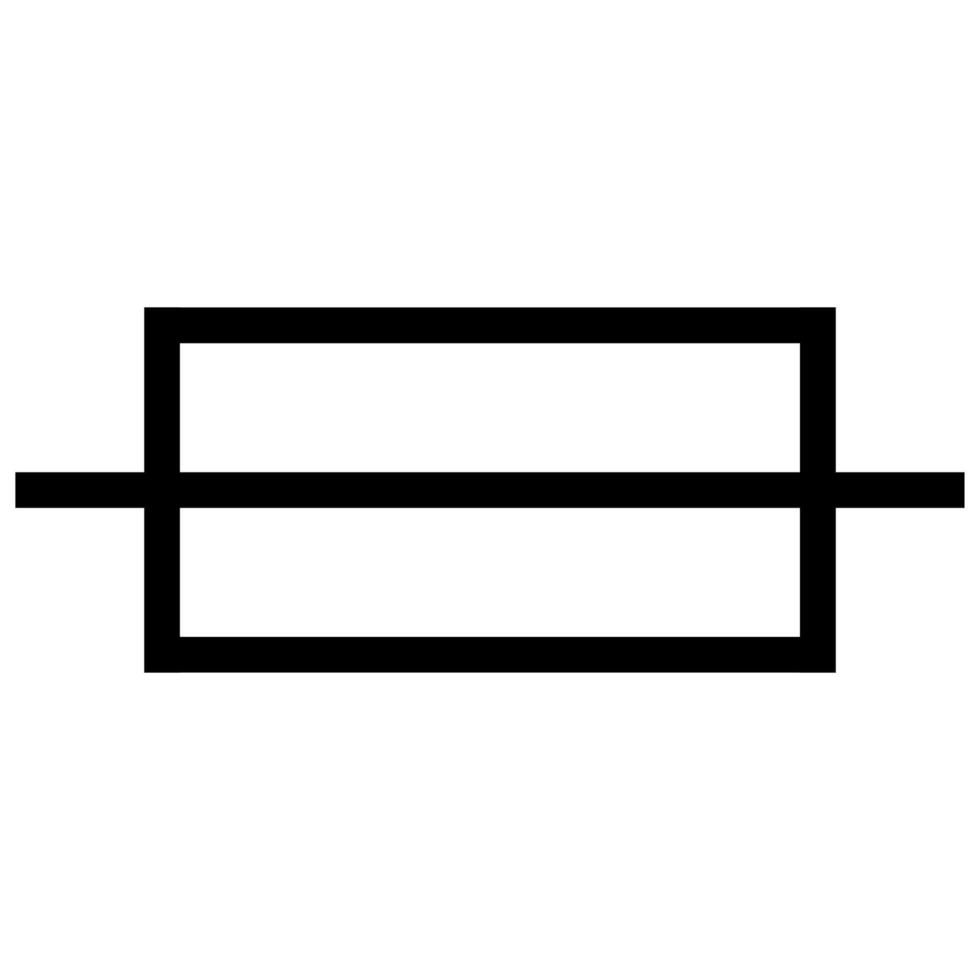
Fuse
A component that breaks the circuit if there is too much current.
Diode
A component that ensures current only flows in one direction.
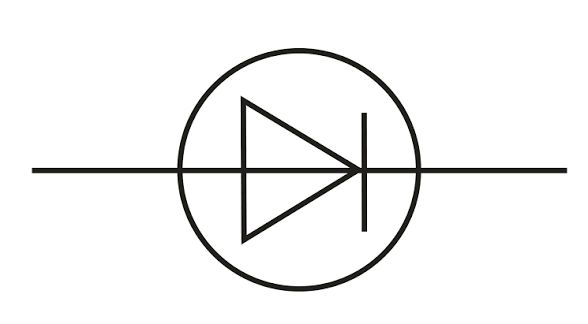
Lamp
Transforms electrical energy into light energy

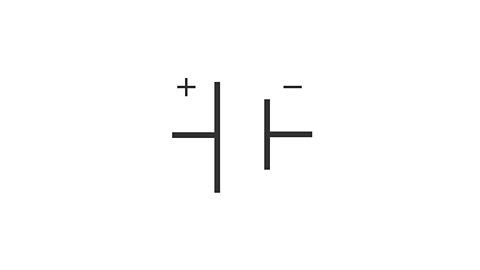
Cell
Transforms chemical energy into electrical energy
Draw the diagram where a student investigates the current through a 12 V filament lamp and the lamp varies with voltage between 0 and 12V
National Grid
An advantage of this system is that it keeps electricity available if some power stations fail.
Explain how the National Grid responds to fluctuating demands
Powerstations with quick start up times, like hydroelectric are used to meet peak demands.
Powers stations with slower start up times, like conventional and nuclear are used to meet baseload demands
What happens if another bulb is added in the series circuit
When another bulb is added, the bulbs will grow dimmer and the current will decrease.
Step-up transformer
A device that increases voltage and decreases current to make the National Grid more efficient by reducing energy loss.
Step-down transformer
A device that reduces voltage to make electricity safer for consumers.
The experiment is repeated with a steel bar. State two control variables.
Same thickness of bar
Same heat source
Same pins
Convection
Gain kinetic energy
Convection currents explain in full detail.
Hot air rises, cool air sinks, etc.
Loft insulation
Fibreglass wool that traps air in pockets to reduce conduction through the roof (25% of heat loss).
Double glazed windows
Two layers of glass with trapped air between them to reduce conduction through windows (15% of heat loss).
Draught proofing
The use of foam and plastic to stop cold air from entering, reducing heat loss by convection (15% of heat loss).
Cavity walls
Reduces conduction by trapping air between two layers of bricks (loss 35%)
Floor insulation
Fibreglass wool that traps air in pockets to reduce conduction through the floor (10% of heat loss).
Graphs
Talk about how the variables increase and decrease
Talk about the rate of increase. Can be either increase, decrease or proportional