ARTH 54600: Non Western Art Final Flashcards
 Call Kai
 Learn
Learn Practice Test
 Spaced Repetition
 Match
Match Flashcards
 Knowt Play
1/38

There's no tags or description
Looks like no tags are added yet.
Name | Mastery | Learn | Test | Matching | Spaced | Call with Kai |
|---|
No analytics yet
Send a link to your students to track their progress
39 Terms
South, Southeast Asia
The range of different cultures is largely dependent on trading routes, as the trade networks expose similar ideologies and religions such as Hinduism, Buddhism, and Islam.
Harappa
It is a Southeast Asian culture from 2,600-1,900 BCE that the first discovered sites showed a uniform ancient civilization that had a coherent culture. There is a system of writing that we have yet to translate.
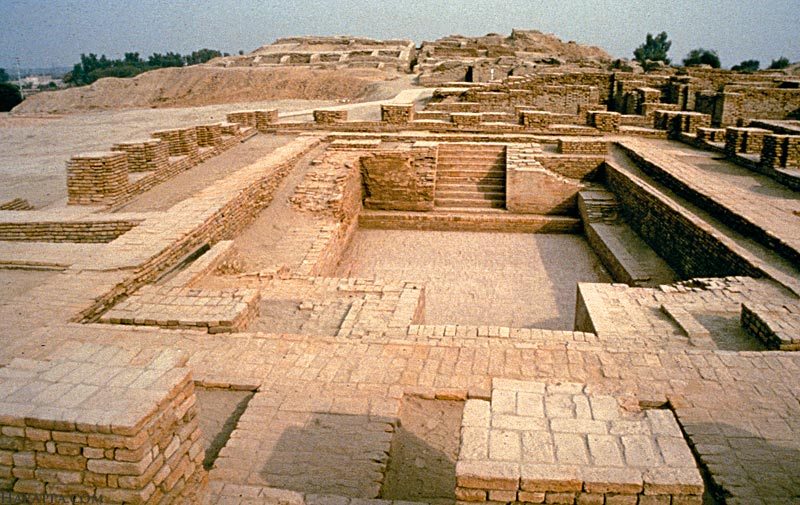
Large water tank, Mohenjo-Daro, Indus Valley (Harappan) civilization, c. 2600-1900 BCE
This structure could have been used as a public bath or served a ritualistic function similar to that of Christian baptisms. The reason it is called Large Water Tank is due to the unknowns of the watertight pool structure as we have yet to translate the meaning and language that could tie an explanation to this structure.
citadel
fortified palace
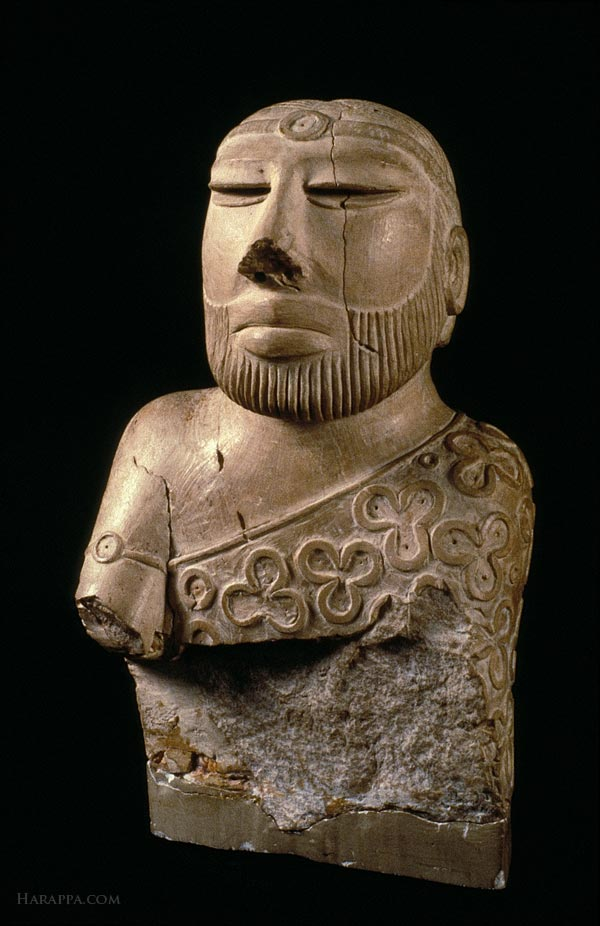
Torso of a "Priest-King", from Mohenjo-Daro, Indus Valley civilization, c. 2600-1900 BCE
Possible ruler as a ‘Priest-King’ or a royal who talked to the spirits, as it had Mohenjo-daro characteristics such as a low forehead, broad nose, and thick lips. The Trefoil would originally be red pigment, with eyes inlaid with colored shells. A beard can also be symbolic of ruling power, much like sculptures from Mesopotamia.
trefoil
Any plant with three leaflets (like clover), or a graphic form composed of three overlapping rings or lobes.
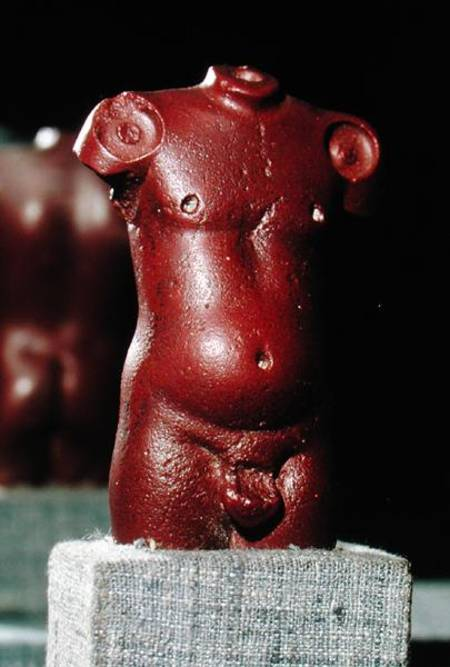
Male Torso, from Harappa, Indus Valley civilization, c. 2600-1900 BCE.
Lifelike rendering that emphasizes the soft texture of the boyd; foretells the aesthetic attributes of soft, rounded, unclothed bodies. Aligned with the Hellenistic interest in the human body, as this culture celebrates sexuality.
Vedic Period: Aryans, Vedas, Brahmins
Illustrates the introduction of horse & chariot, Sanskrit, hierarchical social order, and religion centered around the fire sacrifice to the gods. The Aryan culture is similar to Indo-European with the language and culture, as it is a trifunctional hypothesis using 3 castes or classes: priests, warriors, and producers.
Indo-European- trifunctional hypothesis
The Aryan culture is similar to Indo-European, with the language and culture as it is a trifunctional hypothesis using 3 castes or classes: priests, warriors, and producers.
Brahmanism
Becoming Hinduism. The Vedas are the first sacred writings; hymns to gods; fire sacrifice overseen by priesthood by Brahmins. It is a religiously sanctioned caste system that, over time, the structure became hereditary and immutable. Born into the priestly caste, you die in the same caste.
Samsara
existence in cyclical (i.e., birth, life, death, rebirth); aspire to liberate the self from and unite the soul with eternal and universal Brahman.
asceticism
Separating from worldly concerns. Is a lifestyle characterized by the voluntary renunciation of physical, psychological, or material pleasures.
Maurya Period
No central power, regional kingdoms until the Maurya period.
Ashokan pillars
Erected at Buddhist monasteries, 50’ high with inscriptions related to the rules of dharma.
dharma
Moral laws keep the universe from chaos.
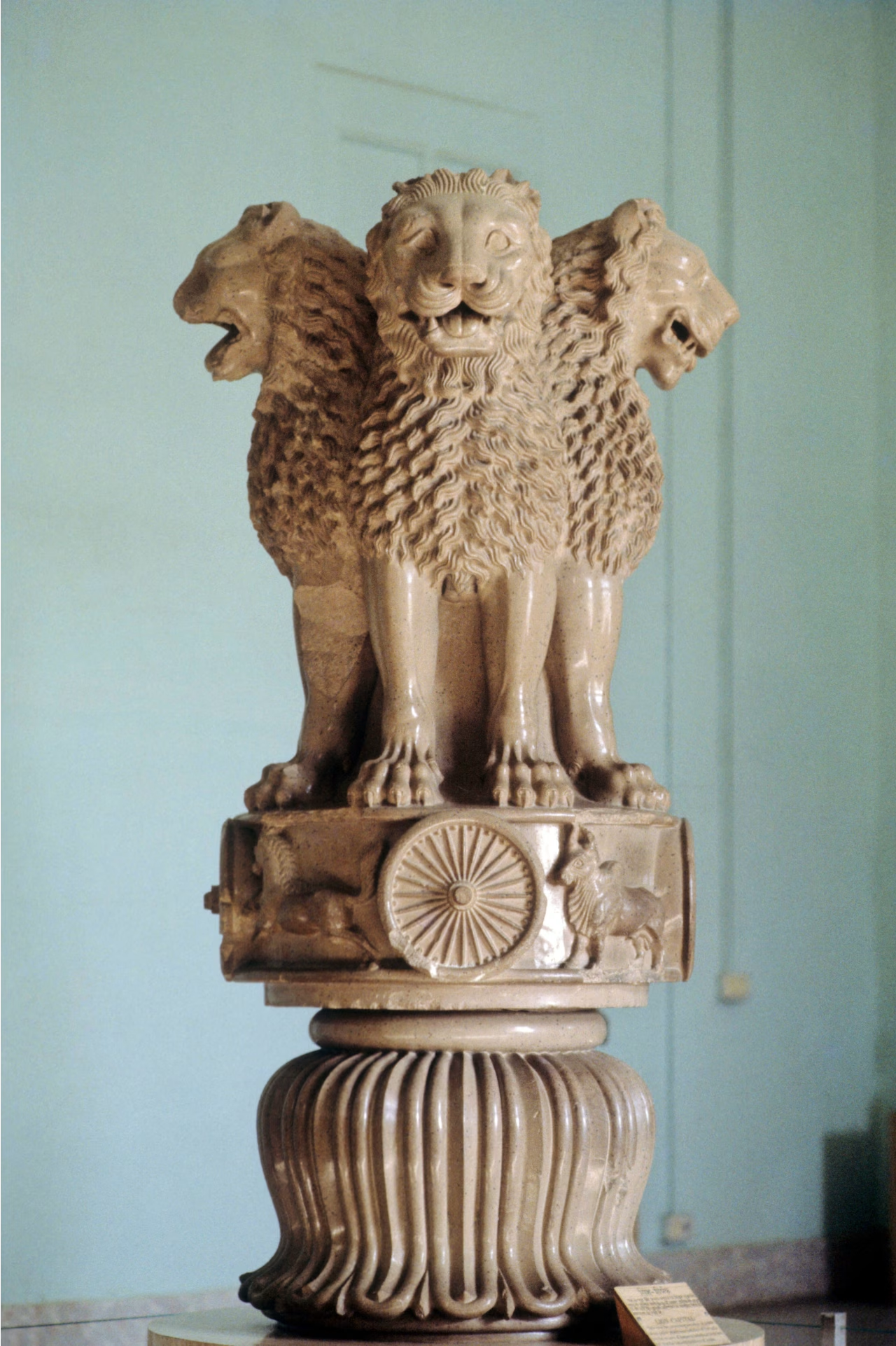
Lion Capital from Ashokan pillar at Sarnath, Uttar Pradesh, India, Maurya period, c. 250 BCE
Often with animal-shaped capitals, which is the Royal standard, for it symbolizes the axis mundi, joining the Earth with the cosmos. Marked the site of Buddha’s first sermon with 4 addorsed Asiatic lions for the cardinal directions. The base is an inverted lotus blossom leading to the platform of a bull, horse, lion, elephant, between chariot wheels symbolizing militaristic might and kingship.
axis mundi
Axis of the world
addorsed
Referring to two animals, figures, or objects placed or oriented back-to-back, so they are facing away from each other.
dharmacharkra
Wheel of the law
chakravartin
Universal kind whose chariot wheels pass everywhere.
Siddhartha Gautama, Buddha
Was a prince who left the palace at 29 to live and meditate as an ascetic in the wilderness for 6 years. He attained enlightenment at Bodh Gaya and became a Buddha (“Awakened One”).
Stupas
Solid mounds enclosing a relic directly connected with the Buddha (such as their ashes).
Mandala
The plan itself or a diagram of the cosmos envisioned in Buddhism. (Cosmic diagram)
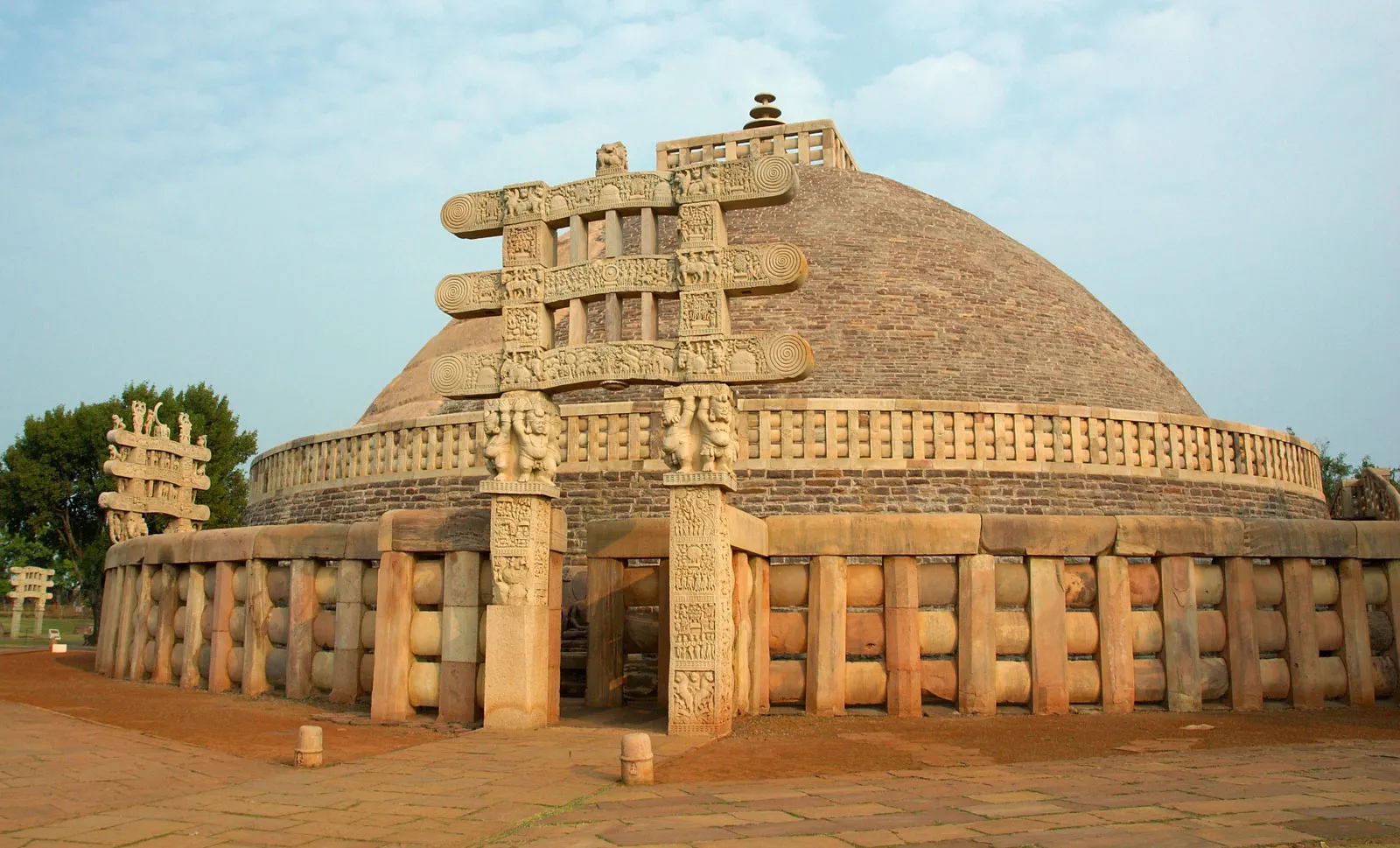
The Great Stupa at Sanchi, Madhya Pradesh, India, founded 3rd century BCE; enlarged c. 150-50 BCE
The entryway has royal iconography with the lions’ relation to the four cardinal directions. The stone railings, added a century later to walk around the structure. There is also a mast that has three disks (umbrellas) that mean the 3 jewels of Buddhism (i.e., Buddha, Law, and Monastic Order).
nirvana
Liberation from rebirth
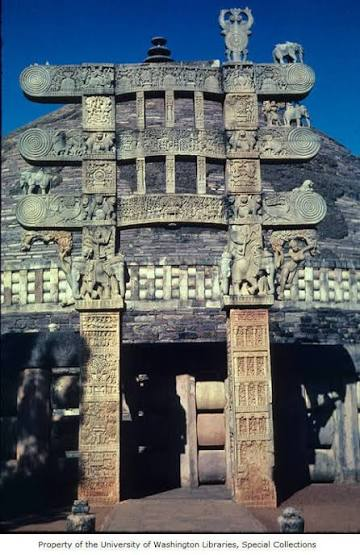
East Torana architrave of The Great Stupa at Sanchi, 1st century BCE
Stone gateway (Torana) where decorative carving only on the gateways, continuing the narrative of the Buddha’s life.
torana
Stone gateway
Jataka tales
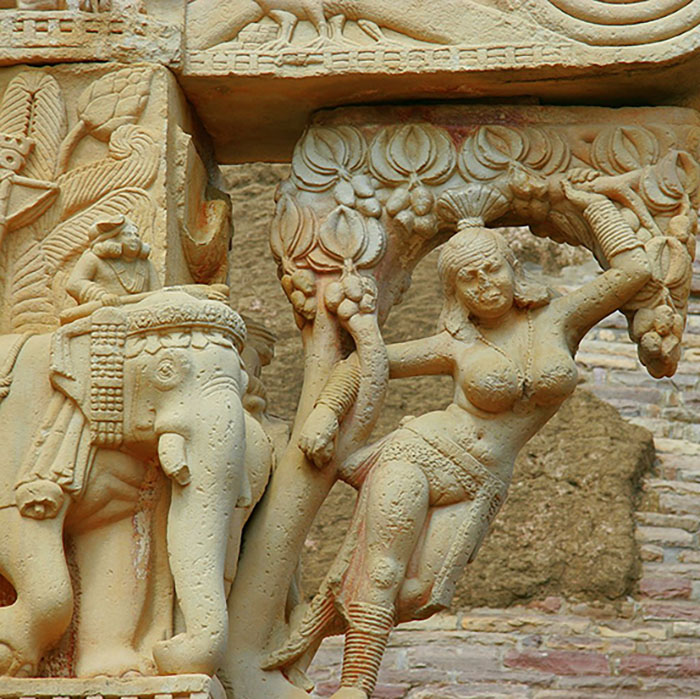
Yakshi Bracket Figure, East torana of the Great Stupa at Sanchi, 1st century BCE
Active sensual with no clear distinction between being clothed or not. The mango tree means the fecundity guardian figure.
Yakshi/ yaksha
The female spirit responsible for the reproductive forces of nature (Yaksha is the male version).
Gandhara Style
It is a fusion of Eastern (Indian) Buddhist symbolism and Western (Greco-Roman) Hellenistic art forms.
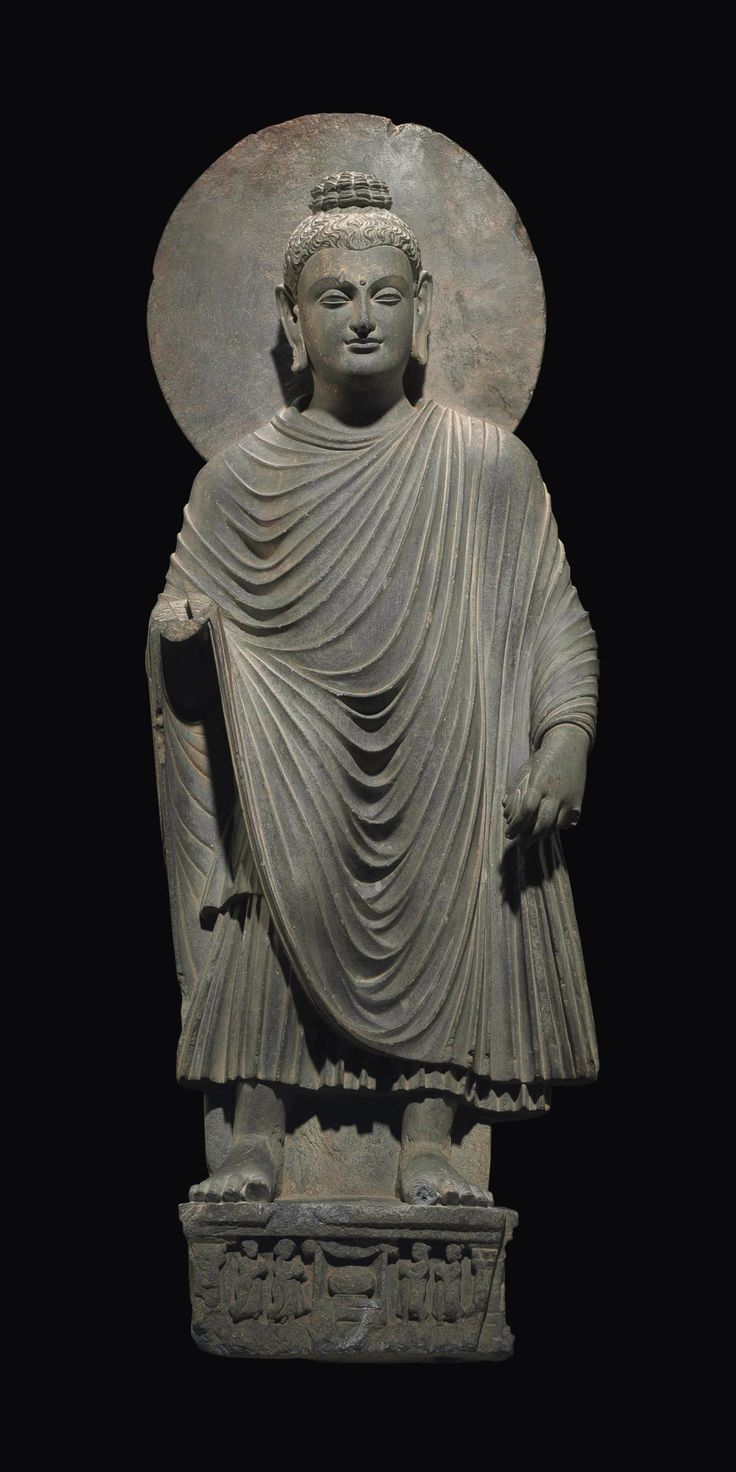
Standing Buddha, from Gandhara, Pakistan, Kushan period, c. 2nd-3rd century CE
Consistent iconography developed with the monk’s robe draped over the left shoulder, golden skin, long arms
Lakshanas
32 marks on his body
Urna
Marks between the eyebrows
Ushnisha
Protuberance top of the head in a bun or a topknot which is meant to symbolize enlightenment
Chakra
Wheels on palms and feet
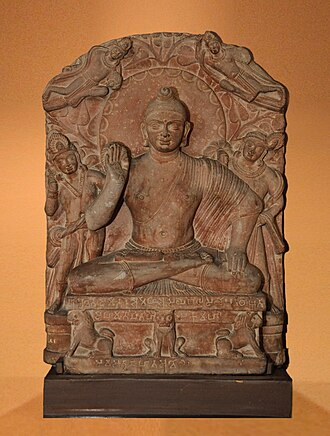
Mathura Style
The second major style of Buddhist art is not influenced by Hellenistic or Roman tradition but rather by the Yakshas (male deities). It is native tendency towards abstraction (geometric); flowing lines, sensual curves and motion with the use of non-clothed figures
Buddha and Attendants, from Katra Keshavdev, Mathura, Madhya Pradesh, India, Kushan period, c. late 1st-early 2nd century CE
There is 2 attendants behind the main Buddha figure, as there is a halo of radiating light (scallops) behind him, with the pipal tree and top knot symbolizing enlightenment. There are also celestial beings that are above, as the main figure has chakra wheel impressions on his hands and feet.
mudras
A symbolic hand, finger, or body gestures used in yoga, meditation, and classical dance to channel the flow of vital life force energy (prana) and balance the five elements in the body