Cell Biology I possible exam questions
 Call Kai
 Learn
Learn Practice Test
 Spaced Repetition
 Match
Match Flashcards
 Knowt Play
1/179

There's no tags or description
Looks like no tags are added yet.
Name | Mastery | Learn | Test | Matching | Spaced | Call with Kai |
|---|
No analytics yet
Send a link to your students to track their progress
180 Terms
What is the central dogma of molecular biology?
DNA replication → DNA repair → transcription → translation → protein
List the types of non-covalent protein interactions
hydrogen bonds
ionic interactions
hydrophobic interactions
van der Waals forces
Compare the differences and similarities of prokaryotic and eukaryotic cells
prok.: small and simple, unicellular, absent nucleus, circular DNA, haploid chromosomes, lack membrane-bound organelles, sexual & asexual reproduction, cell division by binary fission
euk.: large and complex, multi or unicellular, present nucleus, linear DNA, diploid chromosomes, has membrane-bound organalles, sexual reproduction, cell division by mitosis
similarities: cell membrane, cytoplasm, DNA, ribosomes
What is the endosymbiotic theory?
Mitochondira and chloroplasts used to prokaryotes and were engulfed by eukaryotes. They formed a permanent symbiotic relationship.
Name the organelles found only in plant cells
chloroplast, cell wall, vacuole
Describe the structure and the function of the chloroplast
function: site of photosynthesis; transforms light energy into glucose; produces oxygen as a by-product
structure: double membrane; inner membrane encloses the stroma; grana, stacked thylakoid membranes, sit in the grana; contains chlorophyll, the green pigment.
What are the building blocks of protein and nucleic acids? List their functions
proteins: amino acids. functions: catalysis, transport, support, movement and regulation
nucleic acids: nucleotides. functions: translation, storage and transmission of genetic information, regulation of gene expression
What is amino acid activation and why is it important?
ATP-dependent binding of amino acids to tRNA, essential for correct translation
List the types of lipids found in a cell and their functions
phospholipids: membrane structure
fatty acids: energy source, lipid builiding block
cholesterol: steroid hormone precursor
glycolipids: cell recognition
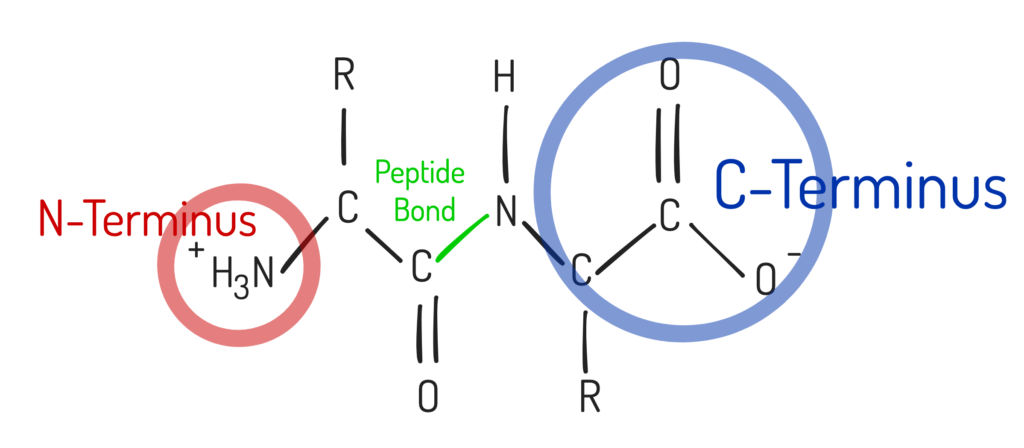
Draw and label a peptide bond
List the types of amino acids
non-polar, polar uncharged, positively charged, negatively charged
List and briefly explain the different levels of protein folding
primary structure: linear sequence of amino acid
secondary structure: local folding stabilized by hydrogen bonds, formation of α helixes and β sheets
tertiary structure: 3D folding of the entire polypeptide, interactions between R groups
quaternary structure: the turning of the polypeptide chains into a functional protein
What is the composition of the DNA and RNA?
in table: feature, DNA, RNA
sugar: deoxyribose, ribose
bases: A T G C, A U G C
strands: double stranded, single stranded
function: stores genetic info, gene expression
Name 6 characteristics of the Watson-Crick Model
double helix structure, antiparallel strands, sugar-phosphate backbone, complementary base pairing, bases connected by hydrogen bonds, right ha
List the different levels of gene expression
transcription, post-transcription, translation, post-translation
List the 3 major types of RNAs and their functions
mRNA: messenger RNA: carries genetic info from DNA to ribosome for protein synthesis
tRNA: transfer RNA: brings amino acids to the ribosome during translation
rRNA: ribsomal RNA: structural and catalytic component of ribosomes
List all the types of RNA
3 major ones: mRNA, tRNA, rRNA
regulatory RNAs: snRNA, snoRNA, miRNA, piRNA, siRNA
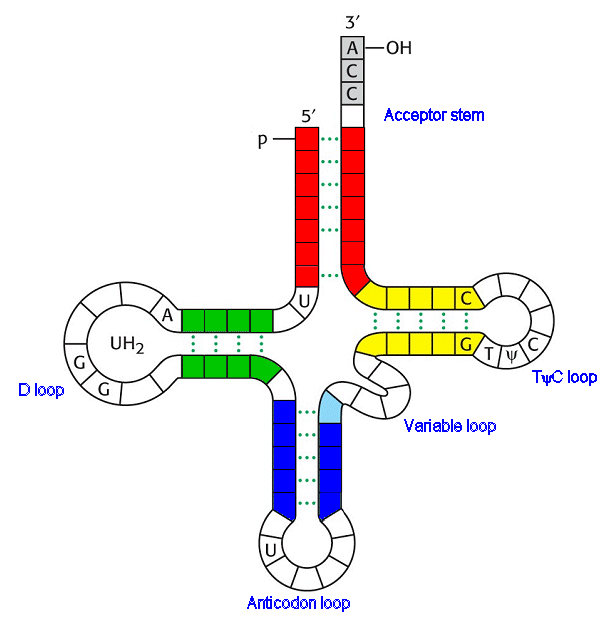
Draw and label a tRNA
What are the possibilities of gene expression regulation?
regulation at every possible level: chromosomes, transcription, RNA processing, translation, post-translation
Define the terms: gene, genome, gene expression, allele, chromosome
gene: a sequence of DNA that encodes a functional product
genome: the complete set of genetic material for an organism
gene expression: the process in which the genetic info is synthesized into RNA and/or protein
allele: different versions of the same gene at a specifi
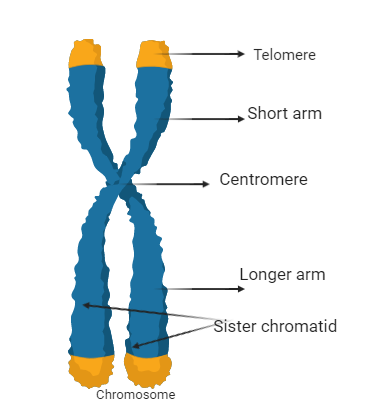
draw and label the parts of a chromosome
Characterize the proteins of chromatin
histones: positively charged proteins filled with basic amino acids, types: H1, H2A, H2B, H3, H4
non-histones: less positively charged proteins, they’re important for transcriptions and regulation
What are the 2 types of chromatin? Briefly explain their structure
euchromatin: lightly packed, active, inside of nucleus, less stained
heterochromatin: densely packed, inactive, near nuclear periphery, darkly stained
define chromatin
DNA packed with protein
Compare heterochromatin and euchromatin
euchromatin: active
heterochromatin: inactive
Define and describe the structure of a nucleosome
a fundumental unit of chromatin that packages DNA into a compact structure
DNA wounds around the histone, “beads on a string”
Define a scaffold protein
a non-histone protein that provides structural support for chromatin, organizes DNA into a loop
List the steps of chromatin condensation
DNA wraps around histones → forms nucleosomes
nucleosomes coil → form fiber
fiber forms loop → attach to scaffold proteins → looped domains form
further folding → condensed chromatin forms
Define looped domains
sections of chromatin organized into loops anchored to scaffold proteins
Define pseudogenes
DNA sequences similar to functional genes but are actually non-functional
Name the types of ER and describe their function and structure
Rough ER: has ribosomes on cytosolic surface → protein synthesis and modification
Smooth ER: no ribosomes → lipid synthesis, detoxification, Ca2+ storage
Name the parts of the Golgi complex, describe its structure and function
parts: cis-Golgi (entry), medial-Golgi, trans-Golgi (exit)
structure: stacked flattened cisternae
function: protein/lipid modification, storing and packaging into vesicles
descrbie the structure and function of the nuclear envelope
structure: double membrane, nuclear pores
function: protects nucleus, regulates transpot of molecules with NPCs
Define the structure and function of mitochondrial membranes
outer membrane: smooth, permeable to small molecules
inner membrane: highly folded into cristae, contains e- transport chain proteins
function: ATP synthesis, compartmentalization for metabolism
Define the nucleulos
non-membrane bound dense structure inside the nucleus responsible for rRNA synthesis and ribosome assembly
compare the 2 oragnelles that have a double membrane
in a table: feature, nucleus, mitochondrion
Membrane: double membrane-pores, double membrane-cristae
function: stores genetic info, ATP synthesis, metabolism
DNA: linear chromosomal, circular mitochondiral
Replication: cell divison; binary fission
What is the endomembrane system made up of?
nuclear envelope + ER + Golgi complex + lysosome + endosome + vesicles + plasma membrane
Describe the structure of the nucleus
spherical organelle, double membrane, nuclear pores, nucleoplasm, chromatin and nucleolus
What is the nuclear matrix? Describe its structure
fibrous network inside the nucleus
structure: protein filaments supporting chromatin organizations
Describe the structure of Nuclear Pore Complexes (NPCs)
large protein complexes embedded in the nuclear envelope, central channel for transport of RNA and protein
List the functions of the nuclear lamina
mechanincal support for the nuclear envelope
organizes chromatin
anchors NPCs
Describe the structure of the mitochondrion?
outermembrane → intermembrane spaces → innermembrane
DNA, ribosome, ATP synthesis particles are flowing in the matrix
edges of the innermembrane are called cristae
Compare the structures and functions of SER and RER
SER, RER
stucture: smooth - no ribosomes, rough - ribosomes
function: lipid synthesis-detox, protein synthesis-modification
List the 3 form of SER
tubular, lamellar, vesicular
Describe the structure and function of lysosomes
structure: membrane-bound vesicle
function: digest macromolecules and cellular debris
Define endosome
membrane-bound compartment responsible for sorting, recycling or degrading of internalized material
Define tonoplasts
membrane surrounding the central vacuole in plants cells, regulates transport
Define peroxisomes
membrane-bound organelles containing oxidative enzymes
Define autophagy
cellular process for degrading damaged organelles or cytoplasmic components
List the functions of a biological membrane
barriers the cell and organelles
transports with selective permeabitlity
signal transduction
energy storage
Define liposome
spherical fat vesicle
What can regulate the cell’s membrane fluidity?
fatty acid composition, cholesterol content, temperature
What can cause membrane assymetry?
lipid composition, enzyme activity, protein distribution
What is the role of compartmentalization?
increased concentration of molecules → more effective reactions
higher level of organization
List the types of transport across membranes
passive, active, endocytosis, exocytosis
List the organelles with double membrane systems
nucleus, mitochondrion, chloroplast
Characterize mitchondrial DNA
circular, double stranded, located inside mitochondiral matrix, inherited maternally
List the types of mutations
small scale mutations = point mutations, insertion, inversion, substitution, deletion
large scale mutations (chromosomal) = duplication, deletion, translocation, inversion
List the consequences of mutations
loss of function, conditional loss of function, gain of function, genetic diseases, cancer, death
Define point mutation
a change in a single nucleotide in DNA, can lead to coding into a different amino acid or stop/start codon
List the types of chromosomal mutations and characterize one of them
large scale mutations (chromosomal) = duplication, deletion, translocation, inversion
duplication: addition of an extra copy of a chromosome
Define monocistronic
a gene only encodes one protein from one mRNA molecule
Define aneuploiditiy mean
an abnormal amount of chromosomes, number is not an exacty copy of a haploid set
List the functions of the cytoskeleton
maintains cell shape and mechanincal strength, responsible for intracellular transport, cell movement, essential for cell division
Describe the structure of the cytoskeleton
a dynamic network of protein filaments composed of microtubules, intermediate filaments, microfilaments
List the functions of microtubules
formation of mitotic spindle, intracellular transport, structural support, formation of cilia and flagella
What are MAPs? List their functions
Microtubule Associated Proteins: proteins that interact with microtubules
functions: stabilize/destabilize microtubules, regulate microtubule assembly/disassembly
Define axonal transport
transport of material along neuronal axons, occurs along microtubules
List the 3 types of motor proteins
kinesins, dyneins, myosins
What are MTOCs? List their types and functions
Microtubule Organizing Centres: sites of microtubule nucleation
types: centrosome, basal bodies
functions: microtubule nucleation, organization of mitotic spindle
What is the role of kinesin, dynein and myosin
kinesin: plus-end directed transport on microtubules
dynein: minus-end directed transport on microtubules
myosin: movement along actin filaments
List the 2 types of myosin
unconventional = type I; conventional = type II
Describe the structure and functions of intermediate filaments
structure: rope-like fibers, made up of fibrous proteins
function: provide strength, maintain cell integrity, form nuclear lamina
List the types and functions of microfilaments
type: actin filaments
function: muscle contraction, cytokinesis, cell shape maintenance, cell cortex support
List the functions of the extracellular matrix (ECM)
holds cell together in tissues, protects, supports the plasma membrane, helps in communication, regulates cell behaviour
List the components of the ECM
fibrous proteins, proteoglycans, GAGs, adhesive glycoproteins
How do cells interact with each other and their environment?
cell signalling, integrins, chemical signalling, mechanical interaction
What are integrins? List their functions
integrins are transmembrane adhesion receptors connecting the ECM with the cytoskeleton
function: cell-ECM interaction, integration, signal transduction
List the types of cell signalling
autocrine, paracrine, endocrine, juxtacrine, neurocrine, intracrine
List the types of cell junctions
tight junctions, anchoring junctions, gap junctions
Define DNA damage
any modification of DNA that changes its coding properties or normal function in transcription or replication
Characterize DNA damage based on its origin
exogenous, endogenous
List 3 endegenous and 3 exogenous DNA damade factors
endogenous: reactive oxygen species, spontaneous depurination, replication errors
exogenous: UV radiation, ionizing radiation, chemical agents
List the types of DNA damage
base modification, AP site, SSB, DSB, cross-links, DNA-protein cross link, helix distortions
List the types of DNA repair mechanisms
direct repair, BER, NER, MMR, HEJ, NHEJ
Briefly list the steps and key enzymes of BER
1) DNA glycosylase removes damaged base 2) AP endonuclease cuts backbone 3) DNA polymerase fills gap 4) DNA ligase seals
Briefly list the steps and key enzymes of NER
1) damage recognition 2) endonuclease excision of oligonucleotide 3) DNA polymerase fills gap 4) DNA ligase seals
Briefly list the steps and key enzymes of MMR
1) mismatch recognition 2) exonuclease excision of error strand 3) DNA polymerase resynthesizes 4) DNA ligase seals
Briefly list the steps and key enzymes of HEJ
1) strand invasion using sister chromatid 2) DNA polymerase resynthesizes 3) DNA ligase seals
Briefly list the steps and key enzymes of NHEJ
1) Ku proteins bind DNA ends 2) end processing 3) direct ligation
Describe the difference between HEJ and NHEJ
HEJ requires a homologous chromosome to act as a template, NHEJ doesn’t
NHEJ has a gap in the repair, HEJ doesn’t
Compare BER and NER
table: feature, BER, NER
damage type: small base lesions, bulky lesions
repair unit: single base, oligonucleotide segment
key enzyme: glycosylase, endonuclease
How can SSBs and DSBs be fixed?
SSBs: BER, NER, MMR
DSBs: HEJ, NHEJ
List the steps of DNA replication
1) initiation 2) elongation 3) termination
Briefly explain the steps of replication
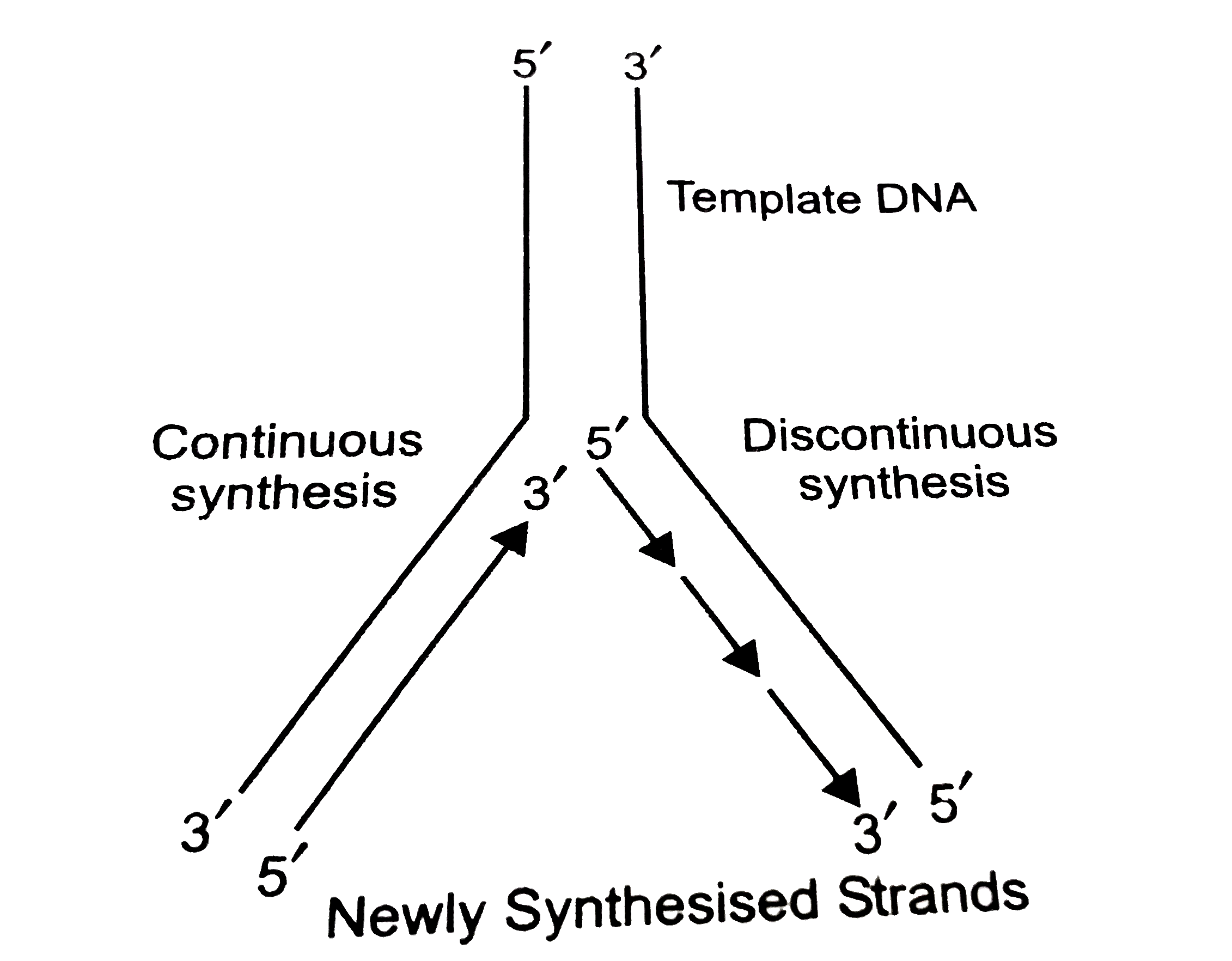
1) initiation: replication begins at the origin of replication, DNA double helix is unwound by helicase and replication machinery assembles
2) elongation: new DNA strands are synthesized by DNA polymerases, leading strands synthesized continously and lagging strands synthesized discountinously (Okazaki fragments)
3) termination: replication ends when forks meet or reach termination sites, DNA strands are seperated and finalized
What is the mechanism of DNA replication
semiconservative, bidirectional, template dependent, 5’→3’ direction
Define semiconservative in replication
each daughter DNA molecule contains one parental strand and ine newly synthesized strand
List the enzymes involved in DNA replication
helicase, primase, DNA polymerases, DNA clamps, topoisomerases, DNA ligase, telomerase
Compare eukaryotic and prokaryotic DNA replication
table: feature, prok., euk.
origin: single, multiple
chomosome shape: circular, linear
speed: fast, slow
okazaki fragments: long, short
telomeres: absent, present
polymerases: I/II/III, α/σ/ε
location: cytoplasm, nucleus
Draw and label a replication fork