AP Psych Unit 1
 Call Kai
 Learn
Learn Practice Test
 Spaced Repetition
 Match
Match Flashcards
 Knowt Play
1/149

There's no tags or description
Looks like no tags are added yet.
Name | Mastery | Learn | Test | Matching | Spaced | Call with Kai |
|---|
No analytics yet
Send a link to your students to track their progress
150 Terms
genetic predisposition
increased chance of developing a trait or condition due to our genetic code
neurons
individual nerve cells
dendrites
rootlike parts; make synaptic connections
cell body/ soma
nucleus
axon
wirelike structure with ending in terminal buttons
myelin sheath
fatty covering of the axon and speed up neural impulses
terminal buttons
branched end of the axon that contain neurotransmitters
neurotransmitters
chemicals contained in the terminal buttons that enable neurons to communicate
synapse
space between the terminal buttons of one neuron and the dendrites of the next neuron
neural transmission
neuron transmits a message
resting potential
resting state, neuron has slightly negative charge because negative ions within cell and positive ions outside usually at -70
threshold
if enough neurotransmitters are received, the cell of membrne become permeable and positive ions rush in bringing charge to about +40
action potential
electric message firing
all-or-none principal
neuron either fires completely or not at all
depolarization
negative charge gets depolarized when positive ions run into the cell
excitatory neurotransmitters
excite next cell into firing
inhibitory neurotransmitters
inhibit next cell from frirng
dopamine
motor movement and alertness; lack of Parkinsons, too much schizophrenia
Seretonin
mood control; lack of lead to depression
Norepinepherine
alertness/ arousal; lack of leads to depression
glutamate
excitatory neurotransmitter; triggers migranses, sezuires
GABA
inhibitory neurotransmitter; internalizes these seiv=xuures but it can caus esleep problems
substanceP
pain percepition; lack maybe be lack of pain perception
Acetylchlorine
lack mens Alzheimers and too much means Myastasia Gravis (muscle weakness)
sensory neurons
take info or senses to your brain
interneurons
take messages and send them elsewhere in brain or on different neurons
motor neurons
take info to rest of body
central nervous system
brain and spinal chord; rest of body to brain
peripheral nervous system
all the nerves that arent part of the central nerous system
reflex arcs
certain reactions occur the moment sensory impulss reach the spinal cord
somatic nervous system
part of PNS and conrols voluntary muscle movements
autonomic nervous system
controls automatic unctions of our body like internal organs and fight or flight response—> sympathetic and parasympathetic
sympathetic nervous system
mobilize out body to respond to stress and carries messages from our glands, organs, muscle that direct our body’s response to stress; warning system
parasympathetic nervous system
carries message to stress response system that cause some activities to slow down after a stress response
endocrine system
is a system of glands that secrete hormones that affect many biological processes; controlled by the hypothalamus
adrenaline
activates fight or flight response
leptin
involved in weight regulation; supresses hunger
ghrelin
motivates eating/ increase hunger
melatonin
triggers sleep and wakefulness responses in brain
oxytocin
promotes good feelings such as trust and bonding
adrenal glands
produce adrenaline/ epinepherine
Ovaries and Testes
produce reproductive hormones
The brain
control human thought and behavior
Phineas Gage
involved in accident that samaged front part of brain; beca,e very emotional and impulsive after the accident
lesioning
the removal or destruction of part of the brain—> sometimes used to study the brain
electroencephalogram (EEG)
detects brain waves; can measure during different stages of conciousness
CAT scan
sophisticated x-ray; uses several x-ray cameras that rotate around the brain and combine pictures into a 3-dimensional picture of the brain structure
MRI scan
magnetic fields to get these scans and measure density and location of brain material; patient not exposed to radiation
PET scan
see which areas of the brain are active during certain tasks and how much of a certain chemical is used
functional MRI
combines an MRI and PET scan
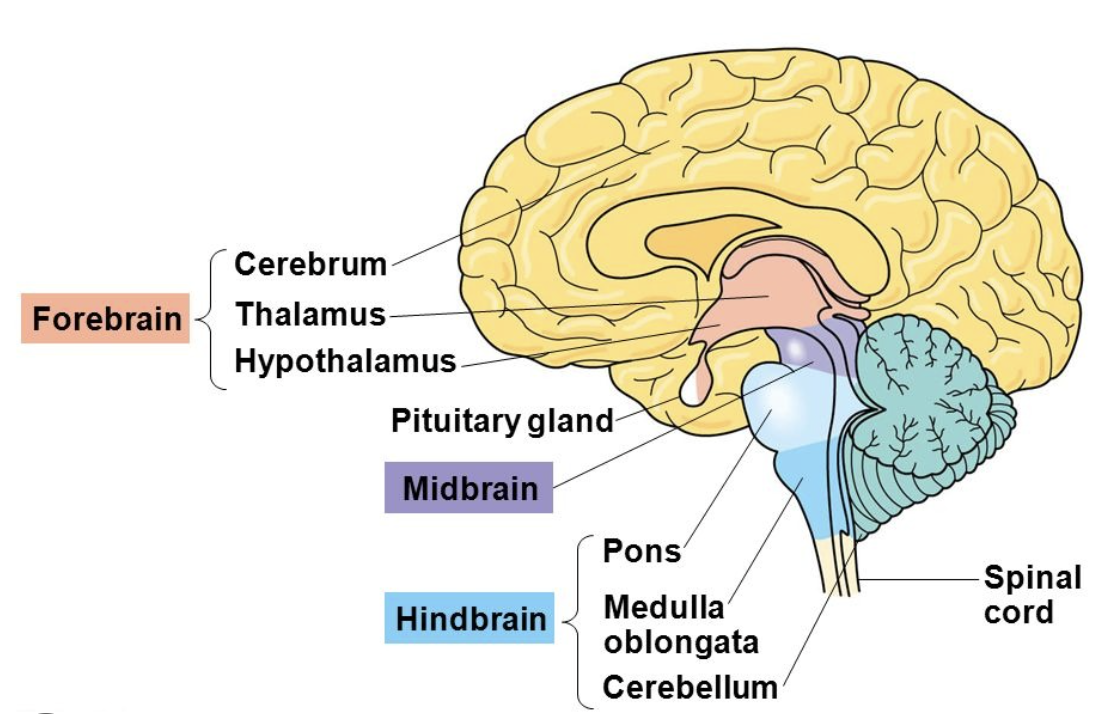
hindbrain
top of pinal cord; life support system—> medulla, pons, cerebellum
medulla
controls our blood pressure, heart rate, and breathing
pons
connects hindbrain with midbrain and forebrain; facial expressions
cerebellum
coordinated habitual muscle movements
midbrain
coordinate simple movements with sensory information and muscle movements—> reticular formation; netlike collection of cells throughout midbrain that control body arousal and ability to focus attention
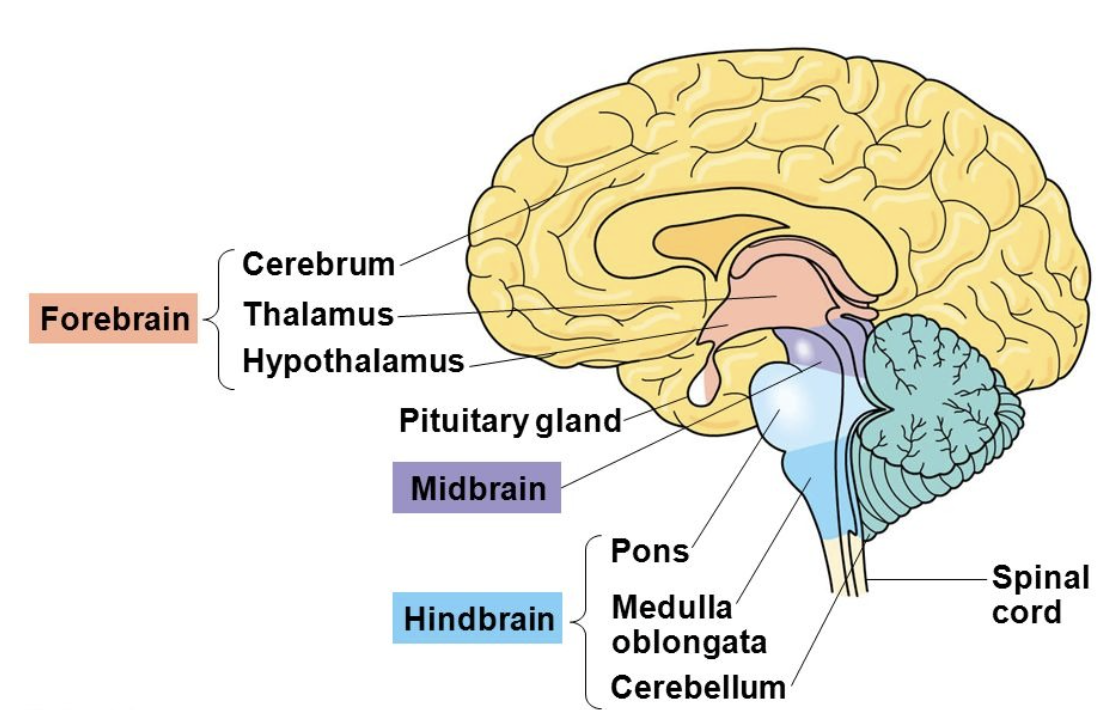
Forebrain
thought and reasoning—> thalamus, hypothalamus, amygdala, hippocampus
thalamus
located on the brain stem; receives sensory signals coming up the spinal cord and sending them to the right arras in forebrain
hypothalamus
controls metabolic functions, homeostasis, libidio, hunger, thirst, and the endocrine system
amygdala and hippocampus
memories processed thriough this area
cerebral cortex
gray, wrinkled denslt packed neurons covering the brain
hemispheres
left hemisphere gets sensory messages and conrols the motor functions for the right half of the body
contralateral hemispheric organization
each side of brain controls opposite side of body
hemispheric specialization
specialty of each hemisphere of brain
split brain patients
patient’s corpus callosum was cut to treat severe epilepsy
cerebral cortex lobes
frontal, parietal, temporal, occipital
association area
any part of cerebral cortex not associated with receiving sensory or muscle info
frontal lobes
top front part of brain behind the eyes
prefrontal cortex
direct thought processes; acts as brain’s central executive—> consequences, pursuing goals, maintain emotions, abstract thoughts
broca’s area
control muscles involved in speech—> damage can lead to aphasia
motor cortex
signals to muscles; voluntary movements
parietal lobes
behind frontal lobes but on top of the brain
somatosensory cortex
receives incoming touch sensations from rest of our body
phantom limb syndrome
if person loses part of body, might still get sensations from that
occipital lobes
back of brain far from eyes; interpret messages from eyes in our visual cortex
temporal lobes
process sound sensed by our ears
Wernickies area
linguistic processing; damage= unable to understand
brain plasticity
our brains can compensate/ grow back from damage especially when younger
exposure effect
prefer stimuli we have seen bfr
priming
participants respoind quicker if they seen before even if they dont remember
blind sight
blind person may be able to accurately describe path of an object
conciousness
Consciousness is the state of being awake, aware of self; look at different levels
Psychoactive drugs
drugs that change chemistry of the brain
blood brain barrier
protects brain from harmful chemicals in the bloodstream
agonists
drugs that mimic neurotransmitters; fit into receptor sites and function as neurotransmitter would
antagonists
drugs that block neurotransmitters; don’t fit the receptor sites but can still block them
reuptake inhibitor
prvents certain chemical from being reabsorbed back into the neuron
tolerance
need for more of same drug to make same effect
withdrawal symptoms
tolerance causes this; might get fatal
stimulants
caffeine, cocaine, amphetamines, and nicotine; speed up body processes
depressants
alcohol, barbituates, and tranquilizers; slow down body systems
hallucinogens
do not speed up or slow down & remain in system for weeks; changes in perception of reality; marijuana, LSD, etc
opiates
morphine, heroin—> poppy plant; drowziness and euphoria
circadian rhythm
our pattern during 24 hr metabolic day
alpha waves
when we are drowzy by awake
non-REM
NREM 1 and NREM 2 while we are awake, brains produce theta waves but they get slower as we go through these. in NREM 2 we see sleep spindles; short bursts of rapid brain waves. NREM 3 is deep sleep; delta or slow waves.
REM/ paradoxil sleep
after delta sleep, we go back through 3, 2, 1 and make to NREM 1 and have rapid eye movement; dreams likely here
REM rebound
more and longer periods of REM if deprived of REM
Insomnia
sleep disorder going to sleep; 10% population
Narcolepsy
Periods of intense sleepiness and suddenly fall into REM; 0.001% population
Sleep apnea
causes person to stop breathing for short periods of time during night; can be fatal