Week 13 Lab Exam 3 K103
 Call Kai
 Learn
Learn Practice Test
 Spaced Repetition
 Match
Match Flashcards
 Knowt Play
1/15

There's no tags or description
Looks like no tags are added yet.
Name | Mastery | Learn | Test | Matching | Spaced | Call with Kai |
|---|
No analytics yet
Send a link to your students to track their progress
16 Terms
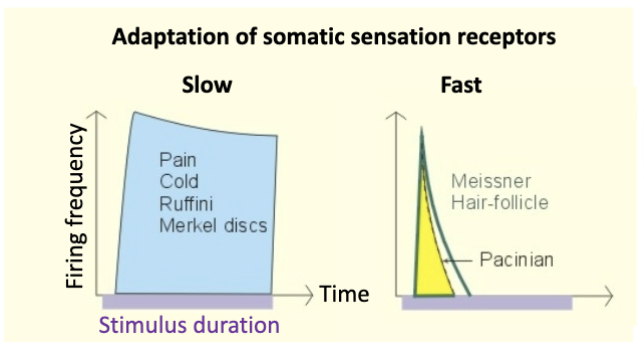
What is sensory adaptation?
The process where sensory receptors become less responsive to a constant, unchanging stimulus over time
*different than habituation
What is an after image?
The sensation felt when a stimulus is removed rather than being applied.
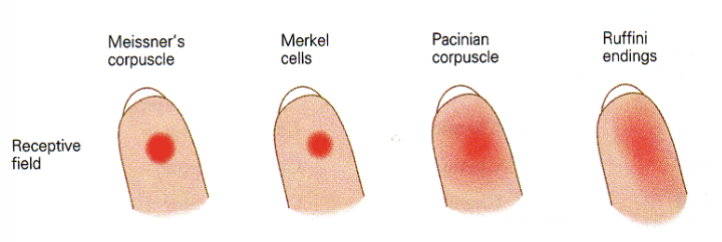
what does the distribution of receptors depend on
- receptor type
- location
What does visual acuity measure?
The clarity of vision, determined by the combined optic power of the cornea and lens
- Abnormalities result in different refractive errors
What is the blind spot?
The area known as the optic disc where no image can be formed due to a lack of photoreceptors.
far point vs. near point (accomodation)
far point: location where eye is not accommodating
near point: location where eye is accommodating
what is sharp detail
occurs in the middle due to convergence of the fovea
What are the steps in the auditory process?
Sound waves enter via pinna → Tympanic membrane vibrates → Ossicles amplify → Oval window vibrates → Cochlea fluid conducts vibrations → Hair cells stimulated → Cochlear nerve transmits to brain.
What is the difference between conductive and sensorineural hearing loss?
Conductive hearing loss involves sound waves moving through the outer and middle ear, while sensorineural hearing loss involves the inner ear, preventing sound from being processed correctly
What does the Weber's test evaluate?
Unilateral hearing loss to distinguish between conductive and sensorineural hearing loss.
What does the Rinne's test determine?
The presence of conductive hearing loss by evaluating air (ear anatomy) and bone (skull bones) conduction
What is the general function of the immune system?
Disease protection
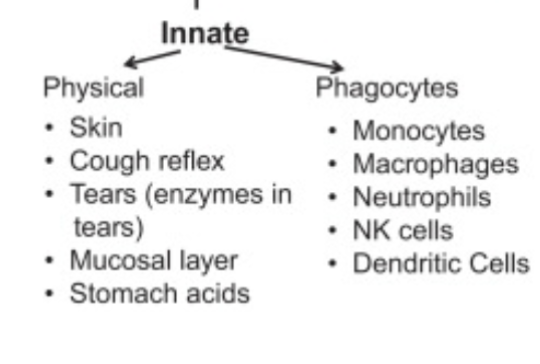
what is innate immunity?
- Nonspecific protection against foreign substances
- All cells but lymphocytes.
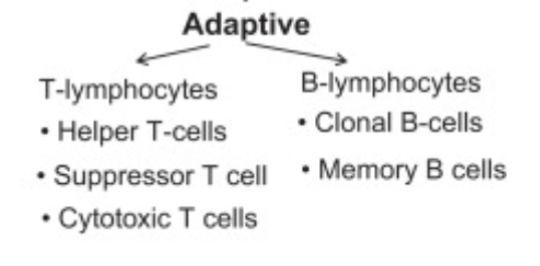
What is adaptive immunity?
A type of immunity that involves the production of antibodies by B cells to recognize antigens
- tcells and Bcells
What is an antigen?
A foreign particle to the host that triggers an immune response.
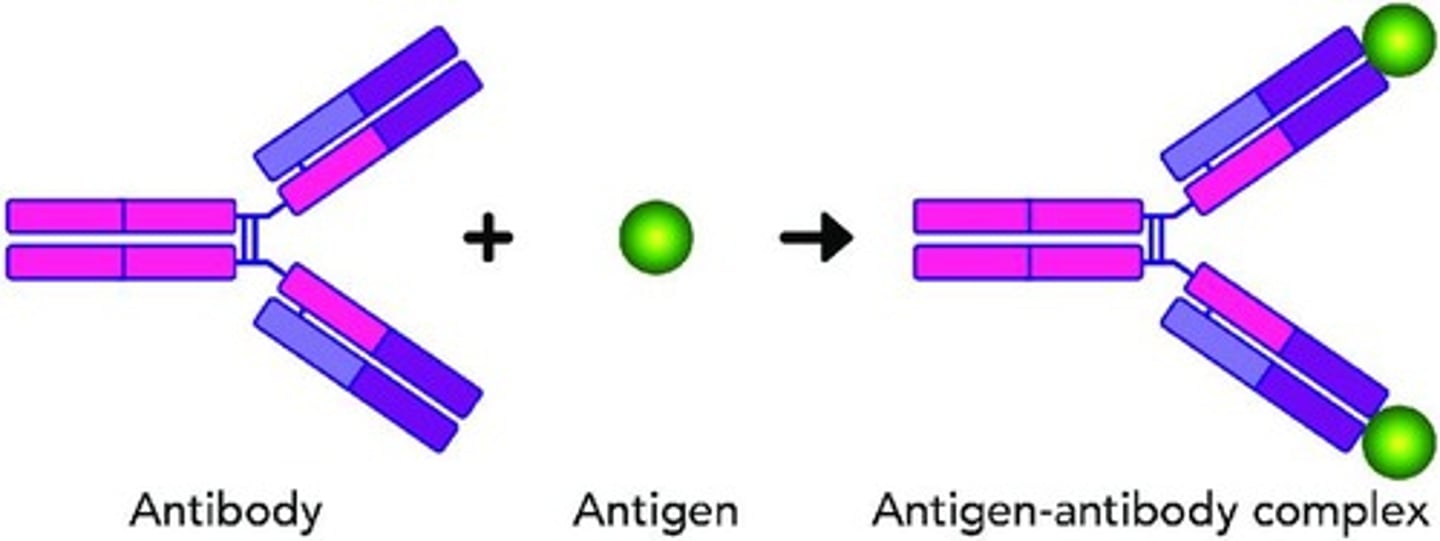
What is the purpose of the Double Diffusion Experiment?
To study antibody-antigen interactions.