AP Bio Unit 1: Natural Selection
 Multiple Choice & FRQ
 Call Kai
1/66

Earn XP
Description and Tags
Name | Mastery | Learn | Test | Matching | Spaced | Call with Kai | Chat |
|---|
No analytics yet
Send a link to your students to track their progress
67 Terms
Gene
The unit of heredity passed from parent to child. They are made up of sequences of DNA arranged at specific locations on chromosomes and contain information for specific proteins which leads to expression of a particular phenotype or function.
Allele
One of two or more alternative forms of a gene that arise by mutation and are found at the same place on a chromosome.
Genotype
An organism’s genetic information.
Phenotype
The set of observable physical traits.
Null Hypothesis
Predicts/assumes that there is NO relationship between the 2 variables and serves as a baseline or default position.
Alternative Hypothesis
Predicts/assumes there IS a relationship between the two variables and the researcher aims to support this.
The 5 Fingers of Evolution
Small Population
Non-Random Mating
Mutations
Gene Flow
Adaptation
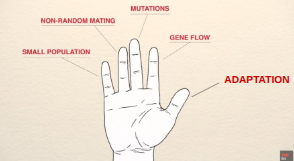
The 5 Fingers of Hardy-Weinberg
Large Population
Random Mating
No Mutation
No Gene Flow
No Selection
Hardy Weinberg Equilibrium
When a population is in equilibrium and is not evolving
Gene Pool
Consists of all the copies of all the genes in that population
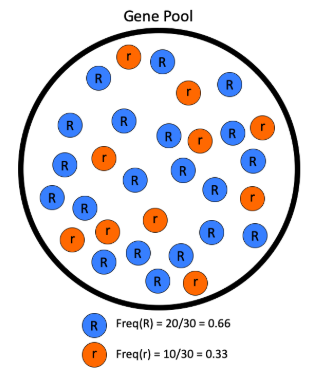
Allele Frequency
How common an allele is in a population (determined how many times the allele appears in population then dividing by the total number of gene copies)
Hardy-Weinberg Equilibrium Equation
p2 + 2pq + q2 = 1.0
(p + q = 1.0)
Used to compare the observed vs expected genotype frequencies of a population. If the observed & expected frequencies match, the population is in equilibrium (no evolution) and vice versa (example of calculation attached)
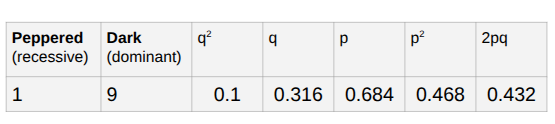
[ p2 ] in Hardy-Weinberg Equation
Frequency of homozygous dominant genotype (AA)
[ 2pq ] in Hardy-Weinberg Equation
Frequency of heterozygous dominant genotype (Aa)
[ q2 ] in Hardy-Weinberg Equation
Frequency of homozygous recessive genotype (aa)
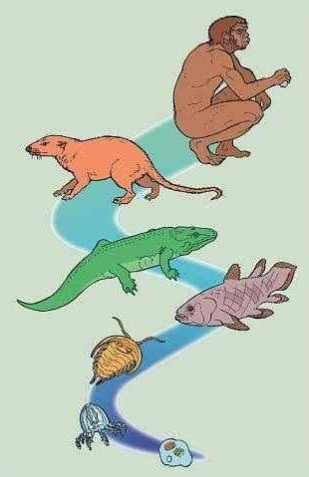
Macroevolution
Evolution occurring at a large scale over a long time period. This kind of evolution is above the levels of population and is not directly observable (fossils). Often caused by extended microevolution.
Microevolution
Evolution occurring at a small scale over a short time period. This kind of evolution takes place within a species or population and is observable through experimental evidence. It’s caused by mutations, selection, gene flow, and genetic drift.
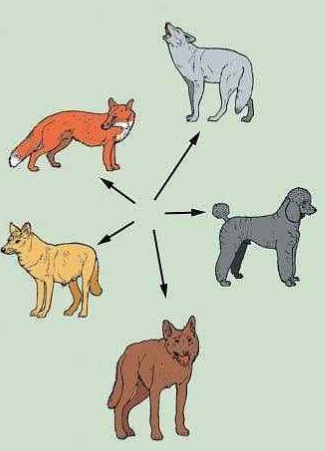
Increases Variation in the Population
Mutation, Gene Flow, Reproduction
Decreases Variation in the Population
Non-random mating, Genetic Drift, Natural Selection
Mutations
Creates variation by causing a change in the DNA sequence (changes protein structure & function)
Synonymous Substitution Mutations (Silent Mutation)
Does not change the encoded amino acid
Nonsynonymous Substitution (Missense Mutation)
Does change the encoded amino acid
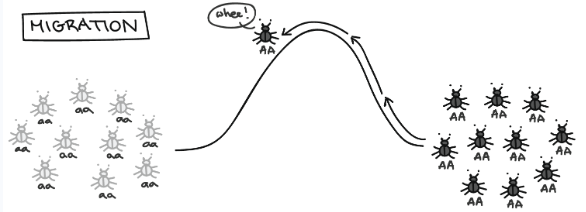
Gene Flow
Movement of individuals and alleles in and out of a population. This causes genetic mixing across regions and can introduce new variation to a population while also reducing differences between the populations.
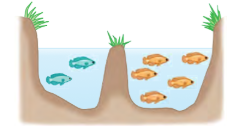
Isolation
Any barrier that prevents interbreeding between populations, preventing gene flow. Allopatric speciation and sympatric speciation are two types.
Allopatric Speciation
Geographic isolation due to physical barriers.
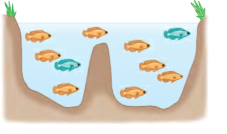
Sympatric Speciation
Reproductive isolation due to timing of reproduction, behavioral differences, etc (takes place in the same area.
Non-Random Mating
Individuals of one sex mate preferentially with particular individuals of the opposite sex rather than at random. This causes traits that attract mates to be passed on and reduces variation in population.
Genetic Drift
A chance event that causes a change in the population and decreases genetic variation. Bottleneck & Founders effect are two examples.
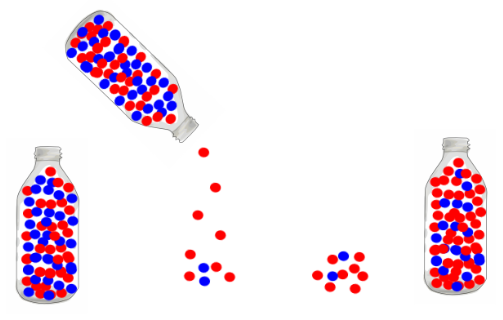
Bottleneck Effect
An environmental event that leaves only a few survivors.
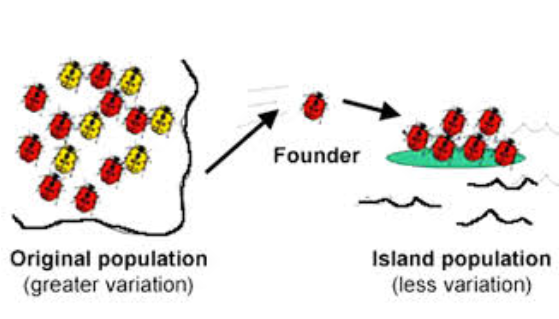
Founders Effect
When a small group leaves and starts a new colony.
Natural Selection
Natural selection increases the frequency of alleles that improve fitness, helping the fittest organisms survive and reproduce (VIDA: Variation, Inheritance, Differential Survival (fitness), Adaptation).
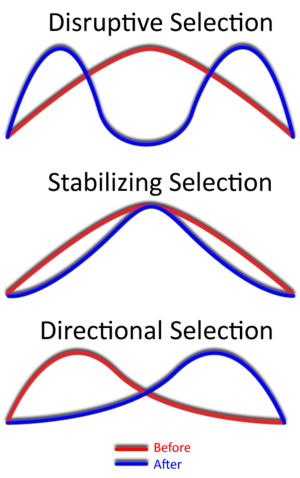
Stabilizing Selection
A type of natural selection that favors intermediate phenotypes rather than extreme variations. This decreases genetic variation.
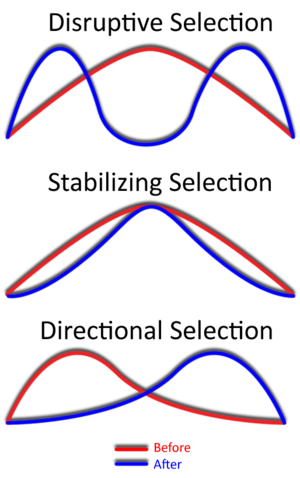
Directional Selection
A type of natural selection that favors one phenotype, causing a shift in the population’s allele frequency in one direction. This shifts genetic variation.
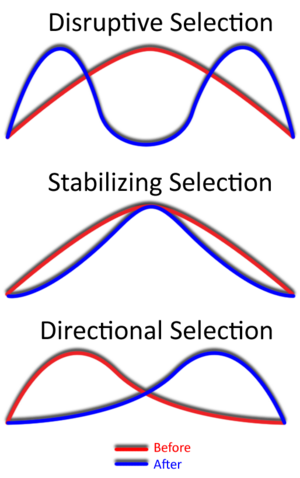
Disruptive (or Diversifying) Selection
A type of natural selection that favors extreme variations for a trait over intermediate values. This increases genetic variation.
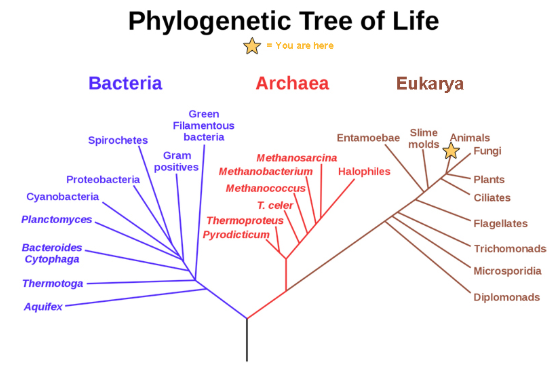
Phylogeny
The evolutionary history for a group of species based on evidence from living species, fossil record, and molecular data
Node (Branch Point)
Each intersection in the tree which represents a shared common ancestor. It is also a speciation event.
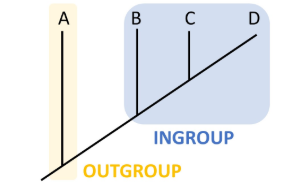
Outgroup
A distantly related group that is used to show how the main group falls in the main tree of evolution
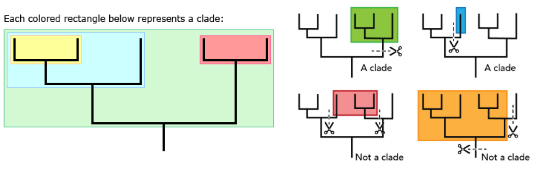
Clade
A group of organisms that include an ancestor and all descendants of that ancestor (a branch on the tree of life)
Taxon
The top/tips of the phylogenetic tree (represents the different species)
Cladograms
A type of phylogenetic tree where branch lengths are arbitrary and do not represent the evolutionary distance or time. They are created by considering the various possible evolutionary pathways.
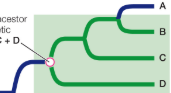
Paraphyletic
A group that includes the common ancestor and some but not all of the ancestors’ descendants
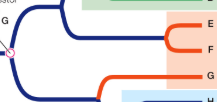
Polyphyletic
A group that does not include the common ancestor of the group
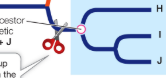
Monophyletic
A group that includes the common ancestor and all descendants of that ancestor (a clade)
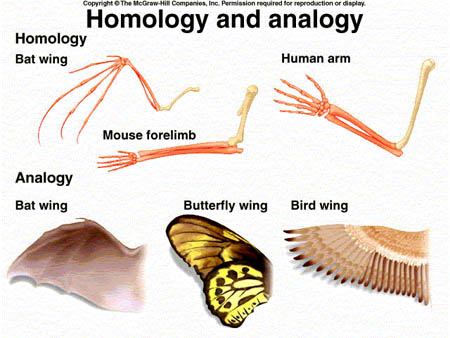
Convergent Evolution
Two species with different ancestors converging to produce analogous structures (species’ appearance becomes more similar over time while remaining genetically different)
Divergent Evolution
Two species with a common ancestor diverging to produce homologous structures (species’ appearance becomes more different over time while remaining genetically related)
Homologous
Same basic bone structure that came from a shared ancestor
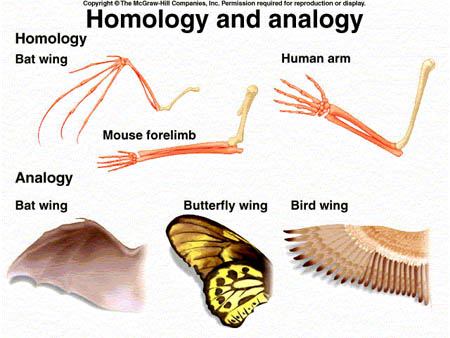
Analogous
Separate evolutionary origins but converged due to environment, traits did not come from a shared ancestor
Darwin’s Findings
He proposed the theory of natural selection (but lacked understanding of genetics) and laid the foundation of mechanisms that lead to speciation.
Species
A population whose members can interbreed and produce viable, fertile offspring. Species form when populations are isolated, allowing them to evolve independently.
Prezygotic Barrier
Mechanism that prevents fertilization from happening in the first place (ex: geographic isolation, behavioral isolation, mechancial isolation, etc)
Postzygotic Barrier
Fertilization happens, but there is a mechanism that prevents the hybrid from being fertile and viable or having fertile offspring (morphological differences, gametic isolation, hybrid viability + fertility + breakdown
Geographic Isolation
Species occur in different areas due to a physical barrier (Prezygotic Barrier, Allopatric Speciation)
Ecological Isolation
Species occur in same region, but occupy different habitats so rarely encounter each other (Prezygotic Barrier, Sympatric Speciation)
Temporal Isolation
Species that breed during different times of day, different seasons, or different years (Prezygotic Barrier, Sympatric Speciation)
Behavioral Isolation
Unique behavioral patterns and rituals isolate species (Prezygotic Barrier, Sympatric Speciation)
Mechanical Isolation
Morphological differences can prevent successful mating (Prezygotic Barrier, Sympatric Speciation)
Gametic isolation
Sperm of one species may not be able to fertilize eggs of another species
Post Reproduction Barrier
Prevents hybrid offspring from developing into viable, fertile adults (Postzygotic Barrier, Sympatric Speciation), and could also lead to hybrid breakdown
Hybrid Viability
Genes of different parent species may interact and impair the hybrid’s development
Reduced Fertility
Even if hybrids are vigorous, they may be sterile (chromosomes of parents may differ in number or structure and meiosis in hybrids may fail to produce normal gametes)
Reduced Breakdown
Hybrids may be fertile and viable in the first generation, but when they mate, offspring are feeble or sterile.
Gradualism
Speciation occurs gradually (small changes over a long time)
Punctuated Equilibrium
Speciation occurs in rapid bursts of change mixed with long periods of little or no change
Ring Species
A ring of populations that encircles an area of unsuitable habitat
Background Extinction
The ongoing extinction of individual species due to environmental or ecological factors such as climate change, disease, loss of habitat, or competitive disadvantage in relation to other species
Mass Extinction
When a large number of species go extinct over a short period of time due to major events (tend to be followed by rapid diversification and adaptive radiation)
Adaptive Radiation
Evolution of many species when introduced to new environmental challenges