essays for tectonics
 Call Kai
 Learn
Learn Practice Test
 Spaced Repetition
 Match
Match Flashcards
 Knowt Play
1/80

There's no tags or description
Looks like no tags are added yet.
Name | Mastery | Learn | Test | Matching | Spaced | Call with Kai |
|---|
No analytics yet
Send a link to your students to track their progress
81 Terms
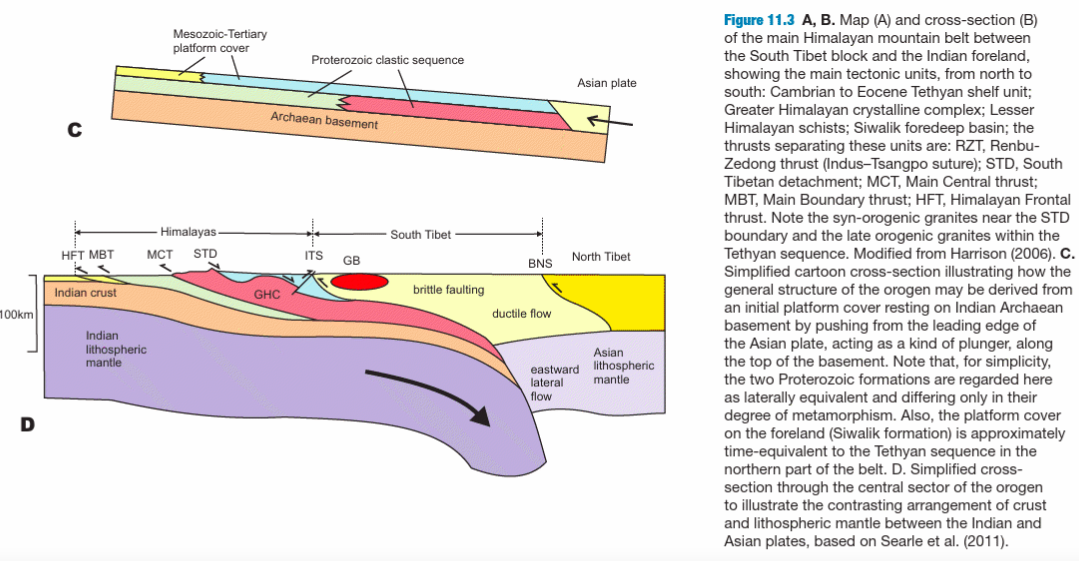
main parts of the Himalayan cross section
Indian lithospheric mantle, Indian Crust, Asian lithospheric mantle, Greater Himalayan Crystalline Complex, Gangdese Batholith in South Tibet, North Tibet, Asian lithospheric mantle
when did the Indian plate reach the margin of Asia
~ 50 Ma in the Eocene
what happened in the Indian-Asian collision
sutures between ancient blocks exploited → renewed thrusting & sig strike-slip faulting
Gondwana detachment
Cretaceous event, Indian plate broke away, beginning its rapid N migration
magnetic-stripe data used for
evidence from Indian Ocean used to track speed and timing of India’s movement toward Asia
approximate time of the initial contact between India & Asia margin
50 Ma in Eocene
pre-collisional phase of the Himalayas
subduction of Indian oceanic crust beneath Asia, pre-thickened Asian crust before continental collision
climax of Himalayan orogeny
20 Ma in the Miocene
Himalayan Moho deepening
result of extreme crustal shortening and thickening, esp prominent in Central sector
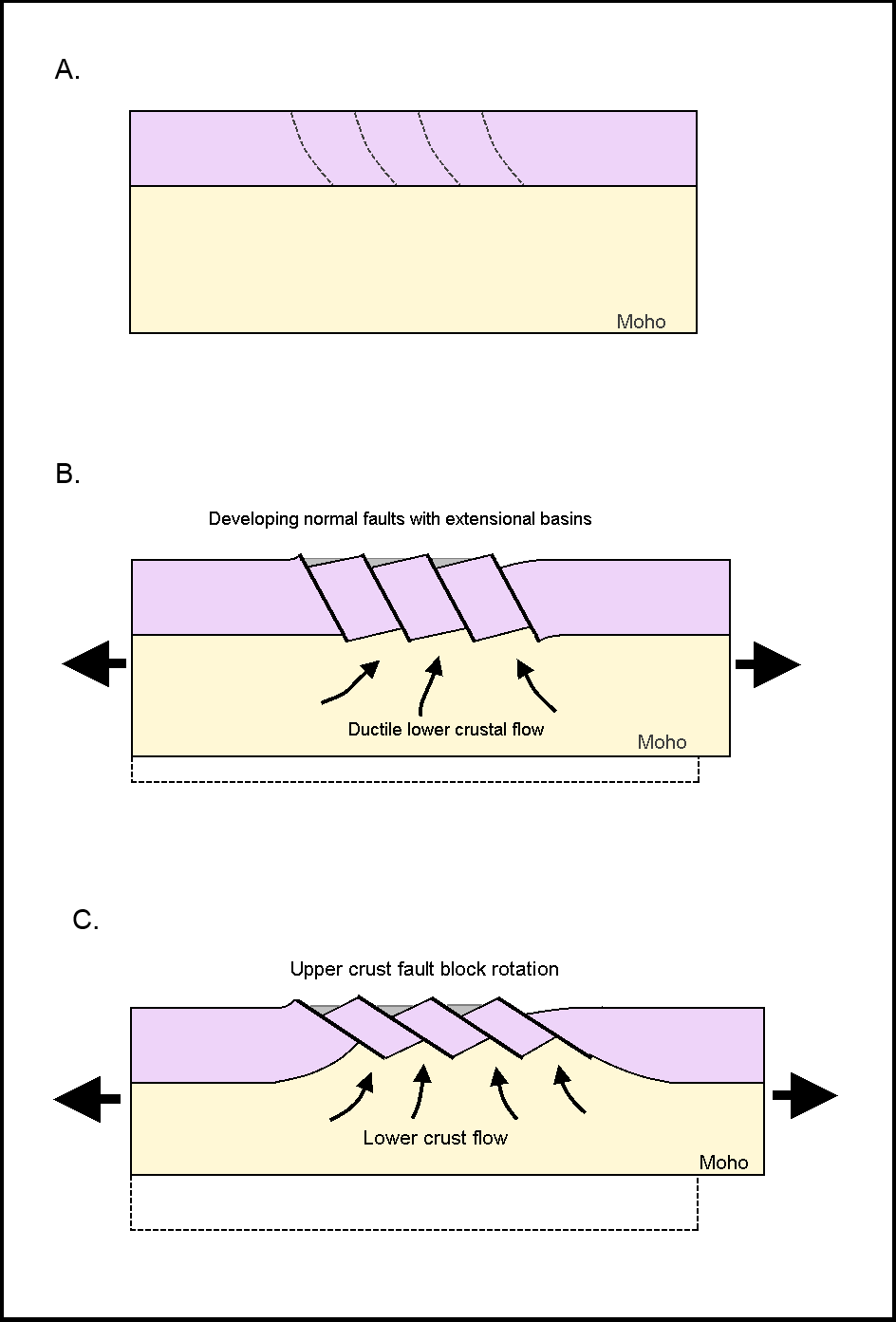
ductile crustal flow
movement of warmer middle & lower crust laterally as it deforms under pressure
brittle upper crust
deforms thru sideways block faulting rather than flowing
topographic limit
crust is so thick it cannot support its weight → g collapse & lateral expansion
isostatic response
upward ‘rebound’ of lightened crust after denudation removes mass from peaks
ends of the Himalayan range
Western Pakistan/Karakorum, Eastern Myanmar
Himalayan modern thrusting
ongoing activity along S border causes topography to propagate S
Himalayan outline
50 Ma Eocene collision starts, 20 Ma Miocene uplift peaks, shortening/thickening Moho, vertical to lateral movement
what primary plate movements drove the Alpine orogeny during the Jurassic and Cretaceous?
Opening of the Central Atlantic moved Africa E relative to eu, opening of S Atlantic forced Africa to rotate anti-clockwise moving it N/NW towards eu
what caused the dramatic ‘Alpine Arc’ geometry?
Pliocene opening of Balearic & Tyrrhenian Seas (Western Mediterranean, rotated Italian peninsula nearly 90 deg, curved orogen into arc
describe sequence of collisions leading to ‘Main Alpine Event’
Subduction of Tethys oceanic crust beneath Apulia
Pennine terrane collided w/ Apulia
combined mass struck eu margin during Miocene
Describe Jura Mountains & Helvetic Zone
Jura: outermost external zone; Mesozoic sediments in a ‘thin-skinned’ fold-thrust belt
Helvetic: deformed eu margin; massive fold nappes cored by eu crystalline basement directed NW
what is the sig of Piemont Zone
critical suture containing ophiolites of Tethys Ocean, high-pressure metamorphism proves these rocks were subducted to great depths before exhumation
define ‘Pre-Alps’ & ‘Dent Blanche’ in structural terms
both are klippe (thrust outliers), Pre-Alps transported far from origin via gravity gliding, Dent Blanche African/Apulian basement resting on top of Pennine units
What are the S Alps & the Insubric Fault?
Insubric fault, a major structural boundary w/ sig strike-slip movement
S Alps, internal zone ft SE-directed thrusting creating ‘fan’ geometry w/ NW-directed Helvetic zone
contrast deformation styles of the outer vs interior Alpine zones
Jura/S Alps brittle thin-skinned fold-thrust geometry linked to a sole thrust
Helvetic/Pennine ductile fold nappes & shear zones formed at greater depths
what is ‘back-thrusting’ & why did it occur in the Alps?
occurred in Miocene, orogen became too thick to move NW, cont convergence forced material upward & backward (SE) toward Apulian plate
What are the modern crustal thickness (Moho) & shortening estimates for the Alps
shortening > 250 km, crustal thickness > 50 km
name the 2 primary Himalayan depocenters/basins & their sediment types
Northern Foredeep Basin between Helvetic & Jura, filled w/ Molasse (Oligocene-Miocene non-marine clastics/conglomerates)
Southern Po Basin on Apulian plate, sediment shed from S Alps
modern Alpine orogeny
dynamic, climax ~25 Ma, ongoing African convergence, eu plate rotation cause ongoing uplift & seismic activity
where do collisional orogens fit into Wilson cycle, what is the primary physical driver?
rep final stage, driven by convergence of continental lithosphere after an ocean basin completely subducted, bcuz continental crust buoyant, resists subduction → thickening & shortening
tapered orogenic wedge model
entire mtn belt acts as wedge-shaped mass, slides along basal detachment, geometry determined by balance of internal rock strength & friction at base
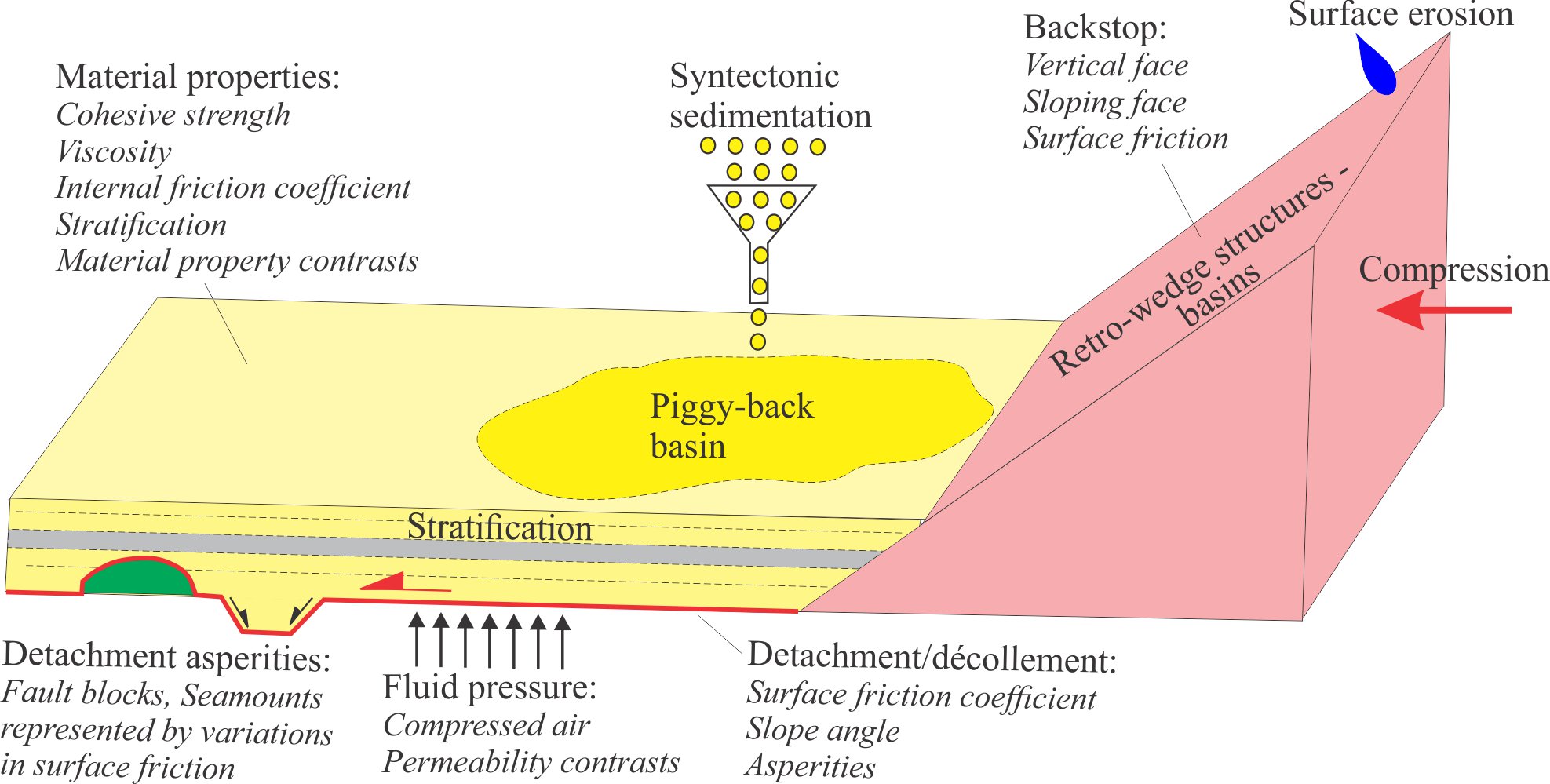
how is a foreland basin formed, what is its purpose?
orogenic load causes underlying lithosphere to flex down, collects sediments eroded from rising peaks
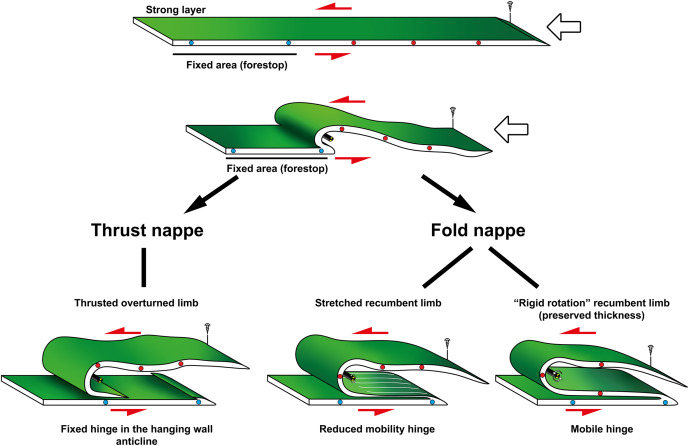
define a nappe & minimum distance requirement
nappe is a large, sheet-like body of rock moved from its og position along a thrust fault, it must have moved over 2-5 km
fold nappes vs thrust nappes
fold - massive fold becomes so recumbent that lower limb shears out
thrust - tectonic ‘slices’ of crust stacked on top of one another
what occurs at margins of an orogen regarding sedimentary cover?
thin-skinned deformation: cover often stripped from crystalline basement & deformed into series of parallel anticlines, synclines, & thrusts
Himalayan ‘wedge’ & ‘thickened interior’
wedge = Indian Plate, thickened interior = Tibetan Plateau
provide an example of complex nappe stacking from the Alps
Helvetic & Penninic nappes, older crystalline basement frequently thrust over younger sedimentary cover
basal detachment
‘floor’ thrust the wedge slides on
lithospheric flexure
bending of plate that creates basins
shortening
result of horizontal compression often 100s of km
recumbent fold
essentially horizontal & leads to fold nappes
orogenic memorization
wedge (the whole mtn), basin, nappe (internal slices), crust flexes to makes basin, folds to make nappes
orogenic essay outline
the big squeeze, the orogenic wedge, regional responses of basins, nappes & folds
joints vs faults
joint is fracture w/ no visible displacement, fault is fracture w/ obvious displacement
define a normal fault & its components
hanging wall moves downward relative to footwall, dominant structure in extensional settings
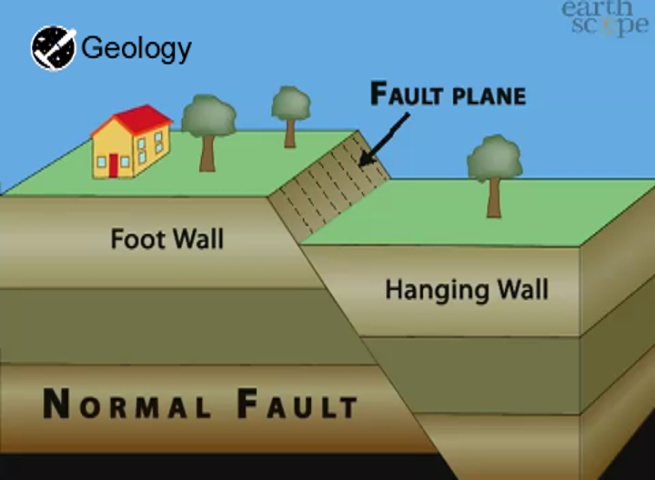
slickensides, slickenlines, slickenfibres
polished surfaces created by friction have lines/grooves & crystal growths, indicate direction of movement e.g. dip-slip, oblique-slip
describe process of brittle rock failure
elastic strain (micro-cracks open) until shear strength is exceeded, stored elastic e released in earthquake at point of failure
how do faults ‘grow’ or propagate?
stress concentrates at ends of new fracture driving it to spread, often creating splay faults & can eventually form massive escarpments
horsts vs grabens
horst uplifted block of crust between 2 normal faults, graben depressed block between
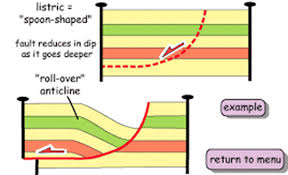
listric fault & rollover anticline
fault that curves from steep near surface to horizontal at depth, anticline fold in hanging wall to fill gap created as block slides along listric fault plane
evolution of crustal stretching
extension, fault blocks rotate, og horizontal strata become inclined, faults themselves rotate to lower angle becoming ‘locked’ & inefficient
West Iberian margin
deep-ocean drilling showed multiple generations of faults, oldest rotated until sub-horizontal basal crustal detachments, extreme cases mantle exposed at seafloor
final stage of extensional evolution
extreme lithospheric thinning, new ocean basin & transition from continental rift to seafloor spreading
rifting outline
extension → continental rifts → ocean basins
joints vs faults, normal fault anatomy, slickensides
fracture, elastic strain → brittle failure → propagation & splay faults ex East African rift
geometry horst & graben (planar) → listric faults & rollover anticlines (curved)
adv evo: fault rotation, basal detachments, mantle exposure e.g. W Iberian margin
describe the lithospheric thickness and geothermal gradient at a divergent boundary
thinnest at ridge axis, thickens as it moves away & cools, high geothermal gradient due to upwelling asthenosphere
list 4 std layers of crustal structure at a MOR
pelagic sediments (absent at axis)
basaltic lava pillows & sheet flows
sheeted dykes
gabbro intrusions (remnants of magma chambers)
explain decompression melting & its magmatic signature
as peridotite rises, pressure decreases while temp stays constant, causes rock to cross solidus w/o added heat, produces MORB
MORB
Mid-Ocean Ridge Basalt, low in silica & volatiles, leads to effusive eruptions
define Benioff Zone
plane of earthquakes marking descending cold dense slab
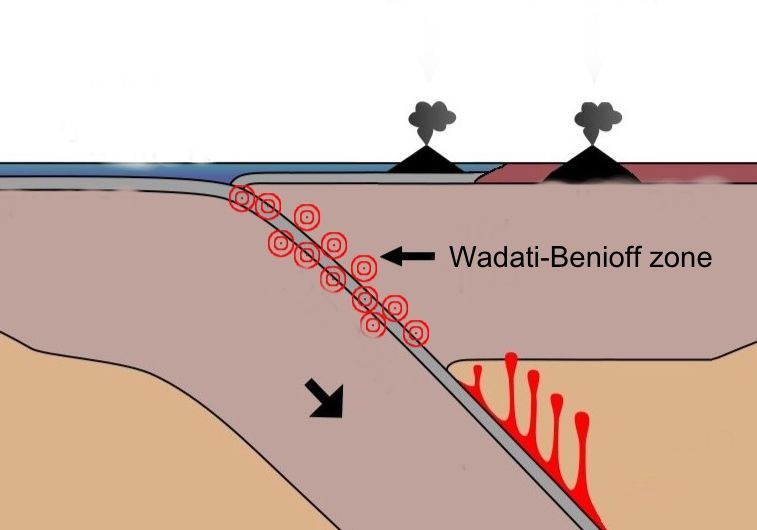
3 primary regions of a subduction system
forearc region between trench & ac often containing accretionary wedge
volcanic arc
backarc region behind arc may experience extension
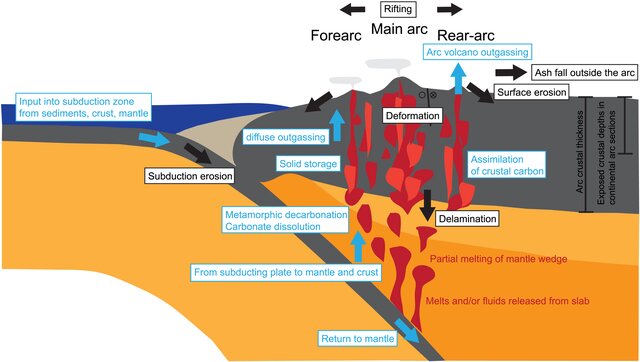
flux melting
as slab descends, hydrous minerals (chlorite, amphibole) break down & release volatiles (water) into overlying mantle wedge, lowers melting temp (shifts solidus) allowing mantle to melt at its current ambient temp
why is subduction zone volcanism typically explosive compared to divergent volcanism?
magmas rich in volatiles & often travel thru thick continental crust, become silica-rich & highly viscous → high-pressure, explosive stratovolcanoes
contrast role of solidus in P-T diagram for divergent & subduction zones
divergent: peridotite rises upward to cross normal solidus (pressure drop), subduction: solidus shifted left (to lower temp) due to chem change
what are the primary mantle rocks involved in both divergence & subduction?
peridotite from asthenosphere, method of triggering melt differs (decompression vs fluxing)
divergent & subduction essay outline
divergent = birth & decompression, subduction = recycling & flux
divergent thin lithosphere, high geotherm, layering, MORB
subduction asymmetric, Benioff Zone, arcs, fluids, stratovolcanoes
earths structure reg of mantle flow, pressure, temp, composition
what is the most critical rheological factor in folding?
viscosity contrast between folding layer & surrounding matrix
competent vs incompetent layers
competent e.g. sandstone, limestone, high viscosity, stiff, resists internal deformation, controls fold’s wavelength
incompetent e.g. shale/marl, low viscosity, soft, flows easily into hinges, acts as a passive matrix
how do layer thickness & viscosity ratio affect dominant wavelength
thicker, more competent layers produce larger, more widely spaced folds
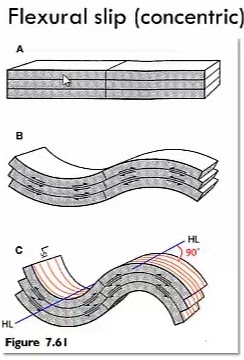
describe flexural slip & its geometric result
layers slide past one another along bedding planes like deck of cards, producing parallel folds where layer thickness remains constant when measured perpendicular to bedding
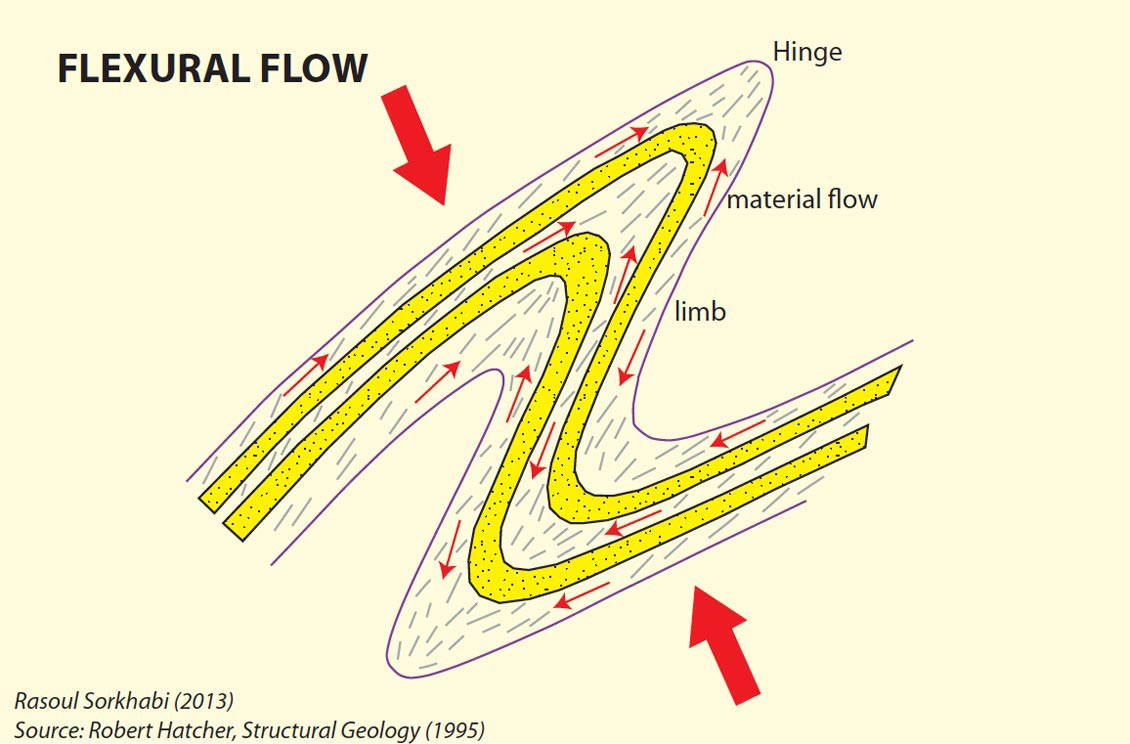
flexural flow
material flow ductiley from limbs toward hinge, produces similar folds where layer thickness constant only measured parallel to axial surface (limbs thinned, hinges thickened)
buckling
high viscosity contrast, stress parallel to layering, rhythmic, periodic & typically symmetric folds
what determines if a fold hinge is rounded or angular
high viscosity contrast in thick layers is rounded, extreme viscosity contrast in thin layers creates chevron w/ sharp hinges & straight limbs to minimize e needed to bend stiff layers
how does total strain affect fold style
initial/low strain creates gentle, open folds, high strain like orogenic cores creates tight, isoclinal folds, complex strain → refolded folds
fold shape & style essay
fold morphology (hinge, limbs, symmetry, tightness) record of rheology
viscosity contrast & wavelength
flexural slip & flow, buckling
hinge shape & strain evolution
what is a lithospheric strength profile
graph mapping max stress rock can sustain before failing vs depth
avg strength profile in lithosphere
brittle to ductile regimes
how do P-T affect rock strength
pressure increases brittle strength w/ depth by increasing friction, temp decreases strength in ductile regime by weakening atomic bonds
2 main effects of fluids on rock deformation
brittle: fluid pressure counteracts confining pressure, facilitating fracturing, ductile: hydrolytic weakening enters crystal lattices, allowing easier dislocation movement & flow
continental vs oceanic mineralogical strength
quartz becomes weaker & ductile at lower temps than olivine found in the mantle
continental multi-layered profile
strong brittle upper crust, weak ductile lower crust (Quartz-rich), 2nd strength ‘spike’ at Moho w/ Olivine mantle
what controls strength of oceanic lithosphere
thermal age
how does strain rate influence deformation
higher rates promote brittle fracturing