AP Psychology
 Call Kai
 Learn
Learn Practice Test
 Spaced Repetition
 Match
Match Flashcards
 Knowt Play
1/249

Earn XP
Description and Tags
All units flashcards
Name | Mastery | Learn | Test | Matching | Spaced | Call with Kai |
|---|
No analytics yet
Send a link to your students to track their progress
250 Terms
Behavioral Perspective
Unit 0 (7 Perspectives)
Focuses on observable behaviors. Does not deal with thoughts or unobservable influences.
Biological Perspective
Unit 0 (7 Perspectives)
Focuses on the biological underpinnings of behavior, such as genetics, brain structures, and neurochemical processes.
Cognitive Perspective
Unit 0 (7 Perspectives)
Focuses on mental processes such as perception, memory, and problem-solving, examining how people think and process information.
Socio-cultural Perspective
Unit 0 (7 Perspectives)
Focuses on how social and cultural factors influence behavior and mental processes, including norms, values, and interactions with others.
Evolutionary Perspective
Unit 0 (7 Perspectives)
Focuses on how natural selection and adaptation influence behavior, highlighting the role of evolution in shaping psychological traits.
Psychodynamic Perspective
Unit 0 (7 Perspectives)
Focuses on how unconscious drives and conflicts shape behavior and personality, emphasizing the influence of early childhood experiences. Sigmund Freud. Weird, not what happens at all.
Humanistic Perspective
Unit 0 (7 Perspectives)
Emphasizes the growth potential of healthy people. All about good, positive.
Handsight Bias
Unit 0 (Research Methods - cognitive errors)
Thinking you predicted an outcome AFTER it happens.
Overconfidence
Unit 0 (Research Methods - cognitive errors)
People overestimate their knowledge and abilities.
Barnum Effect
Unit 0
People accept very general or vague characterizations of themselves as accurate. Ex: Fortune Telling
Theory
Unit 0 (The Scientific Method)
Big organized idea/framework. Ex: Big Bang, Evolution.
Hypothesis
Unit 0 (The Scientific Method)
Testable prediction, usually from theory. Must be able to prove false, testable.
Operational Definition
Unit 0
Definition of procedures in a study. Defines/explains how variables will be measured. Ex: Numbers, time.
Replication
Unit 0
Repeating a previous research study. Helps confirm results.
The Case Study
Unit 0
Atypical individuals.
Naturalistic Observation
Unit 0
Observing in nature w/o interfering.
The Survey
Unit 0
Tool of research for correlational studies. Ex: Self-report, population, sample.
Random Sampling
Unit 0
Random to avoid bias.
Convenience Sampling
Unit 0
Easy but biased.
Representative Sample
Unit 0
Sample must represent the whole population you study.
Wording Effects
Unit 0
The wording can change answers.
Correlation
Unit 0
A measure of how much 2 factors change together, does not predict causation.
Correlation Coefficient: Tells us how strong the relationship is
Illusory Correlation
Unit 0
Illusion, fake correlation.
Experiment
Unit 0
Determines cause and effect by manipulating 1 factor and controlling all other influences.
Independent Variable
Unit 0
What is manipulated (changed).
Dependent Variable
Unit 0
What is measured (depends).
Cofounding Variable
Unit 0
Variable other than IV that may affect results
Experimental Group
Unit 0
Receives the treatment.
Control Group
Unit 0
Does not receive the treatment. (May get a placebo)
Random Assignment
Unit 0
Randomly choose experiment and control groups. Eliminates alternative explanations. Reduces the influence of cofounding variables. Different from random sample.
Single-blind Procedure
Unit 0
Participants don’t know if they have treatment.
Double-blind Procedure
Unit 0
Neither researchers or participants know who has treatment. Reduces experimenter bias. (Cofounding variable)
Placebo Effect
Unit 0
Results caused by expectation. Expecting it makes it happen. (DB controls placebo effect)
Quantitative Research
Unit 0
Data based, uses numbers, data, objective scales.
Qualitative Research
Unit 0
Narrative based. Relies on observations, descriptions, interviews, etc. (No numbers)
Histogram
Unit 0
A bar graph with %.
Mean
Unit 0
Arithmetic average. Commonly used for data analysis.
Median
Unit 0
Middle score.
Mode
Unit 0
Occurs the most.
Skewed Distribution
Unit 0
Uneven. Heavy on one end.
Range
Unit 0
Subtract lowest data point from highest.
Standard Deviation
Unit 0
Tells you how much variety of scores there are around mean. Are they together or clustered? More clustered together = more reliable.
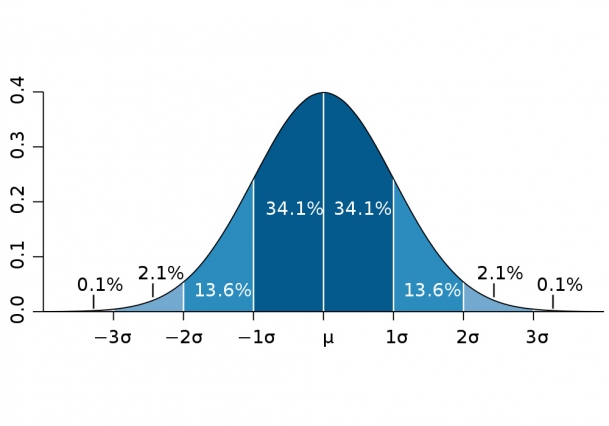
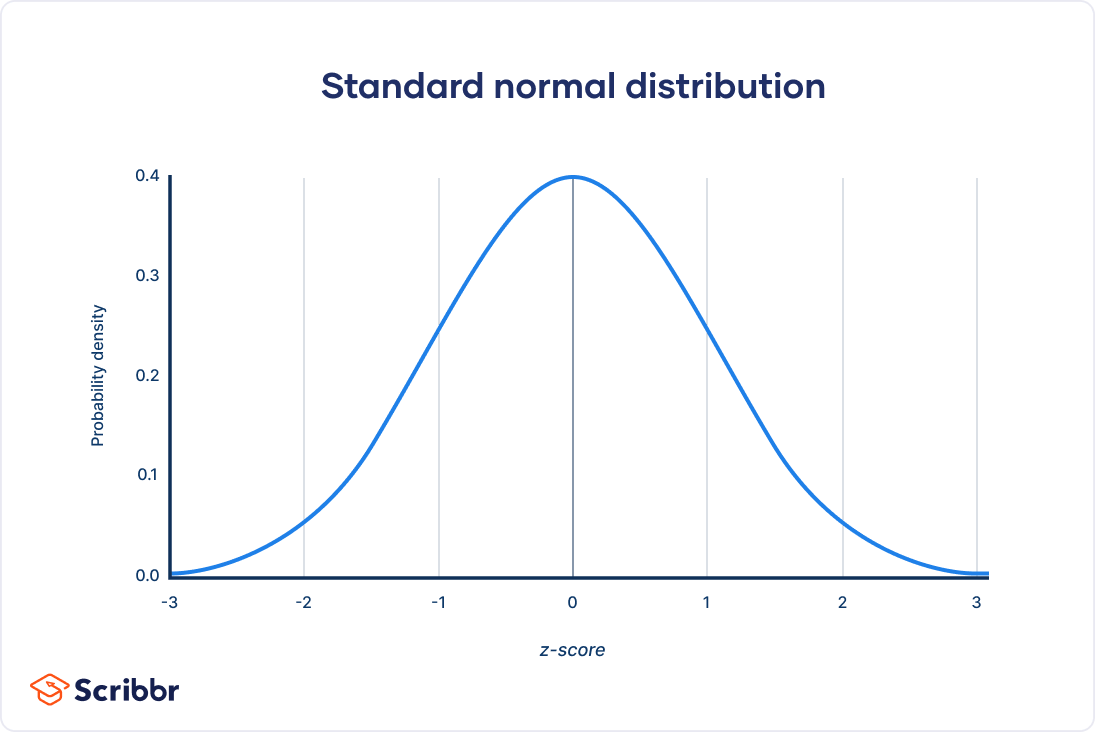
Normal Distribution
Unit 0
The mean, median, and mode are all the same.
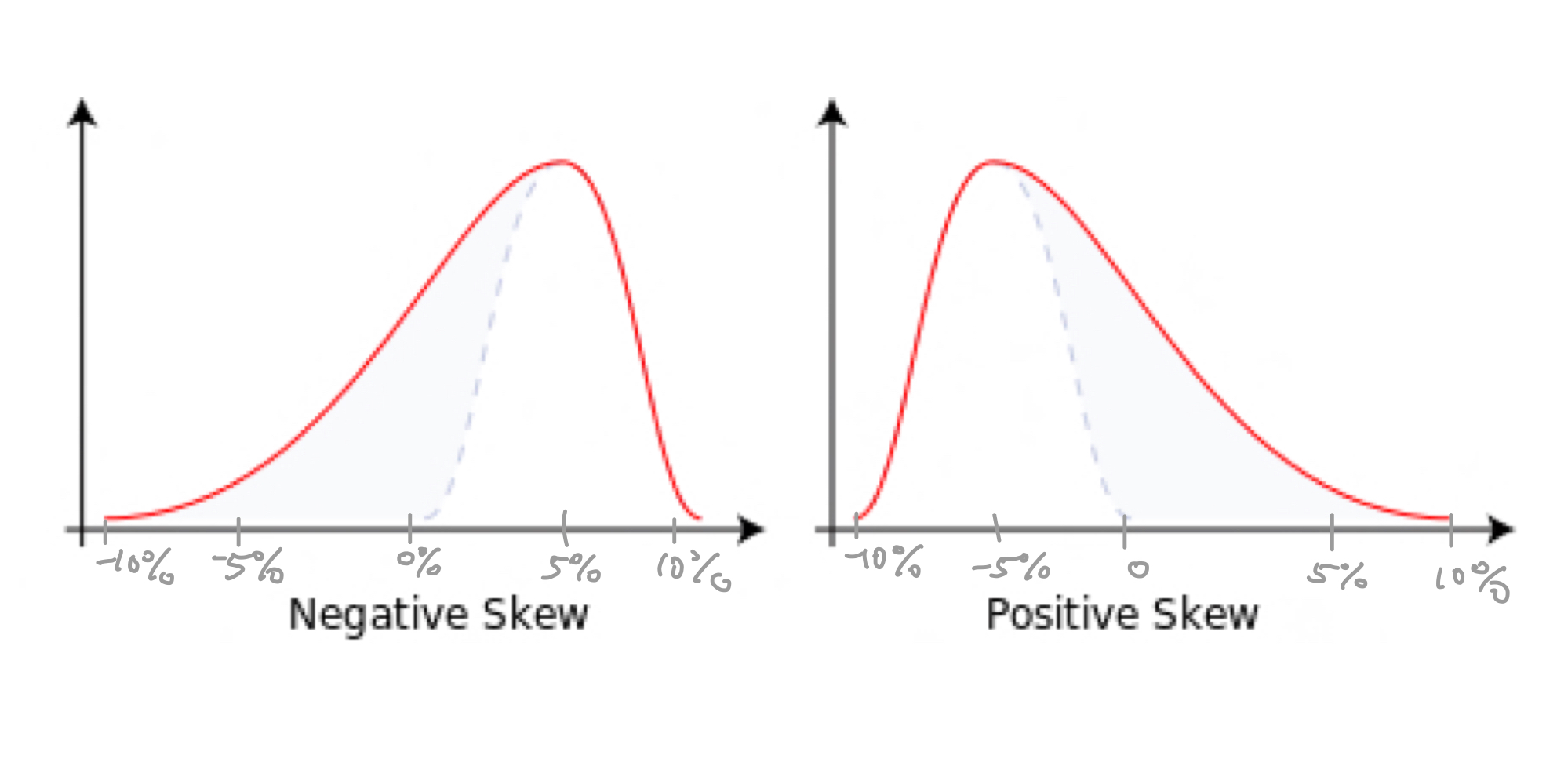
Distributions; Positive & Negative
Unit 0
Outliers skew distributions.
If group has one high score, the curve has a positive skew (contains more low scores).
If a group has a low outlier, the curve has a negative skew (contains more high scores).
Inferential Statistics
Unit 0
Where we can use data gathered from descriptive statistic studies and apply it to the whole population.
Statistical Significance: <5% odds that results are due to change. It means our results were good.
Meta-Analysis
Unit 0
Research method that analyzes the results of many previous studies on the same variables. Crunch data to see if there’s a trend.
Bias
Unit 0
Showing an unfair favorable attitude.
Experimenter Bias
Unit 0
Experimenter treats groups differently to confirm hypothesis.
Self-report Bias
Unit 0
When participants have to report their own thoughts, feelings, etc.
Social Desirability Bias
Unit 0
Answering questions in a way to be viewed favorably.
Hawthorne Effect
Unit 0
Just the fact that you know you are in an experiment can cause change.
Validity
Unit 0
Does the study measure what it’s supposed to?
Ethics in Animal Research
Unit 0
Minimize harm - infection, illness, pain. Only harm when there’s no alternative.
Ethics in Human Research
Unit 0
Informed Consent: Must tell participants enough so they can choose if they want to participate
Protect from harm and discomfort
Maintain confidentiality
Debriefing: After experiment, must explain purpose and any deceptions used
Internal Review Board
Unit 0
Made of panel. Oversees studies and approves them. Makes sure they are ethical.
Directionality Problem
Unit 0
Which direction does the correlation go?
3rd Variable Problem
Unit 0
Different variable is responsible for relationship
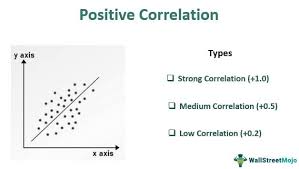
Positive Correlation
Unit 0
Variables increase & decrease together.
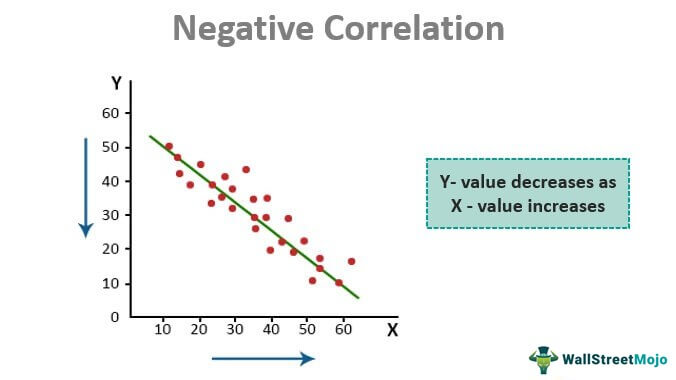
Negative Correlation
Unit 0
As one variable increases the other decreases.
Bimodal
Unit 0
Has two modes - usually indicates good bad scores.
NT
Unit 1
Neurotransmitter
AP
Unit 1
Action Potential
NS
Unit 1
Nervous System
Evolutionary Psych
Unit 1
Study how natural selection influences behavior.
Heredity (Nature)
Unit 1
How genes influence your behavior
Environment (Nurture)
Unit 1
How outside situations influence your behavior (school).
NATURE VS. NURTURE: ANSWER IS BOTH
Unit 1
Twin/Adoption Studies:
Genetics: Identical twin will have a higher percentage of also developing a disease
Environment: Identical twins raised in different environments show differences
Central Nervous System
Unit 1
Brain and spinal cord.
Peripheral Nervous System
Unit 1
Rest of the NS - relays to Central NS.
Somatic Nervous System
Unit 1
Voluntary movement, has sensory and motor neurons.
Autonomic Nervous System
Unit 1
Involuntary organs (heart, lungs, etc) - contains sympathetic NS, parasympathetic NS.
Sympathetic Nervous System
Unit 1
Fight/flight (generally activates - exception digestion)
Parasympathetic Nervous System
Unit 1
Rest/digest (generally inhibits - exception digestion)
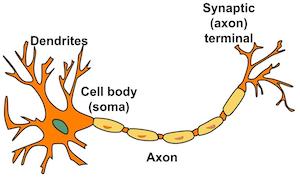
Neuron
Unit 1
Basic cell of the NS.
Dendrites
Unit 1
Receive incoming NTs (spamming phone).
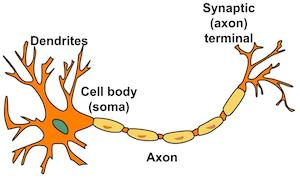
Axon
Unit 1
Carry signals away from the cell body.
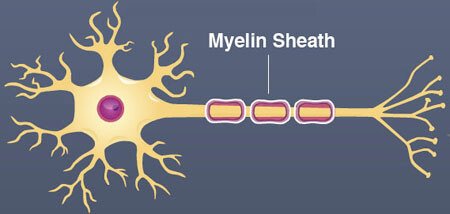
Myelin Sheath
Unit 1
Speeds up AP down axon, protects axon.
Synapse
Unit 1
Gap between neurons.
Sensory Neurons
Unit 1
Receive sense signals from environment - signals to move - send signals from brain.
Motor Neurons
Unit 1
Cells in spinal cord/brain responsible for reflex arc
Reflex arc - important stimuli skips the brain and routes through the spinal cord for immediate reactions (hand on a hot flame).
GLIA
Unit 1
Support cells - give nutrients and clean up around neurons.
Neurons Fire with an Action Potential
Unit 1
Ions move across membrane sends an electrical charge down the axon.
Resting Potential
Unit 1
Neuron maintains a -70mv charge when not doing anything.
Depolarization
Unit 1
Charge of neuron briefly switches from negative to positive - triggers the AP.
Threshold of Depolarization
Unit 1
Stimulus strength must reach this point to start the AP.
All or nothing principle
Unit 1
Stimulus must trigger the AP past its threshold, but does not increase the intensity or speed of the response (flush the toilet).
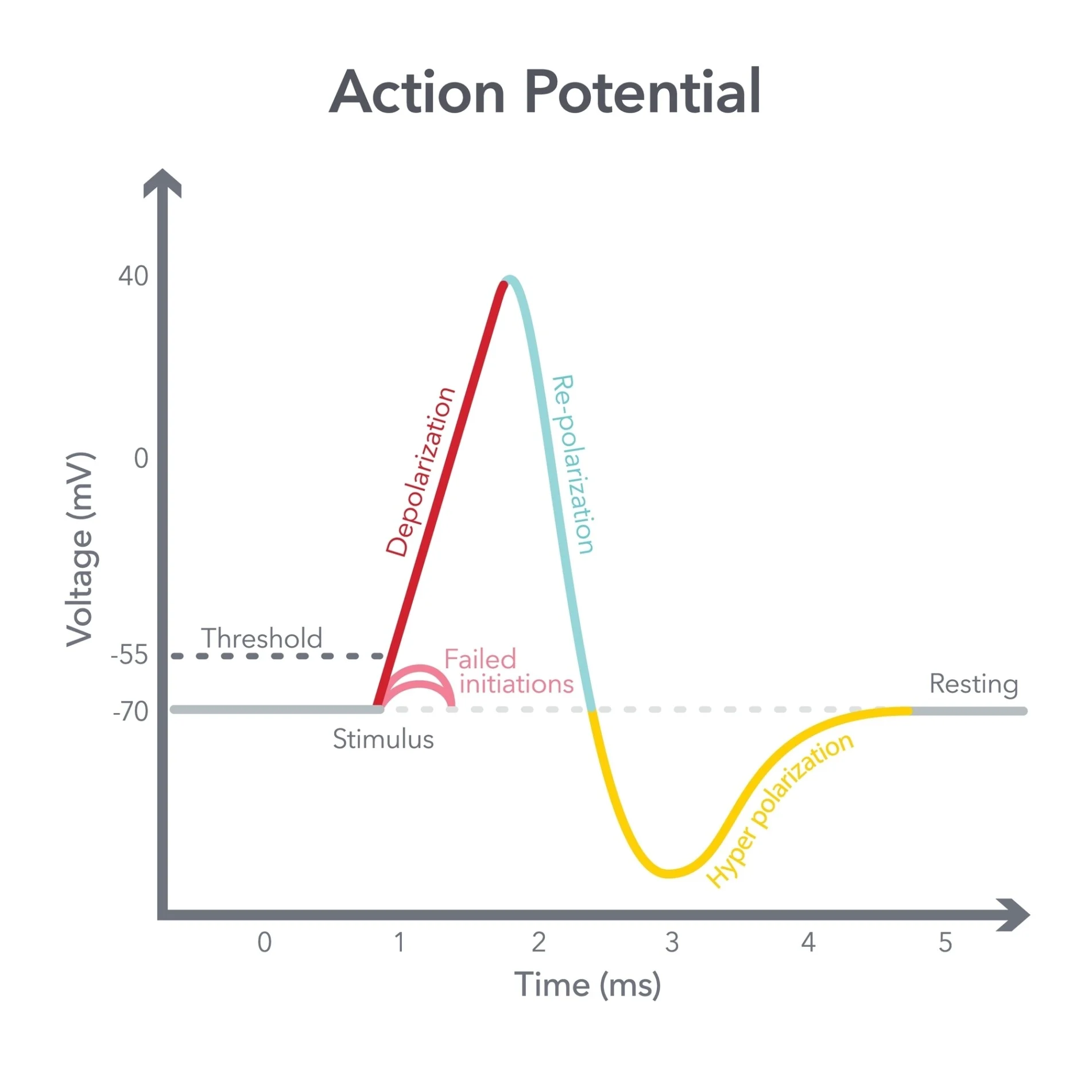
Refractory Period
Unit 1
Neuron must rest and reset before it can send another AP (toilet resets).
Neurotransmitters (NT)
Unit 1
Chemicals released in synaptic gap, received by neurons. Classified as excitatory (increase APs in other neurons) or inhibitory (decrease APs).
GABA
Unit 1
(NT) Major inhibitory NT - helps manage stress, anxiety, and fear by preventing nervous system overactivity, while also playing key roles in regulating sleep, focus, and motor control.
Glutamate
Unit 1
(NT) Major excitatory NT (glutes excite you!) Stimulates neurons to send signals.
Dopamine
Unit 1
(NT) Reward (short term) & fine movement - in hypothalamus, associated with addiction.
Serotonin
Unit 1
(NT) Moods (long-term) emotion, sleep, in amygdala, too little associated with depression.
Acetylcholine (ACh)
Unit 1
(NT) Memory and movement - in hippocampus, associated with Alzheimer’s.
Norepinephrine
Unit 1
(NT) Sympathetic NS - too little associated with depression.
Endorphins
Unit 1
(NT) Decrease pain.
Substance P
Unit 1
(NT) Pain regulation (abnormality increases pain and inflammation).
Hormones
Unit 1
If not in the nervous system, it’s a hormone.
Oxytocin
Unit 1
Love, bonding, childbirth, lactation.
Adrenaline
Unit 1
Fight/flight
Leptin
Unit 1
Makes you full (stops hunger).