NURS 5220-Advanced Health Assessment-Test 2
 Call Kai
 Learn
Learn Practice Test
 Spaced Repetition
 Match
Match Flashcards
 Knowt Play
1/168

There's no tags or description
Looks like no tags are added yet.
Name | Mastery | Learn | Test | Matching | Spaced | Call with Kai |
|---|
No analytics yet
Send a link to your students to track their progress
169 Terms
cranial nerve I
Olfactory (smell)
cranial nerve II
Optic - vision
cranial nerve III
Oculomotor
cranial nerve IV
Trochlear
how do you test cranial nerve IV?
cardinal field test
cranial nerve V
Trigeminal
how do you test trigeminal nerve?
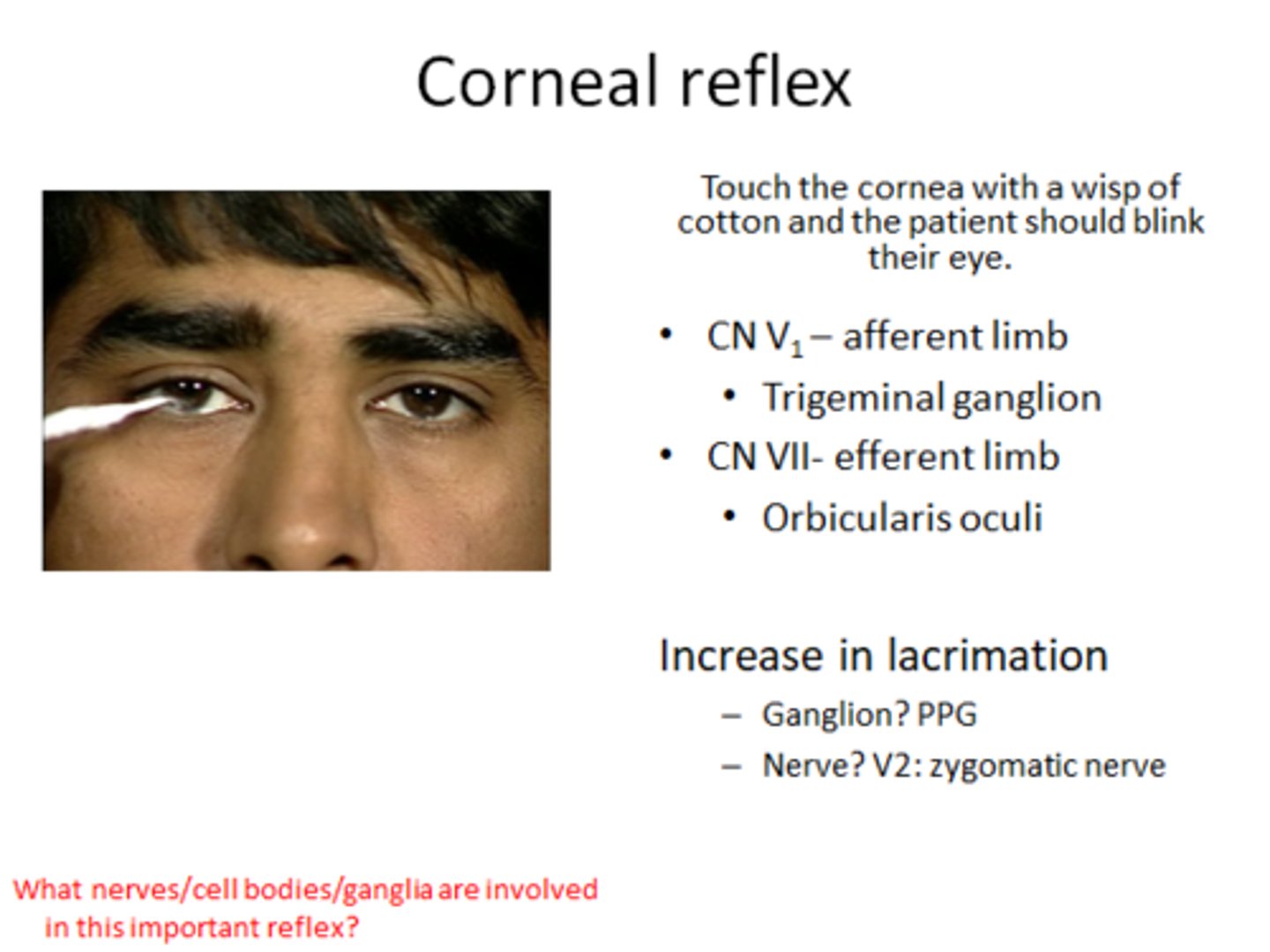
Assess facial sensation (hot/cold, dull/sharp), clench teeth, corneal reflex
cranial nerve VI
Abducens
how do you test abducens nerve?
6 fields of gaze for lateral movement
what 3 cranial nerves are tested together?
III, IV, VI
corneal reflex
blinking in response to corneal stimulation by a cotton wisp
Cranial Nerve VII
Facial - controls most facial expressions & secretion of tears & saliva & taste
cranial nerve VIII
Vestibulocochlear (hearing and balance)
cranial nerve IX
Glossopharyngeal
cranial nerve IX and X
ability to identify sour and bitter tastes on each side of the tongue. Test gag reflex and ability to swallow.
Inspect palate and uvula for symmetry with speech sounds and gag reflex. Observe for swallowing difficulty. Evaluate quality of guttural speech sounds (presence of nasal or hoarse quality to voice).
cranial nerve XI
spinal accessory
how to test cranial nerve XI?
shrug shoulders and rotate head against resistance
cranial nerve XII
Hypoglossal
how to test cranial nerve XII?
inspect tongue in mouth and while protruded for symmetry, tremors, atrophy. Inspect tongue movement toward nose and chin. Test tongue strength with index finger when tongue is pressed against cheek. Evaluate quality of lingual speech sounds (l, t, d, n).
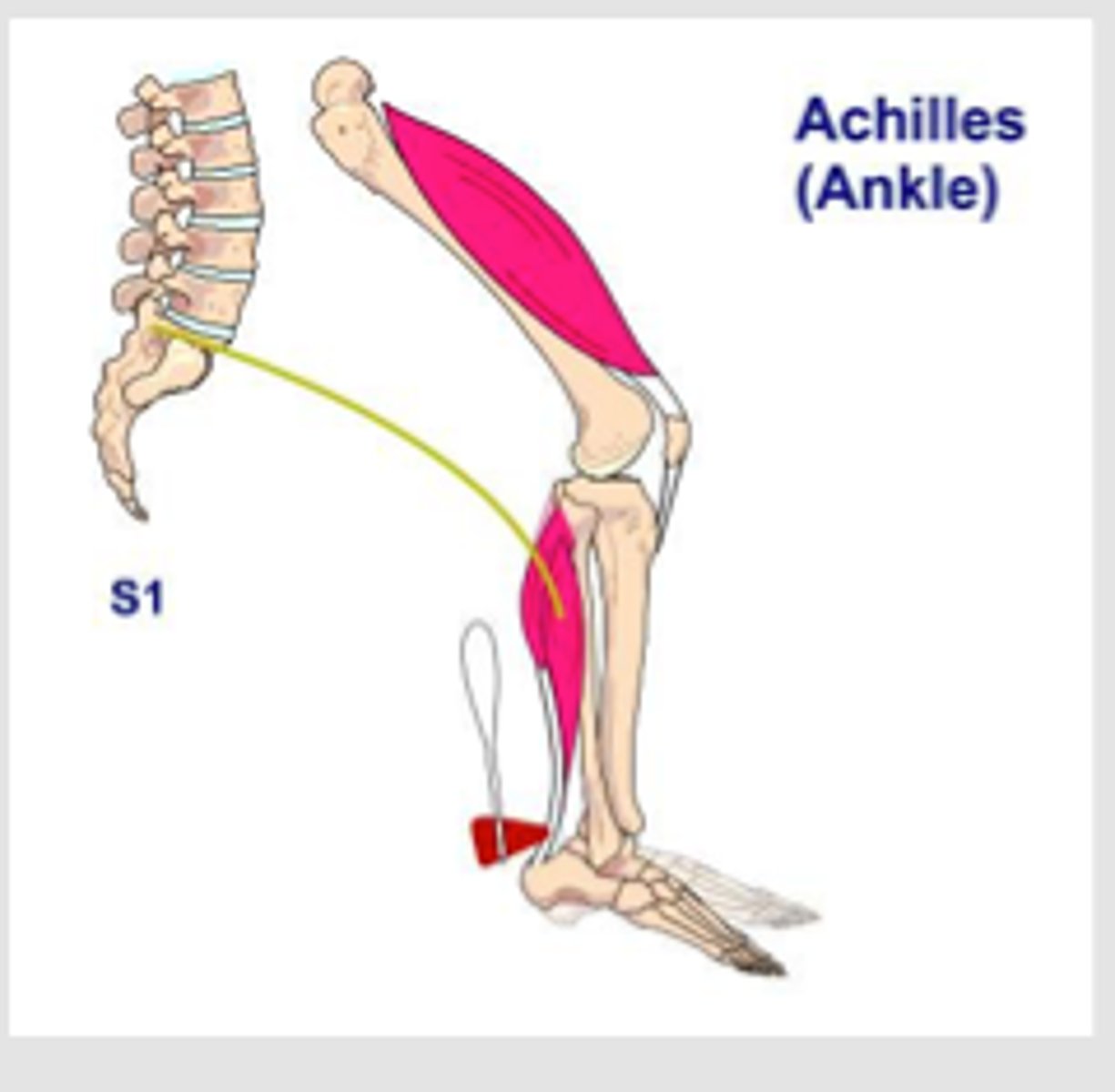
achilles reflex tests....
plantar flexion of foot
DTR 0
no response
DTR 1+
sluggish or diminished
DTR 2+
active or expected response
DTR 3+
more brisk than expected, slightly hyperactive
DTR 4+
brisk, hyperactive with intermittent or transient clonus
clonus
rapidly alternating involuntary contraction and relaxation of a muscle in response to sudden stretch
extension of the elbow tests for....
triceps reflex
triceps reflex
C7-C8
Kernig's sign
a diagnostic sign for meningitis marked by the person's inability to extend the leg completely when the thigh is flexed upon the abdomen and the person is sitting or lying down
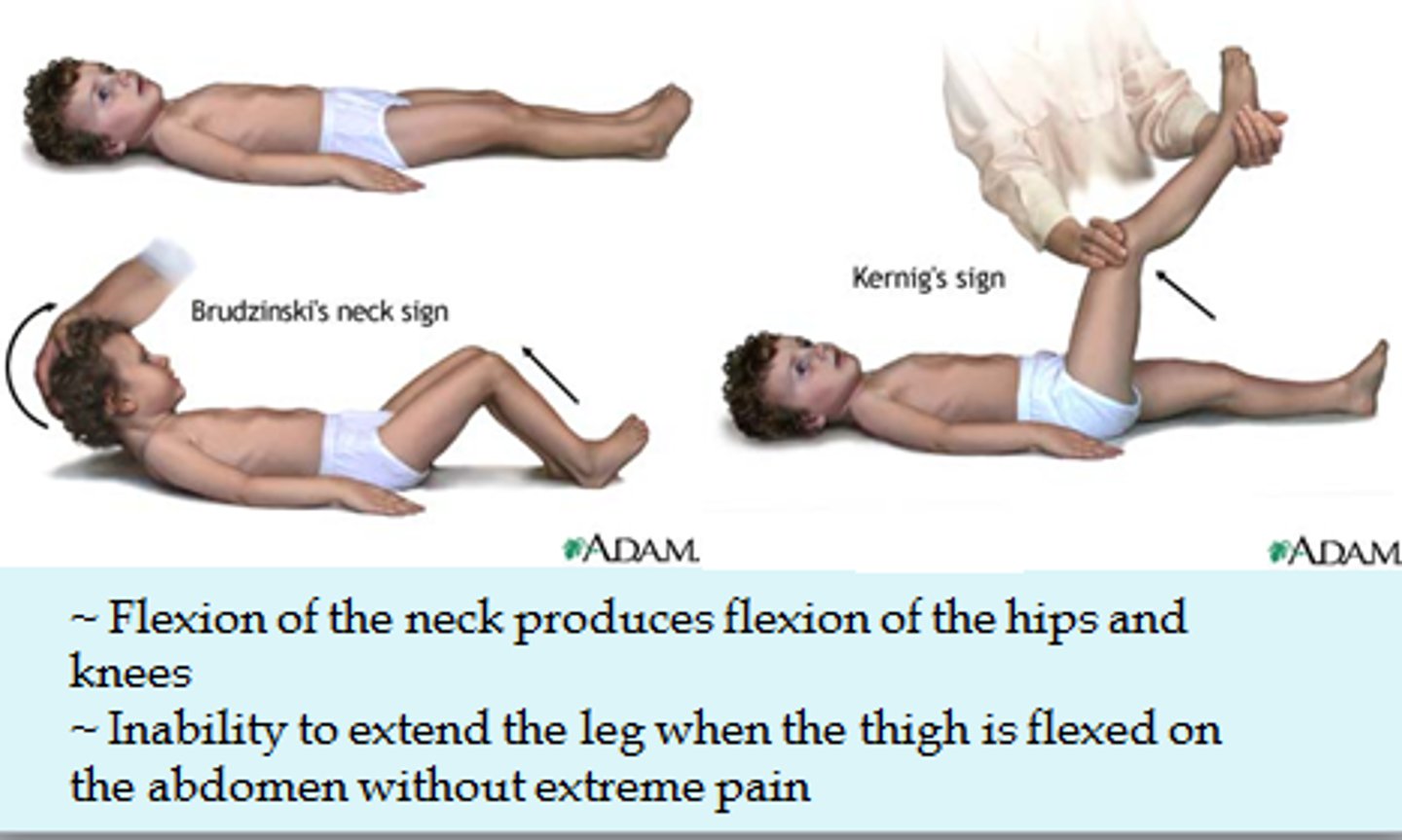
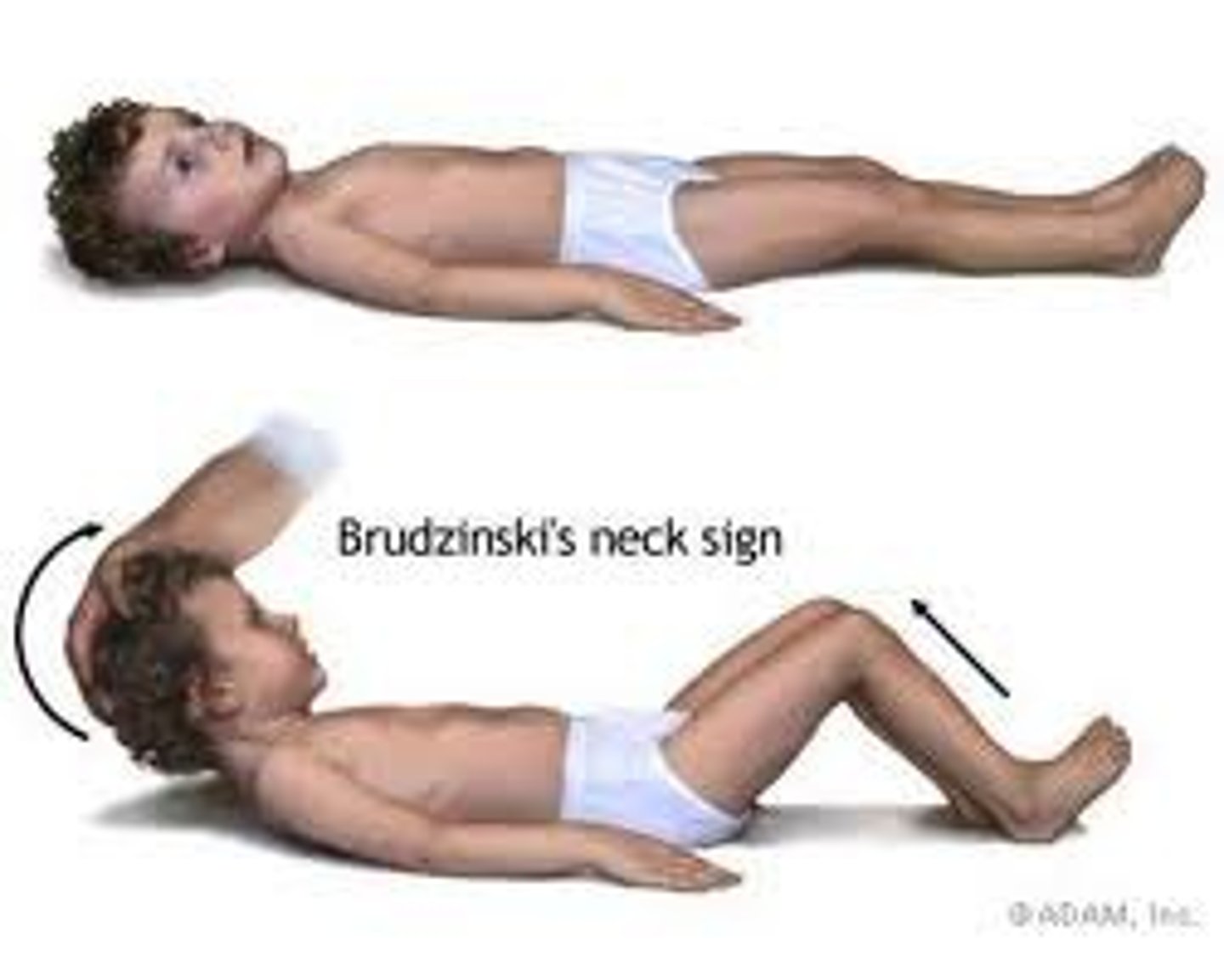
Brudzinski's sign
Sign of meningitis; positive when a patient's legs lift involuntarily when lifting a patient's head
palmar grasp
An infant reflex that occurs when something is placed in the infant's palm; the infant grasps the object.
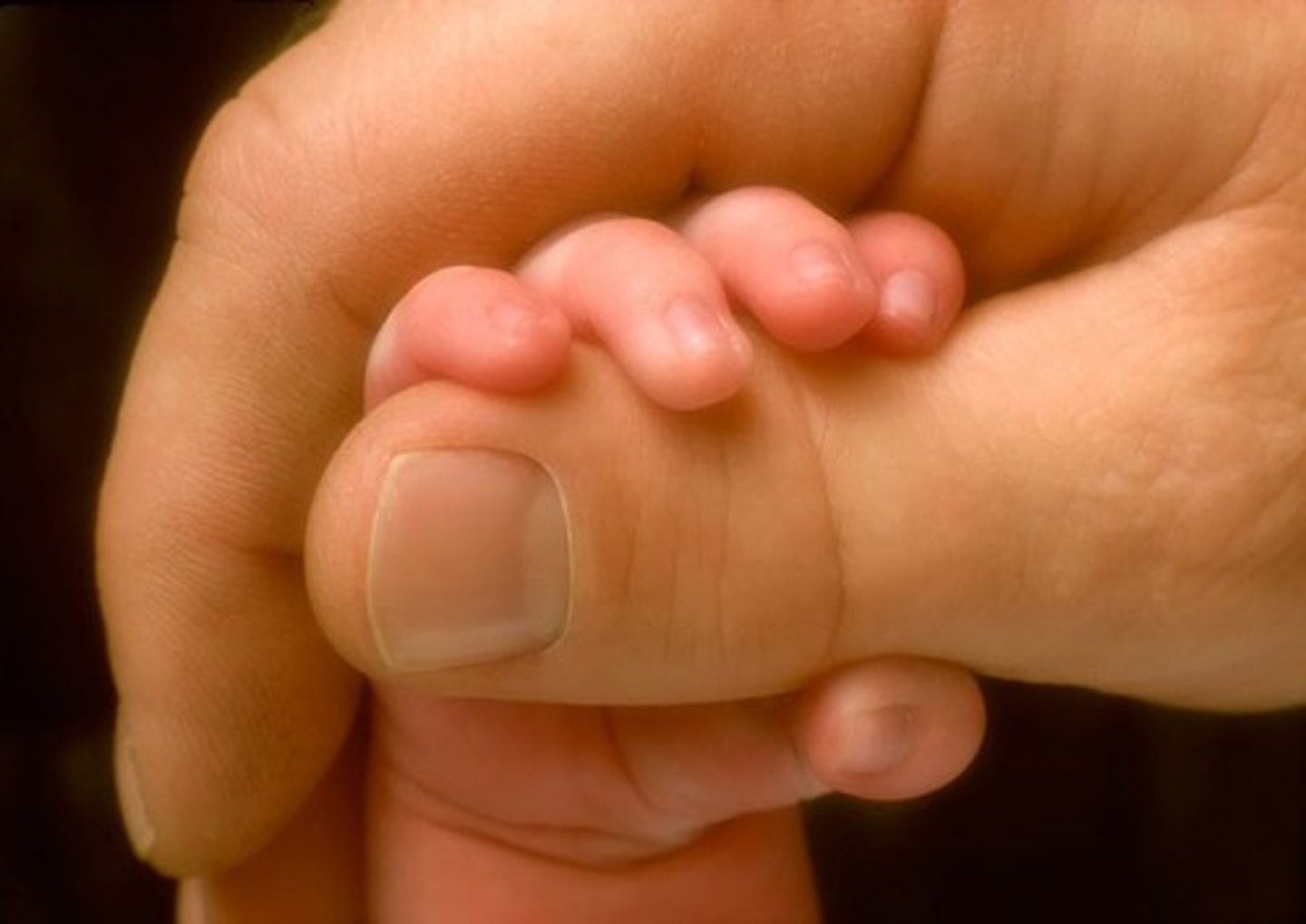
Plantar grasp
Touch sole of foot, toes curl downwards
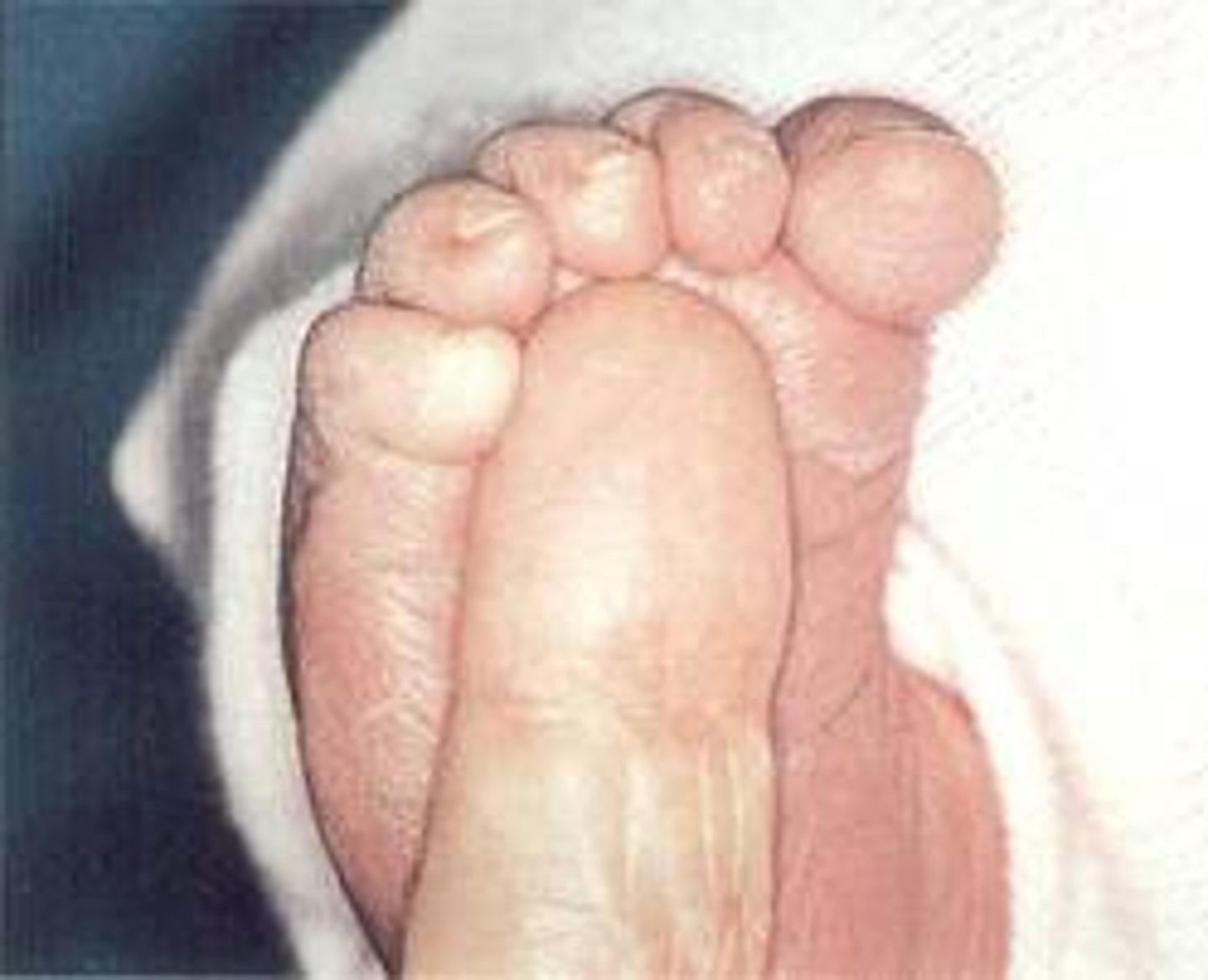
Moro reflex
Infant reflex where a baby will startle in response to a loud sound or sudden movement.
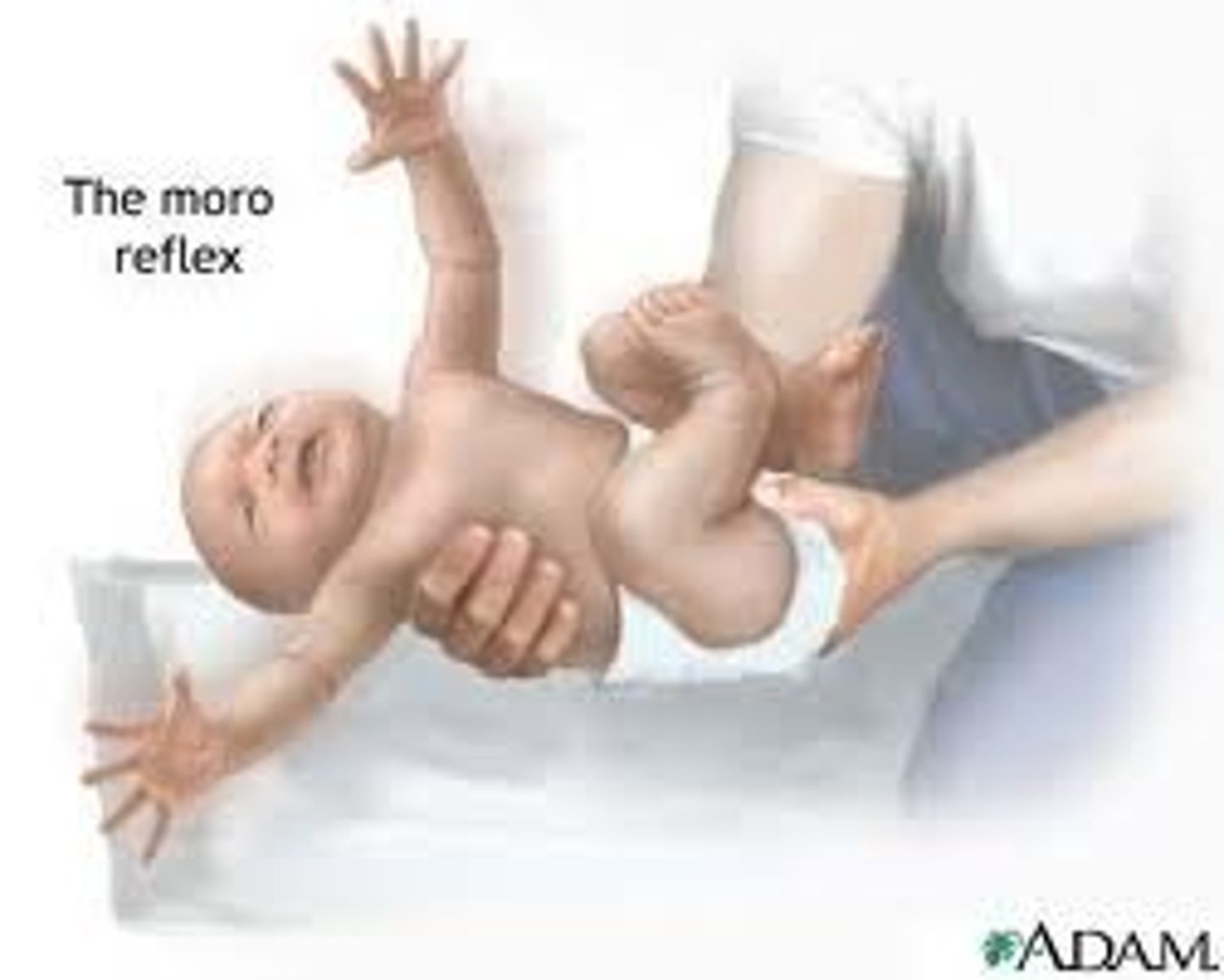
placing reflex
Hold the infant upright under the arms, close to a table.
Let the dorsal "top" of foot touch the underside of the table.
Note flexing of hip and knee, followed by extension at the hip, to place foot on table
Reflex appears at 4 days after birth
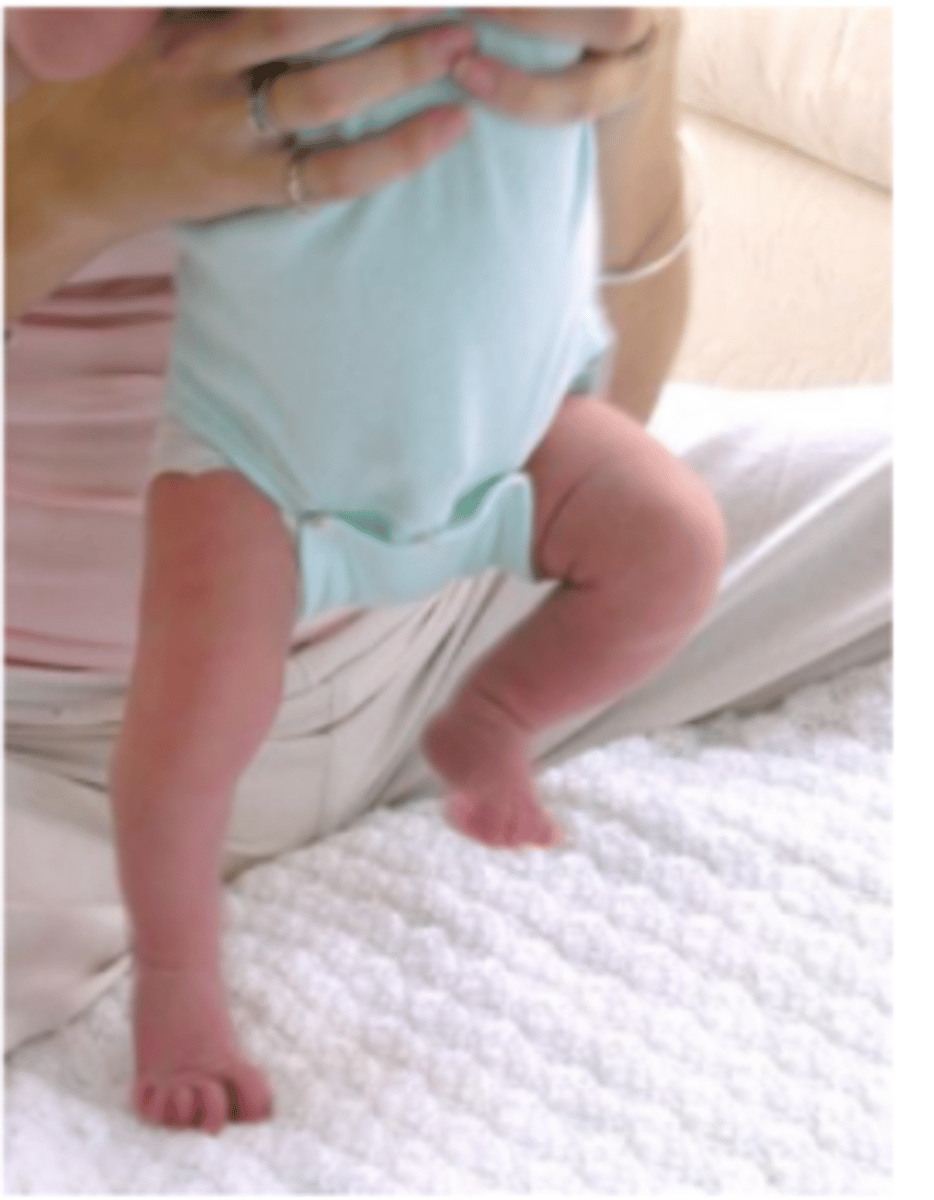
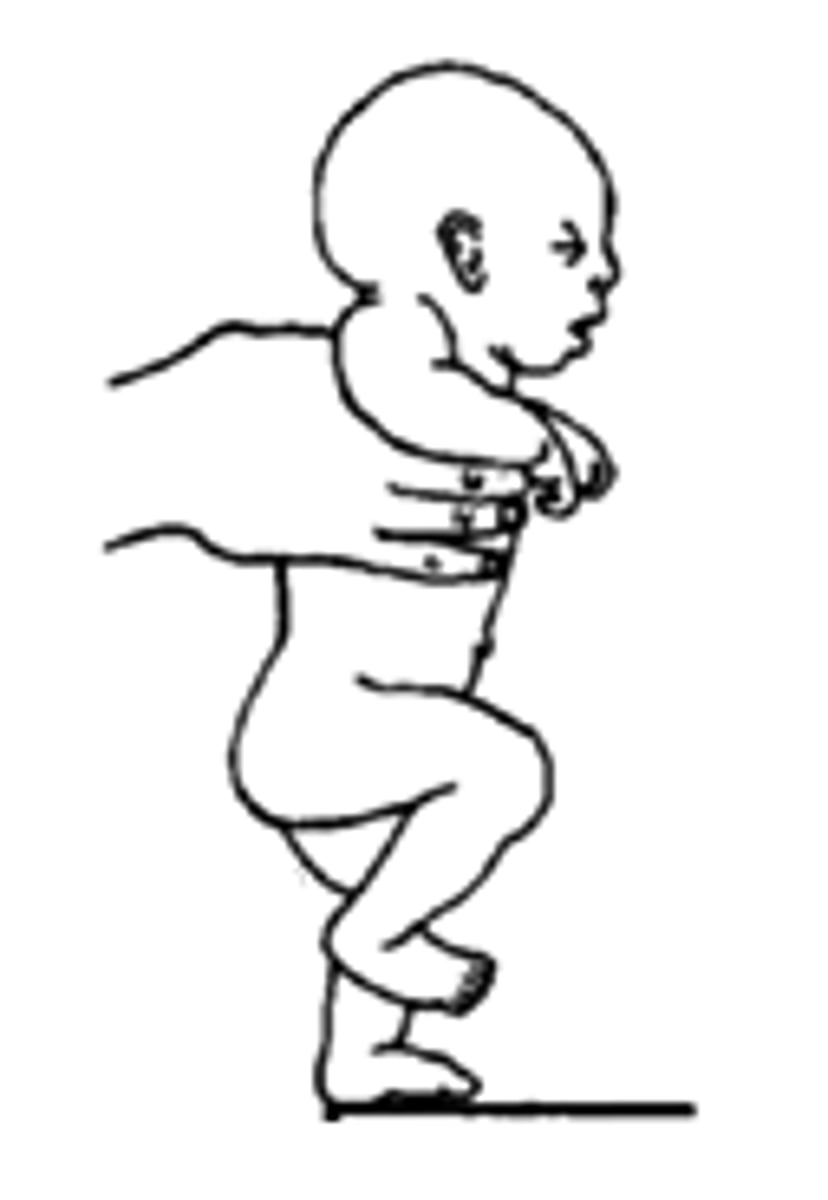
stepping reflex
a neonatal reflex in which an infant lifts first one leg and then the other in a coordinated pattern like walking
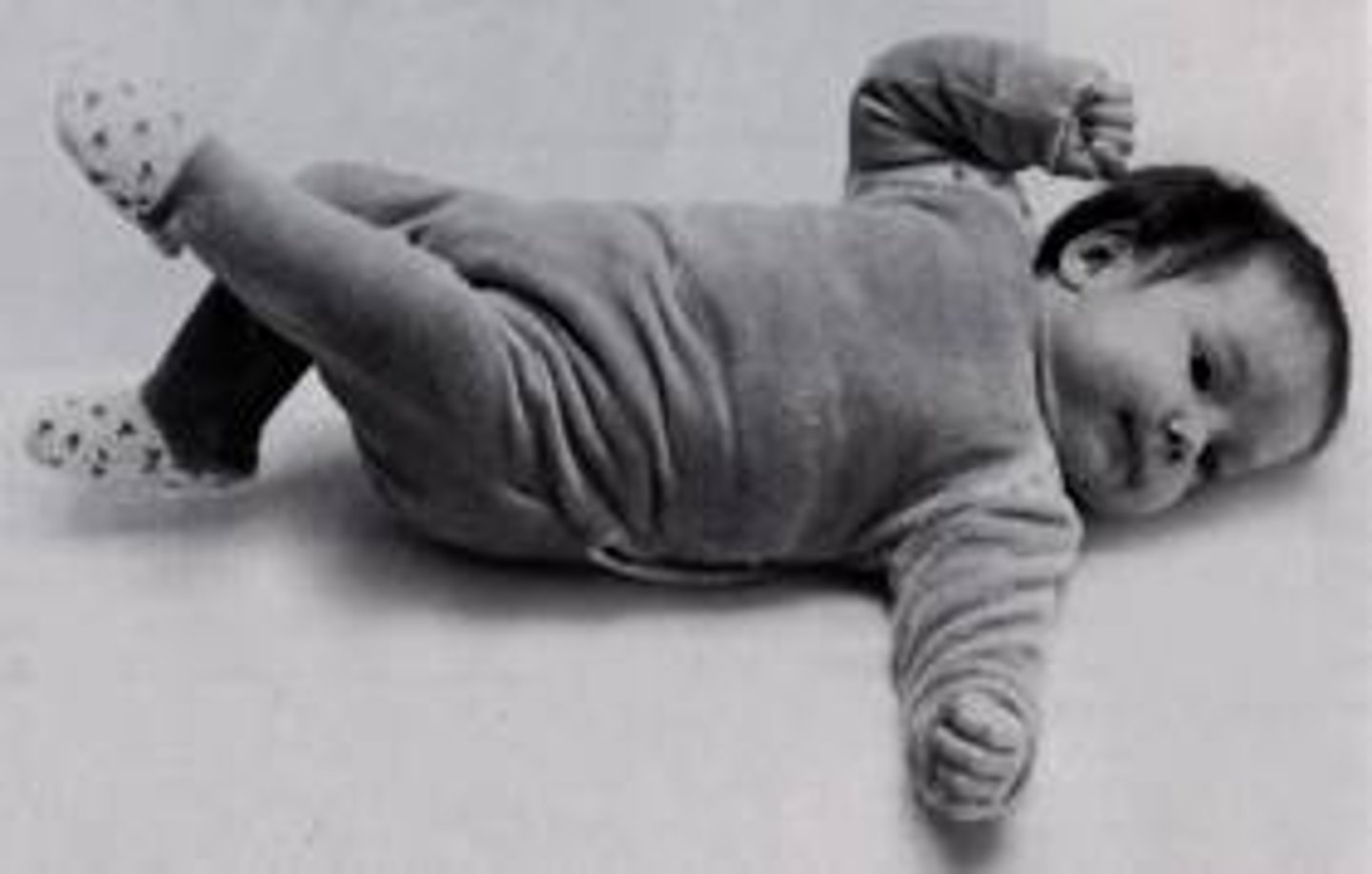
fencing reflex
When baby is lying on her back, depending on the direction of the head- that arm will straighten while the other hand raises up at the head
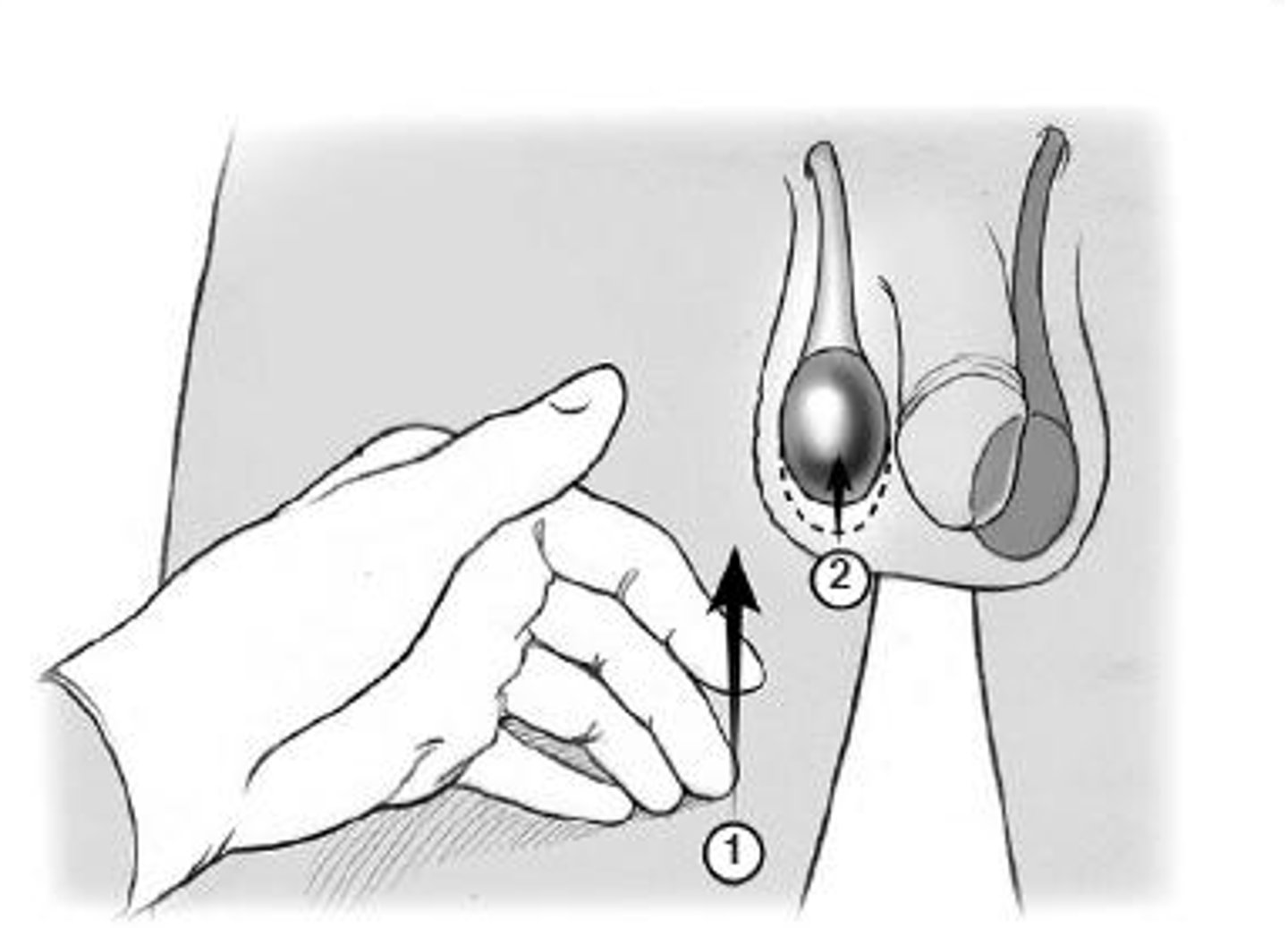
cremasteric reflex
upward pull of testicles and scrotum due to touch
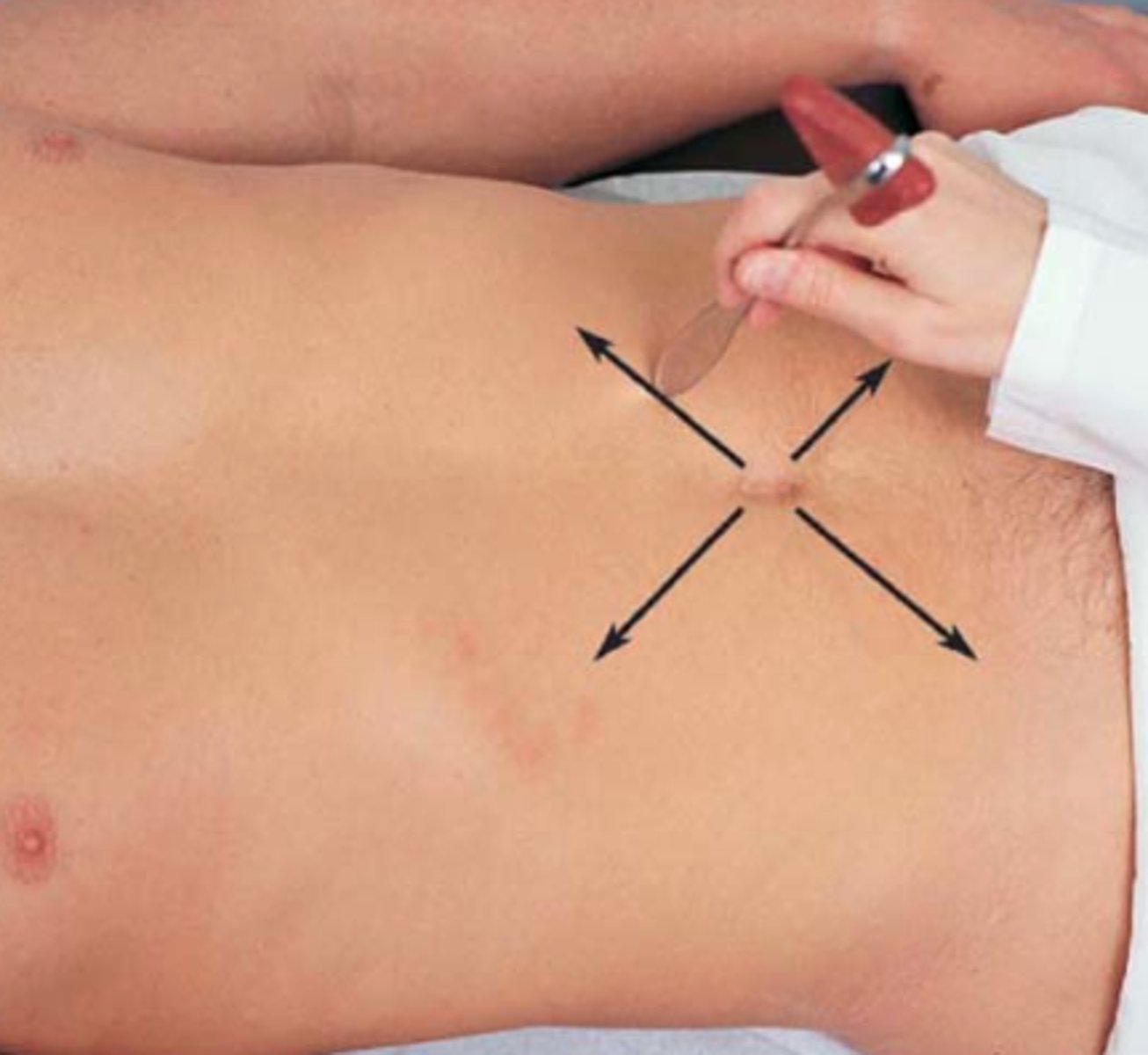
abdominal reflex
Normal response is the ipsilateral contraction of the abdominal muscles with an observed deviation of the umbilicus towards the stroke.
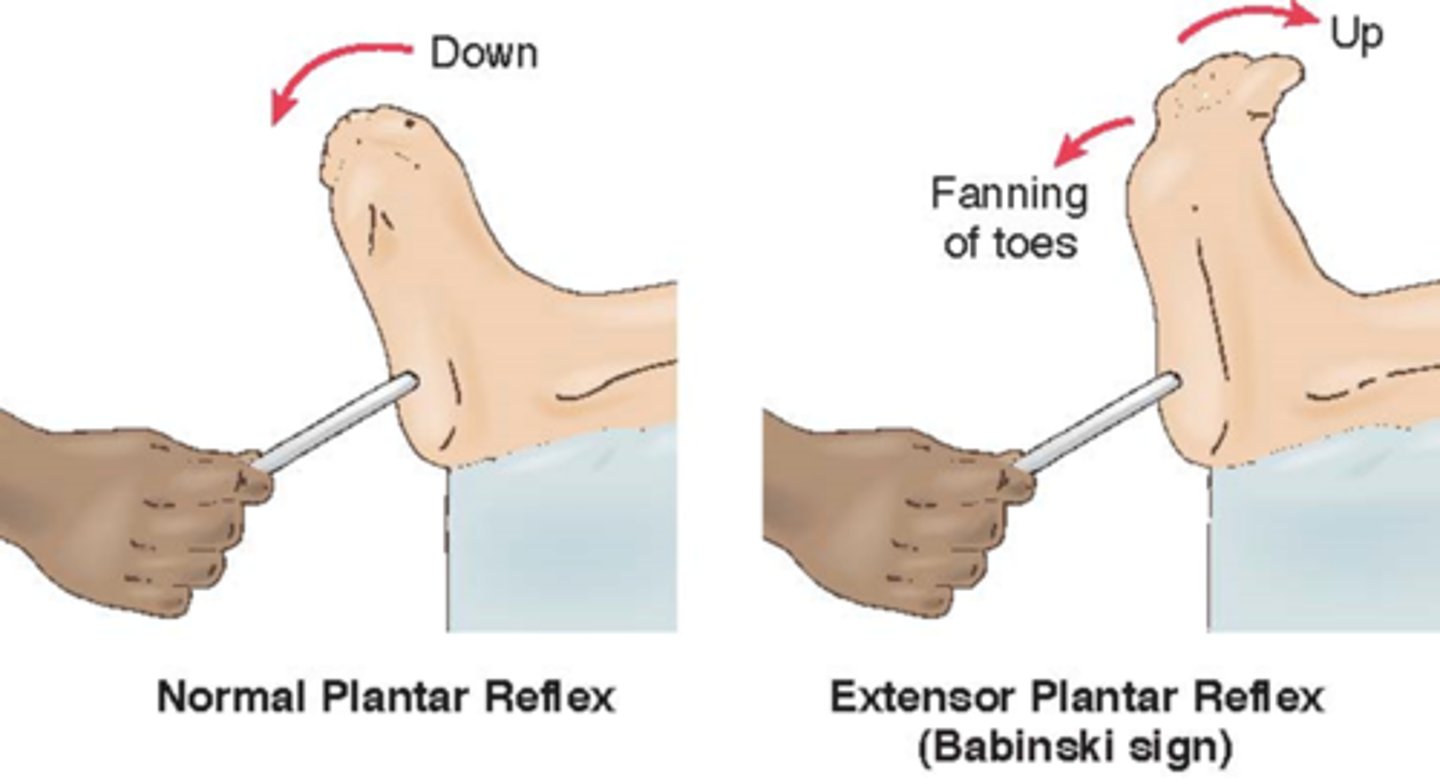
Babinski reflex
Reflex in which a newborn fans out the toes when the sole of the foot is touched
Positive Babinski sign
dorsiflexion of the big toe and fanning of all toes
point location
touch skin and withdraw stimulus promptly; ask person to put finger where you touched
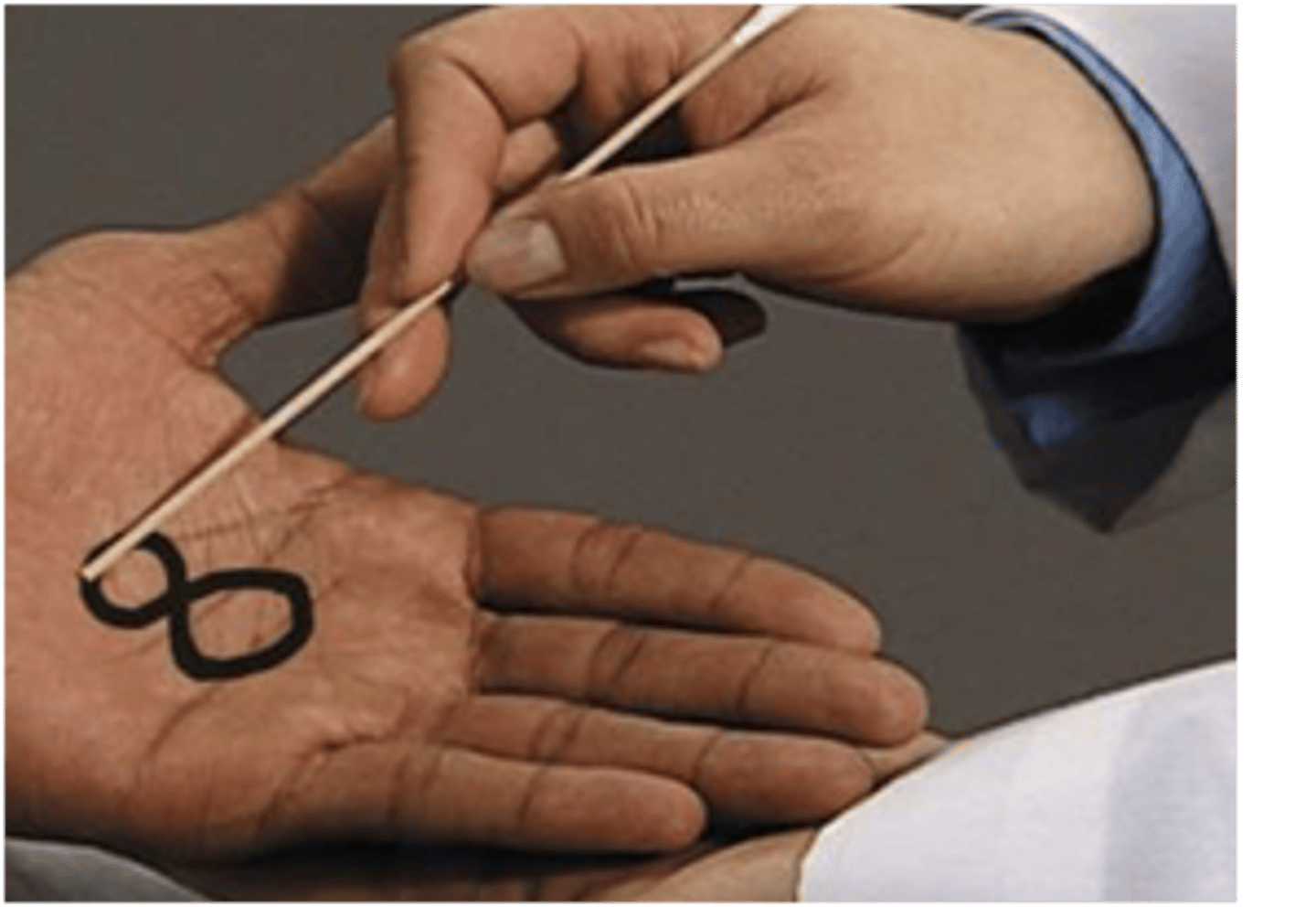
Graphesthesia
ability to "read" a number by having it traced on the skin
extinction phenomenon
Simultaneously touch two areas on each side of the body.
Similar sensations should be felt bilaterally.
two point discrimination
ability to distinguish the separation of two simultaneous pinpricks on the skin
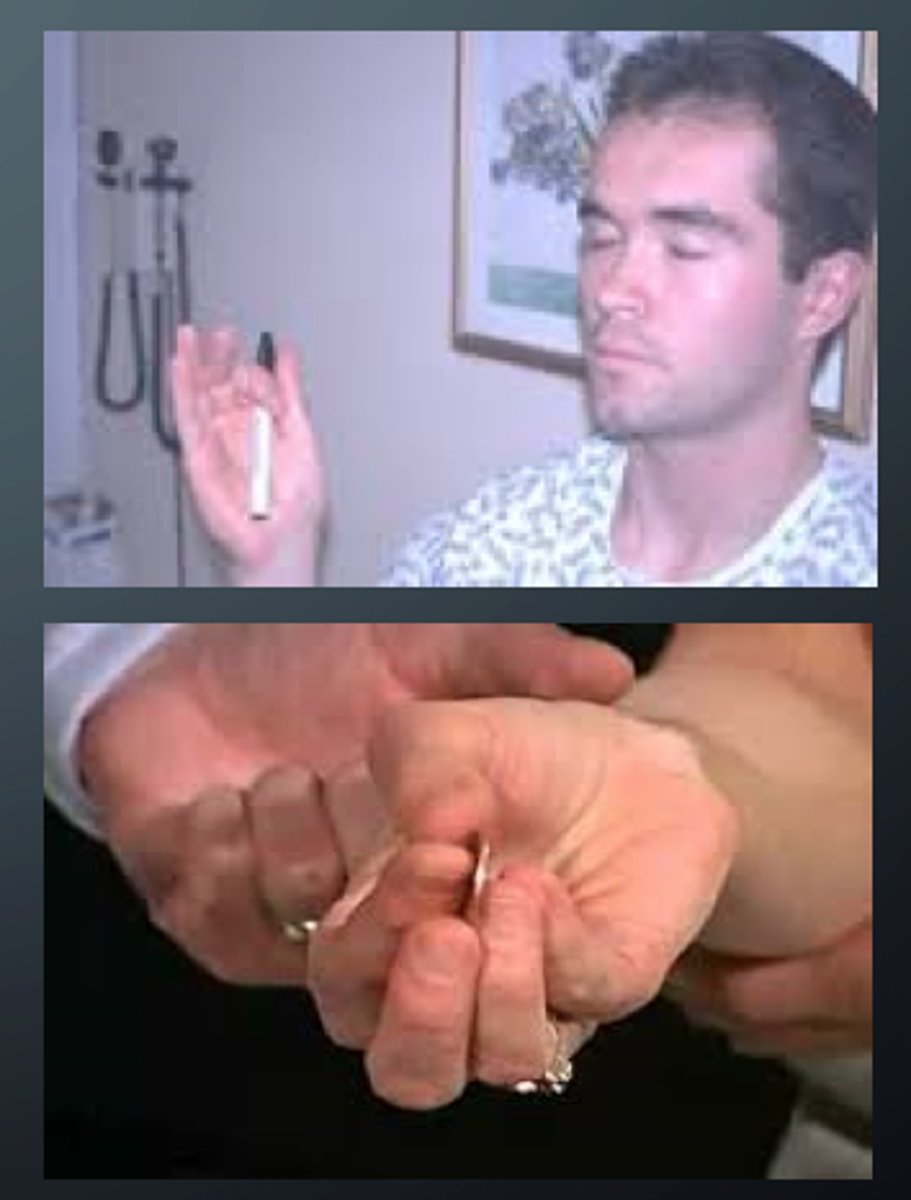
Stereognosis
ability to recognize objects by feeling their form, size, and weight while the eyes are closed
What is the cerrebellum responsible for?
balance and coordination
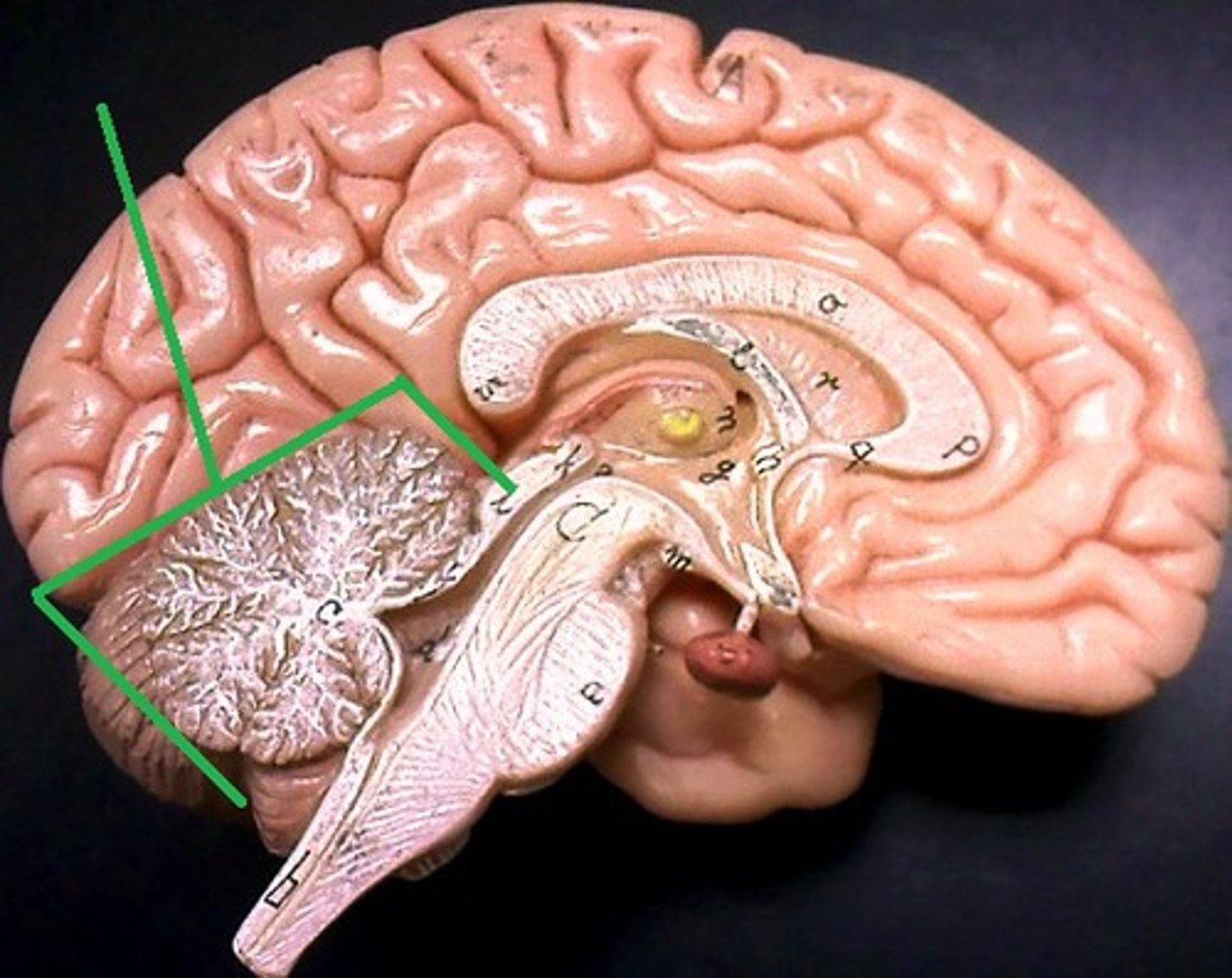
Cerrebellum
part of the brain that controls balance, movement, and coordination
descending tracts in the spinal cord are primarily responsible for....
voluntary motor activity
stereognosis tests the ability of the patient to ....
identify an object by touch
portions of the body that are innervated by specific spinal nerves are identified as ....
dermatomes
Tanner stage 1 breast
prepubertal
tanner stage 2 girls
Breast bud stage: A small mound of breast and nipple develops; the areola widens.
Tanner stage 3 girls
Breast enlargement without separate nipple contour
Pubic hair fills out but is straight
Tanner stage 4 female
Secondary mound occurs in the breast at the areola; Pubic hair is adult like
Which breast Tanner stage corresponds to secondary areola mound development above the breast?
4
You have asked a patient to close his eyes and identify an object in his hand. You are evaluating
stereognosis
Inspection of the breasts usually begins with the patient in which position?
sitting
You are seeing a 16-year-old female gymnast patient. She is athletic and thin. Radiography of an ankle injury reveals a stress fracture. You should question this patient about her:
menstrual cycles
The strength of the trapezius muscle is evaluated by having the patient:
push his or her head against the examiners head
Which medical condition would exclude one from sport's participation?
fever
You have a pregnant patient in clinic. She eats a well-balanced diet and is usually has a daily soft bowel movement. You should explain that constipation is common during pregnancy due to changes in the colorectal areas such as:
decreased movement through the colon and increased water absorption from stool
Environmental hazards and cognitive function are data needed for the personal and social history section of a neurologic assessment for:
every patient
A patient presents to the emergency department after a motor vehicle accident. The patient sustained blunt trauma to the abdomen and complains of pain in the upper left quadrant that radiates to the left shoulder. What organ is most likely injured?
spleen
Which of the following is a concern, rather than an expected finding in older adults?
bilateral pill rolling of the fingers
a primitive reflex that is not normally present in a newborn is....
graphestesia
mental or neurological status assessment begins with....
observation
cerebrum
Largest part of the brain; responsible for voluntary muscular activity, vision, speech, taste, hearing, thought, and memory.
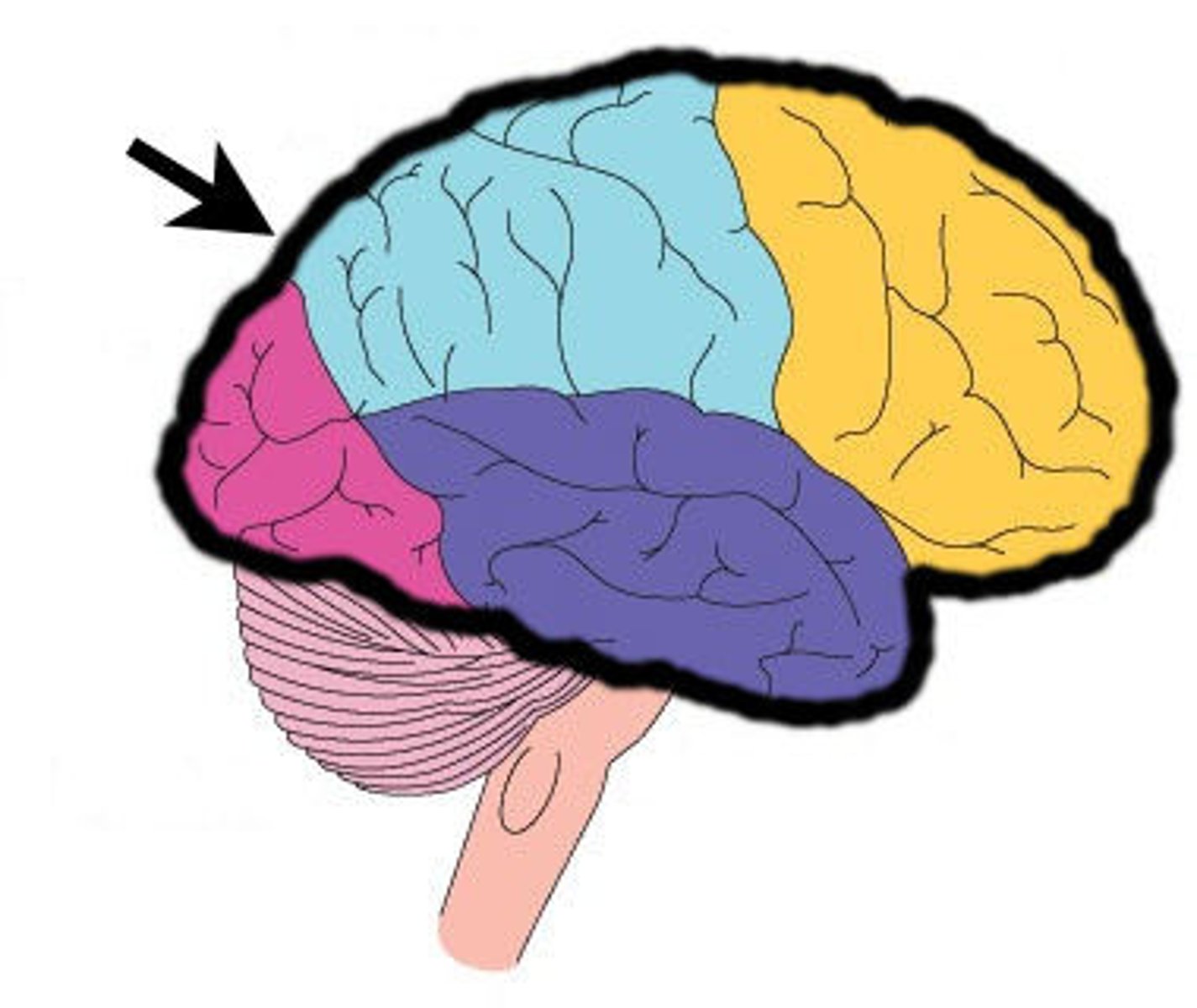
what part of the brain is primarily responsible for a person's mental status?
cerebrum
mediates certain patterns of behavior that determines survival
limbic system
located in the brainstem, it regulates the level of wakefulness or arousal
reticular activating system
Reticular Activating System (RAS)
a dense network of neurons found in the core of the brain stem; it arouses the cortex and screens incoming information
what lobe of the brain is not fully developed in children?
frontal lobe
Are all of the brain's neurons present at birth?
yes
speed of information processing and psychomotor speed decline after what age?
30
verbal skills and general knowledge increase into the ______ and remain stable until the _____
60s, 80s
Edinburgh Postnatal Depression Scale
Screening tool; Self-report assessment; 10 statements
static
(adj) fixed, not moving or changing, lacking vitality
automatism
unconscious bodily movements
agnosia
the inability to recognize familiar objects.
visual agnosia
occipital lobe damage
auditory agnosia
temporal lobe damage
tactile agnosia
parietal lobe damage
agnosia of body parts and relationships correspond to
posterior-inferior regions of parietal lobe
Apraxia
inability to perform particular purposive actions, as a result of brain damage.
receptive aphasia
temporal lobe-wernickes area
expressive aphasia
inferior-posterior frontal -brocas area
visual receptive aphasia
Parietal-occipital area
Expressive writing aphasia
posterior frontal area
coordinated sucking and swallowing is a function of the..
cerebellum
cremasteric reflex corresponds to what spinal area
T12 & L1
biceps reflex corresponds to what spinal area
C5 & 6
brachioradial reflex corresponds to what spinal area
C5&6
triceps reflex corresponds to what spinal area
C 6,7,8
patellar reflex corresponds to what spinal area
L 2,3,4
achilles reflex corresponds to what spinal area
S 1 &2
Clonus is associated with
upper motor neuron disease
plantar reflex corresponds to what spinal area
S 1 & 2
tinnel sign
-tests for nerve sensitivity of the median nerve (tap on volar carpal lig)
-tingling into thumb, index, and ½ of ring fingers.
myasthenia gravis
a chronic autoimmune disease that affects the neuromuscular junction and produces serious weakness of voluntary muscles
Gullain-Barre syndrome
an inflammation of the myelin sheath of peripheral nerves, characterized by rapidly worsening muscle weakness that may lead to temporary paralysis; also known as infectious polyneuritis