18.1 orders, rate equations and rate consta
 Call Kai
 Learn
Learn Practice Test
 Spaced Repetition
 Match
Match Flashcards
 Knowt Play
1/95

There's no tags or description
Looks like no tags are added yet.
Name | Mastery | Learn | Test | Matching | Spaced | Call with Kai | Chat |
|---|
No analytics yet
Send a link to your students to track their progress
96 Terms
How are reaction rates measured?
by observing changes in the quantities of reactants or products over time
what can happen in different experiments?
different quantities can be measured to calculate the rate of reaction. The units are then those of the quantity measured per unit of time
rate =?
quantity reacted or produced/ time
what is conc measured in?
Mol dm-3
What can time be measured in?
seconds, minutes, etc.
what is the case since concentration is such a common term?
Chemists use a square bracket as a shorthand for concentration
showing this: For reactant A:

Changing the conc often..
Changes the rate of a reaction
what is the rate of reaction proportional to?
the concentration of a particular reactant raised to a power
example showing this:or F

for each reactant…
The power is the order of reaction for that reactant. In a reaction, different reactants can have different orders and each may affect rate in different ways
what are common orders?
zero order [0], first order [1], second order [2]
zero order:
when the concentration of a reactant has no effect on the rate, the reaction is zero order with respect to the reactant

In a zero order reaction:
any number raised to the power zero is 1
Concentration doesnt influence the rate
first order:
A reaction is first order with respect to a reactant when the rate depends on its concentration raised to the power of 1
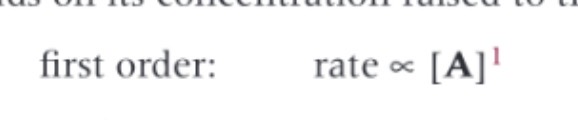
In a first order reaction:
if the concentration of A is doubled (x2), the reaction rate increases by a factor of 2^1 =2
If the concentration of A is tripled (x3), the reaction rate increases by a factor of 3^1 =3
Second order:
a reaction is second order with respect to a reactant when the rate depends of its concentration raised to the power of 2
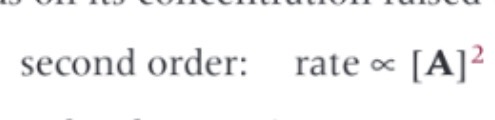
In a second order reaction:
if the concentration of A is doubled (x2), the reaction rate increases by a factor of 2² = 4
If the concentration of A is tripled (x3), the reaction rate increases by a factor of 3² =9
what does the rate equation give?
the mathematical relationship between the concentrations of the reactants and the reaction rate
for 2 reactants, A and B, what is the rate equation
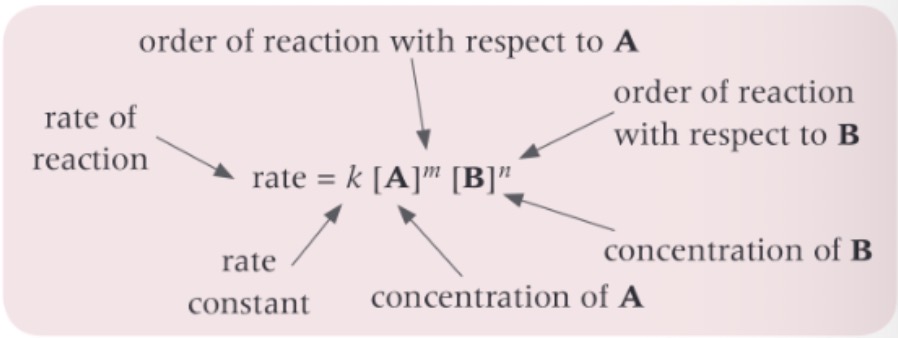
What is the rate constant, k?
the proportionality constant. It is the number that mathematically converts betweeen the rate of reaction and concentration and orders
what does the overall order of reaction give?
the overall effect of the concentrations of all reactants on the rate of reaction
how do you calculate overall order?
Sum of orders with respect to each reactant
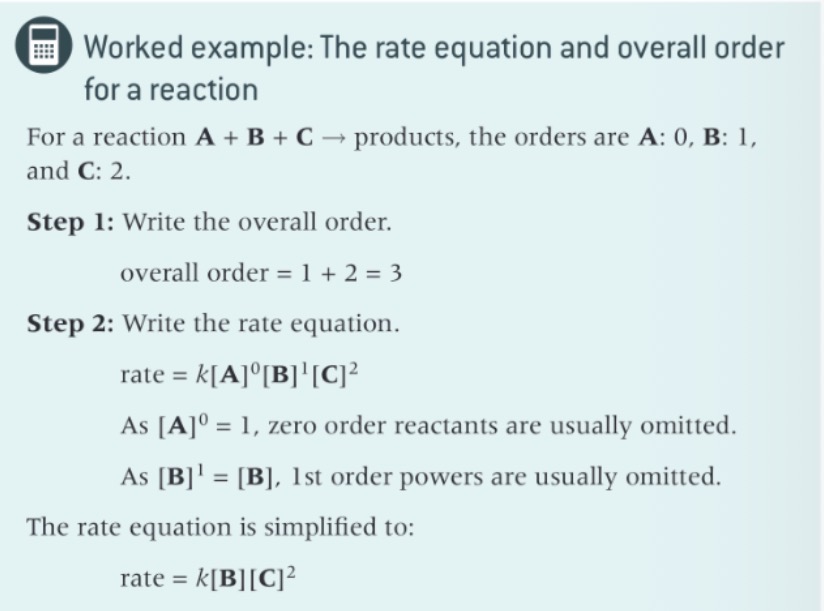
so for the rate equation:

Worked example: the rate equation and overall order for a reaction:
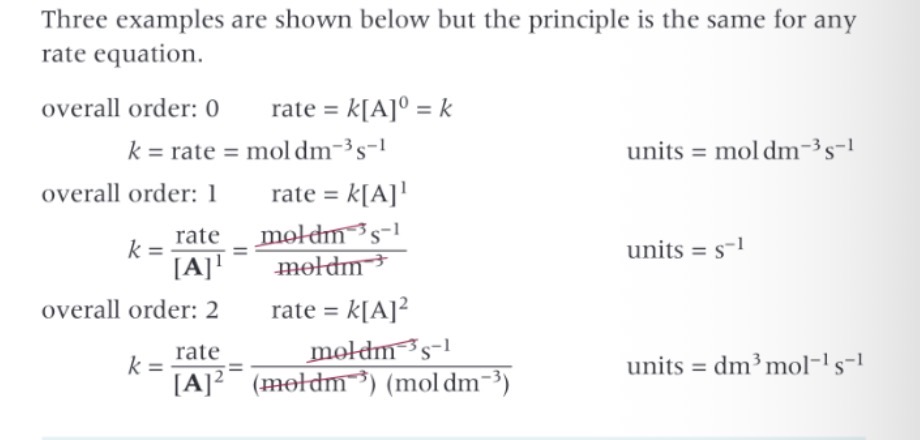
What do the units of the rate constant depend upon?
The number of concentration terms in the rate equation
how can the units of k be determined?
Rearranging the equation to make k the subject
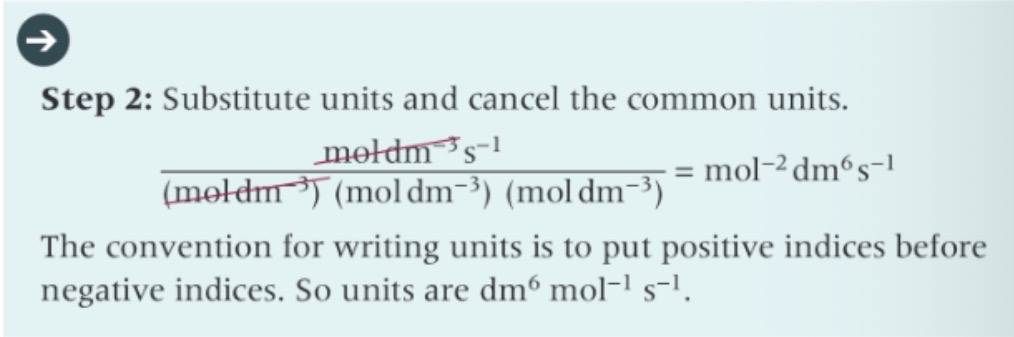
Substitute units into the expression for k
Cancel common units and show the final units on a single line
3 examples shown, with the principle being the same for any rate equation:
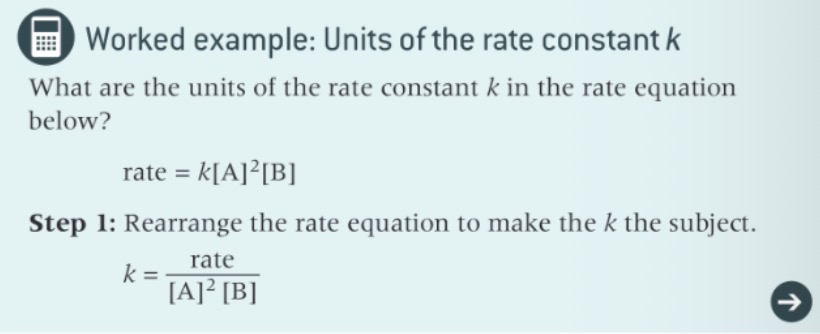
Worked example: units of the rate constant, k:
How must orders of reaction be determined experimentally?
by monitoring how a physical quantity changes over time
how CANT orders be found?
directly from the chemical equation
What’s important when comparing the effect of different concentrations of reactants on reaction rates?
that the rate is always measured after the same time, ideally as close to the start of the experiment as possible. The example below shows the initial rate
What is the initial rate?
the instantaneous rate at the beginning of an experiment when t=0
what does the example below show?
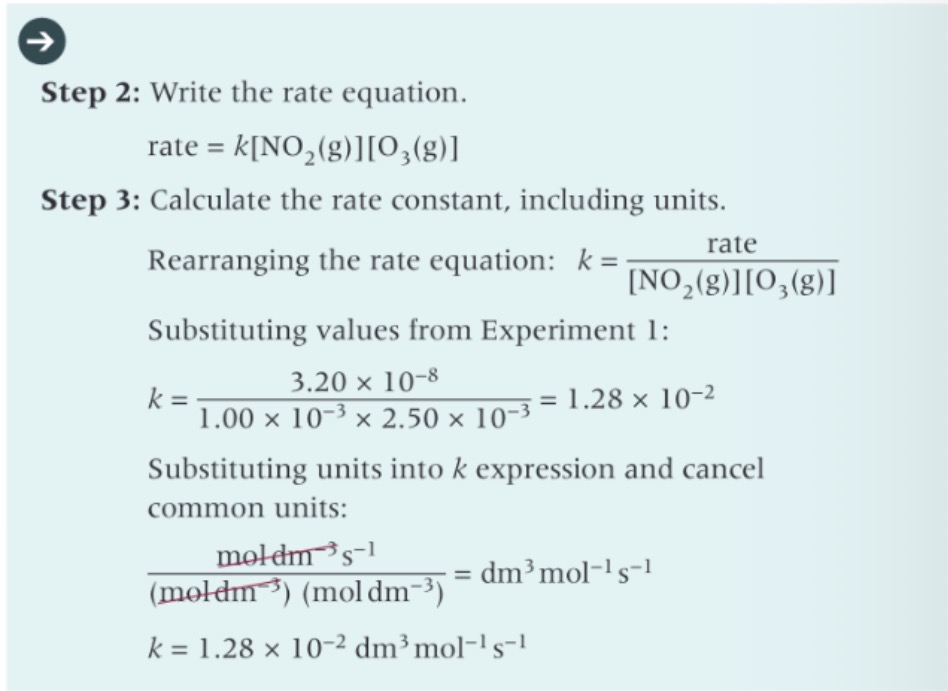
how the rate equation and rate constant can be determined from experimental results
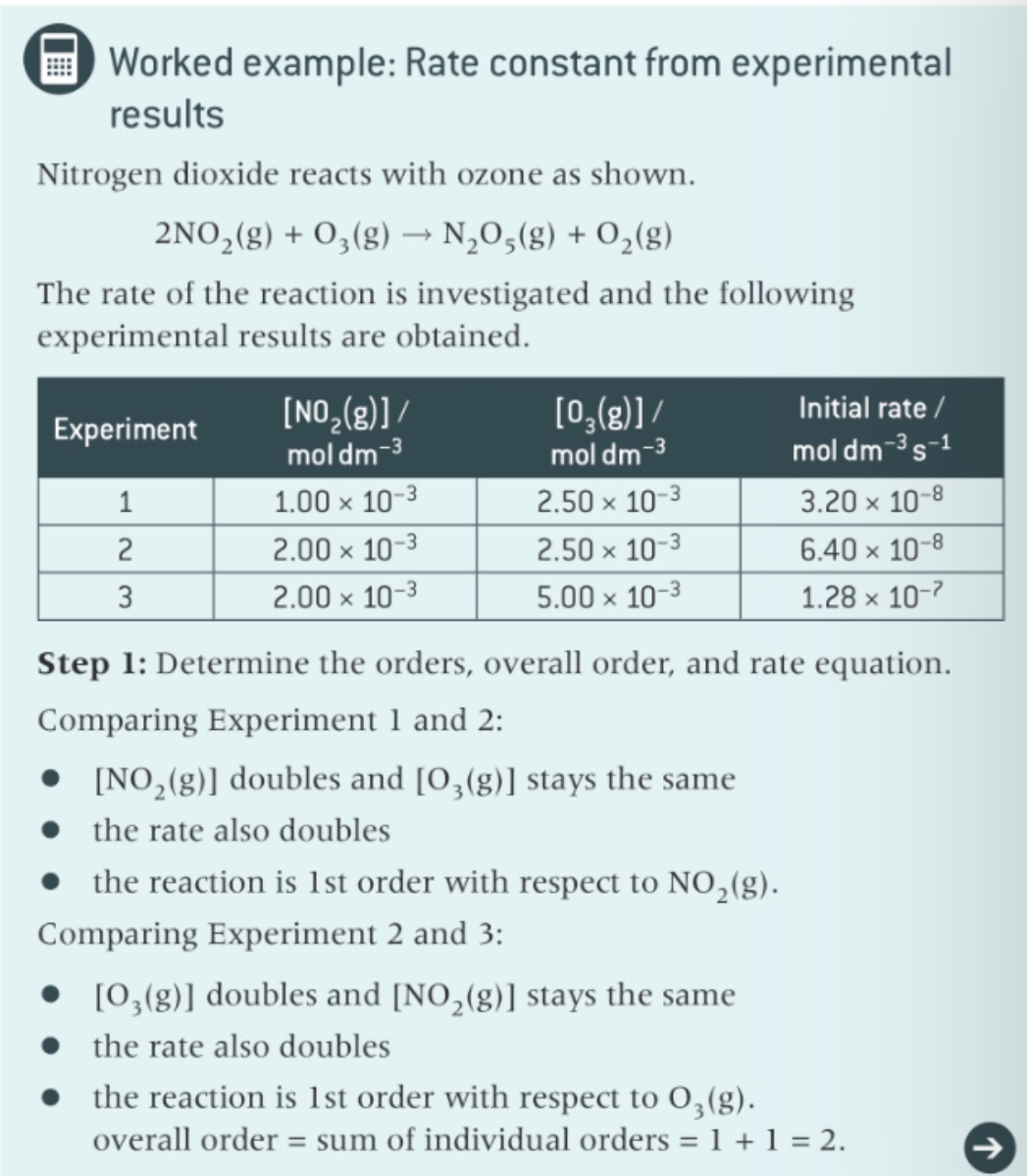
worked example: rate constant from experimental results:
how can cone-time graphs be plotted?
from the continuous measurements taken during the course of a reaction (continuous monitoring)
what are 2 continuous monitoring methods for reactions that produce a gas?
monitoring by gas collection
monitoring by mass loss
what’s a useful property for reactions that don’t produce gases that can be measured over time?
colour change, which can be estimated by eye or by a colorimeter
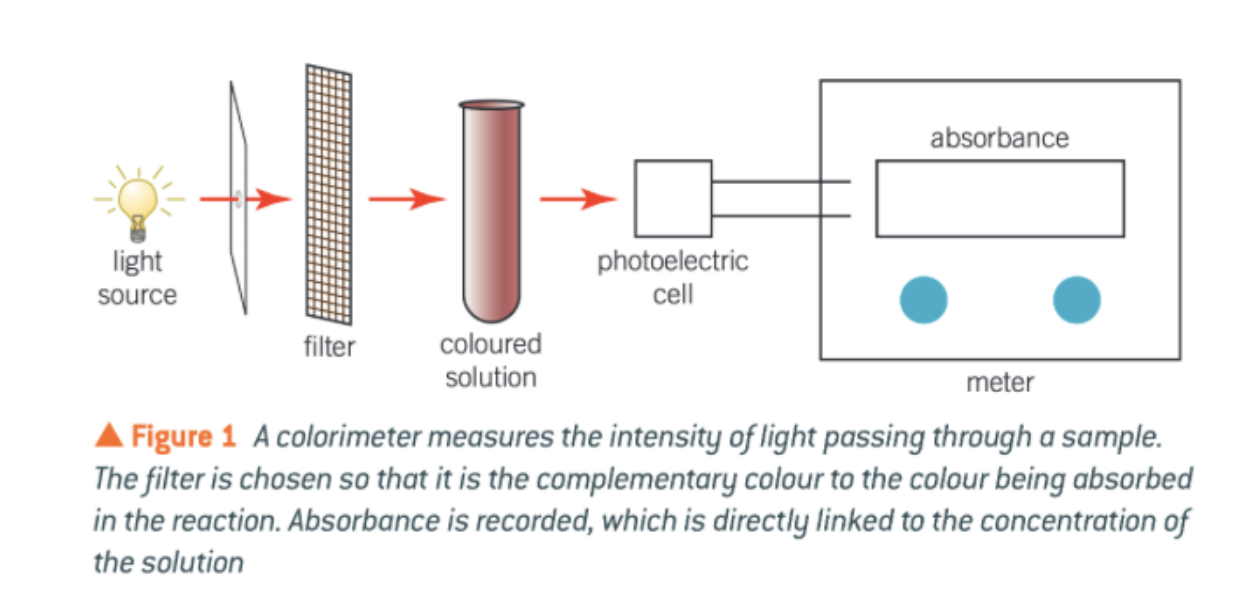
what happens in a colorimeter?
the wavelength of light passing through a coloured solution is controlled using a filter. the amount of light absorbed by a solution is measured
diagram showing colorimeter:
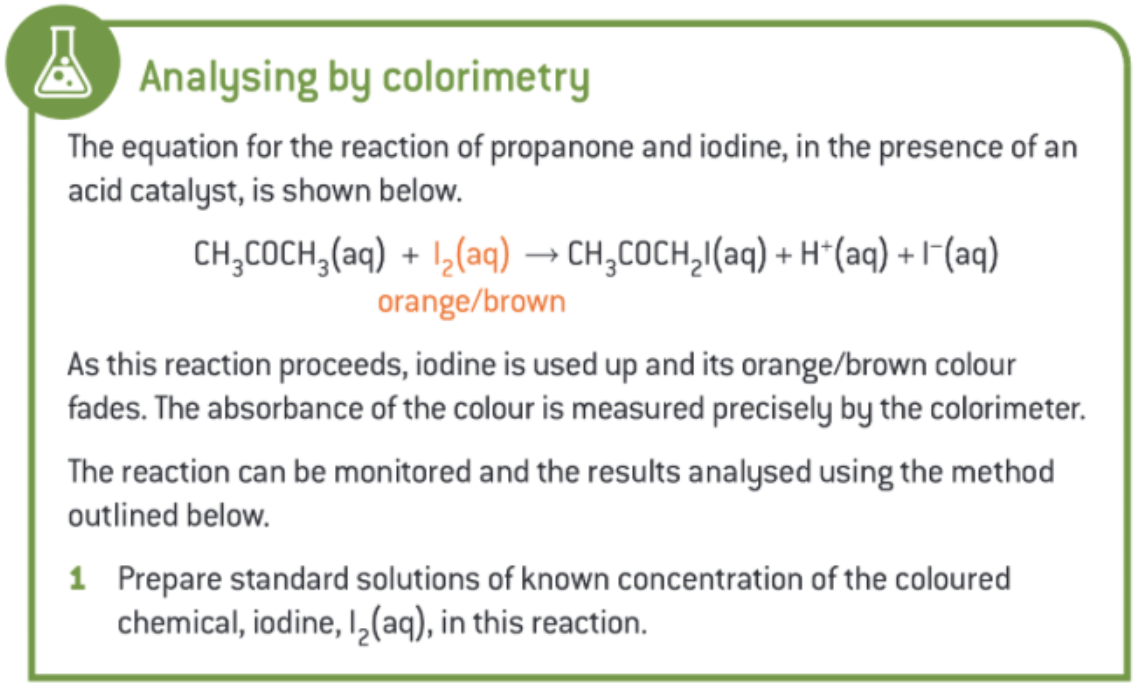
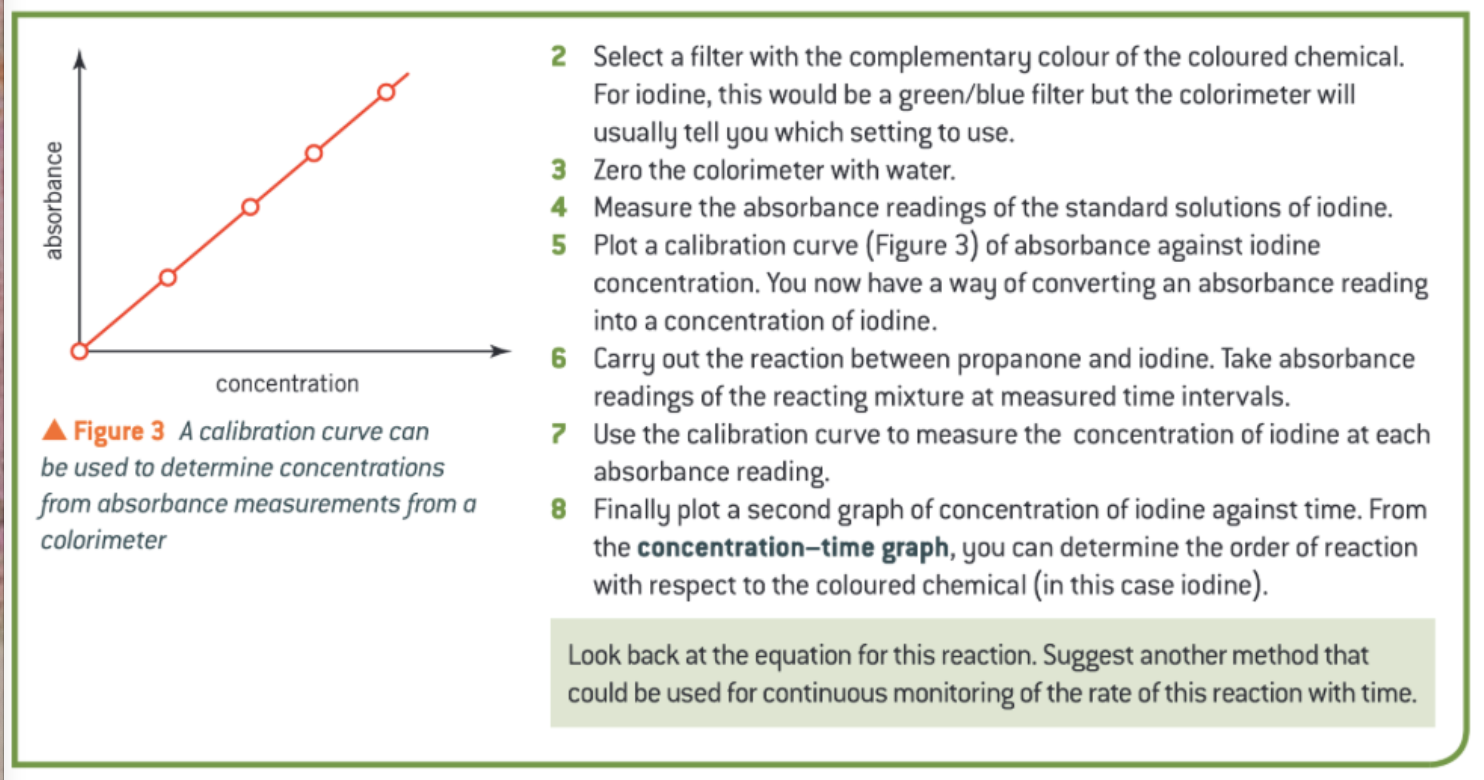
analysing by colorimetry:
what is the gradient of a conc-time graph?
the rate of the reaction
what can the order with respect to a reactant be deduced from?
the shape of a conc time graph for zero and first order reactions
when can the order with respect to a reactant only be obtained?
if all other reactant concs remain effectively constant
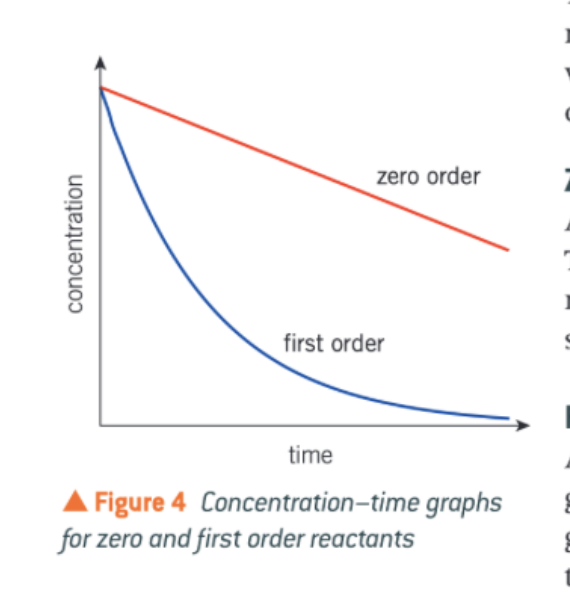
variation of conc with time for a zero order and first order reaction:
zero order:
a zero order produces a straight line with a -gradient
the reaction rate doesn’t change at all in the course of the reaction
the value of the gradient= the rate constant
straight line makes 0 order easy to identify
first order:
produces a downward curve with a decreasing gradient over time
as the gradient decreases, the reaction gradually slows down
the time for the conc of a reactant to halve is constant (half life)
rate constant of a first order reaction can be determined using its value
second order:
also a downward curve, steeper at the start, but tailing off more slowly
what is half life?
the time taken for half of a reactant to be used up
what do first order reactions have?
a constant half life with the conc halving every half life (exponential decay)
how can a first order relationship be confirmed?
from a cone-time graph by measuring successive half lives. if they are the same, the reaction is 1st order with respect to the reactant

example:

what are the 2 methods for determining the rate constant from a conc time graph for a 1st order reaction?
calculating the rate constant from the rate
calculating the rate constant from the half life
calculating the rate constant from the rate:
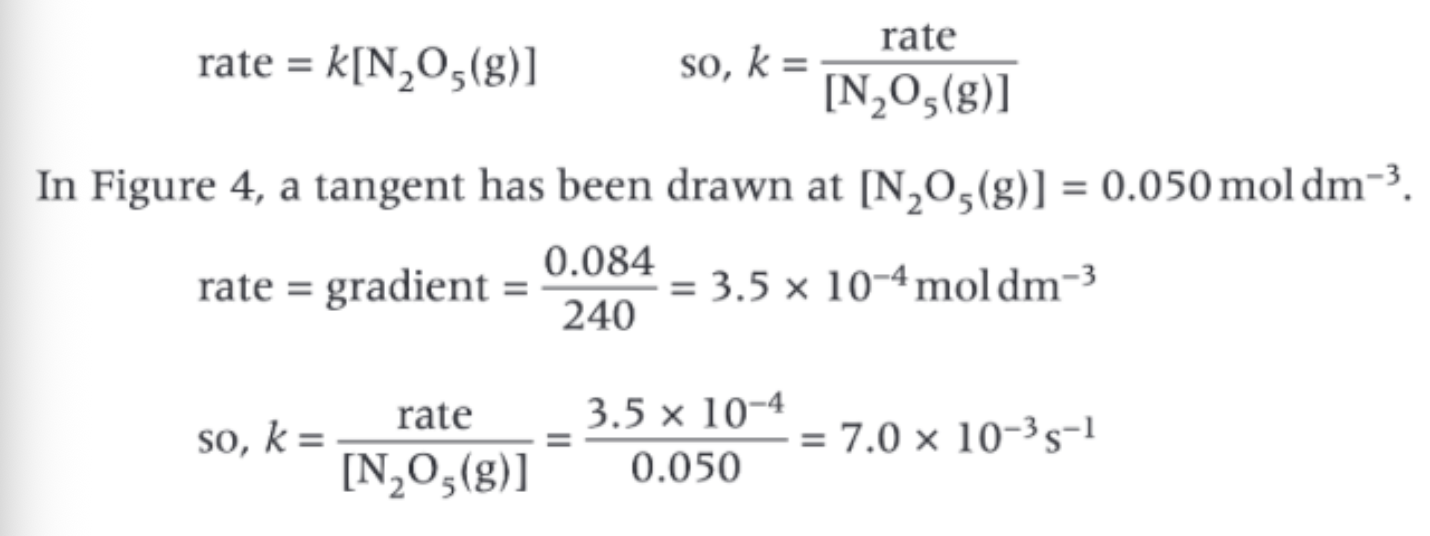
a tangent to the curve on the conc time graph is drawn at a particular conc. the gradient of the tangent is calculated giving the rate of reaction
how is the rate constant then calculated?
by rearranging the rate equation and substituting the value of rate (gradient) and the conc at the position where the tangent has been drawn
example from previous part:
calculating the rate constant from the half life:
makes use of the exponential relationship for a constant half life
more accurate than drawing a tangent

example:

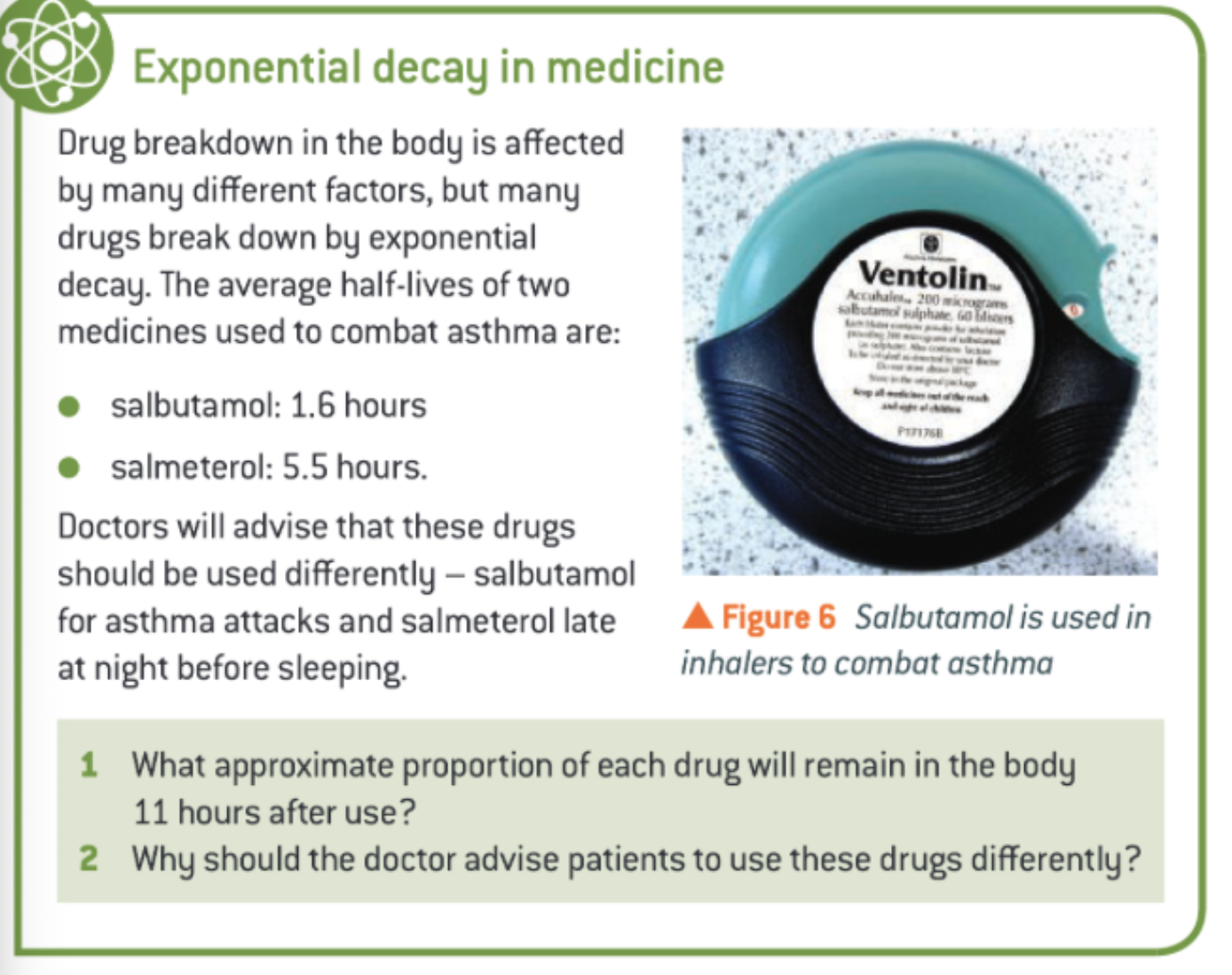
extra info: exponential decay in medicine:
what does an overall chemical equation do?
compares the reactants and products, and the balancing numbers give the stoichiometry (the relative amounts of the species in the reaction. example above

when can a reaction only take place?
when particles collide. for this reaction to take place in a single step, one molecule of H2O2, two I- ions, and two H+ ions would have to collide together simultaneously, which is very unlikely

therefore what is more likely?
for these reactions to take place in a series of steps and it is unlikely that >2 particles will collide together at the same time. the series of steps that make up an overall equation is called the reaction mechanism
what will be the case with the steps in a multistep reaction?
they will take place at different rates
what’s the slowest step in the sequence called?
the rate determining step
what do chemists do?
propose possible mechanisms for reactions
how do you know whether a reaction mechanism is likely to be correct?
the rate equation only includes reacting species involved in the RDS
the orders in the rate equation match the number of species involved in the RDS
the RDS provides important evidence supporting or rejecting a proposed reaction mechanism
haloalkanes being hydrolysed by hot aqueous alkali:
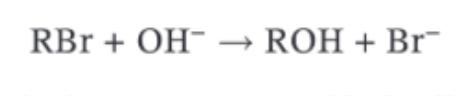
what can the hydrolysis reactions of haloalkanes be investigated experimentally to determine?
the overall order of reaction, the rate equation and a possible mechanism for the reaction
worked example: the hydrolysis of tertiary haloalkanes:
