CHEM 121 Module 7
 Call Kai
 Learn
Learn Practice Test
 Spaced Repetition
 Match
Match Flashcards
 Knowt Play
1/89

Earn XP
Description and Tags
CHEM 121 Foundations of General Chemistry
Name | Mastery | Learn | Test | Matching | Spaced | Call with Kai |
|---|
No analytics yet
Send a link to your students to track their progress
90 Terms
electronic structure
the species involved, that is, the arrangement of the electrons around atoms, ions, or molecules
nuclear structure
the numbers of protons and neutrons within the nuclei of the atoms involved, remains unchanged during chemical reactions
nuclear chemistry
the study of reactions that involve changes in nuclear structure
nucleus
the center of the atom
protons
which are positively charged
neutrons
which do not have a charge
electrons
orbit the nucleus and are negatively charged
electron cloud
the negatively charged region where electrons are located
atomic number (Z) of the element
the number of protons in the nucleus
sum of the mass number (A)
the number of protons and the number of neutrons
isotopes
atoms of the same element with the same atomic number but different mass numbers, due to differences in the number of neutrons
nuclide
referring to a single type of nucleus
X
the symbol for the element
A
the mass number
Z
the atomic number
nucleons
protons and neutrons, are packed together tightly in a nucleus
strong nuclear force
the force of attraction that holds the nucleus together.
force acts between protons, between neutrons, and between protons and neutrons.
electrostatic force
holds negatively charged electrons around a positively charged nucleus (the attraction between opposite charges)
mass defect of the atom
difference between the calculated and experimentally measured masses
nuclear binding energy
the energy produced when the atom’s nucleons are bound together; this is also the energy needed to break a nucleus into its constituent protons and neutrons
mass-energy equivalence equation
the conversion between mass and energy
E
is energy
m
is the mass of the matter being converted
c
is the speed of light in a vacuum (2.9979 x 10⁸ m/s)
electron volts (eV)
1 eV equaling the amount of energy necessary to the move the charge of an electron across an electric potential difference of 1 volt, making 1 eV = 1.602 × 10⁻¹⁹ J
band of stability
a region of stable nuclei within a plot of the number of neutrons versus the number of protons
radioactivity
unstable nuclei exhibit.
changing spontaneously (decaying) into other nuclei that are either in, or closer to, the band of stability.
unstable isotope (or radioisotope)
nuclear decay reactions convert one into another, more stable, isotope
nuclear reaction
occurs when changes in nuclei result in changes in their atomic numbers, mass numbers, or energy states
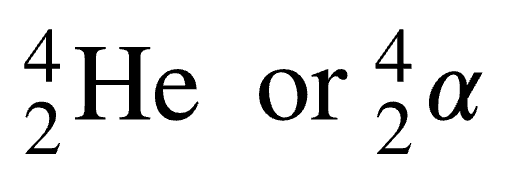
alpha particle
(High-energy) helium nuclei consisting of two protons and two neutrons
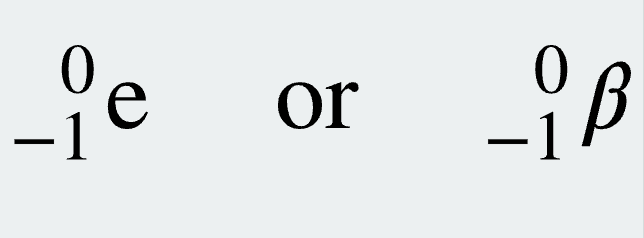
beta particle
(High-energy) electrons, and gamma rays are photons of very high-energy electromagnetic radiation
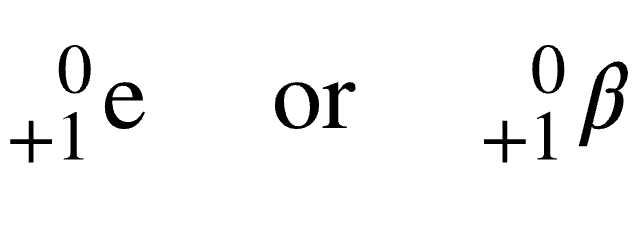
positron
particles with the same mass as an electron but with 1 unit of positive charge

proton
nuclei of hydrogen atoms
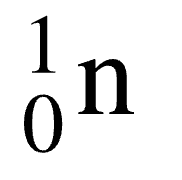
neutron
particles with a mass approximately equal to that of a proton but with no charge

gamma ray
very high-energy electromagnetic radiation
positrons
positively charged electrons (“anti-electrons”)
antimatter
particles with the same mass but the opposite state of another property (for example, charge) than ordinary matter
gamma rays (γ)
a type of high frequency electromagnetic energy (light waves) produced when antimatter encounters ordinary matter
nuclear reactions also follow conservation laws
the sum of the mass numbers of the reactants equals the sum of the mass numbers of the products.
the sum of the charges of the reactants equals the sum of the charges of the products.
radioactive decay
the spontaneous change of an unstable nuclide into another nuclide
parent nuclide
the unstable nuclide
daughter nuclide
the nuclide that results from the decay
alpha (α) decay
the spontaneous change of an unstable nuclide into another nuclide
beta (β) decay
the conversion of a neutron into a proton and a β particle (high-energy electron).
the β particle is emitted from the nucleus and is not an electron originating from the electron cloud
gamma emission (γ emission)
observed when a nuclide is formed in an excited state and then decays to its ground state with the emission of a γ ray, a quantum of high-energy electromagnetic radiation. The presence of a nucleus in an excited state is often indicated by an asterisk
positron emission (β+decay
the emission of a positron from the nucleus
electron capture
occurs when one of the inner electrons in an atom is captured by the atom’s nucleus
alpha decay
A: Decrease by 4.
Z: Decrease by 2.
beta eecay
A: Unchanged.
Z: Increase by 1.
gamma decay
A: Unchanged.
Z: Unchanged.
positron decay
A: Unchanged.
Z: Decrease by 1.
Electron Capture
A: Unchanged.
Z: Decrease by 1.
half-life (t1/2)
the time required for half of the atoms in a sample to decay
nuclear transmutation
the conversion of one nuclide into another
transmutation reaction
the bombardment of one type of nuclei with other nuclei or with neutrons
particle accelerators
devices used to reach the kinetic energies necessary to produce transmutation reactions
fission
the breaking of a large nucleus into smaller pieces
chain reaction
provide more neutrons that can cause fission of even more nuclei, and so on
fissile or fissionable
material that can sustain a nuclear fission chain reaction
critical mass
the amount of a fissionable material that will support a self-sustaining chain reaction
subcritical mass
the amount of fissionable material that cannot sustain a chain reaction
supercritical mass
the amount of material in which there is an increasing rate of fission
radioactive tracer (or radioactive label)
replace one (or more) atom(s) with radioisotope(s) in a compound, we can track them by monitoring their radioactive emissions
Technetium-99
absorbed by damaged heart, lung, and liver tissues. Emits gamma rays, revealing specific locations of tissue damage
Thalium-201
becomes concentrated in healthy heart tissue, indicating healthy regions of the heart
Iodine-131
used to monitor Graves’ disease and conditions of the thyroid gland.
used to monitor brain and liver tumors.
Sodium-24
injected into the bloodstream to locate blockages to blood flow
radiation therapy
the use of high-energy radiation to damage the DNA of cancer cells, which kills them or keeps them from dividing
external beam radiation therapy
delivered by a machine outside the body
internal radiation therapy (brachytherapy)
from a radioactive substance that has been introduced into the body
nonionizing radiation
large difference in the magnitude of the biological effects
ionizing radiation
emissions energetic enough to knock electrons out of molecules
inorganic chemistry
the study of compounds that do not contain carbon-hydrogen bonds, called inorganic compounds
organic chemistry
the study of compounds that contain carbon-hydrogen bonds, called organic compounds
potentially 106 different organic compounds
has four valence electrons; readily forms bonds.
carbon can form up to four covalent bonds with itself and other elements.
capable of forming complex structures such as chains, rings, and branches.
hydrocarbons
the simplest organic compounds, containing the elements hydrogen and carbon
alkanes
a type of hydrocarbon that contain only single covalent bonds between carbon atoms
saturated hydrocarbons
have the maximum number of H atoms for every C atom due to their single bonds
skeletal structure (also called a line-angle structure)
common method used by organic chemists to simplify the drawings of larger molecules
functional group
an atom or group of atoms attached to the main structure of a compound that determines the compound’s overall chemical properties
alkyl group
an alkane minus one hydrogen atom
substitution reaction
occurs when one or more of the alkane’s hydrogen atoms is replaced with a different atom or group of atoms
substituents
branches or functional groups that replace hydrogen atoms on a chain
unsaturated hydrocarboon
do not contain the greatest possible number of H atoms for each C atom in their structure due to the presence of a double bond
addition reactions
a double bond is broken to form two new single bonds
alkyne
a hydrocarbon molecule with one or more triple bonds
cycloalkanes
alkanes that have a ring structure
aromatic hydrocarbon
contains a benzene ring
alcohols
derivatives of hydrocarbons in which an –OH group has replaced a hydrogen atom