ALL CELLULAR DIVISION
 Call Kai
 Learn
Learn Practice Test
 Spaced Repetition
 Match
Match Flashcards
 Knowt Play
1/38

There's no tags or description
Looks like no tags are added yet.
Name | Mastery | Learn | Test | Matching | Spaced | Call with Kai |
|---|
No analytics yet
Send a link to your students to track their progress
39 Terms
What does the cell cycle describe
The sequence of events which occurs between one cell division and the next. It also shows the time spent at each stage
The length of cell cycle depends on?
Organism, type of cell, temperature, water, food, oxygen supplies
Stages which make up the cell cycle
Interphase
Contains G1, S and G2
Nuclear Division (Mitosis)
Prophase, metaphase, anaphase and telophase
Cell division
Leads to new daughter cells
Interphase
G1 (Gap1) Phase
very metabolically active
cell grows
produces rna and ribosomes needed for protein synthesis
produces new organelles
S (Synthesis) Phase
DNA replication occurs
histones are produced so newly synthesized DNA molecules can be wrapped around them
replication increases number of DNA molecules but NOT THE NUMBER OF CHROMSOMES
G2 (Gap 2) Phase
mitochondria and chloroplasts replicate
more protein synthesis
Duplicated DNA is proofed and DNA damage is repaired
centrosomes and spindle fibers are formed
Centrosomes
non membrane bound regions located near nucleus - mitotic center
initiate development of spindle fibres
in animal cells they are made up of centrioles arranged at right angles and responsible for orientating spindle fibres during division
centrosomes are made of microtubules
Spindle Fibres
colchicine is used to arrest inhibit spindle formation arresting cells in metaphase stage
made of microtubules
form during mitosis and meiosis by centromere
Nuclear Division can happen through
M phase of the cell cycle (Mitosis)
Meiosis NOT PART OF THE CELL CYCLE
What is mitosis and what does it produce
Mitosis is the mechanism used to divide a parent cell into two identical daughter cells
daughter cells are genetically identical to parent cell
Where does mitosis occur
occurs in the m-phase of the cell cycle (takes up only 10% of cell cycle and occurs in all somatic cells
Why does mitosis occur
growth of an organism
asexual reproduction
regeneration of body parts
replacement/repair of damaged somatic cells
Stages of Mitosis
prophase
metaphase
anaphase
telophase
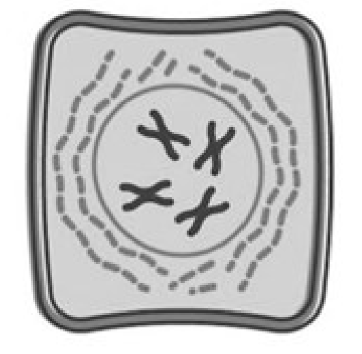
Prophase
DNA is condensed from chromatin into chromosomes
nuclear membrane disintegrates
nucleolus shrinks and disappears
centrioles move to opposite poles of cell
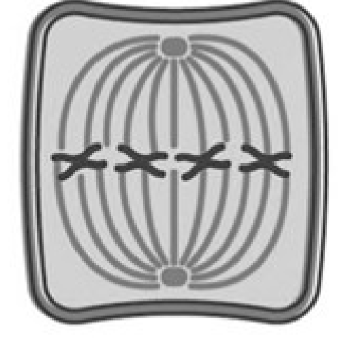
Metaphase
spindle fibres from each centriole attach to each sister chromatid at the kinetochore
drag and line up the chromosomes to the middle/equator of cell
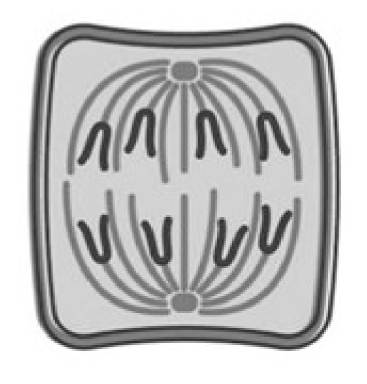
Anaphase
pull chromatids apart by shortening of spindle fibres
sister chromatids migrate to the opposite ends of the cell
mitochondria supply energy needed for this phase
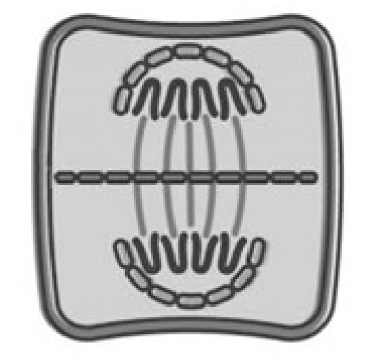
Telophase
sister chromatids reach opposite poles
uncoil and form chromatin
spindle fibres disintegrate
nuclear membranes form + nucleoli reappear
What is cytokinesis
the division of the cytoplasm
Where does cytokinesis come in
follows telophase and precedes the G1 phase of interphase
Cytokinesis in animal cells
cell membrane begins to invaginate at the equator during telophase
microfilaments draw the cell surface membrane to form a furrow
this pinches the cell into two at the cleavage furrow
Cytokinesis in plant cells
sugar filled vesicles from the golig are lined up at the equator by microtubules.
collection of microtubules + vesicles is a phragmoplast (serves as a scaffolding)
vesicles fuse together to form the cell plate
sugars remain in the space between membranes and form the middle lamella + new cell wall
Preparation of a Temporary Microscopic Slide showing Mitosis
cut off 1cm of the growing root tip
transfer root tip to hot hcl and leave it to hydrolyze for 5mins to dissolve the middle lamellae
Wash + Dry
Transfer onto a clean microscope slide
Stain with toludine blue - and leave the stain to set for 2 minutes
Break up the tissues using a glass rod to spread it as thinly as possible
Blot off excess stain
Add a drop of water and cover with a coverslip and squash gently
View under the microscope
Meiosis
the process by which a cell nucleus divides to produce daughter nuclei each containing half the number of chromosomes of the original nucleus
meiosis is sometimes referred to as…
reduction division bcs it reduces the number of chromosomes
Prophase I
genetic material condenses into chromosomes
nuclear membrane disintegrates
centrioles move to opposite poles of the cell
spindle fibres form from asters
homologous chromosomes pair up to form bivalents - process called SYNAPSIS
homologous chromosomes join at several points called chiasmata
crossing over occurs at each chiasma where genetic material is exchanged between non-sister chromatids
Metaphase I
centromere of chromosomes is attached to spindle fibres
bivalents line up at the equator through spindle fibres
one homolgous chromosomes faces 1 pole and the other faces the opposite one
THIS ALIGNMENT IS COMPLETELY RANDOM
Anaphase I
homologous chromosomes are pulled apart by spindle fibres
separates chromosomes into two haploid sets
independent assortment occurs - what chromosomes go to which side is random
Telophase I and Cytokinesis
nuclear membrane reforms + nucleolus
homologous chromosomes reached the opposite poles
spindle fibers disappear
cleavage of cytoplasm may occur
Prophase II
chromosomes condense
centrioles duplicate and move to opposite poles of cell
nuclear membrane disintegrates
spindle fibres appear
NO PAIRING OF CHROMOSOMES AND CHIASMATA DONT DEVELOP
Metaphase II
spindle fibres at each centriole attach to each sister chromatid
spindle fibres drag the sister chromatids and line them up at the center
chromosomes are oriented at random with respect to one another
Anaphase II
sister chromatids are pulled apart by spindle fibres
sister chromatids go to each side randomly
Telophase II and Cytokinesis
Sister chromatids reach opposite poles
spindle fibres disintegrate
nuclear membrane reformes
cleavage of cytolasm/cell walls in plants
4 NEW HALPOID DAUGHTER CELLS R PRODUCED ALL GENETICALLY DIFFERENT TO EACH OTHER
How does meiosis generate genetic variation
crossing over and synapsis
random alignment in M1 AND M2
independent assortment in A1 and A2
Crossing over and Synapsis
alleles are exchanged at chiasmata
produces new combinations of genes on chromosomes
each time meiosis occurs chiasmata form at any point on the chromosomes - such that an infinite number of diff combination of genes can be produced
always equal amounts crossed over - chromosome stay the same length and have the same genes
Random Alignment in M1/M2
which homologous chromosome is facing which side is purely up to chance
maternal or paternal could face either pole
random orientation of sister chromatids
Independent assortment
it is pure chance as to which chromosome or sister chromatid get’s into which gamete
eg not all maternal chromosomes will go into 1 gamete, you could have 40% mom 60% dad - literally any combo
Significance of Meiosis in Sexual Reproduction
keeps the number of chromosomes constant which each generation
if it was 2n - then the new gen would be 4n and the no of chromosomes would double w every generation
bcs mitosis keeps the number of chromosomes constant
Other sources of generation genetic variation
random fertilization
it is pure chance as to which egg fertilizes which sperm
since each gamete is unique a unique zygote is ALWAYS created
mutations
occur during dna replication/cell division
responsible for changes in gene pool
driving force of evolution