AP Bio Unit 7
 Multiple Choice & FRQ
 Call Kai
1/89

Earn XP
Description and Tags
Name | Mastery | Learn | Test | Matching | Spaced | Call with Kai | Chat |
|---|
No analytics yet
Send a link to your students to track their progress
90 Terms
evolution
any change in gene frequencies (gene pool) of a population over time
5 factors of evolution
genetic drift (small population)
sexual selection (non-random mating)
mutations
migration (gene flow)
natural selection
artificial selection
human driven evolutionary change in other species
natural selection is ….
the only way adaptive change occurs in a population
5 principles for natural selection
overproduction
variation
heritability
differential survival & reproduction
overproduction
species tend to produce more offspring than can survive to maturity
variation
there are phenotypic differences between members of a species
heritability
variations are often passed from parent to offspring
differential survival & reproduction
some phenotypes survive & reproduce better than others
they will pass on their traits, increasing the frequency of beneficial traits in a population
individual fitness
how able an individual is to pass on their genes
measured by reproductive success
ongoing selection
biotic & abiotic factors can fluctuate in any environment
selective pressures can change generation to generation affecting the rate and direction of evolution
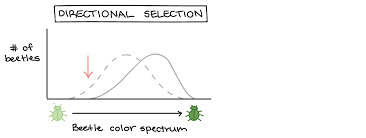
directional selection
one extreme is selected for and the opposite is selected against
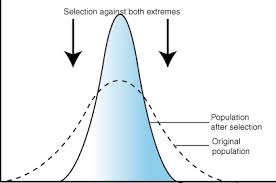
stabilizing selection
a moderate phenotype is selected for and both extremes are selected against
disruptive selection
both extremes are selected for
intermediate phenotype is selected against
phenotype
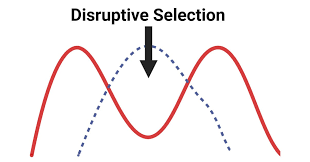
will diverge toward 2 extremes over time
sexual selection
adaptations can evolve purely for mating success
populations with _______ are generally more fit
greater levels of variation
high genetic diversity lets …
populations respond better to environmental changes
more likely to contain individuals that can withstand new environmental pressures
species/populations with little genetic diversity are…
at risk of decline or extinction
genetic drift
evolution that occurs due to non-selective/random processes in small populations
bottleneck effect
type of genetic drift that occurs when population size is drastically reduced
after the pop regrows the allele frequency has changed
often results in loss of genetic diversity → pops are more vulnerable even after they have recovered
founder effect
type of genetic drift that occurs when a small group becomes isolated from the overall population
allele frequencies in the new pop will not match those of the original pop
genetic drift & divergence
genetic drift can increase the liklihood of a small pop diverging into new species
gene flow
mvmt of alleles btwn pops
ways gene flow can occur
migration (btwn pops)
mating (btwn 2 members of diff pops)
continued gene flow btwn 2 pops….
prevents them from diverging into separate species because populations are not reproductively isolated
hardy-weinberg equilibrium
mathematical model that predicts allele frequencies in a non-evolving population
*no real population can actually be in hardy-weinberg equilibrium
conditions of hardy weinberg equilibrium
large population size
random mating
no new mutations
no migration
no natural selection
why hardy weinberg
it provides values we would expect in the absence of evolution
(null hypothesis)
gene pool
all alleles of a gene within a population
genotype frequency
frequency of AA, Aa, or aa
Allele frequency
frequency of A or a
p represents
frequency of A
q represents
frequency of a
p+q always equals…
1
because all alleles in the gene pool are either A or a
p2 =
frequency of AA
2pq =
frequency of Aa
q2 =
frequency of aa
p2 + 2pq + q2 =
1
types of evidence for evolution
geographical
geological
physical
biochemical
mathematical
geographical data
related species originated from common ancestral pop & spread via land bridges or continental mvmt
geological data
study of fossils & fossil age
relative dating
dating based off of position of fossils in layers of rocks
radioactive dating
measure age based off of half lives of radioactive isotopes
morphological data
comparing physical structures
lets us draw conclusions abt evolutionary relationships btwn extant & extinct organisms
4 categories of morphological data
embryology
vestigial structures
homologous structures
analogous structures
vestigial structures
reduced versions of structures that would have been functional in an ancestor
provides evidence abt species ancestry
homologous structures
structures from different species that were inherited from a common ancestor
analogous structures
structures from different species that despite having a similar function do not show common ancestry
molecular data
DNA & Protein sequencing
strongest evidence for determining evolutionary relationships
avoids analogous structure prblm
many specific data points to use
molecular clock
molecular data can be used to make a “molecular clock” that will show when species diverged by determining the rate of mutation for a particular gene
mathematical data
use computer models to test hypotheses & predict most likely evolutionary models
common ancestry of all life
all living things share a common ancestor
common ancestry of life evidence
universal genetic code
shared conserved metabolic processes (glycolysis)
common ancestry eukarya evidence
membrane bound organelles
linear chromosomes
genes contain introns
ongoing evolution
all species have & continue to evolve
phylogenetic trees & cladograms show…
evolutionary relationships among species
diff btwn phylogenetic trees & cladograms
phylogenetic trees show time while cladograms do not
hypothesis testing
phylogenetic trees can compare hypotheses from diff sources of evidence
phylogenetic tree outgroup
species least closely related to all other species on the tree
lineage
evolutionary history of a particular species
phylogenetic tree node
represents a common ancestor & subsequent speciation event where 2 lineages diverged
monophyletic group (aka clade)
includes all species descended from 1 common ancestor
polyphyletic group
does not include the most recent common ancestor of all species in the group
phylogenetic trees can show the…
gain/loss of traits
speciation
the formation of new species
when subgroups of a species diverge into different species
species
group capable of interbreeding to produce viable, fertile offspring
prblms w/ species concept
definition does not apply to asexually reproducing species
is difficult to practically test
doesn’t always hold true for all members of a species
for speciation to occur two populations must become..
reproductively isolated
aka no more gene flow btwn pops
if maintained each pop evolves independently accumulating diff genetic changes
reproductive isolating mechanisms
anything that prevents gene flow btwn pops
pre-zygotic isolating mechanisms
prevent mating &/or fertilization
pre-zygotic habitat
live &/or mate in different locations
pre-zygotic temporal
mate at diff times
pre-zygotic behavioral
diff mating behaviors or phenotypes
pre-zygotic mechanical
reproductive anatomy incompatible
pre-zygotic gametic
sperm cannot fertilize eggs
post-zygotic isolating mechanisms
prevent viability or fertility of hybrid offspring
post-zygotic reduced hybrid viability
hybrids do not survive
post-zygotic reduced hybrid fertility
hybrids are sterile
allopatric speciation
occurs in pops that are geographically isolated
sympatric speciation
occurs in pops w/ geographic overlap
rates & patterns of speciation depend on..
environmental conditions
gradualism
when evolution occurs slowly over hundreds of thousands or millions of years
punctuated equilibrium
evolution occurs rapidly after a long period of stasis
divergent evolution
adaptation to new habitats results in new species becoming increasingly diff over time
adaptive radiation
many new habitats become available so rapid speciation & diversification occurs
convergent evolution
similar selective pressures result in similar phenotypic adaptations in diff species/pops
timeline of life on earth
earth formed ~4.6 billion years ago(bya)
environment was too hostile for life until 3.9 bya
earliest fossil evidence for life 3.5 bya
RNA world hypothesis
RNA could have been the earliest genetic material
evidence for RNA world hypothesis
RNA can both encode info & act as a catalyst to self-replicate & assemble proteins
origin of life
life originated once
all species on earth descended from single common ancestor