Cell Exam 3 - Practice Problems
 Call Kai
 Learn
Learn Practice Test
 Spaced Repetition
 Match
Match Flashcards
 Knowt Play
1/54

There's no tags or description
Looks like no tags are added yet.
Name | Mastery | Learn | Test | Matching | Spaced | Call with Kai |
|---|
No analytics yet
Send a link to your students to track their progress
55 Terms
Which part of the mitochondrion contains cardiolipin making it impermeable?
c. Inner mitochondrial membrane
Which of the following is NOT a product of the Krebs cycle?
d. Acetyl CoA
In eukaryotes, pyruvate is converted to acetyl CoA:
c. In the mitochondrial matrix
If one glucose is fully oxidized in eukaryotes, how many NADH and ATP are produced?
d. 10, 36
Which statement is NOT evidence for the chemiosmotic model?
e. Uncouplers stop ATP synthesis
Which ETC complex is INCORRECTLY paired?
d. Complex IV: cytochrome c reductase
Correct electron flow from NADH?
a. Complex I → CoQ → III → cytochrome c → IV → O₂
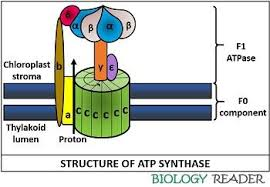
ATP synthase structure:
d. Proton channel, catalytic subunit
Glycerol enters metabolism where and as what?
d. Glycolysis, dihydroxyacetone phosphate
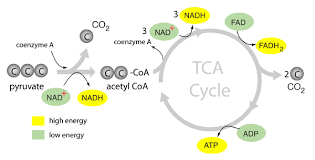
The TCA cycle is considered:
b. Amphibolic
Peroxisomal enzymes:
Produce H₂O₂
Break down H₂O₂
Include catalase:
d. 1, 2, and 3
Oxygen released in photosynthesis comes from:
a. Water
Mitochondria vs chloroplast energy conversion:
a. Chemical from food → ATP ….. light → ATP
Chloroplasts contain:
b. Circular DNA, 70S ribosomes
Accessory pigments:
d. Transfer energy to chlorophyll a
Photophosphorylation uses energy to move:
c. H+, stroma, ATP
In the Calvin cycle:
b. NADPH is oxidized
Which did NOT arise from endosymbiosis?
c. III and IV
Nuclear envelope is continuous with:
b. Rough ER
RNA export occurs by:
c. Selective transport
Highly condensed inactive chromatin:
b. Heterochromatin
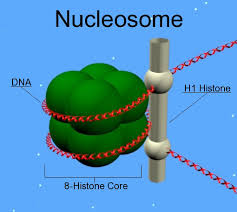
Which is NOT part of histone core?
a. H1
Chromosomes are arranged:
d. In distinct territories
rRNA coding region is:
b. Nucleolar organizing region
Ribosomes making different proteins:
c. No difference
Transport into ER vs nucleus:
c. Translocon; importin
Vesicle coat proteins: 2 layers + ___ + …..
d. All correct
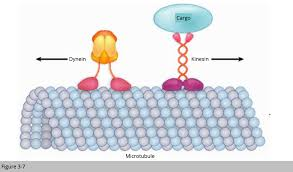
Dynein vs kinesin direction:
b. Center to periphery
Rough ER RNAs encode:
d. All
NOT in ER lumen:
b. O-linked glycosylation
NOT uptake into cell:
d. Exocytosis
Lysosome protection:
c. Carbohydrate chains on membrane proteins
_-_ experiment is:
c. Pulse-chase
In endocrine signaling,___
c. Travels via bloodstream - the messenger molecules reach their target cells via passage through bloodstream
Receptor tyrosine kinases (RTKs) are activated by:
b. Ligand-induced dimerization
The primary activity of receptor tyrosine kinases after activation is:
c. Autophosphorylating tyrosine residues
Adaptor proteins in RTK pathways function to:
b. Bind phosphorylated receptors and recruit signaling proteins
The Ras protein is best described as a:
c. Small GTP-binding protein
Ras is activated when:
c. GDP is exchanged for GTP
What happens when Ras is mutated so it cannot hydrolyze GTP?
c. It remains constitutively active
MAP kinase cascade function:
b. Amplifies the signal through phosphorylation cascades
The final effect of many RTK pathways is:
c. Changes in gene expression
Signal amplification refers to:
c. A single activated receptor triggering many downstream molecules
Protein kinases function to:
b. Add phosphate groups to proteins
Protein phosphatases function to:
b. Remove phosphate groups
Why are signaling pathways tightly regulated?
b. To ensure signals are brief and appropriate
In the epinephrine signaling pathway: what is the primary messenger?
a. epinephrine
In the epinephrine signaling pathway: what is the secondary messenger?
d. cAMP
What is the response of a receptor to the binding of a ligand to it at the cell's extracellular surface?
b. the receptor relays a signal across the membrane to the receptor's cytoplasmic domain at the inner membrane surface
What role do the 3 of the loops on the GPCR at the outside of the cell play in the signaling process?
a. together they serve as a ligand-binding site for extracellular signaling molecules
What enzyme below does diacylglycerol (DAG) recruit and activate?
c. protein kinase C
Which of the following statements is TRUE?
b. GCPRs bind G proteins internally, causing them to become active and separate into subunits
The Ras G protein is a key component of a cascade that plays a key role in regulating vital activities like cell proliferation and differentiation. What is the name of the cascade?
c. the Ras-mitogen activated protein kinase cascade
While animals have many signaling pathways that use tyrosine kinases whereas plants more often use:
b. histidine kinases
Which of the following statements is TRUE?
a. extracellular signal molecules that are hydrophilic must bind to a cell-surface receptor to signal a target cell to change its behavior