Advanced Functions Chapter 60: Orthodontics
 Call Kai
 Learn
Learn Practice Test
 Spaced Repetition
 Match
Match Flashcards
 Knowt Play
1/90

There's no tags or description
Looks like no tags are added yet.
Name | Mastery | Learn | Test | Matching | Spaced | Call with Kai |
|---|
No analytics yet
Send a link to your students to track their progress
91 Terms
?What is orthodontics
It is the specialized branch of dentistry that diagnoses, prevents, and treats dental and facial irregularities
What does orthodontic treatment provide?
- straightens teeth that are rotated, tilted, or otherwise improperly aligned
- corrects crowded or unevenly spaced teeth
- corrects bite problems
- aligns the upper and lower jaws
Benefits of orthodontic treatment:
- psychosocial problems
- oral malfunction
- dental disease
What are psychosocial problems?
- Severe malocclusion and dental facial deformities can be a social handicap
What is oral makfucntion?
- Malocclusion can contribute to dental decay and periodontal disease
How can dental disease be an orthodontic problem?
- Malocclusion can contribute to dental decay and periodontal disease
Most malocclusions are caused by BLANK factors that affect the contours of the face and the size of the teeth and jaw
hereditary
What is the most common cause of malocclusion?
- A disproportion in size between the jaw and teeth or between the upper and lower jaws
Development causes of malocclusion:
- congenitally missing teeth
- malformed teeth
- supernumerary teeth
- interference with eruption
- ectopic eruption (erupting out of place)
Genetic causes of malocclusion:
- responsible for malocclusion when there are discrepancies in the size of the jaw, teeth, or both
- a child who inherits a mother's small jaw and a father's large teeth may have teeth that are too big for the jaw, causing overcrowding.
Environmental causes of malocclusion:
- dental trauma can lead to the development of malocclusion in three ways
- damage to permanent tooth buds when an injury to primary teeth has occurred
- movement of a tooth or teeth as a result of premature loss of a primary tooth
- direct injury to permanent teeth
What is malocclusion?
- anu deviation from normal occlusion is regarded as malocclusion
What is class I malocclusion?
- there is a normal relationship with the molars, but the anterior teeth will be out of alignment with mispositioned or rotated teeth.
What is class II malocclusion?
- this condition is also referred to as distoclusion
- the body of the mandible is in an abnormal distal relationship to the maxilla
- the mesiobuccal cusp of the maxillary first molar occludes in the interdental space between the mandibular second premolar and the mesial cusp of the mandibular first molar
What is class III malocclusion?
- this condition is also referred to as mesioclusion
- the body of the mandible is in an abnormal mesial relationship to the maxilla
- Class III malocclusion causes the mandibular anterior teeth to protrude in front of the maxillary anterior teeth.
What is crowding?
- the most common contributor to malocclusion, one or many teeth are involved in misplacement
What is overjet?
- an excessive protrusion of the maxillary incisors results in space or distance between the facial surfaces of the mandibular incisors and the lingual surface of the maxillary incisors.
What is an overbite?
- this is an increased vertical overlap of the maxillary incisors
What is an open bite?
- a lack of vertical overlap of the maxillary incisors results in an opening of the anterior teeth when occluded
What is a crossbite?
- a tooth is not properly aligned with its opposing tooth
What is corrective orthodontics?
- to move teeth and correct malocclusion and malformations
What does corrective orthodontics include?
- fixed appliances
- removable appliances
- orthognathic surgery
What does orthodontic records and treatment planning include?
- medical and dental history
- physical growth evaluation
- social and behavioral evaluation
- clinical examination
- diagnostic records
What does clinical examination include?
- Used to document, measure and evaluate
- analysis of facial proportions
- evaluation of oral health
- evaluation of jaw and occlusal function
What are diagnostic recrods?
- records required in the form of photographs, radiographs, and diagnostic models
What are photographs useful as an aid in?
- patient identification
- treatment planning
- case presentation
- case documentation
- patient education
What do photographs capture?
- the color, shape, texture, and characteristics of intraoral and extraoral structures
What are the two standard extraoral photographs taken?
- the frontal view
- a profile view
BLANK standard intraoral photographs are also routinely taken:
Five
Panoramic radiograph
- used to view the eruption process of the primary and permanent teeth as well as to evaluate the amount of space available for the eruption process
Cephalometric radiograph:
- extraoral radiographs make it possible to evaluate the anatomic basis for malocclusion, as well as the skull, bones, and soft tissue
Cephalometric analysis:
- the orthodontist can recognize growth patterns which reveal the type of treatment that should be provided to the patient
- cephalometric landmarks are represented as a series of points, making it possible to compute a means of mathematical descriptions and measurement of the status of the skull
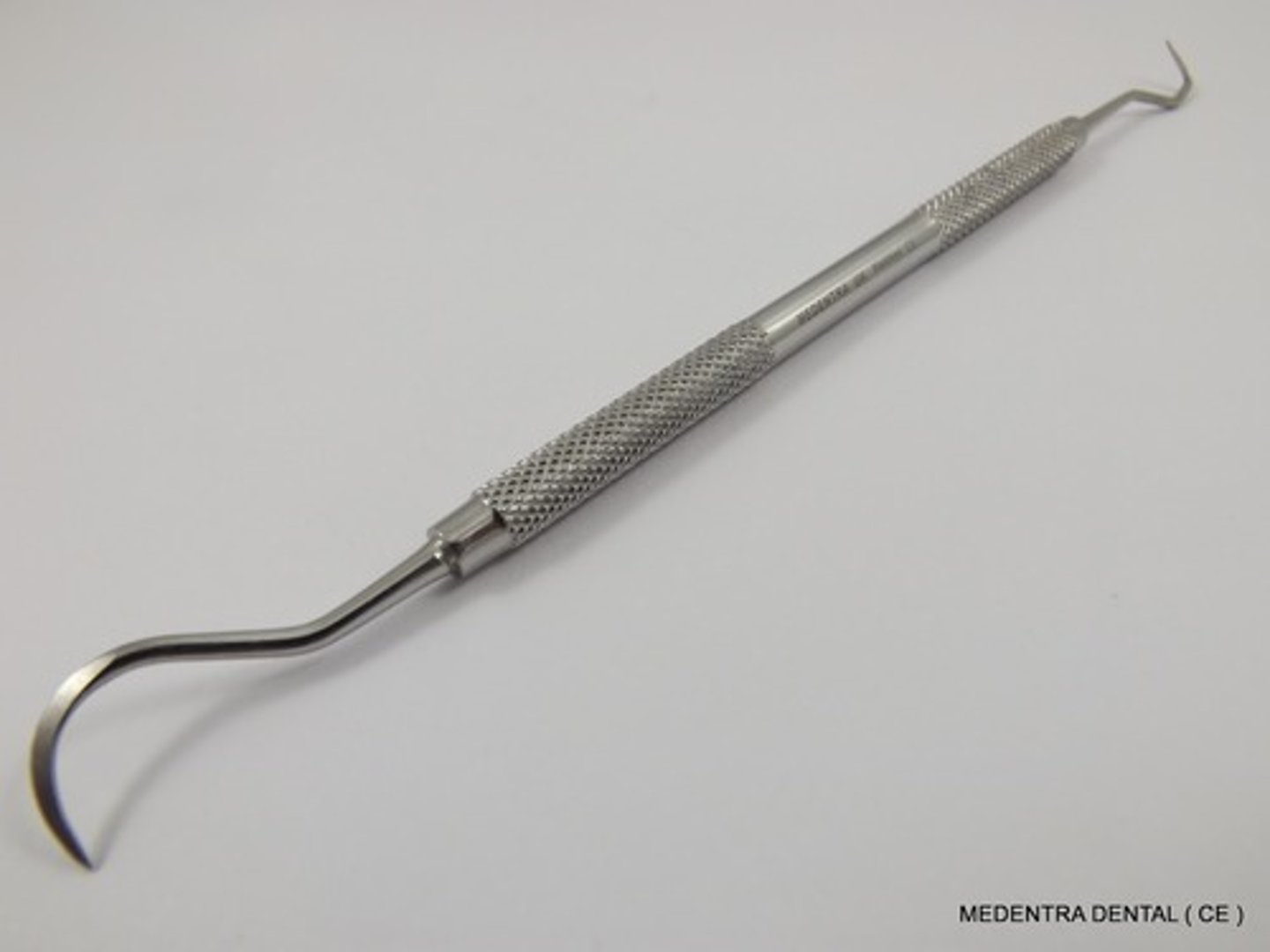
Purpose of orthodontic scaler (U 15 scaler)
- used in bracket placement, removal of elastomeric rings, and removal of excess cement or bonding material
Orthodontic scaler - U 15 scaler
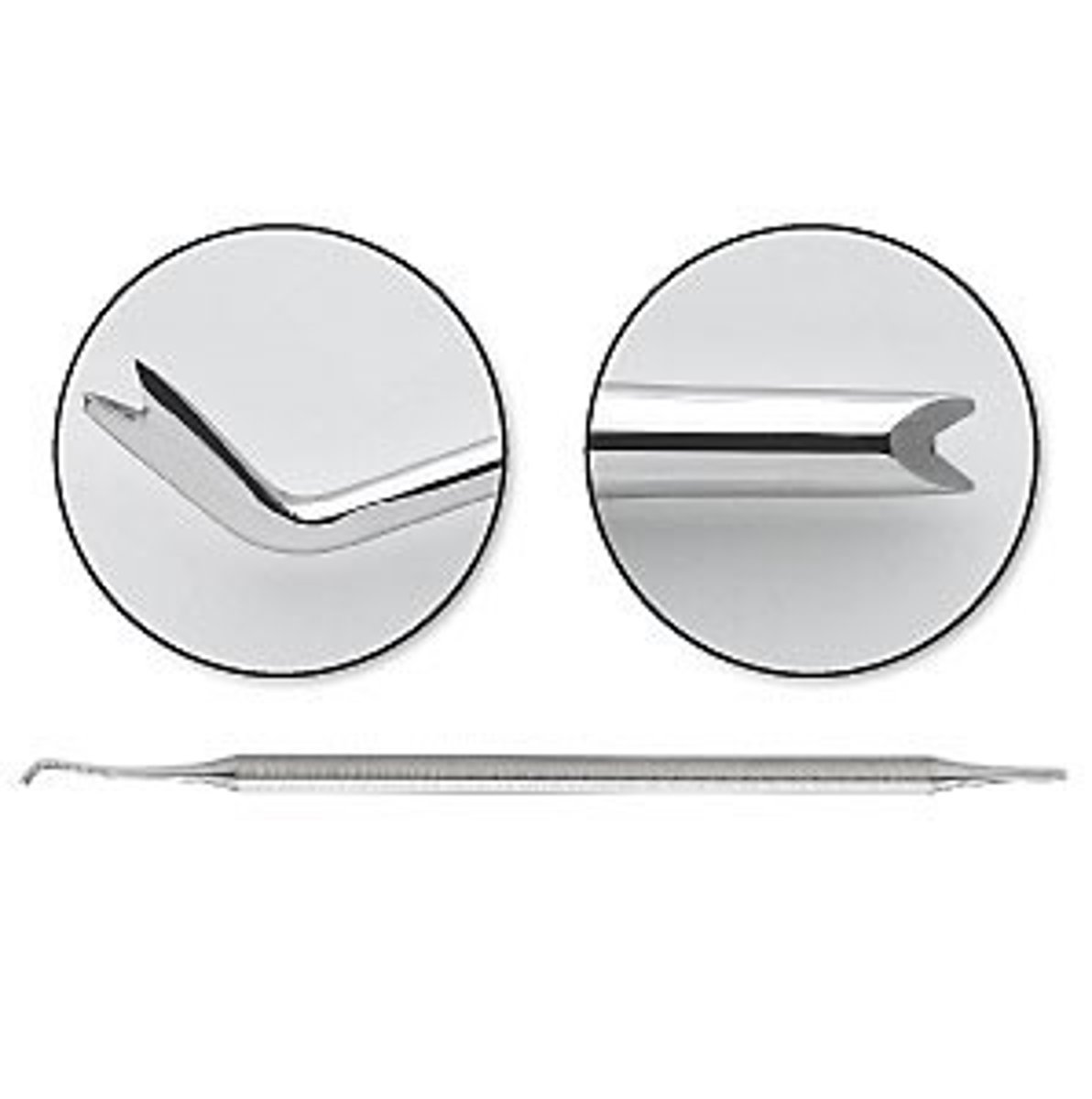
Purpose of a ligature director:
- Used to guide the elastic or wire ligature tie around the bracket and to tuck the twisted and cut ligature tie under the arch wire
Ligature director
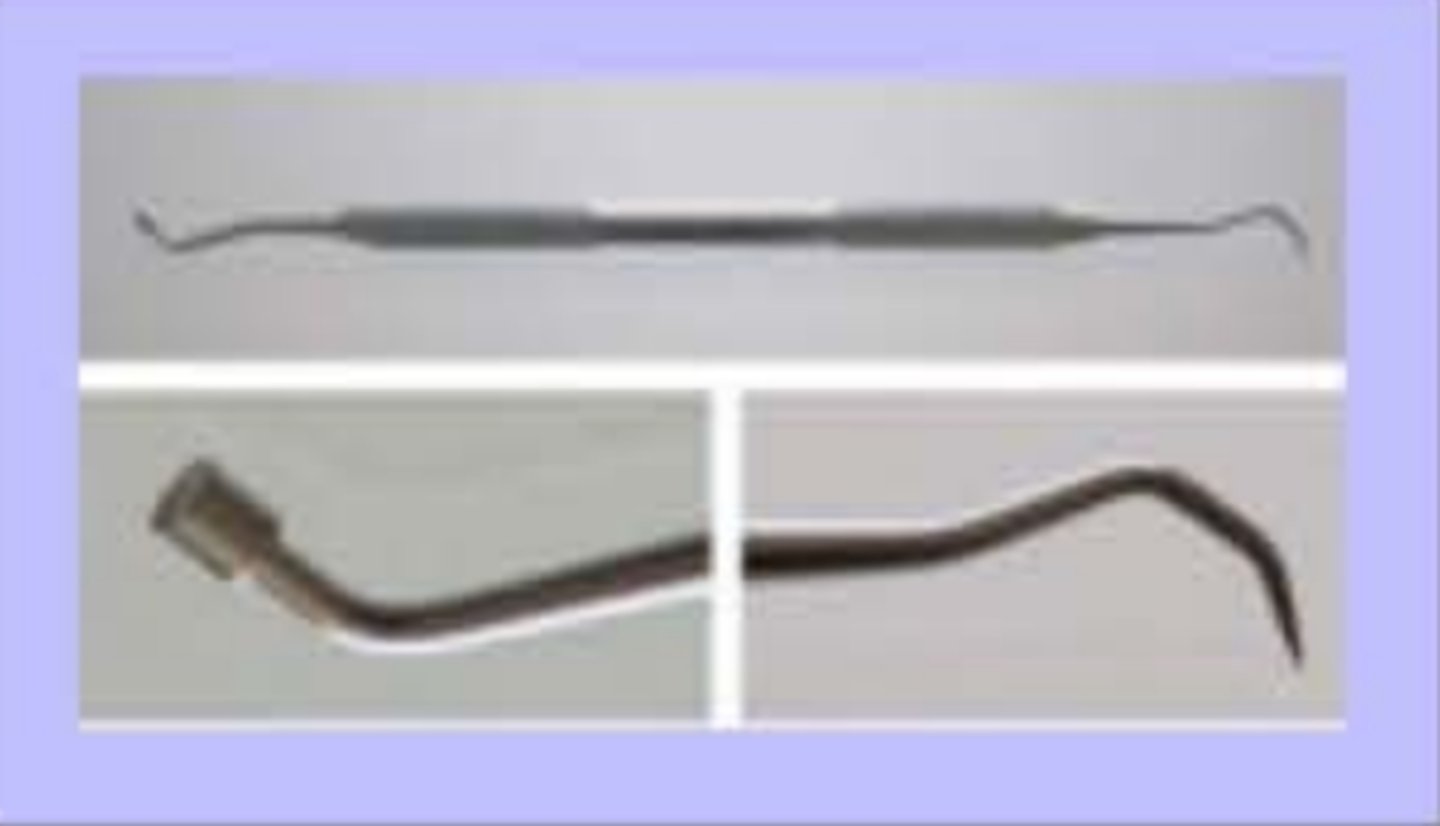
Purpose of band plugger:
- used to help seat a molar band for a fixed appliance
Band plugger
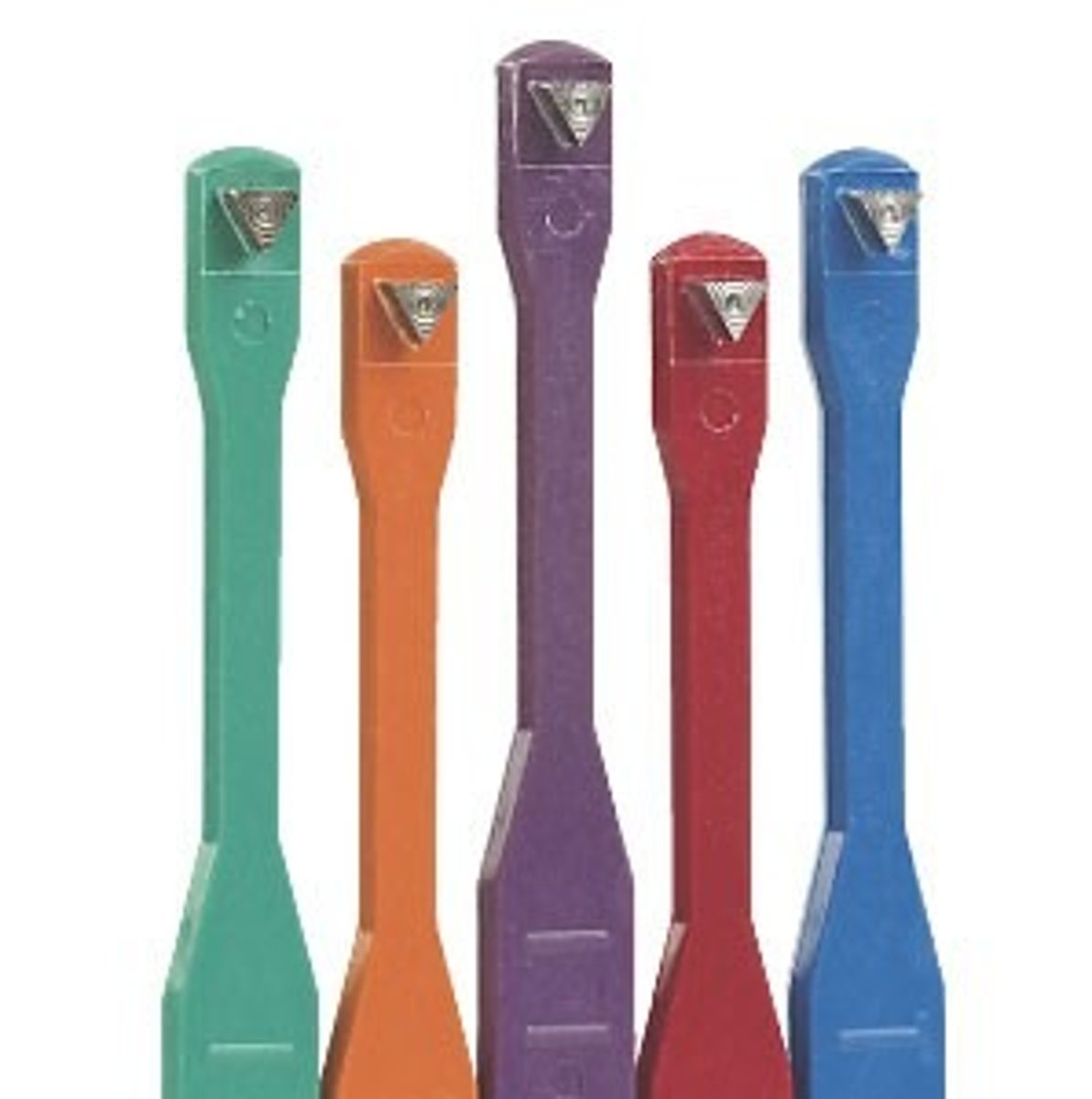
Purpose of a bite stick
- Used to help seat a molar band for a fixed appliance
Bite stick
Purpose of bracket-placement tweezers
- used to carry and place the bonded bracket to the tooth
bracket-placement tweezers
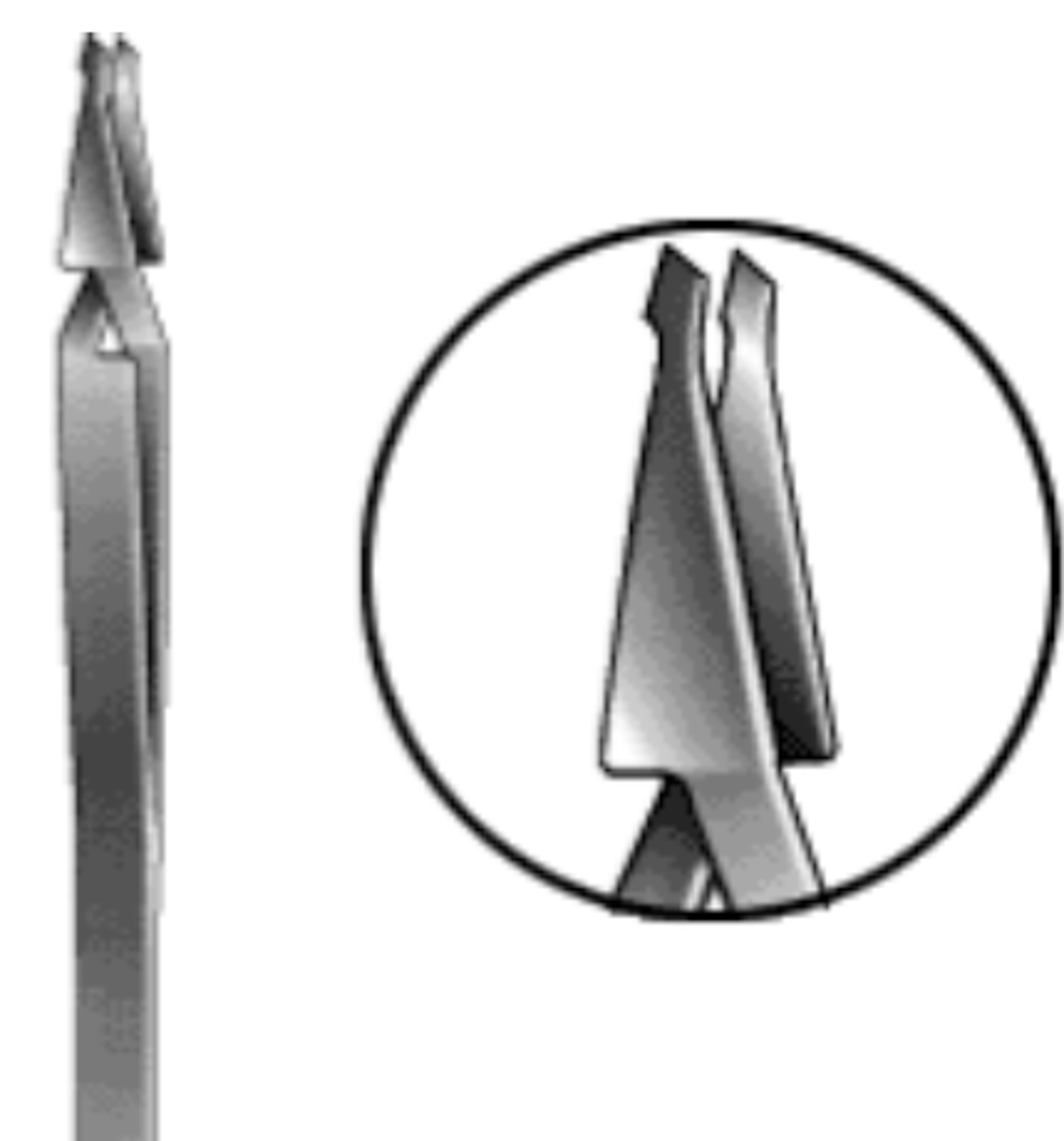
Purpose of bird-beak pliers:
- used to form and bend wire
Bird-beak pliers
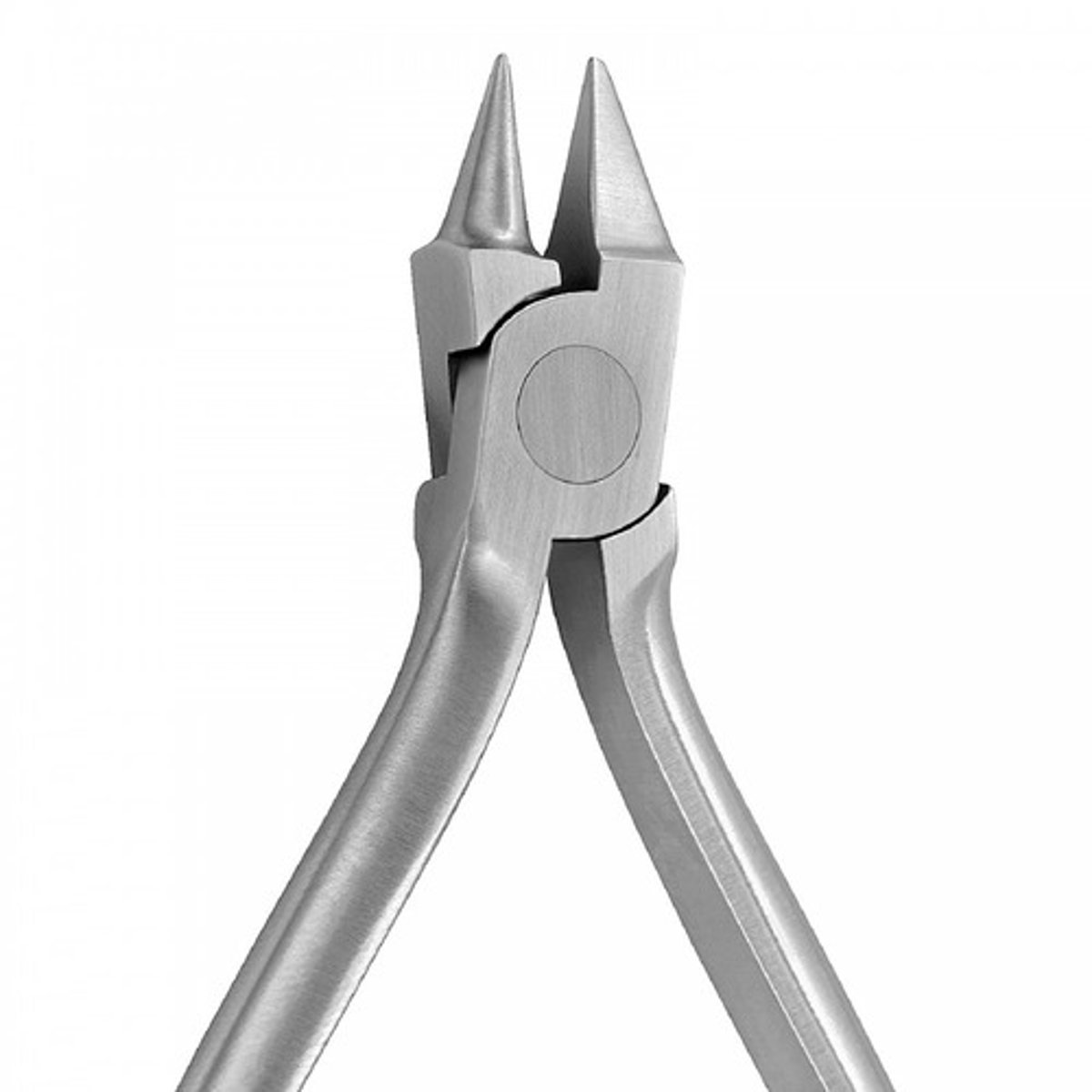
Purpose of contouring pliers
- Used in fitting bands
Contouring pliers:
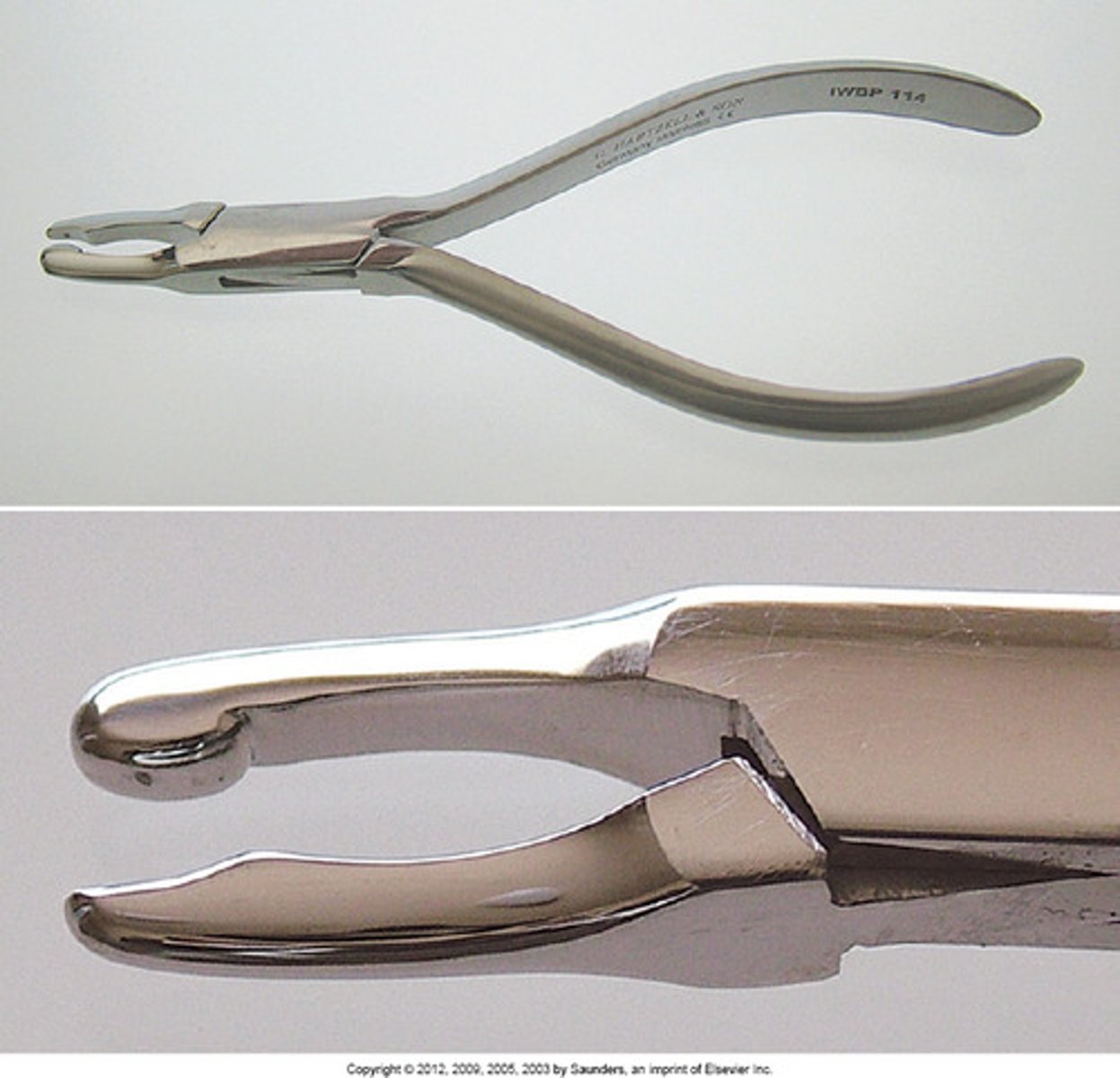
Purpose of Weingart utility pliers:
- Used in placing arch wires
Weingart utility pliers:
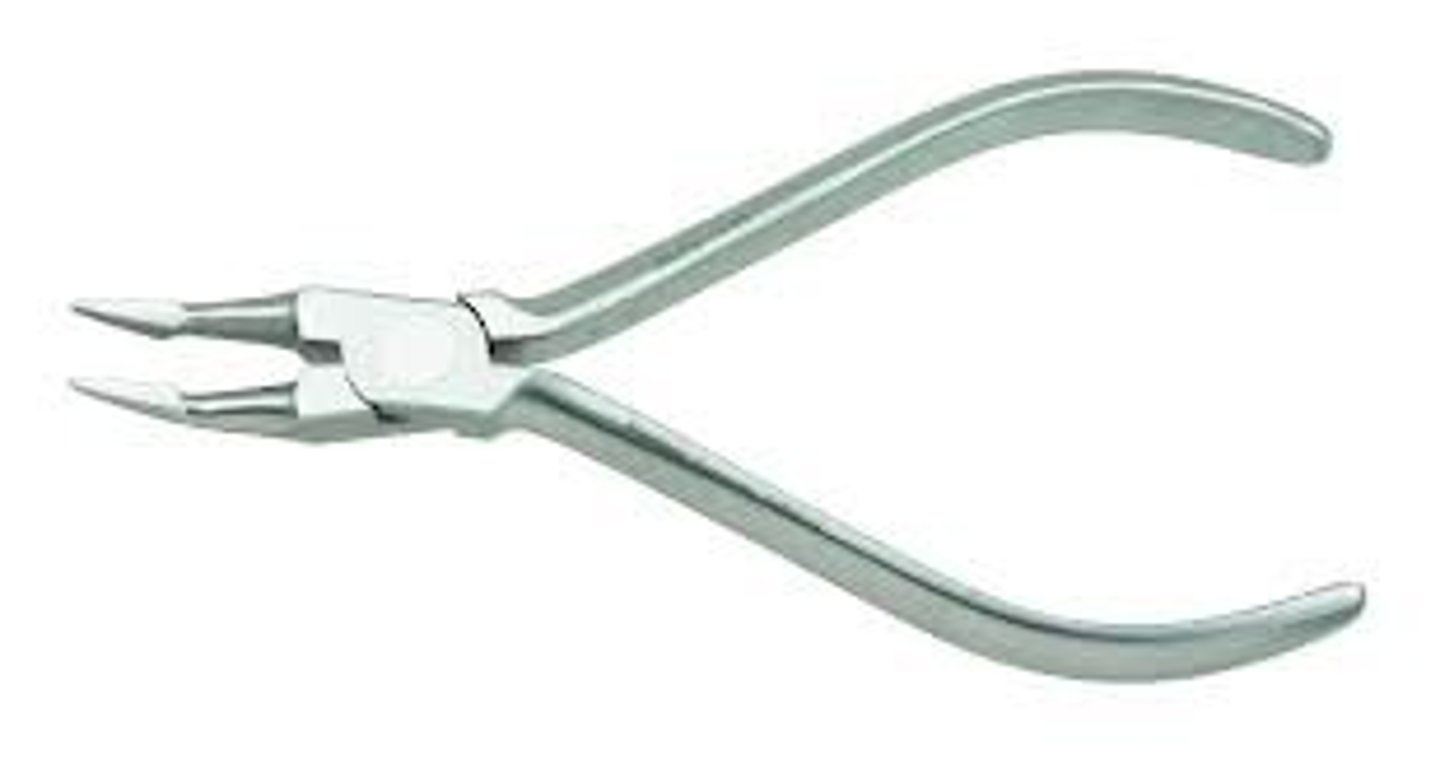
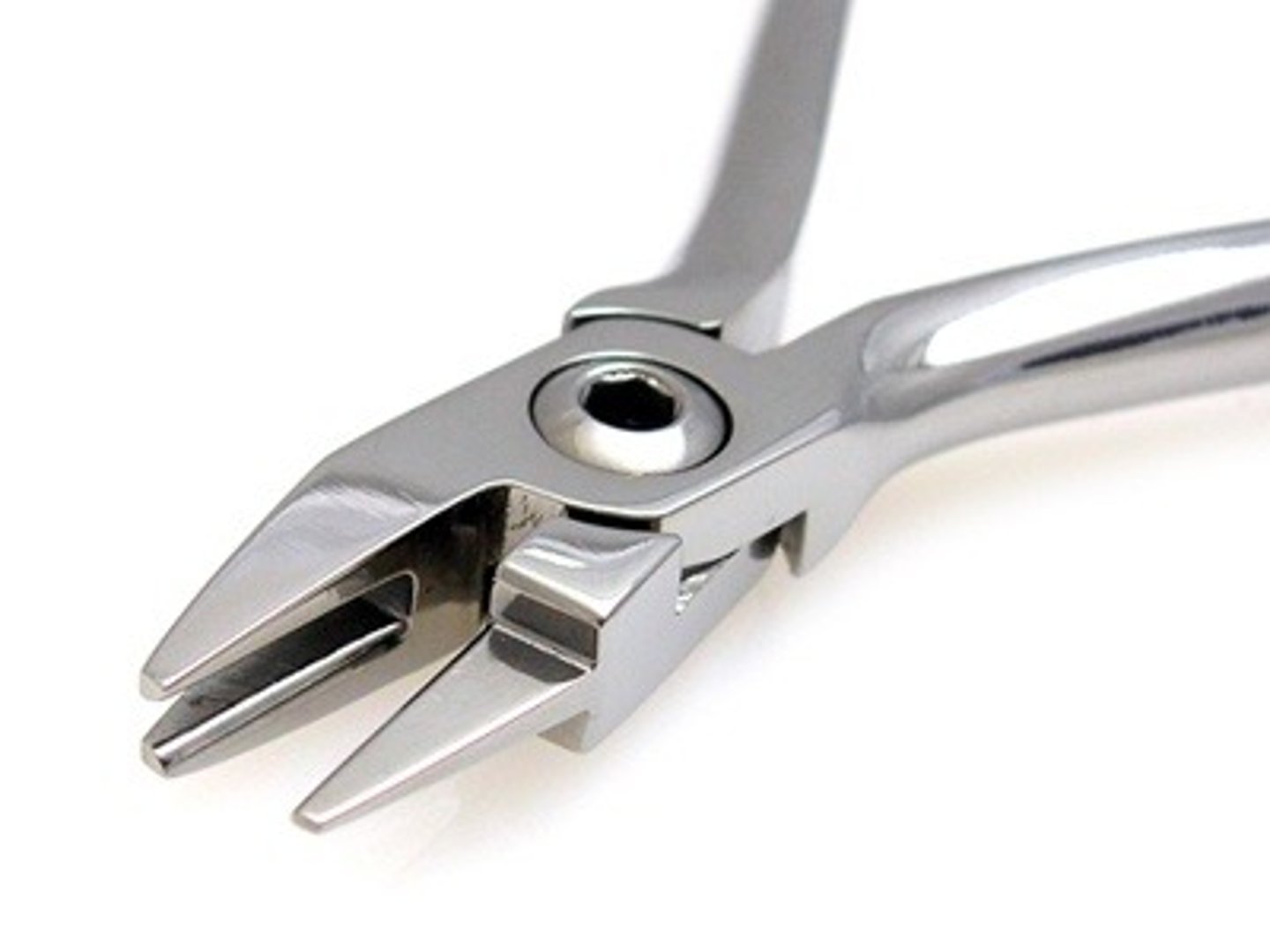
Purpose of three-prong pliers:
- used to close and adjust clasps
Three-pronged pliers:
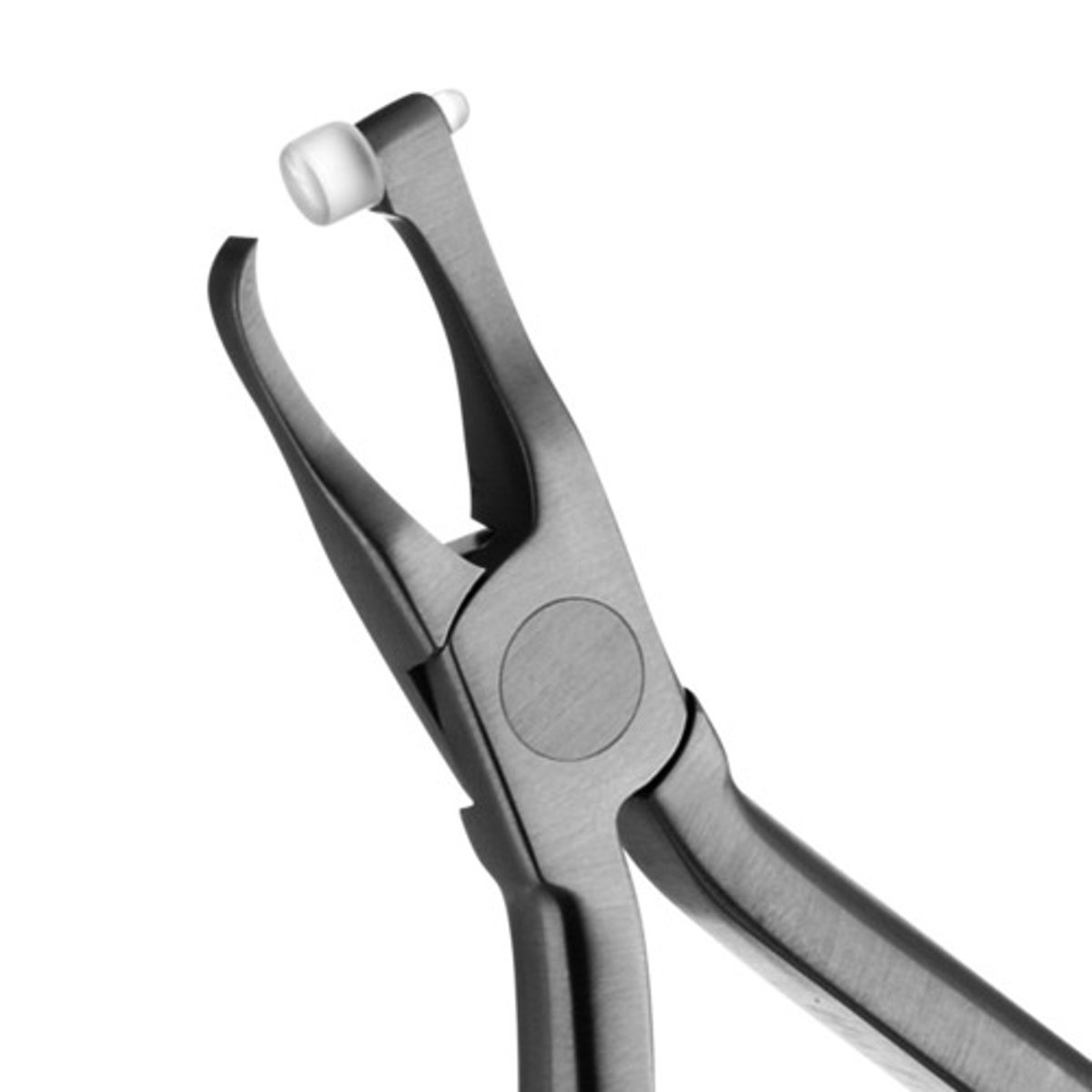
Purpose of posterior band-remover pliers:
- Used to remove bands
Posterior band-remover pliers:
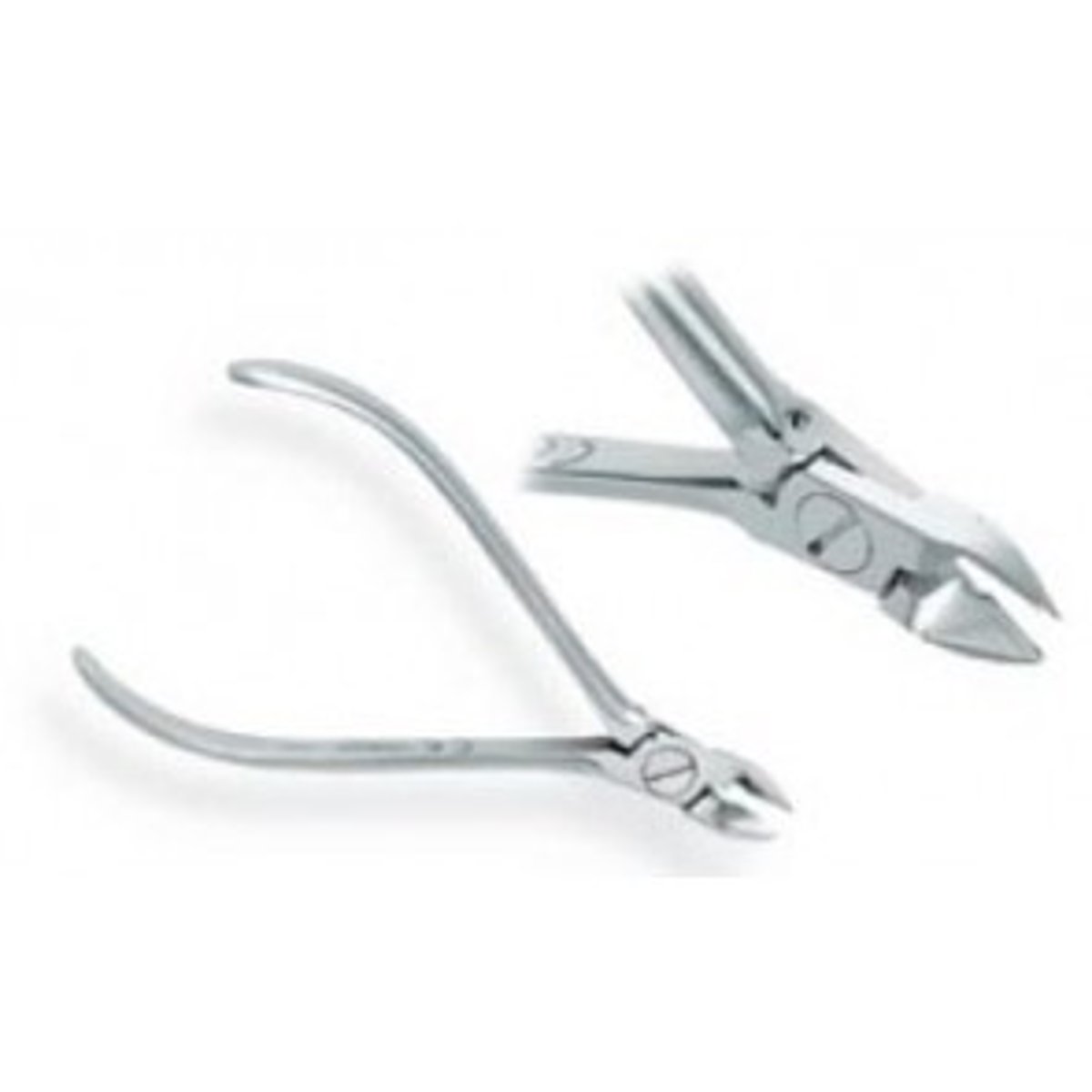
Purpose of pin and ligature cutters
- Cuts the ligature wire for removal
Pin and ligature cutter
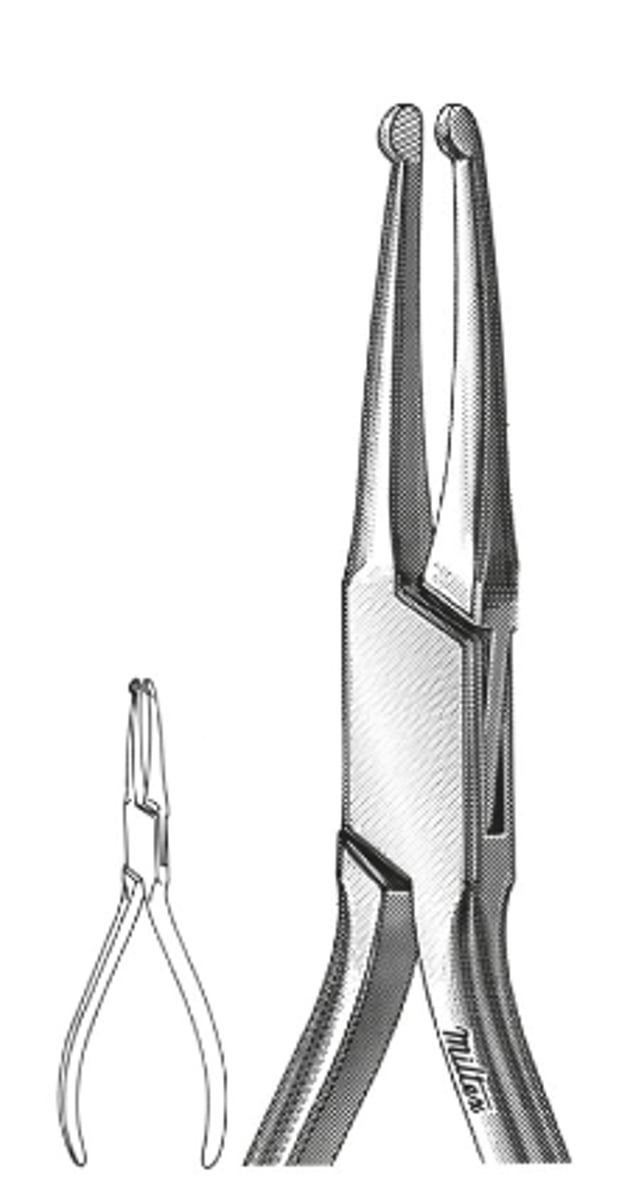
Purpose of the Howe (110) pliers:
- Allows placement and removal of, and the making of adjustment bends in, the arch wire
Howe (110) pliers:
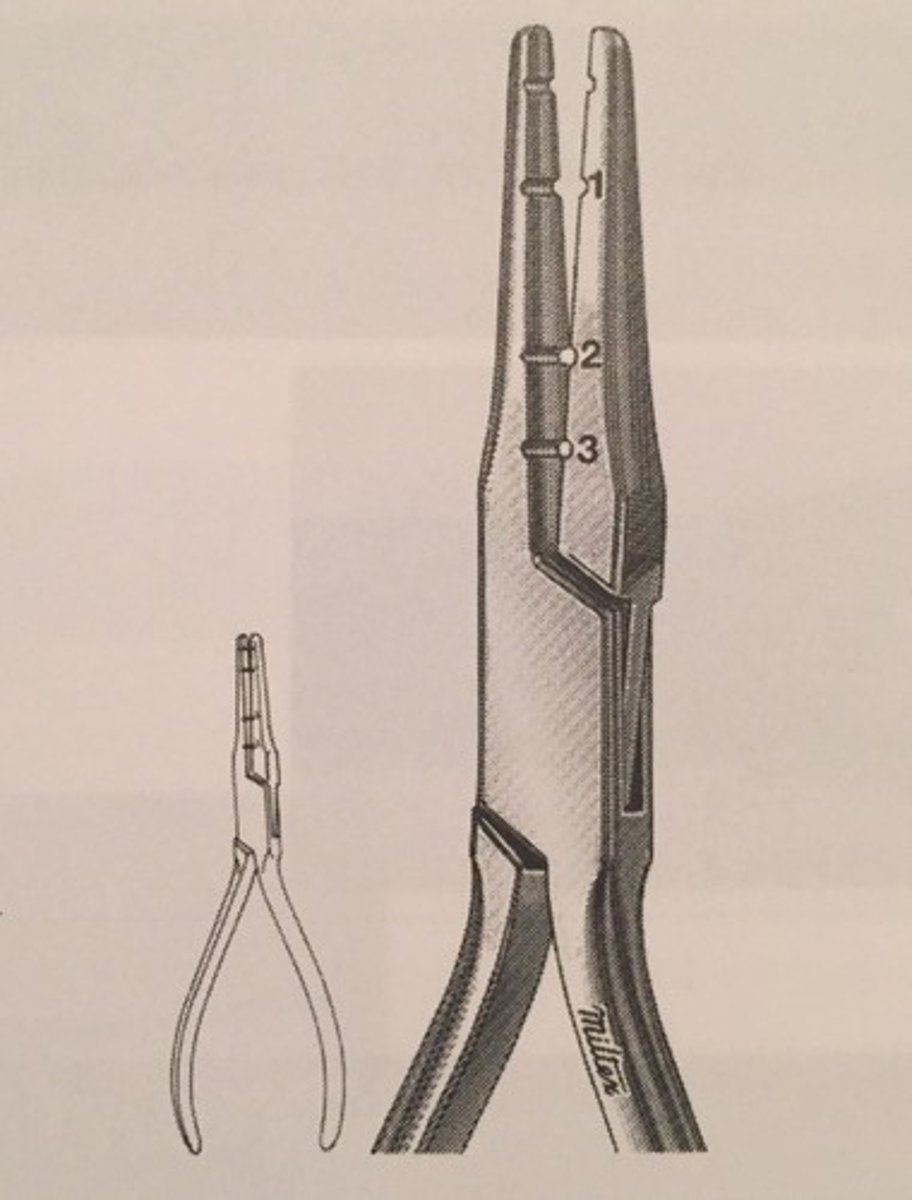
Purpose of wire-bending pliers:
- used to hold, bend, and adjust arch wires to create movement
Wire-bending pliers:
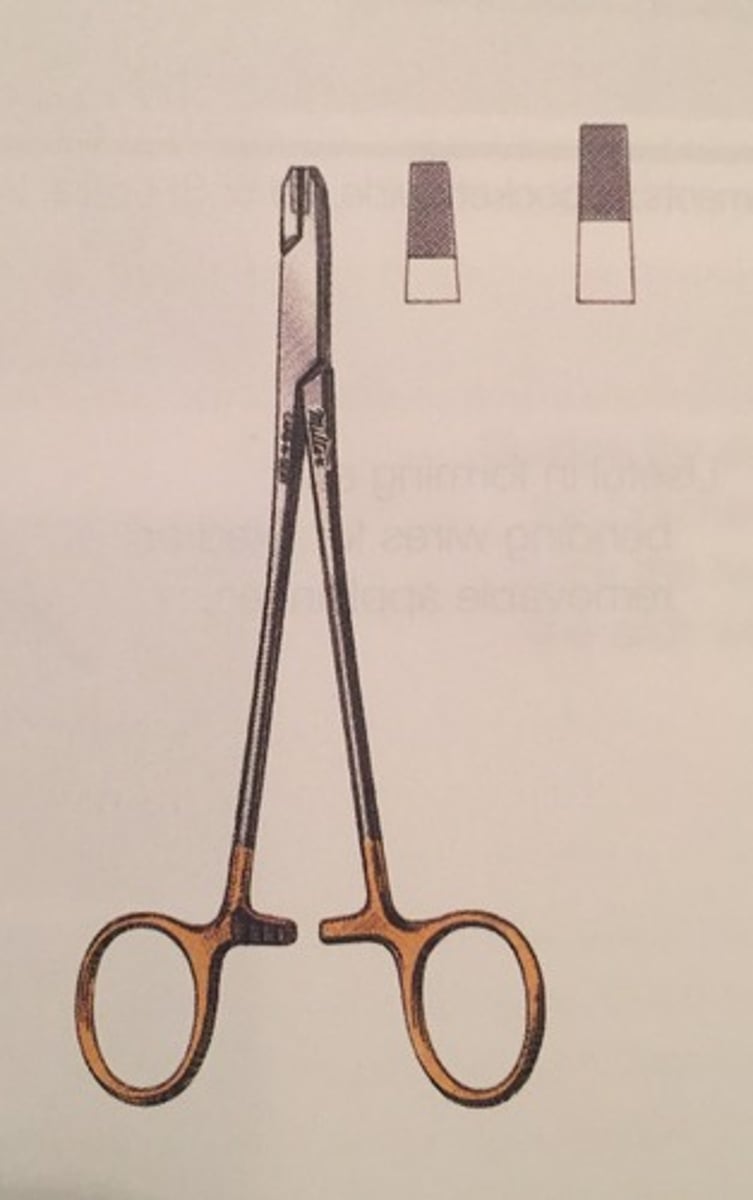
Purpose of ligature-tying pliers:
- Used for ease in ligature tying
Ligature-tying pliers:
Sequence of appointment's for fixed appliances:
- placement of separators
- cementation of molar bands
- bonding of brackets
- insertion of arch wire and tying in with ligature ties or elastomeric ties
- adjustment checks
- removal of appliance
- retention of teeth
What are separators?
- used to separate teeth before fitting and the placement of the molar bands
What are the tyoes of separators?
- steel separating springs
- elastomeric separators
What are orthodontic bands?
- preformed stainless steel bands that are fitted and cemented to molar teeth
Orthodontic bands characteristics:
- seating lugs are located on the lingual surface of maxillary bands
- to seat a mandibular molar band, you can use a band seater on the buccal surface to have the patient bite down
- occlusal edge is contoured and slightly rolled
- gingival edge is straight and smooth
What are headgear tubes?
- Round tubes, routinely placed on maxillary first molar bands, are used for the insertion of the inner bow of a facebow appliance
What are edgewise tubes?
- rectangular tubes are placed on the buccal surfaces of the upper and lower first molar bands to recieve the arch wire
Bonded brackets:
- on the bonded bracket, the arch wire is placed horizontally through the winds of the bracket and then ligated in place
- this stabilization initiates tooth movement by allowing the forces from the arch wire to be transmitted to the tooth
What is an arch wire?
- performed thin wire is placed within the bracket to provide a pattern for the dental arch to take its shape from and to guide the teeth in movement
What are the types of arch wires?
- nickel titanium
- stainless steel wire
- beta titanium (TMA)
- Optiflex
Nickel titanium arch wire:
- used for movement because of its flexibility
Stainless steel wire:
- stiffer and stronger
Beta titanium (TMA) arch wire:
- provides a combination of strength, flexibility, and memory
Optiflex arch wire:
- used for light force and its aesthetics
Round wires:
- Used in the initial and intermediate stages of treatment to correct crowding, level of arch, open a bite, and close spaces
Square or rectangular wires:
- used during the final stages of treatment to position the crown and root in the correct maxillary and mandibular relationship
What are ligature ties?
- A 0.01-gauge stainless steel wire ligature is used to "tie" in arch wires
- cut 3-4 mm and tucked toward the gingival area into the embrasure space
What are Kobayashi hooks for ligating the arch wire?
- ligature ties that have been spot welded at the tip form hooks for the attachment of elastics
What are elastic chain ties?
- these ties, continuous O's that form a chain, are used to close space between teeth or correct rotated teeth
What are elastics?
- commonly referred to as rubber bands, elastics are placed from one tooth to another in the same arch or from one tooth to another tooth in the opposing arch
- Elastics help close spaces between teeth and correct occlusal relationships
What is invisalign?
- this type of system is not suitable for all cases of malocclusion
- a series of clear "aligners" is designed by computer
- the patient's teeth gradually move as a result of the pressure that the aligner creates, until the desired result is achieved
Oral hygiene and dietary instructions:
- floss your teeth, using a floss threader for easy application
- brush your teeth at least once every day
- after brushing, rinse and swish water around to remove any debris
- inspect your teeth and braces carefully to make sure that they are spotless
What is headgear?
- headgear is an orthopedic device used to control growth and tooth movement
Facebow headgear:
- used to stabilize or move the maxillary first molar distally and create more room in the arch
What is a traction device of headgear purpose?
- used to apply the extraoral force necessary to achieve the desired treatment results
Completed treatment:
- once the patient has completed the treatment phase of orthodontics, the bands and bonded attachments are removed
- band removal is accomplished by breaking the seal of cement and lifting the bands off the tooth with a band remover
- bonded brackets are removed by creating a fracture within the resin bonding material
Why is retention necessary?
- to allow gingival and periodontal tissues the required time for reorganization
- to support the teeth that are in an instable position
- to control changes caused by growth
What are the different types of appliances for retention?
- orthodontic positioner
- Hawley retainer
- Lingual retainer
What is an orthodontic positner?
- retains the teeth in their desired positions
- permits the alveolus to rebuild support around the teeth before the patient weares a retainter
- massages the gingiva
What is a Hawley retainer?
- a removable retainer is worn to passively retain the teeth in their new position
What is a lingual retainer?
- A fixed lingual wire bonded canine to canine on the lingual surfaces
- this provides lower incisor position during late growth