Eggs: Composition, Quality, and Cooking Techniques in Food Science
 Call Kai
 Learn
Learn Practice Test
 Spaced Repetition
 Match
Match Flashcards
 Knowt Play
1/24

There's no tags or description
Looks like no tags are added yet.
Name | Mastery | Learn | Test | Matching | Spaced | Call with Kai |
|---|
No analytics yet
Send a link to your students to track their progress
25 Terms
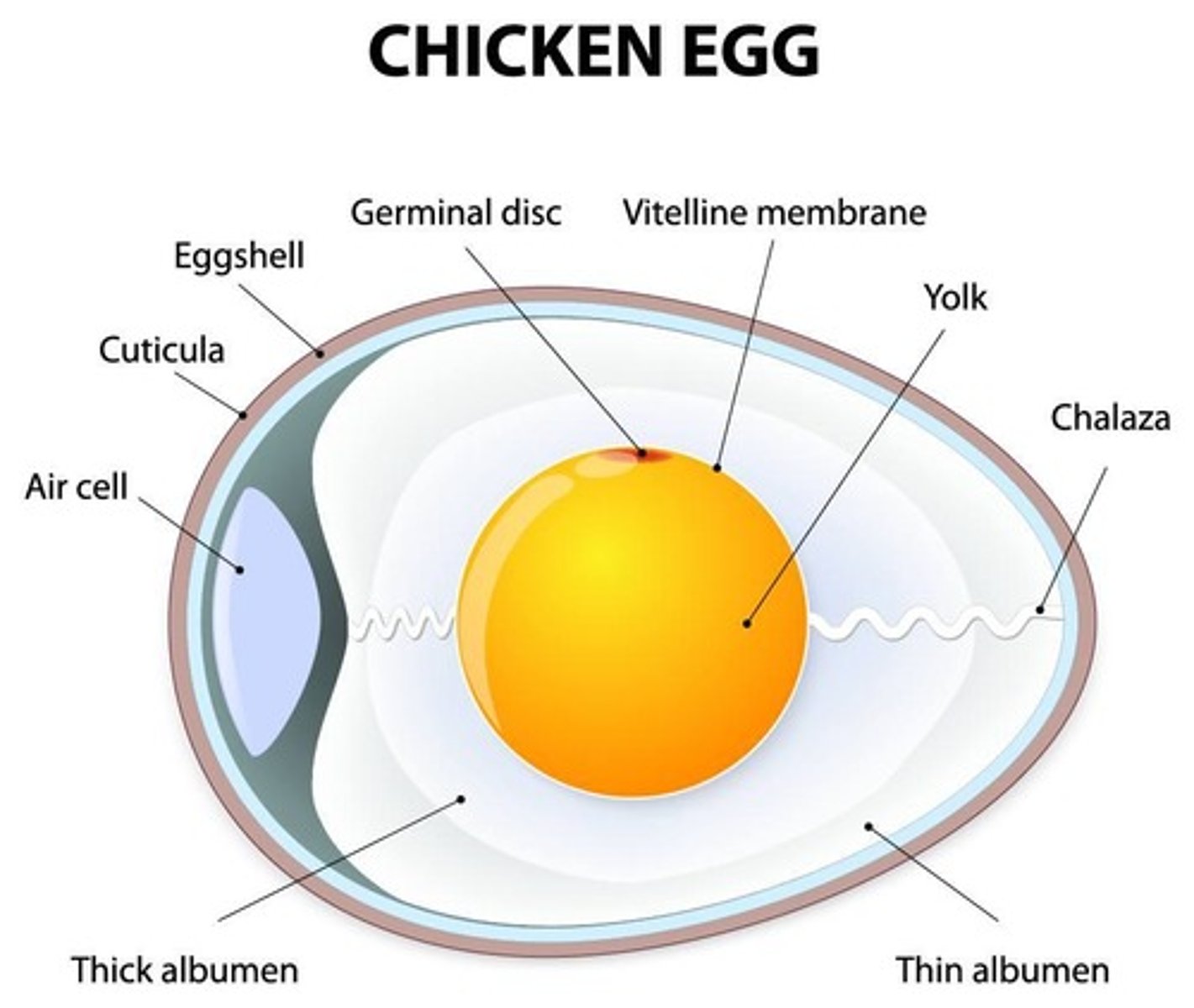
What are the main components of an egg?
Yolk, white (albumen), and shell.
How is egg quality determined?
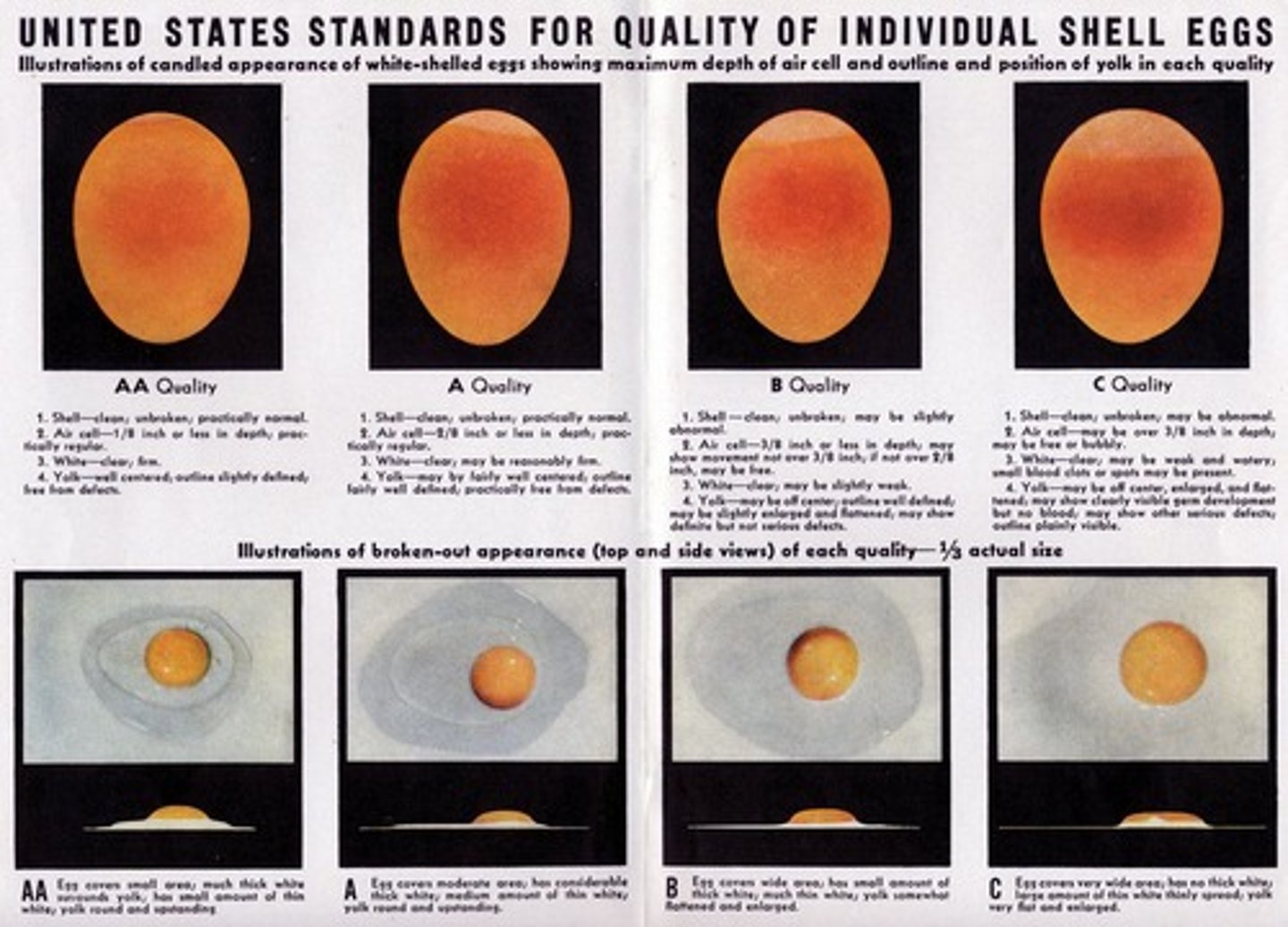
Egg quality is determined through candling and decreases with storage due to moisture loss.
What happens to egg quality over time?
Egg quality decreases as moisture is lost and the yolk enlarges, becoming less viscous.
What is the purpose of the floating test for eggs?
The floating test indicates the age of the egg; older eggs tend to float due to increased air cell size.
How should eggs be stored in the U.S.?
Eggs should be stored at refrigeration temperatures to maintain safety and quality.
What is the effect of cooking on egg proteins?
Proteins denature due to heat, leading to coagulation and the formation of a solid mass.
What is curdling in eggs?
Curdling occurs when there is excess denaturation and coagulation, usually from overheating.
What role does sugar play in egg preparation?
Sugar protects egg proteins from denaturation and increases viscosity.
What effect does salt have on egg proteins?
Salt promotes denaturation, coagulation, and gelation by neutralizing charges on amino acids.
What is the significance of fat in egg white foams?
Fat interferes with the ability of proteins to trap air bubbles, weakening the foam.
What is syneresis in egg gels?
Syneresis is the expulsion of liquid from a gel due to weak gel formation.
What causes the greenish color in hard-cooked eggs?
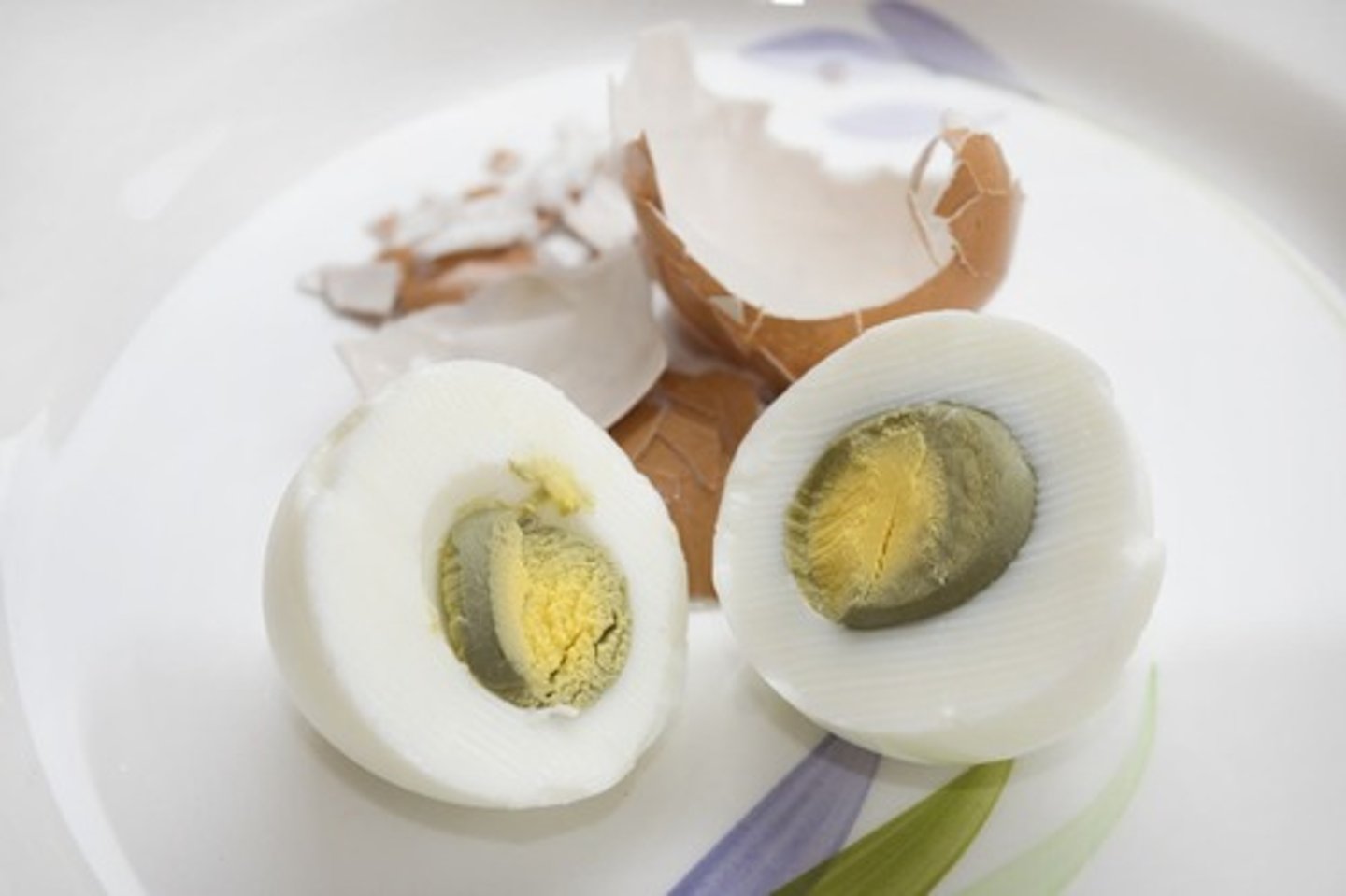
It is caused by a reaction between sulfur in the egg white and iron in the yolk, often due to overcooking.
What is the impact of overheating on egg custards?
Overheating shrinks egg proteins, leading to syneresis and a tough texture.
How do added ingredients affect egg white foam stability?
Acid lowers pH and promotes denaturation, while sugar protects proteins, and fat decreases interactions.
What is the function of eggs in cooking?
Eggs act as binders, emulsifiers, foaming agents, and thickeners, contributing to color, flavor, and texture.
What are common defects in egg cooking?
Common defects include greenish color in hard-cooked eggs, weeping of foams, and beading in baked goods.
What is the difference between white and brown eggs?
Shell color has no meaningful impact on quality or nutrition.
What is the effect of mineral oil on eggs?
Mineral oil can coat eggs to prevent moisture loss and pathogen entry.
What is the relationship between dietary cholesterol and heart disease?
Dietary cholesterol's impact on blood cholesterol levels is less significant than genetic factors.
What happens to egg proteins when whipped?
Whipping unfolds egg white proteins, allowing them to stabilize air bubbles and form foams.
How can you prevent common egg cooking defects?
Prevent defects by controlling cooking temperatures and using proper techniques like placing meringues in hot ovens.
What is the importance of slow heating in egg custards?
Slow heating protects against curdling and ensures a smooth gel formation.
What is the role of eggs in emulsification?
Eggs help stabilize emulsions, allowing mixtures of oil and water to blend smoothly.
What changes occur to eggs during cooking?
Egg proteins denature and coagulate, resulting in a solid mass and changes in texture.
What is the purpose of the lab preview regarding eggs?
The lab preview aims to explore the effects of cooking temperature and added ingredients on eggs.