Social Psych exam 1
 Call Kai
 Learn
Learn Practice Test
 Spaced Repetition
 Match
Match Flashcards
 Knowt Play
1/113

There's no tags or description
Looks like no tags are added yet.
Name | Mastery | Learn | Test | Matching | Spaced | Call with Kai |
|---|
No analytics yet
Send a link to your students to track their progress
114 Terms
social psych
-the study of how people affect, and are affected by,
others
• Helps make sense of social world
• Helps us understand basic principles of social influence as well as
other principles of social behavior
Late 1800s
two experiments point in opposite directions (start of social psych)
Norman Triplett and Max Ringelmann
social psychology experiment kick offs
Norman Triplett
competition enhances performance
Max Ringelmann
As group size increases, individual effort decreases
1908
publication of social psychology textbooks
-Edward Ross
-William McDougall
Twentieth century
-rapid changes and world events lead to new ideas
Stanley Milgram
-studied the role of obedience to understand atrocities of World War II
1950s and 1960
- Psychology is divided between two camps
-Behaviorism and Freudian psychoanalysis
Behaviorism
-learning principles (e.g., rewards and punishments)
Freudian psychoanalysis
-elaborate interpretations of individual experiences
combines methods and uses scientific approaches to measure behavior, thoughts, feelings, and other inner states
social psych
recent history
-Study of cognitive processes such as attribution theory
-Biological and evolutionary processes - social neuroscience
-The self - self-control, self-concept, self-esteem, self-presentation
The ABC Triad
-Affect
-Behavior
-Cognition
Affect
-how people feel (emotions)
Behavior
-what people do
Cognition
-how people think (how you get someone to think ex. guilt)
social sciences
-Anthropology
-Economics
-History
-Political science
-Sociology
Psychology Subdisciplines
-Biological psychology
-Clinical psychology
-Cognitive psychology
-Developmental psychology
-Personality psychology
-Social psychology
Why Do People Study Social Psychology?
-curiosity
-philosophy
-making the world better
curiosity
-why people act the way they do
philosophy
-Reliance on science separates psychology from philosophy
making the world better
-Assume solutions begin with better knowledge of problems
-Engage in applied and basic research
basic reasearch research
-og reasearch in lab (happens first)
-general knowlegde gain
applied research
-taking basic research and applying it
-focuses on solving a particular problem with the basic knowledge
common wisdom is not always accurate
-Adages are sometimes contradictory (ex. “birds of a feather flock together” and “opposites attract”)
-Understanding biased ways of thinking (ex. the hindsight bias)
-Intuition is a poor method for discovering truth
-Common sense may be a starting point for asking questions, but science is what takes us further
Empirical Approach
- Collect data through observation and use data to form our knowledge of something
Scientific Method
6 steps
Step 1: Scientific Method
- State the problem
Step 2: Scientific Method
-formulate a testable hypothesis
Step 3: Scientific Method
-Design the study and collect data
Step 4: Scientific method
-test hypothesis with gathered data
Step 5: Scientific Method
-communicate the rest of the results to the scientific community
Step 6: Scientific Method
-replicate or repeat the finding to validate the findings
independent variable
-variable that gets manipulates
dependent variable
-variable you’re measuring
theoretical stimulus
-cause and effect
theoretical response
-trait being measured
Accomplice/confederate
-working with researchers secretly
deception
- Have to debrief participants after study is complete
Construct validity of the cause
-Independent variable is a valid representation of the theoretical stimulus
Construct validity of the effect
-Dependent variable is a valid representation of the theoretical response
Scientific theories must be testable
-Define its theoretical constructs operationally
Experimental studies
-Researcher has control over the procedures
-Participants are randomly assigned
Quasi-experiment
-no random assignment
internal validity
-Confidence that changes in the independent variable caused changes in the dependent variable
PTSD study
-woman who developed PTSD and were with child, gave birth to children who had significantly lower levels of cortisol levels than mom without PTSD

Why does PTSD study matter?
-found that PTSD can be transferred genetically in utero
-low cortisol levels are linked to PTSD because there is a stress dysfunction
- Children are at a higher risk to PTSD than a child whose mom didn’t have it
social evolutionary benefits
-find more food
-alert others of danger
-mate + reproduce easier
social evolutionary downsides
-social living is more difficult to achieve than solitary life
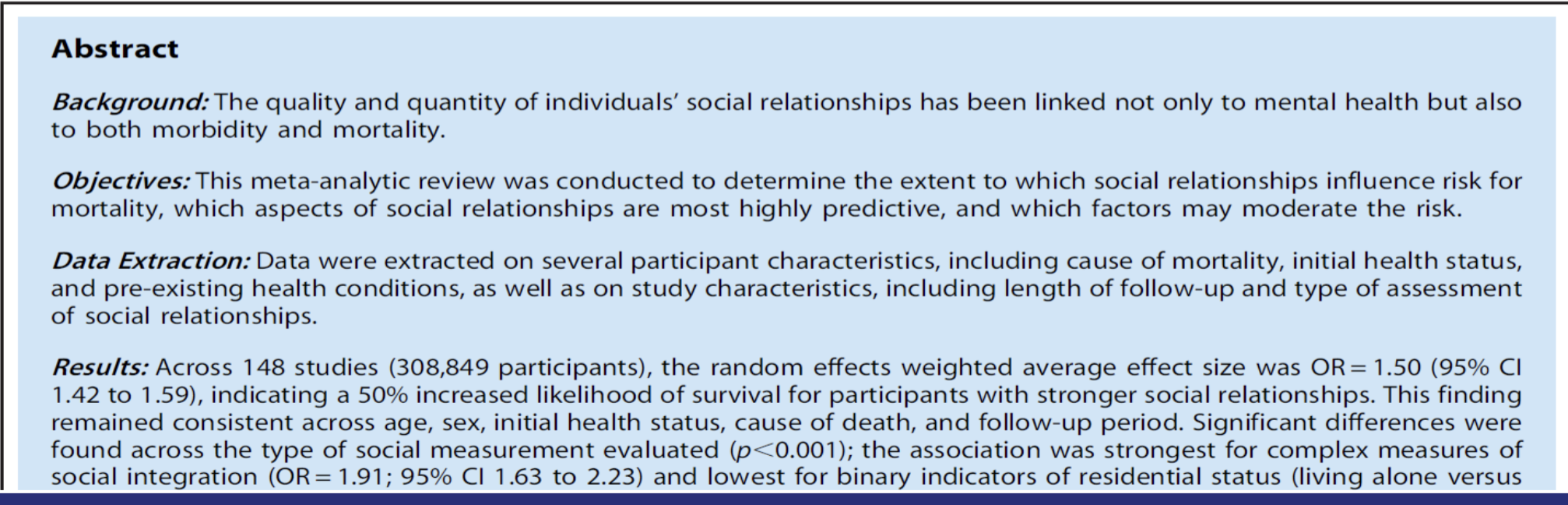
meta-analysis of relationship and health study
-50% greater survival for participants in strong social relationships
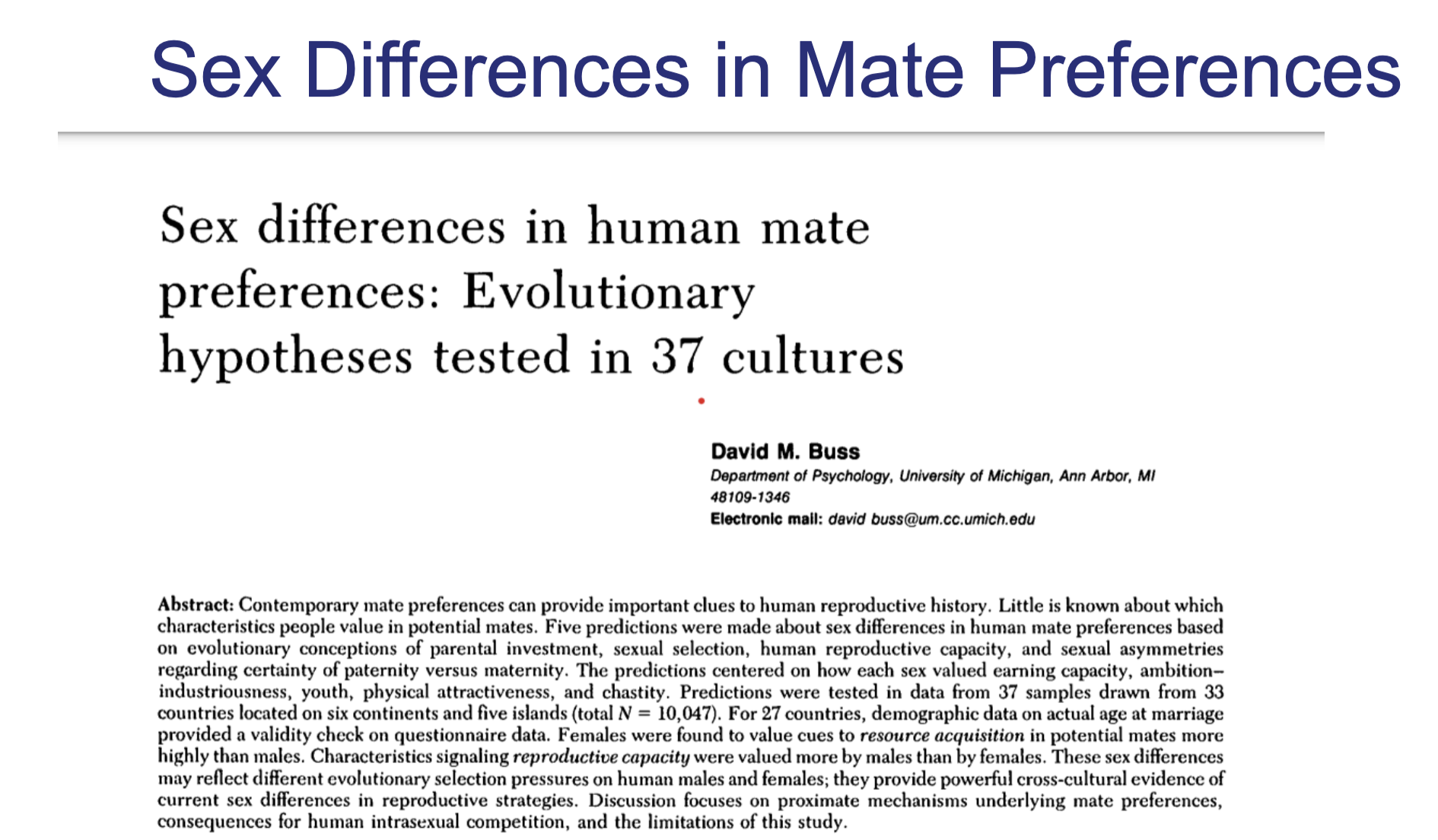
Sex Differences in Mate Preferences: A Cross-Sectional Study
-males looked for traits giving off reproductive viability/capacity (age, weight, height)
-females looked for characteristics like resources and dependability
social animals
-People seek connections to others and prefer to live, work, and play with
other people
cultural animals
The richness of culture is a defining characteristic of humans
cultural significance and important ideas
-Defined: Culture is the essence of what makes us human and differentiates us from other animals
-Shared ideas: brain puts special priority on information directly experienced as shared
-Culture as social system: a network linking many different people
-Culture as praxis: depends on shared ideas of practical ways of doing things
-Culture, information, and meaning: encoding and sharing meaningful
information, which helps in planning for the future
Automatic system
-Outside of consciousness
-Simple tasks
-always on, even in sleep
- Examples: implicit biases, driving a route you do every day, singing to music you know
Deliberate system
-Mostly operates in consciousness
-Turns off during sleep
-Examples: taking exams, taking a different way to work than normal “lock in”
The duplex mind and how they work together
-Automatic system makes conscious thought possible
—Serves the deliberate system
-Conscious override
—Systems can work against each other
—Deliberate system can suppress automatic urges
—Vital to life in culture
3 types of self
-interpersonal self
self-knowledge
-agent self
self-knowledge
-self-awareness
self-esteem
-self-deception
social roles
-social systems create and define roles
-individuals seek and adopt them to gain social acceptance
independent self-construal
-thinks of all parts of self that sets themselves apart from others
interdependent self-construal
-thinks how parts of self interact with others
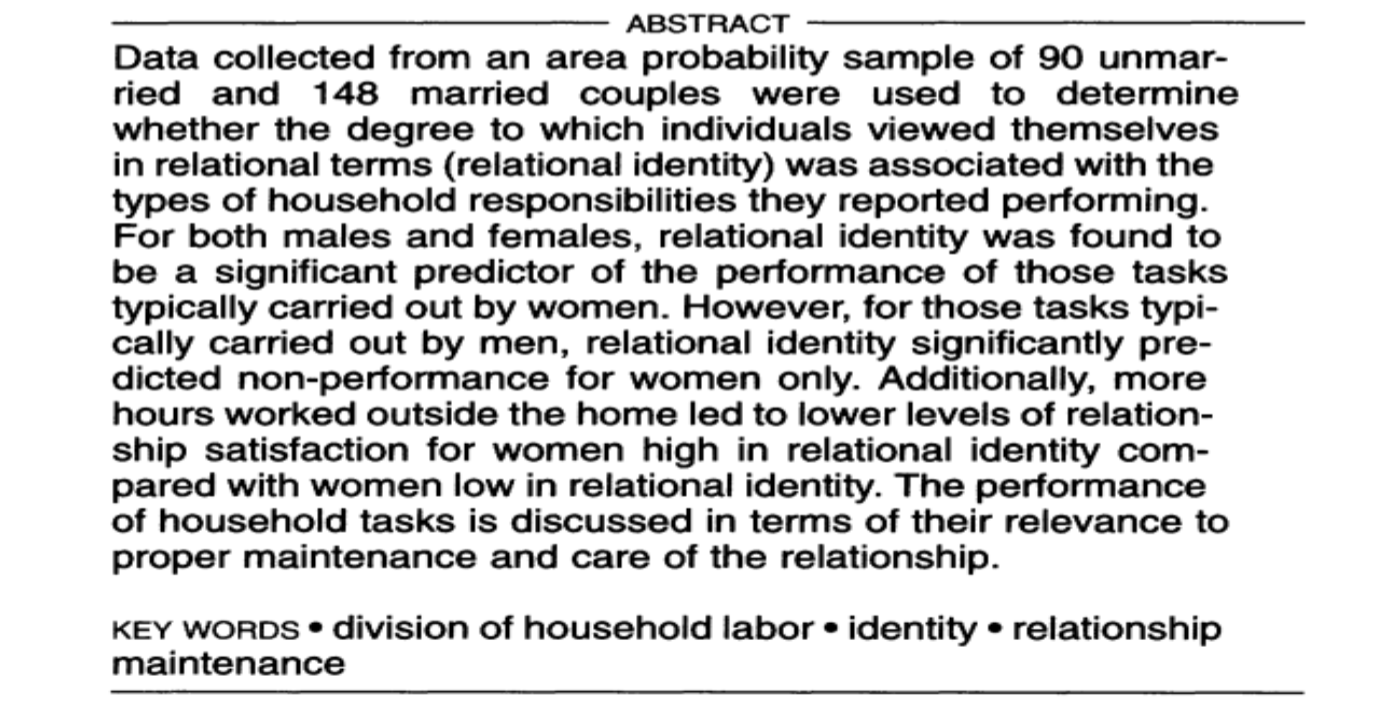
The Behavioral Impact of Self-Construals study
-if you have high interdependent construal, you seek relationships
-if you have high independent construal, you seek solidarity
-for both males and females, relational identity was found to be a significant predictor of the performance of those tasks typically carried out by women
self awereness
-attention directed to the self
-private
-public
private self-awareness
-Looking inward at self’s inner traits
—emotions
—thoughts
—desires
—traits
public self-awareness
-looking outward to understand the self and how you are perceived by others
Where self-knowledge comes from
-standards
-escaping self-awareness Why
-why we have it
standards
-Falling short of standards can prompt people to change their behavior or
escape from self-awareness
escaping self awereness
People seek to escape from self-awareness when it feels bad
Why do we have self-awareness?
-vital for self-regulation,
-social acceptance
-perspective-taking
-goal reaching
social comparisons
-examining the difference between oneself and another person
-learning what the facts mean in the context of what ither people are like
-most useful comparisons involve people in the same general category.
-upward
donward
-parallel
upward comapriosns comparisons
-comparing oneself to someone better than you
-ex. sports, school
-can be discouraging and cause a lack of self-esteem, becomes discouraging
-can help you grow as a person and work towards a better goal
downward comaprions
-comparing ourselves to worse off others
ex. homeless person
-can help appreciate our current state and promote thankfulness
-can cause a lack of accountability by comparing yourself to someone who did worse or is worse off (“its okay becasue leah got a worse grade”)
parallel comparison
-comparing ourselves to people who are on our level
-helps get feedback and hain a sense of how you’re doing
-ex. same class and they got a similar grade so you don’t need to escape or take action
The looking-glass self has three components
-Imagine how you appear to others
-Imagine how others will judge you
-Develop an emotional response to imagining how others will judge you
Introspection
-examining your thoughts and feelings
Limitations of introspection
-Development and children’s views of themselves
-People often don’t realize how their minds work
Self-perception theory
-People observe their own behavior to infer what they are thinking and how
they are feeling
the overjustification effect
-The tendency for intrinsic motivation to diminish for activities that have
become associated with rewards
Three reasons for wanting self-knowledge
-appraisal motive
-self-enhancemnt motive
-consistency motive
appraisal motive
-Learning the truth about oneself
-ex. ask a friend how you are at playing the piano for honest feedback
self-enhancement motive
-Learning flattering aspects of oneself
-ex getting praise to boost self-esteem like social media
Consistency motive
-Getting feedback that confirms current beliefs about
oneself
-can be for a negative thing or positive
-ex. you tell a friend about a bad day and they agree so it’s confirmed you had a bad day
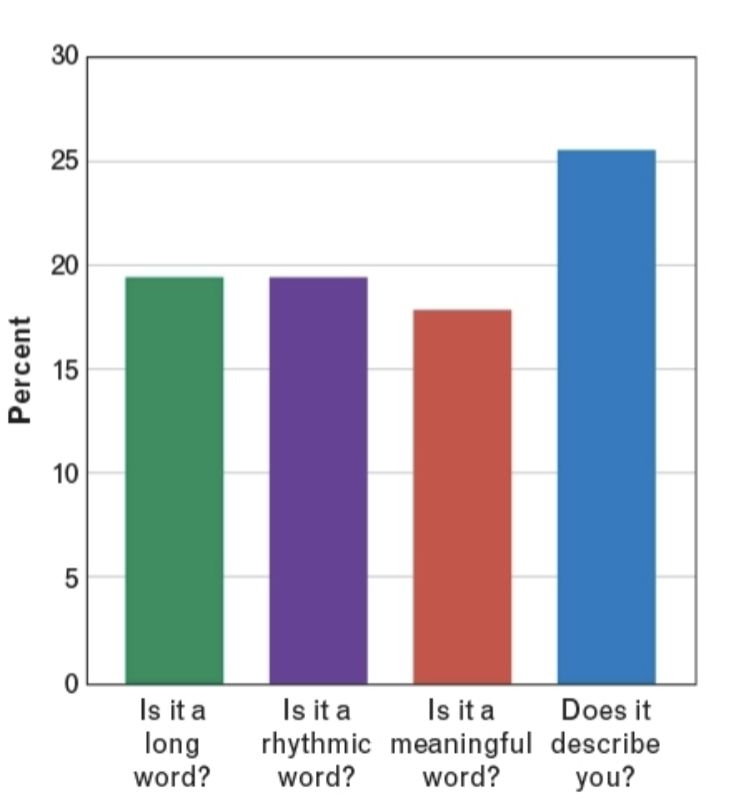
self-reference effect
-Information relating to the self is processed
more deeply and remembered better
-ex. passwords that mean something to you, you remember
Identity slowly changes over time
-Children add new knowledge and skills
-Adults take up new hobbies or break bad habits
-Our body changes throughout our life
Revising self-knowledge
-Change how you think about yourself or change your behavior and a change
in self-concept will follow
-Behavorial Activation Theory
Self-esteem
-how favorably someone evaluates himself or herself
-self protection
Self-protection
-trying to avoid loss of self-esteem
Reality and illusions
-are feelings about oneself really accurate?
Three “positive illusions”
-Overestimating good qualities
-Overestimating one’s perceived control over events
-Being unrealistically optimistic
Overestimating good qualities
-ex. when asked to give adjectives of what you are like, you say good ones and assume the same for others’ impressions of themselves
Overestimating one’s perceived control over events
-People tend to estimate the chances of something bad happening to them as very low
-ex. cancer, car crash, addiction
-victim blaming, “that would never happen to me”
Being unrealistically optimistic
-believing that we can achieve anything we want to do
just-world hypothesis
-The belief that if we’re good, good things will come back to us
People fool themselves and use self-deception strategies to maintain a positive
outlook
-Using self-serving bias
-Being more skeptical of bad feedback
-Remembering good things more
-Making comparisons with those slightly worse
-Skewing impressions of other people to highlight one’s own good traits as
unusual
-Choosing definitions wisely
self-serving bias
-tendency for us to embrace and accept positive feedback, but when it comes to something negative, to externalize it
-ex. good test grade you know it’s bc you worked hard; bad test grade we say it was becasue we had a bad morning
being more skeptical of bad feedback
-when someone criticizes us, we think they’re jealous
-ex. Someone says, “i don’t like your outfit” and you blame it on jealousy
remembering good things more
-We downplay instances in our life where we acted badly or fell short of our expectations
-ex. bringing something up to someone like a fight and they say, “I don’t remember that””
-making comparisons with those slightly worse
-downward comparisons