Further Mechanics: Impulse, Momentum, and Circular Motion
 Call Kai
 Learn
Learn Practice Test
 Spaced Repetition
 Match
Match Flashcards
 Knowt Play
1/12

Earn XP
Description and Tags
Flashcards covering vocabulary and key concepts for Impulse, Momentum conservation, Collisions, and Circular Motion based on the lecture notes.
Name | Mastery | Learn | Test | Matching | Spaced | Call with Kai |
|---|
No analytics yet
Send a link to your students to track their progress
13 Terms
Impulse
The product of a constant force and impact time (F×t), which is equivalent to the change in momentum (Δp ). Where F is a constant force, t is impact time and p is momentum.
Conservation of linear momentum
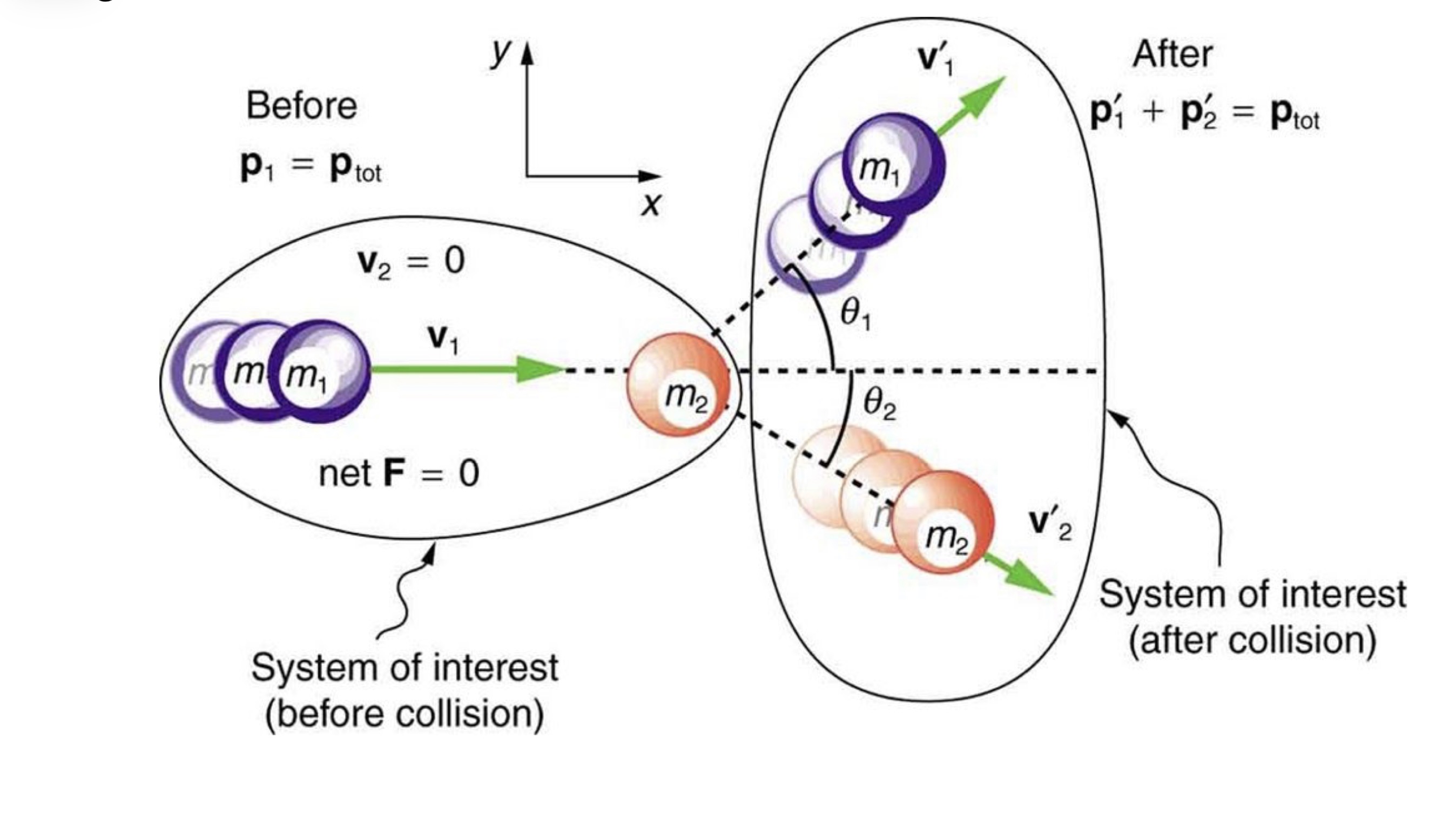
The principle stating that momentum is always conserved in any interaction where no external forces act, meaning momentum before an event equals momentum after. Important to note that momentum can be conserved differently along different dimensions. Approach required to solve problems in relation to the conservation of momentum in 2 dimensions is to resolve motion into components along perpendicular axis and solve thee resultant pair of problems in one dimension simultaneously.
Elastic collision
A type of collision where both momentum and kinetic energy are conserved.
Inelastic collision
A type of collision where only momentum is conserved, while some kinetic energy is converted into other forms like heat, sound, or gravitational potential and may be larger or smaller after the collision. If objects which collide stick together after the collision then this is an inelastic collision.
Explosion
An example of an inelastic collision where the kinetic energy after the event is greater than the kinetic energy before.
Non-relativistic particle
A particle traveling at speeds below those comparable to the speed of light.
Kinetic energy (non-relativistic formula)
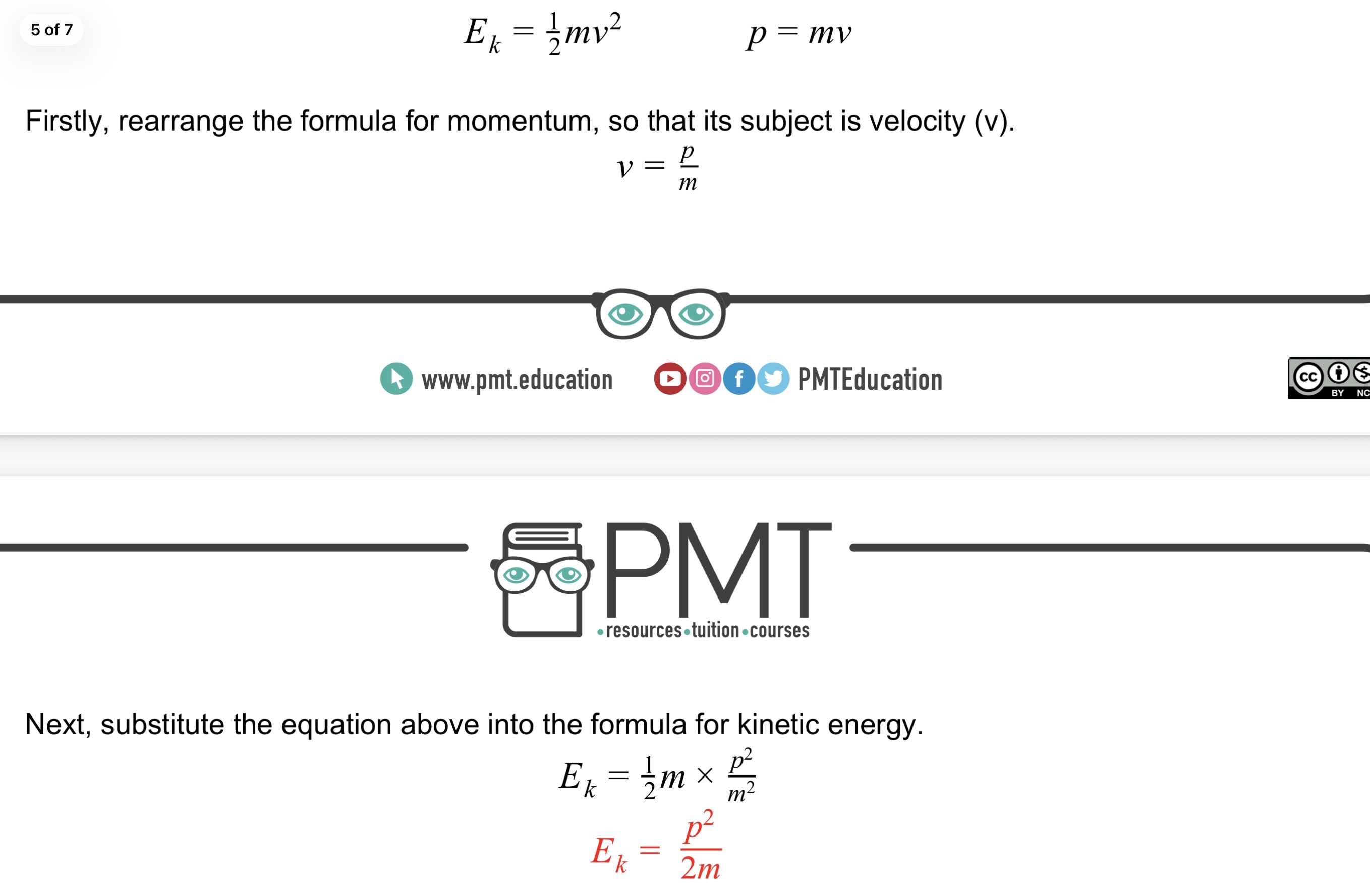
The formula used to calculate energy for particles below relativistic speeds, expressed as Ek=2mp2.
Radian
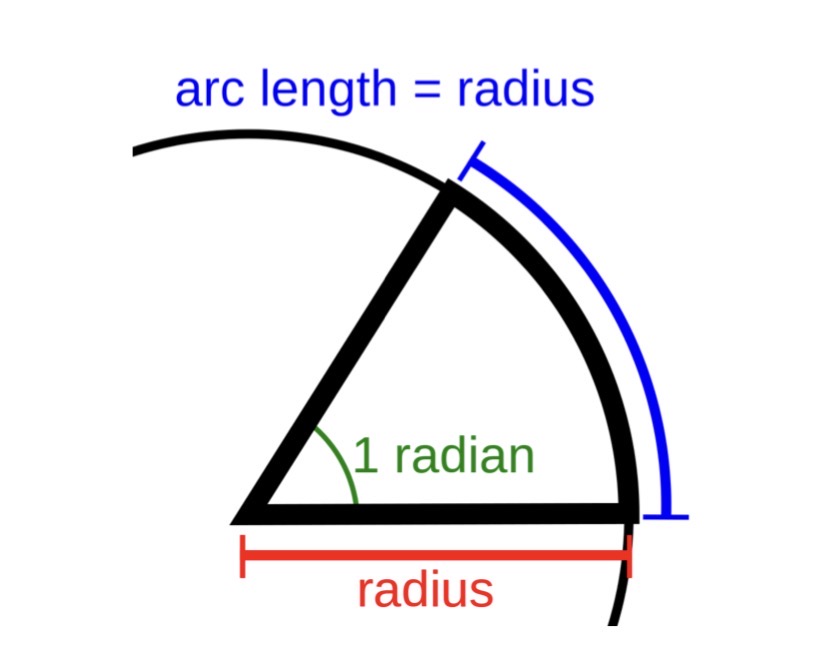
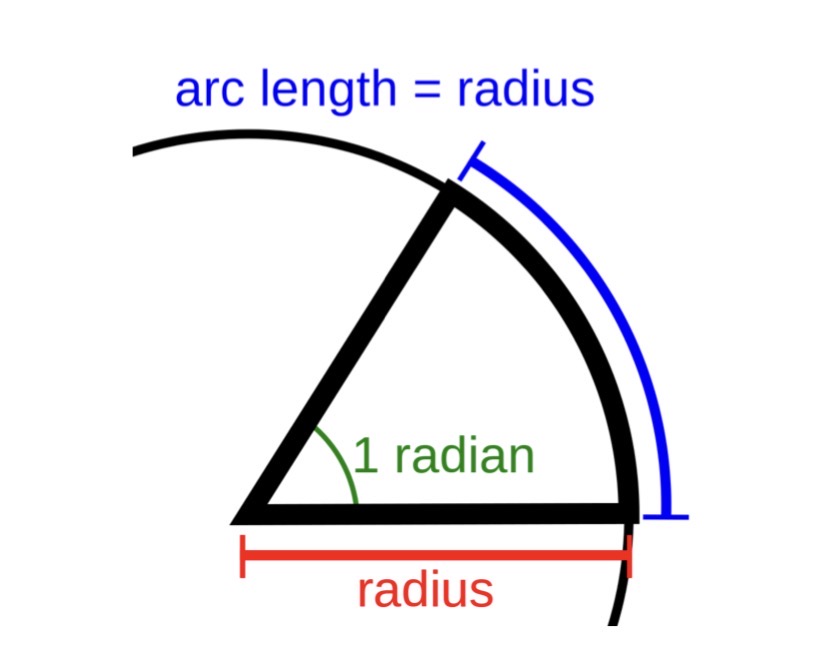
The unit of angle defined as the angle in the sector of a circle when the arc length of that sector is equal to the radius of the circle. One complete circle is 2π rad.
Angular displacement (θ)
The angle turned through by an object in any given direction, measured in radians or degrees.
Angular velocity (ω)
The angle an object moves through per unit time, calculated by dividing linear velocity by radius (ω=rv) or dividing 2π by the time period (ω=T2π).
Centripetal acceleration
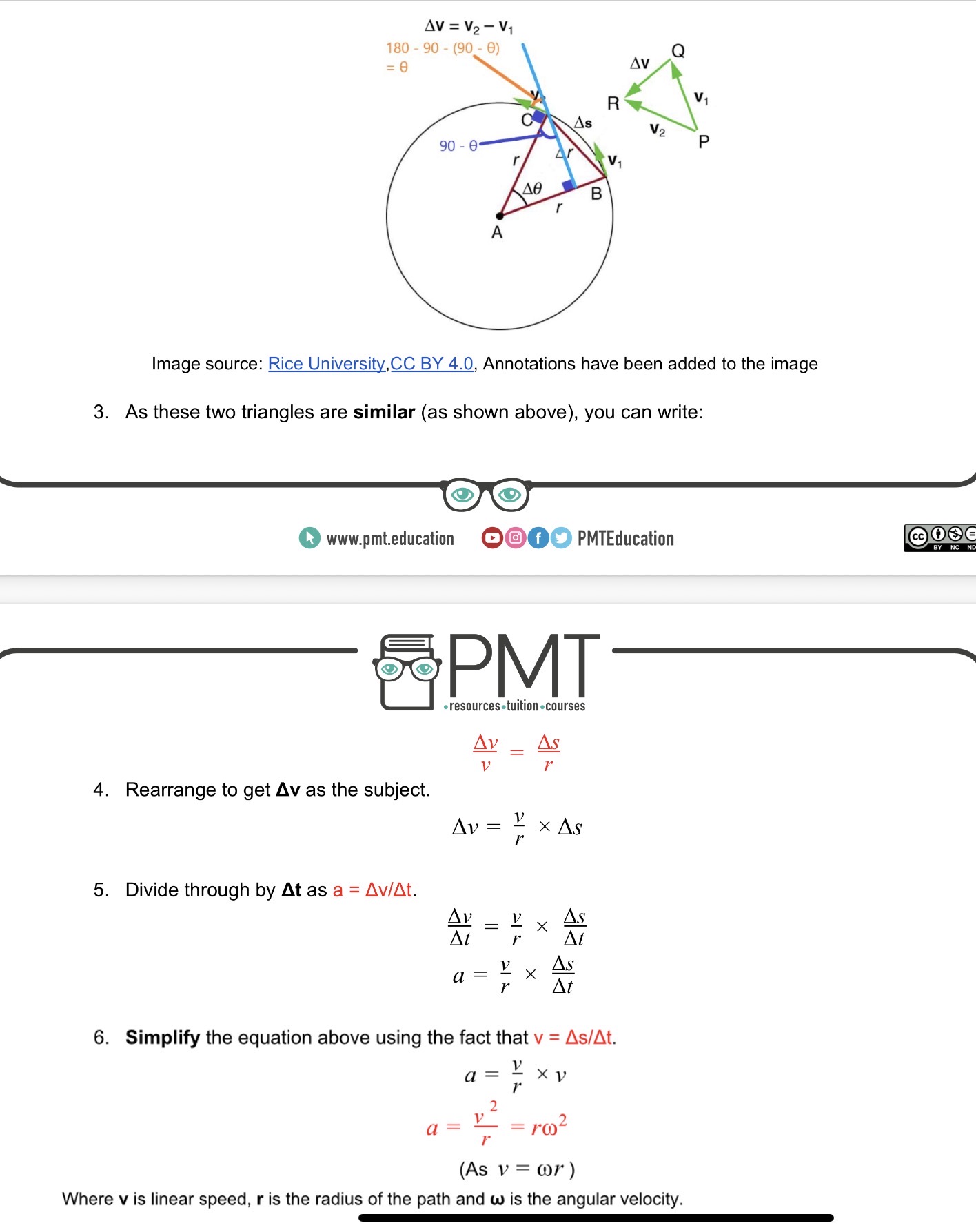
The acceleration experienced by objects moving in a circular path, expressed as a=rv2 or a=rω2.
Circular motion
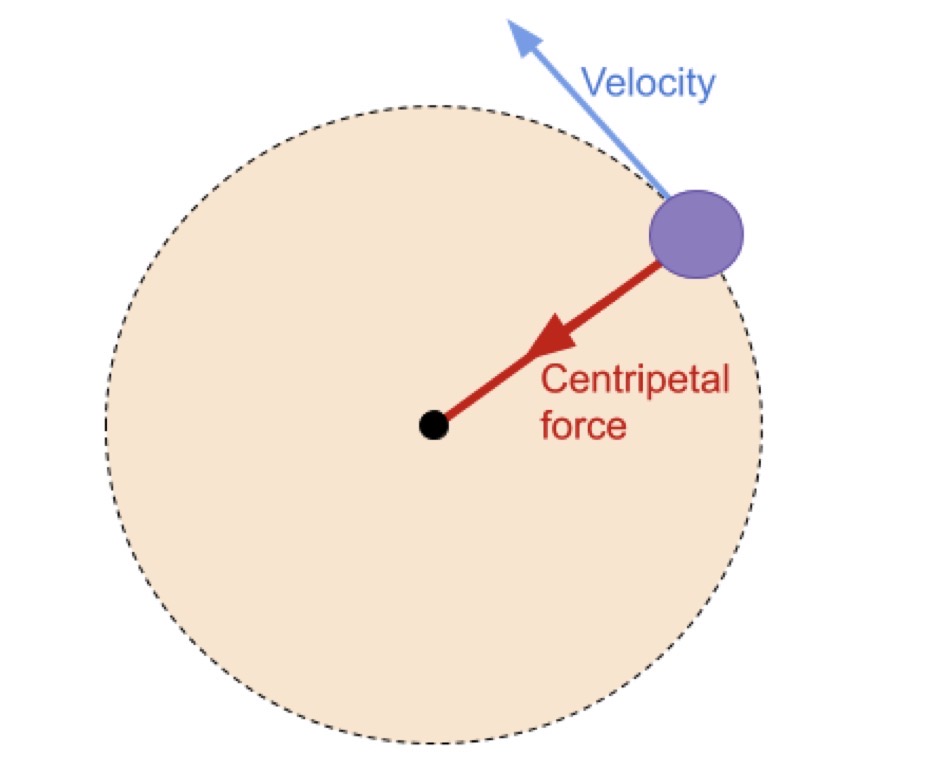
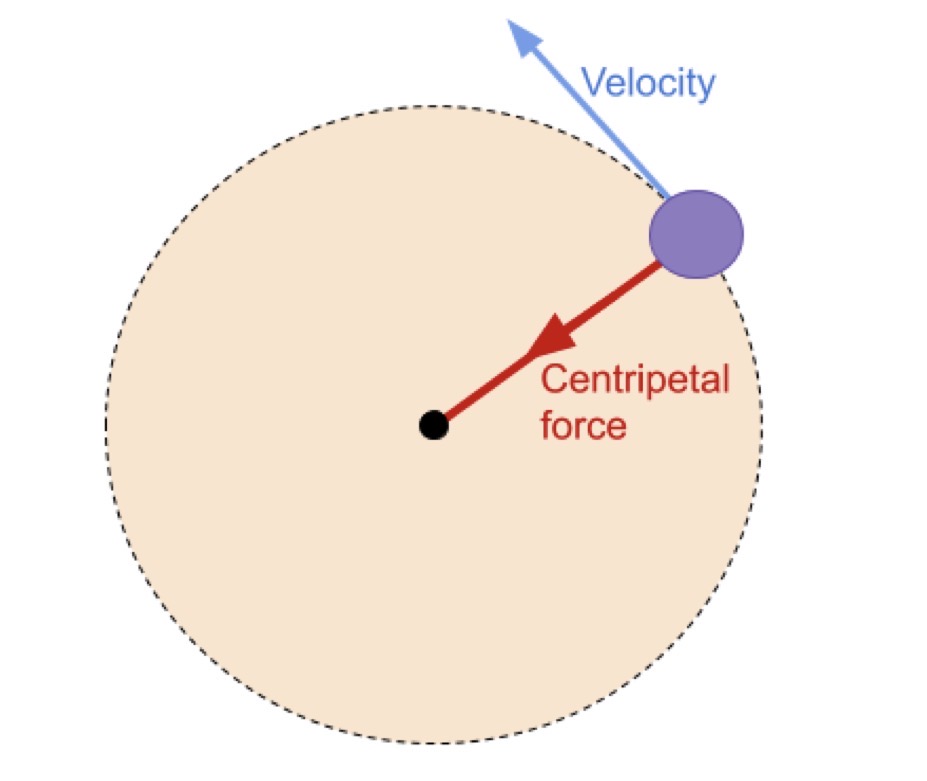
Object moving in a circular path at a constant speed has a constantly changing velocity therefore the object must be accelerating (known as centripetal acceleration). Newton’s first law states that to accelerate, an object must experience a resultant force, therefore object moving in a circle must experience centripetal force.
Centripetal force
The resultant force required to produce and maintain circular motion, which always acts towards the centre of the circle (F=rmv2 or F=mrω2).