chaper 9 bio
 Call Kai
 Learn
Learn Practice Test
 Spaced Repetition
 Match
Match Flashcards
 Knowt Play
1/21

There's no tags or description
Looks like no tags are added yet.
Name | Mastery | Learn | Test | Matching | Spaced | Call with Kai |
|---|
No analytics yet
Send a link to your students to track their progress
22 Terms
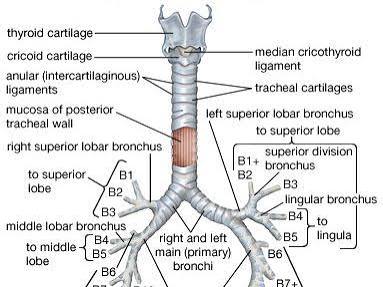
Trachea
Function: air flow into the lungs
Pathway to O2 & CO2: Oxygen follows a downward pathway to the lungs, while carbon dioxide follows the same path upward to be exhaled
Where it can be found: lower neck/upper chest
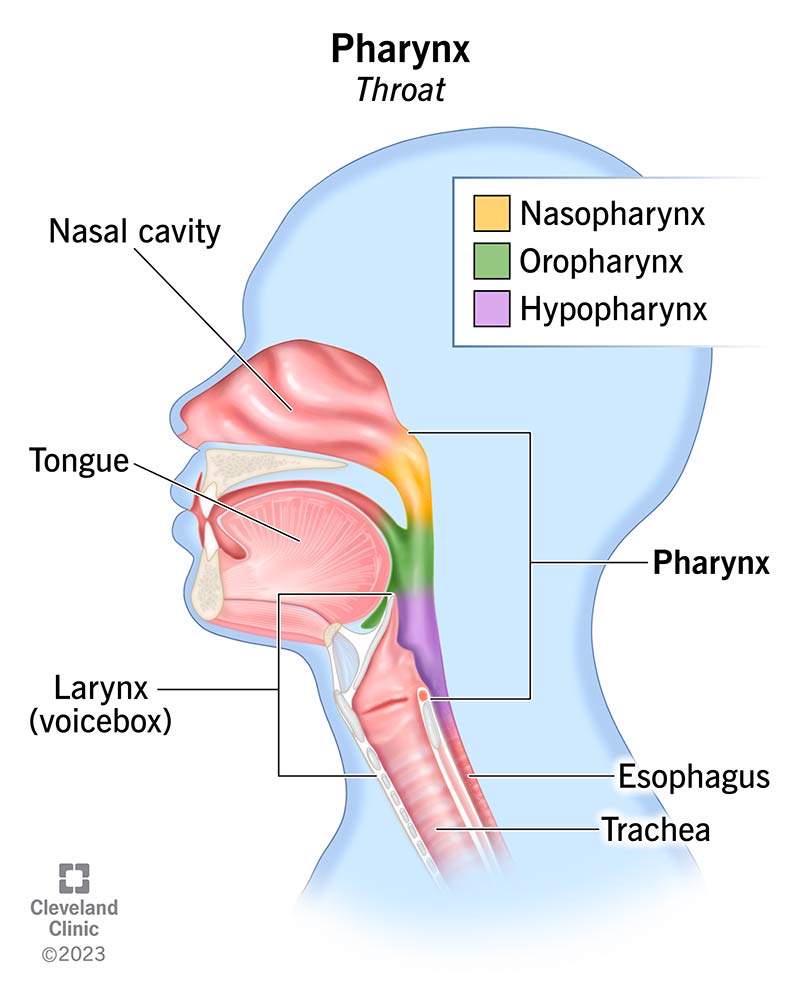
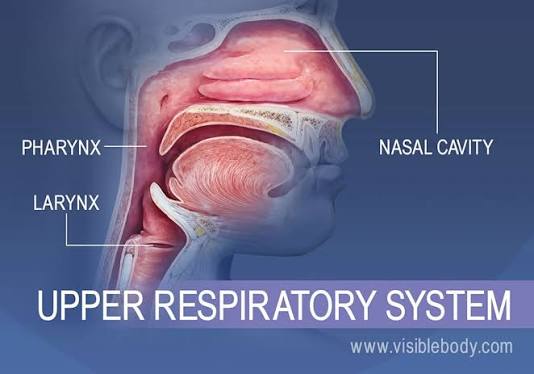
Pharynx
Function: a shared pathway for respiration and digestion
Pathway of O2 & CO2: During inhalation, oxygen-rich air travels through the pharynx on its way to the lungs, and during exhalation CO2 travels through the pharynx and out
Found in: middle of the neck
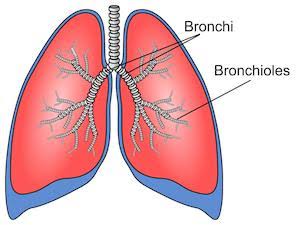
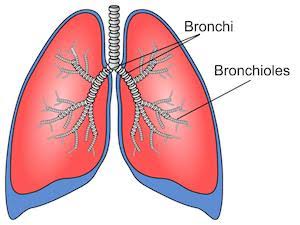
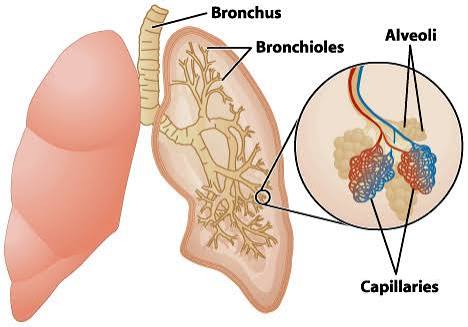
Bronchiolel
Function: deliver O2 to the alevoli and remove CO2 during exhalation
Pathway to O2 and CO2: Air travels down the bronchioles to the alveoli, where O₂ diffuses into the blood and CO₂ to be exhaled
Found in: lungs
Bronchus
Function: conducting air, warming and humidifying it, protecting the lungs through mucus trapping, and regulating airflow
Pathway to O2 and CO2: Air moves through the bronchi → bronchioles → alveoli, where O₂ enters the blood and CO₂ is released to be breathed out
Found in: lungs
Nasal cavity
Function: The nasal cavity filters, warms, and humidifies incoming air before it travels to the lungs
Pathway to O2 & CO2: Air enters the nasal cavity → pharynx → larynx → trachea → bronchi → bronchioles → alveoli, where O₂ passes into the blood and CO₂ goes back out
Found in: nose/mouth
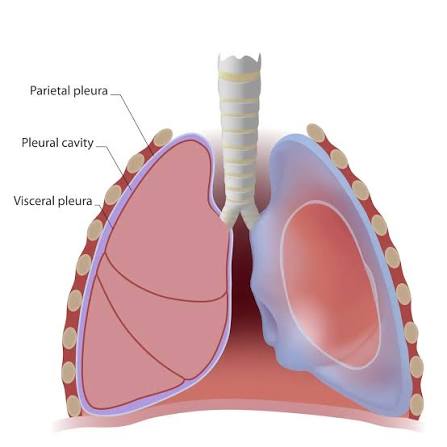
Pleural membrane
Function: reduces friction and maintains pressure so the lungs can expand and contract smoothly during breathing
Pathway to O2 & CO2: O₂ passes through the pleural membrane-enclosed lungs down to the alveoli where it enters the blood, while CO₂ travels the reverse path from the blood to be exhaled
Found in: thoracic(chest)
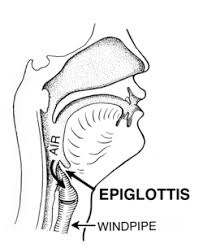
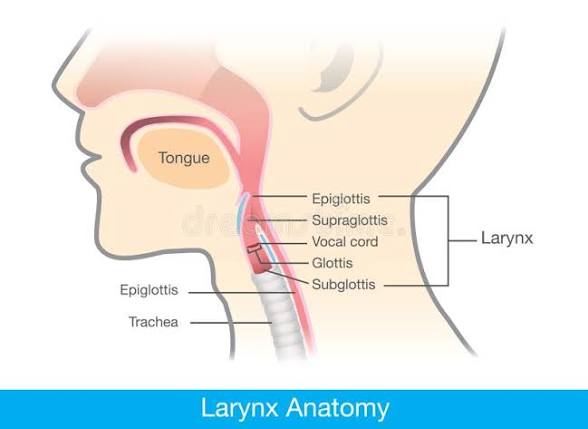
Epiligottis
Function: covers the airway during swallowing to prevent food and liquid from entering the lungs
Pathway to O2 & CO2: Air passes through the epiglottis → larynx → trachea → bronchi → bronchioles → alveoli, where O₂ enters the blood and CO₂ goes back out
Found in: throat
Glottis
Function: controls airflow in and out of the lungs and produces sound by vibrating as air passes through it
Pathway to O2 & CO2: Air passes through the glottis → trachea → bronchi → bronchioles → alveoli, where O₂ enters the blood and CO₂ is expelled back out
Found in; throat
Alveoli
Function: O₂ diffuses from inhaled air into the blood and CO₂ diffuses from the blood to be exhaled
Pathway to O2 & CO2: Air travels from the nasal cavity → pharynx → larynx → trachea → bronchi → bronchioles → directly into the alveoli, where O₂ enters the blood and CO₂ is released back out
Found in: lungs
Advantages/disadvantages of mouth breathing vs breathing through your nasal cavity
Mouth Advantages: faster airflow,
Mouth Disadvantages: dry mouth/bad breath
Nasal advantages: filters air
Nasal disadvantages: limited airflow when congested
Vital capacity
The maximum amount of air you can exhale after taking the deepest breath possible
Tidal volume
The amount of air inhaled or exhaled in one normal, relaxed breath
Expiratory reserve volume
The extra air you can forcefully exhale after a normal exhale
Inspiratory reserve volume
The extra air you can forcefully inhale after a normal inhale
Residual volume
The air that always remains in the lungs after the most forceful exhale
Total lung capacity
The total amount of air the lungs can hold at maximum inflation (vital capacity + residual volume)
Internal respiration
The exchange of O₂ and CO₂ between the blood and the body’s tissues at the cellular level
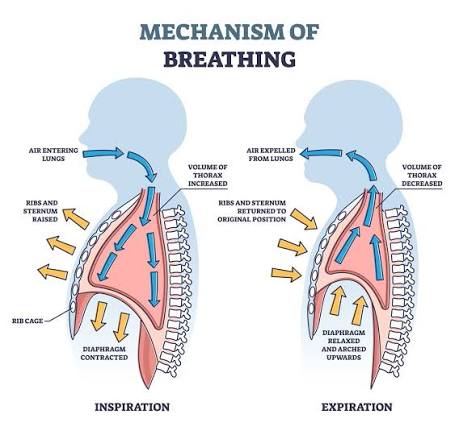
Describe how pressure affects inhalation and exhalation
When the diaphragm contracts it lowers lung pressure pulling air in, and when it relaxes it raises lung pressure pushing air out, as air always flows from high to low pressure
What happens in your diaphragm for inhalation and exhalation
Inhalation: The diaphragm contracts and flattens downward, increasing lung volume and pulling air in
Exhalation: The diaphragm relaxes and domes upward, decreasing lung volume and pushing air out.
What your intercostal muscles do for inhalation and exhalation
Inhalation: The external intercostal muscles contract, lifting the ribs up and outward, expanding the chest cavity to allow air in.
Exhalation: The internal intercostal muscles contract, pulling the ribs down and inward, compressing the chest cavity to push air out.
Process of exhalation in full, what structures in your chest cavity does it go through, what does it look like?
The diaphragm relaxes, ribs pull inward, lung pressure rises, and CO2 rich air is pushed from the alveoli up through the bronchioles → bronchi → trachea → out through the nose or mouth
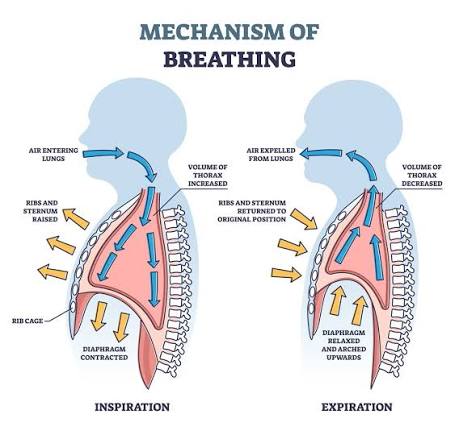
process of inhalation in full, what structures in your chest cavity does it go through, what does it look like?
The diaphragm flattens, ribs lift, pressure drops, and air rushes in through the nose → trachea → bronchi → bronchioles → alveoli