Days 17 to 18 - Art at the Apocalypse: Western and Northern Europe at the Turn of the New Millennium I-II
 Call Kai
 Learn
Learn Practice Test
 Spaced Repetition
 Match
Match Flashcards
 Knowt Play
1/12

There's no tags or description
Looks like no tags are added yet.
Name | Mastery | Learn | Test | Matching | Spaced | Call with Kai |
|---|
No analytics yet
Send a link to your students to track their progress
13 Terms
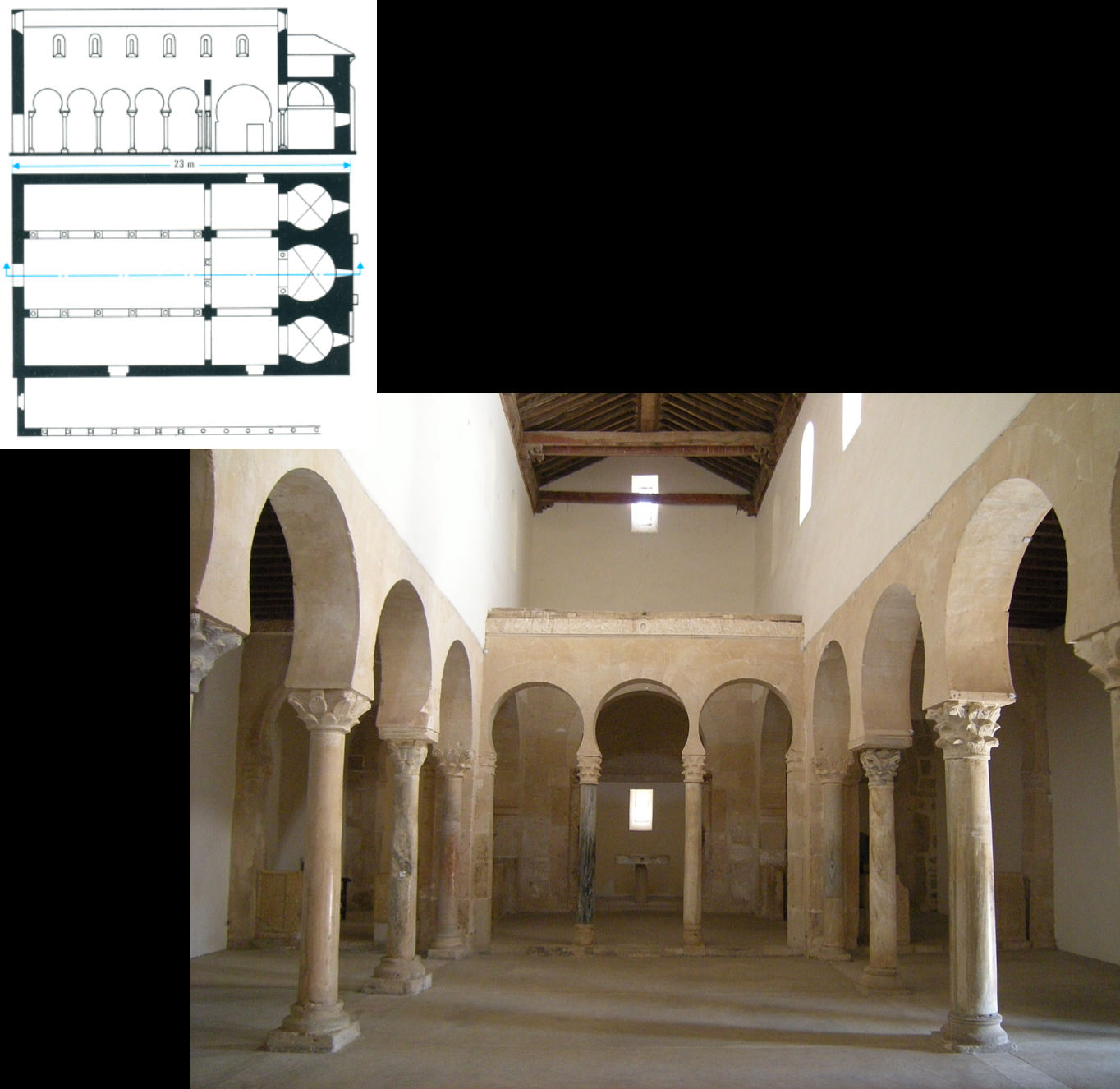
San Miguel de Escalada
artist unknown, 913 CE, stone, plaster, wood
exemplifies Mozarabic fusion of Christian and Umayyad architectural forms
Horseshoe arches clearly show influence from the Great Mosque of Cordoba
demonstrates cultural exchange in medieval Iberia
one of the most important preserved early medieval monastic churches in Spain
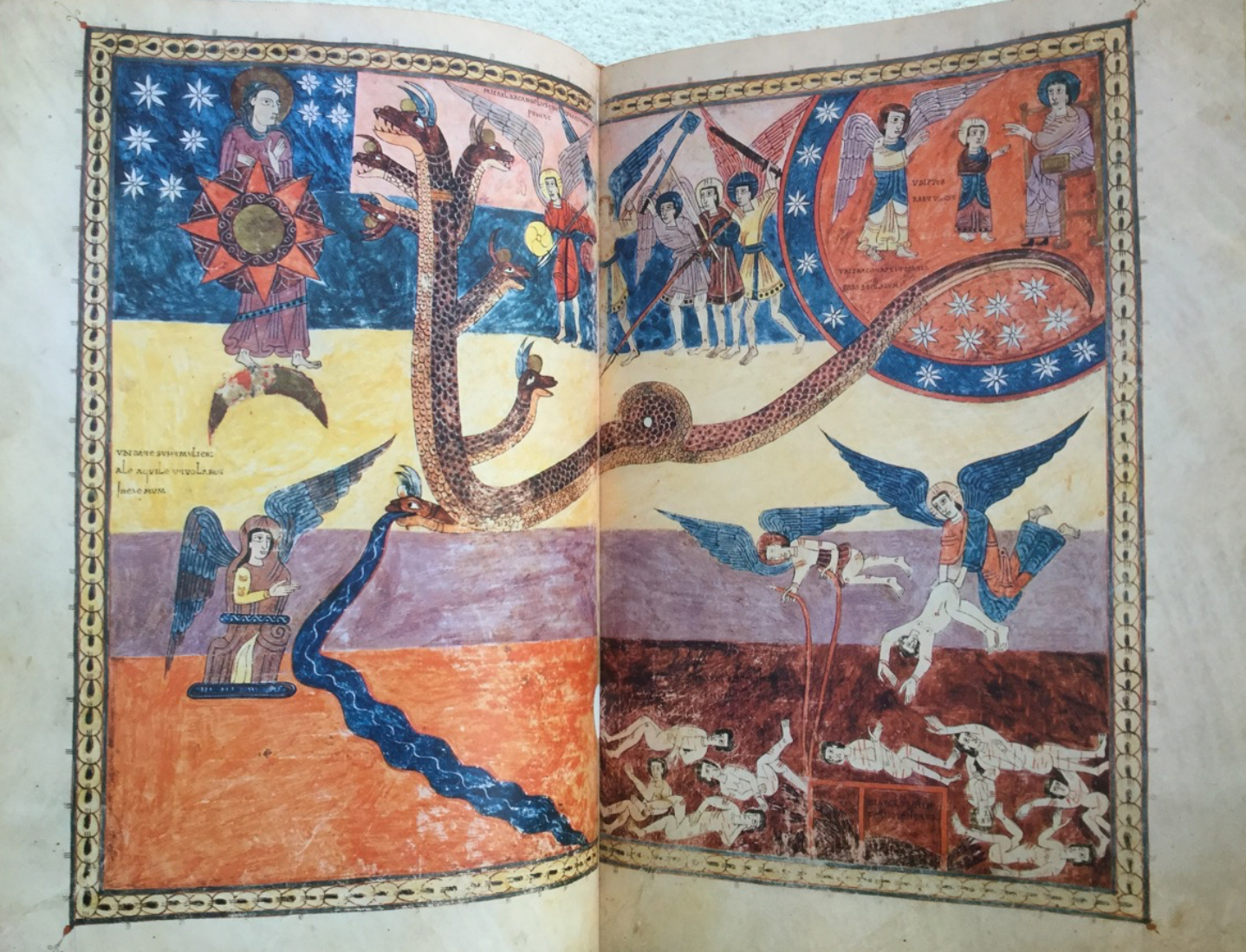
Book of Revelations 12: 1-5
artist unknown, 975 CE, tempura and ink on parchment
shows the Woman clothed with the sun, dragon, and celestial battle
bold outlines, bright colors, and expressive abstraction typical of Romanesque apocalyptic art
reflects heightened medieval interest in eschatology
often tied to Beatus Commentary traditions in Spain
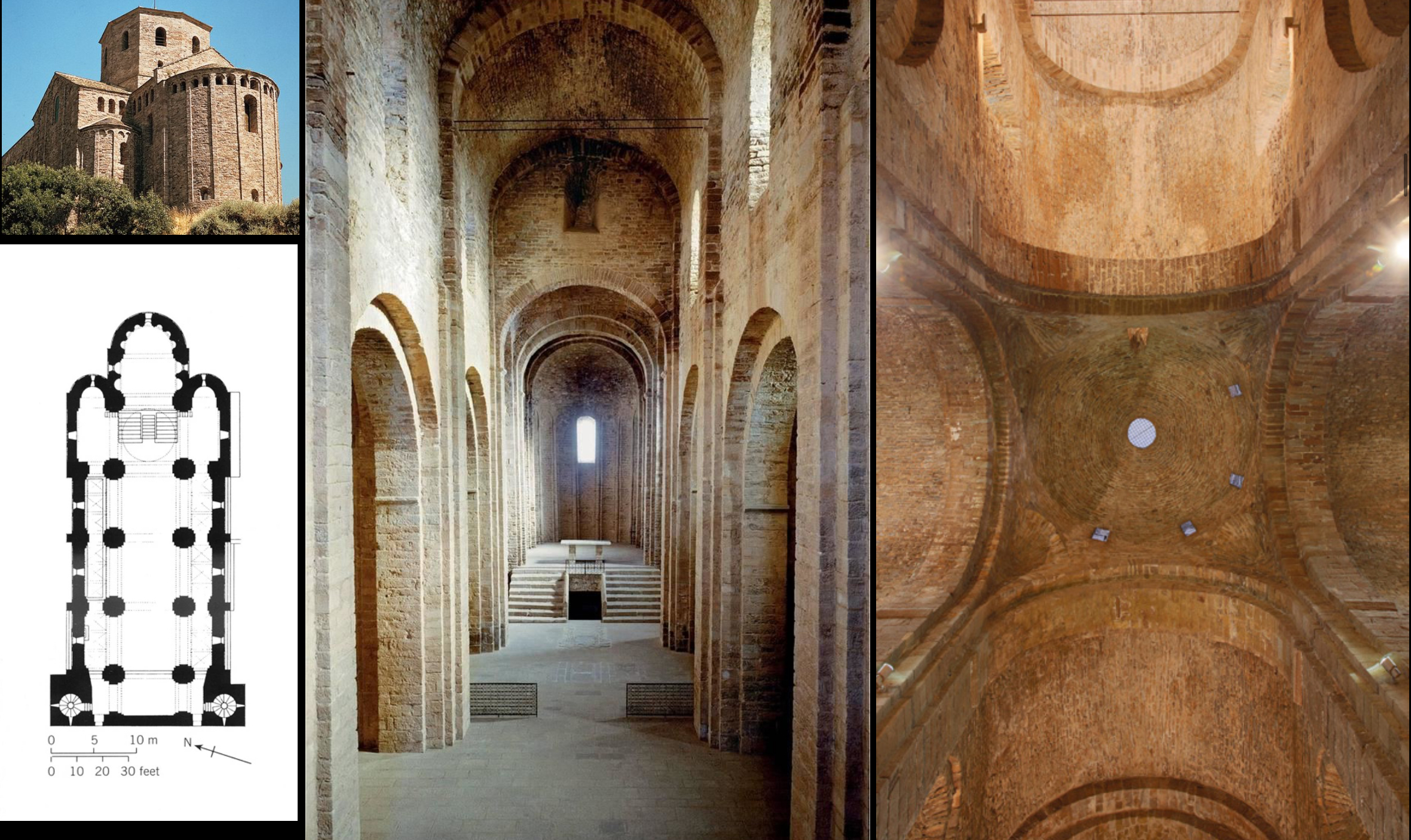
Saint Vincenç
artist unknown, 1020-1040 CE, stone and brick
classic first Romanesque style: thick walls, small windows, rhythmic blind arcades
emphasis on geometric clarity and sculptural massing
demonstrates early stone-vaulted architecture in medieval Catalonia
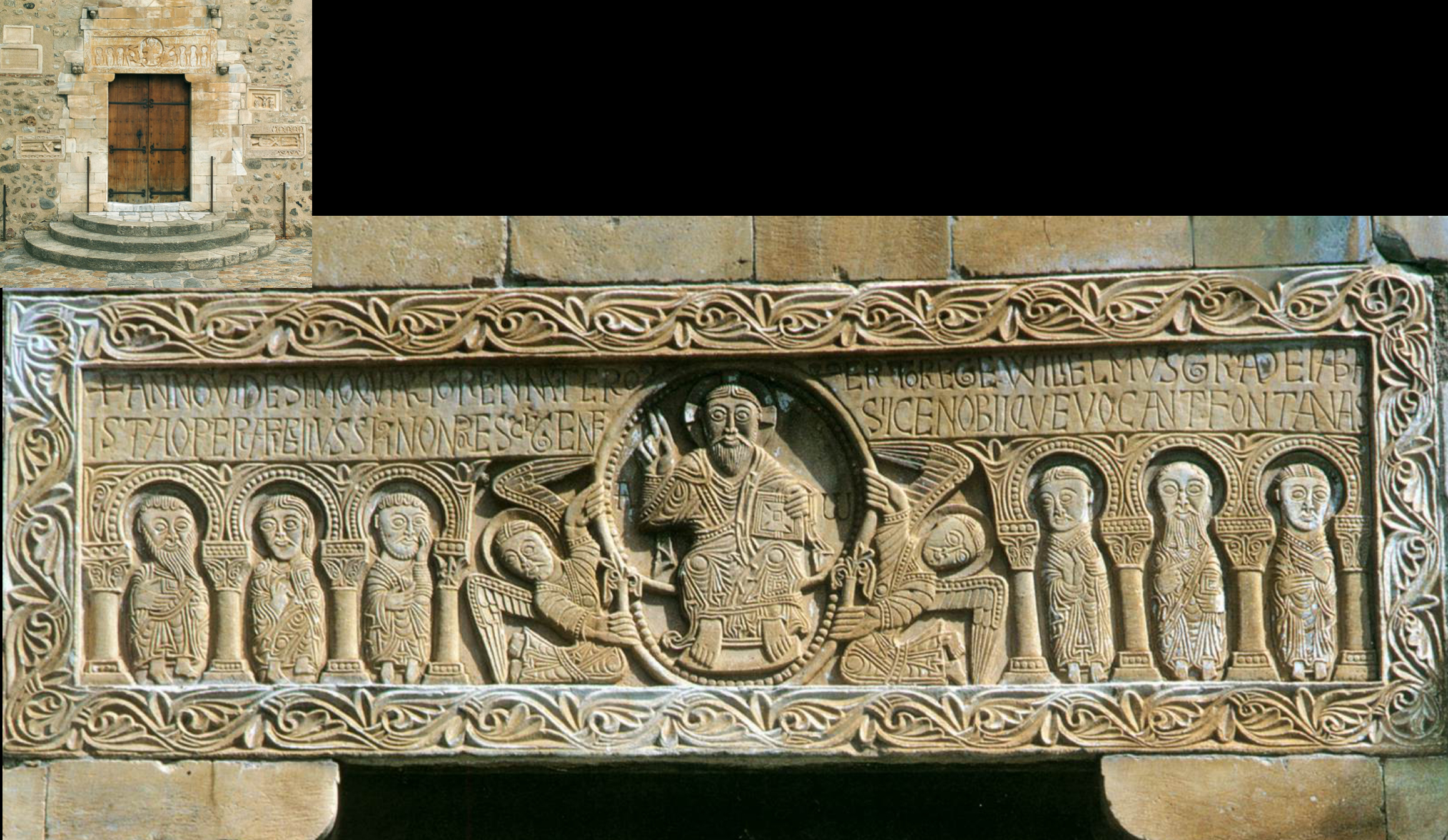
Christ in Majesty and Apostles
artist unknown, 1020-1021, marble
christ in a mayoral, seated as Pantokrator, flanked by 12 Apostles
strong hierarchical scale and frontal it’s reflect Romanesque theological clarity
symbolizes Christ as cosmic judge and ruler
key visual program for mans tic and pilgrimage churches
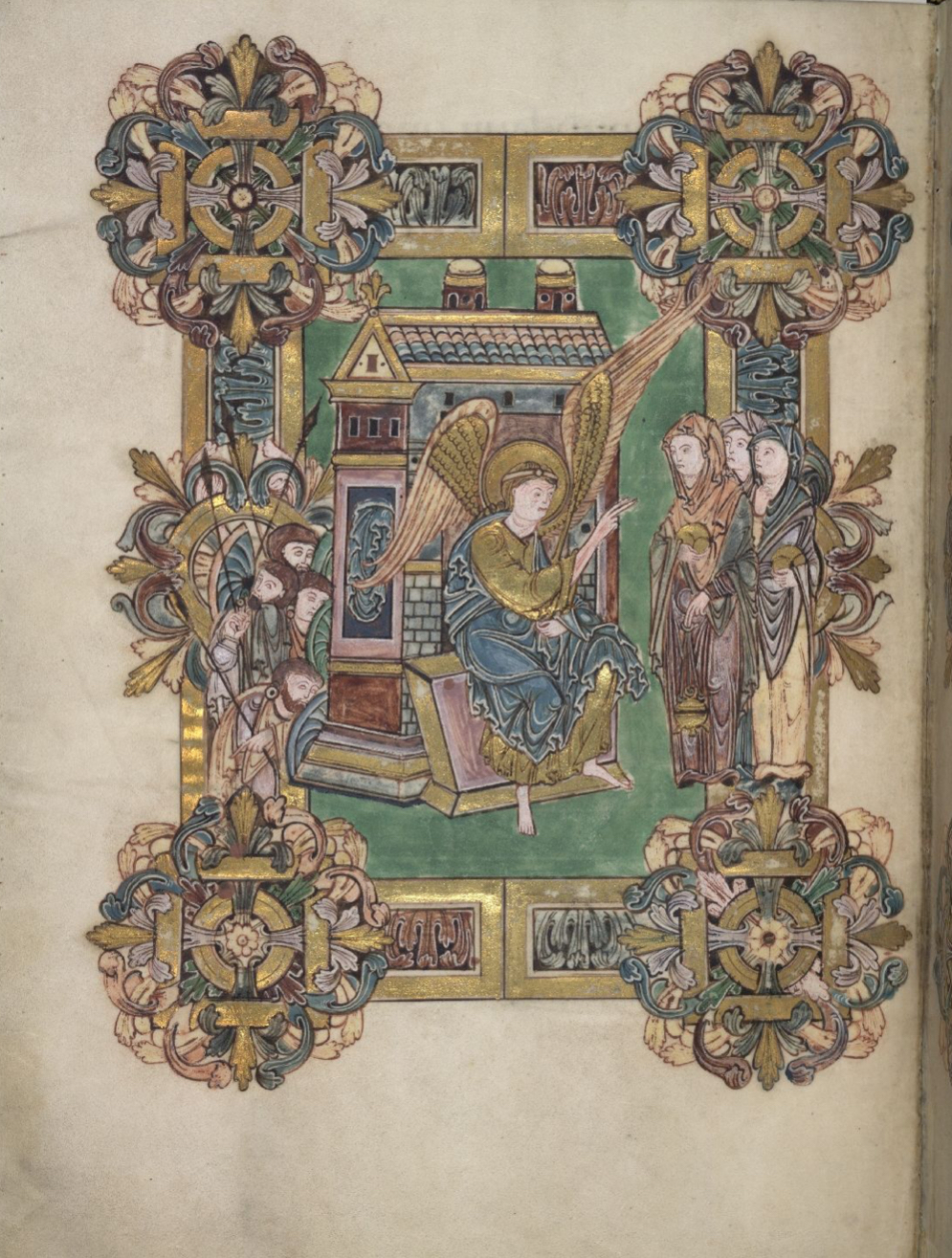
The Three Marys at the Tomb
GODEMAN, 980 CE, ink, colors on vellum
depicts the moment women discover Christ’s empty tomb
often shows the angel announcing the resurrection
combines narrative clarity with expressive Romanesque stylization
common in gospel books and tympani emphasizing salvation
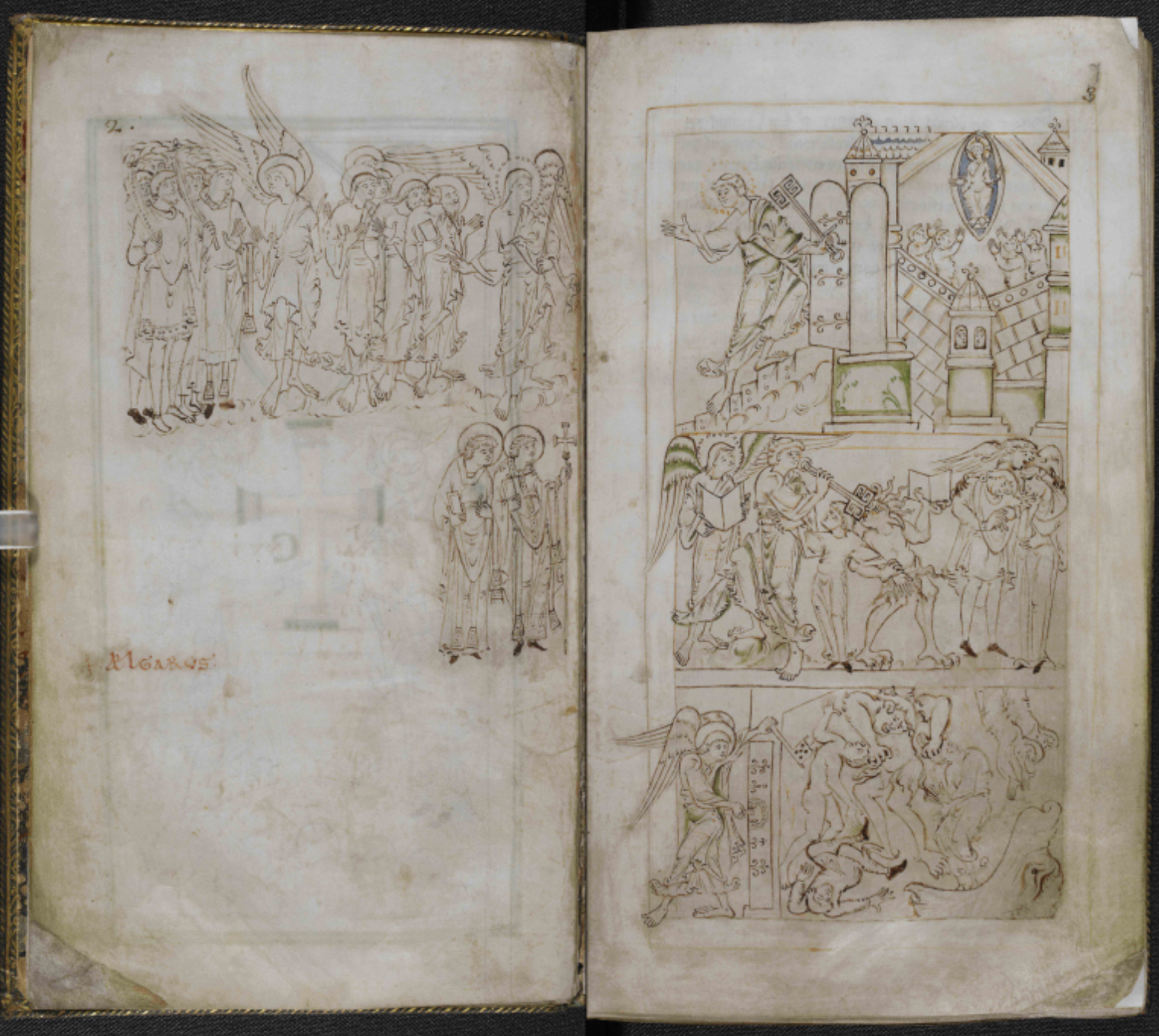
Last Judgment
artist unknown, 1031 CE, ink on vellum
christ enthroned in mandarla judging the dead; saved on one side, damned on the other
dramatic, elongated figures emphasize fear and awe
didactic tool for illiterate pilgrims approaching church portals
expresses medieval concern with sin, penance, and divine justice
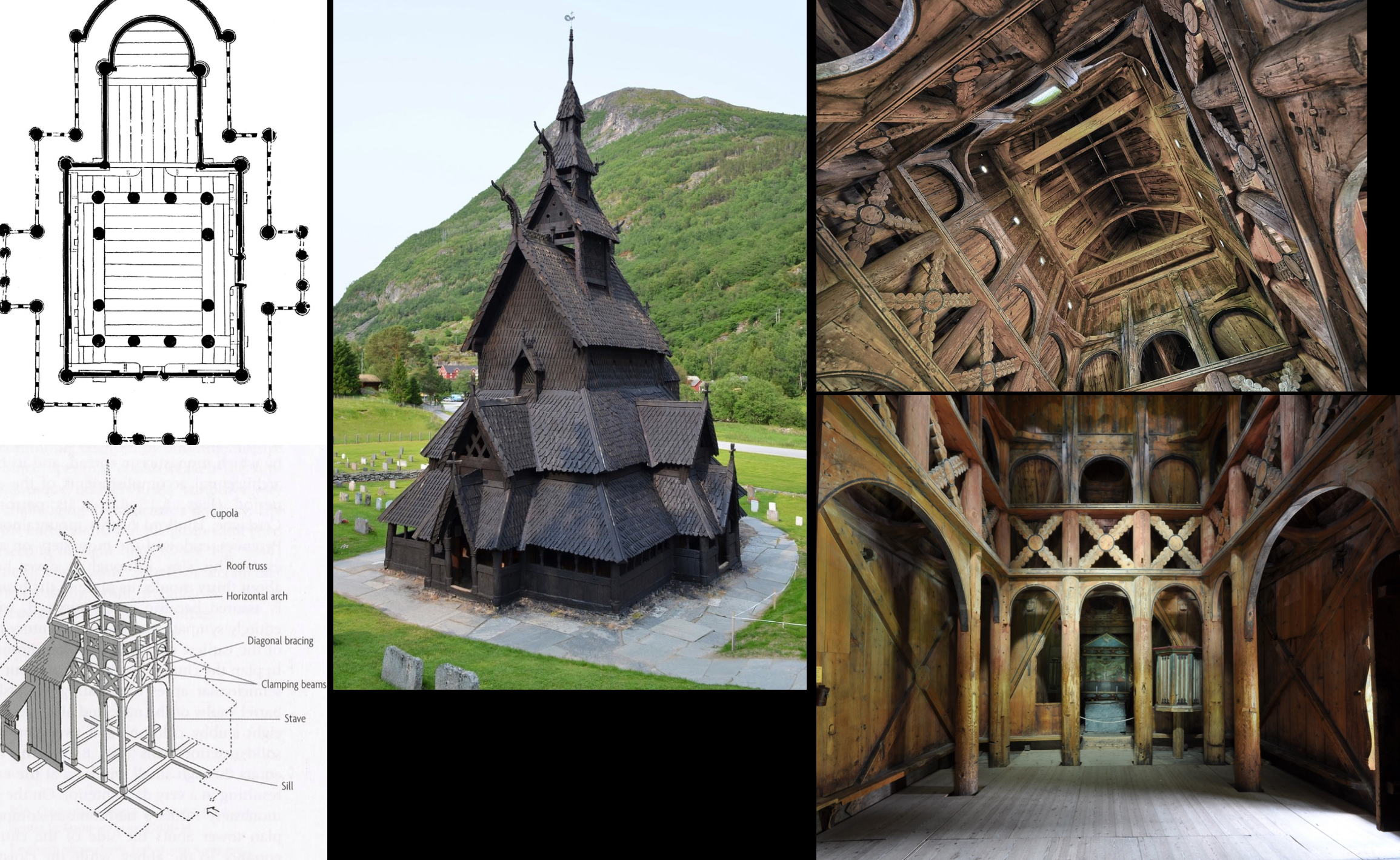
Stave Church (Norway)
artist unknown, 1125-1150 CE, wood covered with pitch
unique Scandinavian fusion of Christian architecture with Viking woodworking
Dragon-head gables and interlace ornament retain pagan artistic vocabulary
vertical staves and complex roof systems show engineering skill
among the most distinctive medieval wooden structures in Europe
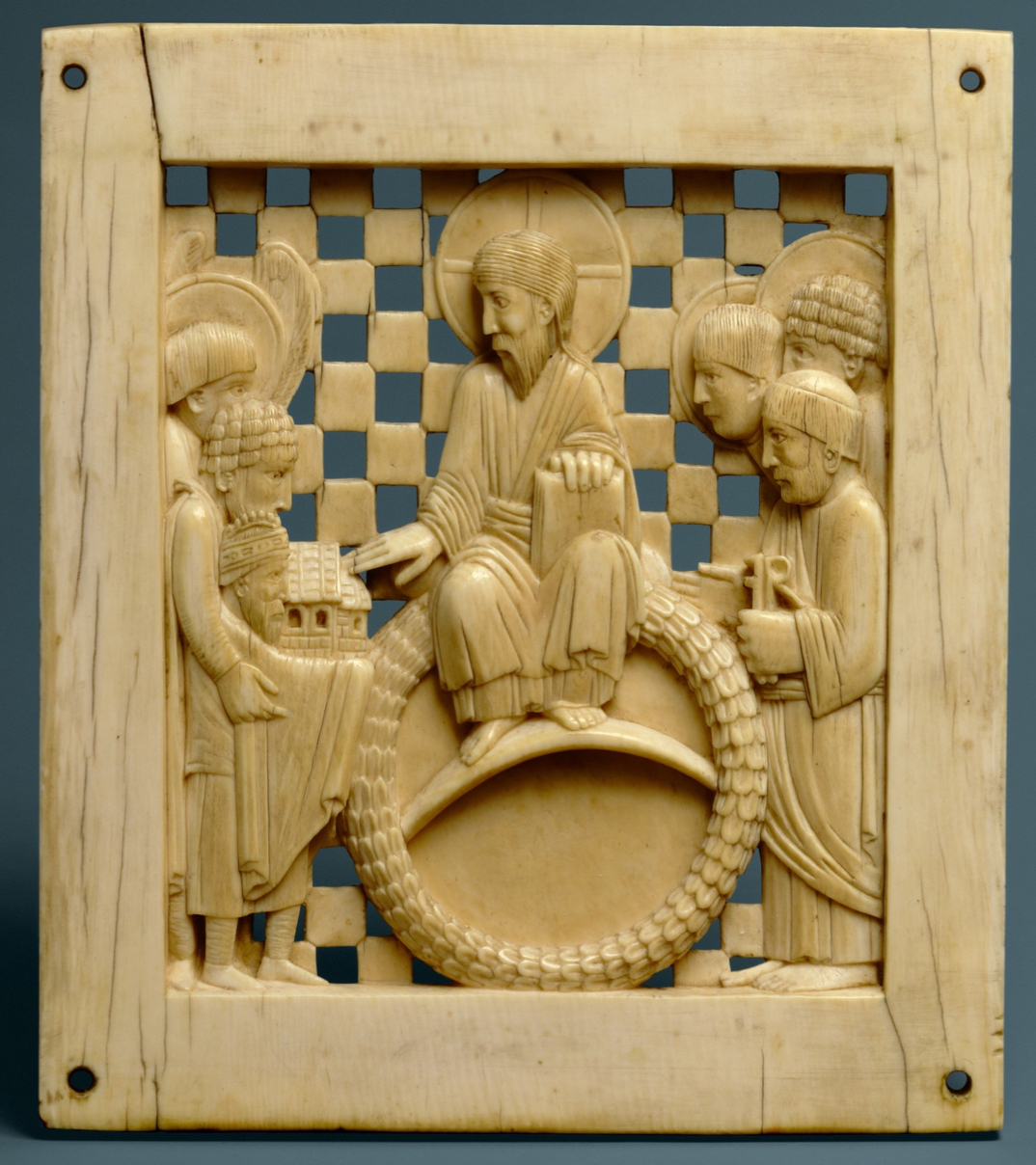
Otto I Presenting Magdeburg Cathedral to Christ
artist unknown, 962-973 CE, ivory
shows Otto I kneeling as Christ receives the cathedral model
visualizes emperor as protector of the Church
demonstrates Ottonian return to hieratic, frontal, iconic figural style
reinforces unity between empire and ecclesiastical authority
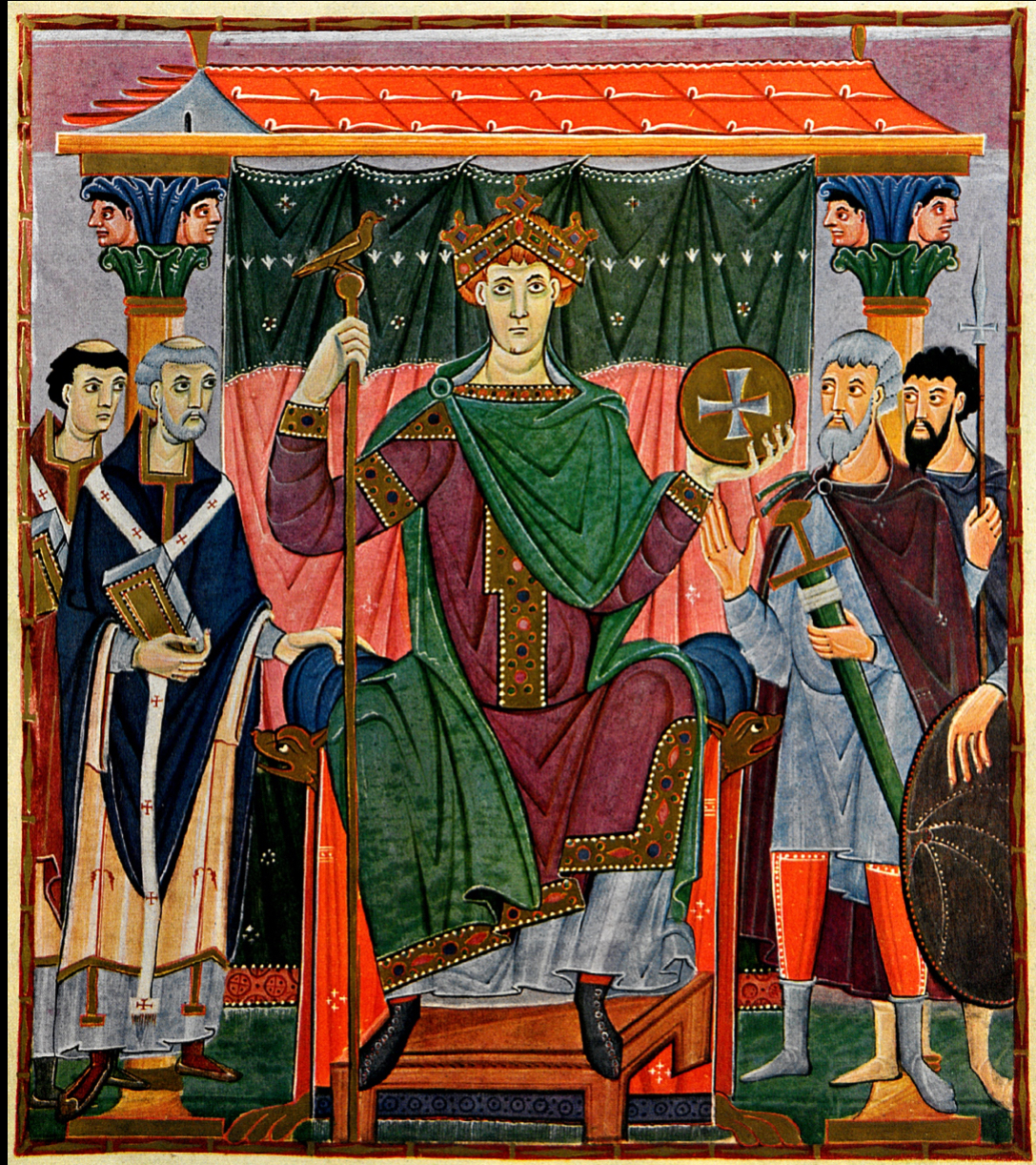
Otto III between Representatives of Church and State
artist unknown, 1000 CE, ink on vellum
Otto III enthroned between ecclesiastical and secular tribute-bearers
reflects idea of translation imperii: transferring Rome’s imperial power to the Holy Roman Empire
- strong symmetry and bright colors express Ottonian grandeur
opposite-page tribute emphasize universal dominion
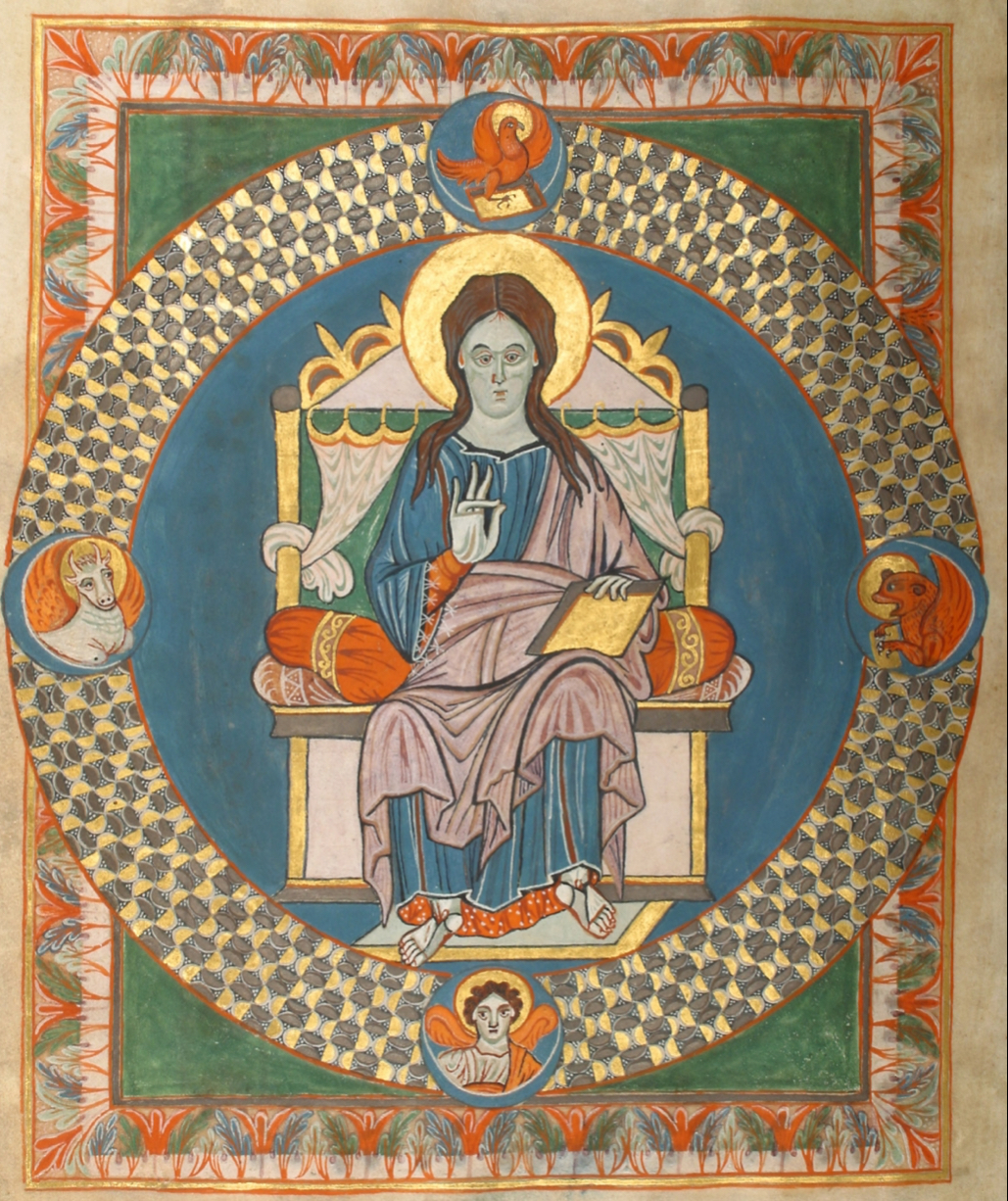
Christ in Majesty (Gero Codex)
artist unknown, 965-970 CE, ink on vellum
Christ depicted enthroned, frontal it’s reflect, monumental
reflects powerful, iconic Ottonian style with Byzantine inspiration
Gero Codex dedicated to Archbishop Gero of Cologne
exmphasiezes Christ’s cosmic authority and spiritual centrality
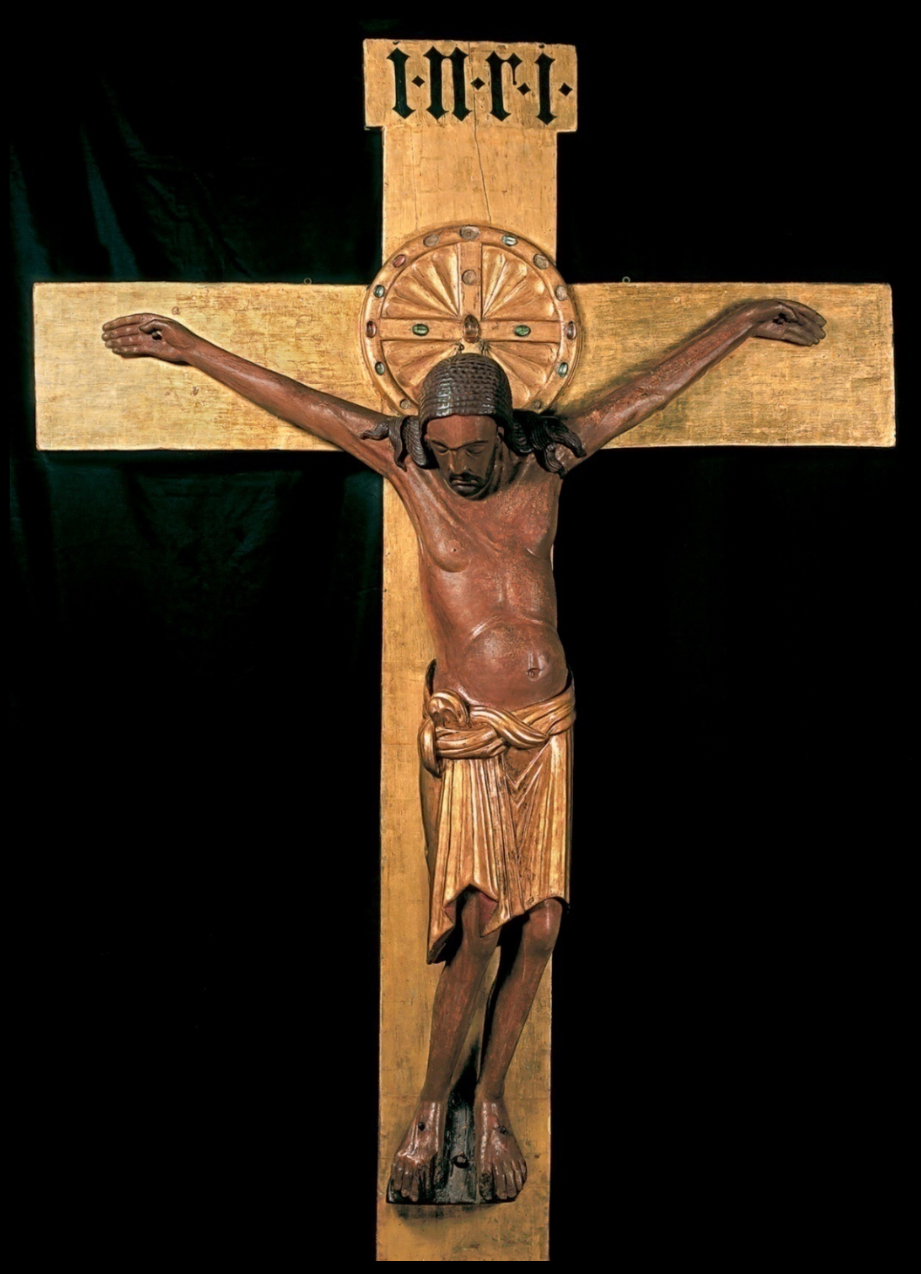
Gero Crucifix (Cologne Cathedral)
artist unknown, 970 CE, painted and gilded oak
earliest surviving life-size crucifix in Western Europe
shows Christ suffering realistically
marks shift toward emotional, affective piety in medieval art
importance devotional focus, commissioned by Archbishop Gero
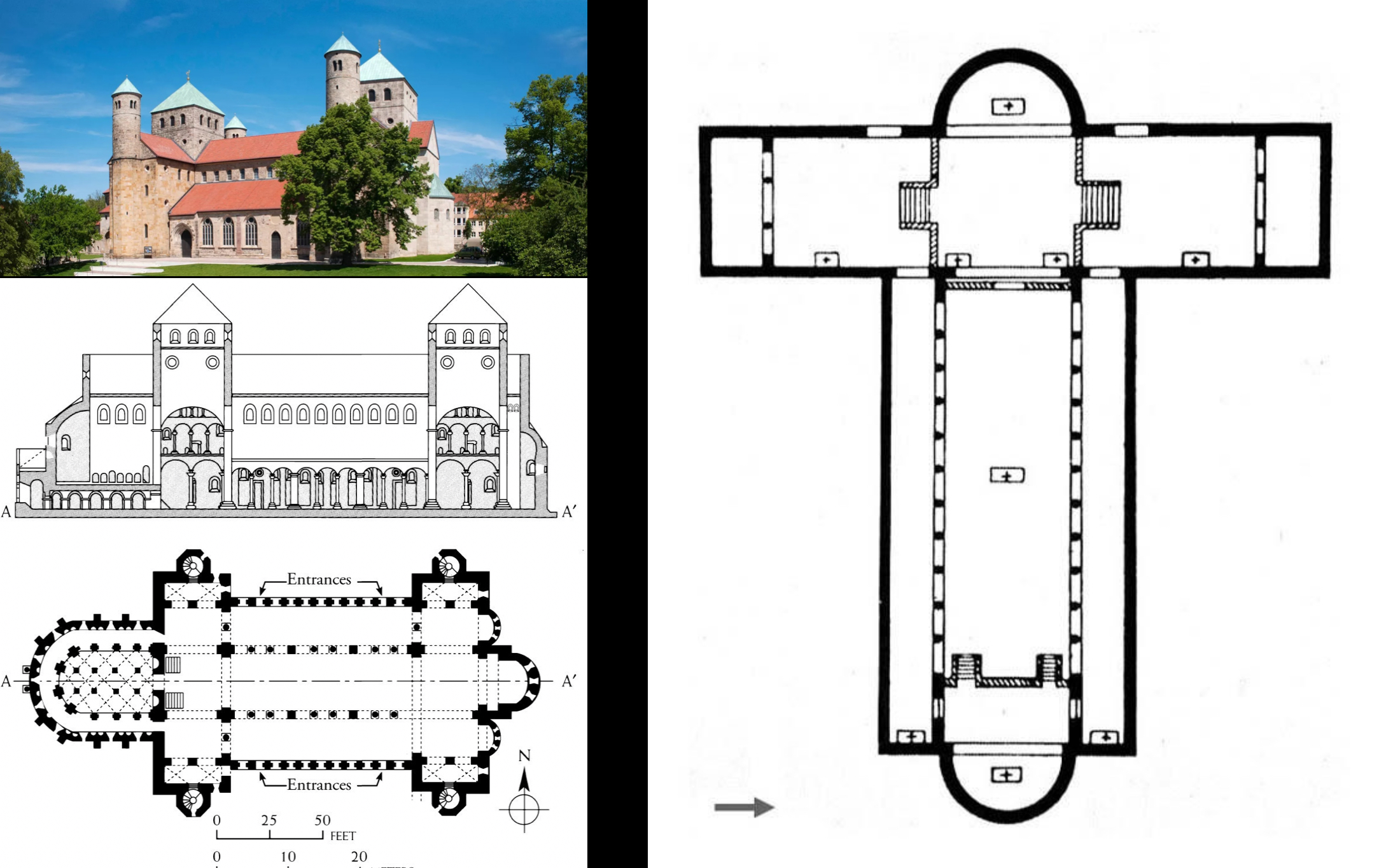
Abbey Church of St. Michael, Hildesheim
artist unknown (commissioned by ARCHBISHOP BERNWARD), 1001-1003 CE, stone basilica
masterpiece of Ottonian architecture
alternating support system; clear modular proportions
double transepts, westbrook, and rhythmic elevation create balance
Bishop Bernward’s artistic program makes it a key imperial church
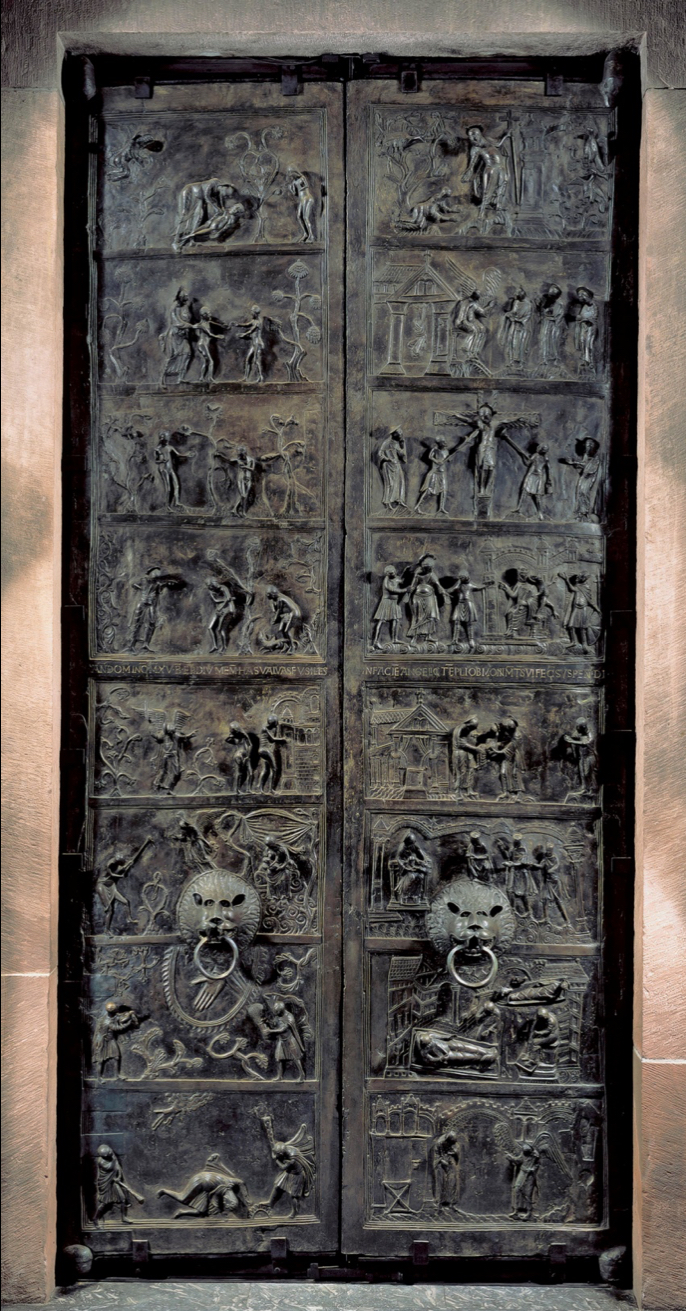
Hildesheim Doors
artist unknown (commissioned by ARCHBISHOP BERNWARD), 1015 CE, bronze
left door: scenes from Genesis; right door: Life of Christ (parallels)
among the largest and earliest monumental bronze doors since antiquity
deeply expressive, narrative reliefs emphasize salvation history
demonstrates Ottonian revival of monumental metalwork inspired by Roman models