personality disorers
 Call Kai
 Learn
Learn Practice Test
 Spaced Repetition
 Match
Match Flashcards
 Knowt Play
1/23

There's no tags or description
Looks like no tags are added yet.
Name | Mastery | Learn | Test | Matching | Spaced | Call with Kai |
|---|
No analytics yet
Send a link to your students to track their progress
24 Terms
personality disorders
enduring patterns of perceiving, relating to and thinking about the environment and oneself that cause impairment and/or distress
presumably evidence by adolescence and stable over the adult lifespan
what makes a PD a disorder
personal distress
causes others distress
how are PDs different from other disorders
other disorders = ego-dystonic
personality disorders = ego-syntonic
egodystonic
dissonant with person’s self image
personal distress, discomfort with ones symptoms
egosyntonic
consistent with persons self image
they do not bother the person
why is it important to treat PDs
significant impairment
risk factor for other mental disorders
treatment implications
PD clusters
cluster A: odd and eccentric
cluster B: dramatic, emotional, or erratic
Cluster C: Anxious, fearful, or avoidant
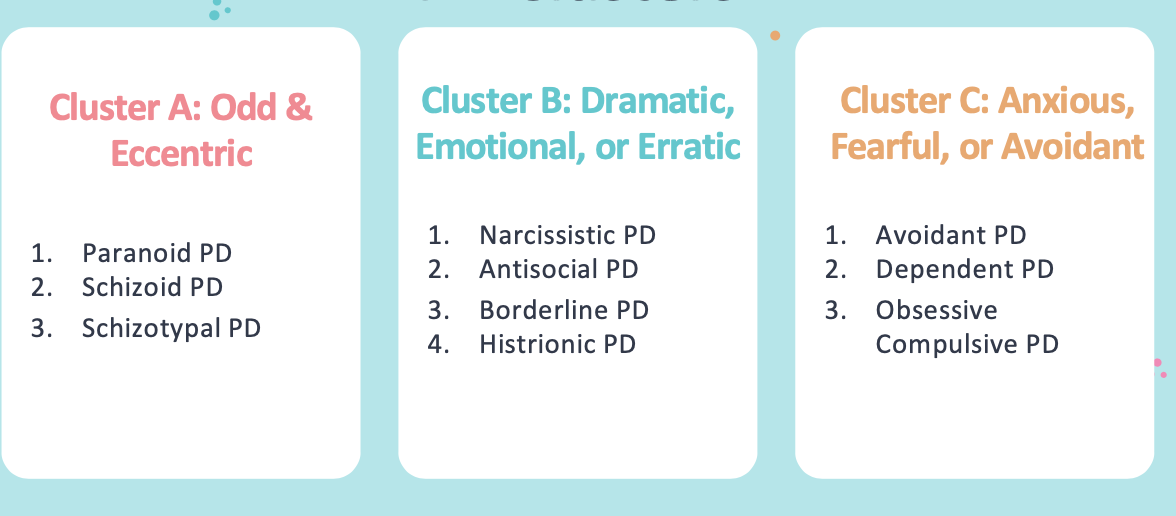
cluster A: odd and eccentric
paranoid PD
schizoid PD
schizotypal PD
cluster B: dramatic, emotional, or erratic
narcissistic PD
antisocial PD
borderline PD
histrionic PD
cluster c: anxious, fearful, or avoidant
avoidant PD
dependent PD
obsessive compulsive PD
narcissistic PD
pervasive pattern of grandiosity (in fantasy or behavior), need for admiration and lack of empathy
symptoms of narcissistic PD
need five or more:
grandiose sense of self importance
preoccupied with fantasies of unlimited success, power, brilliance, beauty or ideal love
believes that he or she is special and unique
requires excessive admiration
sense of entitlement
interpersonally exploitive
lacks empathy — unwilling to recognize or identify with the feelings and needs of others
often envious of others or believes others are envious of him/her
shows arrogant, haughty behaviors or attitudes
NPD associated features
unrealistically high self view
overly sensitive to criticism or defeat
ambitious and confident
relationship problems
treatment for NPD
evidence base is small and progress tends to be slow, long term, and requires a strong therapeutic alliance
antisocial personality disorder
pervasive pattern of disregard for and violation of the rights of others
symptoms of antisocial personality disorder
need 3 or more of the following:
repeatedly breaks the law
deceitfulness
impulsivity / failure to plan ahead
irritability or aggressiveness
reckless disregard for safety of self or others
consistent irresponsibility
lack of remorse
psychopathy
emotional/interpersonal
social deviance
not in the DSM 5
subset of antisocial personality disorder
predicts recidivism: reoffending
better predictor of future bad behavior
emotional/interpersonal psychopathy
glib & superficial
egocentric & grandiose
shallow emotions
lack of remorse and guilt
deceitful & mainpulative
social deviance psychopathy
impulsive
poor behavior controls
need for excitement
lack of responsibility
early behavior problems
adult antisocial behavior
borderline PD
pervasive pattern of instability in personal relationships, self-image, and affects, and marked impulsivity
symptoms of borderline PD
five or more:
frantic efforts to avoid abandonment
pattern of unstable and intense personal relationships
identify disturbance
self-damaging impulsivity
recurrent suicidal behavior, gestures, threats
affective instability
chronic feelings of emptiness
inappropriate, intensive anger, or difficulty controlling anger
transient, stress-related paranoid ideation or severe dissociation
treatment for borderline PD
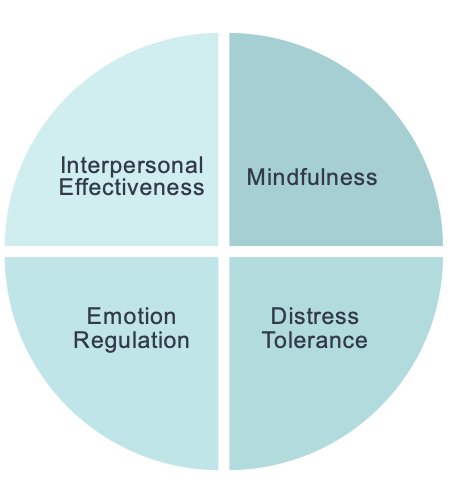
dialectical behavior therapy (DBT)
Dialectical Behavior Therapy (DBT)
DBT reconceptualize Borderline PD as dysregulation of sense of self, relationships and emotions
main treatment goal is to address emotional dysregulation
etiology of cluster B / borderline
people with childhood maltreatment
more likely to develop personality disorders
especially borderline PD