Lecture 9 - Social Psychology
 Call Kai
 Learn
Learn Practice Test
 Spaced Repetition
 Match
Match Flashcards
 Knowt Play
1/44

There's no tags or description
Looks like no tags are added yet.
Name | Mastery | Learn | Test | Matching | Spaced | Call with Kai |
|---|
No analytics yet
Send a link to your students to track their progress
45 Terms
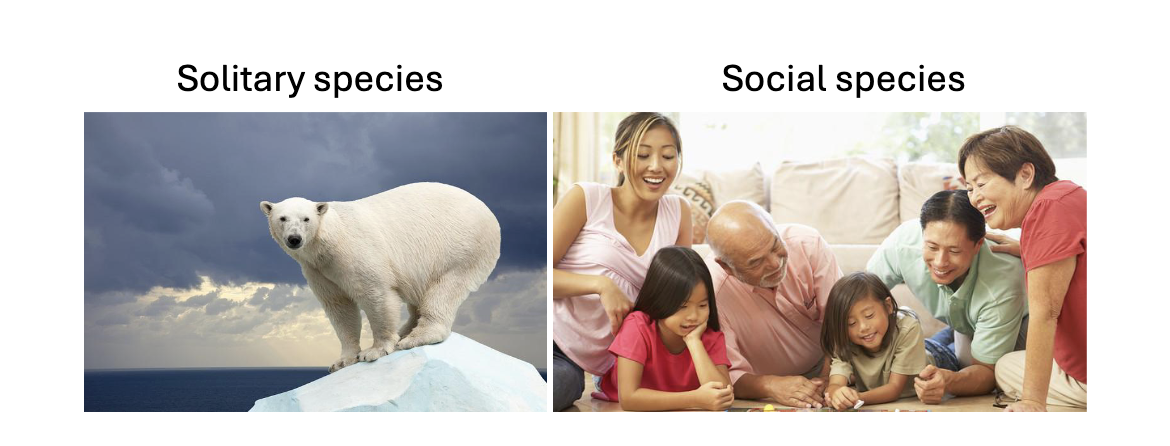
Two types of species
What is unique about the species type that we are
List
Solitary species
Social species
Our ability to cooperate is one of the major reasons we succeed as a species.
Our ability to cooperate comes with strings attached.
Social Psychology definition
the branch of psychology that studies how individuals think about, influence and relate to other people
Some things to keep in mind - not important
how do we think about being influenced: in reality, is this trye
Level of resistant to social pressures
What are we commonly participating in?
Most people view being influenced as weakness (they shouldn’t)
Most people believe that they are highly resistant to social pressures
(they’re wrong)
In certain cases, both tendencies could be a “strength”
Achieve group cohesion + finish tasks
We are continually participating in social networks
Social networks
size of network
Two things important in a network (relating to relationships)
Number of the types of relationships
Characteristic of social networks
Humans have a history of working in small groups (e.g. tribes) (~150 members, according to Dunbar)
However, quantity of relationships is not all that matters – quality matters too
While overall network size can be large, the number of close relationships within is modest
Networks can change with time
Technology, stress, age
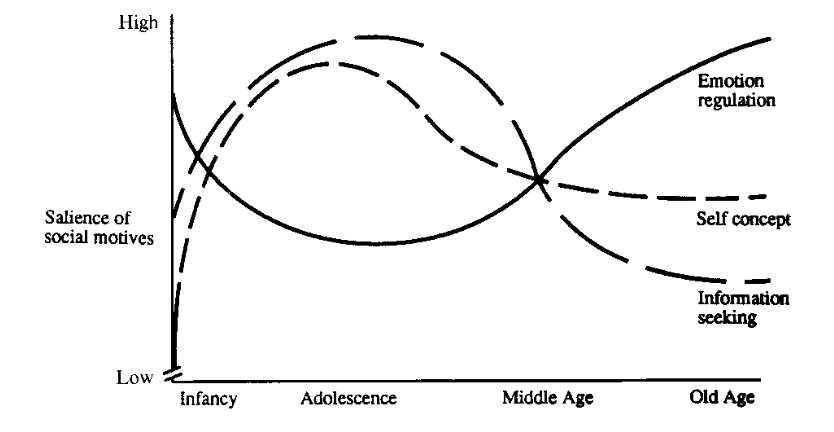
Socioemotional selectivity theory
what is this theory about
Predicts older adults have fewer relationships which are based on different motives (i.e. emotion regulation).
Need to belong theory
what is the basis of the theory
One related study - what was it, what were the results
Humans have a fundamental drive to form/maintain relationships
Absence of relationships might be harmful
Solitary confinement in prison + lockdowns (effects differ by age)
Few experimental studies of isolation (most are correlational)
In one study, only 1 of 5 subjects lasted > 3 days
Subjects given the belief they would end up alone showed unhealthy behaviors,
procrastination and impaired cognition
Loneliness
loneliness definition
isolation definition
What are both definitions related to
What happened during COVID
Treatment of loneliness - level of difficulty - types of treatments
Loneliness is related to, but distinct from, isolation
Isolation = lack of contact, not necessarily bad
Loneliness = feeling, inherently negative
Both related to health outcomes (mental, physical)
Reports of loneliness are increasing (“epidemic”)
Before COVID: 1/3, with 1/12 cases being severe
Loneliness is not easily treatable (either by forced interaction, support networks or social skills training)
Social contagion
main definition
Level of impact depends on what?
Mass hysteria definition
Affects of mass hysteria (2)
three Examples
When a belief rapidly spreads throughout a group
Though is often pejorative, impact depends on belief
Related term: mass hysteria
Large group, behaviors both irrational and harmful
Many potential examples
Urban legends, UFO reports
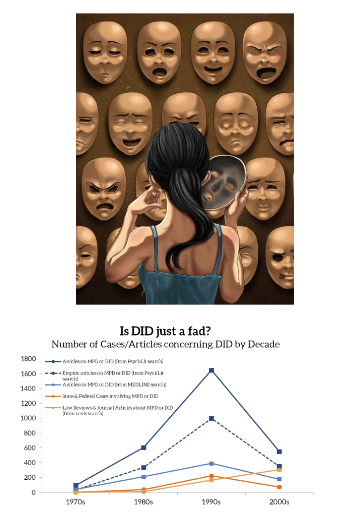
Emotional contagions well-accepted; clinical contagions (e.g. dissociative identity disorder and depression) suggested but more controversial
Dissociative Identity Disorder
what occurs in the individual - what is the issue
Two symptoms
Common in what type of people
Why is it controversial
Affected person claims to have at least two identities
Identities may alternately display
Memory impairment of prior states common
More common in women (reason unknown)
Controversial; concerns about cultural factors or improper interventions
Social loafing
what is social loafing
what affects the variation
Some example
Where is this less evident
Tendency to put in less effort/do less work in groups
Possible variation of bystander effect (e.g. diffusion of responsibility)
Many examples. In a group:
cheerleaders are less loud in a group, people pull less hard on the rope, people generate fewer ideas/less creative ideas
May be less evident in collectivist societies
Deindividuation
What is deindividuation
Two key factors
Main example
hint: kids
Potential examples
Three examples
Engage in behavior atypical for us but consistent w/contextual norms
Key factors are a feeling of anonymity and lack of accountability
Behavior when masked is a great example
Children wearing masks more likely to take ‘forbidden candy’
Presence of a mirror may reduce candy taken
Major potential examples: online behavior, crowd behavior and the Stanford Prison Study
1 – Online behavior
bad types of behaviours
Less effect on people - e..g for fun example
More effect = bad
who is more affected
Issues in victims (2 kinds)
How often it happens - how many types of people
what can it involve what type of issue in social people
In cases when people use their real identity
Reasons
Pros of this
what is the main desire if they use their real identity
Sometimes its cute + funny, like hijacking online polls and voting for ridiculous options
Sometimes its cruel + terrifying, as in cyber-bullying
Males more frequently perpetrators
Associated w/psychological + academic problems in victims
Common; much wider age spectrum than most think
Though it often involves deindividuation, it does not require it
In some cases: people used real identities and articulated real beliefs
Typical behavior, no anonymity but possibility of accountability
In such cases, the motivating factor is likely a desire to enforce certain ideals: cultural, political and religious values
2 – Deindividuation in Crowds
When does this occurs - what types of crowds/events
Typically are crowds like this?
People routinely gather in large groups
One of the most striking example of this is protests
Many throughout history, some of which include 10 000+ people in one place
Most crowds and protests are peaceful
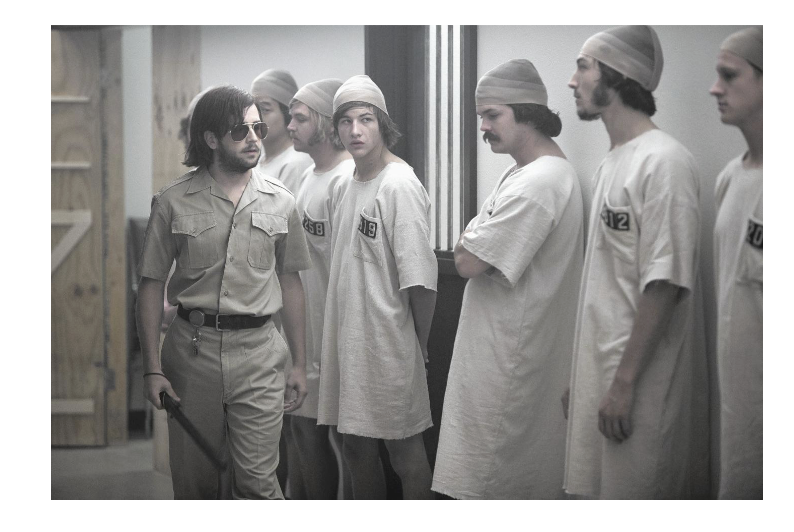
3 – The Stanford Prison Study
type of experiment
what is this study about
What happened in the study of the individuals
How were the individuals behaving
What did the participants initially think
how many guard behaved badly
What did the prisoners experience?
Initial duration vs actual duration of the study
Observational, not experimental
24 participants were randomly assigned to roles of prisoner and guard, head of the study was the superintendent
People reportedly became consumed in their roles, losing their own identity and behaving atypically
One of the most popular and controversial studies
Though initially most participants believed that they were incapable of cruelty, cruel behaviors did emerge
Some guards (~33%) showed aggressive and concerning behaviors
Forced prisoners to perform humiliating lineups, do push-ups, sing, strip naked and clean toilets with their bare hands (partial list only)
Study was supposed to be two weeks but was ended after six days
Criticisms of the Stanford Prison Study
size
Who was picked - what is this issue called
What did the experimenter do (two things)
What is another affect of this
Two main issues
Small sample size (n)
Selection bias (whoever responded to the ad)
Demand characteristics + observer effect
Emphasis on qualitative, anecdotal reports that are difficult to verify and analyze quantitatively
Experimenter (Zimbardo) was involved (superint.)
Numerous ethical issues (never fully repeated)
When discussing influence…
Obedience meaning
Conformity meaning
Are they bad?
Obedience: Listening to a figure of authority (e.g. a persuasive politician or a strong sergeant)
Generally explicit
Conformity: Adopting the predominant belief or behavior of a group due to pressure from that group
Generally implicit
Obedience and conformity are not, by themselves, bad
Issues arise with blindly following without asking questions
Milgram’s story
who was he
What did he think about
What did his research tell us
Child of Jewish parents who grew up through World War 2
Preoccupied with the atrocities of the Holocaust and wondered how people could commit such horrific acts
Prevailing view at the time was such acts were due to “twisted minds”
However, Milgram’s research suggested that situational factors could have also played a role (bad situations, rather than bad people)
Milgram Experiment
three people involved
HInt/analogy: Milgram TEL me if the shock hurts
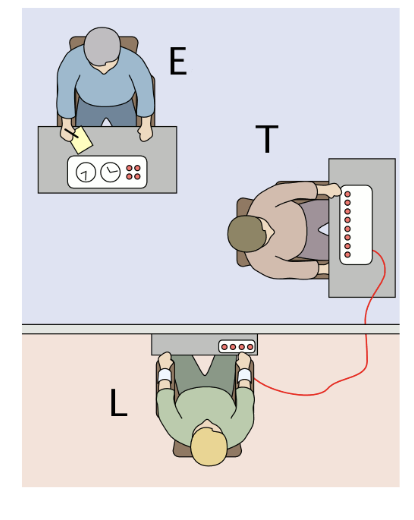
(E) is an experimenter overseeing everything
Participant acts as a teacher (T) who asks the learner (L) questions
(T) is told to give (L) a shock for wrong answers
(L) is an actor who pretends to be shocked and protests to the shocks
Important Factors
Two factors affecting willingness
When did they stop? How many?
What other voice can stop this? - what is this called
What was not a factor
Compliance is related what two factors
Failure to comply may be related to what?
Why is this experiment getting critism?
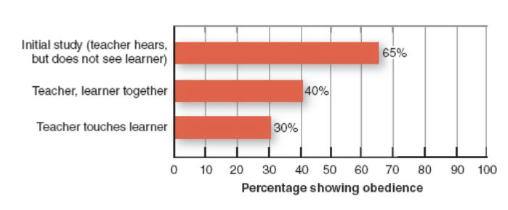
Proximity + contact with learner reduced willingness to give shocks
Some participants stopped complying as intensity increased (15 to 450 V), but the majority (66%) stayed
When a confederate scientist was present and disagreed with the experimenter, compliance was 0%
Value of dissenting voices
No major cultural differences or gender differences
Compliance is not related to sadistic tendencies, but is related to other traits (obedience and authoritarianism)
Failure to comply is related to moral development, though this relationship is not especially strong
Despite many increasing criticism of late (e.g. ethics, internal validity)
Asch’s study on conformity
What is the experiment about
What affected their conformity?
How does it increase?
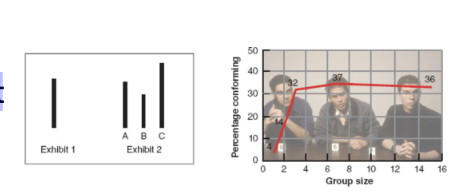
Subjects participated in a study w/several confederates
Subject had to declare which of 3 lines was longer
Before the subject made their judgement, they heard several confederates make an incorrect judgment
Subjects readily conformed to the wrong opinion
Rate of conformity increased w/group size to a point
On conformity
What issue about individuals affects high conformity
Are cultural difference possible? If so (more for which culture, less for which culture)
What differences is not considered for conformity
We all show some capacity; the question is how much and how often
Low self-esteem predicts high conformity
Cultural differences possible; conformity may be greater in collectivist cultures than in individualistic cultures
Gender differences in conformity are disputed
Individualism vs. Collectivism
Index meaning
High =
Low =
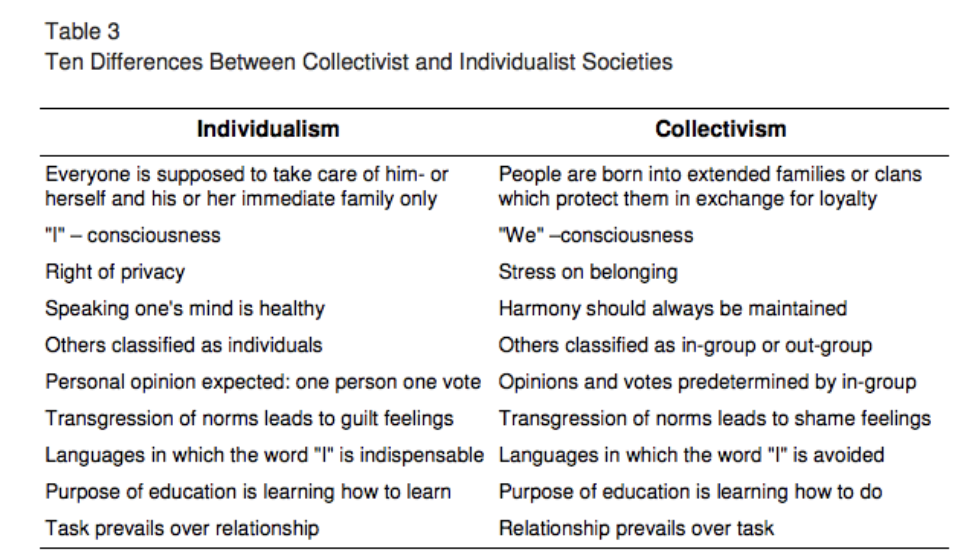
Index reflects the degree to which people are integrated into groups
High index of individualism = individualistic society
Low index of individualism = collectivist society
Individualism vs. Collectivism - continued
what type of society tend toward individualism
What type of society tend toward collectivism
What may they both influence
Western societies tend towards individualism whereas Eastern societies tend towards collectivism
Individualism and collectivism may influence many behaviors (family attitudes, facial expressions, prosocial behaviors + even creativity)
Again, we must avoid stereotypes and focus on what is scientifically proven
Cults
who are they and what do they do
Can they be studied?
Some features of cults
Groups with intense and unquestioning devotion to a single cause
NXIVM, Heaven’s Gate and more
Difficult to study due to their secretive nature
Several consistent features:
persuasive leader who inspires loyalty
members disconnected from the outside world
questions and dissent discouraged
training practices that gradually indoctrinate (ensure they believe in their beliefs) members
Misconceptions
level of difficulty of finding cults
Safety of the cult from the society
Are cult members ok? What about the leaders
What is required for cults to work
Cults are easy to identify and define
Most cults are dangerous to others
Most are peaceful to others, even if harmful to members
Most people in cults are mentally ill (FAE)
33% (higher than normal but not a majority), most cult leaders are mentally ill
• Brainwashing is required (controversial)
Prosocial behavior
What is this
What is another name for this
What is this behaviour associated with
What do they feel?
Voluntary behavior for the benefit of others (e.g. friends, family, strangers or enemies)
For today, assume altruistic = prosocial
Prosocial behaviors are associated w/higher psychological + physical well-being in the helper
It “feels good to be good”
What about punishment?
What type of punishment and What can this be considered what type of behaviour
Give three cases why this may be the case or could be the case
Controversial idea
Just punishments can also be regarded as prosocial
May discourage bad behavior, benefiting the group
Educate the transgressor
Costly punishments (where the punisher pays a cost to deliver punishment) are perceived as more legitimate
Controversial idea
Punishment may not be based on universal principles; could simply be defensive response to your community being attacked
Predicting prosociality
Mood (esp. good moods)
Timing (when we’re not rushed)
Potential for escape (likely to help if we can’t leave)
Background (e.g. doctor, nurse…)
Trait extroversion (L07) and empathy*
Characteristics of the person in need (matching)
Egotistic reasons (relieving personal distress, joy of others we’ve helped, image of being a “better person”)
Bystander effect
what is it
Some reasons why people do this?
Level of difficulty to replicate the experiment
Reduced likelihood to assist others when in groups
Many explanations:
Pluralistic ignorance (“maybe it’s just me, maybe it’s not really a problem”)
Diffusion of responsibility (“someone else will do it”)
Cost of intervention, which can be physical or psychological (e.g. feelings of judgment/vulnerability)
Bystander effects are among the strongest and most replicable effects
Aggression
purpose of the behaviour
Type of studies of aggression
Why is studying aggression hard
Behavior intended to harm others, either verbally or physically
Most real-world studies of aggression are observational
Most laboratory studies of aggression use different measures (i.e. a test) that do not resemble aggression in the real world (e.g. assault)
Degree and severity is affected by many factors
Aggression is more likely if…
gender
situation
feeling
state of individual
something related to the world
Two other things (weather + what you drink)
Male, especially for direct aggression (w/confrontation)
Provocation by the individual (specific)
Overall frustration (non-specific, lashing out at anyone)
Physiological arousal (w/provocation + frustration)
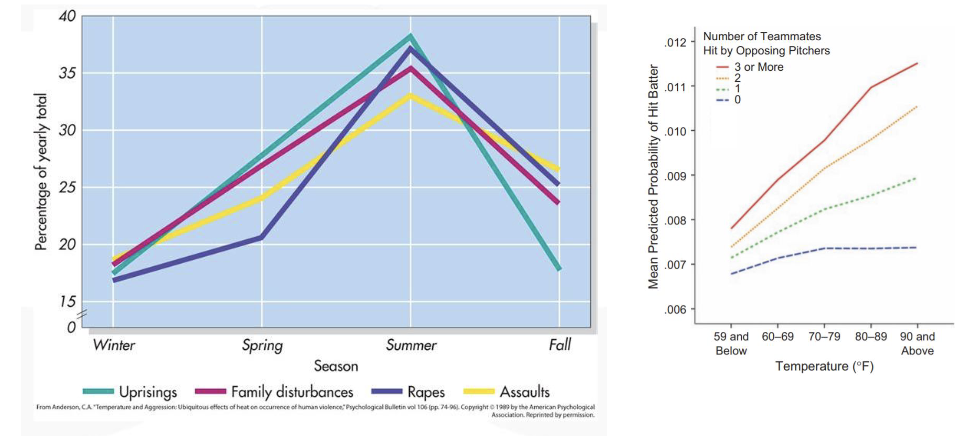
Reinforced by media (e.g. television, video games) and cues (e.g. guns)
Alcohol and temperature
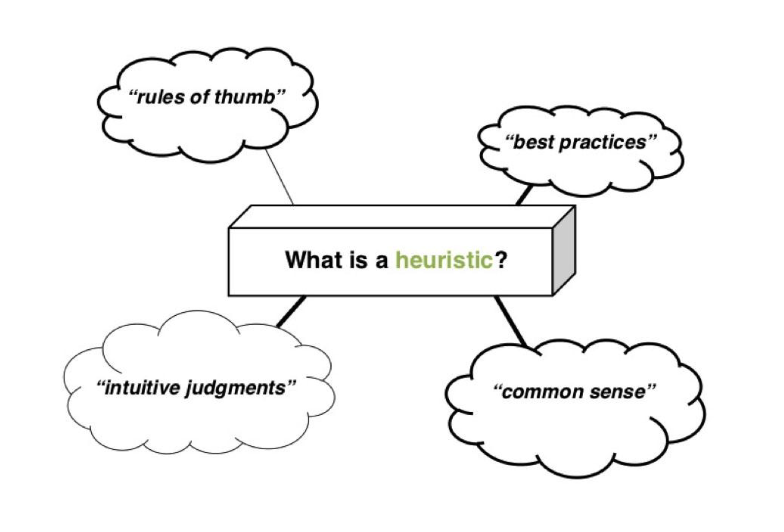
Heuristics
what is it
The importance of heuristics
An issue with heuristics
An approach to decision-making, problem-solving or discovery
During our lifetime, we are faced with many problems and must make many important decisions quickly
In this regard, heuristics are useful
Heuristics can be executed quickly and don’t require a lot of information
but they aren’t always accurate
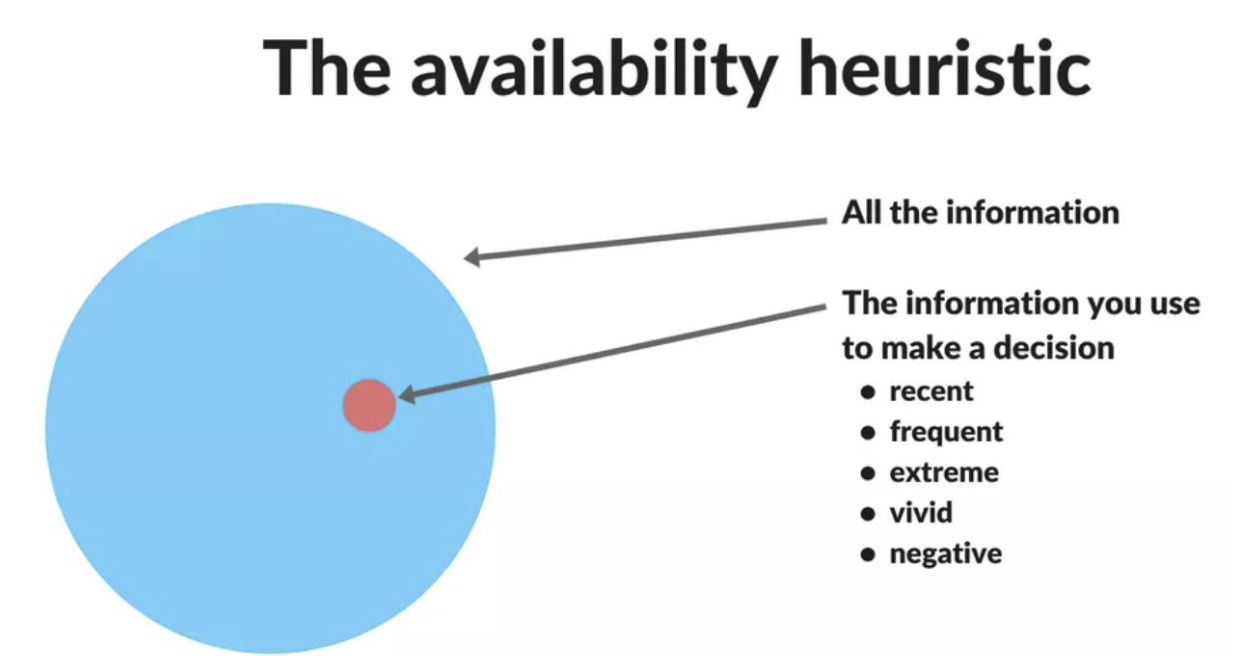
The availability heuristic
What information do you use to make a decision
Hint: most bad
Five characteristics
recent
frequent
extreme
vivid
negative
Representativeness Heuristic
What is it
When is this good
When is it bad?
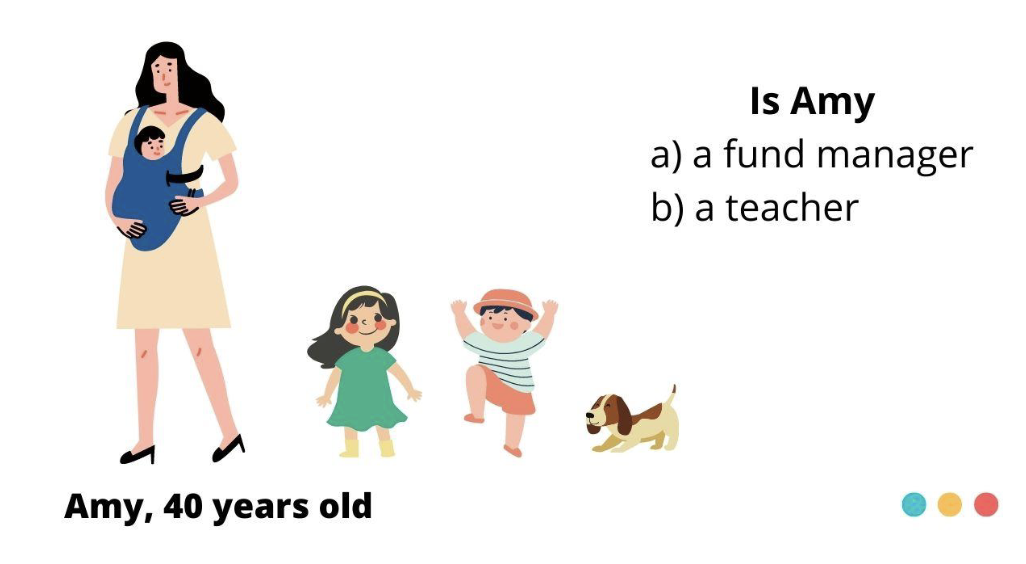
Our tendency to organize information based on the similarity of that information to already established categories
To an extent, this heuristic can be useful (e.g. sorting objects)
Applied to people, heuristics can be problematic
Stereotyping
leads to what type of behaviours
Is anyone not involved in sterotyping?
Is it always bad?
When in this case it is good?
Is stereotyping always visible?
Can lead to prejudicial and discriminatory behavior
We all have some risk for stereotyping
We all also benefit from experience, which can affect or thoughts, feelings and behaviors
If we’re made aware of a stereotype, we can change our behavior
However, we’re not always aware of the stereotypes we have
Implicit discrimination
main definitoin
What does it affect (two things)
Type of measure for it (what is it called - the test)
One specific type
Driven by associations of which the individual is unaware (implicit associations)
These learned associations may influence unconscious processing and drive decision-making
One relevant measure is the implicit associations test (IAT)
Several variations; critical to all is the measurement of response time
IAT
full name
What is this test about
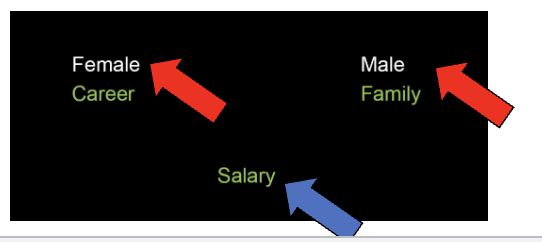
Subjects are shown a word or image and categorize it into one of two groups by hitting a key (“E” or “I”)
Response time and keystroke are logged
Differences in response time may reflect implicit associations (which could be biases)
Criticism of the IAT
concern
Conclusions issues
Arguments of the criticism
Changes
Test-retest reliability concerns
Correlation to discriminatory behavior unclear
However, it has been argued that
weak effects become important on the societal level
IAT could be combined with other tests
Population scores change over time
Group biases
emerges when?
How can it be counteracted
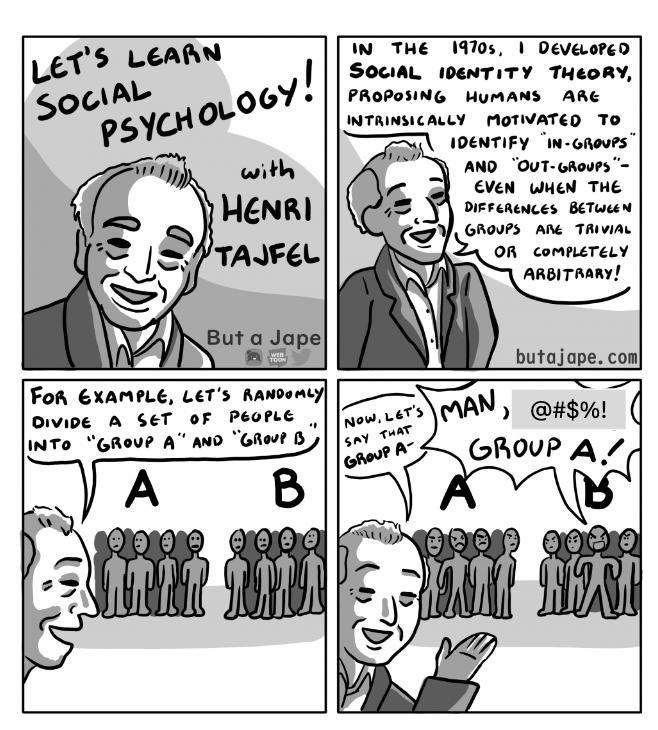
Biases emerge even if the groups involved are relatively new and based on arbitrary criteria
Dot counting (Tajfel’s minimal group paradigm)
Eye color (Elliot’s original classroom study)*
Can be counteracted partially
Forced cooperation (e.g. Robber’s cave study)
Increased contact (e.g. Jigsaw Classrooms), provided proper context*
Stereotype Threat
what two things does it affect
The main definition
Level of affect on people
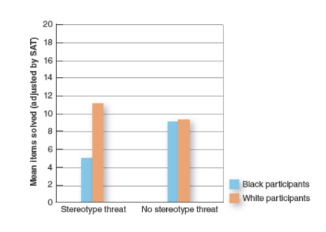
Stereotypes might not just affect our judgment of others, but our own behavior
Stereotype threat is when a fear fulfilling a stereotype in a task negatively affects performance of that task
Meta-analysis suggest effect is smaller than expected
Attributions
What is this theory about
two types of attributions
In theory, the outcome of any event in a person’s life is due to the
interaction of two factors: their traits and their environment
In dispositional attribution, outcome explained by trait
You underperformed on the test because you are a bad student with a poor work ethic, low intelligence or more…
In situational attribution, outcome explained by environment
You underperformed because you were distracted by tragedy
fundamental attribution error
Definition
When evaluating others, we consistently overestimate the role of dispositional factors.
a.k.a dispositional attribution
Famous FAE experiment
What happened in the experiment
what did the participants have to do, and then decide
What did they know?
What is there not much of these kinds of experiment?
Example
When is bias greater? In collectivist culture or individualistic cultures
Subjects randomly assigned to debate pro- and anti-Castro positions
Afterwards, each debater submitted a rating of other debater’s beliefs
Even though the participants knew speech assignment was random, they assumed the debaters agreed with the ideas that they presented
Major reason why we do not include situational factors in our evaluation of others is that we are unaware of them
Relevant to our view of world history: we often fail to consider the unique situational factors that world leaders were under at the time they made their decisions
Bias may be lower in collectivist cultures and greater in individualistic cultures
Defensive Attributions
What is self-serving bias
What does it affect
When is bias more common in individualistic cultures
What specifically about the culture increase the bias
We particularly overemphasize dispositional factors when we succeed and overemphasize situational factors we fail (self-serving bias)
Bias is common in individualistic cultures (Western) where there is emphasis on achievements
Self-serving biases might negatively affect performance