Lab 6 Wishlist
 Call Kai
 Learn
Learn Practice Test
 Spaced Repetition
 Match
Match Flashcards
 Knowt Play
1/12

Earn XP
Description and Tags
EMG and Muscle Micro-anatomy
Name | Mastery | Learn | Test | Matching | Spaced | Call with Kai |
|---|
No analytics yet
Send a link to your students to track their progress
13 Terms
Motor Unit
the unit of skeletal muscle control, single lower motor neuron
Isometric Muscle Contraction
static exercising, muscles generate force WITHOUT moving any joint or length of joint
Isotonic Muscle Contraction-
muscle tension remains constant when the muscle length changes in order to create movement
Agonist Muscle
muscle that produces a certain movement at a joint through shortening and contracting the muscle
Antagonist Muscle
muscle that opposes the action of another muscle through relaxing and lengthening the muscle
EMG
an electromyography test determines muscle and nerve health by measuring electrical activity throughout the body. It is usually used to diagnose carpal tunnel, nerve compression, or muscular dystrophy
Muscle Fatigue
reversible decline in your muscles performance. This is often caused by over working muscles, going to the gym too much, and intense exercise that your muscles can not handle
Muscular Contraction
tension is generated in muscle fibers by the sliding filament mechanism that involves actin and myosin proteins which produce muscle contraction and cellular movement
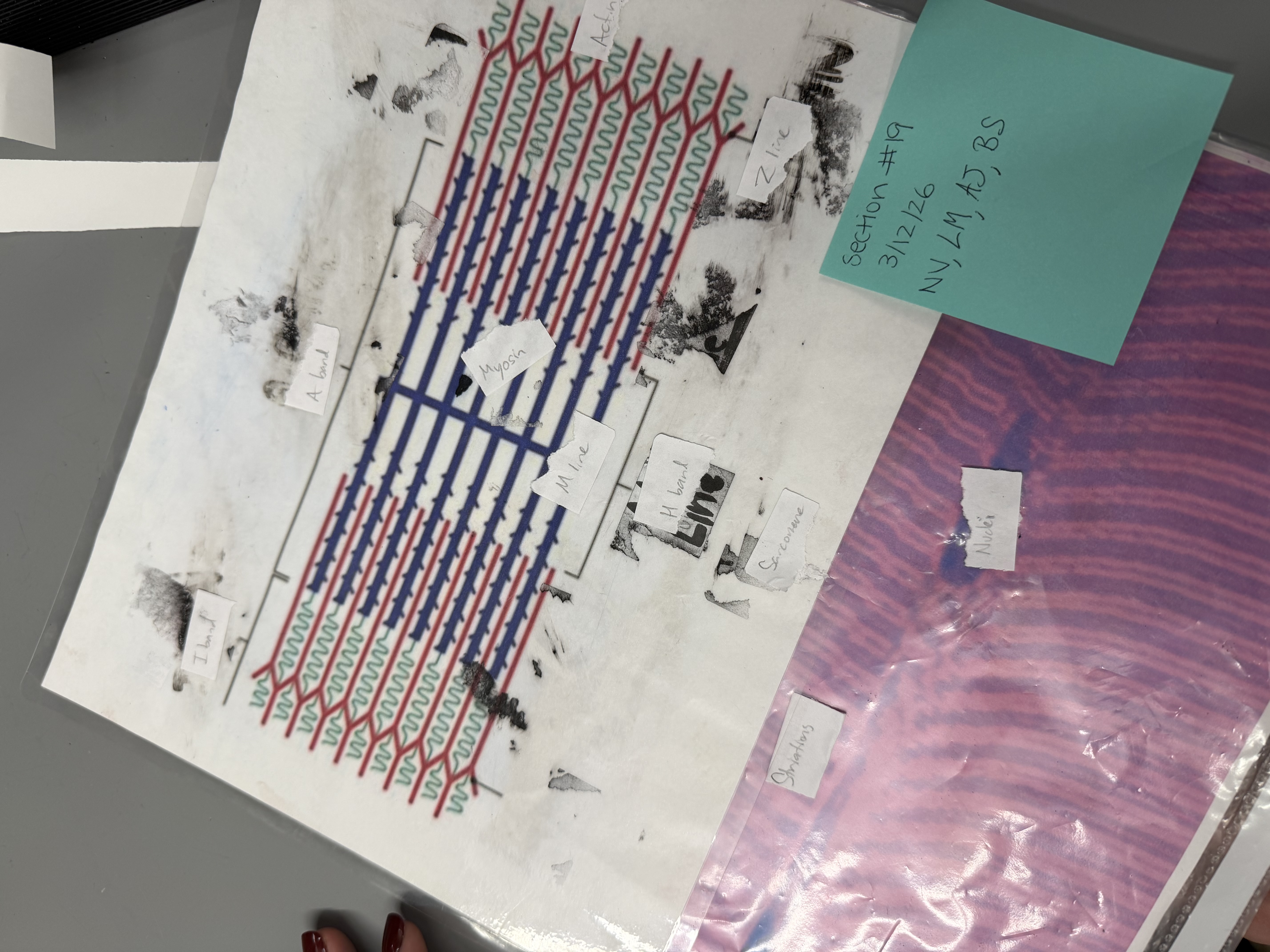
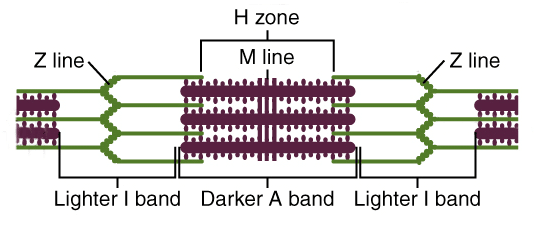
WHOLE SARCOMERE:H zone, A band, I band, Z line, M line
Actin
Thin filament
Myosin
Thick filament
Muscle Micro Anatomy
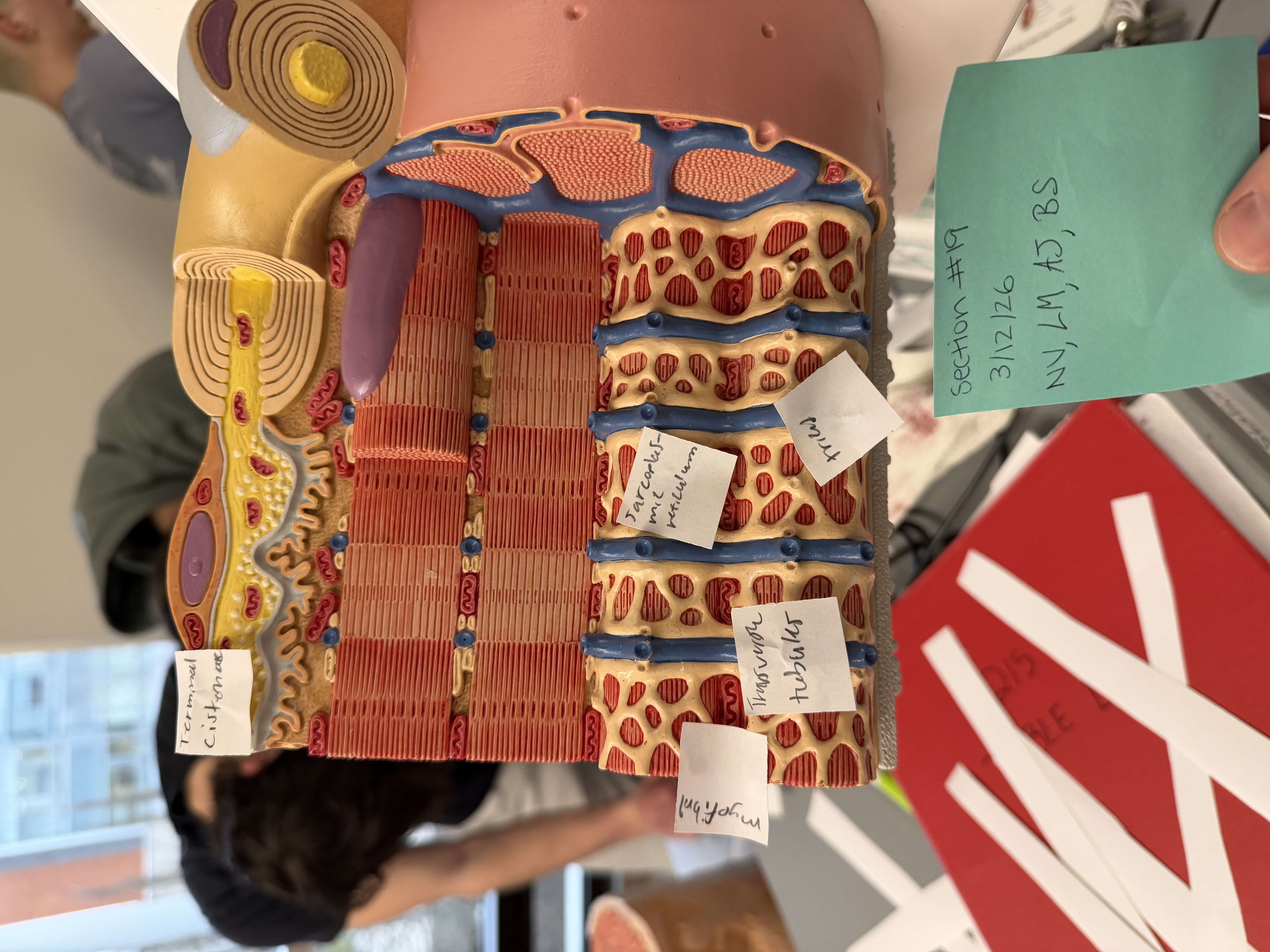
Myofibril, Transverse Tubules, Triad, Sarcoplasmic Reticulum, Terminal Cisternae
Striations and Nuclei