Lecture 8: Introduction to Fungicides (Second Half)
 Call Kai
 Learn
Learn Practice Test
 Spaced Repetition
 Match
Match Flashcards
 Knowt Play
1/129

There's no tags or description
Looks like no tags are added yet.
Name | Mastery | Learn | Test | Matching | Spaced | Call with Kai | Chat |
|---|
No analytics yet
Send a link to your students to track their progress
130 Terms
What 4 forms can fungicides be applied as?
Dust
Granules
Gas
Liquid
Fungicide can be applied to _____ either in-furrow at planting, after planting as a soil drench (including through drip irrigation), or as a directed spray around the base of the plant
soil
Fungicides can be applied to _____, ______, __________ _____ and other propagules to kill pathogens on the material or to protect young plants from pathogens in the soil
seeds
bulbs
transplant roots
Fungicides can be applied to ________ and other aboveground parts of plants by means of a sprayer
foliage
Fungicides can be applied inside of trees via _____ ________
trunk injection
Fungicides are ________ when applied as a vapor-active chemical in the gaseous phase
fumigants
True or false. Some fumigants are also active against nematodes, insects, and weed seeds
True
Fungicides can be applied to harvested produce as a ___ or _____ in the packing house
dip or spray
Fungicides consist of a _________ product having an active ingredient plus inert ingredients that improve performance
formulated
Fungicides consist of a formualted product having an ______ ingredient plus _____ ingredients that improve performance
active
inert
nFungicides are typically mixed with _____ then applied by spraying
water
Some fungicides are applied as dusts, smoke, mist, fog, or _______
aerosol
Effective control necessitates ________ _____________ of fungicides, sometimes every 5 - 7 days
multiple applications
Repeated applications of fungicides are needed for what 2 reasons
new growth
if washed away by rain
What does QoI stand for?
Quinone outside Inhibitor
What does DMI stand for?
DeMethylation Inhibitors
When using fungicides for seed treatments, which kind of fungicide moves into the seed? Contact or systemic?
Systemic. Systemics move into seed, root, and shoot tissues. Contact do not move into the seed.
Fungicide seed treatments can protect seed & seedlings from ____-borne and ____-borne diseases
seed-borne and soil-borne
Fungicide seed treatments are typically at an effective concentration for how many days?
10 - 20 days
Name 3 challenges of fungicide seed treatments (there are 5)
Fungicide with appropriate activity may not be available
The product may have little or no systemic activity (may not move with the expanding root system)
Typically at an effective concentration for 10 - 20 days
May be beneficial in some fields but don’t expect consistent advantage
Does the product have efficacy against all the important pathogens present?
True or false. Contact fungicides (as seed treatments) control internal pathogens.
False. Contact fungicides (as seed treatments) have no control of internal pathogens.
True or false. Contact fungicides (as seed treatments) only provide protection until the seed coat breaks.
True
True or false. Systemic fungicides (as seed treatments) do not control internal or emergence pests.
False. Systemic fungicides (as seed treatments) do have control of internal and emergence pests
How should you dispose of leftover treated seed?
a. Feed it to your livestock
b. Dump it in a pile & let it compost
c. Mix it in with a load from your bin and take it to the elevator
d. Burn it in a wood or corn-burning stove
e. All of the above
f. None of the above
f. None of the above
You should…
1. follow the instructions on the label and
possibly could spread on idle land & disk it in
Fungicides are classified based on their chemical composition. What are the 2 classifications?
Organic
Inorganic
What 2 elements do organic fungicides contain?
Carbon & Hydrogen
What is the main difference between Organic and Inorganic fungicides?
Organic contain Carbon & Hydrogen. Inorganic do not.
Many of the first fungicides were organic or inorganic?
Inorganic, with sulfur or metal ions (copper, tin, cadmium, and mercury)
True or false. Copper and sulfur are still widely used.
True
Most fungicides used today are organic or inorganic?
Organic
Which element is the oldest effective fungicide known and still used extensively today?
a. Copper
b. Mercury
c. Carbon
d. Tin
e. Sulfur
f. Cadmium
g. Hydrogen
e. Sulfur
What are the 3 physical formulations of sulfur fungicides?
Finely ground dust (easiest to apply)
Flotation or colloidal (wet paste)
Wettable sulfur (dissolve in water and spray)
Which of the 3 physical formulations of sulfur fungicides is easiest to apply?
a. Finely ground dust
b. Flotation or colloidal (wet paste)
c. Wettable sulfur (dissolve in water and spray)
a. Finely ground dust
True or false. A majority of copper fungicides are insoluble in water.
True
What is the most famous copper fungicide?
“Bordeaux Mixture”
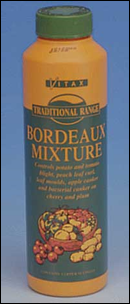
The most famouse copper fungicide, “Bordeaux Mixture”, is named after a grape region in which country?
France
The most famouse copper fungicide, “Bordeaux Mixture”, is a mixture of copper ______ & ____
copper sulfate & lime
The most famouse copper fungicide, “Bordeaux Mixture”, was originally used to scare away “freeloader” picking _____ but had fungicidal properties
grapes
nCopper (Cu2+) is _______ in high concentrations so limit amount & solubility to prevent damage to host
phytotoxic
True or false. Copper fungicides provide longer protection than organic fungicides.
True. Copper fungicides are not easily washed from plant surfaces which provides longer protection than organics.
What is the mode of action of copper fungicides?
Protein denaturation
True or false. Many copper fungicides also help to supply copper (an essential micronutrient) to plants
True
Which inorganic elemental fungicide is no longer registered?
Mercury
True or false. Mercury was not very effective as seed treatments, dormant fruit sprays, or turfgrass fungicides.
False. Mercury was highly effective as seed treatments, dormant fruit sprays, and turfgrass fungicides.
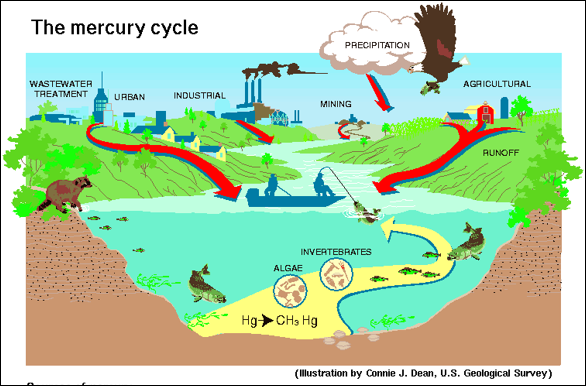
Why is mercury no longer registered for fungicide use?
It has high environmental toxicity
What was the first organic (sulfur) fungicide?
Thiram
Most new fungicide developments are organic formulations. List 4 reasons why.
Higher activity at lower rates
Longer activity duration
Safer to crops, animals, and the environment
Low phytotoxicity & faster soil degredation
Organic fungicides can be separated iinto 2 main groups. What are they?
Nonsystemic (contact)
Systemic
Which fungicides remain on the surface and are not translocated or absorbed?
Contact
Systemic
Contact
Because contact fungicides remain on the surface and are not translocated or absorbed, _______ is critical
coverage
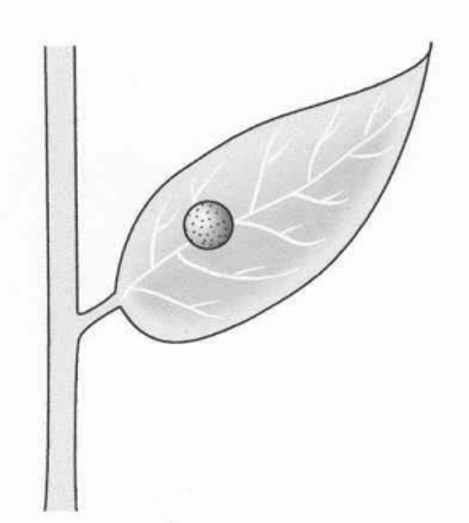
identify the type of fungicide.
Contact
Systemic
Contact (protectant, nonsystemic)
True or false. Contact fungicides have no after-infection activity.
True. This is why they are referred to as protectants.
Since contact fungicides have no after-infection activity, they are referred to as _________
protectants
True or false. Contact fungicides must be present before the pathogen infects.
True
True or false. Contact fungicides protect new growth, even after the contact fungicide is applied.
False. Contact fungicides do not protect new plant growth.
True or false. Contact fungicides inhibit spore germination and stop infection.
True
True or false. Contact fungicides often target multiple sites of action in fungi.
True
Is the threat of pathogen resistance for contact fungicides high, medium, or low?
Low
Is Captan a contact or systemic fungicide?
Contact
Which chemical family of contact fungicides includes Captan?
Phthalimides
The chemical family Phthalimides (include Captan) includes protective sprays, dusts for fruits, vegetables, ornamentals, & turf, and corn & soybean ____ treatments
seed
Which chemical family of contact fungicides includes Manconzeb (Mazate®, Dithane®)?
Dithiocrabamates
Dithiocrabamates, the contact fungicides includeing Manconzeb (Mazate®, Dithane®), are used as corn and wheat ____ treatments
seed
What is the mode of action of nonsystemic (contact) fungicides?
Multi-site activity
__________ control bacterial diseases in fruits & vegetables
Antibiotics
__________ is an antibiotic that is used for fireblight of apples & pears
Streptomycin
_________ is an antibiotic that is chemotherapeutic against phytoplasma diseases
Tetracycline
What is the mode of action of antibiotics like streptomycin and tetracycline?
Inhibits protein synthesis
Which type of fungicides are absorbed into the plant tissue?
Contact
Systemic
Systemic
True or false. There are no fully systemic fungicides for field crops.
True
Systemic fungicides provide protection from the inside, but it is eroded via what 2 things?
Dilution
Deactivation
True or false. Systemic fungicides may offer some after-infection activity but most new tissue is not protected
True
Reapplication of systemic fungicides may be needed after how many days?
12 - 20 days
Is the threat of pathogen resistance for systemci fungicides high, medium, or low?
medium to high
Which has a higher risk of resistance? Contact or systemic fungicides?
Systemic
2 types of systemic fungicides
Local
Upward
Which type of systemic fungicide is absrobed into the immediate area of application and not translocated far from the uptake site?
Local
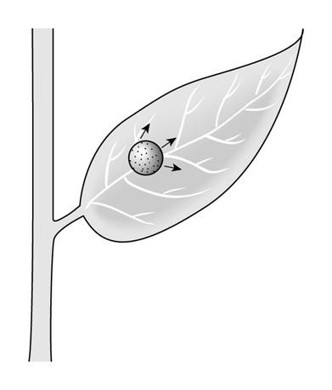
Headline® and Trilex® are examples of which type of systmic fungicde? Local or upward?
Local
Which type of systemic fungicide moves only outward and upward (xylem)?
Upward
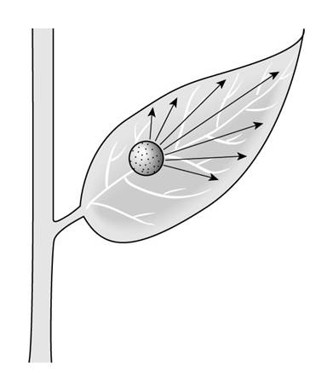
Allegiance®, Apron XL®, Bumper®, Dynasty®, Folicur®, Protege®, Quadris®, Tilt®, and Topsin-M® are examples of which type of systmic fungicde? Local or upward?
Upward
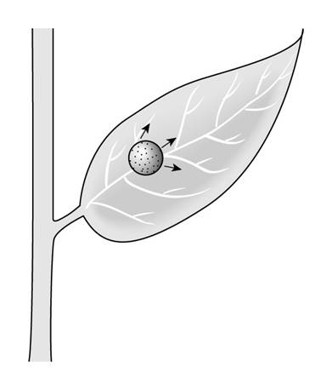
Identify the type of systemic. Local or upward.
Local
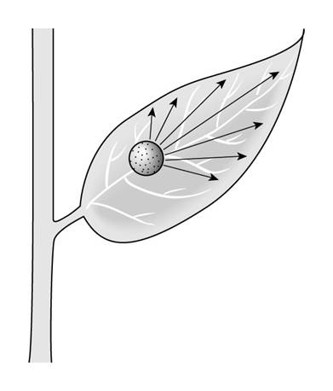
Identify the type of systemic. Local or upward.
Upward
What are the 2 top inorganic elements that are anti-microbial?
Copper
Sulfur
What is a chemical that kills fungal pathogens directly?
a. Fungicide
b. Fungistatic
c. Anti-sporulant
a. Fungicide
What is a chemical that slows or stops fungal growth, but doesn’t kill it completely?
a. Fungicide
b. Fungistatic
c. Anti-sporulant
b. Fungistatic
What is a chemical that prevents the fungus from producing spores, so it can’t spread as easily—even if it’s still growing?
a. Fungicide
b. Fungistatic
c. Anti-sporulant
c. Anti-sporulant
What is the difference between a fungicide and a fungistatic?
A fungicide kill fungal pathogens.
A fungistatic slows or stops fungal growth without killing the pathogen.
What is a preventative fungicide?
A fungicide that is used before a plant gets infected. It creates a barrier that stops the fungus from getting into the plant in the first place.
What is a curative fungicide?
A fungicide that is used after infection has started but before symptoms are severe. It works by entering the plant and stopping the fungus while it is still spreading.
What is a therapeutic fungicide?
A fungicide that is similar to curative, but it refers more broadly to treating an infection that is already inside the plant. It helps slow or stop the disease after infection has occurred.
Are contact fungicides preventative, therapeutic, and/or curative?
Contact fungicides are only preventative.
Are systemic fungicides preventative, therapeutic, and/or curative?
Systemic fungicides can be all: preventative, therapeutic, and curative.
List 5 modes of action (there are 10)
Nucelic acid synthesis inhibitor
Mitosis & cell division inhibitor
Respiration inhibitor
Amino acid & protein synthesis inhibitor
Disrupts signal transduction
Lipid & membrane synthesis inhibitor
Sterol biosynthesis inhibitor in membranes
Cell wall biosynthesis inhibitor
Melanin synthesis inhibitor in cell walls
Host plant defense induction
What is the most important fungicide group?
Triazoles (these are systemic)
Triazoles are broad-spectrum systemic fungicides with both ________ and _______ activity
preventative and curative
2 examples of Triazoles fungicides
Tebuconazole (Folicur®)
Propiconazole (Tilt®)
4 things / areas / crops that Trizoles (systemic) are used on
Field crops
Fruit trees
Vegetables
Turf
Triazoles mode of action
DMI (Demethylation Inhibitor) which inhibits C14-demethylase needed in sterol production (membrane structure and function, essential for cell wall development)
Methoxy-acrylate is a …
chemical family of systemic fungicides
Carbamate is a…
chemical family of systemic fungicides