Leukopoiesis, WBC Differentials, and Lymphocyte Function
 Call Kai
 Learn
Learn Practice Test
 Spaced Repetition
 Match
Match Flashcards
 Knowt Play
1/29

There's no tags or description
Looks like no tags are added yet.
Name | Mastery | Learn | Test | Matching | Spaced | Call with Kai |
|---|
No analytics yet
Send a link to your students to track their progress
30 Terms
the production of white blood cells
purpose:
defend against foreign invaders, such as bacteria, viruses, fungi, or parasites
some have granules that contain enzymes used for digestion and destruction
What is leukopoiesis and what is the purpose of leukocytes?
myeloblast
promyelocyte
myelocyte
metamyelocyte
band
segmented neutrophil, eosinophil, or basophil
List the maturation sequence for granulocytes from least mature to mature (neutrophils, eosinophils, and basophils)
cell size
N:C ratio
chromatin pattern (nucleus pattern)
cytoplasm quality and color
presence or absence of granules
What are the 5 ways to distinguish cell stages and cell types?
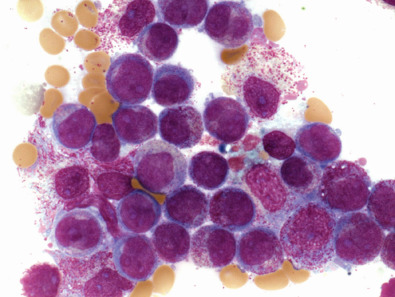
size: 14-20 um
N:C ratio is 6:1, nucleus is round/oval, and may be indented
light red-purple in color, cytoplasm may be a little blue, NO granules
CD45, CD38, CD34, CD33, CD13
Describe the size, N:C ratio, and appearance of myeloblasts
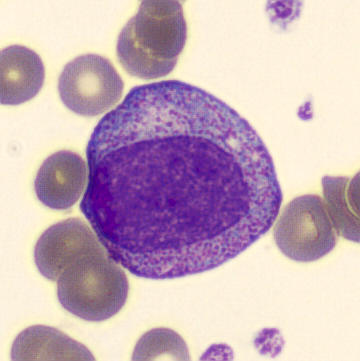
size: 15-22 um
N:C ratio is 3:1, nucleus is oval/round, eccentric, and dark purple
cytoplasm is blue with fine to large blue-red granules
CD45, CD33, CD13, & CD15
Describe the size, N:C ratio, and appearance of promyelocytes
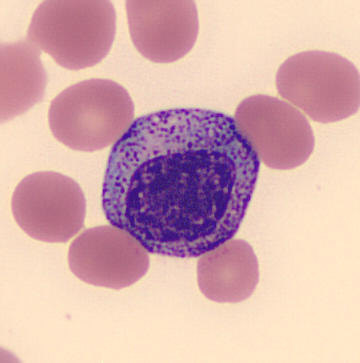
size: 10-18 um
N:C ratio is 2:1, nucleus is red-purple, oval, indented, and dense
cytoplasm: fine, red-blue granules
CD45, CD33, CD13, CD15, CD11
Describe the size, N:C ratio, and appearance of myelocytes
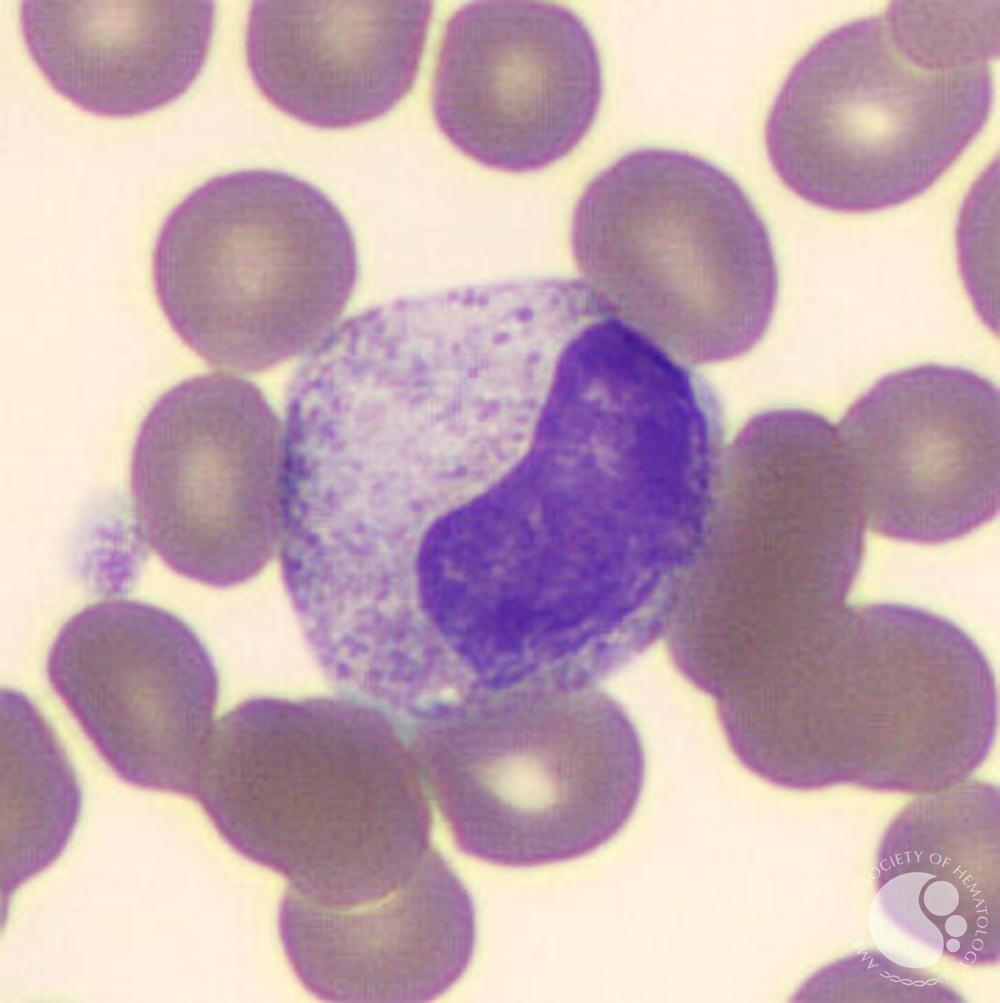
size: 10-15 um
N:C ratio is 1:1, nucleus is kidney bean-shaped, chromatin is patchy
cytoplasm is pale-blue to tan with granules
CD45, CD33, CD13, CD15, CD11
Describe the size, N:C ratio, and appearance of metamyelocytes
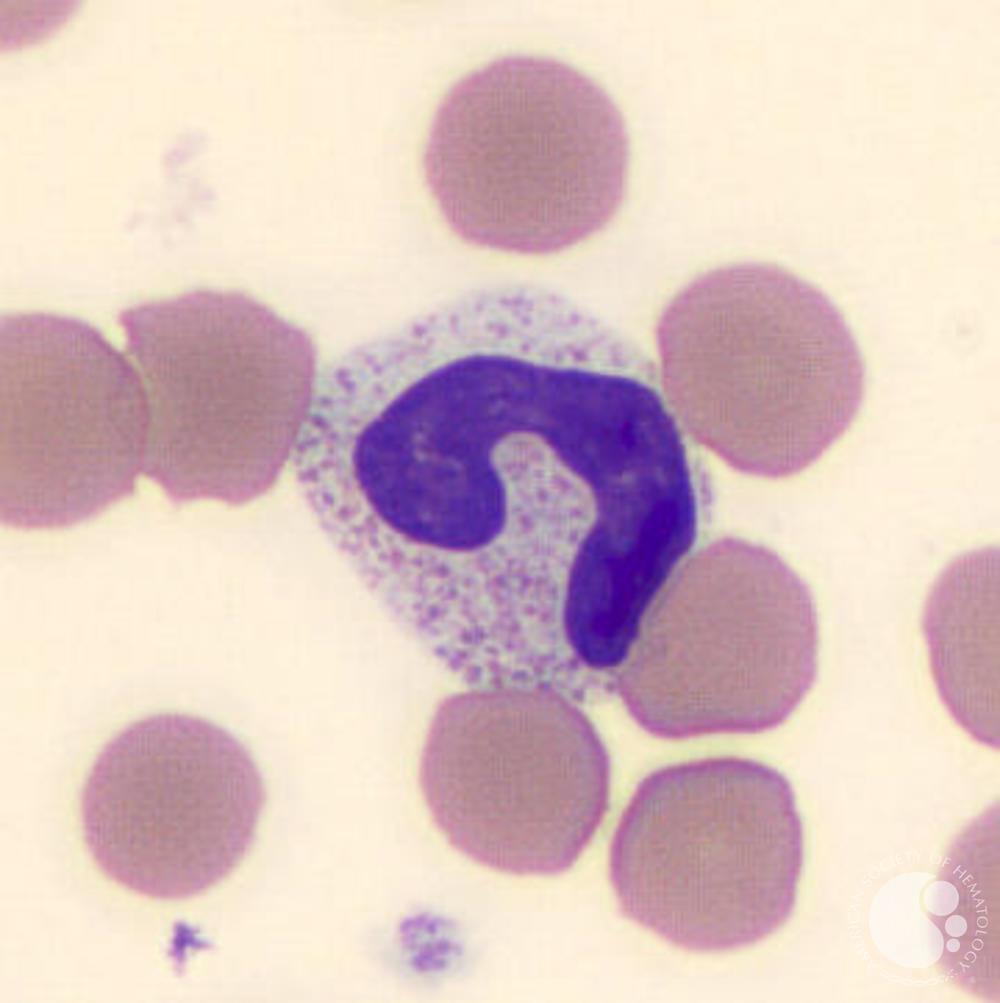
size: 9-15 um
nucleus is C or S shaped
cytoplasm is brown-pink with fine granules
CD45, CD13, CD15, CD11
Describe the size and appearance of bands
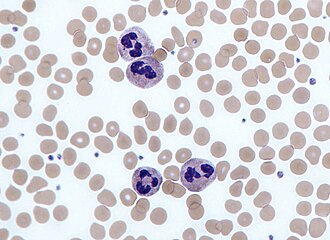
size: 9-15 um
N:C ratio is 1:2, nucleus consists of 2-5 lobes connected by filaments
cytoplasm is pale lilac with many fine granules
USED FOR defense
Describe the size, N:C ratio, and appearance of segmented neutrophils
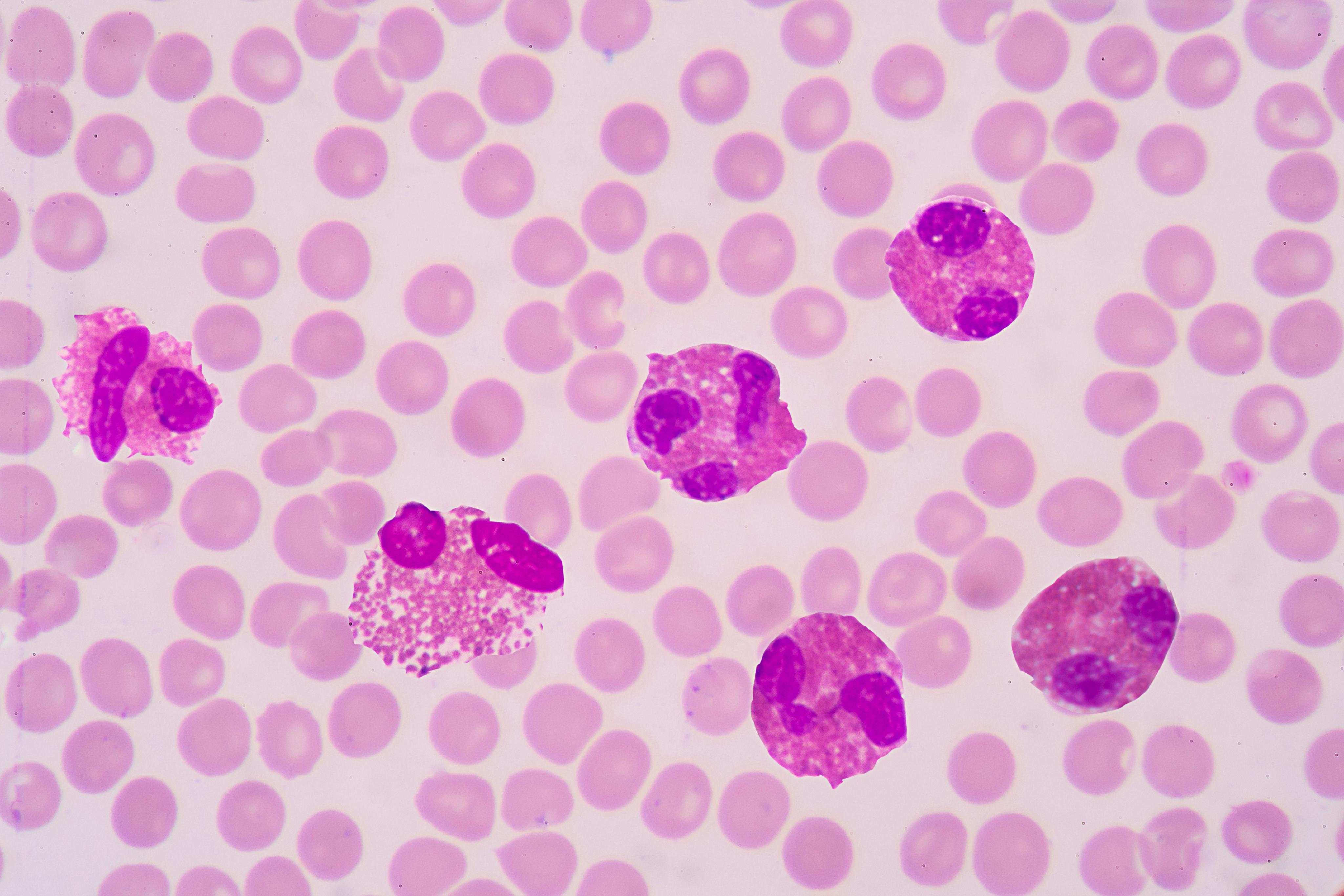
size: 10-16 um
N:C ratio is 1:2, nucleus is eccentric and usually bilobed
cytoplasm has large red-orange granules and orange-pink cytoplasm
responds to parasitic, allergic, and hypersensitive reactions, contains histamine
Describe the size, N:C ratio, and appearance of eosinophils
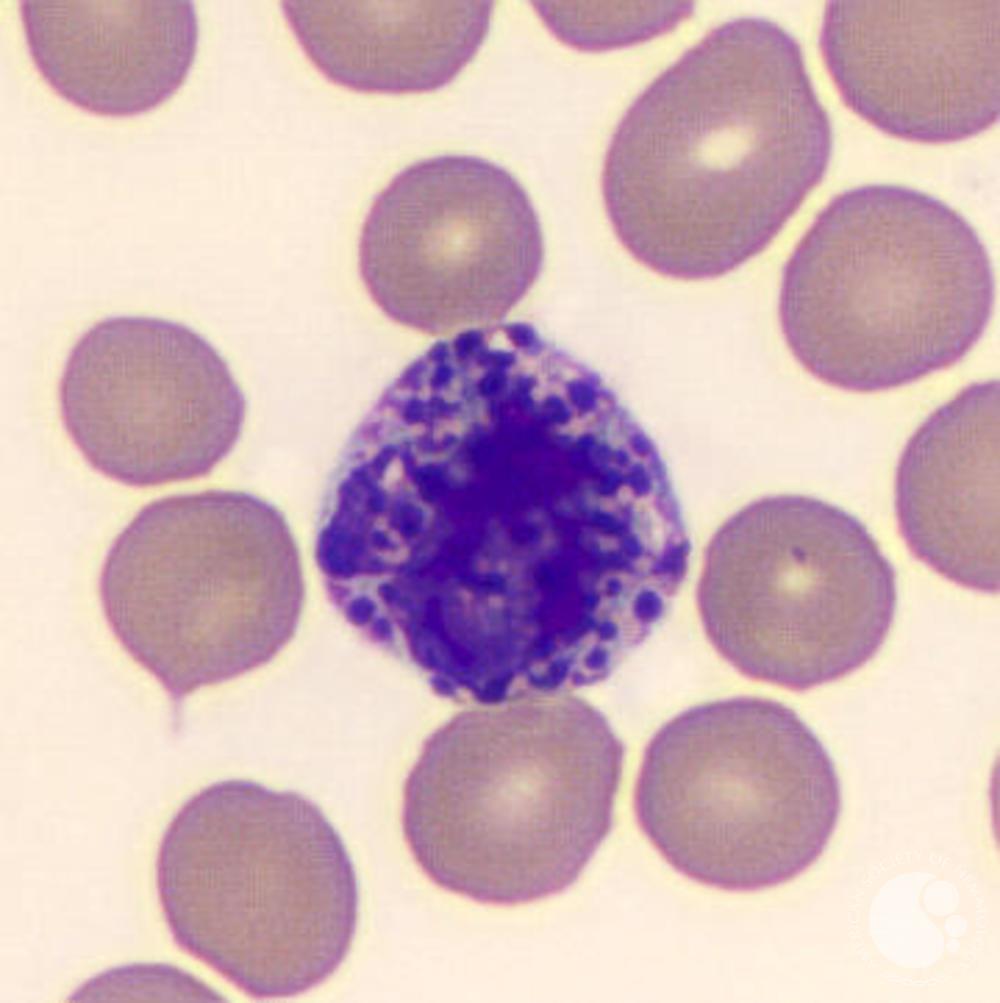
size: 10-14 um
nucleus is coarse, clumped, and bilobed with dark granules
cytoplasm has purple-black granules
contains histamine and heparin used to respond to hypersensitive reactions
Describe the size and appearance of basophils
monoblast
promonoblast
monocyte
What are the 3 stages of monocyte maturation?
same as myeloblasts
Describe the size and appearance of monoblast
size: 12-20 um
irregular and indented nucleus, gray-blue cytoplasm
Describe the size and appearance of promonoblast
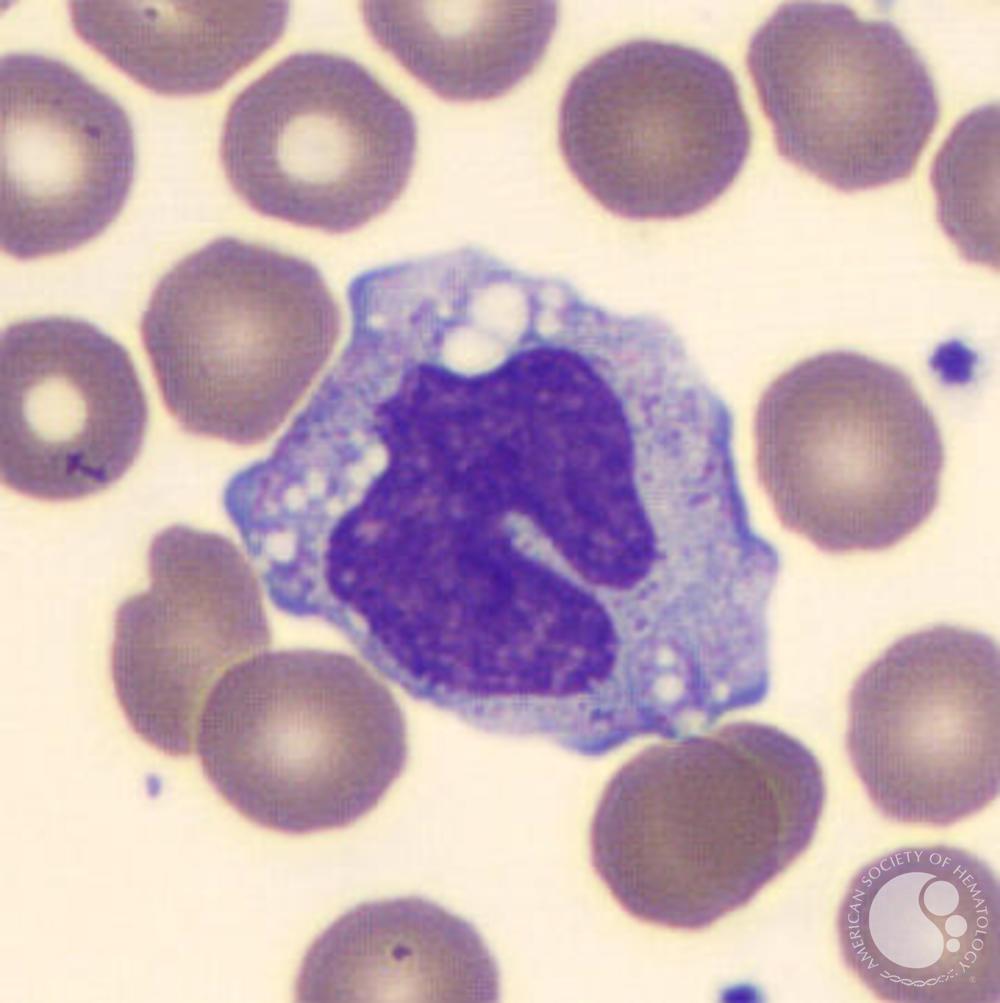
size: 12-20 um
N:C ratio is 1:1
nucleus is loosely woven and thin, and the cytoplasm is light purple/blue or pinkish
CD33, CD13, CD14 (14 is specific to monocytes)
Describe the size, N:C ratio, and appearance of monocytes
lymphoblast
prolymphocyte
small lymphocyte
large lymphocyte
List the 4 stages of lymphocyte maturation, from least mature to most
lymphoblasts
size: 10-20 um
smudgy nucleus, deep blue
prolymphocytes
size: 9-18 um
coarse nucleus, gray-blue cytoplasm
Describe the size and appearance of lymphoblasts AND prolymphocytes
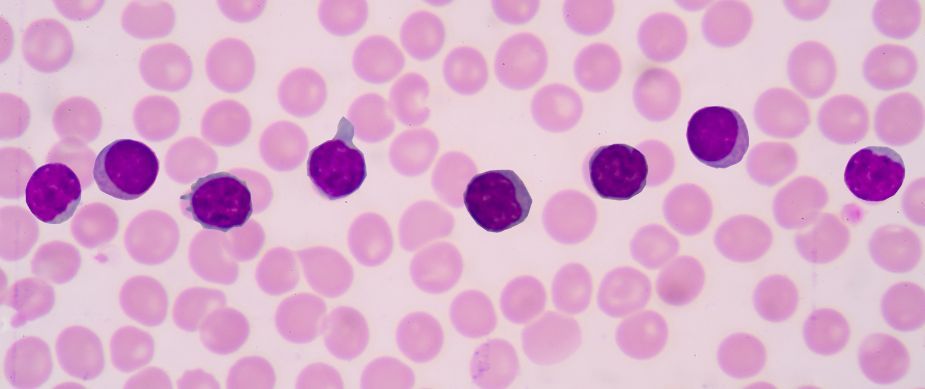
size: 7-12 um
coarse, lumpy nucleus, also oval and eccentric, some red granules
Describe the size and appearance of small lymphocytes
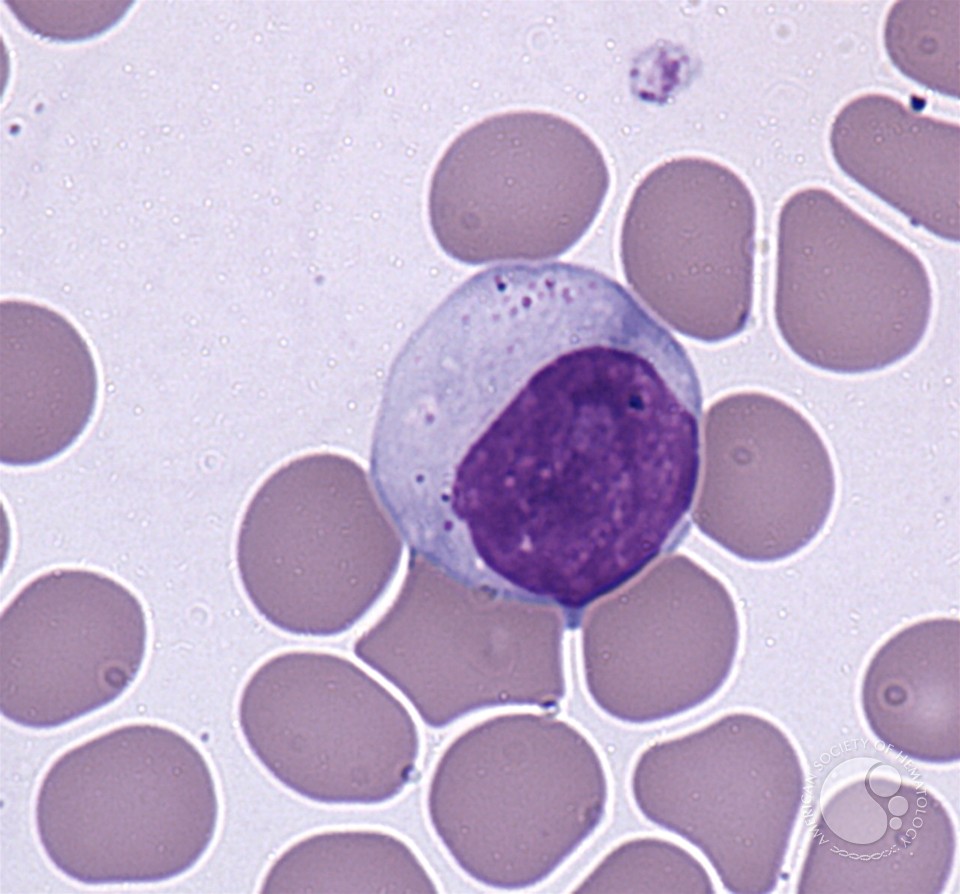
size: 15-18 um
a lot of cytoplasm, light-blue in color
dark purple nucleus
Describe the size and appearance of large lymphocytes
to produce:
graunulocytes (neutrophils, basophils, and eosinophils) (stem cell: CFU GEMM)
erythrocytes (stem cell: CFU GEMM)
monocytes (stem cell: CFU GEMM)
macrophages(stem cell: CFU GEMM)
and megakaryocytes (stem cell: CFU MEG)
specific interleukins and growth factors stimulate the myeloid stem cell to produce these cells
What is the job of myeloid stem cells?
blood filtration
fluid balance
antibody generation
lymphopoiesis
What is the lymphatic system responsible for?
derived from bone marrow stem cells
eventually matures to plasma cells, cells that secrete antibodies in humoral immunity
10-20% of all lymphocytes
Where do B lymphocytes come from and what are they responsible for?
arise from lymphatic stem cells in the bone marrow, but matures in the THYMUS (T = thymus)
used in cell mediated immunity
T helper cell and cytotoxic T cell
60-80% of all lymphs
Where do T lymphocytes come from and what are they responsible for?
to kill bacteria, fungi, and viruses
What is the responsibility of NK cells?
the manual counting and differentiating between leukocytes
count is performed at 50x or 100x under the microscope
100 cells are counted and differentiated, results are reported as percentages
What are differential WBC counts?
9-30 ×10-9/L
6-16 × 10-9/L
4.8-10.8 × 10⁻⁹/L
(move decimal up 3 places)
What are the WBC reference ranges for:
newborns
2-12 years old
and adults?
relative is the percentage of each WBC identified in a 100 cell count
not a complete representation
absolute multiplies each WBC percentage by the patient’s total WBC count
What is the difference between relative and absolute WBC counts?
primary
bone marrow and thymus
secondary
spleen, lymph nodes, tonsils, and peyers patches
List the primary and secondary lymphoid organs
segmented neutrophils: 50-70%
bands: 2-6%
lymphocytes: 20-44%
monocytes: 2-9%
eosinophils: 0-4%
basophils: 0-2%
What are the adult reference ranges for the following WBCs:
segmented neutrophils
bands
lymphocytes
monocytes
eosinophils
basophils
My Pet Mouse Makes Big Messes
Myeloblast
Promyelocyte
Myelocyte
Metamyelocyte
Band
Mature granulocyte (neutrophils, eosinophils, and basophils)
mnemonic to remember the stages of granulocyte maturation