L5 cracks and crumples deformation processes

0.0(0)
Studied by 0 people
call kaiCall Kai
learnLearn
examPractice Test
spaced repetitionSpaced Repetition
heart puzzleMatch
flashcardsFlashcards
GameKnowt Play
Card Sorting

1/40

encourage image

There's no tags or description

Looks like no tags are added yet.

Last updated 1:32 PM on 2/9/25
Name
Mastery
Learn
Test
Matching
Spaced
Call with Kai

No analytics yet

Send a link to your students to track their progress

41 Terms

1
New cards

Deformation

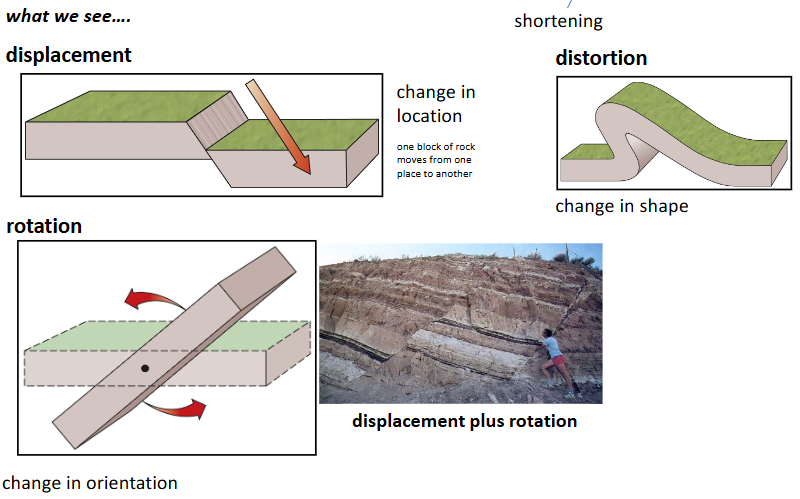
a process by which rocks bend, break or flow. In response to compression, tension or shearing.

  • Types of deformation

    • displacement: change in location, one block of rock moves from one place to another.

    • distortion: change in shape

    • rotation: change in orientation

<p>a process by which rocks bend, break or flow. In response to compression, tension or shearing.</p><ul><li><p>Types of deformation</p><ul><li><p>displacement: change in location, one block of rock moves from one place to another.</p></li><li><p>distortion: change in shape</p></li><li><p>rotation: change in orientation</p></li></ul></li></ul><p></p>
2
New cards

Stress

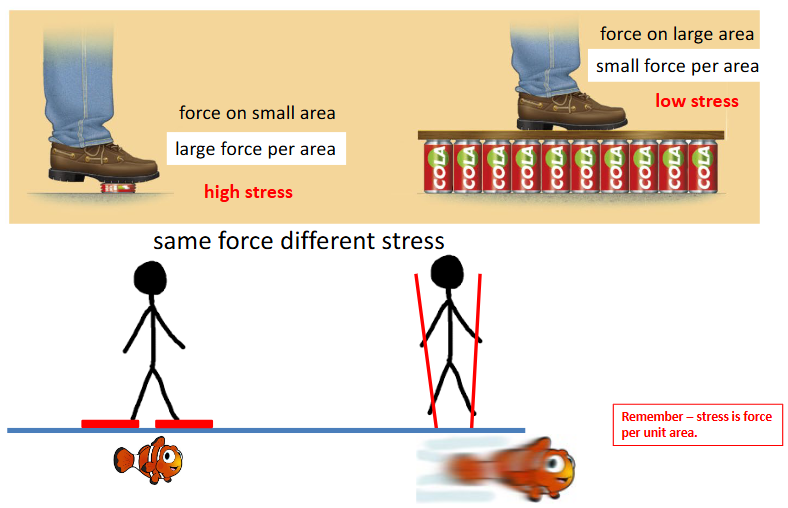
  • Not the same as force → important to distinguish between them.

  • Stress is the force applied per unit area (S=F/A)
<ul><li><p>Not the same as force → important to distinguish between them. </p></li><li><p>Stress is the force applied per unit area (S=F/A)</p></li></ul><p></p>
3
New cards

Strain

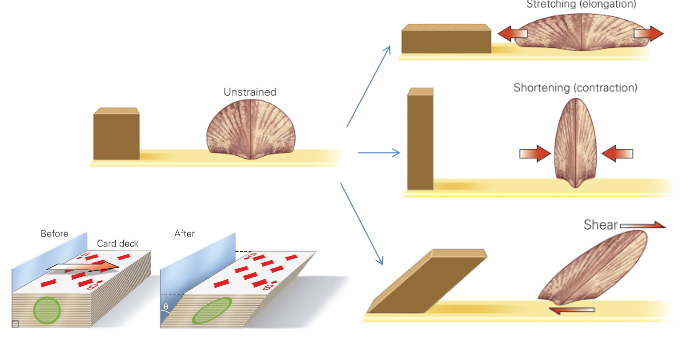
  • When material is loaded with a force, it produces a stress which causes a deformation.

  • Strain is the response of a system to an applied stress

    • e.g. it’s the deformation

    • It is represented by the change in shape arising from the deformation
<ul><li><p>When material is loaded with a force, it produces a stress which causes a deformation. </p></li><li><p><strong>Strain </strong>is the response of a system to an applied stress</p><ul><li><p>e.g. it’s the deformation</p></li><li><p>It is represented by the change in shape arising from the deformation</p></li></ul></li></ul><p></p>
4
New cards

Types of stress

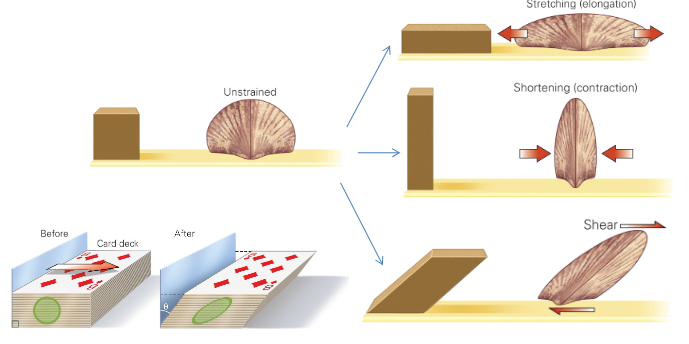
  • Compression

  • Tension

  • Shear

  • Pressure

5
New cards

Compression

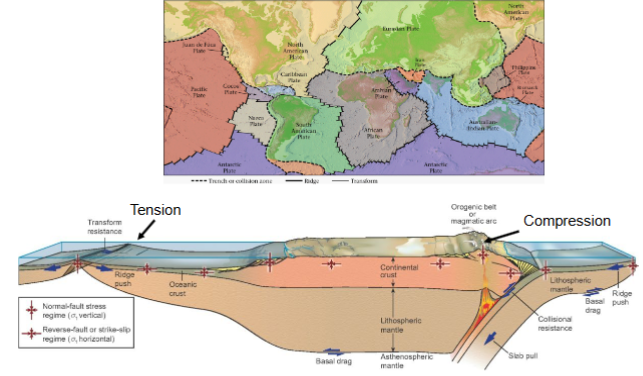
Horizontal compression drives plates collision and orogeny (mountain building)
<p>Horizontal compression drives plates collision and orogeny (mountain building)</p>
6
New cards

Tension

Horizontal tension drives crustal rifting
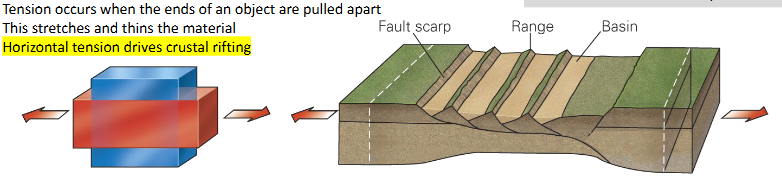
<p>Horizontal tension drives crustal rifting</p>
7
New cards

Shear

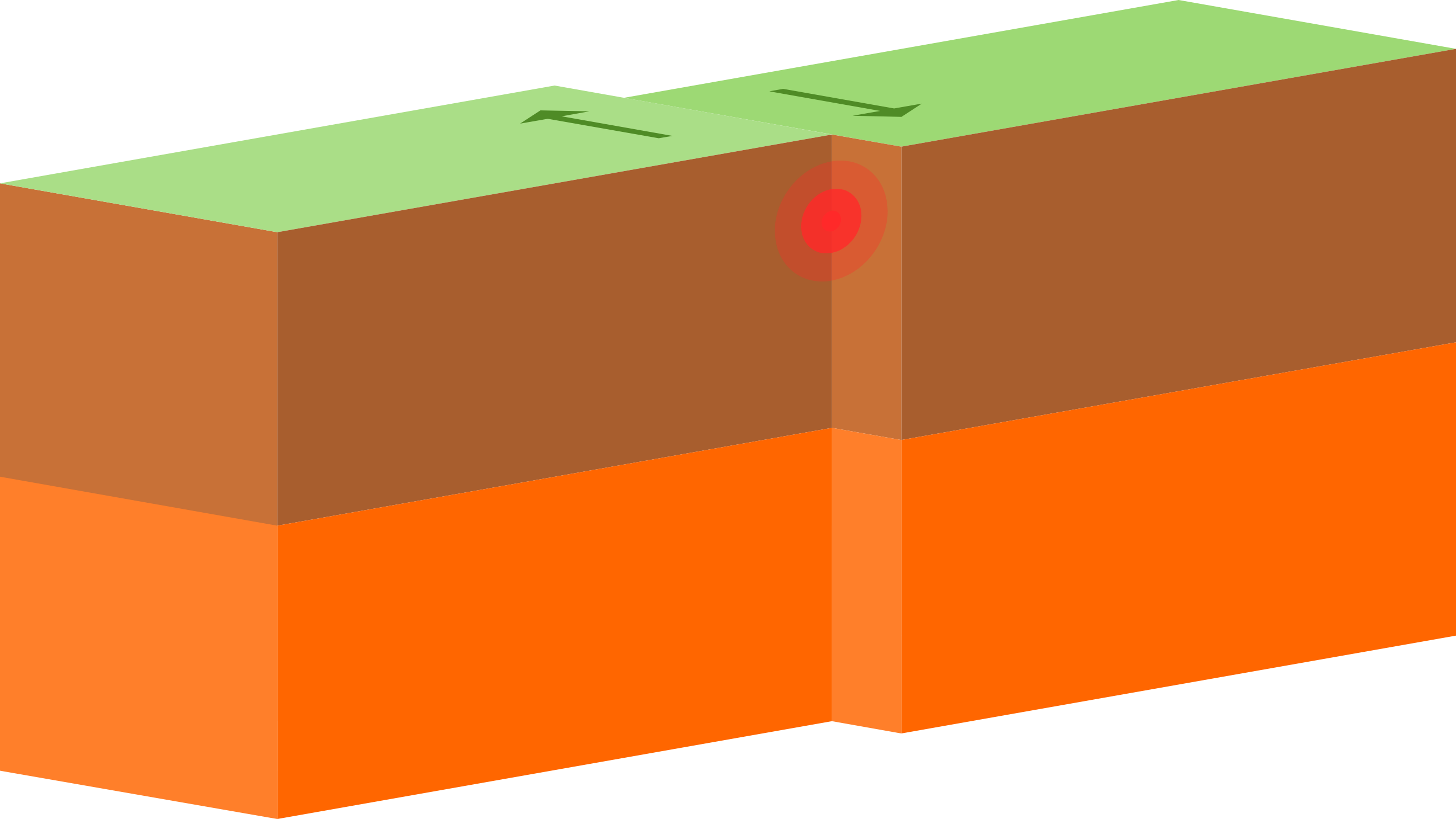
Shear develops when surfaces slide past one another
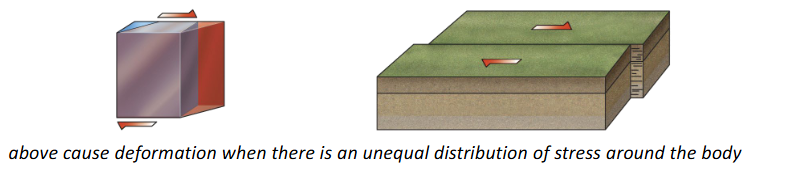
<p>Shear develops when surfaces slide past one another</p>
8
New cards

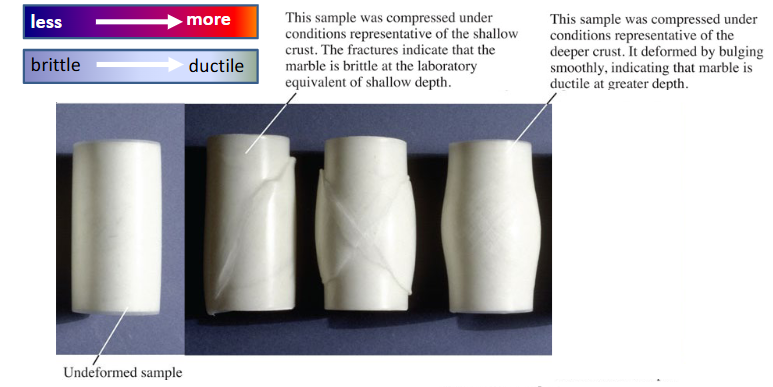
Brittle deformation

  • Fracture in response to stress

  • A continuous, force is applied to a rock. As the force is gradually increased. A little change occurs in the rock until it suddenly fractures/faults.
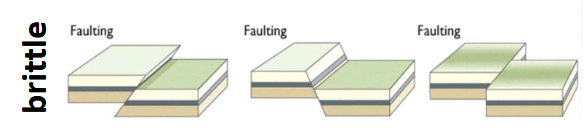
<ul><li><p>Fracture in response to stress</p></li><li><p>A continuous, force is applied to a rock. As the force is gradually increased. A little change occurs in the rock until it suddenly fractures/faults. </p></li></ul><p></p>
9
New cards

Ductile deformation

  • Flow leading to permanent deformation in response to stress

  • Gradually increasing force will cause the rock to undergo smooth and continuous plastic deformation. The rick will contort and change shape without fracturing (see folding and foliation later)
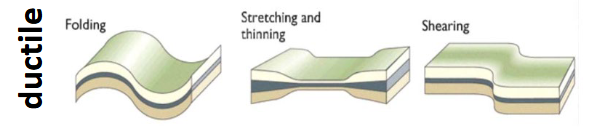
<ul><li><p>Flow leading to permanent deformation in response to stress</p></li><li><p>Gradually increasing force will cause the rock to undergo smooth and continuous plastic deformation. The rick will contort and change shape without fracturing (see folding and foliation later)</p></li></ul><p></p>
10
New cards
<p>Ductile flow vs Brittle flow</p>

Ductile flow vs Brittle flow

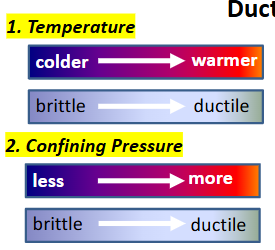
  • Temperature

  • Confining pressure

    • Temp and pressure can increase with depth in Earth

    • Change from Brittle to ductile with depth

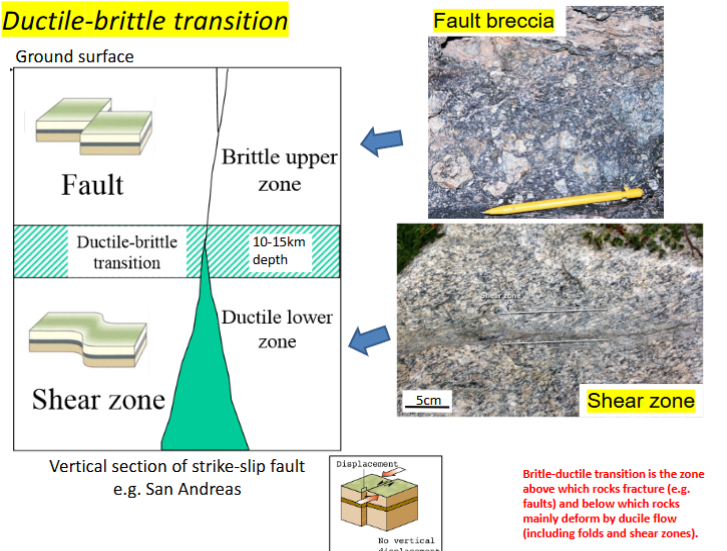
    • Brittle-ductile transition

    • In continental crust about 15km depth

<ul><li><p>Temperature</p></li><li><p>Confining pressure</p><ul><li><p>Temp and pressure can increase with depth in Earth</p></li><li><p>Change from Brittle to ductile with depth</p></li><li><p><strong>Brittle-ductile transition</strong></p></li><li><p>In continental crust about 15km depth</p></li></ul></li></ul><p></p>
11
New cards

Rock properties

  • Rock strength can control nature of deformation

    • Mudstone are often weak and are more prone to ductile flow

    • granites are often strong are more prone to fracturing

12
New cards

Strain rate

  • The rate at which a stress and associate deformation or strain is applied

  • Apply stress more rapidly then rock is more likely to deform by brittle failure. Like hitting it with a hammer.

13
New cards

Fluids

The presence of fluids e.g. water within a rock has the effect of weakening the rock and making it more prone to ductile deformation

14
New cards

Depth

As both temperature and pressure increase with depth

  • Upper levels favour brittle behaviour → faults. Earthquakes therefore are often concentrated in upper 10-15km of the earth’s crust

  • Higher T and P → ductile behaviour - folds

15
New cards

Ductile-Brittle transition

knowt flashcard image
16
New cards

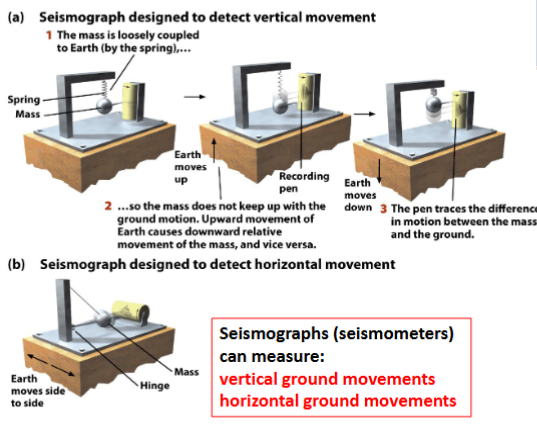
How are earthquakes recorded?

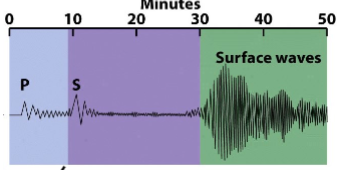
Seismographs record the seismic waves generated by earthquakes
<p>Seismographs record the seismic waves generated by earthquakes</p>
17
New cards

Seismic waves associated with earthquakes

  • Generated by earthquakes naturally, energy travels as waves.

    • Body waves

    • Surface waves

18
New cards

Body waves

Waves that move through the Earth

  • P waves

  • S waves

19
New cards

Surface waves

Waves that travel along the earth’s surface which is detected by a seismograph

  • L waves

  • R waves

<p>Waves that travel along the earth’s surface which is detected by a seismograph</p><ul><li><p>L waves </p></li><li><p>R waves</p></li></ul><p></p>
20
New cards

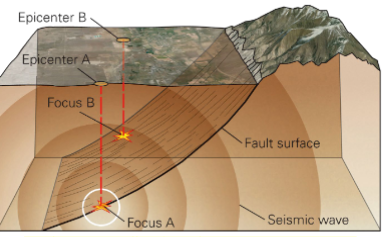
Hypocentre

It is the location where the fault slip occurs. Usually on a fault surface
<p>It is the location where the fault  slip occurs. Usually on a fault surface</p>
21
New cards

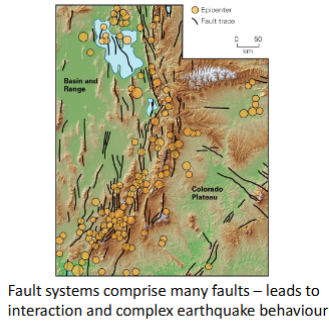
Epicentre

It is the land surface directly above the hypocentre. Maps often portray the location of epicentres.
<p>It is the land surface directly above the hypocentre. Maps often portray the location of epicentres.</p>
22
New cards

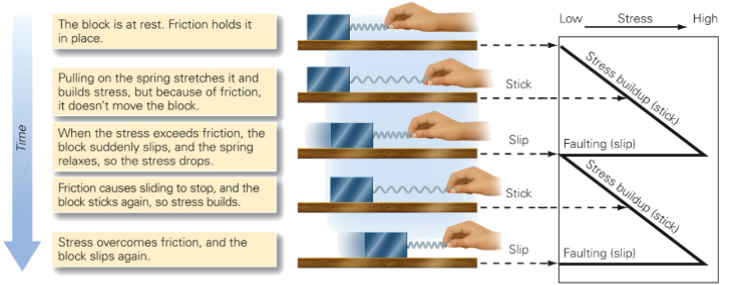
Rock friction

It resists movement, so faults move via stick-slip behaviour.

  • Stick is the period between earthquakes

  • Slip is the earthquake

<p>It resists movement, so faults move via stick-slip behaviour.</p><ul><li><p>Stick is the period between earthquakes </p></li><li><p>Slip is the earthquake</p></li></ul><p></p>
23
New cards

Earthquakes

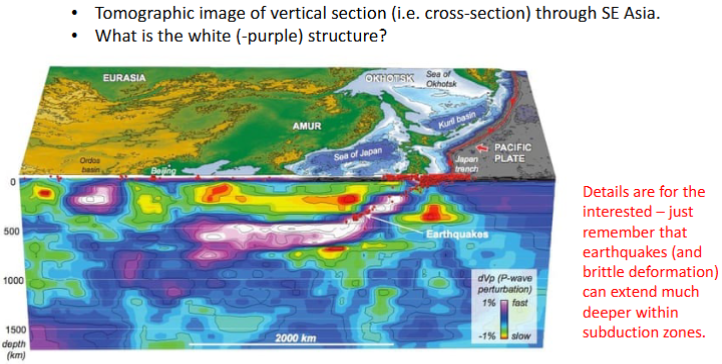
  • They are a form of brittle deformation and in California they are restricted to the upper ca 13km of the crust.

  • However, earthquakes can be much deeper than 10-15km depth where cold ocean crust is subducted under continental crust.

24
New cards

Seismic tomography

  • Spatial variation in seismic travel times (P waves velocity) provides details of Earth’s structure

  • Based on assumption that faster waves = cooler and/or more dense rock
<ul><li><p>Spatial variation in seismic travel times (P waves velocity) provides details of Earth’s structure</p></li><li><p>Based on assumption that faster waves = cooler and/or more dense rock</p></li></ul><p></p>
25
New cards

Plate tectonics

The source of stress for deformation of rocks is due to plate movements/interactions
<p>The source of stress for deformation of rocks is due to plate movements/interactions</p>
26
New cards

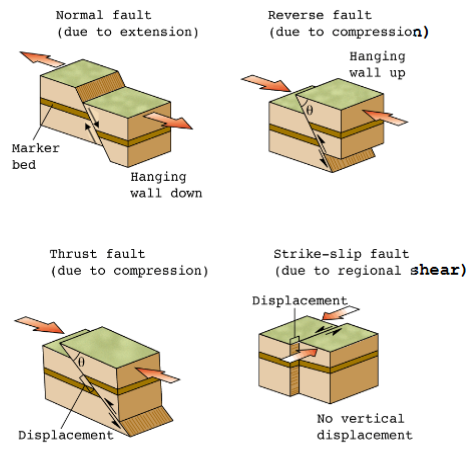
Different types of faults

  • Normal fault

  • Reverse fault

  • Thrust fault

  • Strike-slip fault

<ul><li><p>Normal fault </p></li><li><p>Reverse fault</p></li><li><p>Thrust fault </p></li><li><p>Strike-slip fault</p></li></ul><p></p>
27
New cards

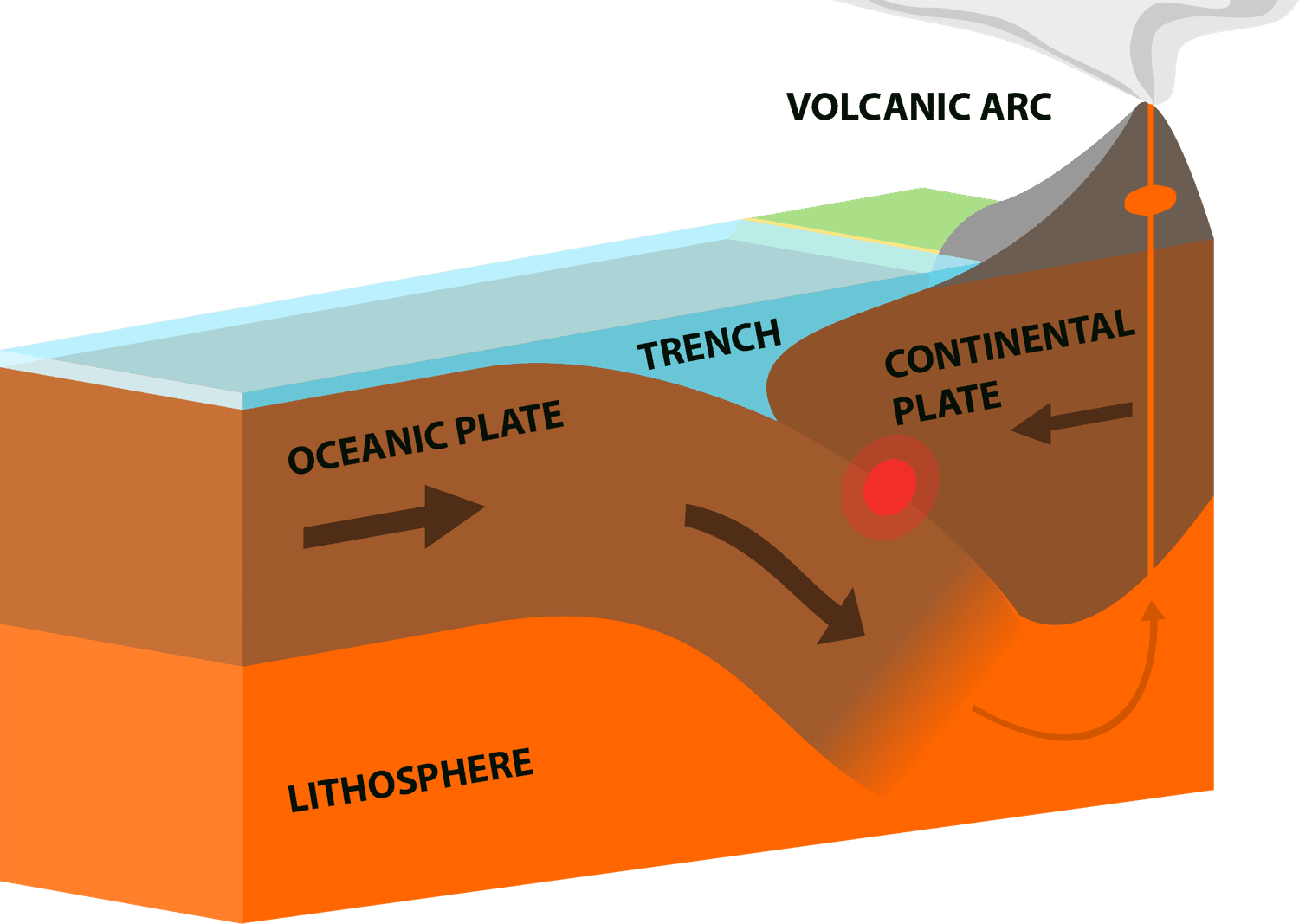
Convergent plate

knowt flashcard image
28
New cards

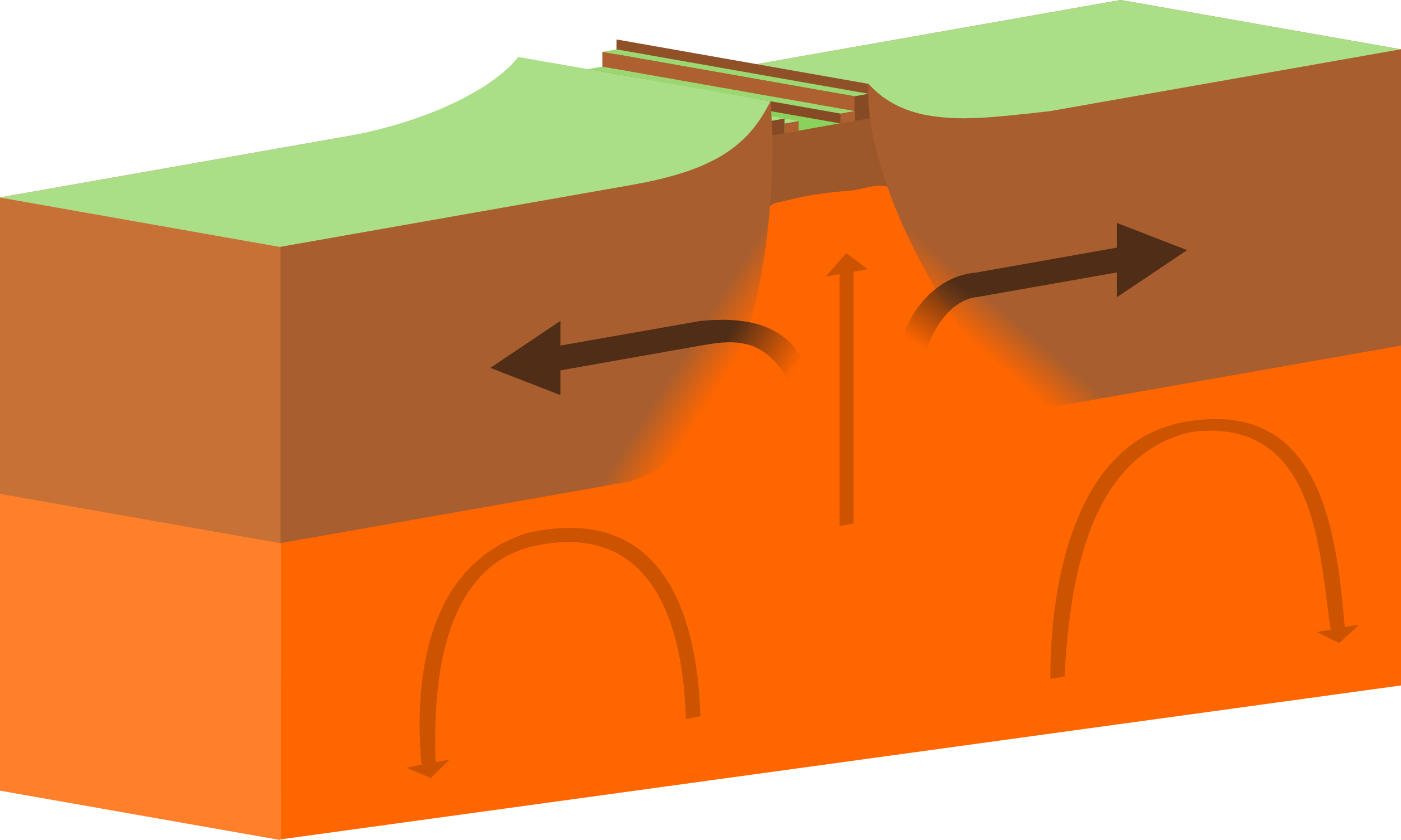
Divergent plate

knowt flashcard image
29
New cards

Transform plate

knowt flashcard image
30
New cards
31
New cards
32
New cards

Folding

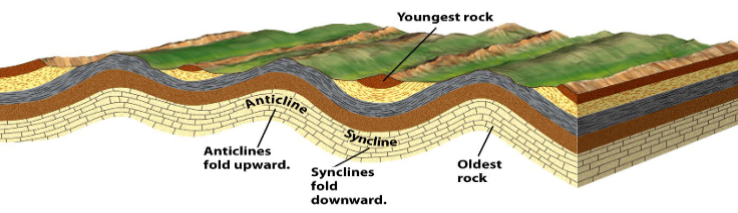
  • Ductile response to compression

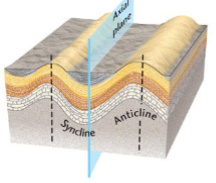
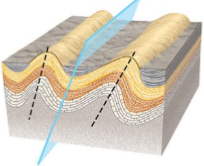
  • Anticlines and Synclines, axial plane

    • Imaginary plane that divides the fold as symmetrically as possible, with one limb either side of the line.

    • Horizontal and plunging folds

    • Vertical and inclined axial planes

<ul><li><p>Ductile response to compression</p></li><li><p>Anticlines and Synclines, axial plane</p><ul><li><p>Imaginary plane that divides the fold as symmetrically as possible, with one limb either side of the line. </p></li><li><p>Horizontal and plunging folds</p></li><li><p>Vertical and inclined axial planes</p></li></ul></li></ul><p></p>
33
New cards

Symmetrical folds

Have limbs that dip symmetrically from the axial plane
<p>Have limbs that dip symmetrically from the axial plane</p>
34
New cards

Asymmetrical folds

Have on limb that digs more sleeply than the other
<p>Have on limb that digs more sleeply than the other</p>
35
New cards

Overturned folds

Have limbs that dip in the same direction, but one limb has been tilted beyond the vertical
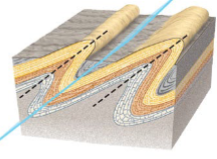
<p>Have limbs that dip in the same direction, but one limb has been tilted beyond the vertical</p>
36
New cards

Fold and thrust belt

Often occur at margins of mountain belts

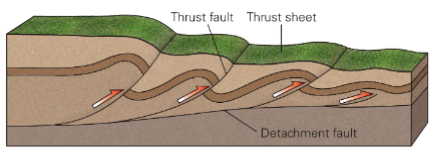
  • Fault slices stacked one on top of the other

  • Process acts to shorten and thicken crust

  • Due to horizontal compression

  • Piggy-back thrusting

<p>Often occur at margins of mountain belts</p><ul><li><p>Fault slices stacked one on top of the other</p></li><li><p>Process acts to shorten and thicken crust</p></li><li><p>Due to horizontal compression</p></li><li><p>Piggy-back thrusting</p></li></ul><p></p>
37
New cards

Divergent boundaries

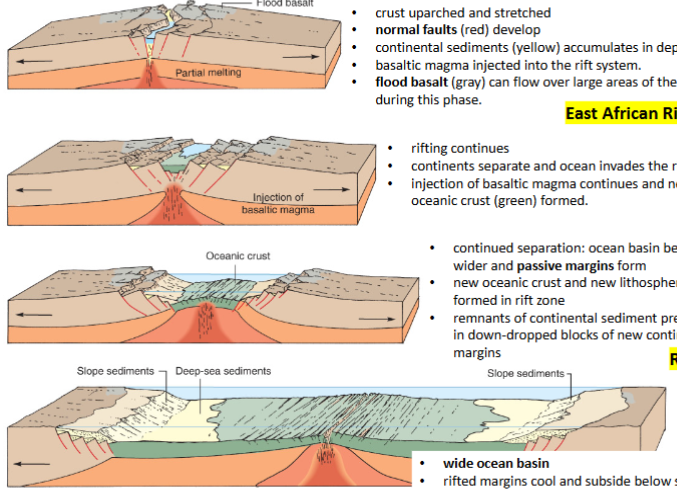
  • East African rift zone

  • Red sea

  • Atlantic ocean

<ul><li><p>East African rift zone</p></li><li><p>Red sea</p></li><li><p>Atlantic ocean</p></li></ul><p></p>
38
New cards

Tensional stress, normal faulting

Ancient normal faults are from rifts in offshore NW Europe
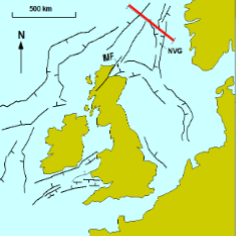
<p>Ancient normal faults are from rifts in offshore NW Europe</p>
39
New cards

Convergent boundaries

  • Ocean-Ocean convergence

    • Accretionary wedge, sediment scraped off the down going slab → developed (folds & thrust)

  • Ocean-Continent convergence

    • Fold and thrust belt on over-riding plate

  • Continent-Continent convergence

    • Deformation: High mountain belt forms by folding, foliations, thrust-faulting and doubling of the crustal layers

    • Fold and thrust belts either side of the mountain belt
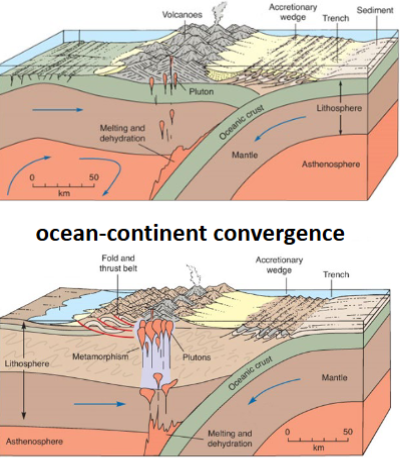
<ul><li><p>Ocean-Ocean convergence</p><ul><li><p>Accretionary wedge, sediment scraped off the down going slab → developed (folds &amp; thrust)</p></li></ul></li></ul><p></p><ul><li><p>Ocean-Continent convergence</p><ul><li><p>Fold and thrust belt on over-riding plate</p></li></ul></li></ul><p></p><ul><li><p>Continent-Continent convergence</p><ul><li><p>Deformation: High mountain belt forms by folding, foliations, thrust-faulting and doubling of the crustal layers</p></li><li><p>Fold and thrust belts either side of the mountain belt</p></li></ul></li></ul><p></p>
40
New cards

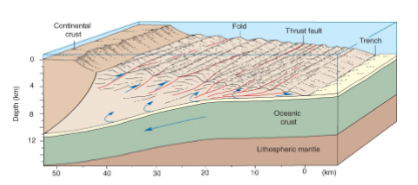
Accretionary wedge

  • Contains thrusts.

  • Thrust faults form above the down going oceanic crust.

  • Folds form between the thrust faults.

<ul><li><p>Contains thrusts.</p></li><li><p>Thrust faults form above the down going oceanic crust.</p></li><li><p>Folds form between the thrust faults. </p></li></ul><p></p>
41
New cards

Continent-Continent convergence: an old orogeny

  • Caledonian Orogeny → 400 mya, formed continuous mountain belt

  • Fold and thrust belt → Intense deformation (metamorphism and igneous intrusions
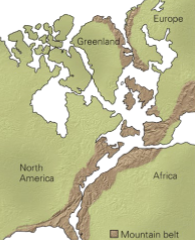
<ul><li><p>Caledonian Orogeny → 400 mya, formed continuous mountain belt</p></li><li><p>Fold and thrust belt → Intense deformation (metamorphism and igneous intrusions</p></li></ul><p></p>