8: The nervous system ( pre read)
 Call Kai
 Learn
Learn Practice Test
 Spaced Repetition
 Match
Match Flashcards
 Knowt Play
1/54

There's no tags or description
Looks like no tags are added yet.
Name | Mastery | Learn | Test | Matching | Spaced | Call with Kai |
|---|
No analytics yet
Send a link to your students to track their progress
55 Terms
functions of the nervous system
sensory functions
sensory or afferent nuerones
receptor detects stimulus
afferent neurone relays information to CNS
integratve
perception and interneurones
motor
motor or efferent neurones, information to effectos and elicits response
organisation of the nervous system
CNS : brain and spinal cord
peripheral nervous system: everything else
PNS subdivided into somatic NS, autonomic NS, and enteric NS
somatic nervous system
sensory neurones from the head, body and limbs
motot neurones to skeletal muscles
voluntary
autonomic nervous system
autonomic neurones from vice versa
motor neurones to smooth and cardiac muscle and glands
involuntary
enteric nervous system
part of the sns
GI tract
what 2 types of cells does nervous tissue contain
neurones
neuroglia
neurones
possess electrical activity, like muscle cells
repsond to stimulus and convert it to action potentials
ap then propogates along membrane
due to the ion movement: Na and K
what are the 3 parts of a neurone
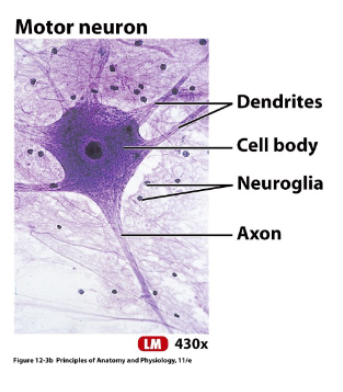
cell body
dendrites
axons
cell body
carries out normal metabolic processes
nucleus surrounded by cytoplasm containing normal organelles in any cell
dendrites
short, taper, branched form input part
axons
long thin
carries nerve impules to other neurones, glands or muscle fibre
axoplasm: substances synthesided in cell body needed in axon, so axonal transport carries it around
synapses at distal end - junction between neurones and other cells
gap is crossed by neurotransmitter
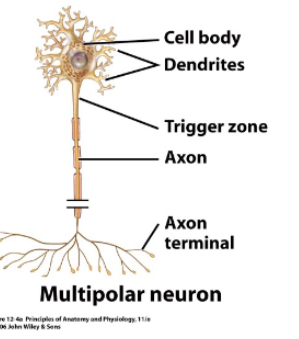
multipolar neurone
several dendrites, one axon
found in brain and spinal cord
motor neurones
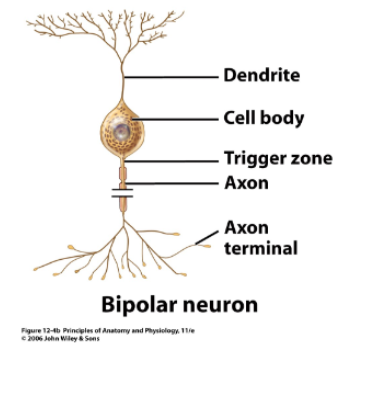
bipolar neurone
one dendrite, one axon
found in retina
unipolar neurone
sensory neurones
start as bipolar, axon and dendrite fuse into one which branches after short distance
both have structure and function of axon, but one has dendrites
cell bodies in ganglia
neuroglia
repair function: glial cells divide and replicate in adult NS, in case of injury the gllial cells multiply
no electrical activity
CNS of neuroglia
astrocytes
oligodendrites
microglia
ependymal cells
astrocytes
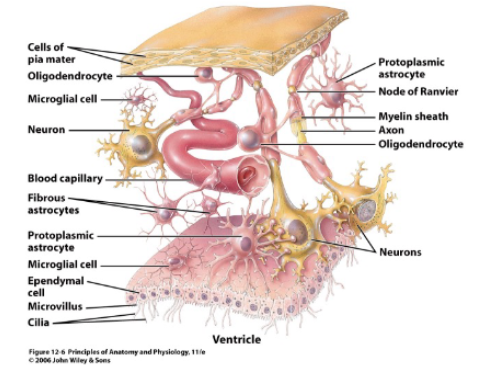
largest and most numerous of glial cells
star shaped:
protoplasmic- short branched processes in grey matter
fibrous- long unbranched processes in white matter
functions of astrocytes
contains microfilaments, give strength and assist in support of neurones
isolation- processes wrap around bv, form blood brain barrier , islates CNS from harmful substances
in embryo they secrete chemicals which help regulate growth
may help formation of synapses
oligodendrites
smaller, less processes
form and maintain yelin sheath around myelinated cns axons
myelin sinulates axons and increases speed of conduction
microglia
smaller thinner processes
phagocytes- removes debris, microbes and damaged nerve tissue
ependymal cells
cubic or columner
line ventricles
produces and circulates CSF
form blood- CSF barrier
PNS neuroglia
schwann cells
satelite cells
surrounf the pns axons and cell bodies
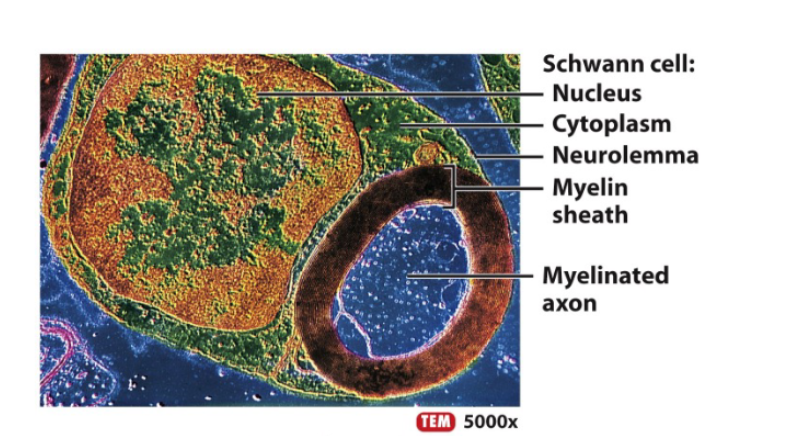
schwann cells
encircles PNS axons
form myelin sheath
each myelinates a single axon
involved in axon regeneration
satelite cells
flat cells , surround the cell bodies
structural support
regulate exchange of materials
grey and white matter
white- myelinated axons
grey matter- cell bodies, dendrites, unmyelinated axons, neuroglia. not myelinated
both contain bv
how do nerves work
changes in membrane potential
due to movement of ions via ion channels
graded and action potentials both caused by changes in membrane potential
ion channels in neurones
allow ions to move down electrochemical gradient
move from high to low conc, moving towards opposite chage
combination produces electrochemical gradient and creates electrical current
channels also allow movement in and out of cells:
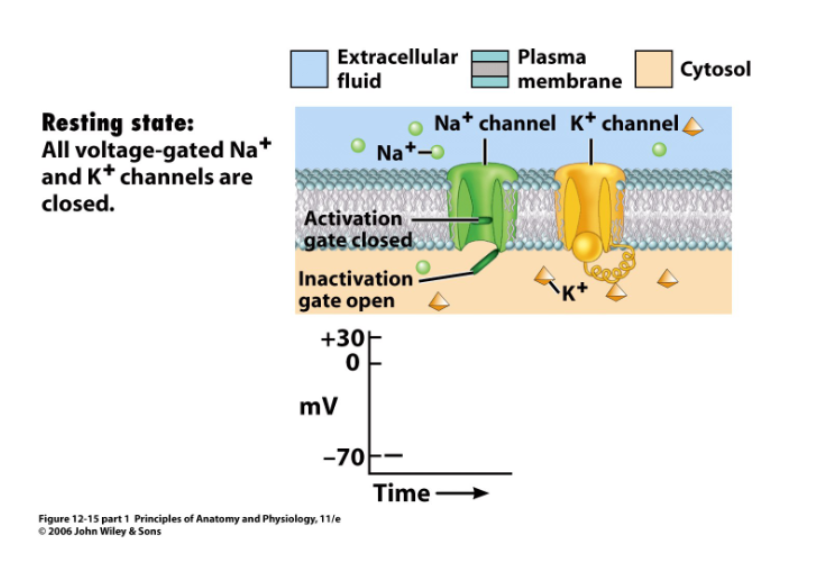
membrane not permable to ions, so has gates which open and close. movement of charged ions causes electrical current to flow
channel types
leakage
voltage gated
ligand gated
mechanically gated
leakage channel type
randomly open and close
more K than Na channels
K moves faster
membrane more permeable to K than Na
voltage gated
open in reponse to a change in membrane potential
involved in action potential generation and propagation
ligand gated
opens and closes in response to chemical stimulus
neurotransmitters, ions , hormones
mechanically gated
opens and closes in reponse to mechanical stimulus
eg vibration ( soung), pressure (touch). stretching
found in ears and skin
resting membrane potential
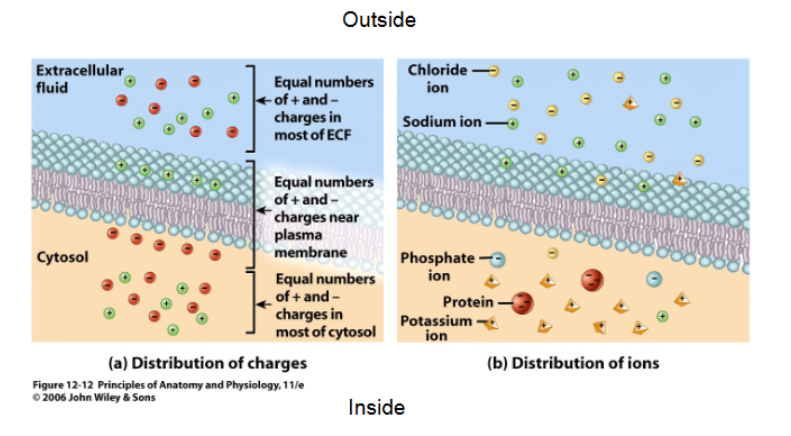
more negative ions inside the cell: more K and phosphate inside
more positive otside the cell, as more Na and Cl
ions leak both ways, but more K leaks out
membrane is less permeable to Na
negative ions bound to large molecules so not able to follow
ion pumps also move K in and Na out
resting potential maintainsed at around -70mV on outside
graded potentials
ligand or mechanically gated channels open
inside membrane becomes more:
negative- hyperpolarising
positive- depolarising
graded pot can hyper or depolarise membrane
larger the signal larger the potential
generally on cell body or dendrites
action potentials
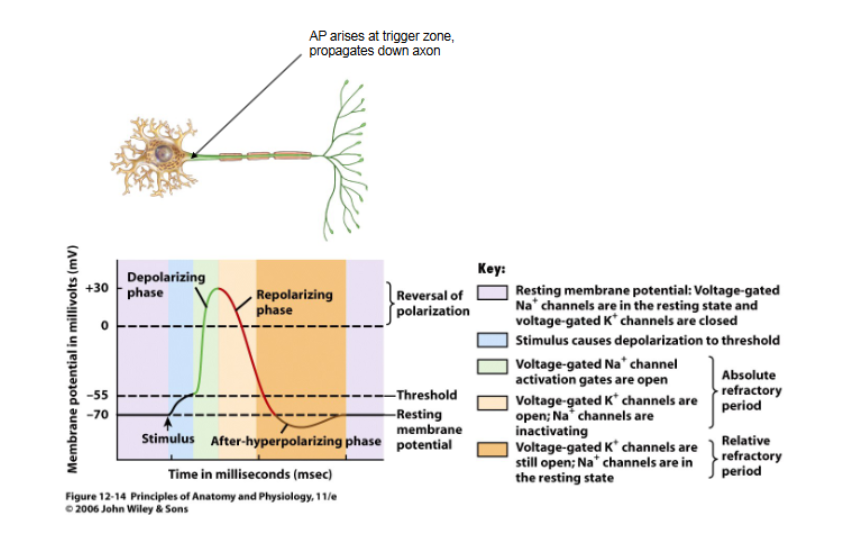
in 2 phases: depolarisation and repolarisation
uually on axons
if memrane gets to -55mV voltage gated Na channels open and ap occurs
depolarisation
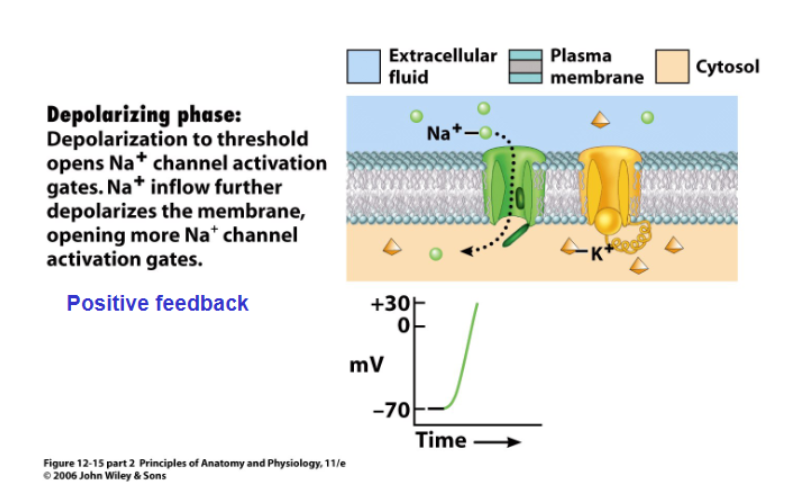
stimulus causes graded potential, depolarises membrane
if graded potential reaches threshold, will get action potential
voltage gated Na open, Na ions rush into cell so membrane becomes more positive
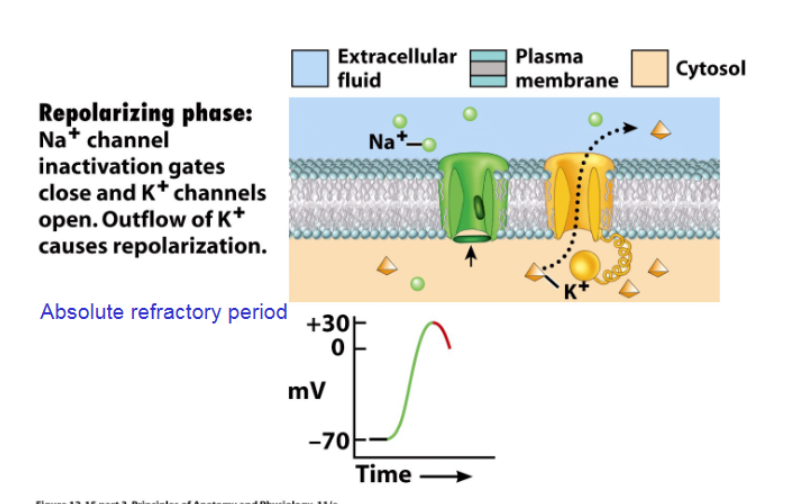
Na begin to close after ap generated
repolarisation
voltage gated K channels begin to open at the same time as Na channels
open more slowly, so become open as Na closing
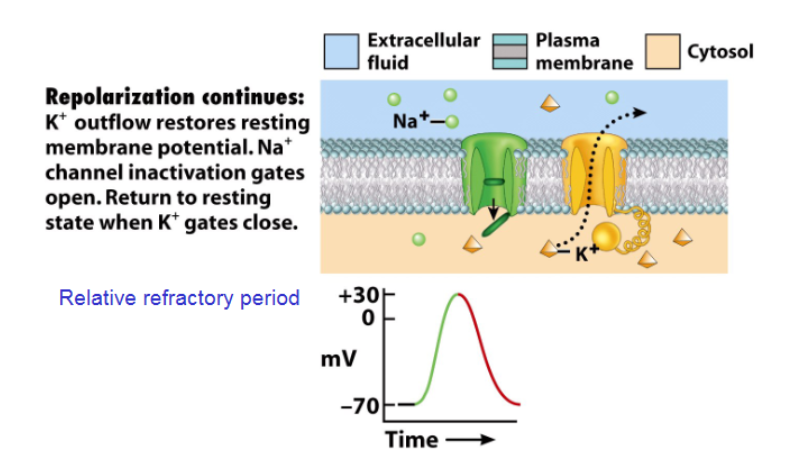
as Na inflow stops, K outflow begins
resets membrane to -70mV
refractory period
absolute- no stimulus will produce an ap. Na channels inactivated and cant be opened so they reset to resting stage
relative- larger than normal stimulus needed, Na channels reset and K channels still open as are slower
larger axons = larger surface area, more gates so faster
generation of an ap
conduction of nerve impulses
propogation
from trigger zone to axon terminals
continous conduction- unmyelinated fibres
saltatory conduction- myelinated fibres, leaps from node to node, and fast
effect of axon diameter
larger diameter fibres faster, with sorter refractory periods
stimulus intensity encoded by combination of frequ of APs
2 types of synapses
electrical
chemical
electrical synapses
gap junctions
ap cross drectly
cardiac and smooth muscle, CNS
have tubular connections, allow ions to flow from cell to cell
fast and synchronised
chemical synapses
has synaptic cleft
crossed by nueortransmitter
slower
unidirectional
AP opens voltage gated Ca channels
serves as a trigger to move vesicles containing transmitter to membrane and release into synaptic cleft
opens ligand gated Na channels in postsynaptic membrane and GP generated
final mechanism to remove transmitter
neurotransmitters
deoplarising- excitatory : EPSP
hyperpolarising- inhibitory : IPSP
acetylcholine
EPSP at NMJ, IPSP eg to slow heart rate
amino acids: glutamate and aspartate, GABA and glycine
many IPSPs occur in brain via GABA
More neurotransmitters
norepinephrine and epinephrine : involved in arousal from sleep, dreas and regulation of mood
dopamine: emotion, pleasure, maintains muscle tone
seratonin: sensory perception, temp regulation, mood, apetite and sleep
nitric oxide: vasodilation,
neurotransmitters (3)
encephalins- potent analgesic, similar to morphine and heroin
endorphins
noth involved in memroy, temp reg, onset of pubertu, depression, sz
modifying the effects of neurotransmitters
used in medicine
L-dopa: dopamine precurser, boots dopamine production used in parkinsons
amphetamines promote release of norepinephrine
botulinum toxin blocks ACh release
salbutamol- adrenergic agonist used to dilate airways in asthma
cocaine blocks dopamine reuptake, causes euphoria
neural circuits
diverging
converging
reverberating
parallel
diverging
one presynaptic neurone affects many post syaptic
motor neurones in the brain diverge to si]pinal cord
sensory neurones diverge to differing brain regions
signal amplified
converging
several presynaptic neurones converge to single post synaptic
single motot neurone at NMJ recieves converging input from differing brain regions
more effective stimulation or inhibition of post synaptic cell
reverberating
impulses sent through circuit repeatedly
circuit may be turned off by inhibitory neurone
breathing, co ordinated muscle activit, walking and short term memory
parallel after dishcharge
pre synaptic cll stimulates net, these neurones synapse with single post synaptic cell
last neurone recieves both IPSPS and EPSPS
regeneration and repair
nervous system plastic: changes due to experience
very limited regeneration- PNS will heal if cell body intact and schwann cells alive, CNS cannot heal