Waves Test - Physics
 Call Kai
 Learn
Learn Practice Test
 Spaced Repetition
 Match
Match Flashcards
 Knowt Play
1/59

There's no tags or description
Looks like no tags are added yet.
Name | Mastery | Learn | Test | Matching | Spaced | Call with Kai |
|---|
No analytics yet
Send a link to your students to track their progress
60 Terms
periodic (slowly) (repeated) motion:
period (T) - the time for one complete repeated pattern
frequency (f) (rapidly)
number of complete patterns per second (measured in Hz)
wave
vibration created by an initial disturbance that travels through a medium or a field
medium
the material a mechanical wave is traveling through
wave categories:
mechanical vs electromagnetic (gravitational)
pulse vs. periodic
Longitudinal vs. Transverse
waves transfer energy without…
waves transder energy without transferring matter
mechanical vs. electromagnetic: mechanical
needs a medium to travel through
mechanical vs. electromagnetic: electromagnetic
vibrares electric and magnetic fields, can travel through a vacuum (empty space)
Longitudinal vs. Transverse: longitudinal
the medium vibrates parallel to the direction the wave is traveling (Ex: sound)
Longitudinal vs. Transverse: transverse
the medium vibrates perpendicular to the direction the wave is traveling (Ex: light waves)
pulse vs. periodic: pulse
not repeated (becomes difficult to identify frequency or wavelength)
pulse vs. periodic: periodic (wave)
continouse wave train, with clear repeated patterns
wave ingredients: something that will vibrate
this determines wave type and wave speed
wave ingredients: an initial disturbance
this determines the wave anatomy (amplitude, wavelength, frequency and period)
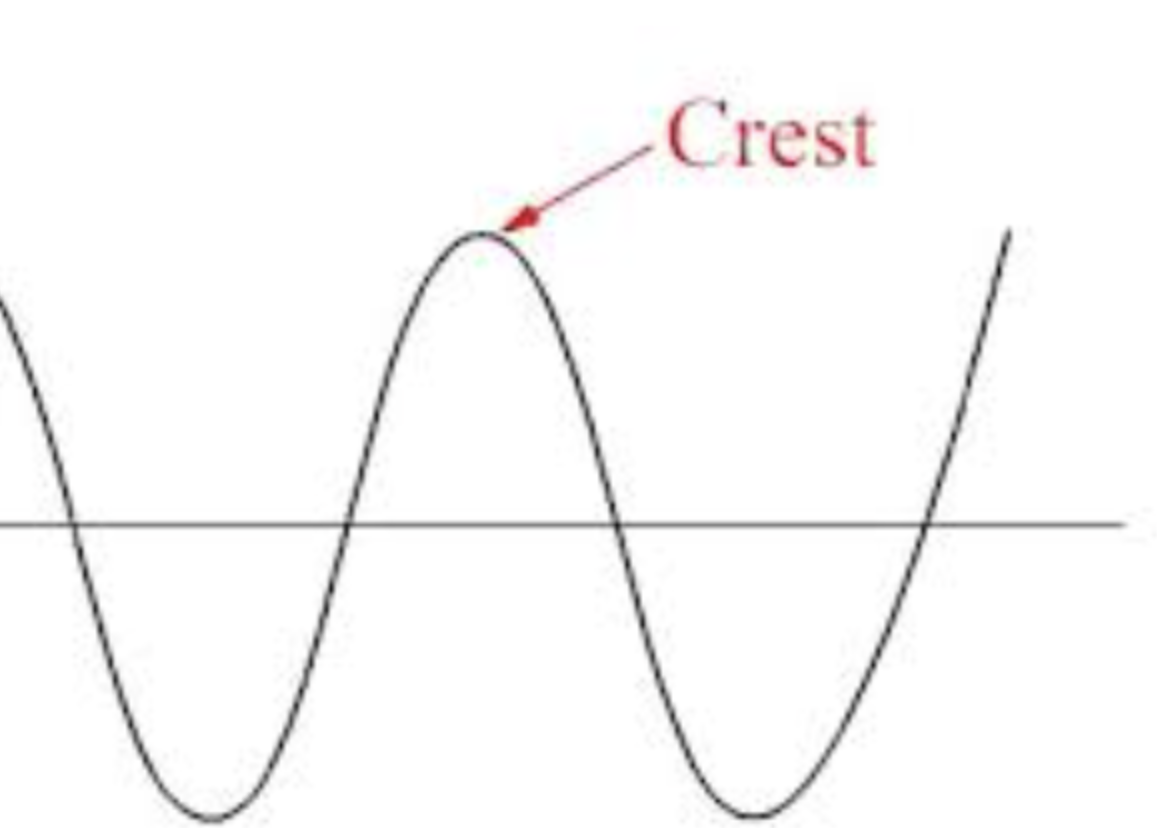
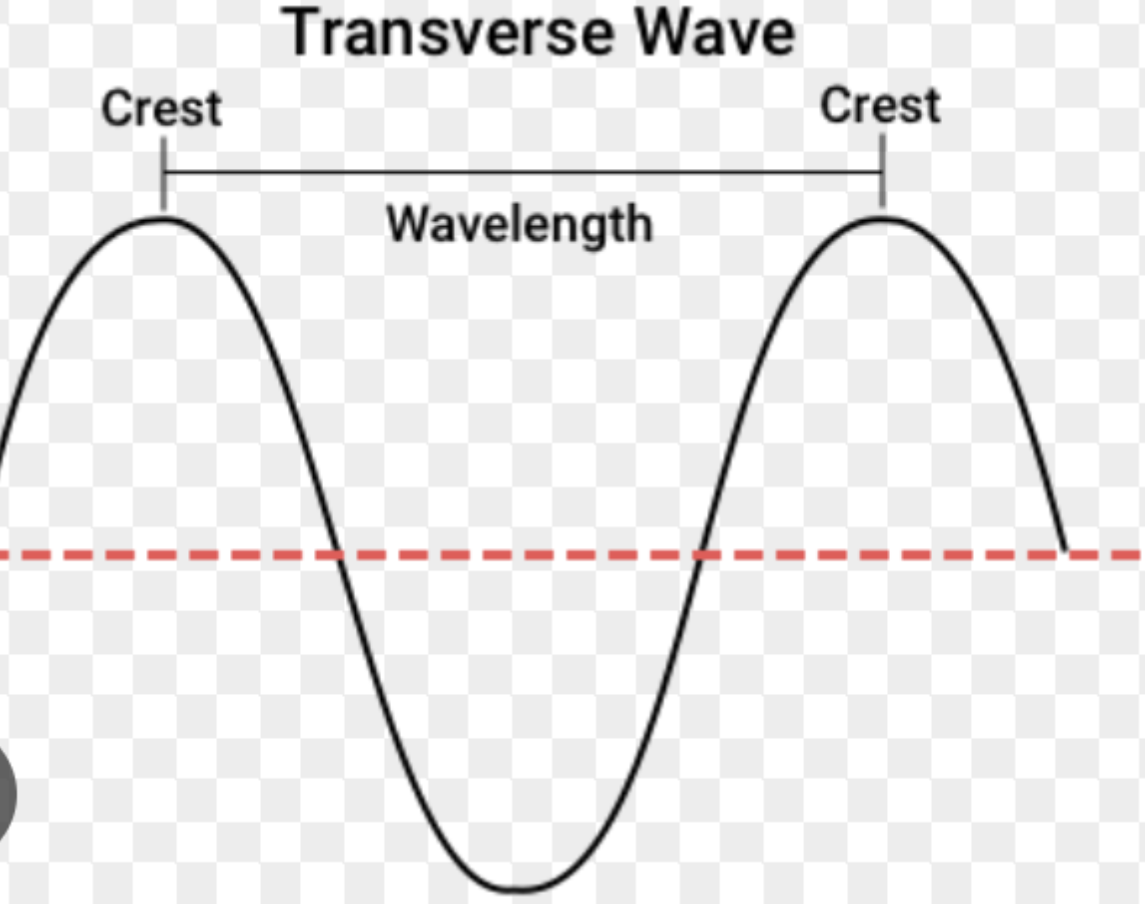
physical measurments: crest
absolute highest point
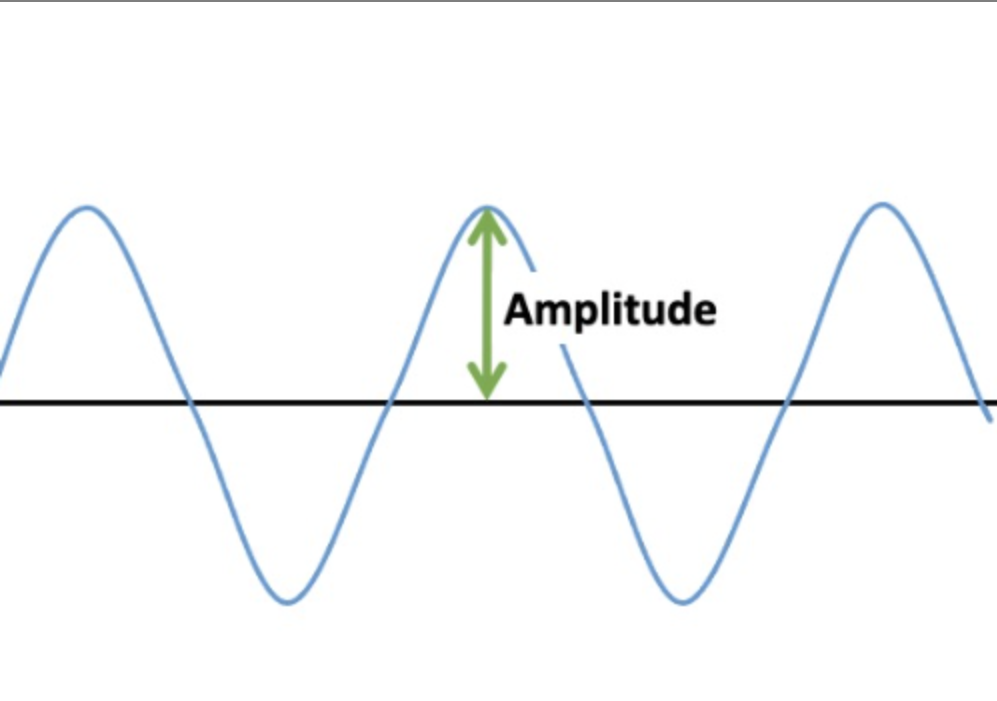
physical measurments: amplitude
height measured from equilibrium
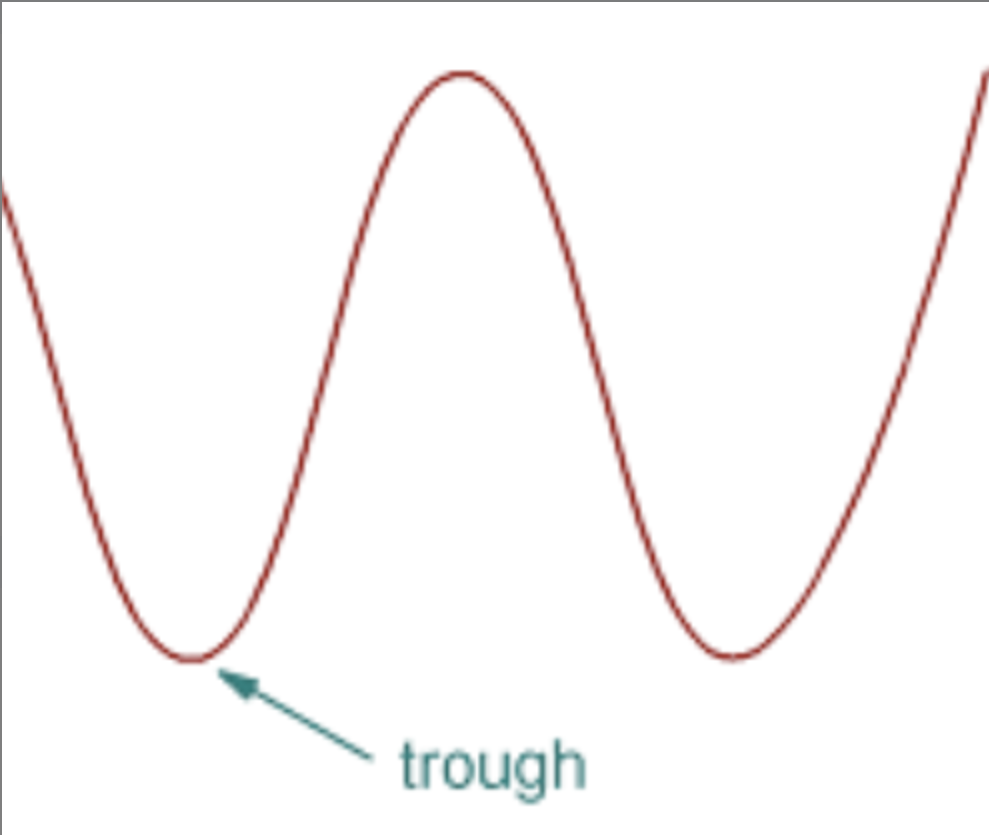
physical measurments: trough
the absolute lowest point of a wave
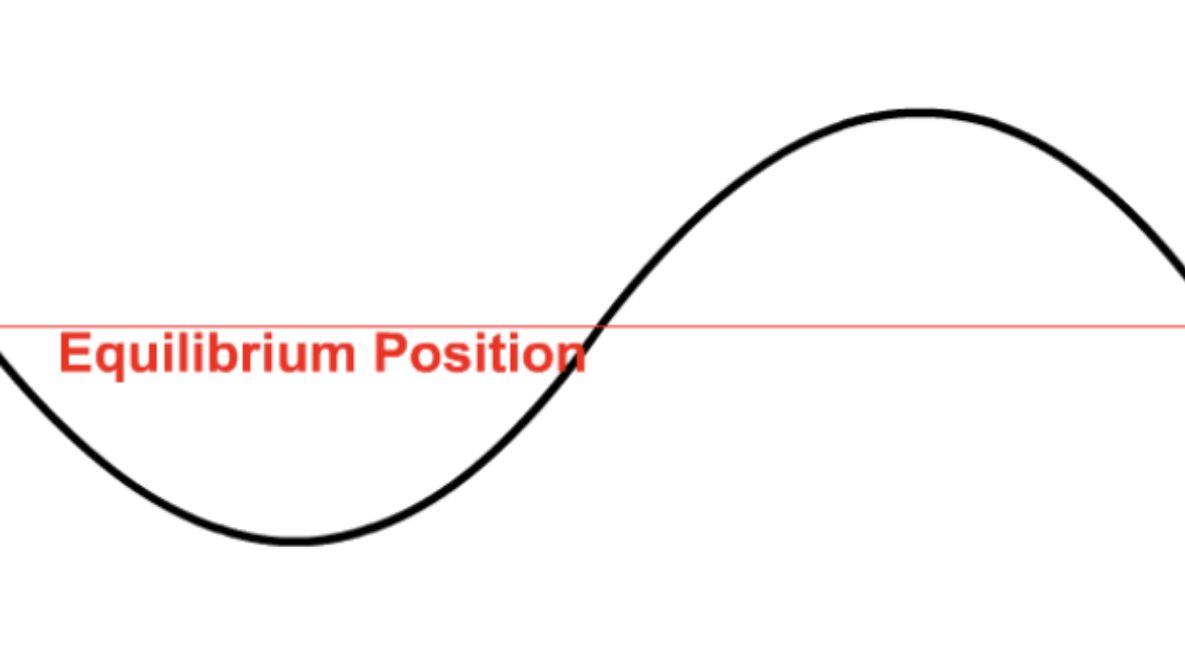
physical measurements: equilibrium
the resting, undisturbed state of the medium before a wave passes through it.
physical measurements: wavelength
length of one complete wave (symobl: λ)
time based measurements: frequency
frequency (f): number of waves per second (Hz)
frequency = wave/sec
time based measurements: period
period (T): the time for one wave cycle to pass (s)
period = sec/wave
time based measurements: velocity
velocity (v): speed the wave travels (m/s)
resonance
when multiples of ½ wavelength fit into the size of the object you get large amplitude vibrations
only changing the MEDIUM can ….
only changing the MEDIUM can change the wave velocity
V=λf makes it look like frequency increases velocity, but this isn’t true becuase..
V=λf makes it look like frequency increases velocity, but velocity is actually the constant
speed of sound
in air: about 342m/s (Exact depends on temp)
speed of electromagnetic waves
in vacuum (or air): 3×10^8 m/s
T=
T= sec/wave
f=
f = wave/sec
the speed of the wave refers to
how far a given point (ex: crest) on the wave travels per unit of time
two equations that can be used to detmine speed of a wave
v=d/t and v=fλ
the velocity of a given type of wave is determined by
the velocity of a given type of wave is determined by the medium
in the equation v=wavelentght (f) what happens
frequency increases, wavelength decreases and
frequency decreases, wavelength increases
how do we see things? light travels from objects to eyes, so objects either
how do we see things? light travels from objects to eyes. Objects either: give off thier own light or reflect light.
sound - what do we hear?
sound:
velocity: constant for all sounds (in a given medium)
Pitch:
frequency: high f, high pitch and low f, low pitch
wavelength: long wavelength, low pitch and short wavelength, high pitch
period: long T, low pitch and short T, high pitch
volume:
amplitude: large A - loud and small A - quiet
light - what do we see?
light:
velocity: constant (in a given medium)
color or type of light: frequency, wavelength, period
brightness or intensity:
amplitude: large A, bright and small A, dark
(when you get to the quantum scale, frequency determines energy)
visible spectrum
red- long wavelength, low f
violet- short wavelength, high f
electromagnetic spectrum (biggest to smallest wavelength)
radio, microwaves, infrared, visible light, ultraviolet, x-rays, gamma rays
wave behavior: what things do waves do and how does it change the wave
reflection, superposition (constructive/destructive interference and interference patterns like beats/double slit, standing waves), diffraction, refraction, doppler effect
reflection
some of a wave will bounce backward when it reaches a new mediun
reflection: changes
reflection changes: direction and amplitude
reflection: stays the same
reflection stays the same: medium, speed, frequency, wavelength, period
reflection examples
happens with string/slinky, waves in water, echos for sound, and mirrors for light
when waves collide, do they pass through each other or bounce off?
all waves pass through each other
superposition
waves can overlap. This can cause constructive interference (adding up) or destructive interference (canceling out).
superposition: changes
superposition changes: amplitude
superposition: stays the same
superposition stays the same: medium, velocity, frequency, wavelength, period
superposition examples
constructive and destructive happen with string/slinky, both happen with water waves
sound: constructive-more people talking and sound gets louder, destructive-noise cancelling headphones
light: constructive happens (more light is brighter) and destructive happens with single slit result
beats
beats-interference pattern
beat frequency=frequency difference
standing waves
reflection-waves bounce back off the end of the string
interferecne-incident and reflected waves interfere
node
always destructive
antinode
maximum constructivr
interference patterns: standing waves
standing waves: reflection, interference, nodes/antinodes, harmonics
interference patterns: double slit
double slit: diffraction and interferece
diffraction
waves bend around a new medium, and spread through openings. (smaller opening/larger waves=more diffraction)
diffraction changes:
changes diffraction: direction and amplitude
diffraction stays the same
stays the same diffraction: medium, speed, frequency, wavelength, period
examples for diffraction
doesn’t happen with string/slinky
in water it defracts around rocks, going through an opening and spreading out
sound can go through doorway and spread out
for light radion waves can bend over obstacles
constructive interference
when two or more overlapping waves meet in a way that their crests and troughs perfectly align
destructive interference
where two or more waves meet and combine, causing their displacements to cancel wach other out. results in a wave with a smaller amplitude than the individual waves.