SLHS 539: 4/21 "Traumatic Brain Injury"
 Call Kai
 Learn
Learn Practice Test
 Spaced Repetition
 Match
Match Flashcards
 Knowt Play
1/42

There's no tags or description
Looks like no tags are added yet.
Name | Mastery | Learn | Test | Matching | Spaced | Call with Kai |
|---|
No analytics yet
Send a link to your students to track their progress
43 Terms
What is TBI?
TBI is caused by a blow to the head or violent head movement (similar to what happens in a high-impact motor vehicle accident.)
The term “TBI” is only utilized when there is evidence of…
Total or partial functional disability or psychological impairment, or both.
Is TBI developmental or acquired?
Acquired
What can cause TBI?
blow to head
causes blood vessels to tear, resulting in a hematoma putting pressure on a specific part of the brain or causing a blood clot
an object striking to the head
can break through the skull and penetrate the brain or push bone fragments into the brain
—>contusion: blow to the head can bruise the brain, damaging tissue located under the point of impact
What are some examples of non-traumatic brain injuries? (5)
Anoxic injuries caused by anesthetic accidents, hanging, choking, near-drowning, severe blood loss
Infections of the brain like Meningitis and Encephalitis
CVA (stroke)
Brain tumors
Metabolic disorders that affect the brain such as insulin shock, liver and kidney diseases
What is the prevalence of TBI?
How many individuals sustain a TBI each year?
How many die from TBI?
How many experience the onset of a long-term disability due to a TBI?
1.5 million
50, 0000
80-90,000
What groups have the highest risk of sustaining a TBI?
In every age group, are TBI rates higher in males than females?
children age 0-4
teens 15-19
adults 75+
What is an SLP’s role in TBI?
SLPS’s are involved in screening, assessment, and treatment of persons with TBI
identifying risk factors for TBI
providing prevention information
conducting comprehensive assessment
advocating for individuals with TBI and their families
educating other professionals
T/F: A cerebrovascular accident is a type of TBI.
False
TBI: Primary Injury Types
When the injury causes the TBI directly
Nonacceleration Injuries
Acceleration Injuries
linear acceleration forces
rotational acceleration forces
Nonacceleration Injuries
Primary Injury (directly causes TBI)
Moving object strikes stationary object
Relatively rare
Tends to be less severe
Acceleration Injuries
Primary Injury
Linear Acceleration Forces
mvt of the brain inside the skull
will cause a coup (where hit your head) and contrecoup (damage at opposite site due to the brain’s inertia - where your brain bounces around - imagine brain like jello inside skull)
Rotational Acceleration Forces
skull is halted by impact; brain continues to rotate with skull
leads to diffuse axonal injury
Examples of Primary Damage from TBI (occurs at moment of trauma)
diffusion axonal injury
coup and contrecoup injuries
intracranial hemorrhages
extra-axial
intra-axial
Pathophysiology of Traumatic Brain Injury: Diffuse Axonal Injury (DAI)
Diffuse Axonal Injury (DAI): caused by a significant acceleration/deceleration injury
ex. a fall from greater than 6 ft. a fall with high angular momentum or a major motor vehicle accident
Pathophysiology of Traumatic Brain Injury: Focal (3)
Contusions
Lacerations
Hematomas (subdural and epidural)
What are the different types of diffuse axonal injuries?
compression
tension (pulled apart)
shearing force (twisted)
Angular Acceleration Injuries
Define
Where do most lesions occur?
The brain rotates at an angle that causes abrasions, lacerations, and twisting/shearing forces —> diffuse axonal injury and hemorrhage and cranial nerve trauma
Most lesions occur in deep white matter (neuronal fibers that interconnect with different brain regions and brain stem.
Where are the most at risk regions for TBI in the brain? (2)
Orbital Frontal Cortex
Anterior Temporal Poles
Acquired Sociopathy
Damage in Orbital Frontal Cortex
Deficits in social cognition
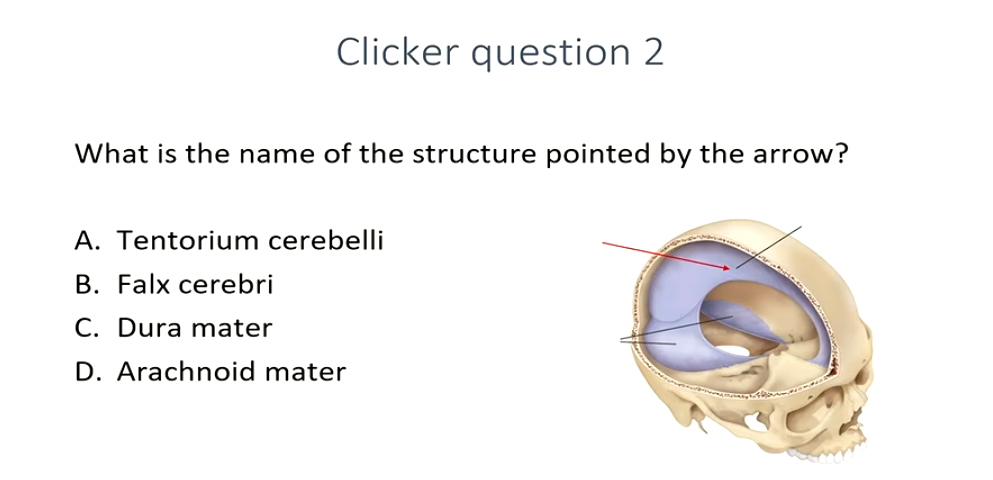
B
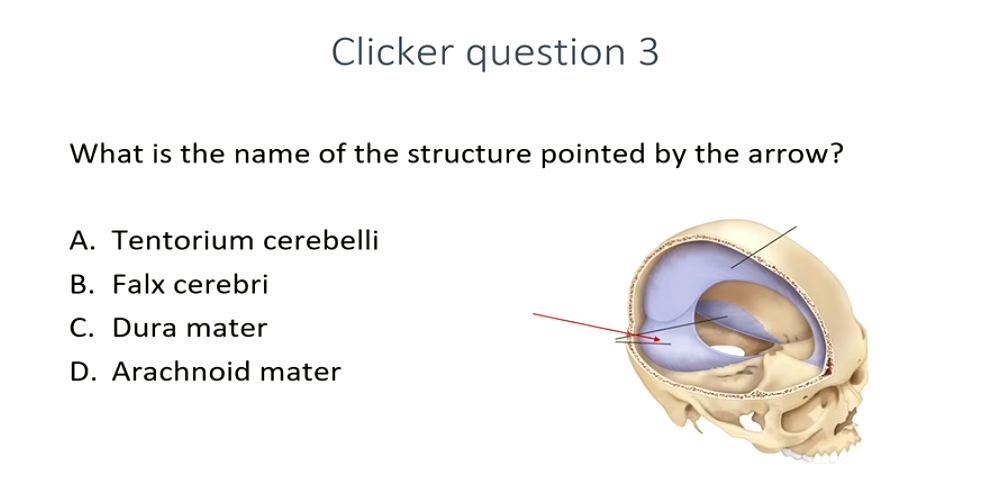
A
What happens when part of the brain is compressed by a subdural hematoma or is expanded because of a contusion?
What do hypoperfusion and herniation lead to?
It is displaced (and can herniates) from one cranial compartment to another.
Can lead to further brain damage in the form of pressure necrosis and infaraction, often remote from the site of the primary injury diaschisis.
Decompressive Craniectomy
A neurosurgical procedure involving the removal of a large section of the skull to relieve severe, refractory intracranial pressure (ICP) and prevent fatal brain herniation, usually caused by traumatic brain injury (TBI) or stroke
Hemorrhage vs Hematoma
Extra-Axial vs. Intra-Axial Hemorrhages
Hemorrhage = the event —> there has been a bleed
Hematoma = the result —> collection of blood in places it shouldn’t be (the bruise)
Extra-Axial = epidural hemorrhage, subdural hemorrhage, subarachnoid hemorrhage
Intra-Axial = intracerebral hemorrhage, intraventricular hemorrhage
What are some examples of secondary damage from TBI?
Cerebral Edema: swelling
Infection
Hypoxia
Alterations in:
volume of cerebral blood flow
release of neurotransmitters
neural sensitivity
metabolic processes
What does “TBI Severity” refer to?
Where are assessments of severity derived from?
Are the boundaries between classifications of mild, moderate,
The amount of acute disruption of brain physiology or structure.
They are derived from clinical evaluations
longer LOC (loss of consciousness) = more severe
What are the initial presentation clinical features of mild traumatic brain injury?
How long does LOC last?
Period of Confusion
Symptoms
Are there typically focal findings on the remainder of the neurological examination?
no longer than thirty minutes
period of confusion (post-traumatic amnesia, PTA) = up to 24 hours
any combination of headaches, neck ache, dizziness, and nausea
typically there are no focal findings throughout the remainder of the neurological examination
Neural Injury
Cognitive deficits (attention, memory, and executive function)
Non-Neural Injury
Systemic Deficits (head/neck ache, dizziness, poor sleep)
Behavioral Deficits, Mental Health Issues (depression, anxiety)
Someone who has mild TBI usually recovers within… (how much time)
If the injury is more severe, recovery can take... (how much time)
Modal Patient (LOC < 1 minute, PTA (Post-traumatic amnesia) 20-40 minutes, usually recovers within 3 months
If injury is more severe (LOC > 10 minutes, PTA > 4-6 hrs) recovery can take months to years or not at all
Persistent Post-Concussive Syndrome (PPCS)
When mild TBI patients have symptoms at 1 year
What are the initial presentation clinical features of moderate traumatic brain injury?
How long does LOC last?
What type of injuries might the individual sustain?
Is imaging visible with medical imaging?
1/3 to ½ of individuals will have lifetime difficulties with…
6 hours
Fractures, bruises, bleeding (subdural hematoma)
injury is visible with medical imaging
learning and daily activities
What are the initial presentation clinical features of severe traumatic brain injury?
Coma duration
What percentage of individuals will have lifetime disabilities
longer than 6 hours
80%
T/F: The severity of the injury does not equate to the functioning level of the patient.
True
What are the symptoms of a concussion?
Dizziness
Nausea
Dazed feeling
Visual symptoms
Irritability
T/F: Mild brain injury, mild traumatic brain injury (MTBI), mild head injury (MHI), minor head trauma, and concussion may be used interchangeably.
T
Mild traumatic brain injury vs. Concussion
MTBI/concussion = short-lived loss of brain function due to head trauma that resolves spontaneously
concussion = function interrupted but no visible structural damage to the brain
How are concussions diagnosed?
Simple Concussion: symptoms gradually resolve, and the patient returns to normal function in 7-10 days
Complex Concussion: symptoms persist and thought processes are affected
Patients with repeated concussions would fall into which category diagnosis of concussion?
Complex Concussion
When can repeated concussions result in cumulative neurologic and cognitive deficits?
Repeated mild brain injuries occurring over extended period (ex. months or years) can result in cumulative neurologic and cognitive deficits.
When can repeated concussions be fatal?
Repeated mild brain injuries occurring within a short period (ex. hours, days, weeks) can be fatal.
Second Impact Syndrome
An individual sustains a second head injury before the symptoms from the first head injury have resolved.
What is the leading cause of death in sports-related accidents?
TBI