ENSC 201- Final Exam-Power Points
 Call Kai
 Learn
Learn Practice Test
 Spaced Repetition
 Match
Match Flashcards
 Knowt Play
1/66

There's no tags or description
Looks like no tags are added yet.
Name | Mastery | Learn | Test | Matching | Spaced | Call with Kai |
|---|
No analytics yet
Send a link to your students to track their progress
67 Terms
Agriculture
Considered the food we grow and eat-domesticated plants and animals.
Origins of agriculture
Developed independently around the world dating back 9,000- 11,000 years.
First Agricultural Revolution
Also called the Neolithic Revolution
Transition from hunting & gathering to farming & settlement.
Societies flourished by improving their capacity to expand agricultural production.
Second Agricultural Revolution
Period of technological innovation.
Increased yields=better diets, longer lifespans, and rise in population
Some technological advancements include:
enclosures, land privatization, tenant farmers.
Efficient machinery (wheel-less plough, threshing machine).
Crop rotation, drainage.
Third Agricultural Revolution
Also called the Green Revolution
Agriculture production was increasing but mostly through expanding crop areas.
Technological innovations included
High-yielding varieties of cereals
Expansion of irrigation infrastructure
Mechanized cultivation
Three kinds of Agricultural land
Arable Land
-Occupied by crops that required annual replanting (5 year periods).Permanent Cropland
-Where crops (such as coffee, tea, fruit) do not require annual planting.Permanent Pastures
-Used primarily for grazing livestock.
What does agriculture’s role in food chains reveal about energy use and global meat‑consumption trends?
Key Concepts
Agriculture functions as a food chain, with energy lost at each trophic level.
Lower trophic levels = more efficient energy use.
Examples
Land: Grasses → Cows → Humans
Ocean: Diatoms → Shrimp → Tuna → Humans
Implications
Eating lower on the food chain increases usable energy.
Lower‑trophic seafood (e.g., mackerel, sardines, herring) is more efficient than tuna/salmon.
Trophic levels differ in carbon, water, and land footprints.
Global Meat Trends
Canadians eat ~70 kg meat/year (global avg: 34 kg).
Demitarians aim to cut meat/dairy by 50%.
Meat consumption varies by region and income but is rising globally.
If trends continue, livestock feed demand will double by 2050.
Livestock Revolution
Traditional livestock grazed on natural vegetation; herd sizes were limited by local environmental conditions.
Modern systems are shifting to industrial production.
Animals are now kept in high‑density, confined facilities with feed and water supplied directly.
Expansion of industrial livestock raises health and environmental concerns, especially from manure management.
Land Use Change
Domestication of plants and animals led to dramatic changes in land cover.
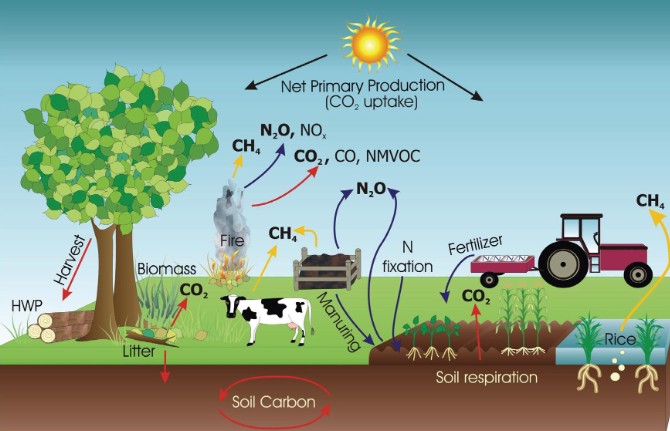
Agriculture in Canada
Over 6% if Canada’s total land area is agricultural land.
Canada’s dominant crops=
wheat
Canola
corn
barley
soybeans
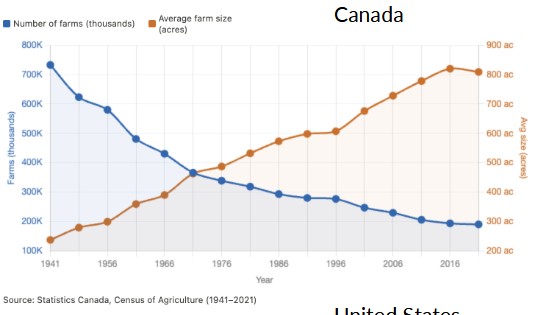
What has decreased in Canada?
The number of farms, sizes of farms have also been decreasing.
Core message= agricultural consolidation or a structural shift that has reshaped rural economies across both US and Canada over the past 80 years.
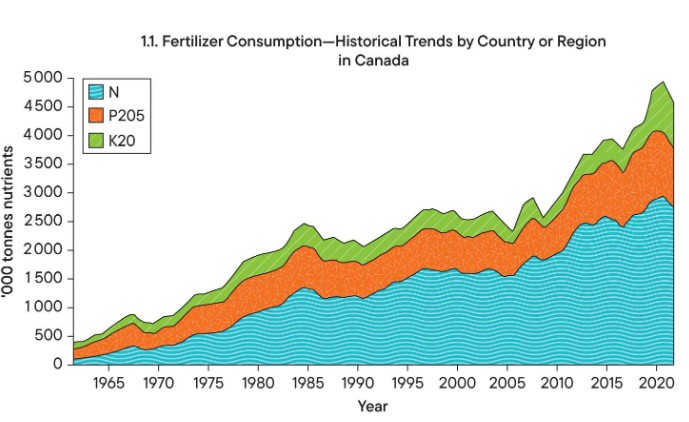
Fertilizer Consumption
Additions have increased over time.
What are the main critiques of the Green Revolution and the role of monoculture in modern agriculture?
Key Critiques
Reliance on monocultures (single‑crop systems).
Lower nutritional quality in some high‑yield crops.
Unequal access to Green Revolution technologies.
Loss of traditional plant varieties and genetic diversity.
Stagnating yields — growth has not continued as expected.
Heavy fertilizer and pesticide use, leading to environmental harm.
Focus on reducing losses from pests, diseases, and weeds, often through chemical inputs.
Monoculture (Definition)
Growing one crop species over large areas, season after season.
Dominant in industrial agriculture (e.g., vast fields of only corn, soy, or wheat).
Pesticides (History)
Trend of highly persistent compounds moving towards less persistent over time despite a decrease in persistence, pesticide use is high and can impact pollinators.
Decline in Pollinators
Due to the heavy use of pesticides and herbicides in conventional agriculture.
Land use changes and agrochemicals.
What is Integrated Pest Management (IPM) and what are its core steps?
IPM Overview
Reduces yield losses from pests while minimizing negative impacts of pest control.
Treats crops and pests as part of a wider agro‑ecosystem.
Prioritizes biological, cultural, and physical methods over chemical pesticides.
Core Steps
Set action thresholds — don’t spray unless pest levels justify it.
Identify pests — many insects are harmless.
Prevention — crop rotation, pest‑resistant varieties, good field practices.
Control — use the least risky method first (pheromones, traps, weeding, etc.).
What defines organic farming and what inputs are prohibited?
Organic farming sustains soil, ecosystems, and human health using ecological processes and biodiversity, not harmful external inputs.
Prohibits synthetic pesticides, mineral fertilizers, GMOs, hormones, antibiotics, synthetic preservatives, sewage sludge, and ionizing radiation.
Standards regulate livestock care, crop production, processing, storage, and pest/disease management.
What are Genetically Modified crops and what key issues surround them?
GMOs are gene‑engineered organisms altered in ways not possible through natural reproduction.
Traits engineered for: colour, shelf life, pest/disease resistance, herbicide tolerance, etc.
Canada: ~140 GMO foods approved, ~75% of processed foods contain GMOs; 4th largest producer (mainly canola, corn, soy, sugar beets, alfalfa).
No mandatory labeling in Canada; 64 countries require it.
Examples: herbicide‑resistant corn, FLAVR SAVR tomato, virus‑resistant squash.
Issues: patent restrictions, seed‑saving prohibited, liability for field contamination, challenges for organic farmers due to pollen/seed drift.
What innovations may occur in the Fourth Agricultural Revolution?
Precision farming — specialized tech to minimize inputs and maximize growth.
Conservation tillage — minimal soil disturbance to reduce erosion and retain moisture.
Improved plant varieties — breeding for hardier, more resilient crops.
Seed treatments — insecticides applied directly to seeds, reducing the need for spraying.
What is a mineral?
Naturally occurring inorganic solids that possess an orderly internal structure and a definite chemical composition.
There are 6,000 different compounds identified.
These include metals that are used for a wide range of purposes including:
Iron
aluminum
Lithium
Coppor
As well as precious metals (gold and silver)
And Diamond (non-metal)
What is a rock?
Naturally occurring combination of one of more minerals.
What country is the leader in exports of minerals and metals?
Canada.
2023= 60 minerals and metals worth $72 billion.
Gold accounts for 20%
Canada’s critical minerals list identifies 34 minerals and metals.
Gold in Canada
fourth largest gold producer globally (~200 tonnes).
Jewellery is the largest driver of global demand.
Increasingly becoming used for technology related purposes.
The Golden Triangle
A top exploration project in Canada (BC).
Prior to becoming Canada, the area was a hub for prospectors looking to strike gold.
Three areas that were explored early on:
-Stikine- where it started in 1861.
-Cassiar- largest gold nugget was found.
-Atlin- offshoot of the world-famous Klondike Gold Rush.
What happened when gold mining in the Yukon?
In 2016, a mummified wolf pup was found in the vicinity of the Klondike River.
-The mummified pup still had intact hair, flesh, and skin which is incredibly rare in North America.
Potash
A group of minerals and chemicals that contain potassium (K). It was discovered in the 1940s during an exploratory drill for petroleum.
Primarily used to producer fertilizer.
Canada is the largest producer.
What is the Ekati Diamond Mine and why is it significant?
First diamond mine in Canada (discovered via indicator minerals in alluvial deposits).
Helped make Canada the 3rd largest producer of rough diamonds (2019).
One of eight Canadian diamond mines; five active as of 2023.
Major economic contributor to NWT and northern regions.
Projected $9.5B value over 25 years.
Strong commitments to Indigenous hiring, Indigenous-owned contractors, and training programs.
Mine Tailings
Waste minerals left over after valuable minerals or metals have been extracted from ore during processing.
When the ore is mined it only contains a small percentage of the target mineral (1-2 %)
After extraction, its crushed an ground into a slurry, the mineral is then separated out.
remains= original rock and water, which can contain arsenic, mercury and cyanide
It is one of the concerns of mining.
Acid Mine Drainage
Can form at active mines, abandoned sites, and waste rock or tailings piles.
Acidic, metal rich water produced when sulfide minerals (especially pyrite) are exposed to oxygen and water during mining operations
Types of Mines
Open-pit with wet tailings
Open-pit placer operations with a pit lake used for recirculating water
Legacy underground operations adjacent to a glacial river.
Mountaintop removal coal mining
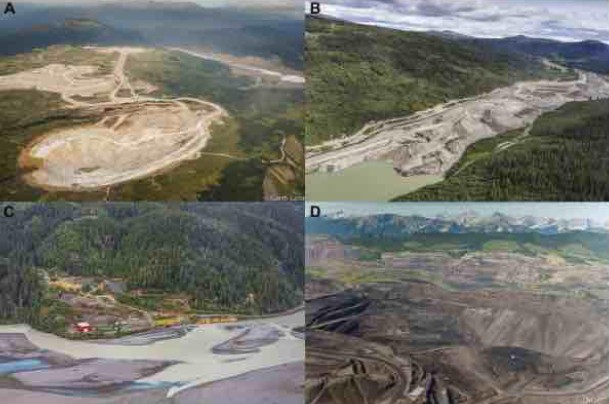
Concerns about mining
After hydrology and temperature
Cause habitat modification and loss
Release pollutants
What is coal?
Combustible, carbon-rich material formed from the remains of land-based plants buried hundreds of millions of years ago and subjected to tremendous heat and pressure.
The longer it is subjected to heat and pressure, the higher its “rank” and the more carbon content will be contained per unit of weight.
There are different classifications of rank- Lignite and subbituminous coal (brown coal) are the low ranks. Bituminous coal and anthracite (hard coals) are high-ranked coals.
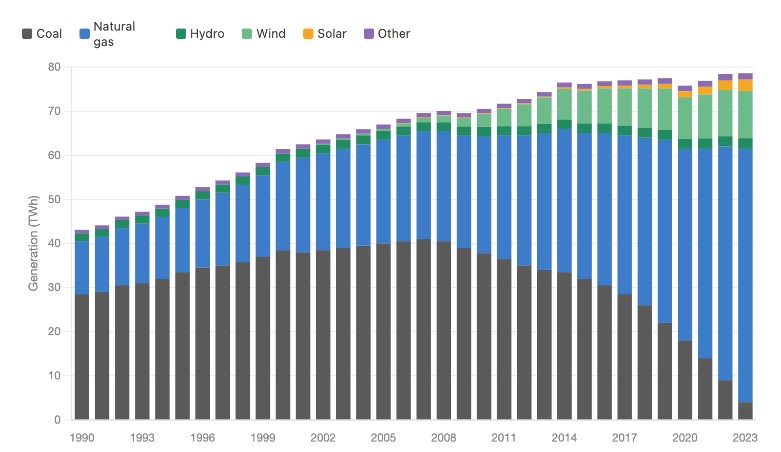
Trends in electrical generation in Alberta
Coal-fired power generation- ended in June 2024.
Coal Mining- continues though the number of mines has decreased over time due to the transition to natural gas.
Legacy Coal Mining Contamination in Crowsnest Pass
Mining occurred on and of through 1900s to 1980s.
Location (Tent Mountain) is crucial for drinking water for the prairies and habitat for species at risk, including bull trout and western cutthroat trout.
Sediment core testing revealed increased sediments during the years that mining occurred.
Testing fish= higher levels of Selenium.
Coaling mining in BC (Elk Valley)
Water pollution from the mines flow from Elk River into Lake Koocanusa (a reservoir).
Long standing concerns about the impact of the pollution on vulnerable fish species
Teck Coal Limited fined $60 million (March 26, 2021) for violating s.36(3) of the Fisheries Act by depositing a deleterious substance into fish‑bearing waters.
Largest pollution‑related sentence ever under the Fisheries Act.
$58M to the Environmental Damages Fund; $2M in fines to the Receiver General.
Investigation found coal mine waste rock leachate (selenium, calcite) entering the upper Fording River from the Fording River and Greenhills operations (since 2012).
Athabasca Oil Sands
Major oil sands development north of Fort McMurray along the Athabasca River.
One of three regional deposits (others: Peace River, Cold Lake).
Development began in the 1960s; became financially viable in the mid‑1990s.
Canada has the 3rd‑largest oil sands reserves globally.
By 2001, crude bitumen production surpassed conventional oil in Alberta.
Today, ~80% of Canada’s oil comes from Alberta’s oil sands.
Bitumen = thick, heavy oil extracted from sands.
How are oil sands extracted and how is bitumen made usable?
Surface mining (≈20%)
Clear land → truck‑and‑shovel mining → hot‑water separation → froth treatment → tailings ponds.
In‑situ (≈80%) — SAGD
Two horizontal wells → steam melts bitumen → drains to lower well → 80–90% water recycled → smaller land footprint but energy‑intensive.
Upgrading
Bitumen is either upgraded to synthetic crude or diluted (dilbit) so it can flow through pipelines.
Athabasca Oil Sands Environmental Impacts
Boreal forest and wetland (fragmentation, carbon storage, critical role of wetlands lost—habitat, regulate flow, recharge aquifers, natural filters)
Athabasca River (water withdrawals, water quality issues)
Air quality (GHGs, criteria air contaminants)
Wildlife (death of 1,600 ducks)
What is the Trans Mountain Pipeline and why is it controversial?
Carries crude oil and refined products from Edmonton → Burnaby; ~1,150 km, built 1953.
Ends at a marine terminal where oil is loaded onto tankers.
BC–Alberta conflict over spill risks.
Kinder Morgan withdrew; federal government took over.
Court challenges: flaws in NEB review (marine impacts, SARA species, Indigenous consultation).
New review found significant adverse environmental effects.
Expansion adds a second line, boosting capacity 300,000 → 890,000 barrels/day for increased exports.
Public opinion remains divided.
What are major concerns associated with natural gas fracking in Canada?
Fracking uses toxic chemicals and large volumes of water.
Risks: groundwater contamination, air pollution, earthquakes, surface/noise pollution.
Saskatchewan: second‑largest oil producer; most fracking with fewest regulations.
Public receives limited environmental information—mostly from government and industry.
What are the key advantages and concerns of wind energy?
Advantages
Converts wind’s kinetic energy into electricity; no fuel, no GHGs, no toxic waste.
Generally quiet and low wildlife impact.
Large wind farms use only ~2% of land, allowing farming/livestock on the rest.
Provides income to landowners.
Concerns
GHGs still produced during turbine manufacturing/transport.
Bird and bat mortality; habitat loss/fragmentation.
Noise, aesthetic concerns, and ice‑throw safety risks.
Potential impacts on property values.
Toxin
A naturally produced poisonous substance made by living organisms (plants, animals, bacteria).
Toxicant
A human-made or anthropogenic poisonous substance (sometimes also used more broadly to include non-biological sources).C
Contaminant
Any substance present where it doesn’t belong or at higher than normal level. It may or may not cause harm.
Pollutant
A contaminant that causes harm to organisms or the environment.
10 chemicals of major public health concern
Mercury
Hazardous pesticides
Air Pollution
Arsenic
Asbestos
Benzene
Cadmium
Dioxin
Inadequate/excess flouride
Lead
Copper toxicity in fish
Free copper binds to fish gills- gills are important for gas exchange and ion balance.
Disruption of these important processes can ultimately lead to death.
Other things dissolved in water can bind copper preventing it from binding to gills or compete with copper for binding sites at the gill surface.
What is the core conflict between the Pebble Mine and Bristol Bay salmon?
Bristol Bay
25 Alaska Native communities.
World’s most productive wild sockeye fishery (~50% of global supply).
Pristine, connected habitats; record salmon returns.
Salmon central to culture for thousands of years.
Pebble Mine
Huge low‑grade copper–gold–molybdenum deposit at salmon headwaters.
Beneath Koktuli and Upper Talarik watersheds.
Would be largest mine of its type in North America.
11 billion tons of ore, worth $300–$500B.
Conflict
High‑risk mining at the source of the world’s premier salmon ecosystem.
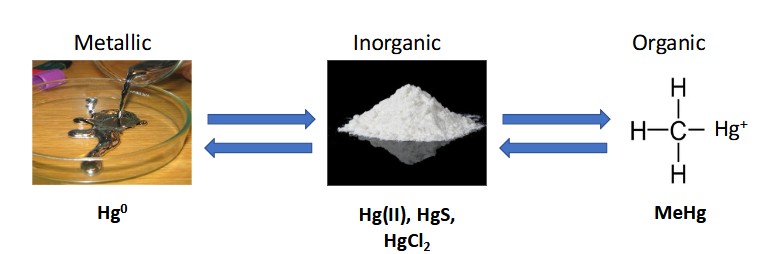
Mercury is a global contaminant
The toxicity of these forms differ.
The cycling among forms of Hg is of great interest to scientists.
It is transported globally.
Mercury in marine fish
certain people may be at risk from MeHg exposure.
Fish is an excellent source of protein and nutrients
Balancing the risks and benefits associate with seafood consumption is vital.
Mercury in Tuna
There are several species of tuna, and they vary in their mercury concentrations.
Large predatory species have higher mercury concentrations.
Mercury in Wolves
most people think wolves only consume ungulates like caribou, moose, and deer- however, wolves are known to have broad diets.
-Wolves consuming terrestrial prey are not expected to have high concentrations of mercury because methylmercury is mainly produced in aquatic environments.Wolves are renowned for their dietary plasticity and make use of marine foods in coastal areas-wolves feeding on marine resources have higher concentrations in their tissues.
-wolves consuming sea otters have the highest THg concentrations which puts them at risk for toxic effects.
Colorado River basin
Sharing water effectively and equitably in river basins is a major global challenge that will intensify as nations increase their needs for water resources
Colorado River basin - drained by one of the longest and most important rivers in the United States
The basin is experiencing a historic water scarcity crisis, and it is on a list of 18 most stressed river basins in the world
Water demand outstrips supply in the multi-state and international Colorado River basin
The river often no longer reaches the sea
In the Colorado River basin, there are four native fish species that are officially listed as threatened or endangered:
-Bonytail (endangered)
-Colorado pikeminnow (endangered)
-Razorback sucker (endangered)
-Humpback chub (currently listed as threatened, previously endangered)
Chernobyl Disaster
On April 26, 1986, a routine test of reactor 4 at the Chernobyl Nuclear Power Plant led to two violent explosions that destroyed the core of unit 4 and the roof of the building, resulting in a series of fires and in massive releases of radioactive materials into the atmosphere. The disaster released massive amounts of radioactive material across Europe.
The staff disabled critical safety systems, removed too many control rods (which regulate the reaction) , and ignored warning signs. These actions violated safety protocols and made the
reactor extremely unsafe.
A ~2,600 km² exclusion zone was established, and over 100,000 people were evacuated.
The exclusion zone is tightly controlled by government authorities
Recently, parts have been opened for scientific research and limited tourism
Researchers have found the land surrounding the plant, which has been largely off limits to humans for three
decades, has become a haven for wildlife.Now represents the third-largest nature reserve in mainland Europe and has become an iconic – if accidental – experiment in rewilding. Eurasian lynx, brown bear, black storks, European bison, wolves, Przewalski's horses
Colorado Wildlife Management
Most conflicts between people and bears can be traced to human food, garbage, pet food, bird seed or other attractants.
Since 1985, Colorado wildlife officers have had a two-strike policy in dealing with black bears
One call about a bear in the trash, the car trunk or the kitchen, and wildlife officers capture it, mark it and relocate it to the wild, where it should be able to find food without pillaging from people
If the same bear is caught a second time, it’s euthanized.
The Third Agricultural Revolution, known as the____________________, occurred in the 1950s–1960s and
was associated with Norman Borlaug.
Green Revolution
A single crop species over a large area of land, grown season after season, is known as a
____________________, and is the dominant model in industrial agriculture.
monoculture
Minerals are naturally occurring, ____________________ solids that possess an orderly internal structure and
a definite chemical composition.
inorganic
The____________________, is a global treaty targeting ____________________ that become widely
distributed geographically, are lipophilic, and accumulate in tissues, potentially causing cancers, birth defects,
and other health effects.
Stockholm Convention, persistent organic pollutants (POPs)
A clearly defined geographical space that is recognized, dedicated, and managed through legal or other
effective means to achieve the long-term conservation of nature, along with ecosystem services and cultural
values, is known as a ____________________.
protected area
Explain how conventional agricultural practices threaten pollinator populations. Provide an alternative
approach to managing destructive insects that we discussed in class
Heavy use of synthetic pesticides (especially neonicotinoids) harms bees directly and weakens their immune systems.
Monocultures reduce floral diversity, leaving pollinators with fewer food sources.
Habitat loss from large‑scale field clearing removes nesting sites.
Alternative approach:
Integrated Pest Management (IPM): uses biological controls (predatory insects), crop rotation, habitat diversification, and minimal targeted pesticide use.
You could also mention organic farming or pollinator‑friendly buffer strips.
Although the Green Revolution is associated with an increase in agricultural productivity, critiques exist of
some of the practices that were adopted during this period. Explain two criticisms related to practices during
this period.
Environmental harm: Reliance on synthetic fertilizers and pesticides caused soil degradation, water pollution, and biodiversity loss.
Monocultures & reduced diversity: High‑yield varieties replaced traditional crops, reducing genetic diversity and increasing vulnerability to pests/disease.
(Other acceptable answers: unequal access to technology, stagnating yields, lower nutritional quality.)
The global banana industry is currently considered to be at serious risk. Explain what the problem is.
The industry relies heavily on a single cloned variety (Cavendish), making it genetically uniform.
A fungal disease, Tropical Race 4 (TR4), is spreading globally and can wipe out Cavendish plantations because they lack resistance.
Monoculture + global trade = rapid disease spread and high vulnerability.
Describe two methods of extracting bitumen from the Athabasca Oil Sands.
Surface mining:
Oil sands are dug up with truck‑and‑shovel systems, mixed with hot water, and bitumen is separated; waste goes to tailings ponds.
In‑situ (SAGD):
Two horizontal wells; steam injected into the upper well melts bitumen, which drains into the lower well and is pumped to the surface.
How does gold mining contribute to mercury pollution?
Artisanal and small‑scale gold mining often uses mercury to form an amalgam with gold.
When the amalgam is heated, mercury vaporizes into the atmosphere, contaminating air, water, and soils.
Mercury can convert to methylmercury, a toxic form that bioaccumulates in aquatic food webs.
What two things could explain the differences in mercury concentrations between bluefin and skipjack tuna?
Trophic level / diet: Bluefin are higher on the food chain and eat larger, mercury‑rich prey.
Age / lifespan: Bluefin live much longer, giving them more time to bioaccumulate mercury.
The Colorado River basin is often cited as a case study in the challenges of environmental management. Using
specific examples from the basin's history, explain why water management in the Colorado River basin has been so
difficult, and discuss what this case reveals about environmental management more broadly.
Why water management in the Colorado River Basin is so difficult
Overallocation: The 1922 Colorado River Compact allocated more water than the river actually provides (“paper water” vs. real water).
Climate change: Long‑term drought and declining snowpack reduce flows.
Competing jurisdictions: Seven U.S. states + Mexico + 30+ Indigenous nations all have claims.
Legal complexity: A century of layered laws (“Law of the River”) makes adaptation slow and conflict‑prone.
Population growth: Expanding cities (Las Vegas, Phoenix, LA) increase demand.
Agricultural dependence: Irrigation for crops like alfalfa consumes the majority of the river’s water.
What this reveals about environmental management
Historical decisions can lock systems into unsustainable trajectories.
Environmental management requires cooperation across political boundaries.
Climate change exposes weaknesses in outdated policies.
Adaptive, science‑based governance is essential but often politically difficult.