protists, fungi, and bacteria for lab
 Call Kai
 Learn
Learn Practice Test
 Spaced Repetition
 Match
Match Flashcards
 Knowt Play
1/74

There's no tags or description
Looks like no tags are added yet.
Name | Mastery | Learn | Test | Matching | Spaced | Call with Kai |
|---|
No analytics yet
Send a link to your students to track their progress
75 Terms
the four kingdoms within domain eukarya are:
Protista, Fungi, Plantae, and Animalia
protists aka protozoans
microscopic and unicellular; found in all the supergroups
can be colonial or multicellular
six supergroups each a separate evolutionary lineage of eukaryotes
easier to identify them as eukaryotic that is not a plant, animal, or fungus
Prokaryotes are most likely related to the first eukaryotic cell to have evolved
some are disease causing but many have significant ecological importance such as aquatic photoautotrophic protists that make oxygen
protists bridge the gap between ____ and _____
eukaryotic cells and multicellular organisms
general characteristics of protists
Structurally diverse
Most single-celled
exceptions are kelp, volvox, and spirogyra
high level of complexity
some have unique organelles
Sometimes grouped by how they acquire nutrients
Protists reproduce sexually and asexually
Mostly asexually - only sexually when in unfavorable conditions
can form spores or cysts in unfavorable environmental conditions
colony
loose association of independent cells seen in fungi and bacteria
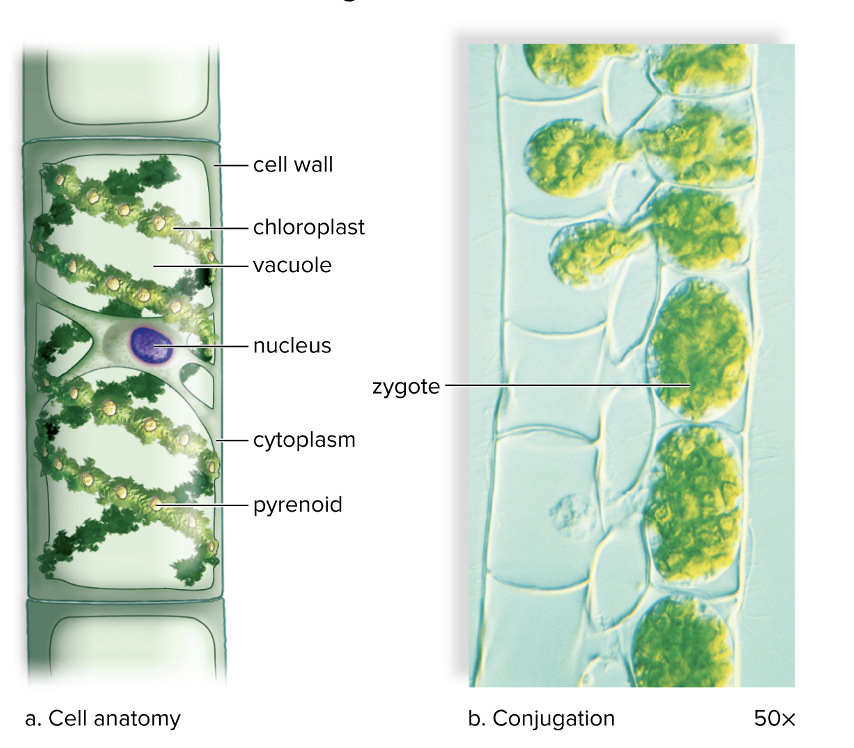
spirogyra
kingdom: protista
division: algae
charophyte
Filamentous green alga in which each cell has a ribbonlike chloroplast
unbranched, thread-like chains of cylindrical cells surrounded by a slimy mucilage sheat
red algae
kingdom: protista
division: red algae, muticellular
Most multicellular charophytes
Contain red and blue pigments, as well as chlorophyll
Coralline algae have calcium carbonate in their cell walls; contribute to formation of coral reefs
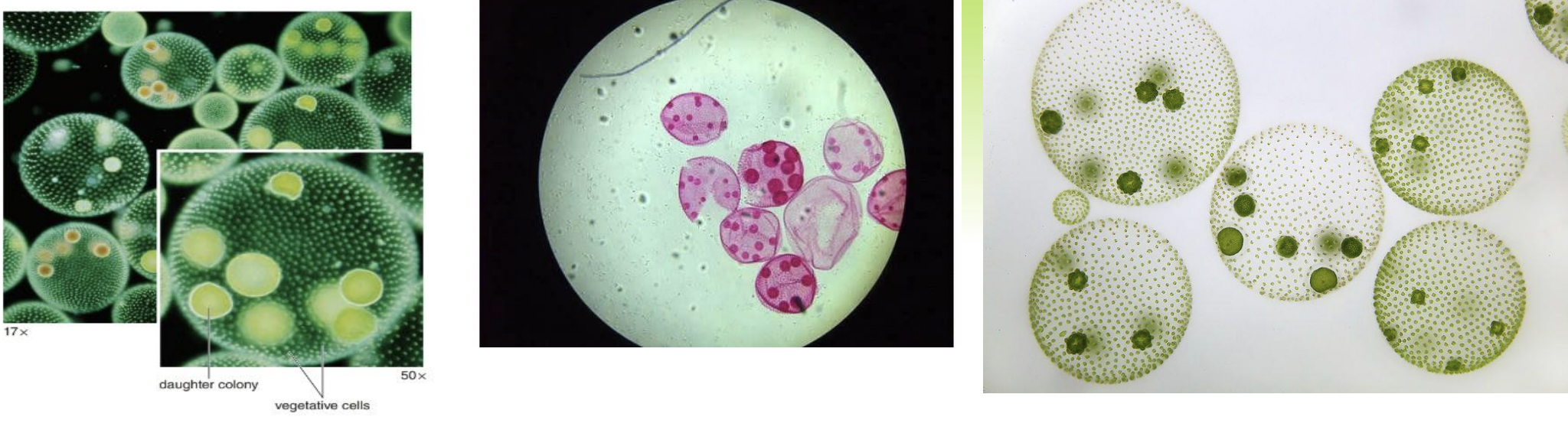
volvox colonies
kingdom: protista
divsion: colonial green algae
ype of chlorophyte
a hollow sphere with thousands of cells arranged in a single layer surrounding a watery interior
Colony
Flagella
Some cells are specialized for reproduction
green algae
euk, plantea
protists with both chlorophylls a and b
found in many habitats
Most are single-celled; some filamentous or colonial; some are multicellular
related to land plants
divided in chlorophytes and charophytes
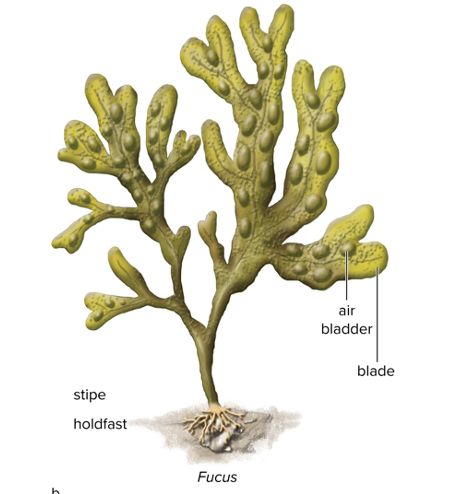
Brown algae - supergroup chromalveolata
kingdom: eukaryotic
division: brown algae
Multicellular seaweeds
Contain accessory pigments
kelp most familiar: have blades and stalks
What word refers to unicellular eukaryotes that are typically heterotrophic consumers?
protozoans
When black bread mold sexually reproduces, what kind of spore does it make?
zygospore
Where are the spore-producing structures located on a mushroom?
on the underside of the cap
What kind of algae has silica in its cell walls?
diatoms
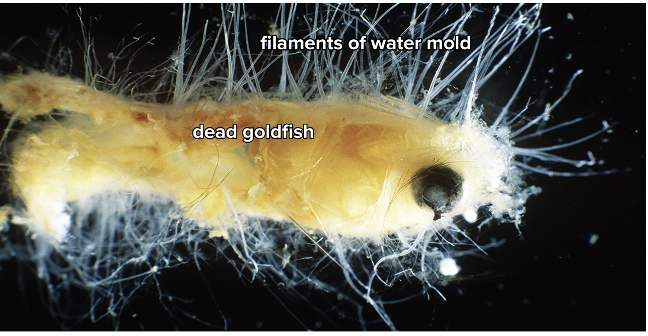
oomycetes (water molds)
euk, chromalveolata
Most are saprotrophs - feed on dead organic water
usually live in water and decompose remains and form furry growths when they parasitize fish
some are parasites
Have a filamentous body with cell walls of cellulose
Use asexual and sexual reproduction
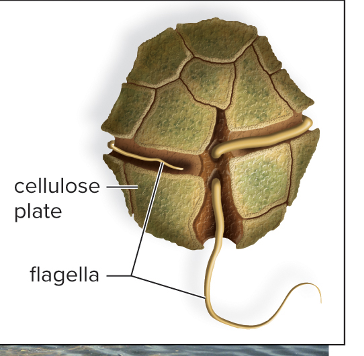
dinoflagellates
euk, protista
Important members of phytoplankton in marine and freshwater ecosystems
Generally photosynthetic
Have protective cellulose plates encrusted with silica and two flagella in two different grooves
Whirl to move with their dinoflagellate
heterotrophs
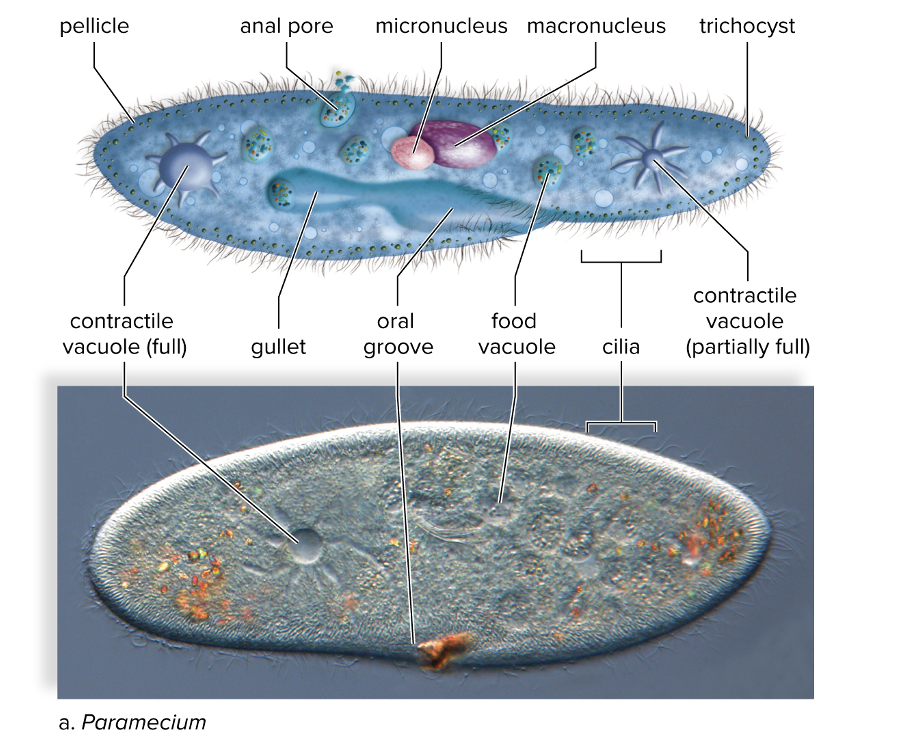
ciliates
largest group of protozoans
All have cilia which help with feeding
Most are freely motile, but some can be anchored
rotate as they move
Paramecium is the most widely known ciliate
Visible contractile vacuoles which help maintain water balance w environment
Macronucleus
Conjugation
Micronucleus
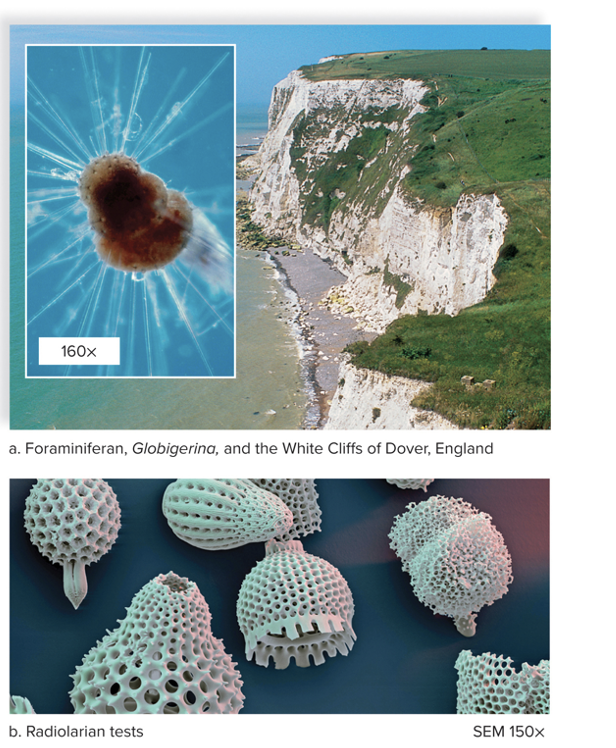
foraminiferans and radiolarians - supergroup rhizaria
eukaroyte, protista
they have fine, threadlike pseudopods and a skeleton called a test made of calcium carbonate
Fossilized shells can be used to date sedimentary rock
Their presence is used as an indicator of oil deposits on land or sea
euglenids
Freshwater unicellular organisms with two flagella, one much longer than the other
most have chloroplasts
surrounded by three membranes (endosymbiosis or green algal cell)
have a photoreceptor ( eyespot apparatus)
plasma membrane surrounded by a flexible pellicle
euglena
kingdom: protista
division: euglenophyta
posses animal and plant like cell characteristics - transition
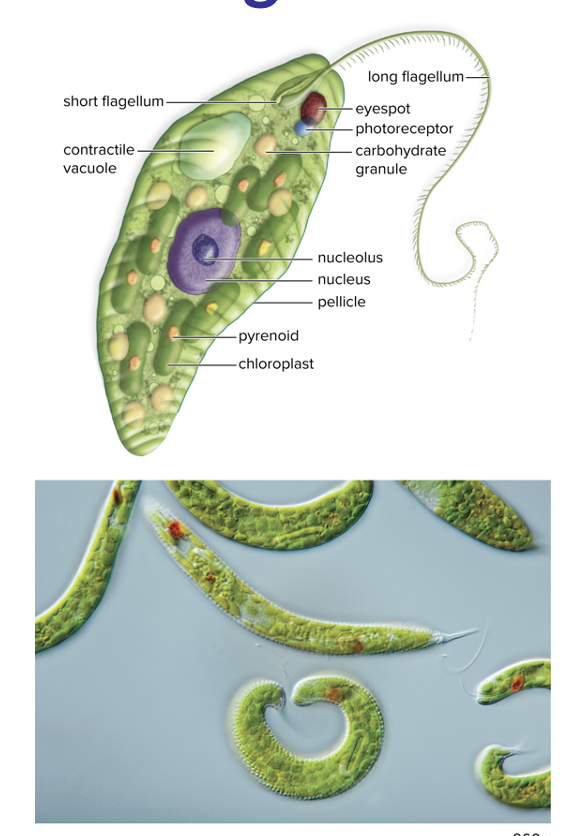
pellicle in euglenids
a specialized, protein-based cell covering located directly underneath the plasma membrane that provides both structural support and the ability to change shape
amoebas
protozoans that move by pseudopods which form when the microfilaments contract and extend as the cytoplasm streams toward a particular direction. usually live in aquatic environments
types of organisms: Amoeba, slime molds
parabasilids and diplomonads
Single-celled endosymbionts of animals
Survive in anaerobic environments
Lack mitochondria and use fermentation to produce ATp
parabasilids
euk, protista
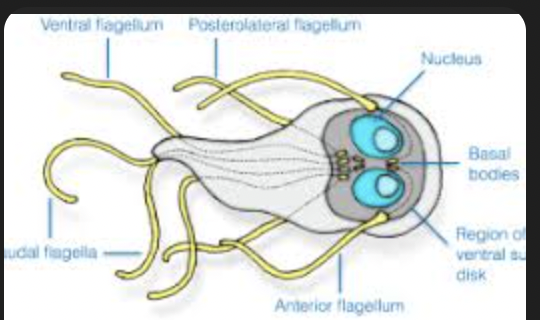
Diplomonads
euk, protista
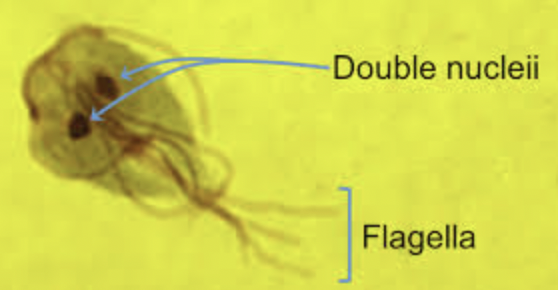
single celled
two flagella
two nuclei
endosymbionts
Giardia attaches to the human intestinal wall, causing severe diarrhea
phagocytosis
form of endocytosis where immune cells (phagocytes) engulf and destroy large particles
often termed "cell eating"
sporangia
an enclosure in which spores are formed. It can be composed of a single cell or can be multicellular
fungi!
domain Eukarya, supergroup Opisthokonta, kingdom Fungi
structurally diverse group of heterotrophs
release enzymes into their external environment and digest food outside of the body
some are parsitic
some are saprotrophs that decompose dead plants, animals, and microbes
important to recycling inorganic nutrients
degrade cellulose and lignin
six groups: microsporidia, chytrids, zygospore, sac, AM, and club
nonmotile - move toward a food by growing toward it
glycogen is used as an energy reserve
no chloroplasts
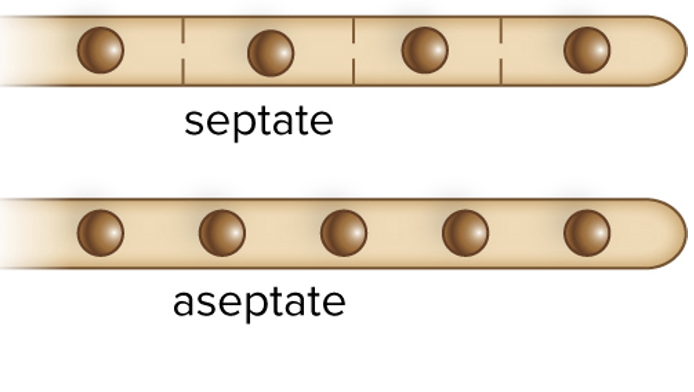
hyphae
body of a fungus composed of many of these filaments
gives mycelium a large surface area to facilitate absorption of nutrients
what is a mass of hyphae called for fungi?
mycelium
what are septa?
cross walls that separate hyphae into chains of cells in fungi
xxx have pores to allow cytoplasm to pass from cell to cell
what are the cell walls of fungal cells comprised of?
chitin
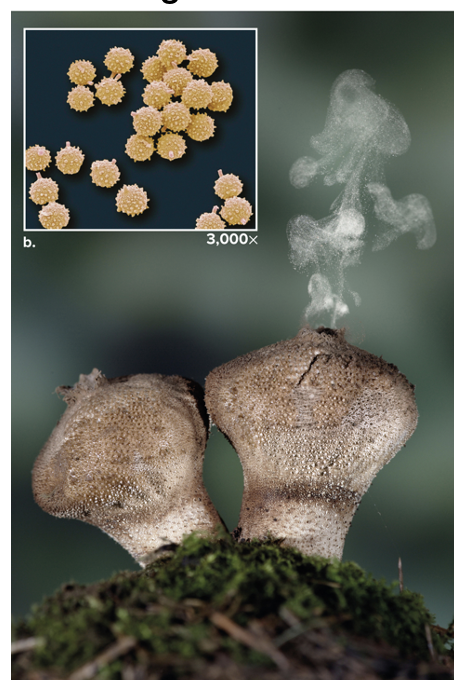
fungi windblown spores - reproduction
used as a method of adaptation to dry land
spores are haploid reproductive cells that develop into a new organism without the need to fuse with another cell
fungal diversity
classified by mode of sexual reproduction
Microsporidians
Chytrids (Chytridiomycota)
Zygospore fungi (Zygomycota)
Sac fungi (Ascomycota)
Club fungi (Basidiomycota)
AM fungi (Glomeromycota)
saprotrophs
organisms that obtain nutrients by breaking down dead and decaying organic matter through extracellular digestion
sporangium
a capsule that produces spores
yeast
unicellular fungi, many are sac fungi
most reproduce by budding
budding
reproduction that is unequal binary fission
A small cell gets pinched off and grows to full size
Asexual reproduction occurs as food sources run out, producing spores
Lichen body
has three layers—fungi form top and bottom layers and protect middle layer of photosynthetic cells
Fungal portion offers protection and delivers minerals and water
Cells of photosynthetic partner give the fungus nutrients
anabaena - cyanobacteria
domain: euk
kingdom: protista
long, unbranched, blue-green to olive-green filaments (trichomes) composed of beaded or barrel-shaped cells, often described as a string of beads. Larger and thicker walled
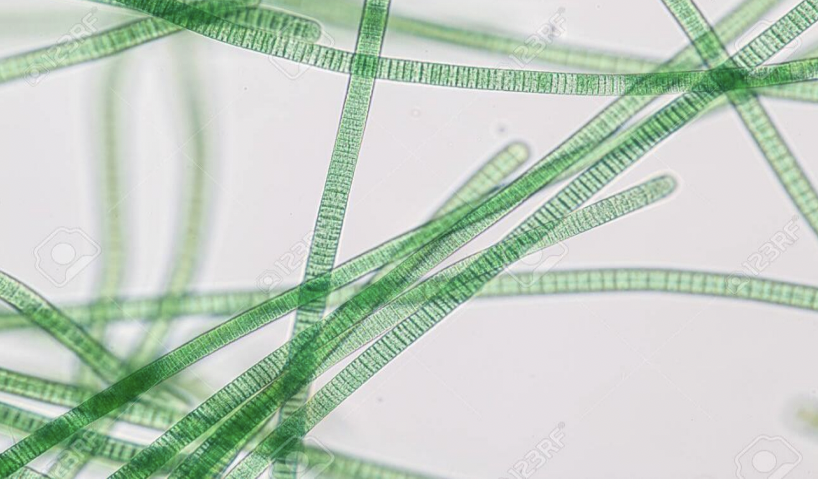
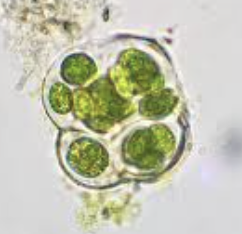
ulothrix
kingdom: protista
division: algae
a genus of filamentous, unbranched green algae
characterized by a simple, uniseriate structure - cells are arranged end-to-end in a single row
freshwater or marine algae form long, hair-like filaments that appear bright green
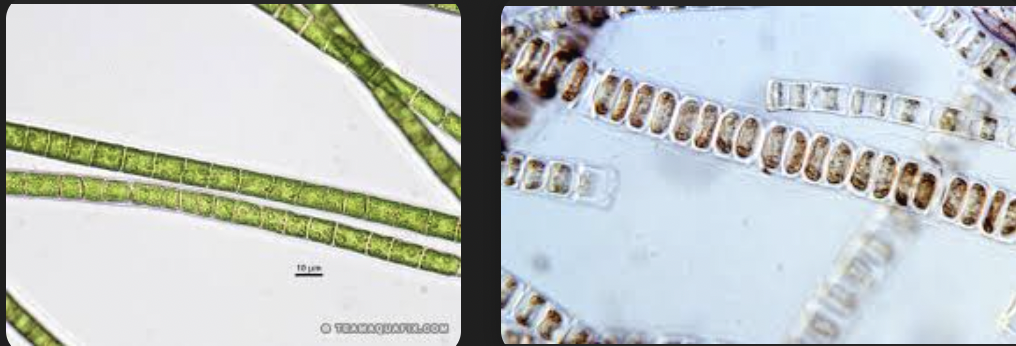
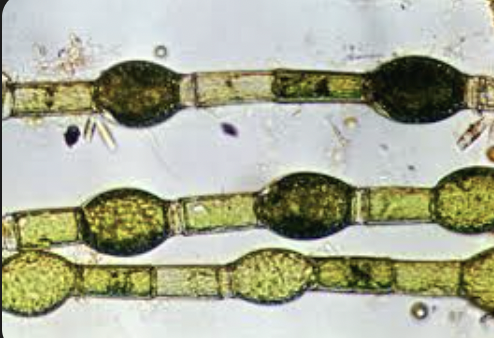
oedegonium
kingdom: protista
division: algae, filamentous
unbranched green alga characterized by cylindrical cells
a specialized holdfast for attachment
unique ring-like apical caps resulting from cell division
net-like chloroplast
thick cell walls (cellulose/chitin)
reproduces via zoospores or oogamy
amoeba v paramecium
Amoeba and Paramecium are both single-celled, eukaryotic microorganisms found in aquatic habitats, but they differ significantly in structure and locomotion
Amoebas have an irregular, ever-changing shape and move using temporary projections called pseudopodia (false feet)
Paramecium has a fixed, slipper-shaped form, uses hair-like cilia for fast movement, and has a more complex structure, including two nuclei
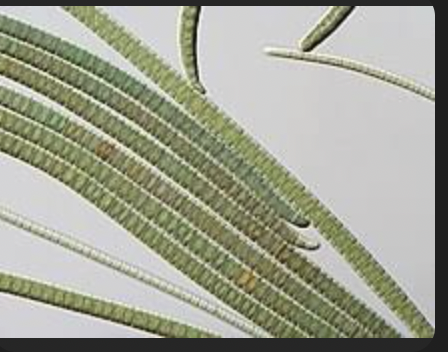
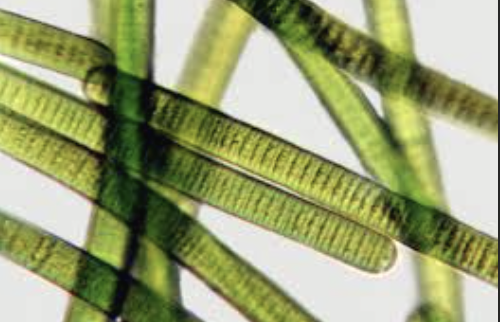
oscillatoria
kingdom: bacteria
division: cyanobacteria
filamentous blue-green algae
long, unbranched filaments which are generally composed of a single row of cells
Lack of Sheath
Filaments are actively motile
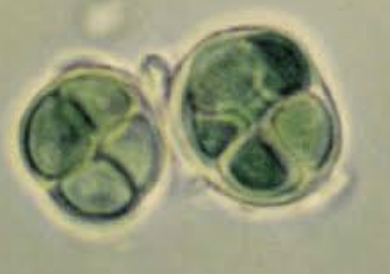
gleocapsa
bacteria, bacteria
Concentric Sheaths (Gelatinous Envelopes)
Colonial
Cells are spherical, but appear hemispherical or irregular after division
Pigmented Sheaths
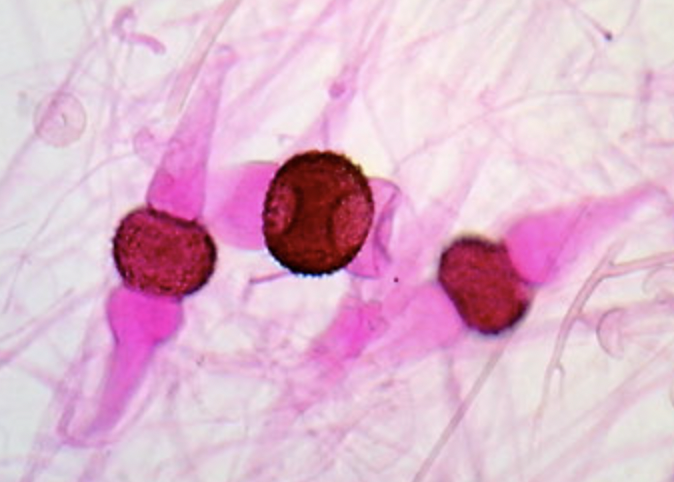
rhizopus nigrican conjucation
euk, fungi
Two opposite mating types (+ and −) involved
Thick-walled, dark zygospore visible
Zygospore often rough/spiny in appearance
Suspended between two suspensor cells
Fusion region appears swollen compared to normal hyphae
bacteria
Most common type of prokaryote with more than 11,000 species but estimated millions of unnamed species
shapes of bacteria
Bacilli - rod
Cocci - string ish
Spirillum - spirals
bacilli
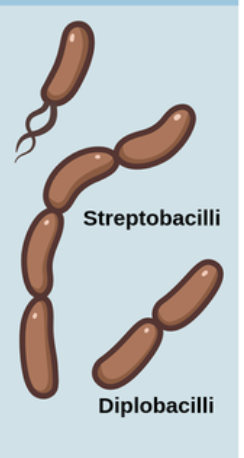
cocci
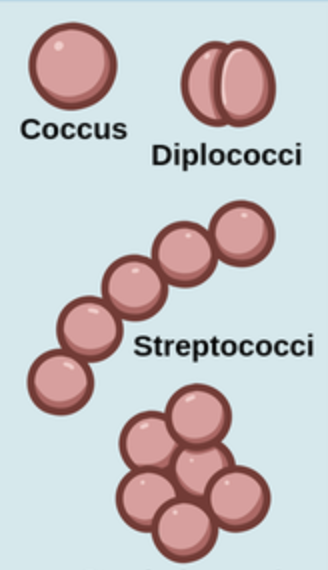
spirilla
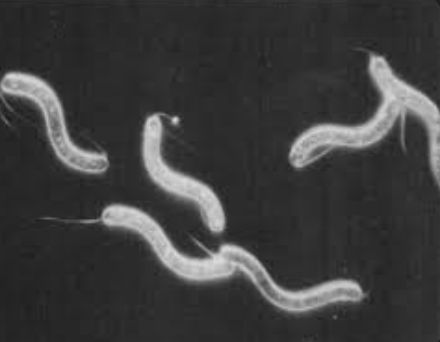
what shape are the bacillus subtlis bacteria?
rods - bacilli
where does photosynthesis occur in cyanobacteria?
thylakoids in the cytoplasm
Where does photosynthesis occur in green algae?
in the chloroplasts
what proteins are synthesized in bacteria?
main two are ribosomal proteins and RNA polymerase
can bacteria ever have cilia?
no, only ever flagella for motile bacteria
typical bacteria cells
One chromosome in the nucleoid region
Accessory rings of DNA called plasmids
Have ribosomes and storage granules
Capsule
Motile ones have flagella
Some have fimbriae to bind to surfaces
Gram staining
gram staining for bacteria
used to classify bacteria based on differences in cell walls
Results are used to select antibiotics totreat infections
If positive test they have a thick layover of peptidoglycan and stain purple
If negative test they have a thin or do not have a layer of peptidoglycan and stain pink
Outer membrane of lipopolysaccharide molecules - some have this as a cell wall
capsule
a polysaccharide layer outside cell wall
What parts of a bacteria cell are outside the cell:
Flagella
Fimbriae
Capsule
Cell wall
Plasma membrane
What parts of a bacteria cell are inside the cell:
Cytoplasm
Ribosomes
nucleoid
how is bacteria reproduced asexually?
binary fission
The bacterial cell replicates its genome and divides into two new daughter cells
Each daughter cell is a clone—an exact copy
Generation time can be as short as 20 minutes to a day or more
endospore
a thick waller and dehydrated structure that is formed during harsh conditions that allow for survival
bacterial metabolism
heterotrophic, chemoautotrophs, or autotrophs
Louis Pasteurs bacteria lab
found that bacteria was coming from the air and that viruses are smaller than bacteria
microbiology
the study of microbes (bacteria, archaea, protists, and fungi)
not a classification of life but term for organisms too small to be seen with the naked eye
chemoautotrophs
bacteria that obtain energy by oxidizing inorganic compounds, such as H2S, abundant in thermal vents
protocells were most likely heterotrophs because they consumed preformed organic molecules → heterotrophs preceded autotrophs
if protobionts evolved at thermal vents, they may have carried out chemosynthesis
the two domains of prokaryotes
bacteria and archaea
prokaryotes
single-celled organisms lacking a nucleus and the membrane-bound cytoplasmic organelles found in eukaryotic cells
cynobacteria
have chlorophyll and other pigments
some are photosynthetic
Some capable of nitrogen fixation and carbon fixation
Some symbiotic (lichens) with fungi
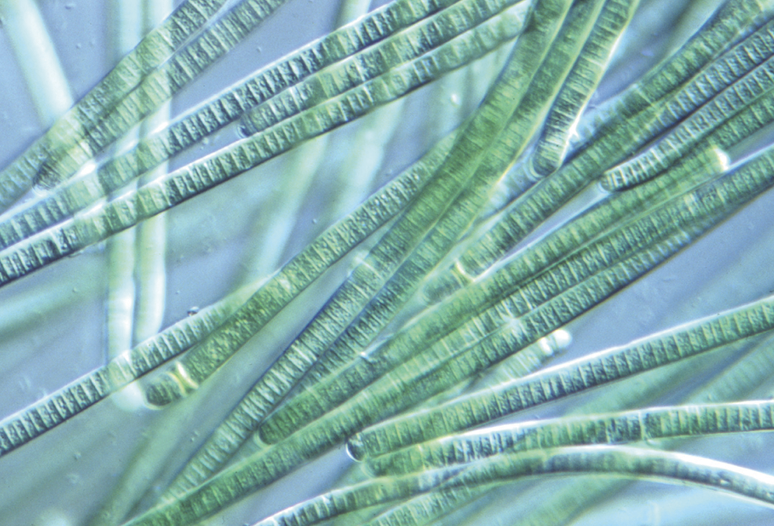
cyanobacteria v bacteria
Cyanobacteria are a specialized phylum of photosynthetic bacteria (often called blue-green algae) that produce oxygen, unlike most other bacteria. cyanobacteria contain chlorophyll-a to make their own food, whereas most bacteria are heterotrophic and do not photosynthesize
anabaena - cyanobacteria
Domain: Bacteria
Kingdom: Bacilliati
Phylum: Cyanobacteria/Cyanobacteriota
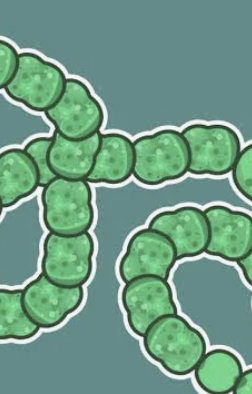
oscillatoria
Domain: Bacteria
Kingdom: Bacilliati
Phylum: Cyanobacteria/Cyanobacteriota
gloeocapsa - cyanobacteria
Domain: Bacteria
Kingdom: Bacilliati
Phylum: Cyanobacteria/Cyanobacteriota