chapter 25: neurological system
 Call Kai
 Learn
Learn Practice Test
 Spaced Repetition
 Match
Match Flashcards
 Knowt Play
1/74

There's no tags or description
Looks like no tags are added yet.
Name | Mastery | Learn | Test | Matching | Spaced | Call with Kai |
|---|
No analytics yet
Send a link to your students to track their progress
75 Terms
the neurological system is responsible for
coordinating and regulating all the bodys functions
CNS (central nervous system)
brain and spinal cord
PNS (peripheral nervous system)
the sensory and motor neurons that connect the CNS to the rest of the body
subarachnoid space
a space in the meninges beneath the arachnoid membrane and above the pia mater that contains the cerebrospinal fluid
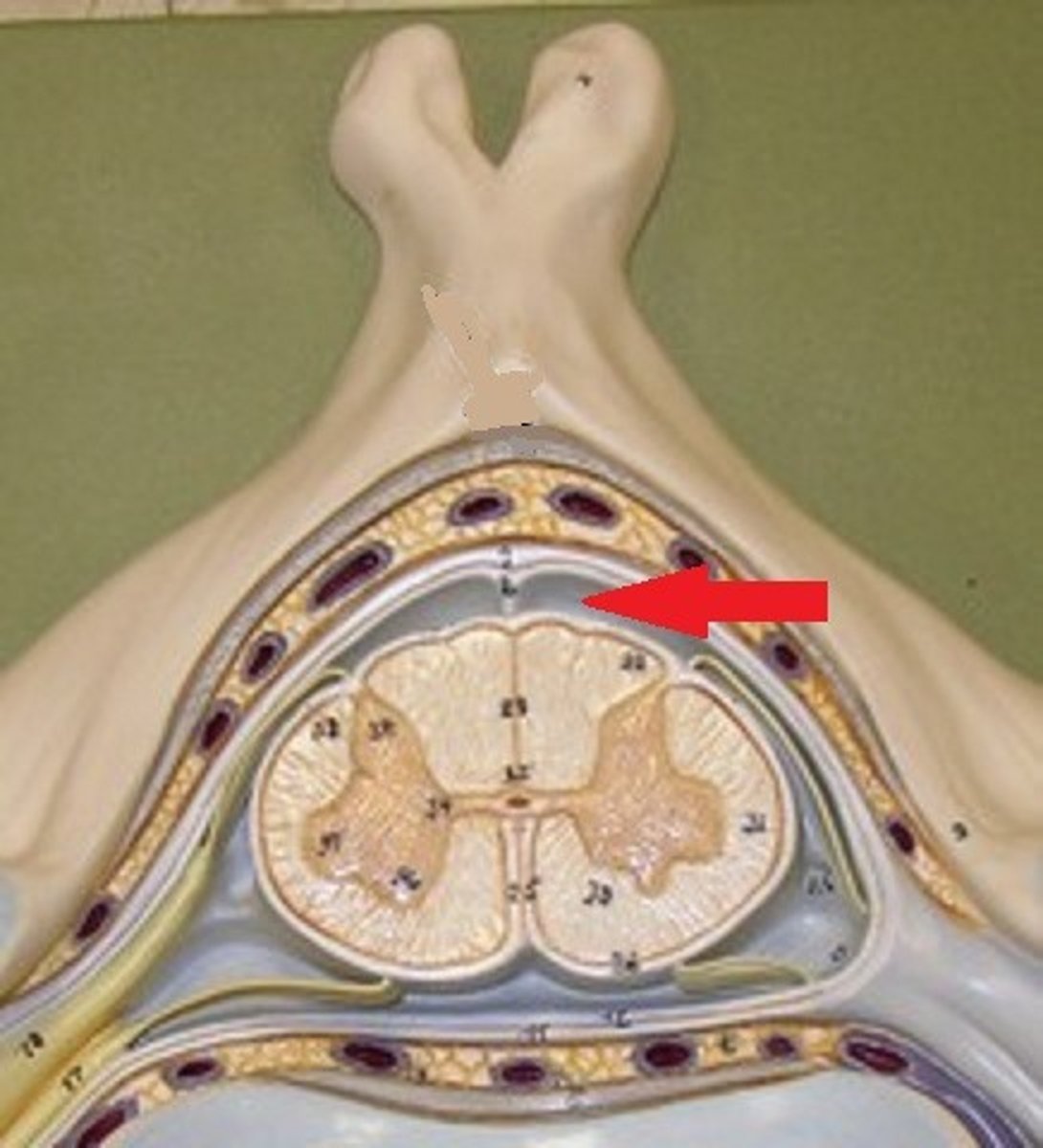
CSF (cerebral spinal fluid)
cushions the brain and spinal cords
nourishes CNS
removes waste materials
sensory and motor pathways
Most decussate (cross from one side to the other) from one side of CNS to other side
Most are made up of a chain of 2-3 neurons that contribute to successive tracts
Most exhibit body mapping (spatial arrangement)
All pathways are paired right and left
Cerebrum
Area of the brain responsible for all voluntary activities of the body
left and right hemispheres
largest part of brain
corpus callosum
the large band of neural fibers connecting the two brain hemispheres and carrying messages between them
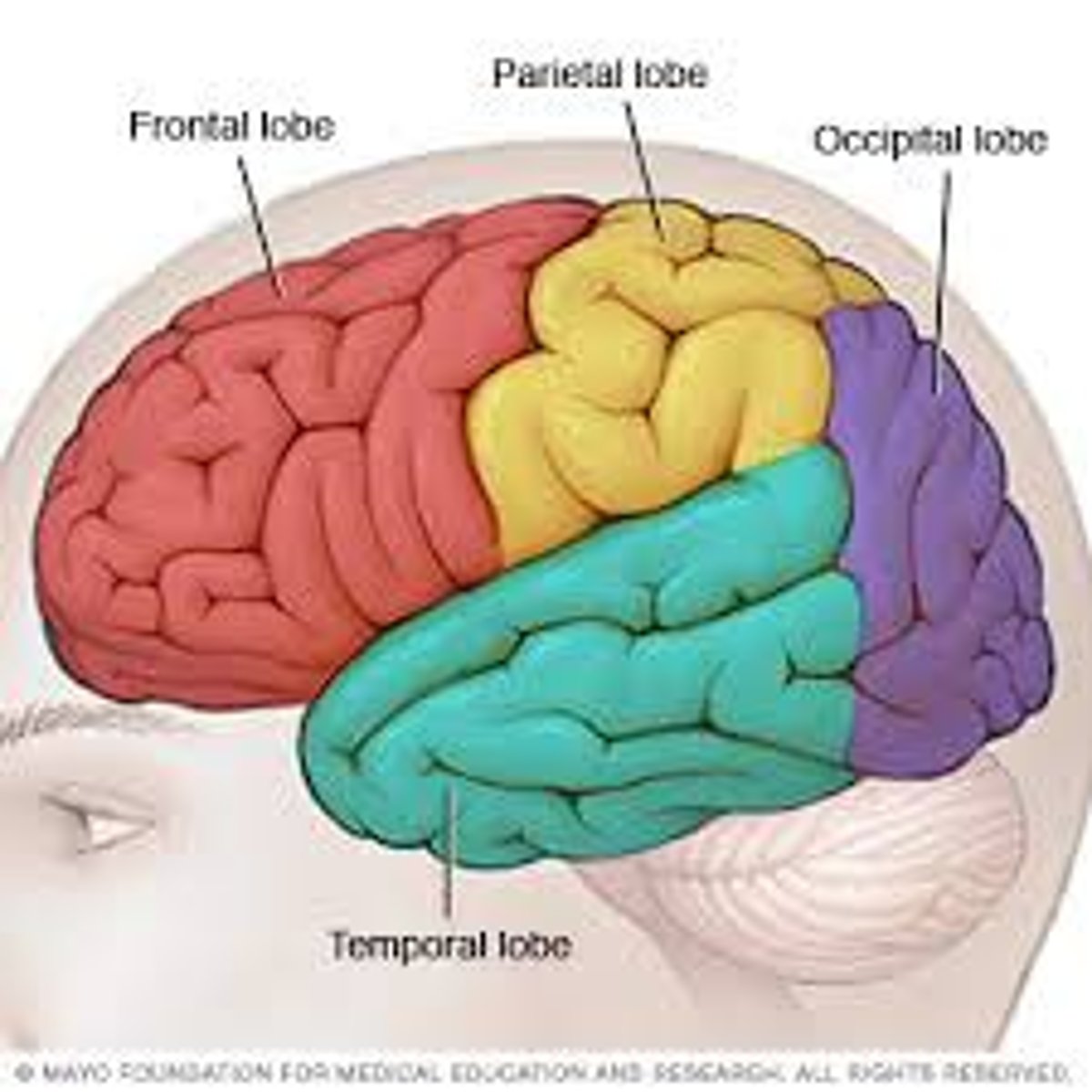
Four lobes of the brain
frontal, parietal, occipital, temporal
gray matter
higher level functions like memory, perception, communication, etc
cerebral cortex
outer region of the cerebrum, containing sheets of nerve cells; gray matter of the brain
frontal lobe function
primary motor cortex
directs voluntary skeletal actions
talking and writing
emotions
judgement and behavior
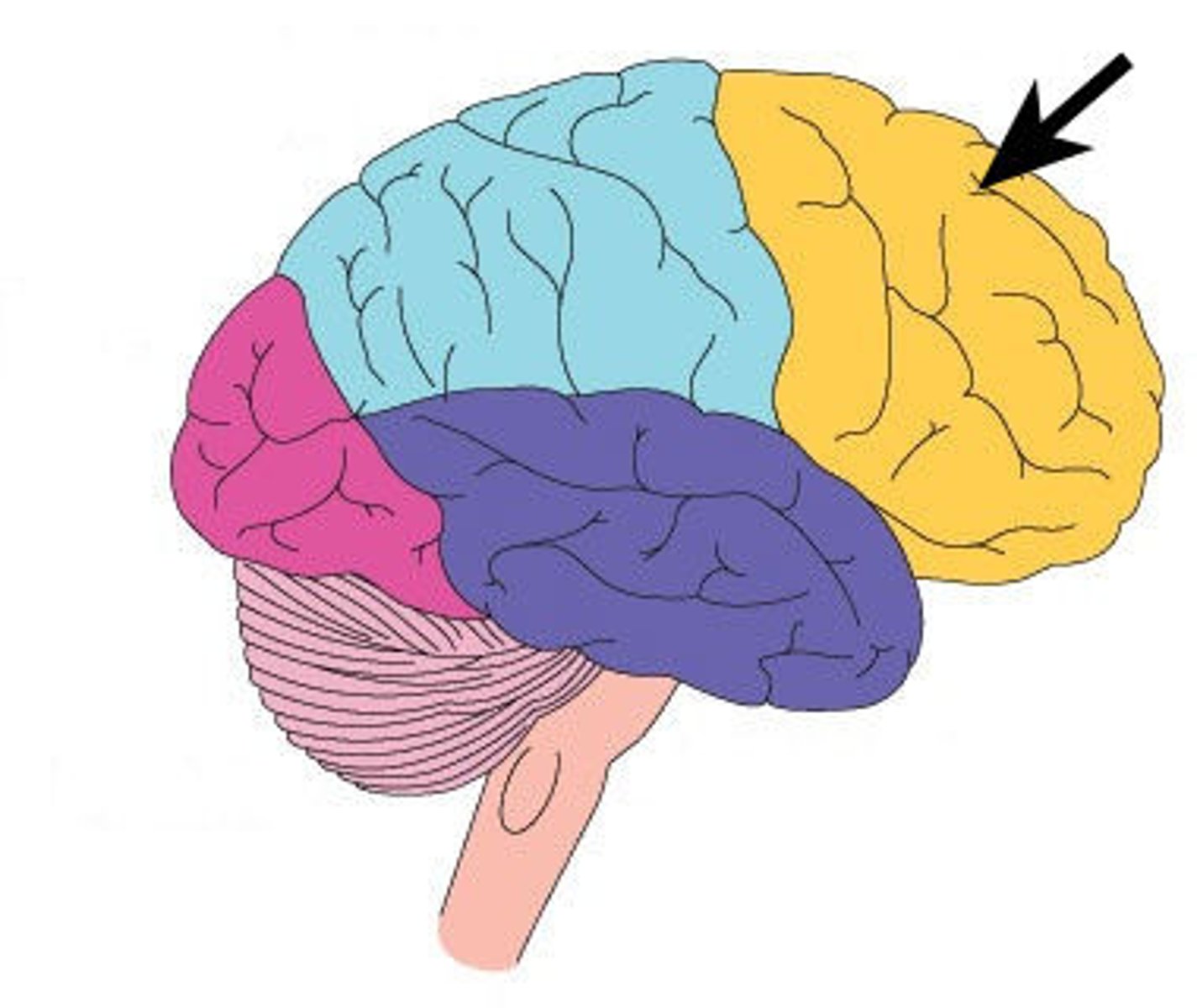
frontal lobe contains that ______ which is used for speech
broca's area
parietal lobe function
touch
pain
temperature
shapes
two point touch descrimmination
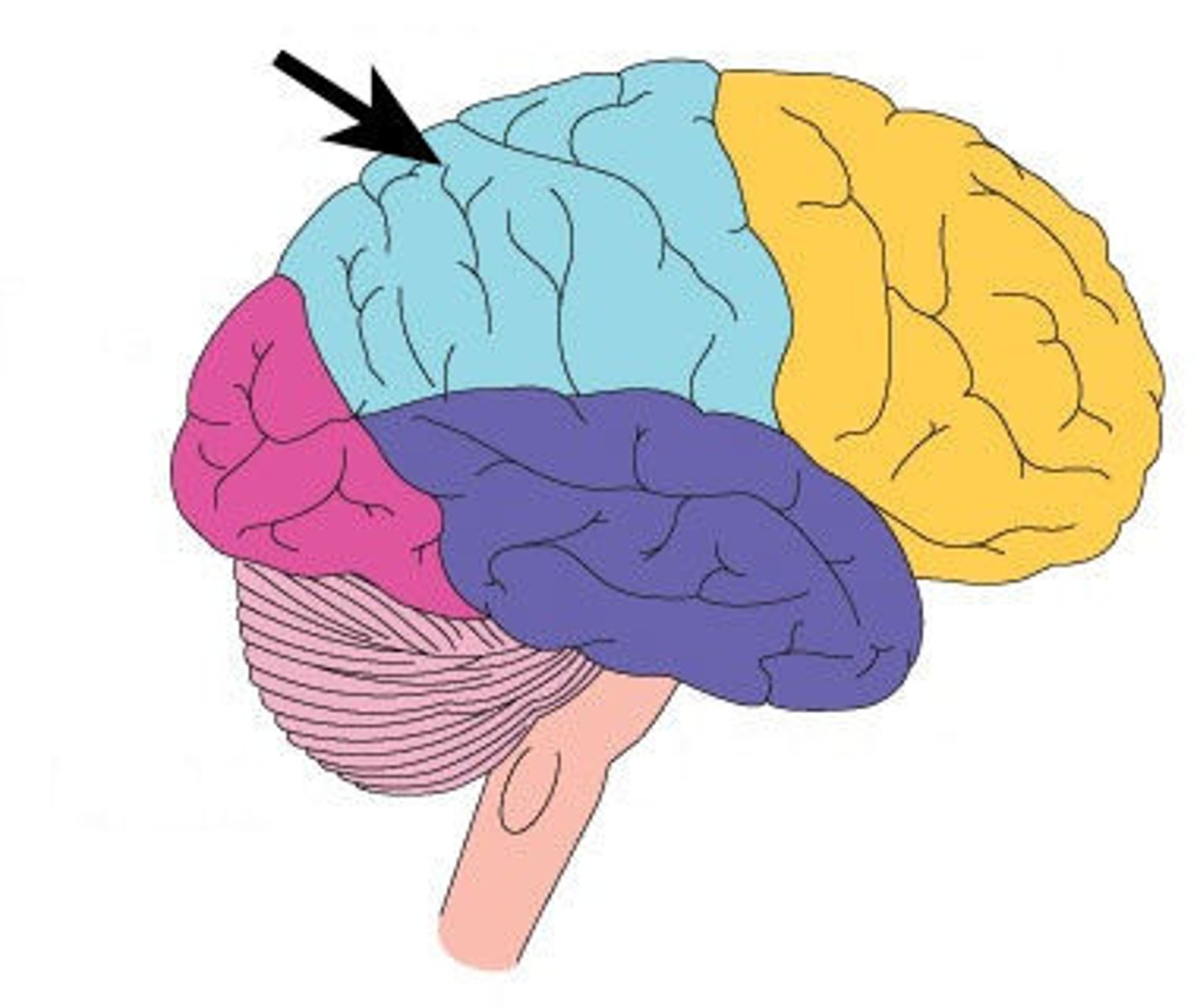
occipital lobe function
influences ability to read with understanding
primary visual receptor
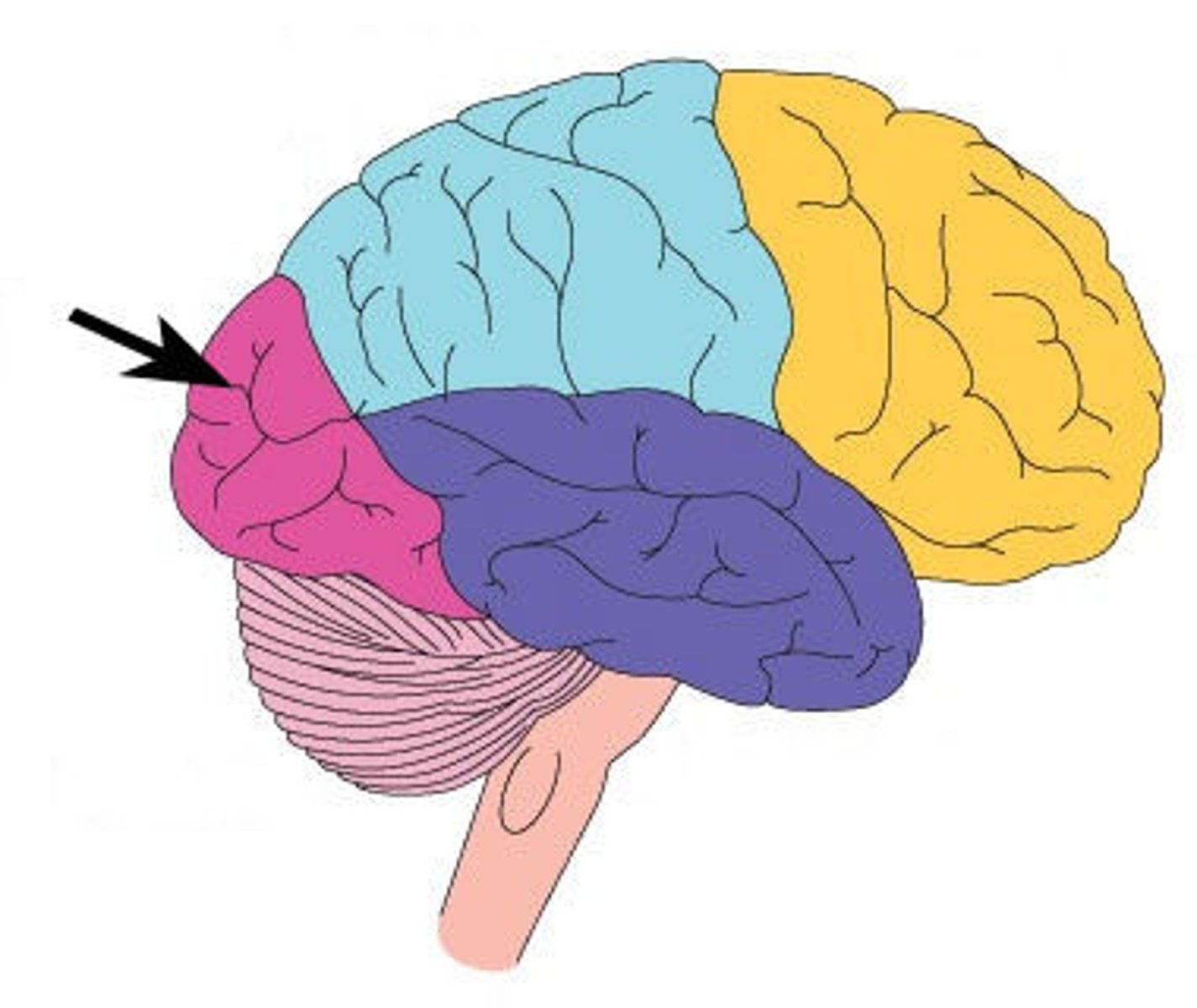
temporal lobe function
hearing and smell
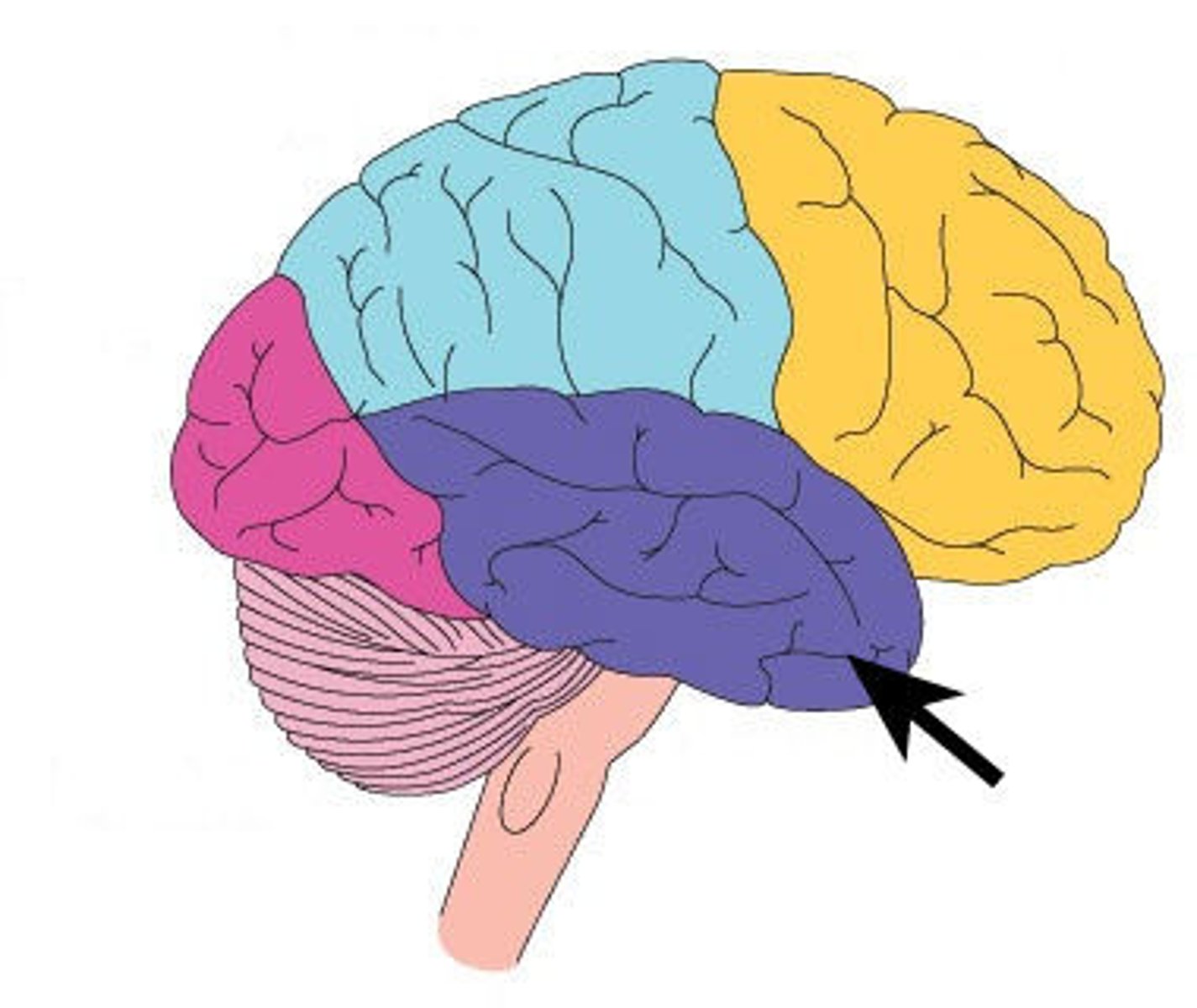
the temporal lobe contains _________ which is responsible for interpreting auditory stimuli
wernicke's area
Midbrain
A small part of the brain above the pons that integrates sensory information and relays it upward.
Pons
A brain structure that relays information from the cerebellum to the rest of the brain
medulla oblongata
Part of the brainstem that controls vital life-sustaining functions such as heartbeat, breathing, blood pressure, and digestion.
Brainstem consists of
midbrain, pons, medulla oblongata
The pons links the cerebellum with the
brain stem, cerebrum, and spinal cord
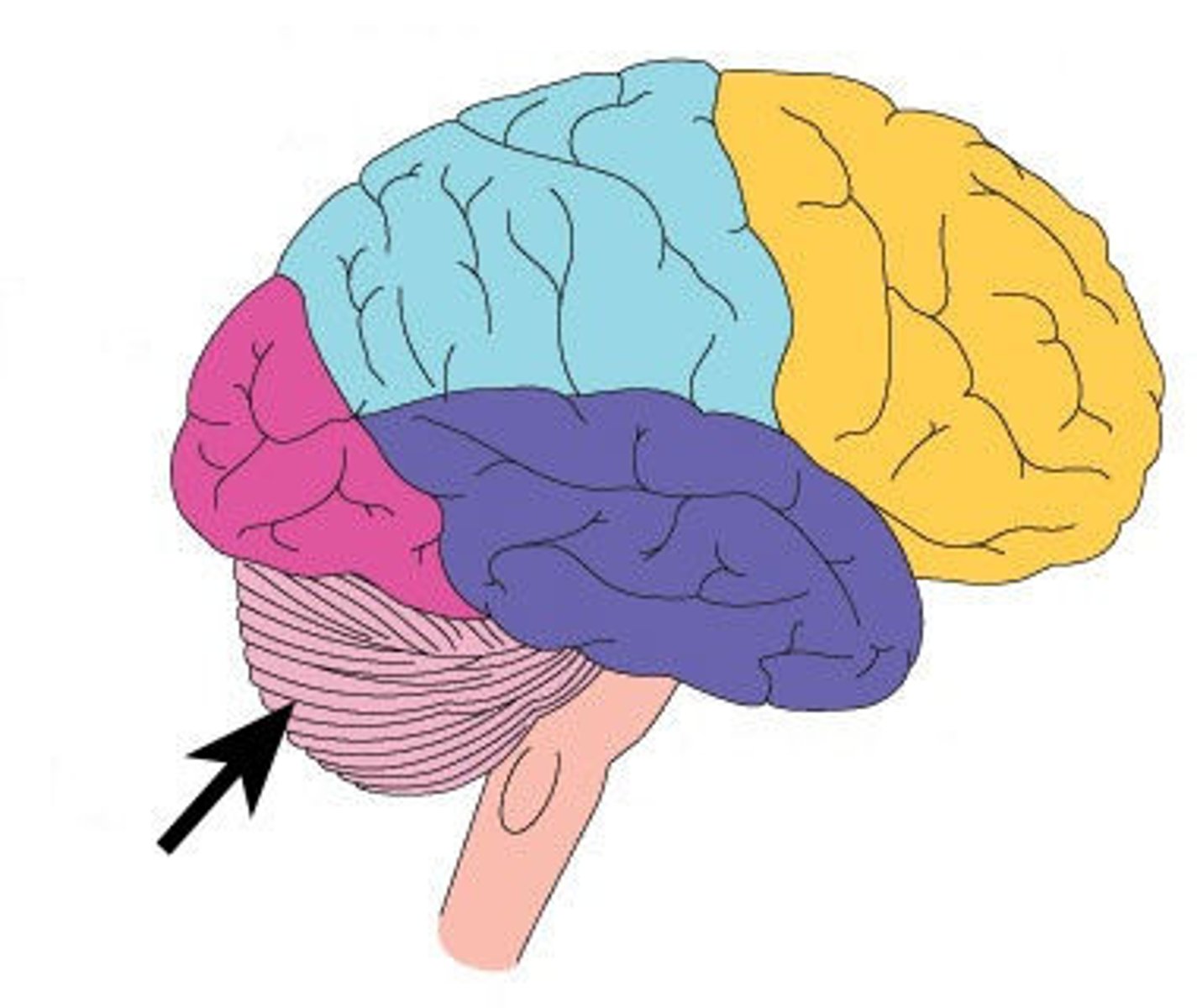
cerebellum
the "little brain" at the rear of the brainstem
functions include processing sensory input and coordinating movement output and balance, coordination, smoothing of voluntary muscles movements, maintaining equilibrium, and maintaining muscle tone
spinal cord
Nerves that run up and down the length of the back and transmit most messages between the body and brain
the spinal cord is not as long as the
vertebral canal
white matter function
carry signals from one part of the CNS to another
afferent
sensory
efferent
motor
Synapse
the junction between the axon tip of the sending neuron and the dendrite or cell body of the receiving neuron
spinothalamic tract
nerve pathway from the spine to the thalamus along which pain impulses are carried to the brain
pain, temp, light tough
posterior column pathway
Carries sensations of highly localized ("fine") touch, pressure, vibration, and proprioception
dorsal root function
sensory
extrapyramidal tracts
group of tracts associated with balance and muscle tone
the peripheral nervous system consists of
12 pairs of cranial nerves and 31 pairs of spinal nerves
Somatic Nervous System (SNS)
the part of the peripheral nervous system that controls voluntary movement of skeletal muscles
31 nerves of the spine are composed of
8 cervical nerves
12 thoracic nerves
5 lumbar nerves
5 sacral nerves
1 coccygeal nerve
each nerve is attached to the spinal cord by
two nerve roots
sensory nerve fibers enter through the
dorsal rooots
motor nerve fibers enter through the
ventral roots
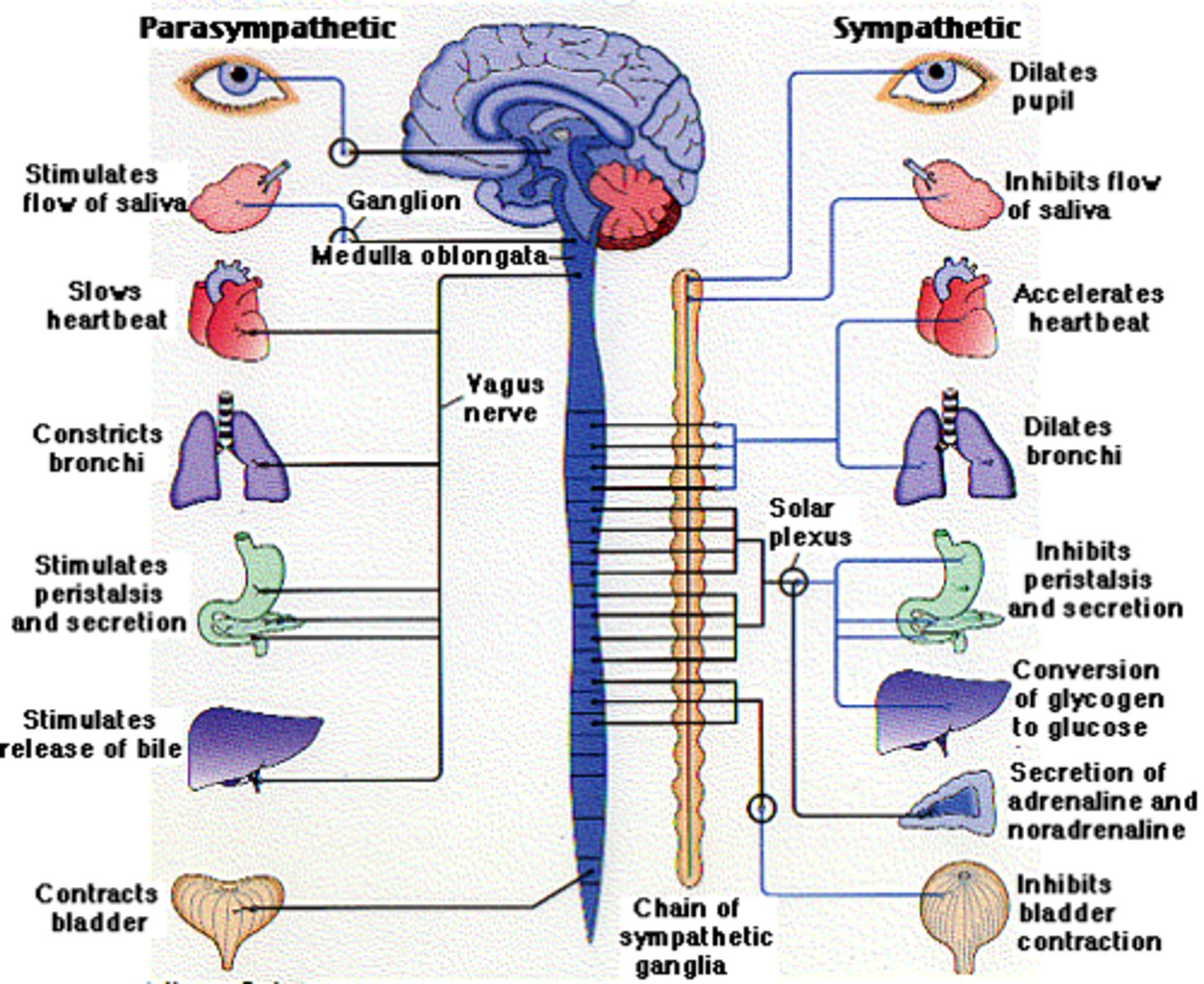
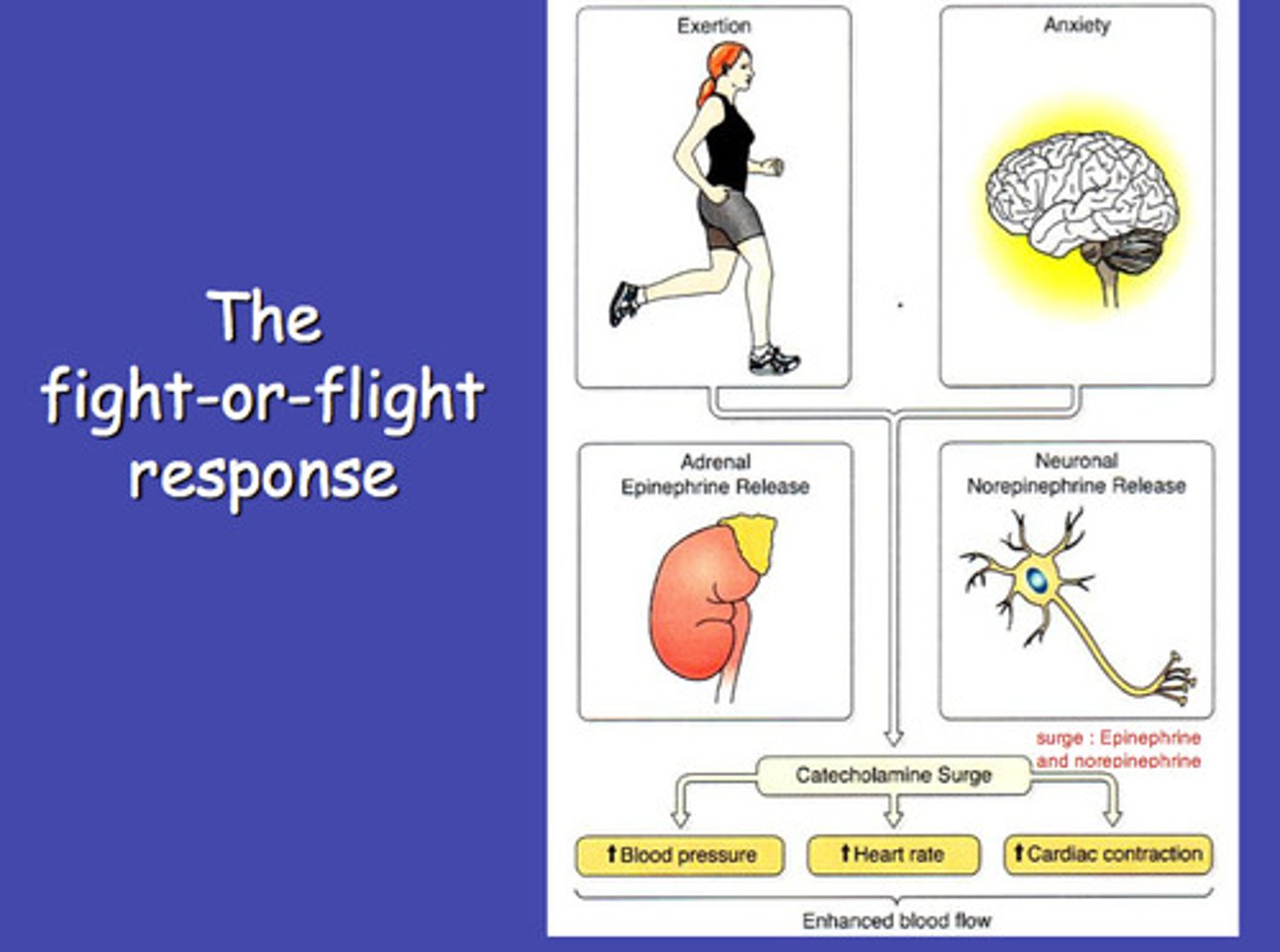
autonomic nervous system
the part of the peripheral nervous system that controls the glands and the muscles of the internal organs (such as the heart). Its sympathetic division arouses; its parasympathetic division calms.
sympathetic nervous system
the division of the autonomic nervous system that arouses the body, mobilizing its energy in stressful situations
parasympathetic nervous system
the division of the autonomic nervous system that calms the body, conserving its energy
paresthesia
abnormal sensation of numbness and tingling without objective cause
decrease in taste, smell, hearing, and vision is normal in
older patients
risk factors for stroke
High blood pressure
high cholesterol
Atherosclerosis
Heart disease
Smoking or tobacco use
Atrial fibrillation (Afib)
Diabetes
Overweight or Obesity
Blood disorders
Excessive alcohol
Certain medications
where do strokes occur
brain
strokes can occur at
any age
what is a stroke
Damage to the brain from interruption of its blood supply.
blood clot in the brain
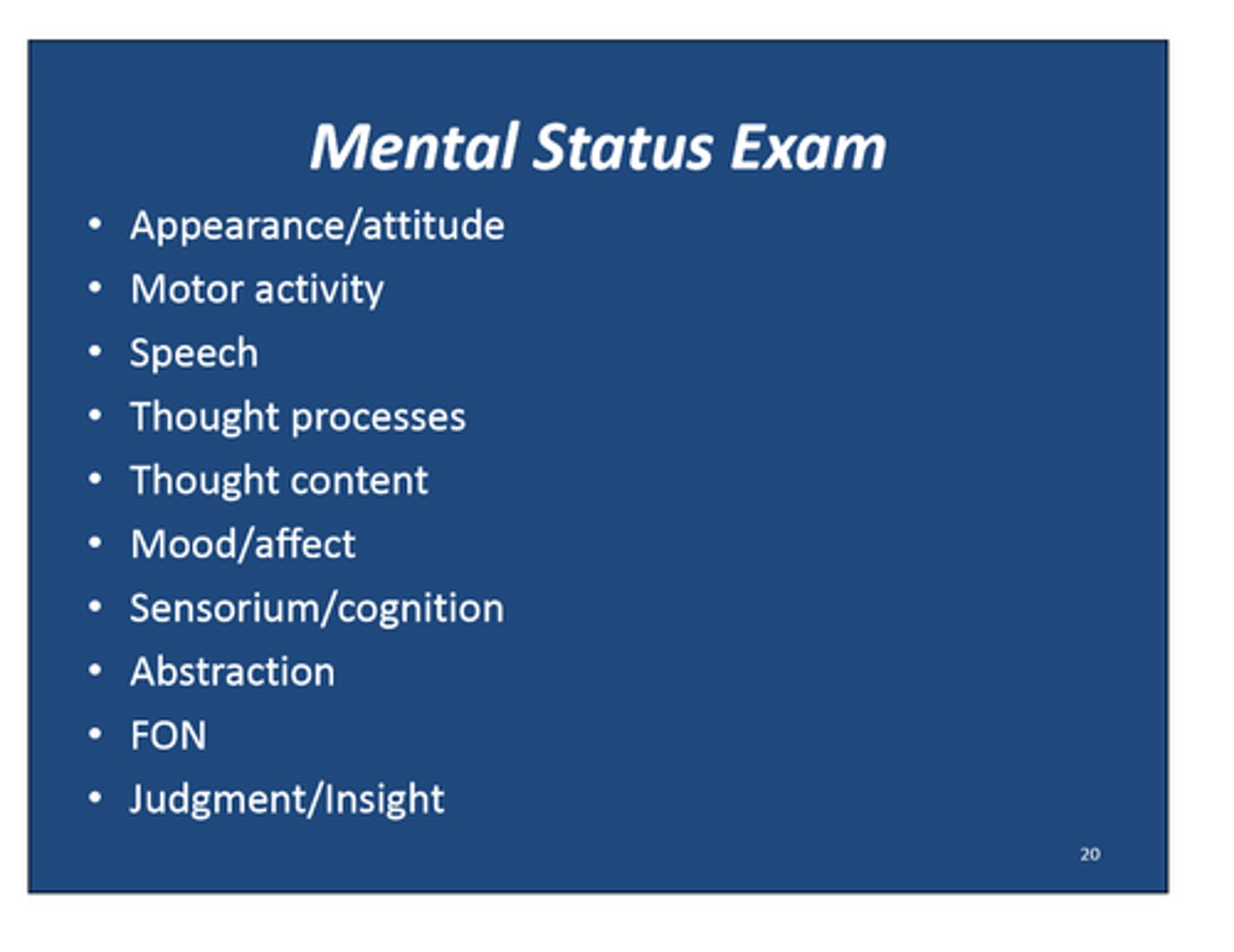
mental status exam
a set of interview questions and observations designed to reveal the degree and nature of a client's abnormal functioning
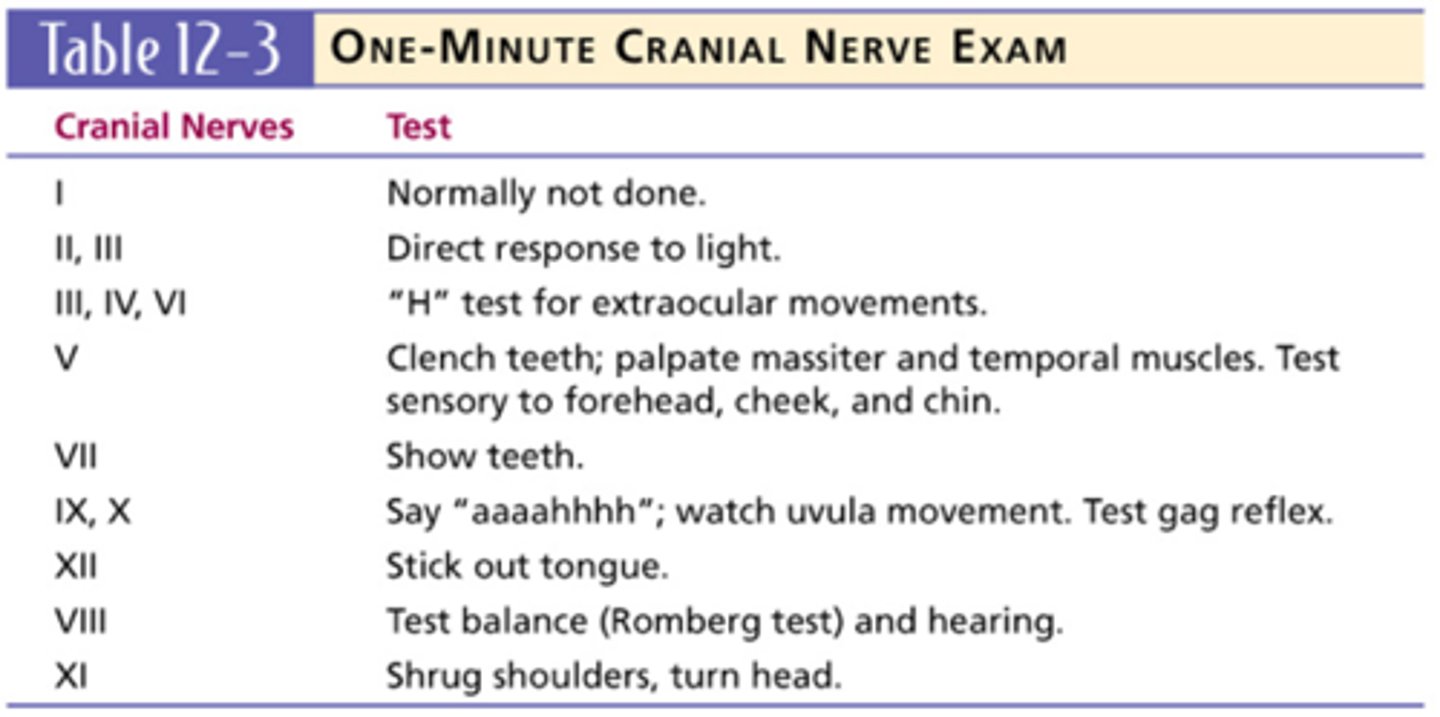
cranial nerve exam
major section of the neurological exam that assesses sensory and motor functions of the cranial nerves and their associated central and peripheral structures
Cerebellar Examination
Assess for overall coordination of movement, balance, and equilibrium
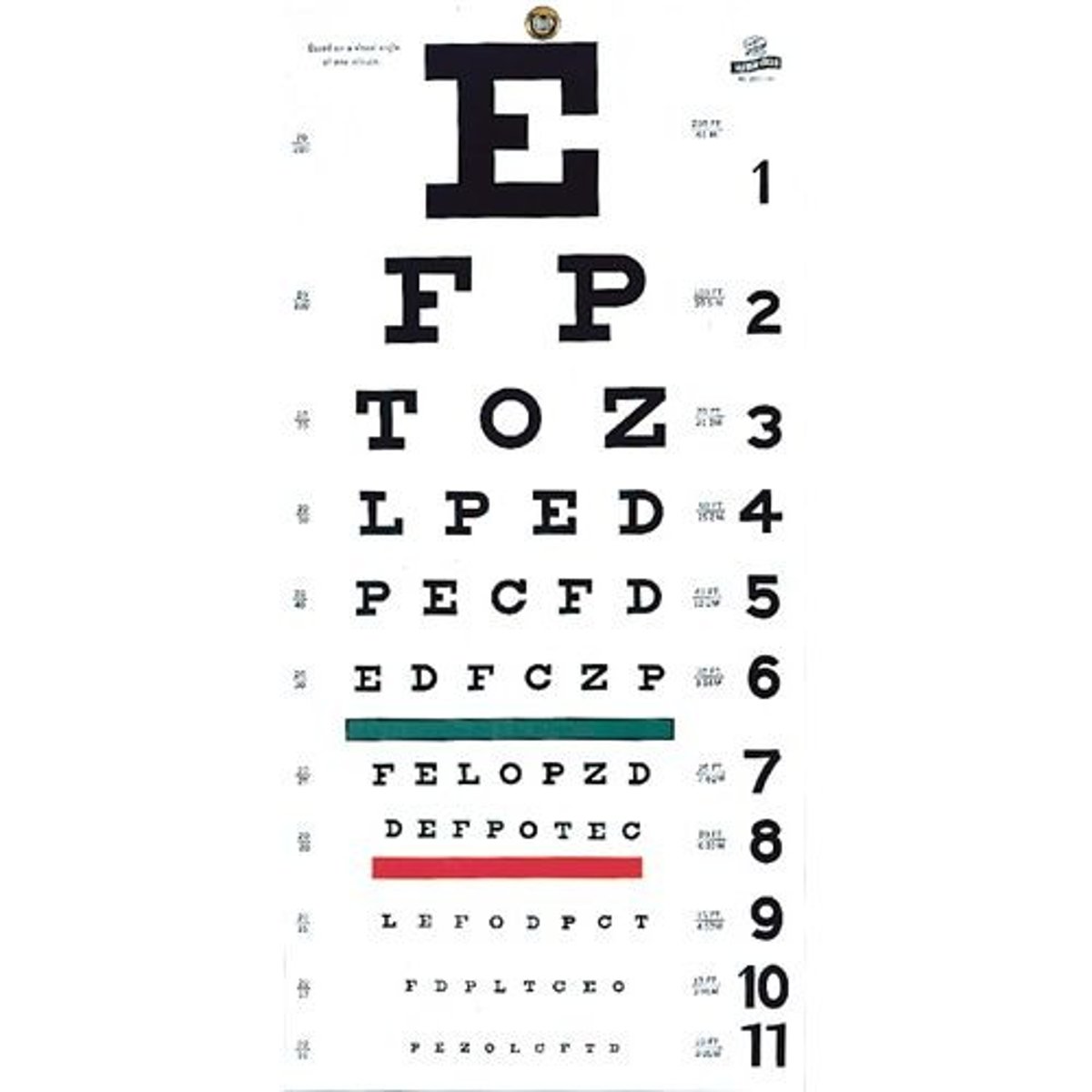
Snellen chart
used to measure visual acuity
reflex hammer (percussion hammer)
test neurological reflexes and deep tendon reflexes, efferent neurons send message to the brain.
how do you rate reflexes
0-4
+4 is hyperactive
0 is no response
cranial nerve 1 test
Olfactory ( sensory) smell, have pt close eyes and smell substances one nostril at a time
cranial nerve 2 test
Snellen chart
cranial nerve 3 test
Pen Light Test- Stand 1 foot away from patient
Gently move pen light from outside of eye to center of eye for 1 second
Move the pen light away from center of eye and pay attention to pupil constriction and dilation.
PEARRL= Pupils Equal Round and Reactive to Light
cranial nerve 4 test
Trochlear (Motor) downard, internal rotation of the eye
6 positions of gaze and pupillary response
cranial nerve 5 test
-Touch to face (have patient close eyes and touch patient on random parts on face with cotton wisp)
-Muscles of mastication (place hands on patient's masseter and temporalis and ask them to bite down)
-Corneal reflex (have patient look up and in. Then touch the cornea with . cotton wisp and patient will blink and tear)
cranial nerve 6 test
Abducens (motor) lateral deviation of the eye
6 positions of gaze and pupillary response
cranial nerve 7 test
facial expressions
cranial nerve 8 test
Acoustic (Sensory) Hearing and balance
webber, rinne and gross hearing
cranial nerve 9 test
Swallows, tastes, salivates
cranial nerve 10 test
Swallows, tastes, talks
cranial nerve 11 test
Lift traps and you push down on them and tell patient to resist
Have patient turn head to side and you place hand on one side of face and you resist them pushing
cranial nerve 12 test
moves tongue
ptosis
drooping of eyes
dyskinesia
the distortion or impairment of voluntary movement such as in a tic or spasm
anesthesia
loss of feeling or sensation
hyperesthesia
increased sensitivity to stimulation such as touch or pain
analgeisa
inability to feel pain
hypalgesia
decreased sensitivity to pain
Hyperalgesia
increased sensitivity to pain
Two point descrimination test results:
fingertips- 6mm
dorsal hand- 15mm
chest- 45mm
forearm- 39
back-45
upper arm-40
Babinski reflex
Reflex in which a newborn fans out the toes when the sole of the foot is touched