Lec 28: The Basics of Puppy Behavior and Problem Prevention
 Call Kai
 Learn
Learn Practice Test
 Spaced Repetition
 Match
Match Flashcards
 Knowt Play
1/35

There's no tags or description
Looks like no tags are added yet.
Name | Mastery | Learn | Test | Matching | Spaced | Call with Kai |
|---|
No analytics yet
Send a link to your students to track their progress
36 Terms
Development of Puppy chart
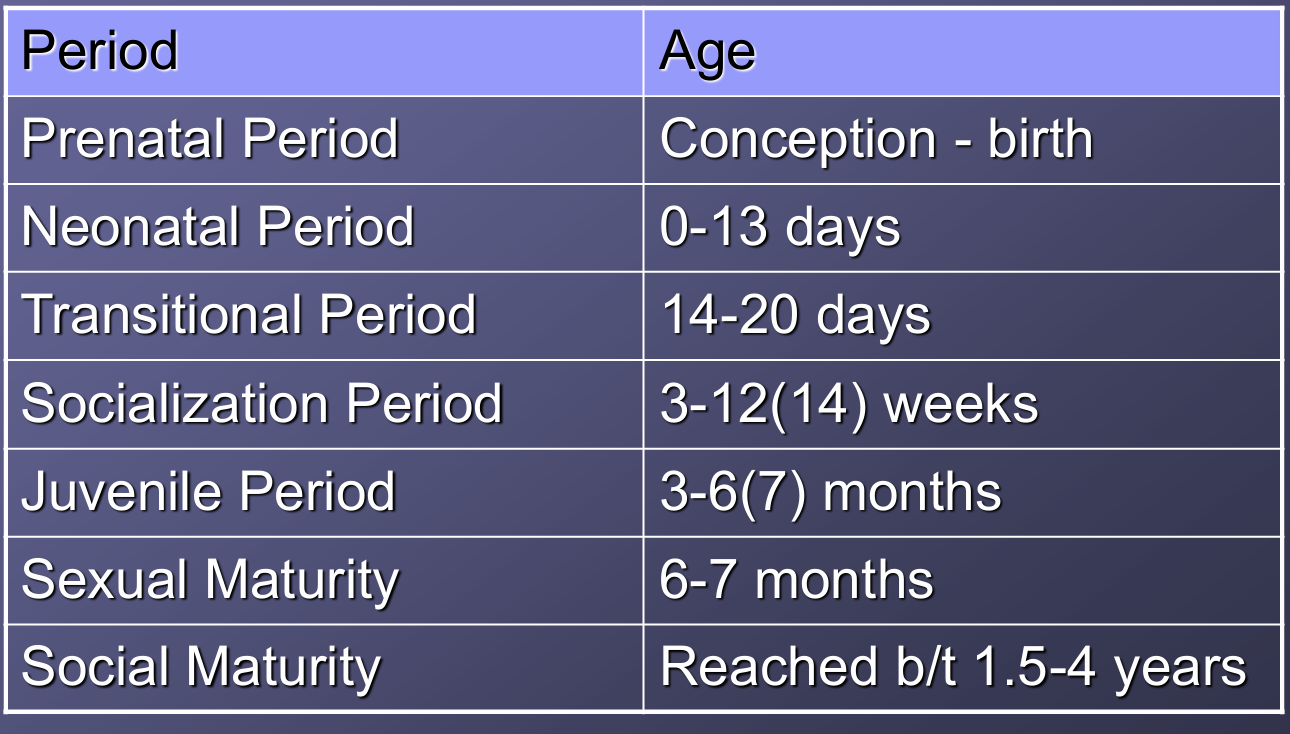
Prenatal Period =
Fetal development
What are some effects of stress during the prenatal period?
Increased cortisol
Changes ‘set point’ HPA axis
High emotionality as adults
puppy mills?
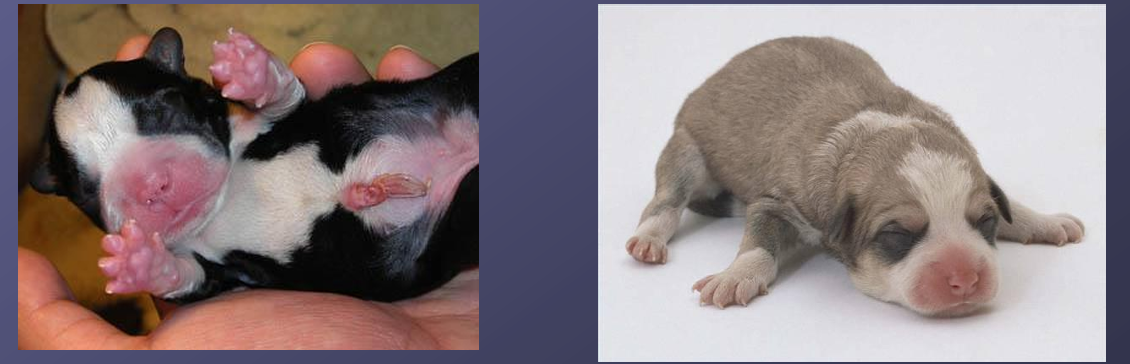
Neonatal Period (0-13 days)
Born deaf and blind, poor smell
Eating and sleeping
Very limited learning capabilities
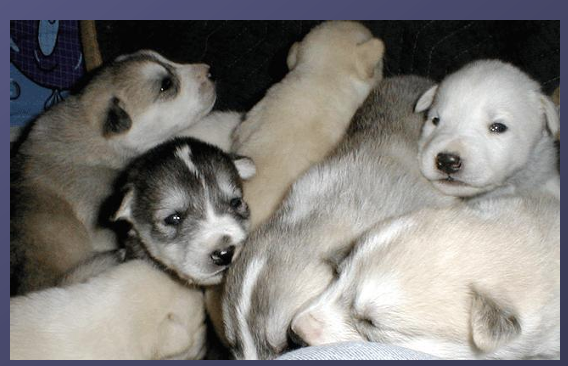
Transitional Period (14-20 days)
Eyes open
Tooth eruption
Able to stand
Level of learning during the Transitional Period (14-20 days)
Learn to avoid pain
No emotional learning yet (no change in HR & don’t learn from bad experience)
Startle responses ENDS transitional period (hearing begins)
Socialization Period (3-12 weeks)
Gradual wean
Leave nest to eliminate
Offer play behaviors
Social relationships
Level of learning during Socialization Period (3-12 weeks)
Avoidance response
Fearful postures develop
Learn from bad experiences
If early illness occurs in the Socialization Period (3-12 weeks), what does this predispose the puppy too?
Aggression problems
Fear of strangers and children
Separation related problems
What can occur if a puppy is isolated during the Socialization Period (3-12 weeks)?
Leads to learning deficits and fear response
“Kennel dog syndrome”
Fear Period (8-10 weeks)
Very sensitive to traumatic experience
Single scary event can have life long effects
Can retain fear of person, dog, object
Handle this period with care!
Juvenile Period (3-6 months)
Rapid growth
Increasing independence
Sexual interest begins
Teething occurs
◼ Destructive chewing ↑
When does Canine Adolescence occur?
Time between sexual and social maturity
Social Maturity in Dogs can occur as early as __ and as late as __.
12 months, 4 years
During Social Maturity in Dogs they show behaviors of?
More proactive defense
Fearful puppies tend to become biters at this point
Puppy Prep School should include
Socialization
Housetraining
Crate training
Mouthiness
Manners
What is the single best thin an owner can do to set their puppy for the rest of their life?
Taking them to a puppy class!
A study showed Puppies that attended socialization class were more likely to be
retained in their homes
How to pick an appropriate Puppy Kindergarten Class?
Observe class yourself
Puppies 4 months of age and younger
Appropriate sanitation before and after class
Appropriate supervision
Health screening
Should we isolate puppies until fully vaccinated?
Absolutely not
More likely to lose pet over a behavior problem than from infectious disease
When puppies are not fully vaccinated it is important make wise choices for socialization such as:
Avoid dog parks, pet stores, etc.
Make play dates with healthy, socially mature, dogs with a history of appropriate social behavior with dogs
Puppy kindergarten
It is important to remember that puppies are typically in which period at the time of their first vaccine appointment?
Fear period
Potential frightening stimuli during a vet appointment includes:
Cold exam table
Rectal temperature assessment
Vaccine injection
Nail trims
Physical manipulation by a stranger
How do we prevent long lasting fear of the veterinary clinic?
Associate food with everything!!
What is an easy way to prepare a puppy for the vet exam?
Mock exam as home
Feet, ears, tail, mouth, exam table
Owner can use healthy treats to create a positive association
Tips to housetraining
Supervision
Frequent opportunities for success
Meal feeding (keep schedule)
Food and verbal commands
Accompany pup outside
Give food reward and verbal praise immediately following elimination
Crate/Confinement - when unsupervised
Tether (umbilical method)
Interruption instead of punishment
Why crate train?
Housetraining
Safety
Independence
A place to escape
How to pick proper crate size?
Big enough to sit, stand, and lie
The mouthy pup is normal behavior in young puppies b/c
Taste and facial sensation are among 1 senses to develop
Dam and litter mates teach inhibition
Persistent mouthing over 12 weeks of age may be a sign of
Premature maternal separation
Displacement behavior in anxious pups
Early signs of aggression if seen in the context of resource guarding and handling
Learned attention seeking behavior
Ways to discourage mouthy behavior?
Remove ALL attention to response
Avoid rough or high arousal play
High pitched “ouch” works in some cases
Provide appropriate chewing outlets
In early development it is important to not encourage behaviors now that
Will not be desirable from an adult dog
Ex: jumping, pawing, mouthing
When teaching puppies it is important to avoid
Harsh punishment
◼ Inhibits learning and offering of new behaviors
◼ Devastating effects during fear periods
◼ May exacerbate existing fear or aggression
Dog Appeasing Pheromones can assist with training
ThunderEase ADAPTIL behaviors in puppy class ® collar reduces fearful
Helps pup adjust to first night away from mom and litter mates
Consider collar to be worn all the time and/or diffuser next to crate
Red flags in Puppies
Avoidance of people, animals, objects
Alarm barking, lunging, hackles up - not normal seek help now!
Excessive mouthing over handling
Reluctance to “sit” or “down” - Pain! or anxiety
Other red flag alerts in puppies
Excessive vocalization in crate or home alone
Inability to settle in crate
Pup will not eat food without owner present
Repeated elimination in appropriately-sized crate - NOT normal